


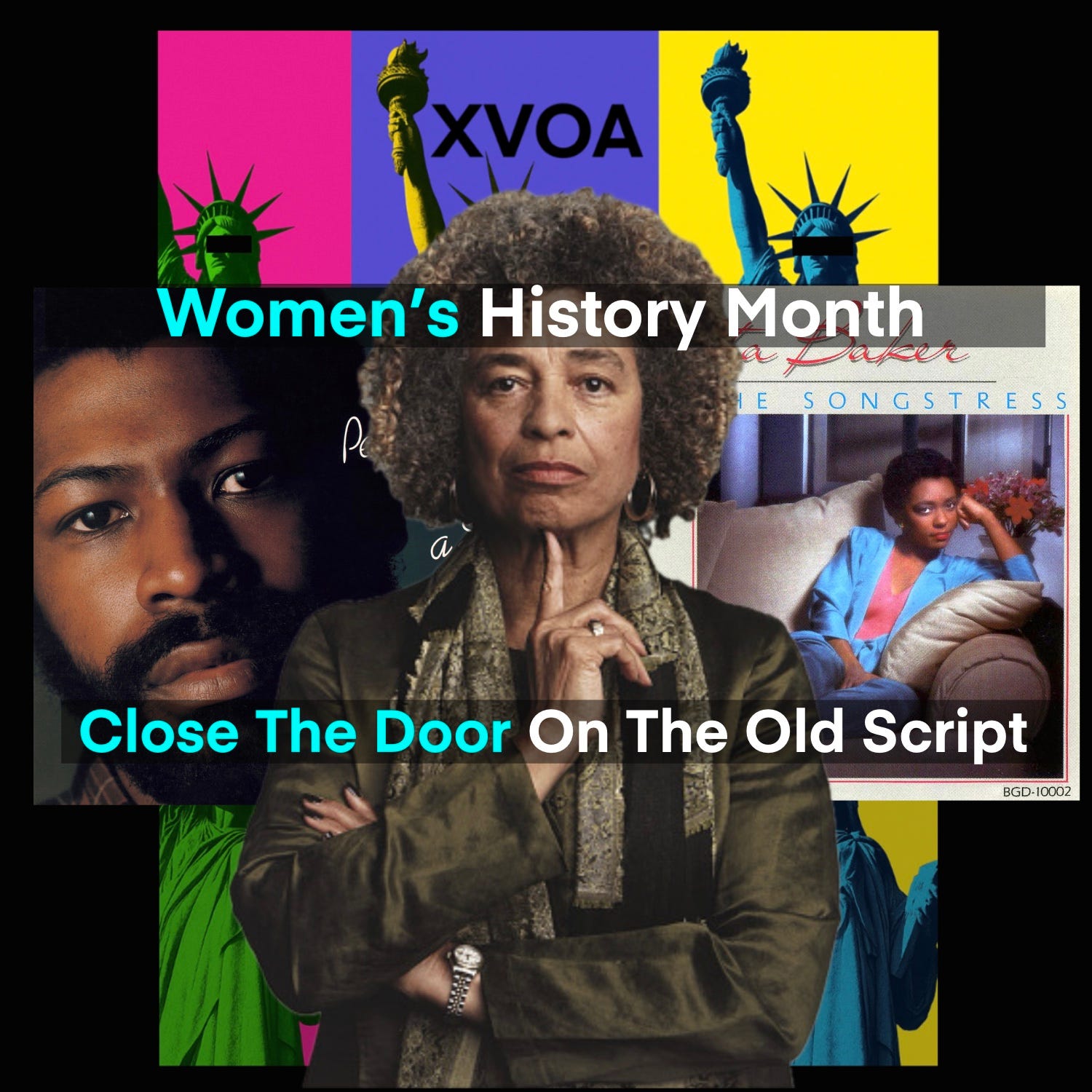
I didn’t know I was blind until Angela Davis made it impossible to keep my eyes half‑closed.
This was before smartphones and social media, back when “the internet” was somewhere you had to go sit down at, like a place. I worked nights. Closer to midnight, dashboard glow on my hands, city lights sliding past the glass. WHUR’s Quiet Storm would carry me through that last stretch of the day: that low, patient voice between records, that slow glide that could make a hard shift feel briefly survivable.
And I still had the nerve to judge it. I filed it under comfort. Candlelight. Grown folks. Men “begging.” The wider Black male culture around me treated it like a joke in public, even while we played it in private. That’s the tell. We’ll ride to slow jams, but we roll the windows up first so those outside won’t hear it and judge us, like tenderness is something that can get you caught.
Then I opened Davis and the same songs stopped sounding harmless. They started sounding like an argument. Like a people trying to learn consent after centuries of coercion. Like men practicing how to ask instead of take because women can finally choose. Like a freedom story hiding inside a love song. That’s when the bridge blew. The shortcut collapsed. I couldn’t cross over into easy assumptions anymore.
So before I tell you what Quiet Storm became after Davis, I’ve got to take you back to what it was before her: where it started, who named it, and why a Howard University station in D.C. taught the whole country how to listen at night. [5][7][8]
TLDR
Quiet Storm isn’t “bourgeois comfort.” Under Angela Davis’s lens, Black love music is where freedom gets practiced first, because love in the blues was never an idealized escape from history. [1][19]
WHUR (Howard-owned) and Melvin Lindsey built the Quiet Storm format in 1976, turning late-night radio into a Black ritual that spread nationwide. [5][7][8]
Songs like Teddy’s “Close the Door” and Anita’s “Will You Be Mine” aren’t just romance. They carry the tug between invitation and entitlement, choice and control, which is why men clown tenderness in public and still need it in private. [17][18]
This essay is my confession: Davis re-tuned my ears, and I can’t laugh at tenderness the same way anymore. [1][4]
Restack restack then restack it and share it. Send it to one friend who still jokes about “simp music.” And if you’ve got the means, close the door and become a paid subscriber:
WHUR, Melvin Lindsey, and the Night the Storm Got a Name
WHUR was never just “a radio station” in D.C. It was a Black institution with a transmitter. Howard University owned it, staffed it, and let it function like a public square with better music. [5][6] By the time I was driving nights with that dial locked in, WHUR had already done something rare. It didn’t just play the soundtrack. It named a mood.
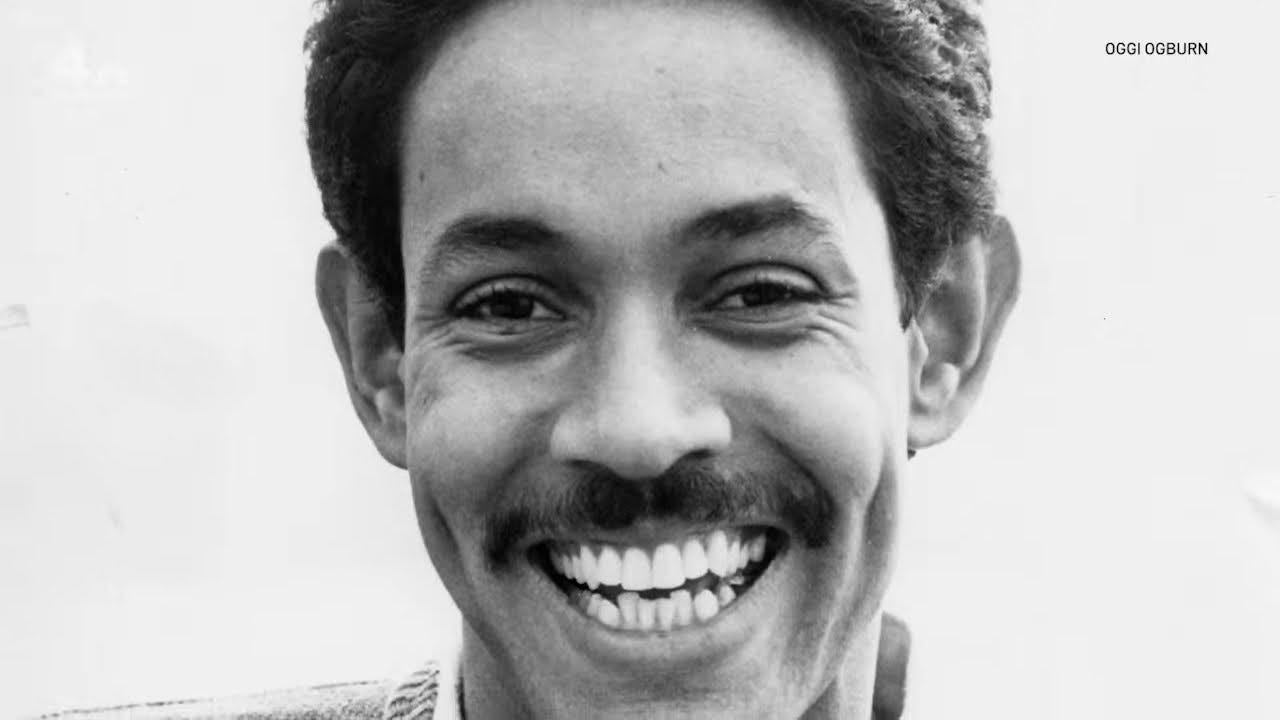
The origin story starts the way a lot of Black innovation starts: when somebody needed to solve a problem with what they had on hand, and there wasn’t time to be precious about it. In 1976, a young Melvin Lindsey was an intern at WHUR when the station needed a live shift covered. [5][6] Later retellings describe him as a shy kid, “quietly shaking in his platform shoes,” stepping up with albums pulled from his own stash. [5][6] That night he didn’t try to sound like every other DJ chasing hype. He leaned into the opposite. He let the room go dim.
What he built wasn’t “slow songs” as a playlist. It was a format with rules and a feeling. Lindsey started blending mellow, romantic soul across decades, stitching old and new together in a way that made time feel softer. The show’s name came from Smokey Robinson’s “Quiet Storm,” and the title fit because the music moved like weather. [16][5][7] It was gentle, but it carried force. Even the naming has a little myth to it. In one account, Cathy Hughes told Lindsey the name came because he was quiet, but he hit like a storm when he opened his mouth. [5][6]
That combination is the secret: low volume, high impact. Quiet Storm gave D.C. a late-night ritual, the kind you don’t announce as sacred while it’s happening. You just keep showing up. One of the cleanest testimonies I’ve heard about Lindsey’s reach comes from Donnie Simpson, the longtime Washington, D.C. radio personality and former BET host, remembering the era when the show ruled the night: you “didn’t even have to have a radio… just open the window.” [6][9][10]
And WHUR understood what they had. The station didn’t treat the show as filler or a niche. They treated it like a flagship. Quiet Storm became a nightly refuge for the folks coming off shift and the folks coming down from the day. It made room for romance without pretending romance was the whole story.
The format didn’t stay contained in D.C. Once radio people saw what WHUR had built, the blueprint spread. “Quiet Storm” stopped being a single program and became a national template for late-night Black radio. [7][8] Lindsey eventually carried the style beyond WHUR to WKYS‑FM (and later into TV work, including BET). [6][8]
So when I say this wasn’t bourgeois comfort music, I mean it. It was infrastructure. It was a nightly practice of softness in a world that rarely rewarded it.
Davis, the Mirror, and the Bridge Black Men Build
It hits differently for a lot of Black men because many of us were raised in Black‑woman‑led homes, churches, classrooms, and neighborhoods. We learned to depend on Black women long before we learned to truly see them. That closeness can breed a particular contradiction: you love what you rely on, but you still inherit a patriarchal script that says you must not be corrected by it.
So you build a bridge. Mental moves. Jokes. “That’s just how women are.” Selective history. Anything that gets you from intimacy to entitlement without feeling the moral cost.
Angela Davis won’t let you call that “just culture.” [2][3][4]
In Women, Race & Class, she points out how even scholarship treated Black women as an afterthought: “the special situation of the female slave remained unpenetrated.” [2] Translation: people wrote a whole library about slavery and still managed to look past the woman standing in the room.
Then she forces the harder view of what slavery did to gender itself: “the slave woman was first a full-time worker for her owner, and only incidentally a wife, mother and homemaker.” [2] Translation: Black womanhood gets defined as labor first, humanity second. Love doesn’t get to be “private” when the world has been billing your body as public property.
She names the convergence, too: “Racism and sexism frequently converge—and the condition of white women workers is often tied to the oppressive predicament of women of color.” [2] That’s not a slogan. That’s an X‑ray.
In Women, Culture & Politics, she captures how liberation gets sabotaged when sexuality is treated like a side issue. A young man says it plainly: “Women cannot become creative agents without being freed from sexual oppression.” [3] Meaning: you can’t build a free people on top of a half‑caged woman.
And in Freedom Is a Constant Struggle, she names the trap Black women were pushed into and refuses the forced-choice logic: “Black women were frequently asked to choose whether the Black movement or the women’s movement was most important.” Her response is blunt: “This was the wrong question.” [4] The question wasn’t which struggle mattered. The question was whether you were willing to tell the whole truth at once.
This is also where the bridge turns into something you can’t unsee. When Black men feel structurally powerless, some of us cling to patriarchal control as a way to feel like “somebody.” Meanwhile, many Black women cling to education because it has been one of the few institutional pathways that could be converted into leverage, mobility, and self-definition even when everything else was rigged.
So when I say Davis ruined me, I mean she ruined my ability to treat this music as harmless. She made it impossible to mock tenderness as weakness without hearing what that mockery is trying to protect.
Blues Legacies, Billie Holiday, and the Love Songs People Misread
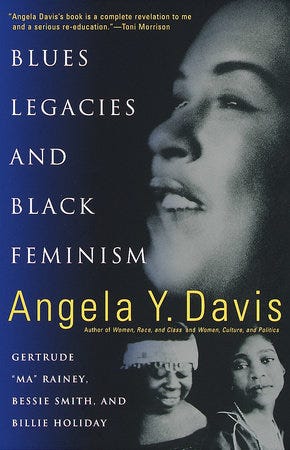
I need to give you the backstory on the book that changed my life.
I didn’t pick up Blues Legacies and Black Feminism looking for a sermon. I picked it up because I thought I already understood Black music. I thought I had the basics. Blues is pain. Soul is healing. Quiet Storm is grown folks. Move on.
Davis came along and rearranged the furniture. She treated those songs like evidence. Like a Black woman’s voice on wax was not decoration, but documentation. And the disrespect I’d learned to laugh off, the jokes, the dismissals, the “that’s just entertainment,” started sounding like a cover story.
That’s why it took me so long to write this essay. Because once that book gets in your system, it doesn’t just teach you about Ma Rainey or Billie Holiday. It teaches you about you. It makes you go back to your favorite songs and ask what you were ignoring to keep enjoying them.
Here’s the lowdown on what Angela Davis did to me in Blues Legacies and Black Feminism. [1] She took “love” out of the Hallmark aisle and put it back where Black folks actually lived it.
When I first came up on Billie Holiday, I heard her the way most people do. A great voice. A tragic life. A woman singing heartbreak so pretty you almost forget to ask what broke her in the first place. People treat Billie like she is the patron saint of sad romance, like her love songs are pure feeling floating above history.
Davis does not let you do that. [1][19]
She keeps pointing at the same uncomfortable fact from different angles. The blues did not treat love as an idealized escape hatch. In Davis’s frame, love had social meaning because unfreedom had intimate meaning. The historical African‑American vision of individual sexual love was linked with the possibilities of social freedom. [19]
Once you take that in, Billie’s catalog reads different. Her love songs stop being soft-focus confessionals and start sounding like testimony that got dressed up for the radio.
Take “Good Morning Heartache.” [15] On paper, it looks like a simple breakup song. In your ear, it is a woman addressing pain like it has a key to the house. Billie does not beg the world to be fair. She names what is there. That kind of intimacy with sorrow is not bourgeois comfort. It is survival training.
And once you hear Billie that way, you start hearing the whole lineage differently. You start hearing how a love song can carry the aftertaste of coercion and still reach for something freer anyway.
That is the setup. Because the next time you hear a man in a slow jam asking for the door to close, the real question becomes: is he performing possession, or is he practicing permission? And when you hear a woman ask, “Will you be mine,” you can finally hear what is underneath it.
“Close the Door”: The Slow Jam as Post‑Captivity Negotiation
Once Davis re-tunes your ear, you stop treating Teddy Pendergrass like a caricature. You stop hearing him as “just sex” or “just smooth.” You hear him as a Black man trying to speak desire in a world where Black women’s desire had been treated like it didn’t count.
And we’re not talking about some deep cut. “Close the Door” is a signature single. [17] It’s still in rotation because it sits right in the Quiet Storm pocket: intimate, persuasive, ritualistic. It’s a song people know by muscle memory.
So don’t float above the words. Get down into the lyrics and watch how power leaks through romance.
The opening is invitation: “Let me give you what you’ve been waiting for.” “Close the door / No need to worry no more.” That’s a man trying to create privacy before he asks for anything else. Then he moves into care: “Let me rub your back where you say it’s sore.” That line matters because it frames touch as response, not entitlement. She speaks. He responds.
But the song also shows the snare. In the same breath, the language flirts with possession and escalation. “Let me blow your mind.” And later it spikes into entitlement: “Let me do what I want to you.” The tenderness is real, but the old reflex keeps trying to reassert itself in the middle of the seduction.
That contradiction is the point. This is what post‑captivity intimacy sounds like in real time: persuasion wrestling with possession. Permission struggling to stay permission once desire gets loud.
Teddy’s formation adds another layer. He grew up in the church, and in the COGIC world around him (COGIC = Church of God in Christ, a major Black Pentecostal denomination), women weren’t simply background support. [11][12][13][14] There was a visible tradition of women’s authority in the room. So when he sings tenderness, it doesn’t have to be read as “weak.” It can be read as learned reverence.
If Davis ruined my easy listening, this is one of the places she did it. Because once you read her, you can’t hear “Close the Door” as bourgeois comfort. You hear it as a cultural negotiation.
“Will You Be Mine”: Anita Baker and the Sound of a Woman Choosing
Now flip the record and listen from the other side of the door.
If Teddy shows you what men were trying to learn out loud, Anita Baker shows you what women were finally allowed to demand out loud.
Quick Women’s History Month detour, because Anita deserves it. She didn’t drop out of the clouds as “Quiet Storm royalty.” She came up through Detroit’s music scene, did time as the lead voice in Chapter 8, got treated like she didn’t have “star potential,” and still kept singing like she had something to prove. [21] Her first solo album, The Songstress(1983), is where “Will You Be Mine” lives. [20] It wasn’t a blockbuster at first. It was a blueprint. And after Rapture blew the doors off in 1986, the world circled back to the earlier work because they finally heard what was there all along. [22]
Anita’s whole quiet-storm genius is restraint. She doesn’t rush the listener. She doesn’t over-explain. She makes space, then she fills it with precision. So when “Will You Be Mine” comes on, it doesn’t feel like a chase scene. It feels like a boundary being drawn with velvet gloves. [18]
Anita Baker’s “Will You Be Mine” isn’t a woman being pursued. It’s a woman doing the asking, but she’s not begging. She’s negotiating safety. She’s naming what it costs to want something real when you’ve already been hurt.
Look at how she opens: “Something has come over me / A feeling I can’t explain.” That’s vulnerability before the pitch. Then she gives you the backstory in plain language: “The love I lost I found again… My broken heart you came to mend.” This is love with receipts.
And that’s the Davis logic hiding in the pretty. Anita doesn’t frame love as escape from reality. She frames it as a risk taken inside reality. The last love “left me feelin’ so empty and blue” and “made me afraid to let my true feelings show.” That’s not melodrama. That’s a woman telling you exactly why she is cautious with her own heart.
So when she repeats “Will you be mine?” she’s not asking for ownership. She’s asking for clarity. For a yes that doesn’t come with punishment later. For commitment that doesn’t cost her her dignity.
This is why it lands hard, especially during Women’s History Month. Because this isn’t a woman waiting to be chosen like she’s in line. This is a woman choosing with her eyes open.
That’s why Quiet Storm mattered. It didn’t just give men permission to sound soft. It gave women room to sound exact.
The Window‑Up Rule
Here’s the part I didn’t want to admit for a long time.
A lot of Black men, especially in the hip hop era, learned to police tenderness like it was contraband. We would clown the slow stuff in public. Then we would go home, roll the windows up, and let the same music do its work on us.
That isn’t just taste. That’s a masculinity rule.
The rule says you can want love, but you can’t look like you want it. You can crave being held, but don’t you dare sound like you need it. Because in a world that is always testing your manhood, being caught feeling becomes a liability.
And if you take Davis seriously, that rule is not harmless. [1][19]
If Black intimacy has always been a political site, then mocking Black romance is not just a joke about a song. It’s a way of shrinking the one place where freedom had to be rehearsed first.
Because the joke is rarely about the song. The joke is a shield.
It’s a shield against the part of you that knows tenderness requires accountability. If you let the slow jams be what they are, then you have to answer a simple question: am I asking, or am I taking.
And that’s where misogynoir can slip in wearing a grin.
If Black women’s voices are allowed to be only one thing, sexy, available, entertaining, but not authoritative, not complex, not naming terms, then the culture gets trained to hear Black women as background. That training does not stay in the speaker. It moves into the living room. It moves into the car. It moves into the way a man hears a woman say no, or hears a woman ask for clarity, or hears a woman tell the truth about what love costs her.
That is why Anita matters here. She isn’t performing sweetness. She is asking for a decision.
And that is why Teddy matters here. He starts in invitation and care, then the old reflex tries to spike the language toward control. You can hear the battle.
Part of why the pressure got so intense is simple. When you live in a world that can take your job, your dignity, your safety, your future, the temptation is to find one place you can feel powerful. Patriarchy offers that hit. It offers it cheap.
So you can be a man who is powerless in the larger world and still feel entitled in the smaller world. That’s the tiny throne in the burning room.
So if you want the cleanest way to understand what Davis did to me, it’s this.
She made me hear the joke as fear.
And once you hear that, you can’t go back to laughing the same way.
Conclusion: Close the Door on the Shortcut
I said Angela Davis made it impossible to keep my eyes half‑closed. That is still the most honest sentence in this whole thing. Because once you see what she’s pointing at, you can’t unsee it.
And if I’m going to confess something right here at the end, it’s this.
The reason this took me so long to put out is not because I lacked information. It’s because a part of me still wanted the shortcut. A part of me still wanted to keep the windows up. A part of me still wanted to enjoy the music without being examined by it.
That is the sin of patriarchy. Not the loud version everybody knows how to condemn. The quiet version. The version that lets you feel entitled while you call it protection.
Close the door on the old script. Close the door on the part of us that only wants tenderness when it’s private, and only wants women’s truth when it’s convenient. Close the door on that reflex that calls love “soft,” treats consent like a suggestion, and hears accountability as an attack.
Because I’m not writing this from the clean side of the room. I’m writing it from the side that still gets tempted by the shortcut.
Because the truth is, Quiet Storm was never just music. It was a night school.
It taught men how to ask.
It taught women how to speak plainly.
It taught a whole community how to practice freedom where freedom starts, in the private room, in the soft moment, in the place the world does not applaud.
And Davis did what a real teacher does. She ruined the performance. She made it impossible for me to pretend I didn’t hear what I heard.
So here’s the last thing I’ll say.
If you grew up like I did, you learned to survive by keeping something hidden. You learned to keep your softness private. You learned to laugh so nobody could see you flinch. But love doesn’t survive on hiding. Love survives on truth.
That bridge I almost crossed is still out there for all of us. The bridge where we take the easiest story about ourselves and call it reality. Angela Davis blew that bridge up for me.
And I’m grateful.
Because I would rather be ruined into honesty than soothed into the same old goddamn lie.
A Quiet Storm After‑Hours Ask
If you made it this far, thank you thank you thank you. Seriously.
To everybody riding with me on a free subscription, I see you. If money is tight, stay right where you are. You’re not “less than” in this room.
To my paid subscribers, thank you for putting real fuel in the tank. You’re the reason I can take my time, do the research, and still hit publish without asking anybody’s permission.
And if you’ve got the means, don’t overthink it. Close the door behind you and come closer.
Become a paid subscriber here:
Sources
Angela Y. Davis, Blues Legacies and Black Feminism (Vintage/Random House) — Primary text grounding the “love as social freedom” argument (Rainey, Smith, Holiday).
Angela Y. Davis, Women, Race & Class (PDF) — Full text for the slavery, labor, and convergence quotations used here.
Angela Y. Davis, Women, Culture & Politics (PDF) — Full text for the sexuality/liberation quotation used here.
Angela Y. Davis, Freedom Is a Constant Struggle (PDF) — Full text for the “wrong question” passage used here.
The Quiet Storm Station (WHUR), “History” — WHUR’s account of Melvin Lindsey and the 1976 origins of the Quiet Storm format.
NBC4 Washington, “Quiet Storm: Melodies, Moods & Mixes of Melvin Lindsey” — Reporting on Lindsey’s legacy and Quiet Storm’s influence.
PBS American Masters, “What is quiet storm music?” — Overview of the format/genre and its roots at WHUR.
99% Invisible, Episode 636: “The Quiet Storm” — Narrative history on how the format spread nationally.
Donnie Simpson (official site) — Background on Simpson’s broadcasting career (context for the quoted remembrance).
Radio Hall of Fame: Donnie Simpson — Career summary and recognitions.
Teddy Pendergrass (official bio) — Biography including early church formation.
Philadelphia Music Alliance: Teddy Pendergrass — Additional biographical reference (gospel roots; ordination claim).
COGIC Department of Women, Official Handbook (PDF) — Documentation of the Department of Women’s structure/history.
Anthea Butler, Women in the Church of God in Christ (UNC Press) — Scholarly history of COGIC women’s leadership.
Billie Holiday (official site): “Good Morning Heartache” — Song notes and recording date used in the Holiday section.
Smokey Robinson (official site): A Quiet Storm — Context for the term “Quiet Storm.”
“Close the Door” (single) — reference entry — Release details and chart performance summary.
Anita Baker, “Will You Be Mine” — track reference — Track reference for the song used in analysis.
Pitchfork, “The Year Megan Thee Stallion Became a Symbol” — Publicly available excerpt quoting Davis on love, agency, and social freedom.
Wow, I am blown away by your ability to take a topic and touch such a vulnerable space, within really elegant writing. Your work is important and needed.
I can glimpse this within the cultures, and understand, and it's hard to keep the lens on and evaluate things through it. I'll keep reading : )
Thank you for this article. I appreciate your honesty and what you have learned from listening, being taught, thinking and examining what is in front of you. I would like to see more men be able to do this! Much appreciated!