

Blackout Brief Daily | March 15, 2026
Five Things That Matter Today
Iran’s war file is no longer just about strikes. Tehran rejected ceasefire pressure, threats widened to UAE port infrastructure, and the Strait of Hormuz remains a live global choke point.
The DHS shutdown has crossed from Washington theater into a spring-break labor and travel crisis, with 50,000 TSA officers still unpaid, more than 300 already gone, and airline CEOs now openly warning Congress.
The United States is facing a higher domestic terror threat at the same time its counterterror bench has been thinned by departures and internal disruption.
U.S.-China trade talks in Paris are not abstract diplomacy. They are about tariffs, rare earths, export controls, oil shocks, and what working households will pay next.
A federal judge just slowed the Trump administration’s push to force colleges to hand over race and sex admissions data on a rushed deadline, turning a higher-ed data fight into a civil-rights and surveillance story.
If this briefing helps you see what the national headlines miss, restack it so someone else can see it too.
Become a paid supporter here:
If recurring support is not your move right now, back the work with a one-time tip here:
The center of the national news map over the last 48 hours was easy to identify. National outlets concentrated on the Iran war, the partial DHS shutdown and airport chaos, rising terrorism fears, Paris trade talks between Washington and Beijing, and the Trump administration’s latest fight over race data in higher education. That is the official hierarchy of urgency.
The edge of the map told a different story. Reuters and local reporting showed Minneapolis still living with the social and economic wreckage of ICE sweeps. Black press in Baltimore pushed a police accountability case that would barely register if you only watched cable. Statehouse, disability, immigration, and reproductive-rights reporting surfaced the quiet policy fights that will shape who can work, who can get care, who can vote, and who gets pushed out of public life.
That contrast is the real hierarchy audit. The center gets spectacle, elite negotiation, and official conflict. The edge gets the bill, and usually the people paying it are workers, immigrants, Black communities, disabled people, women trying to hold onto basic healthcare, and queer people watching whether their rights can survive the next round of court or ballot politics.
Top Breaking National Stories
1. Iran Rejects Ceasefire Pressure and Widens the Threat Map Around Hormuz
Reported (ET): March 14-15, 2026
Summary
This is one of the few justified repeats from yesterday’s brief, because the story materially changed overnight. Reuters reported March 14 that Iran rejected ceasefire efforts unless U.S. and Israeli strikes stop, while the Strait of Hormuz remained under threat and damage to Kharg Island sharpened the risk to oil exports. AP then reported that Iran-linked actors explicitly named major UAE ports, including Jebel Ali, Khalifa, and Fujairah, as possible targets, pushing the war’s threat map beyond Iran and Israel. AP also reported that President Trump urged countries including China, France, Japan, South Korea, and the United Kingdom to send warships to help keep Hormuz open. In other words, this is no longer just a battlefield story. It is now a regional shipping, labor, and cost-of-living story.
Why It Matters
Hormuz is one of the world’s most important energy chokepoints. When a war threatens export terminals, tanker routes, and Gulf port infrastructure at the same time, the consequence is not confined to oil traders. It moves through freight costs, insurance, food prices, airline costs, and household budgets already strained by tariff policy and stagnant cushion.
Who Is Affected
Households with the least room in the budget absorb this kind of shock first. Workers who commute, families already managing grocery and rent spikes, and diaspora communities with relatives across the region are all exposed, even if the official U.S. framing treats the story mainly as strategy and deterrence.
What Mainstream Missed
Mainstream coverage has rightly treated this as a top story, but too much of it still reads as a military file plus a market file. The underplayed piece is that the threat has widened to civilian port infrastructure in neighboring Gulf states, which turns a war story into a logistics story and a labor story almost immediately.
Sources
Reuters — Ceasefire talks fail as Iran says strikes must stop before de-escalation — on Iran’s rejection of ceasefire pressure, Kharg Island damage, and the continuing Hormuz risk.
AP — Live updates on the Iran war — on threats to UAE ports and Trump’s call for partner navies to help keep Hormuz open.
2. DHS Shutdown Turns Spring Travel Into a Labor Crisis
Reported (ET): March 14-15, 2026
Summary
The partial shutdown of the Department of Homeland Security is now a labor crisis dressed up as a travel inconvenience. Reuters reported that the 29-day shutdown has forced 50,000 TSA officers to work without pay and that more than 300 officers have already quit. Reuters also reported Sunday that major airline CEOs directly urged Congress to act, warning that the problem is deepening as a record 171 million passengers are expected to fly during the spring travel period. LAist and NPR affiliate reporting showed the pressure on the ground, with workers missing paychecks, lines stretching for hours in cities like Houston, Atlanta, New Orleans, and Austin, and travelers facing mounting uncertainty. This is not just dysfunction. It is the federal government compelling airport security labor while refusing to pay for it.
Why It Matters
When airport screening buckles, the fallout is not evenly distributed. It hits workers who cannot afford missed shifts, families with fixed itineraries, people whose jobs do not let them rebook easily, and federal employees already carrying shutdown pain in their own households.
Who Is Affected
The most immediate victims are the officers being required to show up unpaid. But the damage spreads outward to hourly travelers, airport-dependent service economies, and households already navigating unstable schedules and thin margins. A Beltway funding failure becomes a working-class time tax almost instantly.
What Mainstream Missed
National coverage has often framed the story through lines at checkpoints. That misses the sharper truth. This is a coercive labor story first, and a traveler frustration story second.
Sources
Reuters — U.S. airline CEOs urge Congress to end standoff, pay airport security officers — on the 29-day shutdown, 50,000 unpaid TSA officers, and airline warnings.
LAist — TSA workers miss a full paycheck while travelers keep paying airport security fees — on missed paychecks and ground-level delays.
3. Elevated Terror Threat Meets a Weakened Counterterror System
Reported (ET): March 14, 2026
Summary
AP reported that three recent acts of violence, a bombing attempt in New York, a synagogue attack in Michigan, and a campus shooting in Virginia, laid bare a heightened terrorism threat against the backdrop of the Iran war. The same AP reporting said the threat is unfolding while experienced personnel have been fired or have left the FBI and Justice Department, straining the country’s counterterror architecture. Reuters likewise reported that the recent synagogue and Virginia attacks exposed the limits of vigilance, especially against lone actors. AP also cited estimates from Justice Connection that about half of the Justice Department National Security Division’s counterterrorism prosecutors have left since the start of the Trump administration, along with about a third of senior leadership. This is not only a story about violent actors. It is a story about state capacity, and whether the government has hollowed out the people it needs when violence spikes.
Why It Matters
Counterterror systems are built on expertise, pattern recognition, and continuity. When staffing and institutional memory are thinned while geopolitical escalation is inflaming grievances, the danger is not only that an attack happens. It is that the warning signs are harder to connect before it does.
Who Is Affected
Communities historically targeted by hate violence and mass attacks carry this risk most directly. Religious minorities, immigrant communities, political targets, and ordinary civilians in public places are the ones forced to live with the consequences of a degraded prevention system.
What Mainstream Missed
The dominant frame has been incident-by-incident. What gets less attention is the structural layer beneath those incidents: a national-security workforce turned over, reassigned, or pushed out while the threat environment is getting more volatile.
Sources
AP — U.S. faces elevated terrorism threats against backdrop of Iran war and cuts at FBI, Justice Department — on the recent violence and the strain on the counterterror system.
Reuters — Iran war puts many in U.S. on high alert; synagogue attack shows limits — on the difficulty of stopping lone actors and the pressure on domestic security.
Fox 8 / AP — Elevated terrorism threats amid cuts at FBI and Justice Department — local republication preserving the AP reporting on counterterror departures.
4. Paris Trade Talks Put Household Prices, Not Just Diplomacy, on the Table
Reported (ET): March 15, 2026
Summary
U.S. and Chinese economic officials opened talks in Paris on Sunday aimed at clearing a path to an expected Trump-Xi summit later this month. Reuters and AP reported that the talks center on tariffs, rare earth exports, U.S. export controls on high-tech goods, and Chinese purchases of American agriculture. Reuters also noted that the Iran war hangs over the talks because supply disruptions through Hormuz matter deeply to China’s energy imports and to global markets. At the same time, AP reported that congressional Democrats estimate Trump’s new tariff strategy could cost U.S. households an average of $2,512 this year. So this is not some clean diplomatic sidebar. It is a direct fight over inputs, prices, and how much pressure Washington is willing to push onto families while calling it strategy.
Why It Matters
Trade policy lands in everyday life through grocery bills, manufactured goods, auto parts, electronics, and jobs dependent on stable industrial supply chains. Rare earth shortages and new tariff investigations do not stay in Paris conference rooms. They travel into factories, store shelves, and family budgets.
Who Is Affected
Working households already living close to the edge are the first to feel a price shock. So are workers in sectors that rely on imported inputs, from electronics to transportation to agriculture, and consumers who have no leverage over the policy choices being made in their name.
What Mainstream Missed
A lot of national coverage still treats trade as leader-to-leader chess. The missing frame is distributional: who pays, which industries tighten first, and how a war-driven oil threat compounds a tariff-driven consumer-cost threat.
Sources
Reuters — U.S., China economic chiefs meet in Paris to clear path to Trump-Xi summit — on the scope of the talks and the Iran-oil shadow hanging over them.
AP — U.S.-China trade talks open in Paris — on the diplomatic and economic stakes.
AP — Congressional Democrats say Trump tariffs will cost U.S. households more than $2,500 this year — on projected household costs.
5. Judge Slows Trump Administration Push for College Race Data
Reported (ET): March 13-14, 2026
Summary
A federal judge temporarily blocked the Trump administration from forcing colleges to quickly turn over race and sex admissions-related data, giving states and universities more time and pausing an immediate reporting deadline. Reuters reported that the order came after 17 Democratic attorneys general sued over the administration’s attempt to alter the federal IPEDS survey and require institutions to provide data by next week. AP reported that the states argued the move was unlawful, coercive, and likely to chill applications while threatening schools with fines or loss of federal funding. The judge extended the deadline through March 25 while the challenge continues. The administration’s stated theory is that the data would help prove colleges are complying with the Supreme Court’s 2023 affirmative-action ruling. The deeper reality is that the government is trying to turn federal data collection into a new enforcement weapon in the post-affirmative-action era.
Why It Matters
Higher education data does not sit in a neutral vault. It can be used to police institutions, intimidate administrators, and reshape admissions behavior before any final court ruling arrives. That matters for access, privacy, and whether schools retreat preemptively from any effort that touches equity.
Who Is Affected
Black students and other students from historically excluded groups have the most at stake in how race is tracked, interpreted, and weaponized. Universities are caught in the middle, but students are the ones who live with the downstream consequences if institutions change admissions, outreach, or aid behavior out of fear.
What Mainstream Missed
Too much of this story has been reduced to a technical dispute over reporting requirements. It is larger than that. It is a civil-rights monitoring fight, a privacy fight, and a federal pressure campaign aimed at institutions already operating under a chilled legal environment.
Sources
Reuters — U.S. judge temporarily blocks Trump data demand for colleges — on the ruling, the 17-state lawsuit, and the deadline extension.
AP — Judge pauses Trump administration data push at colleges — on the states’ objections and the potential penalties facing schools.
Stories Buried Beneath the National Headlines
6. Minneapolis Is Still Living With the Aftershock of the ICE Surge
Reported (ET): March 14, 2026
Summary
Reuters reported that while large-scale ICE visibility has eased in Minneapolis, the damage from Operation Metro Surge is still spreading through hospitals, schools, workplaces, and neighborhoods. The reporting found that about 3,000 agents participated in the operation, which ICE said produced roughly 4,000 arrests, while Mayor Jacob Frey said roughly 400 immigration officers remain in the city, still above the normal level. Reuters also reported 50% no-show rates for pediatric patients with conditions like cancer and sickle cell disease because families remain too afraid to leave home. Fridley Public Schools said nearly 100 students have vanished, creating enrollment and funding losses, and city officials estimated January’s economic damage alone at roughly $203 million. The spectacle phase ended. The social wreckage did not.
Why It Matters
This is what immigration enforcement looks like after the cameras leave. A raid does not end when the officers go home. It keeps working through missed treatment, lost rent, vanished students, food insecurity, and neighborhood fear.
Who Is Affected
Immigrant families are carrying the most direct trauma, but the blast radius includes school districts, hospitals, service workers, landlords, small businesses, and anyone tied to local stability. This is a citywide public-health and public-economy story, not just an immigration story.
What Mainstream Missed
The original surge got national attention as spectacle, arrests, and political muscle. This follow-up was driven by Reuters and local impact reporting, and it exposes a coverage gap: national headlines moved on while the consequences for immigrant and minority communities deepened in plain sight.
Sources
Reuters — Minneapolis grapples with lingering trauma, economic damage after ICE surge — on medical no-shows, missing students, and lasting citywide harm.
City of Minneapolis — Operation Metro Surge impact update — city estimate of the economic fallout.
City of Minneapolis — Federal response impact assessment — local documentation of ongoing community and economic losses.
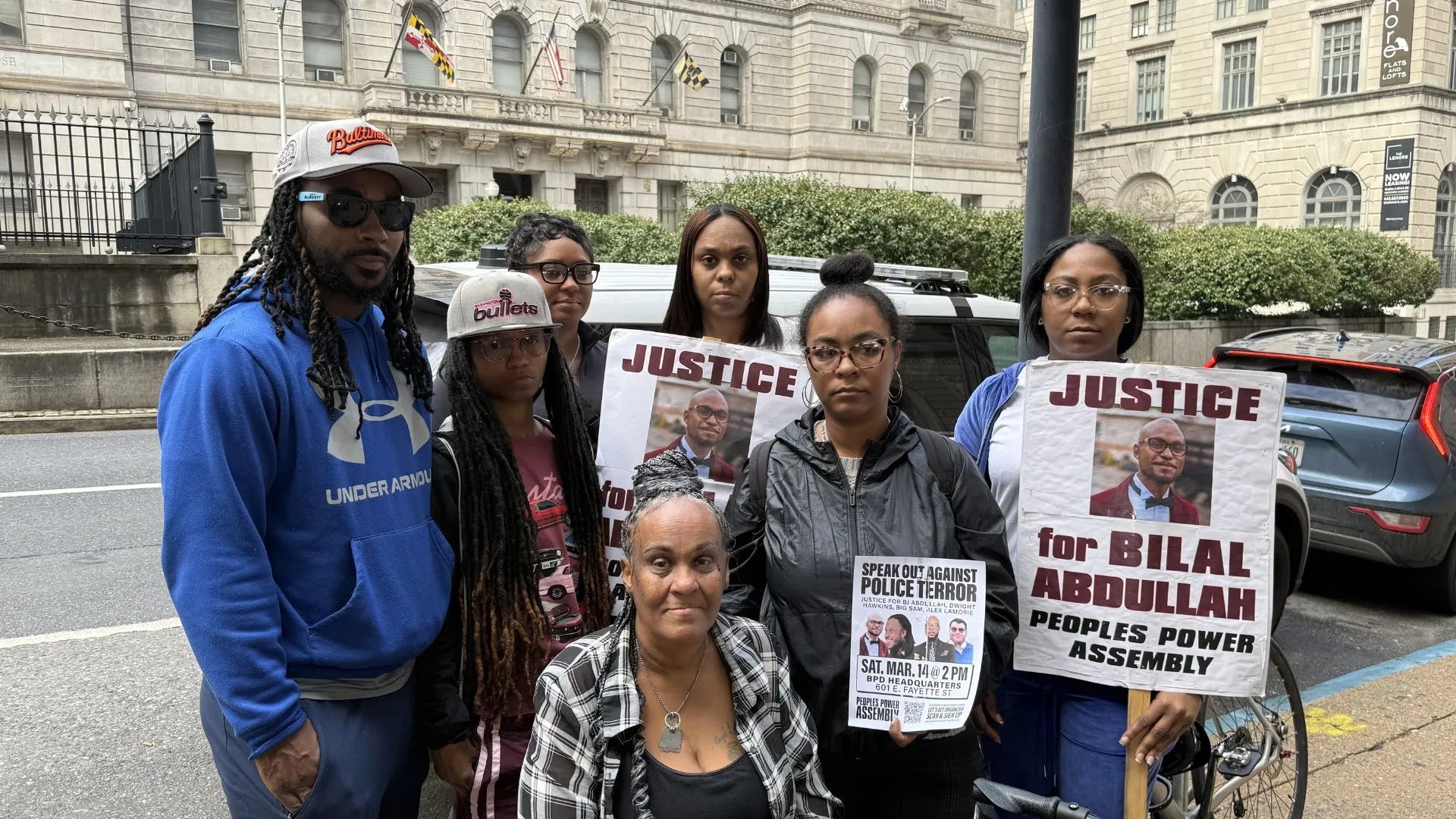
7. Black Press Pushes Police Accountability in Baltimore After Bilal Abdullah Family Lawsuit
Reported (ET): March 13, 2026
Summary
AFRO reported that the family of Bilal “BJ” Abdullah filed a civil lawsuit in Baltimore City Circuit Court on March 11 against three Baltimore officers involved in his 2025 fatal shooting. The suit alleges excessive, unnecessary, or unreasonable force and includes claims for wrongful death, battery, and constitutional violations. AFRO also reported that the family’s attorney framed the case as part of a broader demand for accountability for officers killing people in the Black community. The story matters because Maryland’s attorney general had already declined to bring criminal charges in the case in December, meaning the family is now trying to force accountability through civil court and discovery. One of the officers named in the suit later returned to duty and was involved in another fatal shooting, intensifying community anger.
Why It Matters
When prosecutors decline charges, the story is often treated as closed. For families, it is not closed at all. Civil litigation becomes one of the few remaining tools to force records, testimony, and scrutiny into the open.
Who Is Affected
Black neighborhoods that live under aggressive policing carry the message this case sends. So do families who are told the criminal system sees no case, then must build their own accountability process in public while grieving.
What Mainstream Missed
This story was driven by Black press and local accountability reporting, not by major national outlets. That is the gap. A police-violence case with an active civil challenge, a prior no-charge decision, and continued officer involvement in deadly force barely registers nationally unless there is video, riot, or federal spectacle attached.
Sources
AFRO — Bilal Abdullah’s family files civil lawsuit against Baltimore officers — Black press reporting on the lawsuit, the family’s demands, and the local accountability fight.
Maryland Office of the Attorney General — No charges will be filed in the June 17, 2025 fatal police-involved shooting in Baltimore — official declination statement in the case.
8. Somali TPS Win Offers Temporary Relief to a Black Immigrant Community on the Brink
Reported (ET): March 13, 2026
Summary
A federal judge temporarily blocked the Trump administration from ending Temporary Protected Status for nearly 1,100 Somali immigrants, postponing a March 17 deadline that would have stripped them of deportation protection and work authorization. Reuters reported that Judge Allison Burroughs cited the weighty consequences Somalis would face, including detention, deportation, violence if returned to Somalia, and family separation. Reuters also reported that plaintiffs argued the administration’s move was driven by bias against non-white immigrants rather than objective country conditions. AP connected the stay to the wider climate of fear in Minnesota, where large Somali communities have already been living through intensified federal immigration enforcement. The order is temporary, not final, but it interrupted a rapid push that could have shattered households in a matter of days.
Why It Matters
TPS decisions are often covered as technical immigration law. They are not technical to the people living under them. They determine whether parents can work, whether families can remain together, and whether Black immigrant communities can plan their lives without sudden legal freefall.
Who Is Affected
Somali families are directly affected, especially in places like Minnesota where community ties, jobs, schools, and religious life are deeply rooted. Employers, children, and mixed-status families all sit inside the consequences of a TPS cutoff.
What Mainstream Missed
Despite the immediacy of the deadline and the magnitude of the risk for a Black immigrant community, this story was not dominant national news. It was covered, but largely as a legal item, not as a major racialized immigration development unfolding in real time.
Sources
Reuters — U.S. judge temporarily blocks Trump from ending protections for 1,100 Somalis — on the court order and the risks of detention, deportation, and family separation.
AP — Somali TPS ruling leaves protections in place for now — on the stay’s connection to broader Somali community fear and enforcement pressure.
9. Immigrant Airport Workers Sue After Losing Clearances Despite Lawful Status
Reported (ET): March 13, 2026
Summary
Reuters reported that the Service Employees International Union and four workers sued after Customs and Border Protection revoked security clearances for at least 80 noncitizen airport workers nationwide. The lawsuit says lawful-status workers, including TPS holders, asylum seekers, and green-card applicants, lost customs seals that had long allowed them to clean airplane cabins, handle luggage, and work in secure airport areas. Reuters reported the change hit workers at airports including Boston Logan, San Francisco, JFK, Houston, and Orlando. Local Boston reporting showed the real-world result: workers with valid authorization abruptly lost jobs and income even though the policy shift came from a new interpretation, not a change in their work eligibility. This is immigration hardening through the back door of workplace access.
Why It Matters
The administration does not need a mass raid to destabilize immigrant labor. It can do it through credentials, clearances, and interpretation changes that turn lawful work into instant precarity. That matters for the workers themselves and for the sectors quietly dependent on them.
Who Is Affected
Immigrant airport workers are first in line, but the story reaches beyond them to families dependent on those wages and to airports that rely on workers doing physically demanding, often invisible labor. It is a low-wage labor story wrapped inside an immigration-security story.
What Mainstream Missed
This was reported first through a labor-and-immigration legal frame, not treated as a national labor rights story. That is the coverage gap. The people doing the work are largely invisible until policy turns them into collateral damage.
Sources
Reuters — Immigrant airport workers, union sue after Trump administration revokes clearances — on the lawsuit and the lawful-status workers affected.
Axios Boston — Logan workers lose jobs after CBP clearance shift — local reporting on the Boston impact and worker fallout.
10. Virginia Quietly Moves Reproductive Rights, Voting Rights, and Marriage Equality Toward the Ballot
Reported (ET): March 14, 2026
Summary
Virginia’s 2026 legislative session ended with budget drama, but one of the more consequential outcomes was further movement on constitutional rights questions that will outlast the day’s Capitol spectacle. News From The States, drawing on Virginia Mercury reporting, said lawmakers sent constitutional amendments on reproductive rights, automatic restoration of voting rights after felony sentences, and marriage equality toward voters. The same reporting also noted broader worker and immigration-related priorities moving through the session, showing how a state trifecta can shift the policy floor quickly. A state legislative source also confirms that the marriage amendment would repeal Virginia’s dormant same-sex marriage ban and affirm the right of two adults to marry regardless of sex, gender, or race. This is major civil-rights architecture being built at the state level while national outlets mostly watched the budget standoff.
Why It Matters
State constitutional fights matter because they are harder to roll back than ordinary statutes. They shape whether a right survives the next governor, the next attorney general, or the next federal court turn.
Who Is Affected
Women seeking durable reproductive protection, formerly incarcerated Virginians seeking automatic rights restoration, and LGBTQ Virginians watching whether marriage equality is protected in the state’s own founding law all have a direct stake here. This is not symbolic politics. It is a contest over who the state says fully belongs.
What Mainstream Missed
This story was reported through statehouse coverage while national headlines centered elsewhere. It satisfies the buried-story test on two fronts: it was advanced through local and state reporting, and the consequences for marginalized communities were largely absent from the national political agenda despite being substantial.
Sources
News From The States — The 10 most important things that happened in Virginia’s 2026 legislative session — on the civil-rights amendments and the session’s policy direction.
Virginia Legislative Information System — HJ3 — primary legislative summary on repealing the same-sex marriage prohibition and affirming the right to marry.
Virginia Legislative Information System — HJ1 — primary legislative summary on the reproductive-freedom amendment.
11. Virginia Joins Fight Over Rules That Let Employers Strip No-Cost Birth Control Coverage
Reported (ET): March 13, 2026
Summary
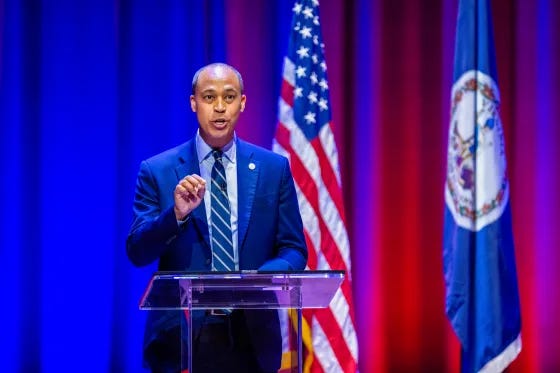
Virginia Attorney General Jay Jones joined attorneys general from 20 other states in challenging Trump-era regulations that broadened employer and university exemptions from no-cost birth control coverage under the Affordable Care Act. Virginia Mercury reporting, republished locally, said the coalition is urging the Third Circuit to affirm a lower-court ruling that found the regulations unlawful. The reporting also quoted Jones saying the exemptions shift the cost of contraception onto women, families, and states. At the same time, Virginia lawmakers are considering state-level contraception protections, which shows that Richmond is trying to build a local backstop against federal rollback. This is a women’s healthcare access story, and that means it is directly a Black women’s story too, because Black women are among the women who rely on affordable, uninterrupted access to contraception and primary reproductive care.
Why It Matters
Insurance carve-outs are often framed as conscience disputes. On the ground, they are cost-shifting mechanisms. They move healthcare expense from institutions and plans onto people who are supposed to somehow absorb it individually.
Who Is Affected
Workers, students, and families who depend on no-cost contraception are directly affected. Women with the least slack in their budgets are the ones most likely to feel the damage first when coverage becomes optional for employers instead of guaranteed by law.
What Mainstream Missed
This story was pushed forward by state AG offices and statehouse reporting, not treated as a major national development. That is the coverage gap. Despite obvious consequences for women’s healthcare access, the story remained mostly a legal brief item while louder national narratives swallowed the attention.
Sources
12 On Your Side / Virginia Mercury — Virginia joins states challenging Trump admin regulations that limit free birth control access — on Virginia’s role in the multistate challenge and the cost-shifting argument.
Virginia Mercury — Virginia joins states challenging Trump admin regulations that limit free birth control access— statehouse follow-up noting related state-level contraception measures.
California Attorney General — Bonta continues to defend contraceptive access from Trump administration attacks— coalition background on the challenge to the exemptions.
12. Maryland Disability Advocates Warn Budget Cuts Could Force People Out of Independent Living
Reported (ET): March 12-14, 2026
Summary
Maryland disability advocates rallied as the state Senate prepared its budget proposal, warning that proposed cuts to the Developmental Disabilities Administration could devastate services. WYPR reported that Governor Wes Moore’s proposal would cut DDA by $150 million, which advocates say would translate into roughly $300 million once federal Medicaid matching dollars are lost. WYPR also reported that about 4,000 Marylanders use self-directed care and about 15,000 use community services, while proposed cost-saving changes would hit people with the highest-intensity needs and could drive them toward institutional care. Follow-up state budget reporting indicated the Senate proposal reduced some of the blow but still left painful limits and uncertainty in place. A state budget problem is being balanced on disabled people’s bodies and independence.
Why It Matters
Disability cuts are often framed as technical containment. They are not technical. They decide whether someone can stay at home, keep a caregiver, hold together a work routine, or be pushed toward a facility because the state decided their life is where the savings should come from.
Who Is Affected
Disabled Marylanders, their families, caregivers, and the direct-care workforce all have skin in this fight. When rates drop and supports are capped, the chain reaction runs through labor shortages, family burnout, and reduced autonomy for people already forced to fight hardest for basic stability.
What Mainstream Missed
This story lived mostly in local public-radio and state-budget coverage, despite affecting tens of thousands of people and the workers who keep them supported. It was both locally driven and stripped of national attention, even though the consequences are immediate and systemic.
Sources
WYPR — DDA rallies against cuts in final hours before Maryland Senate releases state budget — on the proposed cuts, the federal match effect, and the threat to independent living.
Maryland Matters — Senate committee finalizes nearly $71 billion spending plan for fiscal 2027 — on the budget committee’s modifications to the disability cuts.
WBAL-TV — Maryland budget would cut developmental disabilities funding — on family testimony and the human toll of the proposed cuts.
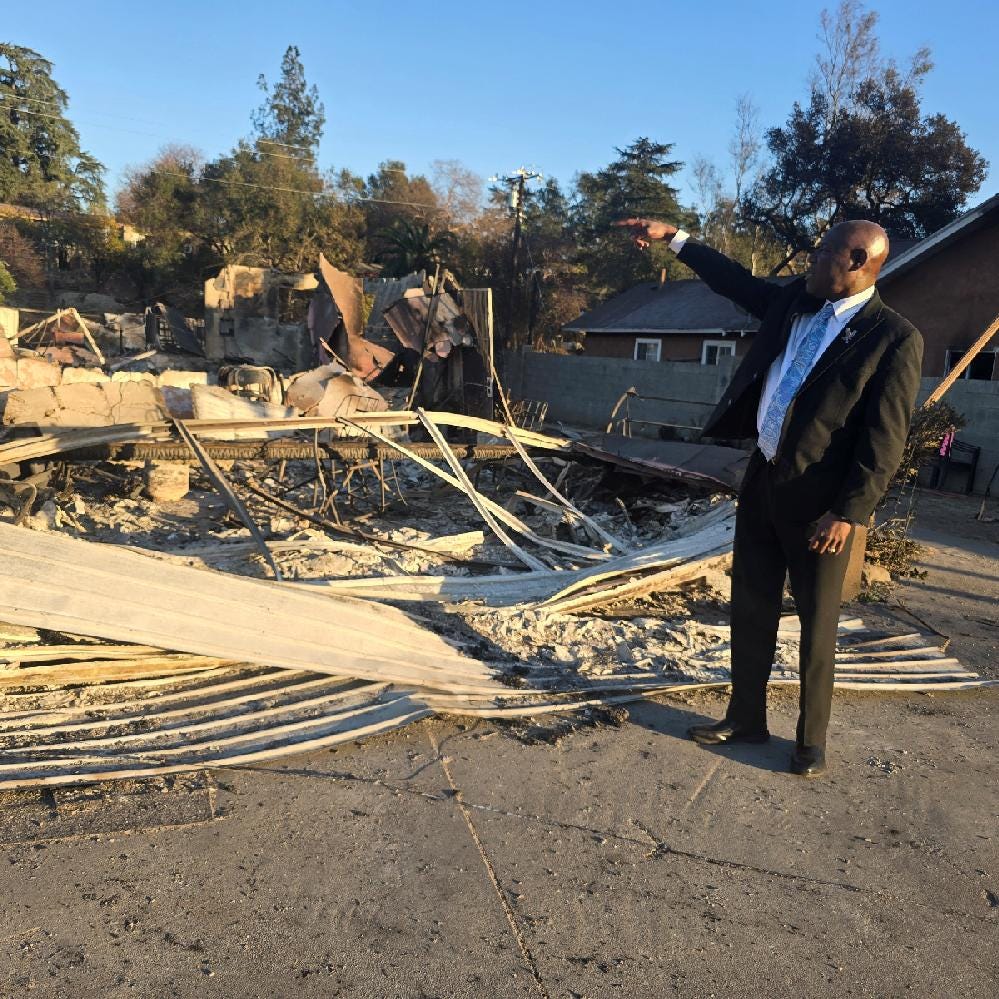
13. Altadena Fire Accountability Is Moving Into a Civil-Rights Frame
Reported (ET): March 14, 2026
Summary
The Los Angeles Times reported that civil-rights lawyer Ben Crump is gathering evidence for a possible discrimination lawsuit over Los Angeles County’s response to the Eaton fire in historically Black west Altadena. The Times reported that Crump and other community leaders argue the response in Black neighborhoods lagged behind the response in whiter areas, with west Altadena receiving evacuation alerts hours later and suffering most of the deaths. The same reporting noted that California Attorney General Rob Bonta has already opened a civil-rights investigation into possible disparities based on race, age, and disability. This matters because the story reframes a disaster response failure as a civil-rights question about whose neighborhoods received urgency and whose did not. Altadena residents are effectively asking whether disaster triage reproduced the value hierarchy California says it rejects.
Why It Matters
Disasters do not distribute harm evenly, and neither do emergency responses. If a historically Black community can show that warnings, resources, and urgency were unevenly distributed, that becomes a live test of whether civil-rights law can reach state and local disaster governance.
Who Is Affected
West Altadena residents, especially Black families whose homes and generational wealth were tied to that neighborhood, are at the center of this fight. Older residents and disabled residents matter here too, because the state investigation is explicitly examining disparate effects by race, age, and disability.
What Mainstream Missed
This story was built by local accountability reporting and a civil-rights investigation frame, not by national front-page treatment. National coverage of fires usually centers climate, destruction totals, and rebuilding. The coverage gap is that racialized emergency-response disparities rarely become the headline.
Sources
Los Angeles Times — Turning the Altadena fire into a civil rights crusade: Was discrimination against Black residents at play? — on the possible lawsuit, delayed alerts, and west Altadena’s claims.
California Attorney General — Attorney General Bonta announces investigation into Eaton fire emergency response — on the state probe into disparities based on race, age, and disability.
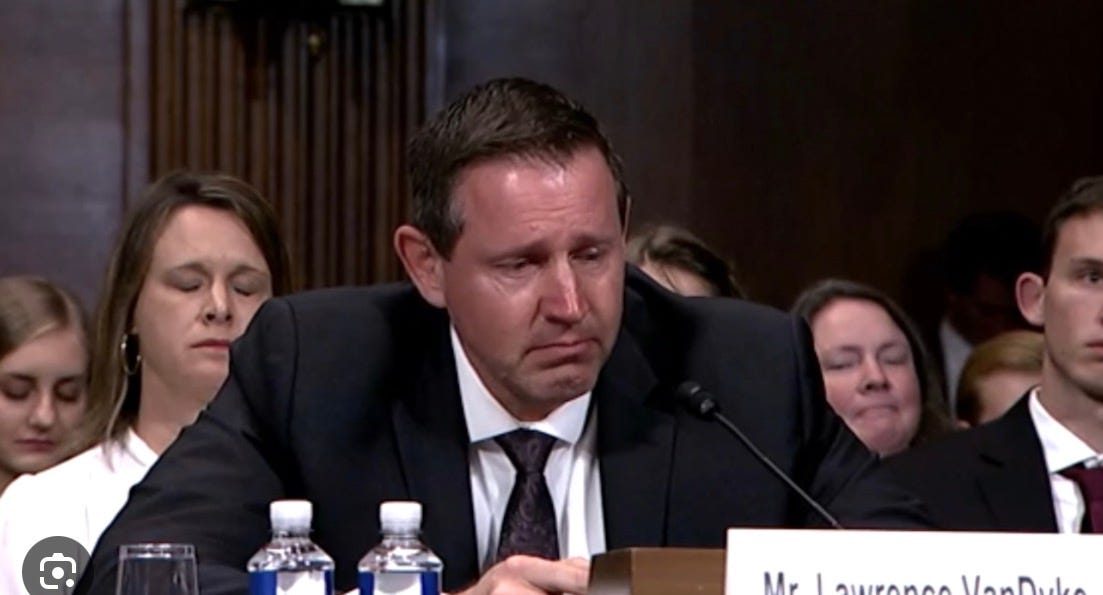
14. Nearly 30 Federal Judges Rebuke Colleague in Transgender Bias Case
Reported (ET): March 13, 2026
Summary
Reuters reported that nearly 30 Ninth Circuit judges issued rare written rebukes of Judge Lawrence VanDyke after his dissent in a case involving a women-only spa that refused service to a transgender woman. Reuters said judges from both parties criticized the dissent’s language as vulgar and said it could damage public trust in the judiciary. The underlying case involves Washington’s anti-discrimination law, which bars public-accommodations discrimination based on sexual orientation, including gender expression or identity, and the full court let stand a ruling against the spa’s challenge. The opinion does not just reflect a bad tone problem. It exposes how anti-trans legal conflicts are being narrated inside the federal judiciary itself. When judges frame ordinary anti-discrimination enforcement as culture-war emergency, the consequences do not stop with one spa.
Why It Matters
Trans rights are increasingly filtered through courtrooms where tone, framing, and ideology can shape public understanding before any higher court rules. Judicial contempt is not a side issue when courts are helping tell the country what kinds of people count as protected under ordinary law.
Who Is Affected
Trans people and queer communities are directly affected, especially in public-accommodations cases that determine whether anti-discrimination law means what it says. The impact extends to anyone watching whether judges will treat their dignity as routine law or as optional political controversy.
What Mainstream Missed
This was covered mostly as a legal oddity, if at all. That misses two things: it is a trans rights story, and it is a judicial-culture story. The coverage gap lies in treating the spectacle of the language as the story instead of the underlying stakes for anti-discrimination law and public trust.
Sources
Reuters — U.S. judges condemn Trump appointee’s “vulgar barroom talk” in transgender bias case — on the rebukes and the underlying dispute.
Ninth Circuit — Olympus Spa v. Armstrong — primary court document on the Washington anti-discrimination case.
15. VA Workers Win Back Union Contract Covering 320,000 Employees
Reported (ET): March 13, 2026
Summary
Reuters reported that a federal judge reinstated a collective bargaining agreement covering 320,000 Department of Veterans Affairs employees after the VA canceled it to implement President Trump’s labor order. Reuters said the judge found the agency had not shown national security was the real reason for the cancellation and agreed with the union that the move was retaliatory. The ruling matters because the VA operates a vast healthcare network, employs more than 400,000 people, and was one of the most significant test cases in the administration’s effort to strip collective bargaining from broad swaths of the federal workforce. Labor reporting and union statements described the decision as a major rebuke to the administration’s anti-union posture. This is a worker-rights story, but it is also a veterans’ care story because labor power inside the VA affects the people who deliver that care.
Why It Matters
When collective bargaining is stripped from a major public employer, the effects reach beyond union members. Staffing stability, working conditions, whistleblowing, and service delivery all sit inside that fight. At the VA, those outcomes touch healthcare for veterans directly.
Who Is Affected
VA workers are directly affected, but so are veterans who depend on the agency’s hospitals and facilities. A federal labor rollback at the VA is never only an HR story. It shapes the conditions under which care gets delivered.
What Mainstream Missed
This was a significant labor and public-sector governance ruling, yet it did not dominate national headlines. It satisfies the buried-story test because it emerged through labor and legal reporting, and its consequences for public workers and veterans were largely absent from the louder national story mix.
Sources
Reuters — U.S. judge revives union contract for 320,000 workers at veterans’ agency — on the ruling, the retaliation finding, and the scope of the contract.
AFGE — Court orders restoration of AFGE Veterans Affairs collective bargaining agreement — union statement on the decision and what it restores.
Federal News Network — VA ordered to restore AFGE contract under federal judge’s temporary order — on the implications for VA labor relations.
Closing Note on Coverage Gaps
The deeper pattern is not mysterious. National news still rewards spectacle first: war maps, shutdown drama, summit choreography, and institutional combat among elites. The stories lower in the hierarchy are the ones that reveal how power is actually felt, through missed cancer treatment, revoked work access, stripped healthcare coverage, delayed evacuation alerts, disability cuts, police impunity, and whether a state constitution will name your family as fully human. The people closest to those consequences are usually served first by Black press, local metro desks, nonprofit statehouse reporting, labor reporters, and legal specialists. That is not an accident. It is a map of whose pain counts as immediate and whose pain gets filed under later.
Support XVOA
If you read this work regularly, you already know what is at stake. Mainstream media is being consolidated into something uglier by the day: fewer owners, fewer independent voices, more deference to power, and more pressure to turn the news into one right-wing puppet voice for oligarchic interests. When that happens, the first stories pushed out of frame are almost always the ones about Black communities, workers, immigrants, queer people, disabled people, and anyone else who cannot buy their way into the headline.
So this is the part for the followers and for the fence-sitters. If you keep reading, nodding, learning, and telling yourself you will support later, later is how independent work gets choked out. It was the people who stepped off the fence and became paid supporters who made it possible for me to do this full time. They did not just buy access. They bought time, scrutiny, pressure, and a newsroom answerable to readers instead of billionaires.
If that matters to you, become a paid supporter here:
And if the subscription is the part you keep hesitating over, take the out and back the work anyway with a one-time tip here:
Either way, do not leave this work to survive on applause alone.
________________________________________
Okay, here is a Canadian view of the U.S.-Israeli military actions they have started in Iran. In a very real sense, that as yet unofficial “war” has simmered for a long time. One must remember the historic origins of Israel, which it is probably fair to say were essentially mandated by the Holocaust. I, for one, think the Jewish people needed a safe haven—though it has hardly proven all that safe.
The land was taken over from the people already there, which is more or less how countries originate. The United States and the rest of the Americas, including Canada, are obvious examples. In Eurasia the same history is often less obvious, simply because the armed push and shove of sovereignty may date back millennia.
But the present leaders of both the U.S. and Israel appear to have personal reasons—reasons not necessarily in their countries’ best interests—for being in charge of wars, if this can be called a war. Both nations also possess enormous assets to bring to the battlefield. Air and sea power may already be established in the Middle East theater by the aggressors, although I note that they are asking for help from allies whom the U.S. has recently hurt financially. I hope those allies refuse—not out of spite, but out of prudence.
American exceptionalism may once again need reminding of something it repeatedly forgets: the United States is not invincible, and it does lose wars, all those jingoistic movies notwithstanding. Americans have a history of sort of forgetting allied help, so, like, why should the rest of us suffer in their interest, whatever that may be?
Iran has a horrible regime—much like Russia’s—and, like Russia, it appears willing to sacrifice whatever number of citizens it deems necessary. When a poor country is at war, civilians suffer even more than soldiers; military service can at least stave off starvation, though at the risk of a worse death. And however dreadful the regime may be, people rarely welcome being bombed by foreigners. One might think even MAGA supporters would understand that sentiment, given their rhetoric about immigrants and sovereignty at home.
Americans themselves generally do not want to see their young military members killed or maimed for reasons that seem vague or disconnected from any genuine national threat.
Without massive funding increases, American military resources are largely limited to destroying the means by which Iran can project force beyond its borders. That alone will not produce regime change, nor will it prevent Iran from re-arming. Re-arming would be difficult without Russian help, and the U.S. could certainly damage Russia’s ability to provide it. But, for reasons I will not speculate about here, it appears unlikely that President Trump would allow Russia to be hurt too severely financially.
And while Mr. Trump has shown contempt for the law in other areas, I am not sure he could push sufficient money through the system quickly enough once current military assets begin to be depleted.
Meanwhile, Israel also risks exhausting both its defensive and offensive ordnance if U.S. support falters. Nor can Trump realistically put “boots on the ground” in the numbers required for regime change. Americans would go nuts, even armed MAGAs, should that happen. In other words, whatever Mr. Trump hopes to achieve, it is difficult to see how he achieves it. Iran would almost certainly enjoy overwhelming superiority in ground forces should either the U.S. or Israel commit to a land war. And a ground war would be the only plausible path to “victory,” if victory is defined as regime change or a lasting end to Iran’s sponsorship of terrorism—which it certainly does sponsor.
Israel, meanwhile, has opened a second front, further taxing its resources. None of this serves the real interests of the ordinary people in the countries involved. It rarely does. It is leaders, not populations, who most often drive nations into war.
And finally there is the larger strategic risk: a militarily depleted United States if the Chinese dragon begins roaring at Taiwan, or if a Russian–Chinese–North Korean axis decides that the moment is ripe for aggressive hegemony—precisely when the world’s most powerful military might no longer be quite so powerful.
Trump, Netanyahu and a small cabal of loyal sychophants are creating wars as a distraction to cover up their own crimes.
The thousands of lives lost are meaningless to these empty shells and their supporters.
My concern is that, unless both of these criminals are brought before a court of justice similar to that of Nuremburg, the United States and Israel will forever be subject to attack from Muslim sympathizers.
If men the world over would recognize that no one asks to be born into a life of wealth or poverty they might seek to adjust the present acceptance of inherited and accumulated wealth as well as the status of women throughout all the world's cultures.
Naive thoughts but ones which would allay the many concerns that presently plague our planet.