

Blackout Brief Daily | March 16, 2026
Five Things That Matter Today
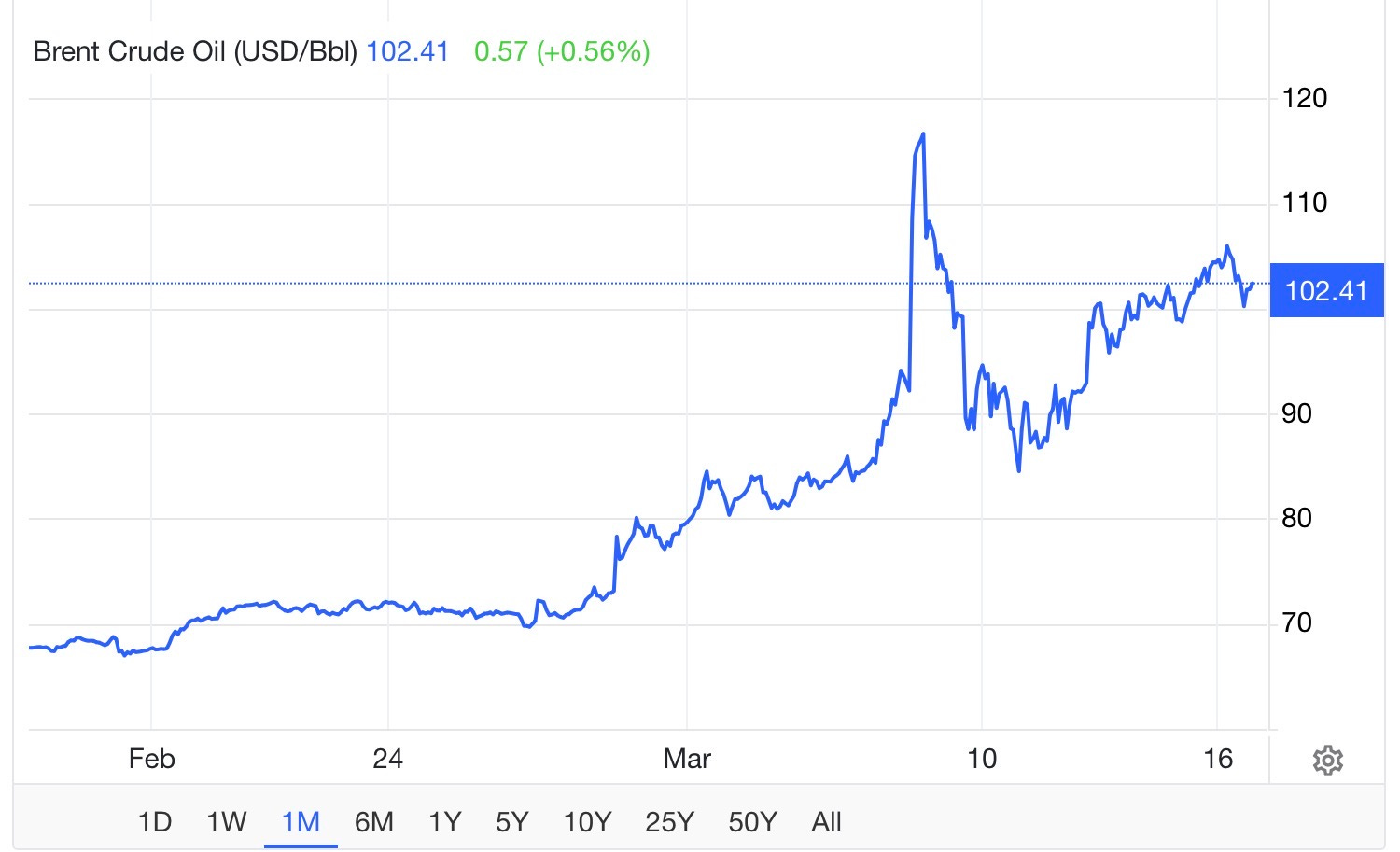
The Iran war is now an oil-shock story, not just a battlefield story. At least 15% of global oil supply is effectively trapped behind Hormuz, and Brent has pushed above $100.
The DHS shutdown has become a forced-labor and spring-break travel story, with unpaid TSA staffing now serious enough that airline CEOs publicly intervened.
Paris trade talks produced possible U.S.-China “deliverables,” but the Iran war is now threatening summit timing and complicating the whole economic picture.
Michael B. Jordan’s best-actor win and Sinners’ four Oscars made a rare Black-led awards breakthrough that deserves more than entertainment-page treatment.
The Greeley meatpacking strike is a national labor, safety, and food-price story, not just Colorado local news.
If this brief helped you see what the national headlines missed, please restack it. On Substack, a restack is not just a compliment. It is one of the clearest signals to the algorithm that a piece deserves to travel beyond the people who already know my name.
That matters more than most readers realize. Independent reporting like this does not move on billionaire distribution. It moves because readers decide it should.
And if you read this work regularly and want more of this kind of digging, the best way to support it is to become a paid subscriber.
But if you do not want another monthly commitment, I get it. That is exactly why Buy Me a Coffee is there. It is not a subscription, not a membership, and not an ongoing bill. It is simply a one-time contribution for readers who want to help fund the work without taking on one more recurring charge.
Reporting window: March 14, 2026, 11:04 AM ET to March 16, 2026, 11:04 AM ET.
Over the last 48 hours, national attention clustered around four big magnets: the Iran war and oil risk, the DHS shutdown’s effect on air travel, U.S.-China trade maneuvering in Paris, and the Oscars. None of that attention is neutral. War, markets, elite bargaining, and spectacle have a way of pushing slower, more punishing stories off the front page, even when those quieter stories do more lasting damage to people with the least cushion.
A few story lines remain here because the facts materially changed, not because the news cycle kept circling the same drain. Iran and oil, the DHS shutdown, and the Paris trade talks all moved in ways that raised the stakes inside this reporting window.
The stories below follow the damage outward. They ask not only what happened, but who pays, who gets protected, and which communities are expected to absorb the cost in silence. That is where the real hierarchy of the news reveals itself.
Top Breaking National Stories
1. Iran War Oil Shock Deepens as U.S. Buffers Thin
Reported (ET): March 16, 2026, 3:06 AM
Summary
This story stays in the brief because it materially changed from risk to live shock. Reuters now reports that the U.S. is rapidly running out of ways to cushion oil markets as the Iran war enters its third week. At least 15% of the world’s oil supply is effectively trapped behind the closure of the Strait of Hormuz, roughly 15 million barrels a day are shut out of global markets, and Brent crude has moved above $100 a barrel. A second Reuters markets dispatch says the war is already clouding the inflation outlook and keeping central banks cautious. What had been framed earlier as a strategic risk is now a direct cost story for fuel, freight, aviation, and household budgets.
Why It Matters
Oil shocks do not arrive at the pump alone. They move through diesel, jet fuel, groceries, delivery costs, utility bills, and inflation expectations. Black households, working-class households, and already squeezed renters are usually the ones asked to absorb the price wave first.
Who Is Affected
Commuters, hourly workers, airport-dependent service economies, truck-reliant supply chains, and families with no spare margin are all in the blast radius. So are countries and communities that depend on stable fuel costs to keep food and medicine moving.
What Mainstream Missed
A lot of coverage still treats this as naval drama and war theater. The missing frame is domestic distributional pain: this is now a battlefield story that is mutating into a cost-of-living story. This repeats from the March 14 brief only because the underlying facts materially worsened inside the current window.
Sources
Reuters — US is quickly exhausting tools to absorb Iran war oil shock — Reporting on the shrinking U.S. buffer, Hormuz closure, and crude shock.
Reuters — Stock markets wary, oil steady on Hormuz tensions; traders eye central banks — Market reporting on Brent above $100 and inflation implications.
2. DHS Shutdown Turns Airport Security Into a Forced-Labor Crisis
Reported (ET): March 15, 2026, 6:03 AM
Summary
Reuters reported Sunday that major U.S. airline CEOs urged Congress to end the 29-day partial shutdown that has forced 50,000 TSA officers to work without pay. The same reporting said staffing absences have already disrupted travel at major airports while spring-break traffic builds. The public intervention matters because it moved the story from worker distress into open industry alarm. AP likewise described the CEOs’ demand for Congress to restore DHS funding as checkpoint lines and operational strain worsened. This remains in the brief because the story advanced from unpaid hardship to a nationally visible systems warning.
Why It Matters
A shutdown is often reported as Beltway procedure. On the ground it works like coerced labor for TSA staff and like a time tax for travelers who cannot simply absorb delays, missed shifts, or rebooked childcare.
Who Is Affected
The first people hit are the unpaid officers and their households. After that come hourly workers, families on fixed itineraries, disabled travelers who need predictable screening conditions, and airport economies that depend on smooth throughput.
What Mainstream Missed
Too much mainstream framing still begins and ends with long lines. The sharper truth is that this is a labor coercion story first and a traveler inconvenience story second. This repeats from the March 15 archive only because the new reporting added public airline intervention and a clearer operational warning.
Sources
Reuters — US airline CEOs urge Congress to end standoff, pay airport security officers — Original reporting on the 29-day shutdown and unpaid TSA staffing.
AP — Airline CEOs warn Congress to restore DHS funding — Independent confirmation of industry pressure and travel disruption.
3. Paris Trade Talks Move From Preview to Possible Deliverables
Reported (ET): March 15, 2026, 6:32 PM
Summary
Reuters reported late Sunday that top U.S. and Chinese officials held “remarkably stable” talks in Paris that touched agriculture, critical minerals, and managed trade, with potential “deliverables” for Trump and Xi to consider at a Beijing summit. Another Reuters dispatch Monday said the summit itself is not dead but could be delayed because the White House is consumed by the Iran war. A third Reuters report said Beijing remains in communication with Washington and signaled that Marco Rubio sanctions may not block travel. In other words, what looked yesterday like preparatory diplomacy has now turned into actual bargaining with summit-level consequences. The economic stakes run from tariffs and farm exports to critical supply chains and consumer prices.
Why It Matters
Trade talks sound abstract until they land in grocery prices, electronics costs, industrial inputs, farm sales, and the cost of building things in the United States. The Iran war now hangs over the talks as an oil and shipping pressure point, making this not just a trade story but a cross-current economic stability story.
Who Is Affected
Farmers, manufacturing workers, import-dependent firms, consumers already paying more for basics, and communities whose jobs depend on stable industrial supply chains all have skin in this. Low-wealth households again have the least room to absorb any policy experiment that raises prices in the name of leverage.
What Mainstream Missed
Mainstream trade coverage still loves the leader-versus-leader chessboard. What it often misses is how fast those negotiations become a distributional story about who pays more, which industries tighten first, and how war-driven oil stress compounds tariff-driven pressure. This repeats from the March 15 archive only because the Paris story moved from setup to possible deliverables and summit instability.
Sources
Reuters — Exclusive: US, China discuss farm goods, managed trade in “remarkably stable” Paris talks, sources say— Original reporting on the scope of talks and possible deliverables.
Reuters — Trump-Xi meeting not in jeopardy but could be delayed, White House says — Reporting on summit timing and Iran-war spillover.
Reuters — China in contact with US on summit, Rubio sanctions may not apply, Beijing says — Reporting on continued diplomatic communication.
4. Michael B. Jordan and Sinners Deliver a Rare Black Awards Breakthrough
Reported (ET): March 15-16, 2026

Summary
AP reported that Michael B. Jordan won best actor for Sinners, his first Oscar, after a performance in the 1930s Mississippi-set supernatural film that helped drive the movie to four wins. AP also noted that Jordan is only the sixth Black man ever to win the best actor trophy. Reuters’ winners list shows Sinners also took original screenplay for Ryan Coogler, original score for Ludwig Göransson, and cinematography for Autumn Durald Arkapaw. That combination matters because a Black-led film breaking through across major categories is still rare enough to register as a cultural event, not just awards-night trivia. National outlets covered the wins, but too much of the treatment stayed in horse-race mode and underplayed the historical rarity.
Why It Matters
Awards institutions are memory machines. They influence what kinds of stories get financed, which performances get canonized, and what executives decide is “bankable” the next time a Black filmmaker wants to do something ambitious, expensive, or stylistically strange.
Who Is Affected
Black filmmakers, actors, crew members, and audiences are directly implicated. So are younger artists who are constantly told that the lane for Black work is either narrow, hyperrealist, or secondary to the “universal” stories funded for everyone else.
What Mainstream Missed
Awards coverage loves gowns, speeches, and winners lists. The missing frame is that Jordan’s win joins a very short list, and Sinners’ performance signals that Black-led prestige and genre filmmaking can still bend an institution that has long rationed this kind of recognition.
Sources
AP — Michael B. Jordan wins best actor at Oscars 2026 — Reporting on Jordan’s first Oscar and the rarity of the win.
Reuters — Oscars 2026 winners list: “Sinners” and “One Battle After Another” sweep — Full winners list showing Sinners’ four-win night.
5. Meatpacking Strike in Greeley Becomes a National Labor and Food-System Story
Reported (ET): March 16, 2026
Summary
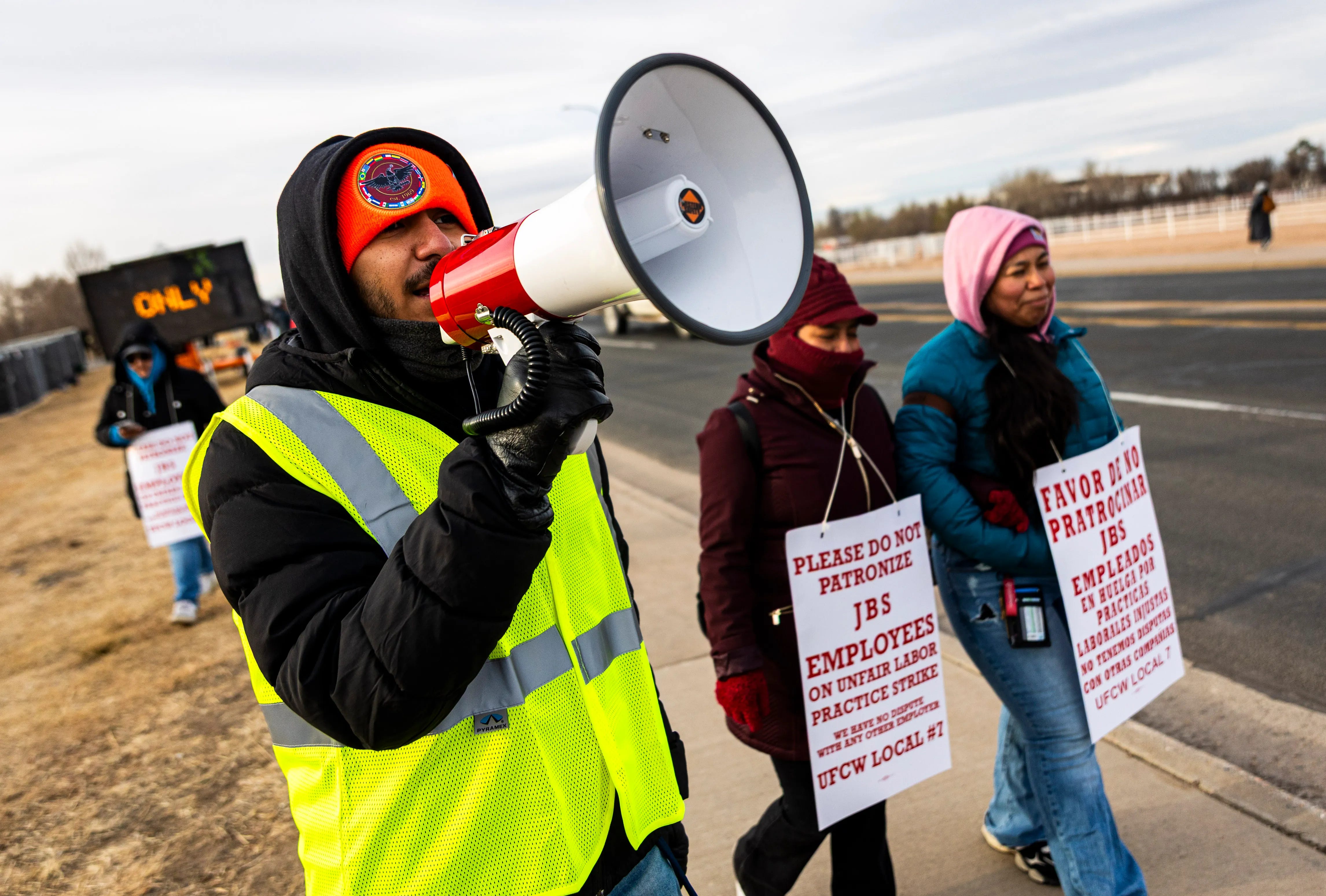
AP reported Monday that about 3,800 workers at one of the nation’s largest meatpacking plants went on strike in Greeley, Colorado, in what union representatives called the first walkout at a U.S. beef slaughterhouse in four decades. AP also reported union allegations that JBS charged many workers at least $1,100 for required protective equipment. CPR reported that the strike began at 5:30 a.m. and is expected to run as an unfair labor practice strike. This is not just one plant’s contract dispute. It is a national labor story inside an already strained beef market, which means worker safety, bargaining power, and food prices are all now tied together.
Why It Matters
When one of the country’s largest beef plants stops, the story moves beyond Colorado almost immediately. It touches inflation, grocery prices, supply chains, and the old American pattern of extracting hard labor from workers whose injuries, safety costs, and bargaining leverage are treated as disposable.
Who Is Affected
The workers are first in line, many of them immigrant and working-class people in one of the toughest jobs in the country. But ranchers, retailers, and consumers also feel the effects if processing bottlenecks and price pressure intensify.
What Mainstream Missed
National coverage often treats meatpacking labor as background infrastructure until shelves look shaky. The missing frame is that this is an essential-industry labor story about bodies, safety gear, inflation, and the cost of keeping food cheap for everyone else.
Sources
AP — 3,800 workers are on strike at one of the largest meatpacking plants in the US — Original reporting on the strike’s scale and historic significance.
CPR News — JBS workers strike in Greeley — Local reporting from Greeley on the strike’s start time and immediate on-the-ground impact.
UFCW Local 7 — JBS workers to strike over unfair labor practices — Strike announcement outlining the unfair labor practice claims and worker demands.
Stories Buried Beneath the National Headlines
6. Rising Utility Profits Are Hitting Black Southerners Hardest
Reported (ET): March 16, 2026
Summary
Capital B reported Monday that residential power prices have jumped more than 30% since 2019, and that a new Energy & Policy Institute analysis found investor-owned utilities kept about 13 cents of every dollar customers paid between 2021 and 2024. Early 2025 filings show those margins running even higher, near 15 cents on the dollar. Capital B also highlighted that utilities in the Southeast, where the largest concentration of Black Americans lives, average nearly 16 cents in profit per revenue dollar, with Georgia Power pulling in about 22 cents. The same reporting notes that Black households already spend far more of their income on energy because of older housing stock, inefficiency, and the legacy of redlining. This is a racialized extraction story hiding inside monthly bills.
Why It Matters
Energy burden works like a quiet tax on being poor, on being Southern, and on living in housing someone else neglected for decades. When utility profit margins rise at the same time that customers are being told to absorb higher costs, the pain is not shared evenly.
Who Is Affected
Black Southerners, low-income households, elders on fixed incomes, and renters in older buildings take the hit first. Families already choosing between rent, medicine, food, and lights on now have to subsidize shareholder comfort too.
What Mainstream Missed
This story was surfaced by Black press and an energy-policy watchdog report while the headline mix revolved around Iran, the shutdown, trade, and the Oscars. Even where national outlets discuss utility prices, they rarely foreground the racial geography of energy burden or the way Southern profit structures land hardest on Black households.
Sources
Capital B — The hidden profit in your power bill, and why Black Southerners get hit the hardest — Black press reporting on rising bills, profit margins, and racial energy burden.
Energy & Policy Institute — How ratepayers pay for soaring utility profits — Underlying report on utility profit shares and regional disparities.
Stateline — Utility profits rise as household bills soar, new analysis finds — State-policy reporting on the same profit trend.
7. Medicaid Data Can Still Feed Immigration Enforcement in Most States
Reported (ET): March 14, 2026, 1:00 PM
Summary
LAist, carrying NPR reporting, explained that families applying for Medicaid were long told their data would not be used for immigration enforcement, but a December court ruling changed that landscape. The story says 22 states have sued to block federal health agencies from sharing Medicaid data with DHS, but in the remaining 28 states there are no limits on what identifying information can be shared with ICE and related agencies. The same report notes that names, addresses, and other identifying information can now be shared for some undocumented enrollees. A KFF brief had already warned that the agreement marked a sharp departure from past policy and could chill care-seeking behavior. The result is that a health-benefits system is being repurposed, at least in part, into an enforcement channel.
Why It Matters
People avoid care when they think the state is collecting information for reasons other than care. That means untreated illness, delayed emergency treatment, less prenatal care, and more fear in clinics that already serve communities under pressure.
Who Is Affected
Mixed-status families, undocumented immigrants, low-income patients, and community clinics in immigrant neighborhoods are immediately affected. So are legal residents and citizens in households where one person’s fear keeps everyone from seeking help.
What Mainstream Missed
This moved through NPR, LAist, litigation trackers, and immigrant-health policy analysis while national headlines focused elsewhere. The buried truth is not simply that ICE got new data access. It is that a benefits database many families were told was safe can now function as part of the enforcement architecture.
Sources
LAist/NPR — Medicaid can share data with ICE. Here’s how that 180-degree change spreads fear — Current reporting on the court ruling and the spread of fear.
KFF — Potential implications of the new Medicaid data-sharing agreement between CMS and ICE — Policy analysis on the consequences for immigrant patients.
CourtListener — State of California v. U.S. Department of Health and Human Services — Public docket for the litigation challenging the data-sharing regime.
8. Los Angeles Safety-Net Clinics Are Bracing for a Medicaid Cliff
Reported (ET): March 16, 2026
Summary
KFF Health News reported Monday that Los Angeles safety-net clinics are pushing for a new local tax as federal and state cuts squeeze the system that serves poor and uninsured patients. The story says St. John’s Community Health alone sees 144,000 patients, about 80% of them on Medi-Cal. KFF also reported that the new federal law will slash the federal contribution to Medi-Cal by an estimated $30 billion a year, or 25%, while a Berkeley and UCLA-linked analysis projects nearly 3 million fewer Californians could be enrolled by 2028. The same reporting says California will also cut certain clinic payments for patients with “unsatisfactory” immigration status by about $1 billion a year. This is what a policy abstraction looks like when it arrives at the clinic door.
Why It Matters
When safety-net clinics wobble, emergency rooms fill, untreated chronic illness rises, and local governments start improvising tax workarounds to keep basic care alive. That is not a California-only story. It is a preview of what public-health destabilization looks like when fiscal ideology hits real bodies.
Who Is Affected
Low-income Angelenos, disabled residents, immigrants, unhoused patients, and pregnant people relying on community care are at the center of this. People with money can switch providers. People in tents, on Medicaid, or in mixed-status families usually cannot.
What Mainstream Missed
National coverage talks about Medicaid cuts in giant aggregate numbers. KFF’s local reporting showed the institutional consequence national headlines tend to flatten: clinics serving the poorest patients are now hunting for tax lifelines just to keep care from collapsing.
Sources
KFF Health News — Reckoning With State and Federal Cuts, Los Angeles Safety-Net Clinics Push for a New Tax— Current local-ground reporting on the clinic crisis.
UC Berkeley Labor Center — Projected reduction in Medi-Cal coverage due to federal H.R.1 and 2025-26 State Budget, by county, 2028 — Projection showing potential scale of coverage loss.
9. Immigration Fear Is Draining School Enrollment and School Budgets in Massachusetts
Reported (ET): March 15, 2026
Summary
CommonWealth Beacon reported Sunday that school districts in immigrant-heavy Massachusetts cities are seeing enrollment drops that officials connect to heightened immigration enforcement. Chelsea Public Schools alone lost 350 students this year, including 223 English language learners, and around a quarter of transfer-outs reportedly self-deported to another country. The district is staring at an $11 million budget shortfall, with the enrollment drop alone costing about $6.7 million in state aid. A follow-up CommonWealth Beacon podcast Monday said Chelsea’s numbers are part of a broader pattern that is also hitting Lynn and other districts. This is an immigration story that turns directly into a school-funding and community-stability story.
Why It Matters
When fear empties classrooms, it also destabilizes teacher staffing, special programs, language services, and local planning. The harm does not stop at the border beat. It moves into budgets, layoffs, and the quiet shrinking of public institutions that immigrant families depend on.
Who Is Affected
Immigrant families, Latino communities, English learners, school workers, and students who remain in districts forced to cut services all get hit. In places like Chelsea, the damage is communal, not individual.
What Mainstream Missed
This was driven by metro and education reporting, not by the national front page. National immigration coverage usually focuses on raids, court battles, or campaign rhetoric. What it often misses is the institutional aftershock: fear can drain enrollment, shrink budgets, and weaken public schools before any headline writer circles back.
Sources
CommonWealth Beacon — “Climate of fear”: Student enrollment declining amid Trump’s immigration crackdown— Current metro reporting on enrollment loss and school finance.
CommonWealth Beacon — Immigration enforcement and public school enrollment tumbles — Follow-up reporting on Chelsea and Lynn budget effects.
GBH News — Is ICE causing a drop in student enrollment? School leaders say yes — Local reporting on school leaders tying enrollment loss to ICE pressure.
10. Ohio’s Child-Welfare Speech Omitted the Racial Infant-Health Emergency
Reported (ET): March 16, 2026, 4:50 AM

Summary
Ohio Capital Journal reported Monday that advocates and lawmakers said Governor Mike DeWine’s address missed key child-welfare priorities, including child care and the depth of the maternal and infant health crisis. The story says the most recent state operating budget cut a requested maternal and infant health earmark from $7.5 million to $5 million. It also notes that 909 infants died in Ohio in 2023, that Black children die at a disproportionately higher rate than all other children in the state, and that the March of Dimes gave Ohio a D grade while ranking it 37th for preterm birth. That is not a side note. It is a policy-choice story about what gets named from the podium and what gets left to keep killing quietly.
Why It Matters
State speeches tell you what leaders want the public to feel urgent. When child care and Black infant health can be softened into a passing mention while funding is reduced, the message is that rhetorical celebration matters more than structural repair.
Who Is Affected
Black mothers, infants, caregivers, and low-income families are most directly affected. So are communities where early-life health outcomes are already warning signs of deeper inequality in housing, wages, prenatal care, and health access.
What Mainstream Missed
This story lived in statehouse reporting while the national headline mix looked elsewhere. The narrow speech frame hides the deeper reality: Ohio’s child-welfare omissions sit alongside racial infant-health disparities that remain severe, measurable, and budget-shaped.
Sources
Ohio Capital Journal — Ohio advocates, lawmakers say governor’s address missed key child welfare points — Current statehouse reporting on the omissions.
March of Dimes — Ohio 2025 report card — State preterm birth and maternal-infant health indicators.
11. Mississippi’s Pregnancy Gun-Death Crisis Shows How Reproductive Policy and Gun Policy Collide
Reported (ET): March 16, 2026
Summary
The 19th reported Monday that Mississippi leads the nation in gun deaths among pregnant and postpartum people, describing the state as a hotspot tied to lax gun laws and restrictive abortion access. Mississippi Today’s underlying reporting found that roughly 15 people per 100,000 births in Mississippi died from gun violence during pregnancy or within a year after pregnancy. The Mississippi Maternal Mortality Report says 17 maternal deaths reviewed in the latest cycle were caused by gun violence, calling the trend deeply concerning. Taken together, the reporting shows that maternal risk in Mississippi is not only about hospitals, hemorrhage, or hypertension. It is also about firearms, intimate partner violence, and a state policy environment that makes pregnancy more dangerous.
Why It Matters
Too often the country discusses abortion restrictions, maternal mortality, and gun violence as separate policy silos. This story shows they are not separate at all. They converge in the lives of pregnant and postpartum people, and that convergence becomes fatal.
Who Is Affected
Pregnant and postpartum people in Mississippi are directly affected, especially in a state with deep maternal-health inequality and a long record of racial disparity in health outcomes. Black women and Black birthing people already live closer to the edge of those systems, which means the collision of gun policy and reproductive policy lands hard there.
What Mainstream Missed
The current push came through The 19th and Mississippi reporting, not the dominant national front page. National coverage often splits reproductive justice from gun violence and treats maternal health as a hospital-management issue. This buried story shows the whole architecture at once.
Sources
The 19th — Mississippi leads in U.S. gun deaths among pregnant and postpartum people — Current original reporting on the state as a national hotspot.
Mississippi State Department of Health — Mississippi Maternal Mortality Report — Primary report documenting gun-violence-related maternal deaths.
Mississippi Today — Mississippi pregnancy-related gun death reporting — State reporting on the pregnancy-related gun-death rate.
12. Mississippi Is Spending More on Prisons While Medical Oversight Questions Persist
Reported (ET): March 15, 2026
Summary
Mississippi Today reported Sunday that lawmakers are considering spending more than $480 million on the Department of Corrections next year, about $12 million more than this year. The same article says the biggest chunk goes to the prison medical contract held by VitalCore, which rises from $124 million to $128 million this year and to $133 million next year by contract. Mississippi Today also noted that lawmakers tied the increase to the medical contract while continuing to push transparency and reform after repeated concerns about care. Magnolia Tribune separately reported that House lawmakers are now demanding more financial reporting from MDOC as part of the appropriation process. That makes this more than a budget story. It is an oversight story about whether rising prison spending is buying care, opacity, or both.
Why It Matters
Prison budgets are moral documents. They show what the state is willing to spend to confine people and what it is willing to tolerate in secrecy while doing so. If the medical bill grows but accountability remains foggy, incarcerated people pay in bodies before taxpayers ever see the ledger.
Who Is Affected
Incarcerated Mississippians and their families are the first people affected. But so are the overwhelmingly poor communities to which most incarcerated people eventually return, carrying untreated illness, trauma, or both.
What Mainstream Missed
This story moved through Mississippi statehouse and investigative reporting while the national spotlight looked elsewhere. Prison stories usually have to become spectacular scandals before they break through nationally. The quieter truth is that procurement, contracting, and medical neglect are often where the actual harm lives.
Sources
Mississippi Today — As prison costs increase, lawmaker wants new conditions on the spending — Current reporting on the prison budget and VitalCore contract growth.
Magnolia Tribune — House seeks transparency in MDOC spending — Statehouse reporting on the transparency push tied to the appropriation.
13. Tennessee’s School Immigration-Data Bill Keeps Advancing
Reported (ET): March 15, 2026
Summary
The 74 reported Saturday that a Tennessee bill requiring public schools to gather immigration-status information and report it to the state education department advanced out of a House committee. The article notes that an earlier version would have allowed schools to deny enrollment or charge tuition to students who could not prove legal status, though those provisions were stripped after concern about jeopardizing more than $1.1 billion in federal education funding. What remains is still not trivial. It builds a state data apparatus around children whose status is politically contested and whose families already have reason to fear government collection. In practice, “it’s just a data bill” is often how exclusion infrastructure begins.
Why It Matters
Data collection is power before it is policy. Once the state starts building lists tied to immigration status in schools, families have to decide whether enrollment, honesty, and safety can still coexist.
Who Is Affected
Immigrant students, mixed-status families, English learners, and school systems caught between compliance and trust are directly affected. Fear alone can depress enrollment, attendance, and parent engagement long before any harsher law arrives.
What Mainstream Missed
This latest step was surfaced by education and statehouse outlets, not by the dominant national headline mix. National coverage prefers the flashier federal immigration fight. What it often misses is that state-level data systems are how future exclusion gets normalized and bureaucratized.
Sources
The 74 — Bill Requiring Immigration Status Checks in Tennessee Public Schools Advances in Legislature — Current education reporting on the committee move.
Tennessee Lookout coverage reflected in The 74’s reporting — Statehouse-origin reporting on the bill’s movement.
14. Missouri’s Doula Expansion Story Is Really a Maternal-Mortality Story
Reported (ET): March 16, 2026, 9:00 AM
Summary
The Missouri Independent reported Monday that the state’s Medicaid doula program has been operating for 15 months and lawmakers from both parties want to expand it. The story says doulas are doing far more than delivery-room support, helping families find utilities assistance, car seats, transportation help, and postpartum stability. Missouri’s own Pregnancy-Associated Mortality Review materials say an average of 70 women die while pregnant or within one year of pregnancy each year, and 80% of pregnancy-related deaths were deemed preventable. State reporting also shows the pregnancy-related mortality ratio for Black women was 2.5 times that of white women. This means doula policy is not soft social support. It is part of the state’s maternal-survival infrastructure.
Why It Matters
Maternal mortality debates are often reduced to hospital quality or individual behavior. The doula story widens the frame to show that social support, postpartum navigation, and trust can be part of the difference between crisis and survival.
Who Is Affected
Women on Medicaid, Black mothers, rural families, and low-income parents trying to navigate pregnancy and the year after birth are most directly affected. Programs like this matter most where the medical system is already thin, expensive, or distrusted.
What Mainstream Missed
This story came through Missouri state reporting, not the national headline mix. National media pays attention when maternal death spikes or a celebrity dies. It rarely sustains attention on the policy plumbing that could reduce preventable deaths, especially for Black mothers.
Sources
Missouri Independent — Missouri doula program shows early success as lawmakers look to expansion — Current reporting on the program and proposed expansion.
Missouri Department of Health and Senior Services — 2025 Pregnancy-Associated Mortality Review materials — Primary data on preventability and racial disparity.
15. A U.S. Anti-LGBT Group Helped Shape Senegal’s New Crackdown
Reported (ET): March 16, 2026
Summary
Reuters reported Monday that Senegalese activists pushing a harsher anti-LGBT law discussed strategy and mobilization with MassResistance, a U.S.-based group known for anti-LGBT campaigns. Reuters says Senegal’s lawmakers approved a new law doubling the maximum prison term for same-sex sexual acts to 10 years and criminalizing what it calls the promotion of homosexuality. The same investigation says this is the first known case of a U.S. group helping shape a successful push for anti-LGBT legislation in Africa since Trump returned to power. Reuters also reports that health workers fear the law will drive LGBT people underground and damage HIV prevention, with prevalence among men who have sex with men extremely high in parts of Dakar. This is not simply a foreign-culture story. It is also an American-export story.
Why It Matters
When U.S. political actors help intensify anti-LGBT repression abroad, the line between domestic culture war and foreign consequences gets very thin. Public-health damage follows quickly when criminalization pushes people into hiding and makes outreach harder.
Who Is Affected
LGBTQ people in Senegal are the immediate targets, along with HIV workers and community organizers. But the story also matters to U.S. LGBTQ communities because it shows how American right-wing infrastructure is attempting to scale its politics across borders.
What Mainstream Missed
Despite direct U.S. ideological involvement, this did not sit near the top of the domestic headline mix dominated by war, shutdown, trade, and awards. Much mainstream coverage treats anti-LGBT laws abroad as local culture conflicts. Reuters’ investigation showed something more uncomfortable: American organizing helped harden the law.
Sources
Reuters — US “pro-family” group worked with Senegal activists pushing anti-LGBT law — Current investigation on U.S. involvement and public-health concerns.
Reuters — Senegal lawmakers approve new anti-LGBT bill — Reporting on the law’s passage.
Closing Note on Coverage Gaps
Today’s hierarchy tells the same old story in a new accent. The center of national attention went to war, markets, elite diplomacy, and awards-night spectacle. The edge reporting, where the harder truths lived, showed extraction through utility bills, enforcement through health data, school destabilization through immigration fear, maternal danger through policy neglect, and prison opacity through budget language. That is what a real coverage gap looks like: not just stories that were missed, but harms that were structurally downgraded because they happened to ordinary people rather than powerful institutions.
Support XVOA
If you read this work regularly, you already know what is at stake. As mainstream media collapses into fewer owners, fewer independent voices, and more deference to power, the first stories pushed out of frame are almost always the ones about Black communities, workers, immigrants, queer people, disabled people, and anyone else who cannot buy their way into the headline.
So this is the ask for the followers and the fence-sitters. If you keep reading, learning, and telling yourself you will support later, later is how independent work gets choked out. The readers who became paid supporters did not just buy access. They bought time, scrutiny, and a newsroom answerable to readers instead of billionaires.
If that matters to you, become a paid supporter here:
If you do not want another monthly charge, Buy Me a Coffee is a one-time contribution, no subscription, no ongoing bill, just a simple way to help keep this work alive.
Either way, do not leave this work to survive on applause alone.
An ailing, demented old man admits: "You could make the case that maybe we shouldn’t even be there at all, because we don’t need it. We have a lot of oil.”
When is reporting the news, war is intensifying & ground troops are headed to Mideast, a license revoking, unpatriotic crime? Rabid MAGA wolves are rampaging. The constitution & the rule of law are cast aside.
Resist MAGA gangster grifter authoritarianism! Vote Sane. #VoteBlue!
https://weissmann.substack.com/p/the-wolf-is-at-the-door?utm_campaign=post-expanded-share&utm_medium=web
Trump, Hegseth, Miller FAFO malevolence & incompetence is having catastrophic consequences for the economy & national security. German Defense Minister: “What does Trump expect a handful of European frigates to do that the powerful U.S. Navy cannot? This is not our war and we didn’t start it.”
Once again, lucid, highly relevant reporting, in a lucid, focused format.
Once again I am reminded that the personal use of the ever more threatened right to vote is less a opportunity to register a personal opinion (for which there are other avenues) as it is a share of responsibility for the fate of our society as a whole; i.e., self-government. To be stressed is when important political decisions are met with negligence, passivity, or self-centered narcissism or malice, those who already suffer with the least protection and fewest options will generally suffer first and most. Genuine liberty and justice exist as an environment of mutually-defended individual rights, and that the alternative is, to one degree or another, form of tyranny.
Yes, the vote is a share of personal choice, but also as an inextricable requirement of a constitutional republic, a share of social responsibility. I don't think we talk enough about that.