

Blackout Brief Daily | March 17, 2026
BREAKING
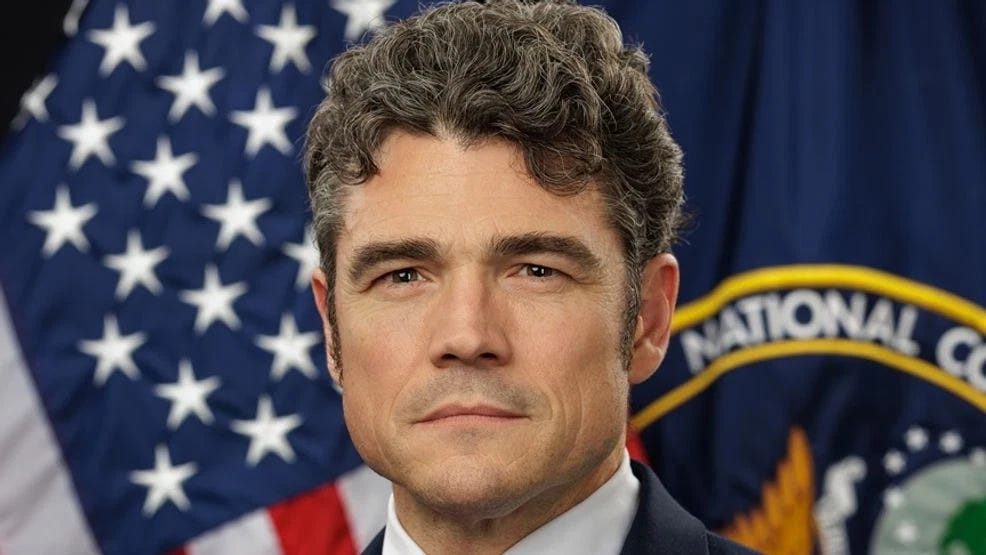
Joseph Kent, the director of the National Counterterrorism Center, resigned Tuesday in protest over the Iran war, saying he could not support a conflict he believed was not justified and insisting Iran posed no imminent threat to the United States. This is not a small personnel shuffle. It is a warning flare from inside the intelligence state itself. A forthcoming in-depth XVOA essay is coming on what Kent’s resignation reveals about the public case for war, the pressure behind it, and the cracks widening underneath the official story.
Full sourced note appears below in the body of this brief.
Five Things That Matter Today
U.S. allies are refusing Trump’s request to help police the Strait of Hormuz just as Gulf oil exports fall by more than 60%, turning a war story into a coalition-fracture story. [1][2][3]
The Supreme Court will hear Trump’s bid to strip TPS protections from more than 350,000 Haitians and about 6,100 Syrians, keeping the blocks in place for now but putting Black immigrant families directly in the line of fire. [4][5]
The shutdown is now biting hard at airports, with over 10% of TSA officers absent Sunday, about 20% no-show rates at major hubs for weeks, and 366 officers already gone. [7]
A federal judge has blocked RFK Jr.’s attempt to rewire childhood vaccine policy and the advisory committee behind it, at least for now. [10][11]
The United States is getting hit by a stacked weather event, with blizzards, tornado threats, wildfire danger, flooding and record Southwest heat, plus more than 12,500 flights delayed or canceled. [13][14]
If this briefing helps you see what the national headlines miss, restack it so someone else can see it too. And if you want to help fund more of this reporting, become a paid subscriber at
If a paid subscription is not in the cards right now, a one-time Buy Me a Coffee tip is a beautiful way to help keep the digging going.
The hierarchy audit was blunt. National outlets spent the last 48 hours clustering around five magnets: the Iran war and Hormuz, the shutdown and aviation strain, the Supreme Court and immigration status, Kennedy’s vaccine upheaval, and the nationwide weather pileup.
But once you move out to Black press, local metro reporting, nonprofit investigations, housing reporters, public-health reporters, and LGBTQ outlets, a different map appears. The buried story is not only what Washington is doing at the top. It is how that pressure is landing below: Latino workers getting swept up in traffic-stop pipelines, safety-net clinics bracing for cuts, LGBTQ housing protections put on the chopping block, Black infant mortality remaining grotesquely unequal, rural mothers driving an hour to give birth, and state lawmakers trying to turn every arrest into an immigration screen.
I also avoided recycling earlier Blackout Brief items unless the facts materially changed. That is why Hormuz and the TSA shutdown remain in today’s edition. Both moved from ongoing crisis to sharper, newly reported escalation inside this window.
Top Breaking National Stories
1. U.S. allies rebuff Trump’s Hormuz request as the oil shock deepens
Reported (ET): March 16, 2026
Summary
Several U.S. allies said Monday that they have no immediate plans to send ships to help reopen the Strait of Hormuz after Trump asked other countries to join a policing mission there. Germany, Spain, and Italy ruled out participation for now, while Britain and Denmark signaled caution and emphasized de-escalation. Reuters reported that Gulf oil exports in the week to March 15 fell roughly 61%, to 9.71 million barrels per day from 25.13 million in February, as the effective Hormuz closure disrupted shipments and forced output cuts. Another Reuters analysis said Washington is quickly running out of tools to cushion the market shock, even after insurance guarantees, waivers, and emergency reserve releases. This story is back in the brief only because it materially changed inside the window: the coalition fracture is now public, and the supply disruption is now quantified.
Why It Matters
This is no longer just a Middle East battlefield story. It is a story about whether the United States can drag allies into the costs of a war it widened, and whether working people everywhere will be forced to subsidize that failure through fuel, food, freight, and travel prices.
Who Is Affected
Black households, low-income commuters, airport workers, truck-dependent regional economies, and families already stretched by food and utility costs will feel the squeeze first if higher energy costs keep cascading through the economy. Countries in Asia and the Global South that depend heavily on Gulf crude are also exposed to rationing and broader economic damage.
What Mainstream Missed
Most war coverage still frames Hormuz as a naval standoff. What too much of it misses is that Washington is also learning the political limit of its own alliance system in real time. That is the major update from prior Blackout Brief coverage, and it changes the meaning of the whole story.
Sources
Reuters — US allies rebuff Trump’s request for support in Strait of Hormuz Original reporting on European and allied refusal to join a U.S.-backed mission.
Reuters — Middle East oil exports drop at least 60% as Hormuz stays mostly closed, data shows Shipping-data based reporting on the scale of the export collapse.
Reuters — US is quickly exhausting tools to absorb Iran war oil shock Analysis of reserve releases, waivers, and the shrinking U.S. buffer.
2. Supreme Court will hear Trump’s bid to end TPS for Haitians and Syrians
Reported (ET): March 16, 2026
Summary
The Supreme Court said Monday it will hear arguments over the Trump administration’s effort to revoke Temporary Protected Status for more than 350,000 Haitians and about 6,100 Syrians. For now, the justices left in place lower-court orders that have blocked the terminations from taking effect while the cases proceed. Reuters reported that the administration argued it should be able to end the protections immediately, while lower courts found serious procedural problems and, in the Haiti case, constitutional concerns. The State Department still warns against travel to Haiti because of kidnapping, crime, terrorism, civil unrest, and limited healthcare, directly undermining the claim that return is safe. Haitians first received TPS after the 2010 earthquake, and the case now sits at the center of Trump’s larger deportation agenda.
Why It Matters
This is one of the clearest tests yet of whether the administration can use the courts to normalize mass precarity for entire communities that have built lives, families, and work histories in the United States. For Black immigrants in particular, it carries the old logic that legal status is always provisional when power decides you are disposable.
Who Is Affected
Haitian families, Syrian families, employers, schools, churches, and mixed-status households all have immediate stakes. The Haitians targeted here are overwhelmingly Black, and any forced return would send people into a country the U.S. government itself says is dangerous.
What Mainstream Missed
Too much coverage treats this as a docket story. It is a racialized immigration story, a labor story, and a neighborhood stability story at the same time. The courts are deciding whether hundreds of thousands of people can keep working, paying rent, and staying with their children.
Sources
Reuters — Supreme Court to weigh Trump bid to end legal protections for Haitian, Syrian migrants Original reporting on the Court’s move and the number of migrants affected.
Courthouse News Service — Supreme Court keeps legal protections for Syrian and Haitian migrants, for nowCourt-focused reporting on the temporary blocks remaining in place.
Reuters — Appeals court lifts block on Trump fast third-country deportations policy Additional immigration-court context on the administration’s broader deportation push.
3. Shutdown strain at TSA is now a measurable staffing crisis
Reported (ET): March 16, 2026
Summary
The administration said just over 10% of TSA officers did not report for work on Sunday as the partial shutdown stretched to 30 days. That is far above the usual absentee level, which DHS said is normally below 2%. Reuters reported that at Atlanta, JFK, and Houston, the non-reporting rate has hovered around 20% since funding lapsed on February 14, and that 366 TSA officers have already left during the shutdown. On Sunday and Monday, absences topped 50% in Houston and 30% in New Orleans and Atlanta, while airline CEOs urged Congress to end the standoff as spring-break travel surged. This story remains in today’s brief because the update is real: we now have measurable attrition, not just generalized dysfunction.
Why It Matters
A shutdown becomes something else when government starts relying on unpaid labor to prop up safety-critical infrastructure. At that point, the story is no longer partisan spectacle. It is forced institutional degradation.
Who Is Affected
TSA officers, many of them workers without elite financial cushions, are absorbing the cost first. Travelers, airport contractors, rideshare workers, hotel staff, and families moving through major Black and immigrant metro hubs are next in line.
What Mainstream Missed
National coverage often turns these moments into airport-line theater. What it misses is the labor coercion underneath. The new staffing data makes clear that the system is not functioning normally. It is being held together by unpaid people until they stop showing up.
Sources
Reuters — US says 10% of airport security officers did not work Sunday amid shutdown Original reporting on absenteeism, departures, and airline pressure.
Reuters — More than 12,500 US flights delayed or canceled due to major storms National aviation disruption context as the system absorbs both weather and shutdown strain.
AP News — Spring, climate change, jet stream serves up buffet of wild weather hitting US Broader infrastructure stress context around this travel period.
4. Federal judge blocks RFK Jr.’s effort to remake childhood vaccine policy
Reported (ET): March 16, 2026
Summary
A federal judge in Boston on Monday blocked key parts of Health Secretary Robert F. Kennedy Jr.’s attempt to reshape U.S. childhood vaccine policy. Reuters reported that Judge Brian Murphy halted Kennedy’s 13 appointees to the federal advisory panel on immunizations, postponed the panel’s scheduled meeting, and invalidated votes that had been used to cut the routine childhood schedule to 11 shots and downgrade recommendations for six diseases. The plaintiffs, led by the American Academy of Pediatrics and other medical groups, argued that CDC acted unlawfully and that the advisory committee had been remade into a vehicle for Kennedy’s anti-vaccine agenda. Murphy agreed that the CDC could not unilaterally make these changes without a lawfully constituted committee. The administration is expected to appeal.
Why It Matters
Vaccine schedules are not niche paperwork. They shape what pediatricians stock, what insurers cover, what schools require, and how outbreaks spread or are contained. When that system is destabilized, the fallout does not hit evenly.
Who Is Affected
Children, immunocompromised people, parents, schools, and under-resourced clinics have the most at stake. Communities that already face barriers to consistent care are especially vulnerable when public-health guidance becomes a political toy.
What Mainstream Missed
This is not merely another culture-war skirmish. It is a fight over administrative procedure, scientific legitimacy, and the public’s ability to trust the federal health architecture at all. The committee’s balance and qualifications matter because its recommendations ripple through the entire care system.
Sources
Reuters — US judge upends Kennedy’s overhaul of childhood vaccine policies Original reporting on the injunction and what parts of Kennedy’s plan were blocked.
Reuters — Pediatricians win Round 1 in vaccine fight, but damage has been done Follow-up legal and public-health context.
ACIP ruling PDF referenced in Reuters Court document linked from Reuters on the judge’s reasoning.
5. The country is under a simultaneous weather stress test
Reported (ET): March 16, 2026
Summary
The United States is being hit by an unusually broad stack of extreme weather at the same time. AP reported blizzard conditions in the Great Lakes, tornado threats and damaging winds in the East, Arctic cold behind the storms, immense rain in Hawaii, wildfire danger in Nebraska and the broader West, drought across more than half the country, and a record-shattering March heat event building in the Southwest. Meteorologists told AP that some of this is characteristic spring chaos, but that the scale of the coming Southwest heat is the kind of event that would not have been possible without human-caused climate change. Reuters separately reported that more than 12,500 U.S. flights were delayed or canceled Monday, with ground stops and slowdowns across major airports. The story is not one storm. It is systemwide stress hitting transport, power, housing, and emergency response all at once.
Why It Matters
This is how climate strain actually arrives for most people, not as a single apocalypse, but as overlapping regional shocks that strain the same national systems at once. That kind of overlap punishes households and workers with the least slack in money, time, housing, and transportation.
Who Is Affected
Outdoor workers, unhoused people, elders, renters without reliable cooling, people dependent on air travel, and families already living close to the edge face the highest practical risk. In many places, those groups are disproportionately Black, brown, disabled, or poor.
What Mainstream Missed
Coverage often slices weather into isolated local stories. The deeper pattern is national. The same country that cannot keep airports, power grids, and emergency systems resilient under ordinary strain is being asked to absorb multiple shocks in one week.
Sources
AP News — Spring, climate change, jet stream serves up buffet of wild weather hitting US National overview of the weather pattern and climate framing.
Reuters — More than 12,500 US flights delayed or canceled due to major storms Aviation disruption and airport-specific impacts.
AP News — Winds, blizzards and triple-digit heat put over half of the US in the path of extreme weather Additional AP reporting on the geographic spread of the event.
Stories Buried Beneath the National Headlines
6. Iran is asking FIFA to move its World Cup matches to Mexico
Reported (ET): March 17, 2026
Summary
Iran’s football federation is negotiating with FIFA to move its 2026 World Cup matches from the United States to Mexico, according to Reuters and AP reporting published Tuesday. Iran is currently scheduled to play two group-stage matches in Los Angeles and one in Seattle. Iranian officials said Trump’s own statements about not being able to guarantee the team’s security made U.S. venues untenable. Reuters reported that moving the matches would pose major logistical challenges and that, if FIFA refuses, Iran may decide not to travel to the United States at all. AP noted that such a late venue shift would be unprecedented less than three months before the tournament.
Why It Matters
This is the Iran war crossing over into civilian culture, sports diplomacy, policing, travel, and cross-border logistics. It also exposes a humiliating contradiction for the United States as a co-host nation: you cannot sell yourself as safe global ground while simultaneously waging war against one of the countries expected to play on your soil.
Who Is Affected
Iranian players and staff are the most immediate stake-holders, but so are Iranian and Muslim fans, immigrant families, Mexican host cities, stadium workers, and local communities expecting World Cup traffic and revenue. Any venue shift would reroute tourism, policing burdens, and economic benefits across borders.
What Mainstream Missed
This story was visible mainly through sports wires even as national headlines remained fixed on missiles, oil, and diplomacy. That is precisely why it belongs here. It reveals a systemic consequence of war, in a domain national political coverage often dismisses as secondary, even though it touches immigration, safety, and international legitimacy.
Sources
Reuters — Iran negotiating with FIFA to move World Cup games to Mexico from US Original reporting on the negotiations and the current match schedule.
AP News — Iran’s Mexico Embassy says Iran is negotiating with FIFA to move World Cup matches Additional reporting on the embassy statement and the unprecedented timing.
The Guardian — FIFA will not agree to request to move Iran games to Mexico from US Secondary reporting on FIFA’s likely response and tournament implications.
7. Park Police traffic stops are feeding ICE arrests around Washington
Reported (ET): March 16, 2026
Summary
A Washington Post report and a Capital News Service investigation published within the window showed that at least 10 ICE arrests in the D.C. region involved the U.S. Park Police between September and February. According to court filings in a class-action lawsuit, many of the arrests began as traffic stops on federal parkways for commercial-vehicle issues, then escalated after ICE agents arrived. The cases often involved Latino workers in vans or trucks, including people with no criminal record. Advocates say the stops amounted to racial profiling and warrantless immigration enforcement by proxy. Park Police said they conducted traffic enforcement legally and did not themselves make immigration arrests, but the pattern described in court records shows how routine policing can become a handoff pipeline.
Why It Matters
This is how deportation policy becomes ordinary fear. Not through a press conference or a raid that makes cable news, but through the conversion of daily commuting and work travel into a pretext for federal capture.
Who Is Affected
Latino workers, immigrant families, day laborers, small business crews, and mixed-status households in the D.C.-Maryland corridor are directly in the blast radius. So are any communities told that “routine” traffic enforcement is neutral when it is being used as a sorting mechanism for immigration status.
What Mainstream Missed
This story satisfies the buried-story test on two fronts. It emerged first through local and specialized reporting, and in the hierarchy audit it sat far below the war, shutdown, vaccine, and Supreme Court stories dominating national attention. The consequence is systemic, not isolated: a policing agency with a public-safety frame becomes a feeder line for immigration arrests.
Sources
Washington Post — At least 10 ICE arrests of immigrants involved U.S. Park Police, records show Original reporting drawn from court documents and lawsuit records.
The Daily Record — How Park Police help ICE carry out deportation efforts in MD, DC area Local investigative reporting on the mechanics of the stops.
The Daily Beast — Park Police’s Secret Role in ICE Arrests Exposed National pickup that highlights the local investigation’s significance.
8. DOJ is using military-trespass charges to intensify border prosecutions
Reported (ET): March 16, 2026
Summary
A ProPublica and Texas Tribune investigation published Monday found that since last April, at least 4,700 immigrantsalready charged with illegal entry have also been hit with misdemeanor trespass charges for allegedly crossing military land. The reporting found that more than 90% of those cases have been resolved and that about 60% of the trespass counts were dropped or dismissed. At least nine judges in Texas and New Mexico have found the cases legally deficient, often because the defendants did not know they were on military property. One man sat in jail for 40 days over a trespass allegation that prosecutors could not sustain. Yet the Justice Department has kept pressing the cases, aided by Pam Bondi’s “zealous advocacy” directive to DOJ lawyers.
Why It Matters
This is an administrative escalation of border punishment through a military frame, even where judges keep signaling that the legal basis is weak. It clogs courts, prolongs detention, and turns mere crossing cases into quasi-national-security theater.
Who Is Affected
Migrants, public defenders, federal courts, and border communities are directly affected. Families already facing deportation now face longer detention and extra criminal stigma, even when the added charges collapse.
What Mainstream Missed
This was first surfaced by nonprofit investigative and border-focused reporting, not the national front page. It was also framed far below louder narrative fights about “the border” in general, even though it shows the specific legal machinery through which the administration is hardening punishment. That gap matters because systems are built through paperwork long before they become headline doctrine.
Sources
ProPublica — The Trump Administration’s “Disturbing” New Legal Strategy to Prosecute Border Crossers Is Taxing Courts and Testing the Law Investigative reporting based on court records and docket analysis.
Office of the Attorney General — General Policy Regarding Zealous Advocacy on Behalf of the United States DOJ policy memo underlying the prosecution pressure described in the investigation.
CNN — Prosecutor complains “The system sucks” in detention case Supporting context on federal detention strain referenced in the investigation.
9. Los Angeles safety-net clinics are looking to tax their way out of collapse
Reported (ET): March 16, 2026
Summary
KFF Health News reported Monday that Los Angeles safety-net clinics are pushing a five-year half-cent sales tax to offset federal Medicaid cuts and state retrenchment. St. John’s Community Health, which serves about 144,000 patients, said 80% of them are on Medi-Cal and that federal and state cuts could cost the system up to one-third of its annual revenue. KFF reported that the county measure could generate about $1 billion a year, most of it intended to stabilize clinics, hospitals, and schools serving low-income patients. The same piece noted that California is expected to lose about $30 billion a year in federal Medi-Cal support and that community clinics will also see payment cuts tied to patients with certain immigration statuses. In short, local governments are now being asked to invent tax policy fast enough to keep poor people’s healthcare from imploding.
Why It Matters
When safety-net clinics buckle, the damage does not stay inside a budget memo. It shows up in untreated pregnancies, missed checkups, unmanaged chronic illness, overcrowded emergency rooms, and people simply disappearing from care.
Who Is Affected
Low-income Angelenos, unhoused patients, immigrants, disabled people, pregnant women, and families who depend on community clinics rather than private systems will take the first hit. The patients named in the report are exactly the people national budget coverage tends to flatten into statistics.
What Mainstream Missed
This story was reported through a health-policy lens, not as a national headline. That left the deeper coverage gap intact: Washington stories talked abstractly about Medicaid cuts, while local reporting showed the concrete triage now underway in clinic systems serving poor Black and brown communities. That is the difference between fiscal theory and lived consequences.
Sources
KFF Health News — Reckoning With State and Federal Cuts, Los Angeles Safety-Net Clinics Push for a New TaxOriginal reporting on clinics, projected losses, and the county ballot plan.
Los Angeles County proposal PDF — Half-cent sales tax measure Primary document on the proposed county revenue measure.
KFF — Allocating CBO’s estimates of federal Medicaid spending reductions across the states State-level context for the projected funding shortfall.
10. States are suing HUD over a funding threat tied to broader anti-discrimination protections
Reported (ET): March 16, 2026
Summary
California and 15 other states filed suit Monday accusing the Trump administration of threatening to cut housing-discrimination enforcement funding if states maintain protections beyond the federal Fair Housing Act. LAist reported that HUD guidance issued last September says the federal law does not protect additional groups and warns against using federal funds to promote what it calls “gender ideology,” “elective abortions,” or “illegal immigration.” Courthouse News reported that the states say this guidance could cost them fair-housing assistance funds and unlawfully undermine protections for LGBTQ people, voucher users, veterans, seniors, and others. California officials said the threat could cost their state millions and described the move as an attempt to pressure states into weakening their own laws. The lawsuit argues that HUD is treating the Fair Housing Act as a ceiling instead of a floor.
Why It Matters
Housing discrimination rules decide who gets shut out of safe neighborhoods, stable schools, and economic opportunity. When federal funding is used as leverage to attack broader protections, that is not just bureaucratic housekeeping. It is civil-rights rollback by contract.
Who Is Affected
LGBTQ renters, people who use housing vouchers, immigrants, veterans, seniors, and anyone protected under stronger state laws are directly affected. In practice, these rollbacks would also hit Black renters hardest because housing discrimination compounds across race, class, disability, and source-of-income status.
What Mainstream Missed
This story clears the buried-story test cleanly. It emerged through local housing and court reporting, and it was largely drowned out by larger national headlines despite obvious structural consequences. National coverage too often waits until civil-rights damage is complete, while local reporting catches the mechanism when it is still being built.
Sources
LAist — California and other states sue Trump administration over housing discrimination rules Local housing reporting on the lawsuit and the threatened protections.
Courthouse News Service — California, other states file suit over changes to federal housing funding Court-focused reporting with funding figures and legal claims.
California Department of Justice — Coalition complaint against HUD (PDF) Primary filing laying out the funding-threat allegations and protected classes at issue.
11. Mecklenburg County says the Black infant mortality gap remains devastating
Reported (ET): March 16, 2026
Summary
Mecklenburg County Public Health released a new infant mortality report Monday, and the headline is as old as it is shameful. WFAE reported that Black infants in Mecklenburg are more than 3.5 times as likely to die before age one as non-Hispanic white infants. The county’s own release said the infant mortality rate from 2021 through 2023 was 8.8 for non-Hispanic Black infants versus 2.4 for non-Hispanic white infants, and that about 70 infants in the county die each year before their first birthday. Officials linked the disparities to maternal health conditions, blood pressure, inadequate prenatal care, and broader social conditions. The county also said one in five pregnant people receives inadequate prenatal care.
Why It Matters
This is not a mystery. It is a policy index. It tells you what happens when maternal care, preventive care, safe housing, income stability, and trust in the health system are distributed unequally year after year.
Who Is Affected
Black women, Black infants, Black families, and the community networks that try to hold them through pregnancy and early childhood are at the center of this story. It is also a story about what local governments choose to measure, fund, and still tolerate.
What Mainstream Missed
This was first reported through local public-radio and county channels, not treated as a national alarm. That is the coverage gap. Despite the fact that Black maternal and infant health is a national crisis, the story still tends to be visible only when local reporters and health departments force it into view.
Sources
WFAE — Mecklenburg County report highlights alarming disparities in Black infant mortality Local reporting on the county findings and racial disparity.
Mecklenburg County — Public Health Releases 2025 Infant Mortality Report Official county release with county-specific rates and recommendations.
March of Dimes — 2025 Report Card for North Carolina Statewide maternal and infant health context.
12. Rural North Carolina mothers are still driving dangerous distances to deliver babies
Reported (ET): March 16, 2026
Summary
North Carolina Health News reported Monday that 28 of North Carolina’s 100 counties have no clinicians or facilities providing deliveries. The same report said the longest travel distances to care in 17 counties range from 23 to 60 miles, and in mountain counties the drive can exceed an hour. WFAE’s reprint noted that nearly 12,000 births in 2024 came from counties where someone likely would have delivered locally if a hospital or birth center had existed. Researchers tied these maternity-care deserts to worse outcomes, including higher rates of severe maternal morbidity, preterm birth, gestational diabetes, and cesarean delivery. Even where the workforce has technically grown, the absence of facilities still blocks access.
Why It Matters
A county without delivery care is not a neutral geography problem. It is a state decision about which women are expected to travel in pain, in weather, on bad roads, while pregnant, and hope nothing goes wrong before they reach a bed.
Who Is Affected
Rural women, low-income women, Black women, disabled pregnant people, and families without reliable transportation are hit hardest. The farther care moves away, the more class and racial inequality become medical risk.
What Mainstream Missed
This story surfaced through state health reporting and public-radio distribution, not through dominant national coverage. That is one buried-story condition. Another is that it gets framed as a rural inconvenience rather than a structural maternal-health crisis with clear consequences for marginalized women.
Sources
North Carolina Health News via WFAE — Lawmakers hear how rural women face risks to give birth State health reporting on clinician and facility deserts.
BPR / North Carolina Health News — Lawmakers hear how rural women face risks to give birth Regional republication of the same reporting for Western North Carolina.
March of Dimes — Maternity care access in North Carolina State-level context on maternity care deserts and access gaps.
13. Atlanta is moving to block ICE detention expansion as World Cup fears rise
Reported (ET): March 17, 2026
Summary
Axios Atlanta reported Tuesday that Atlanta City Council member Kelsea Bond introduced a resolution aimed at keeping ICE detention centers out of the city. The measure would oppose detention centers in Atlanta proper and block ICE from receiving city resources such as property or tax incentives. Axios said the move comes as officials and advocates worry about stepped-up immigration enforcement around the 2026 World Cup, with detention plans in nearby areas such as Social Circle already raising alarm. Mayor Andre Dickens had previously said ICE is “not invited” to the World Cup, while the city also rolled out a public human-rights action plan for the tournament. The resolution now heads to the public safety committee.
Why It Matters
Mega-events almost always arrive carrying promises of pride and economic growth. They also carry policing, displacement, and surveillance. Atlanta’s move shows local officials trying, however imperfectly, to keep immigration enforcement from piggybacking on the World Cup spectacle.
Who Is Affected
Immigrant Atlantans, mixed-status families, street vendors, hospitality workers, and residents of neighborhoods already pressured by event-driven development are all affected. The burden of “security” rarely lands on tourists first. It lands on the people who already live there.
What Mainstream Missed
This story was reported locally and sat beneath larger national arguments about immigration and the Iran war. It also fits the coverage-gap rule because mainstream coverage of the World Cup still leans heavily toward branding and logistics, while local outlets are tracking detention policy, human-rights planning, and community fear.
Sources
Axios Atlanta — Atlanta council resolution targets ICE detention centers Original local reporting on the resolution.
Axios Atlanta — Dickens hopes ICE presence will be “nonexistent” during World Cup Prior mayoral stance that gives the new resolution context.
City of Atlanta — ATL26 Human Rights Action Plan launch Official city framing of World Cup human-rights planning.
14. Idaho is advancing a bill to record immigration status for every arrest
Reported (ET): March 16, 2026
Summary
An Idaho House committee advanced a bill Monday that would require every law-enforcement agency in the state to verify and record the immigration status and nationality of any arrested person. The bill text says agencies would also have to publish biannual reports on foreign nationals arrested in Idaho and could face withheld state funding for noncompliance. Idaho Capital Sun reported on the committee action within the last 24 hours, while the bill text itself shows how broad the requirement would be. The proposal reaches across the whole “administration of criminal justice,” not just felony cases or immigration-specific arrests. It would turn ordinary arrest processing into an immigration data-harvesting regime.
Why It Matters
This is the state-level normalization of immigration sorting through criminal process. Even when sold as record-keeping, it expands the logic that every arrest should double as a status check and public classification exercise.
Who Is Affected
Immigrants, Latino communities, people vulnerable to over-policing, and anyone swept into arrest systems for low-level reasons are most affected. Once immigration status becomes a mandatory field tied to funding and public reporting, the incentive structure shifts toward more surveillance and more error-prone classification.
What Mainstream Missed
This was first reported through statehouse and advocacy coverage, and it was overshadowed by louder national immigration litigation stories. That is exactly the kind of buried legislative development this brief is supposed to catch, because state law often becomes the test site for broader national hardening.
Sources
Idaho Capital Sun — Idaho committee advances bill requiring immigration status, nationality be recorded on all arrests Statehouse reporting on the committee action.
LegiScan PDF — Idaho House Bill 660 Primary bill text showing the verification, reporting, and funding provisions.
ACLU of Idaho — 2026 HB 660: Immigration Status and Arrests Civil-liberties analysis of the bill’s scope and harms.
15. Dr. Oz is reportedly pressuring medical societies on trans youth care
Reported (ET): March 16, 2026
Summary
Them reported Monday that CMS Administrator Mehmet Oz pressured major medical societies during a winter meeting to change their positions on gender-affirming care for transgender youth, citing New York Times reporting published this week. According to Them, the meeting included representatives from the AMA, APA, American Society of Plastic Surgeons, and the American Academy of Family Physicians, plus a representative from SEGM, an anti-trans lobbying group. Them also reported that the AMA did not actually change its policy after the meeting and that it continues to support evidence-based gender-affirming care while generally deferring surgeries in minors to adulthood. The story lands in a broader policy environment where CMS has already proposed federal funding restrictions and hospital participation limits tied to gender-affirming care for people under 19. In plain terms, this is what administrative pressure looks like when it tries to move medicine by intimidation and policy threat rather than open evidence review.
Why It Matters
Trans healthcare is being targeted not only through legislatures and court fights, but through pressure campaigns aimed at professional standards, reimbursement, and institutional fear. Once that happens, care collapses long before a formal ban is final.
Who Is Affected
Trans youth, their families, queer communities, clinicians, and hospital systems are directly affected. Marginalized patients with the fewest options, especially those relying on Medicaid or large hospital networks, face the greatest practical harm when institutions retreat preemptively.
What Mainstream Missed
This clears the buried-story rule because it emerged through LGBTQ-focused reporting and specialized medical documents while larger national coverage kept moving elsewhere. It was also framed too narrowly in many places as an internal medical-politics dispute, even though the real stakes are access, institutional retreat, and the federal weaponization of reimbursement and standards against trans people.
Sources
Them — Dr. Oz Tried to Pressure Medical Societies to Oppose Trans Youth Care LGBTQ-focused reporting on the meeting and its implications.
American Medical Association — Letter to Oz re Medicare Gender Care CoP Official AMA comment letter defending evidence-based care.
American Psychiatric Association — Letter to CMS Regarding Conditions of Participation Official psychiatric association response to the proposed federal restrictions.
Federal Register — Proposed Medicaid and CHIP funding restrictions for gender-affirming care Primary rulemaking context for the broader federal campaign.
Late Breaking Update Sources
Reuters — US National Counterterrorism Center director resigns over war in Iran Original reporting on Kent’s resignation letter and its significance inside the administration.
AP News — Top counterterrorism official Kent resigns over Trump’s Iran war, says Iran posed no imminent threatAdditional reporting on Kent’s public explanation and the broader rupture it signals.
Closing Note on Coverage Gaps
The day’s hierarchy tells on the system. National outlets are excellent at recognizing rupture when it arrives as war, courtroom spectacle, aviation crisis, or elite institutional conflict. They are far worse at recognizing rupture when it arrives as a clinic budget, a housing guidance memo, a county infant-mortality report, a rural labor-and-healthcare desert, or a police stop that quietly becomes an ICE arrest.
That is why buried stories matter. They show the state in its administrative posture, not its theatrical one. And that is usually where marginalized people meet power first.
Support XVOA
If this brief helps you see what larger outlets bury, you are under no obligation to support it. You can absolutely enjoy the benefits of somebody else spending the hours, opening the filings, cross-checking the claims, and coming back with the part the headline left out. That is a perfectly modern arrangement.
But if you would like more of this kind of trouble, paid subscriptions buy me the one thing the machine is designed to starve: time. Time to dig. Time to verify. Time to notice the story hiding behind the louder story.
So by all means, do not subscribe unless you want this work to keep getting sharper.
Subscribe here
And if commitment feels a little dramatic for a Tuesday, there is the cleaner vice. No monthly vows. No long-term entanglement. No need to explain yourself to anybody. Just the quiet elegance of a one-time tip, which language for saying you keep your freedom and I keep my caffeine.
Buy me a coffee here:
If that matters to you, become a paid supporter here:
If you do not want another monthly charge, Buy Me a Coffee is a one-time contribution, no subscription, no ongoing bill, just a simple way to help keep this work alive.
Either way, do not leave this work to survive on applause alone.
Again, I appreciate your thoroughness and clarity.
Netenyahu Israel got him into it. Talked him into it. And he went for the bait. So did Jared Kushner. The man who said he would never pull us into a war. Got talked into one and doesn’t have any way of getting out of it.