


Blackout Brief Daily | March 23, 2026
Five Things That Matter Today
• Trump said the U.S. and Iran had reached “major points of agreement” and paused threatened strikes on Iran’s power plants for five days, but Tehran denied any such talks and accused Washington of manipulating oil and financial markets. (reuters.com)
• The Iran war is already hitting ordinary people harder than the market bounce suggests. The IEA warned of a “major, major threat” to the global economy, while Reuters reported U.S. gasoline prices are already up more than 30% this month and may top $4 a gallon within days. (apnews.com)
• Two pilots were killed in a LaGuardia runway collision as the travel system buckled under a five-week DHS funding fight, long TSA lines, and Trump’s deployment of ICE agents to 14 airports. (reuters.com)
• The Supreme Court’s conservative majority sounded receptive to restricting late-arriving mail ballots, while Trump kept tying DHS funding to proof-of-citizenship voting legislation and broader mail-ballot limits. (reuters.com)
• Off the national front page, the buried map was uglier: a California sheriff running for governor seized more than 650,000 ballots, a Georgia abortion prosecution started cracking under local scrutiny, and Iowa, Kansas, Idaho, Texas, New Mexico, and Maine each advanced stories about power moving quietly against vulnerable people. (latimes.com)
If this briefing helps you see what the national headlines miss, restack it,
to keep this operation running,
or
if that’s what you can do today.
Reporting window: March 21, 2026, 8:58:42 p.m. ET to March 23, 2026, 8:58:42 p.m. ET.
The news hierarchy audit in this window was blunt. Major national coverage was dominated by Trump’s claimed Iran diplomacy, Tehran’s denial, the market swing that followed, the LaGuardia runway collision and airport chaos, the DHS funding fight, and the Supreme Court’s mail-ballot hearing. Those are real national stories, and they deserved lead treatment. (reuters.com)
But once the scan moved outward to Black press, statehouse reporting, nonprofit investigative outlets, legal reporting, immigration reporting, LGBTQ reporting, disability coverage, and environmental justice outlets, a different country appeared. That country is where a sheriff can physically seize ballots, a Black woman can face an abortion-related attempted murder case that starts collapsing as local facts come in, refugees can be threatened with detention over paperwork delays, disabled people can lose care to budget cuts, and Indigenous environmental justice can be treated like a box to check instead of a law to honor. (latimes.com)
Top Breaking National Stories
1. UPDATE: Trump Claims Iran Talks, Pauses Strikes, and Tehran Calls It Fake
Reported (ET): Monday, March 23, 2026.
Summary
Trump said Monday that the United States and Iran had reached “major points of agreement” and that he was postponing planned strikes on Iran’s power plants for five days. He said Steve Witkoff and Jared Kushner had spoken with Iranian officials and suggested a deal could come soon. Iran publicly denied that any talks had taken place. Reuters reported that Iran’s parliament speaker called Trump’s account “fakenews” used to manipulate the financial and oil markets. The result was a White House de-escalation story built on a claim the other side said never happened. (reuters.com)
Why It Matters
This is bigger than diplomatic spin. When a president’s war rhetoric can move global oil and equity markets in minutes, the truthfulness of those statements becomes a material question, not a branding issue. (reuters.com)
Who Is Affected
People in the blast radius are not only soldiers and diplomats. They are also workers commuting to jobs, families paying for food and fuel, Black households with less cash cushion for price shocks, and anyone already living inside an inflation squeeze that turns foreign policy into rent-day pain. (reuters.com)
What Mainstream Missed
Much of the mainstream frame treated this as a diplomacy-versus-denial story. The deeper issue is that war messaging itself has become a market-moving instrument, and that makes factual ambiguity dangerous in a way cable-news horse-race coverage tends to understate. (reuters.com)
Sources
Reuters — Trump says there are ‘major points of agreement’ in talks with Iran White House account of the claimed talks and five-day pause.
Reuters — Iran denies talks with US after Trump postpones strikes on power grid Tehran’s denial and its explicit accusation of market manipulation.
Reuters — Oil craters, stocks rally as Trump says Iran talks underway Market reaction to Trump’s claim and Iran’s denial.
2. UPDATE: The Iran War Is Still an Energy and Inflation Story, Even After the Rally
Reported (ET): Monday, March 23, 2026.
Summary
Markets liked Trump’s pause announcement. Reuters reported that oil fell more than 13% and stocks rebounded after the White House said talks were underway. But AP reported that the head of the International Energy Agency warned the world economy faces a “major, major threat” from the Iran war if it keeps moving in this direction. Reuters also reported that U.S. gasoline prices are already up more than 30% this month, diesel has crossed $5 a gallon, and domestic energy abundance is not insulating the country from global price pain. The one-day rally did not erase the class character of the shock. (reuters.com)
Why It Matters
Energy shocks are how war enters the kitchen. They hit transport, groceries, heating, freight, fertilizer, and household debt, and they hit them fastest for people who cannot absorb another swing. (apnews.com)
Who Is Affected
Black households, low-income workers, rural commuters, delivery drivers, and parents already juggling food and rent are the first people forced to make a real sacrifice when fuel spikes. Wall Street can call it volatility. Working people call it cutting something else. (reuters.com)
What Mainstream Missed
The big desks covered oil and stocks as market indicators. What often gets softened or lost is that this is also a regressive tax story, where the burden travels downward fastest and hardest. (reuters.com)
Sources
AP News — International Energy Agency head says global economy faces ‘major, major threat’ from Iran war IEA warning on the global economic stakes.
Reuters — Trump’s Iran war oil shield is cracking Reporting on gasoline, diesel, exports, and why U.S. supply does not mean immunity.
Reuters — Oil craters, stocks rally as Trump says Iran talks underway Immediate market response to Trump’s announcement.
3. LaGuardia’s Deadly Collision Exposed a Travel System Running on Strain, Shutdown, and Theater
Reported (ET): Monday, March 23, 2026.
Summary
Reuters reported that two pilots were killed when an Air Canada Express jet collided with a fire truck at LaGuardia, injuring dozens and triggering hundreds of cancellations. That crash hit amid a five-week DHS funding standoff that has left TSA officers working without pay and airports dealing with worsening absences and long security lines. Reuters also reported that ICE agents were redeployed to 14 airports, ostensibly to help with security lines, though their actual role was unclear and the TSA union objected that they lack the months of training TSA work requires. The result was a travel system combining deadly disruption, unpaid labor, and armed immigration theater in the same frame. This is not a normal stress test. It is a governance failure. (reuters.com)
Why It Matters
Airport security is not a stage prop. When the system is degraded by political hostage-taking, people do not just wait longer. They move through a more brittle infrastructure where staffing, morale, safety, and public trust all erode at once. (reuters.com)
Who Is Affected
Travelers broadly are affected, but not evenly. Immigrants, Black and Latino travelers, families with children, disabled passengers, and workers already treated as suspicious bear more of the fear when armed immigration agents become part of the airport landscape. TSA workers and first responders also carry the burden of being asked to keep a weakened system functional. (reuters.com)
What Mainstream Missed
National coverage understandably led with the crash. What it too often flattened was the full structure around it: a shutdown-strained airport system, unpaid TSA officers, and the conversion of immigration enforcement into a visible performance of force inside civilian travel hubs. (reuters.com)
Sources
Reuters — Two pilots killed in New York runway collision, Trump deploys ICE to strained US airports Core reporting on the crash, flight disruptions, and ICE airport deployment.
Reuters — Trump ties DHS funding deal to approval of voter bill Reporting on the funding standoff, unpaid TSA staff, and Trump’s linkage of DHS operations to voting legislation.
4. The Supreme Court Mail-Ballot Fight Is Now an Active Midterm Threat
Reported (ET): Monday, March 23, 2026.
Summary
The Supreme Court’s conservative majority sounded skeptical Monday of state laws that allow some ballots postmarked by Election Day to arrive later and still count. Reuters reported that about 30 states and the District of Columbia have some form of after-Election-Day receipt rule, and Mississippi warned a ruling for the challengers could doom those laws. AP reported that 14 states and D.C. would need to scramble before the 2026 midterms, with another 15 states potentially affected for military and overseas ballots. At the same time, Reuters reported Trump is refusing to separate DHS funding from a proof-of-citizenship voting bill and is also pressing for broader mail-ballot restrictions. In other words, the courtroom fight and the legislative pressure campaign are moving together. (reuters.com)
Why It Matters
Election administration does not become harmless because it sounds procedural. Change the deadline, the ID rule, or the documentation requirement a few months before an election, and you change who gets counted and who gets confused out of the process. (apnews.com)
Who Is Affected
Black voters, elderly voters, rural voters, military families, disabled voters, students away from home, and people who lack easy access to passports or birth certificates all face different versions of the same risk. These rules are sold as order. In practice they often function as friction targeted downward. (apnews.com)
What Mainstream Missed
The dominant frame is often “Trump still hates mail voting.” True, but incomplete. The fuller story is that an election-law squeeze is being built simultaneously through courts, Congress, and budget blackmail. (reuters.com)
Sources
Reuters — US Supreme Court conservatives lean toward Republican bid to limit mail-in voting The legal stakes and the number of states potentially affected.
AP News — Supreme Court’s conservative majority questions state laws on late mail ballots Midterm timeline and operational consequences for states.
Reuters — Trump ties DHS funding deal to approval of voter bill Trump’s effort to tie voting restrictions to DHS funding.
5. States Sued USDA Over a Funding Squeeze That Turns Hunger Relief Into Ideological Leverage
Reported (ET): Monday, March 23, 2026.
Summary
Reuters reported that Democratic-led states sued Monday to stop USDA from withholding tens of billions of dollars in federal funds unless states comply with Trump policies on immigration, transgender people, and other issues. The lawsuit says the conditions threaten food and farm programs already approved by Congress. Reuters reported the affected programs could include SNAP, school lunch, and WIC, alongside support that states use to feed low-income families and sustain agricultural systems. This is not a symbolic anti-woke lawsuit. It is a direct fight over whether the federal government can weaponize basic nutrition and farm support to force compliance with unrelated culture-war and immigration demands. When food assistance becomes a political lever, hunger gets deputized. (reuters.com)
Why It Matters
Food aid and farm support are backbone programs, not side perks. If the executive branch can hang those funds on vague ideological certifications, then families become bargaining chips and states are pressured to choose between feeding people and obeying a federal political line. (reuters.com)
Who Is Affected
Low-income children, Black and Latino families, mothers relying on WIC, school systems, farmers, and communities already dealing with higher food prices stand to feel this first. The phrase “funding conditions” sounds technical. The lived version is skipped meals, disrupted services, and more chaos for households already stretched thin.(reuters.com)
What Mainstream Missed
The mainstream shorthand is that this is another blue-state versus Trump lawsuit. That undersells the material question: whether anti-poverty food programs can be converted into ideological enforcement tools. (reuters.com)
Sources
Reuters — Democratic-led states sue to block Trump administration’s USDA funding restrictions Main reporting on the lawsuit, programs at stake, and the challenged conditions.
U.S. District Court filing — Massachusetts et al. v. U.S. Department of Agriculture et al. complaint Primary filing challenging the USDA’s funding conditions.
Stories Buried Beneath the National Headlines
6. The War-and-Markets Corruption Question Got Harder to Dismiss
Reported (ET): Monday, March 23, 2026.
Summary
Reuters reported that Trump’s claim of productive Iran talks sent shares higher and oil lower, while Iran’s parliament speaker called the story fake news used to manipulate the financial and oil markets. AP reported the same day that Polymarket and Kalshi rushed to tighten insider-trading rules after bipartisan pressure, and noted criticism that users had profited from advance knowledge around the Iran war and Venezuela action, while Donald Trump Jr. has financial ties to the platforms. Reuters also reported that the SEC’s former enforcement chief clashed with leadership over how aggressively to pursue cases tied to Trump-world before leaving last week. That does not prove a specific criminal scheme in Monday’s market move. But it does describe an ecosystem where war rhetoric moves prices, betting platforms face insider-knowledge criticism, and federal enforcement appears weaker around politically connected actors. As Anthony Scaramucci put it on today’s Don Lemon Show, this looks like “open, transparent corruption.”
Why It Matters
This is the corruption Anthony Scaramucci was pointing to. If policy announcements about war can move markets and prediction platforms in real time while the people policing fraud are under internal strain, then the line between governance and monetized volatility starts to blur in plain sight. (apnews.com)
Who Is Affected
The people footing the bill are not hedge funds and insiders alone. They are drivers buying gas, workers absorbing inflation, taxpayers financing military escalation, and communities that always pay cash for elite chaos they did not authorize. (reuters.com)
What Mainstream Missed
While major outlets led with whether the Iran talks were real and whether markets liked the pause, the corruption angle sat closer to the margins. The coverage gap is that the loud national narrative was de-escalation and market relief, while the harder question of profit architecture, insider-knowledge risk, and weakened oversight emerged through a mix of Reuters, AP, and independent media rather than the dominant cable frame. (reuters.com)
Sources
Reuters — Iran denies talks with US after Trump postpones strikes on power grid Iran’s explicit charge that Trump’s claim was used to manipulate markets.
AP News — Kalshi and Polymarket rush to ban insider trading as senators move to curb prediction marketsReporting on insider-trading guardrails, Iran-war betting criticism, and Trump-family ties.
Reuters — Exclusive: US SEC’s ex-enforcement chief clashed with bosses over Trump cases before leaving, sources say Reporting on weakened or contested financial enforcement around Trump-linked cases.
7. A California Sheriff Running for Governor Seized More Than 650,000 Ballots
Reported (ET): Monday, March 23, 2026.
Summary
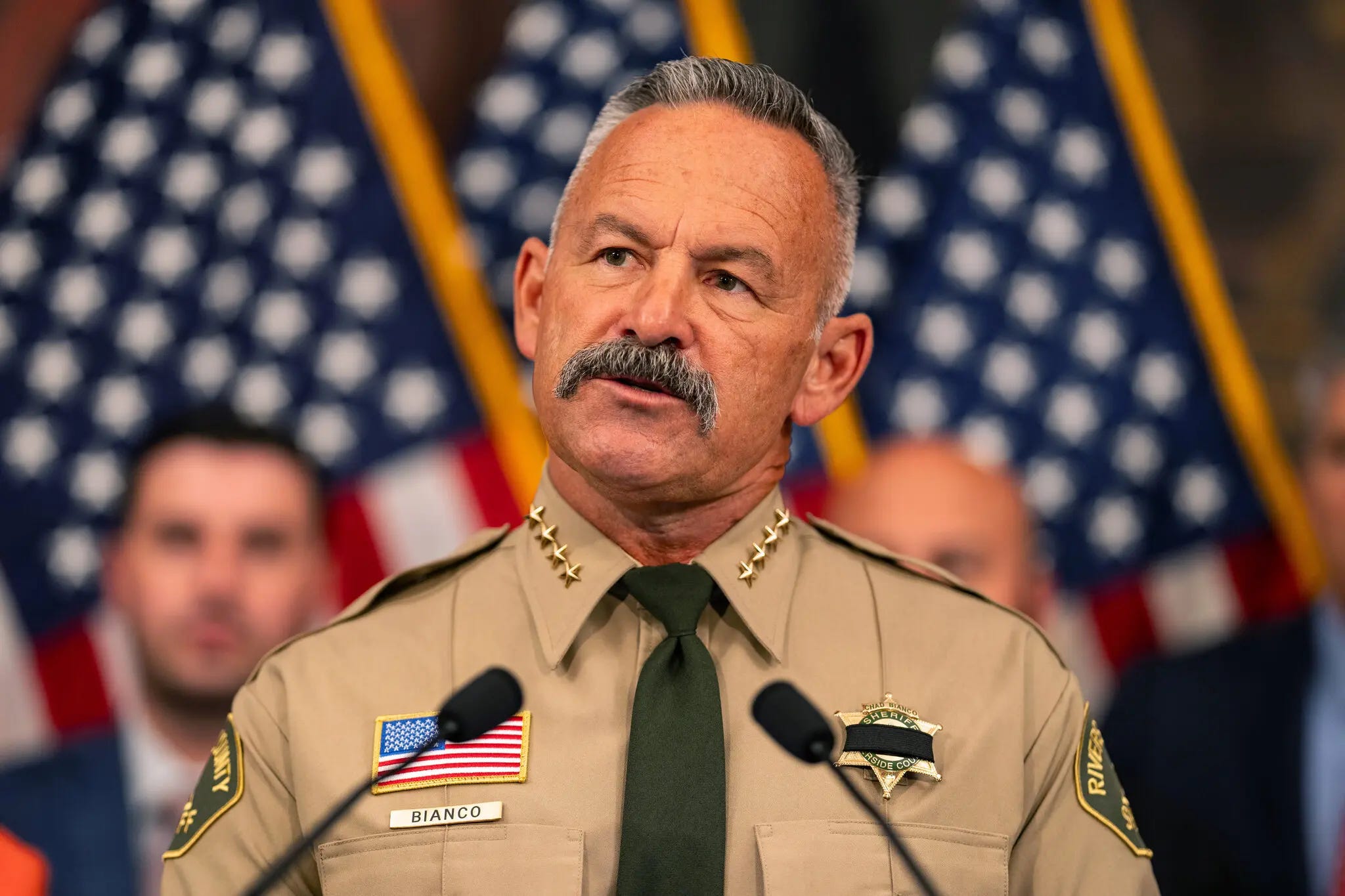
AP reported that Riverside County Sheriff Chad Bianco, a Republican running for governor, seized more than half a million ballots from a November 2025 special election, claiming he was investigating a ballot-count discrepancy. The Los Angeles Times reported the number as more than 650,000 ballots and said Bianco’s action followed allegations from a local citizen group that county officials say misunderstood raw election data. AP reported that Attorney General Rob Bonta called the move unprecedented and designed to sow distrust in elections. The Los Angeles Times reported the county registrar said the true variance was 103 votes, or 0.016%, not the tens of thousands alleged by activists. This is not social media rumor. It is a sitting sheriff using criminal process to seize election materials while campaigning for higher office. (apnews.com)
Why It Matters
Once law enforcement starts physically seizing ballots after an election based on thin or disputed fraud narratives, election administration moves out of the civic sphere and into the theater of criminal suspicion. That is how distrust gets manufactured, not merely reflected. (latimes.com)
Who Is Affected
California voters are affected first, especially communities that depend on mail voting and already face narratives that treat their ballots as inherently suspect. Black, Latino, immigrant, elderly, and working-class voters pay the highest price when routine administration gets recoded as fraud theater. (apnews.com)
What Mainstream Missed
While national attention stayed fixed on the Supreme Court mail-ballot case and Trump’s federal voter bill, one of the most extreme ballot stories in the country was happening at the county level in California. The coverage gap is clear: AP, the Los Angeles Times, and specialty election reporting advanced the story, while national headlines largely stayed centered on federal voting narratives and Iran. (apnews.com)
Sources
AP News — GOP sheriff in California seizes ballots as he runs for governor Main reporting on the seizure, the special election, and Bonta’s criticism.
Los Angeles Times — The Riverside County sheriff has seized 650,000 ballots. Here’s what we know Detailed local reporting on the warrants, disputed numbers, and the governor’s-race context.
CyberScoop — State officials, election experts question California sheriff’s seizure of ballots Election-administration and security context.
8. UPDATE: Georgia’s Attempted-Murder Abortion Case Is Already Cracking Under Local Scrutiny
Reported (ET): Monday, March 23, 2026.
Summary

TheGrio reported over the weekend that Georgia had charged Alexia Moore, a Black woman, with attempted murder under an abortion-related theory. On Monday, The Current reported that a judge granted Moore bond while openly expressing doubt about the prosecution, and noted that records themselves had been inconsistent about whether the charge was murder or attempted murder. Georgia Public Broadcasting then reported that the infant delivered after the alleged abortion attempt died of “undetermined causes,” according to the Camden County coroner. That means the legal and factual basis of the case was wobbling almost as soon as local reporters and the courtroom dug into it. The public got a moral panic headline first. The harder facts arrived later and locally. (thegrio.com)
Why It Matters
This is what reproductive criminalization looks like on the ground. A woman’s body becomes a crime scene first, and only after the charge lands does the evidentiary weakness start to matter. (thecurrentga.org)
Who Is Affected
Black women, poor women, women in abortion deserts, and anyone living in a state where prosecutors think pregnancy outcomes belong inside the criminal code are all in the blast radius. The racial history here matters, because Black women have long been treated as uniquely surveillable mothers whose pain and privacy count less. (thegrio.com)
What Mainstream Missed
The coverage gap is not that the story was totally ignored. It is that the first splash favored the shock value of the charge, while the most important Monday developments came from local and public-media reporting that exposed confusion, doubt, and a coroner’s finding of undetermined cause. That is exactly how a punitive narrative outruns the facts. (thecurrentga.org)
Sources
TheGrio — Georgia state charges Black woman with attempted murder under abortion law The initial nationalized charge framing.
The Current — Judge, expressing doubt on abortion murder charge, grants bond to Georgia mother Local court reporting on the judge’s doubts and the unstable charging record.
Georgia Public Broadcasting — Coroner: Infant died from ‘undetermined causes’ Coroner finding that complicates the prosecution’s narrative.
9. A Federal Judge Blocked a Refugee Detention Policy That Could Have Swept Up More Than 100,000 People
Reported (ET): Monday, March 23, 2026.
Summary
Reuters reported that a federal judge in Boston blocked a Trump administration policy that would have exposed refugees to arrest and detention if they had not obtained green cards after one year in the United States. Reuters said plaintiffs argued the policy could affect more than 100,000 lawfully admitted refugees whose status applications were still pending. The administration’s memoranda reinterpreted immigration law to require detention after one year, even though that had not been historical practice. Reuters reported the policy was part of “Operation PARRIS,” initially focused on Minnesota refugees but potentially expandable beyond that. A lawful refugee program was being pushed toward mass detention through bureaucratic reinterpretation. (reuters.com)
Why It Matters
This is not a border-crossing story. It is a lawful-status story. When the government can convert paperwork delay into detention exposure, legal admission stops being meaningful security and starts becoming provisional mercy.(reuters.com)
Who Is Affected
Refugee families are affected first, including communities from war-torn countries who came to the U.S. through formal resettlement channels and are still waiting on adjudications they do not fully control. In places like Minnesota and beyond, many of the people placed at risk are Black African and other refugee communities who already survive under a permanent suspicion they did not create. (reuters.com)
What Mainstream Missed
Despite the possibility of affecting more than 100,000 lawfully admitted refugees, this story sat beneath Iran, airports, and election fights in the national hierarchy. The coverage gap is that a potentially vast detention expansion was treated more as a legal technicality than as a human and family-separation story. (reuters.com)
Sources
Reuters — US judge blocks Trump administration from detaining thousands of refugees Main reporting on the injunction and the number of refugees potentially exposed.
Democracy Forward — Refugees Sue to Block Trump-Vance Administration Policy Ordering the Arrest, Indefinite Detention of Lawfully Admitted Refugees Plaintiff-side legal framing and background on the challenged policy.
Complaint — Jean A. v. Noem filed complaint Primary court filing describing Operation PARRIS and its detention practices.
10. New Mexico’s ICE Story Was Not About the Border. It Was About Probation Officers Allegedly Luring People Into Arrest
Reported (ET): Monday, March 23, 2026.
Summary
Source NM, via States Newsroom, reported that a federal judge sent back to state court a lawsuit alleging New Mexico probation officers coordinated with ICE to arrest and deport probationers. The report says the New Mexico Ethics Commission alleges officers lured people to probation meetings under false pretenses, where ICE agents were waiting. One person had already been deported, while others were in custody, with family hardship described in the lawsuit. The case turns on an alleged violation of a 2025 New Mexico law barring state employees from sharing citizenship data with federal authorities outside limited circumstances. This is the kind of story national immigration coverage misses when it reduces everything to border footage and raids. (newsfromthestates.com)
Why It Matters
Due process collapses fast when the state uses ordinary supervision appointments as a trapdoor into deportation machinery. It turns public institutions that are supposed to monitor compliance into pipelines of deception.(newsfromthestates.com)
Who Is Affected
Immigrants on probation, mixed-status families, and communities already trained to fear any state office are most directly affected. The injuries do not stop with detention. They spill into rent, children, caregiving, and whether a family can trust any part of government at all. (newsfromthestates.com)
What Mainstream Missed
The coverage gap is plain. This was advanced by Source NM and States Newsroom, not by the national front page, even though it speaks to a systemic question about state collaboration with deportation efforts. National coverage centered on airport ICE optics and mass-enforcement spectacle, while this story showed the quieter institutional mechanics underneath. (newsfromthestates.com)
Sources
News From The States / Source NM — Federal judge sends case alleging NM probation officers colluded with ICE back to state court Core reporting on the remand and the allegations.
Complaint background — Federal judge sends case alleging NM probation officers colluded with ICE back to state court Same report includes the relevant description of the 2025 New Mexico law and the alleged “false pretenses” meetings.
11. Iowa Sent a ‘Medical Conscience’ Bill to the Governor That Could Shrink Care Access in Practice
Reported (ET): Monday, March 23, 2026.
Summary
Iowa Capital Dispatch reported that the Iowa House sent a bill to Gov. Kim Reynolds that would allow health care practitioners and organizations to refuse to participate in or pay for services that conflict with their conscience or religious beliefs. The bill would protect providers from civil, criminal, or administrative liability for refusing care, except in emergency services. The same report noted critics warned the legislation does not require providers who refuse care to inform patients in advance or refer them elsewhere. That means access can narrow invisibly, through denial, delay, and silence. In rural or provider-shortage settings, that kind of refusal power can function like a ban without calling itself one. (newsfromthestates.com)
Why It Matters
The most durable restrictions often do not arrive wearing the word ban. They arrive as institutional permission to say no, with no clear replacement path for the patient who still needs care. (newsfromthestates.com)
Who Is Affected
LGBTQ people, people seeking reproductive care, rural patients with few provider options, and disabled patients who depend on timely referrals all face heightened risk under this model. When one clinic or one provider can refuse and there is nowhere nearby to go, “choice” becomes a fiction. (newsfromthestates.com)
What Mainstream Missed
This was statehouse reporting first, not a national headline, even though it speaks to a broader red-state strategy of converting culture-war language into concrete care refusal. National outlets often cover the slogans. Local reporters were the ones tracking the operational harm. (newsfromthestates.com)
Sources
Iowa Capital Dispatch — Iowa House sends ‘medical conscience’ bill to governor Main reporting on House passage, liability protections, and referral concerns.
Stateline — ‘Medical conscience’ bills would let providers refuse more health care Broader context on how these bills can restrict real-world access.
12. UPDATE: Kansas’ Anti-Trans Law Will Sit Over People’s Lives for Months Before the Next Major Hearing
Reported (ET): Monday, March 23, 2026.
Summary
A Douglas County judge set September 29 as the next hearing in the lawsuit challenging Kansas’ new anti-trans bathroom and identity-document law. The Lawrence Times, citing Kansas Reflector, reported the law forces people to use bathrooms in government buildings based on sex assigned at birth and blocks gender-marker changes on driver’s licenses and birth certificates. The ACLU case page says the law immediately invalidated driver’s licenses for transgender Kansans and authorizes people to sue anyone they suspect of being trans for using the “wrong” restroom in government buildings. That means the litigation is alive, but relief is delayed. For trans Kansans, the calendar itself has become part of the punishment. (lawrencekstimes.com)
Why It Matters
Time matters in civil-rights cases. A harmful law does not become less harmful because a hearing exists months away. It just means the state gets a longer run of forcing people to live inside the injury. (lawrencekstimes.com)
Who Is Affected
Trans Kansans are directly affected, especially people whose appearance no longer matches the documents the state is forcing on them. That creates immediate risk in jobs, travel, housing, school, and any routine interaction where identification is required. (lawrencekstimes.com)
What Mainstream Missed
This is an update to a story already visible earlier this month, but the national attention moved on faster than the harm did. The coverage gap is that local and LGBTQ legal reporting kept following the court schedule while national outlets largely stopped at the initial outrage beat. (lawrencekstimes.com)
Sources
Lawrence Times / Kansas Reflector — Douglas County judge sets hearing over Kansas anti-trans ‘bathroom bill’ for Sept. 29 Current procedural update on the lawsuit.
ACLU — Doe v. State of Kansas Case page explaining the law’s effects on IDs and bathroom access.
Reuters — Kansas sued over new transgender ID, bathroom law Earlier national overview of what the law does.
13. Idaho Advanced Medicaid Disability Cuts Even After the State Restored Some Mental-Health Funding
Reported (ET): Monday, March 23, 2026.
Summary
Idaho Capital Sun reported Monday evening that the Idaho Senate passed a bill cutting nearly $22 million from Medicaid disability services, sending it to the governor. The cuts would reduce provider reimbursement for residential habilitation services and, according to lawmakers quoted in the report, could destabilize care for highly vulnerable people and push some providers to close. Earlier Monday, Idaho Capital Sun also reported that lawmakers moved to restore some mental-health funding after patient deaths, leaving disability-service cuts as a stark contrast. The politics here are not subtle.Some care became suddenly fundable once public death and scandal were attached to it. Disability services remained a target. That is austerity with hierarchy. (newsfromthestates.com)
Why It Matters
Residential habilitation is not a luxury line item. It is daily living support that keeps disabled people housed, safe, and out of more expensive institutional and emergency settings. (newsfromthestates.com)
Who Is Affected
Disabled Idahoans, caregivers, provider staff, and low-income families holding together care arrangements with very little margin are the people asked to absorb this cut. When providers close or cut back, the “budget savings” migrate into family collapse, hospital strain, and deeper crisis. (newsfromthestates.com)
What Mainstream Missed
This was statehouse and health-policy reporting, not a national headline, even though it illustrates a wider pattern in which Medicaid debates focus on ideology and work requirements while the quieter cuts land on people who need help surviving day to day. The coverage gap is that local outlets mapped the human infrastructure of the cut while national coverage remained trained on larger partisan narratives. (newsfromthestates.com)
Sources
Idaho Capital Sun — Idaho Senate passes $22M in Medicaid disability budget cuts, sending bill to governorCurrent reporting on the Senate vote and the scale of the cut.
Idaho Capital Sun — After patient deaths, Idaho budget committee approves restoring cut Medicaid mental health programs Current contrast case showing what lawmakers restored and why.
KFF Health News — Families defend disability services amid Medicaid cuts Broader context on what these cuts mean for families and providers.
14. The Federal Government’s Rio Grande Buoy Plan Is a Border Story, an Environmental Story, and a Treaty Story
Reported (ET): Monday, March 23, 2026.
Summary
Inside Climate News reported Monday that the federal government is installing the first stretch of what is planned to become 536 miles of floating barriers on the Rio Grande. The same report said DHS has waived environmental laws and issued more than $1 billion in contracts for the project. Experts told the outlet the buoys could intensify flooding, change the river channel, and create treaty problems with Mexico if they obstruct natural flow or drift into contested territory. The reporting also noted the lack of publicly available environmental assessment or flood modeling. A massive border project with billion-dollar contracts, ecological risk, and treaty implications is moving ahead with less national attention than the culture-war slogans that help justify it. (newsfromthestates.com)
Why It Matters
This is how “border security” gets laundered into infrastructure exceptionalism. Once environmental rules are waived and secrecy becomes normal, the public is asked to trust a militarized experiment on a dynamic river without the baseline facts large projects are supposed to disclose. (newsfromthestates.com)
Who Is Affected
Border communities, migrants, river users, Indigenous and Mexican communities downstream, and residents already vulnerable to flooding all face consequences here. This is also an environmental justice story because the people living closest to the harm are rarely the people making the contracts. (newsfromthestates.com)
What Mainstream Missed
The coverage gap is obvious. This story was advanced by nonprofit climate reporting and Texas-focused outlets, while national immigration coverage remained centered on enforcement spectacle and airport optics. What got underplayed was the flood risk, the treaty risk, and the scale of the buildout itself. (newsfromthestates.com)
Sources
Inside Climate News / News From The States — Feds plan to install 536 miles of floating barriers on Rio Grande to deter migrants Core reporting on the project, waivers, contracts, and expert warnings.
Texas Tribune — Feds plan to put 536 miles of floating barriers on Rio Grande Republished/localized reporting that underscores flood and river-course concerns.
15. Maine’s DEP Tried Again to Push a Landfill Expansion Over Penobscot Objections
Reported (ET): Monday, March 23, 2026.
Summary
Maine Morning Star reported Monday that the Maine Department of Environmental Protection again gave initial approval to expanding the Juniper Ridge Landfill. The move came after a judge had already struck down the earlier determination and ordered the agency to reconsider the project’s cumulative environmental justice impacts. The report quoted Penobscot Nation Chief Kirk Francis saying the decision did not reflect the lived reality of his people, while Conservation Law Foundation said DEP was again treating environmental justice as a checkbox. Juniper Ridge is expected to hit capacity in 2028, which means the state’s waste problem is being answered, once again, by asking Indigenous communities to absorb more risk. That is a policy choice, not an inevitability. (newsfromthestates.com)
Why It Matters
Landfill fights are always framed as infrastructure necessity. But when the solution keeps landing near communities already burdened by pollution and when a judge has already said the environmental justice analysis was deficient, the issue is not just trash capacity. It is whose health and land get designated as acceptable sacrifice zones.(newsfromthestates.com)
Who Is Affected
The Penobscot Nation is directly affected, along with nearby communities and the Penobscot River watershed. Indigenous communities have long had to fight not only pollution itself but the official habit of describing cumulative harm as if it were abstract or debatable. (newsfromthestates.com)
What Mainstream Missed
The coverage gap is that this was carried by state, Indigenous-affairs, and environmental-justice reporting rather than national outlets. Meanwhile, the country’s dominant headlines were elsewhere, even though the story sits at the intersection of land use, environmental racism, and state accountability. (newsfromthestates.com)
Sources
Maine Morning Star / News From The States — DEP again gives initial approval for Juniper Ridge Landfill expansion Current reporting on DEP’s renewed approval.
Conservation Law Foundation — Once Again, Maine DEP Allows Juniper Ridge Landfill Expansion to Move Forward Environmental justice response and description of the court’s earlier rejection.
Maine DEP document — JRL Public Benefit Determination, dated March 23, 2026 Primary agency determination.
Closing Note on Coverage Gaps
The deeper pattern is that the national hierarchy still privileges spectacle over structure. The front page gave us war, markets, crashes, and Supreme Court signals. The buried file showed what power does while people are watching those things: it tests new ballot distrust mechanisms, criminalizes pregnancy, tightens care refusal, cuts disability services, builds border infrastructure under waivers, and treats Indigenous environmental justice as negotiable.That is not a separate America from the headline America. It is the same one, just seen from where the cost lands.(reuters.com)
Support XVOA
Let me stop being polite and tell it to you straight. This publication is running on fumes right now. The last few weeks have seen a real drop in support, and I need money point blank to buy time to keep doing this work. I know money is tight and people are cutting back. That is real. But this is also the kind of moment when work like this either gets supported or it starts disappearing, right when the biggest outlets are leaving the hardest parts of the story out.
I did not build this out of ego. I built it out of purpose. I built it because too many powerful institutions keep asking you to doubt your own eyes, lower your voice, and accept polished confusion as context. A brief like this takes time, focus, and the willingness to keep digging after the big outlets move on to the next shiny disaster. I do not want to shut this down. I want to keep building it. But purpose does not pay for time, and time is exactly what I need more of right now.
So I am asking plainly. If this brief helped you think straighter, feel less crazy, or see what legacy media kept trying to soften, become a paid subscriber here:
Do not tell yourself you will get around to it later. Later is how independent work dies while everybody swears they always meant to support it.
And if a paid subscription feels like too much right now, or you already subscribe, even the smaller gesture matters. If you have been reading for free, eating off the plate, nodding along, and telling yourself somebody else will keep this thing alive, please stop. Be the somebody. Help me buy the time to keep this publication alive.
Outstanding. Your summary of the top news is great, but your coverage of the Stories Buried is the most revealing aspect, and so well done.