

Blackout Brief Daily | March 30, 2026
So damn reliable you forget how good it is. Like COOL AC, baby.
Five Things That Matter Today
• Trump’s Iran file escalated again: after a month of war and a shaky search for an off-ramp, he publicly floated the possibility of U.S. forces seizing Iran’s Kharg Island oil export hub and again threatened “widespread destruction” if no deal comes soon. [1][2]
• What our March 28 brief treated as a coming mass protest is now a documented reality: No Kings organizers say more than 8 million people showed up across 3,100-plus events, while Los Angeles ended the weekend with tear gas and 74 arrests near a detention center. [3][4]
• The Labor Department just moved retirement risk further down the ladder: a new proposed rule would open the door for private equity and crypto inside 401(k) plans, giving Wall Street a new lane into ordinary workers’ savings. [5][6][7]
• Reuters found at least four cases of unusually well-timed trades ahead of Trump policy surprises on tariffs, Venezuela, and Iran, while regulators are still trying to catch up with prediction-market oversight. [8][9][10]
• The Supreme Court’s birthright citizenship fight is being framed as constitutional theory, but education reporters are already spelling out the real stakes: more children pushed into undocumented precarity and a chill over public-school enrollment. [11][12][13]
If this brief feels like COOL AC on a hot day, that is exactly the problem: I make this look too damn easy. It is not a newsroom floor full of salaried people. It is one retired black cop with a keyboard, up late and up early, working for you so the buried story does not stay buried. If this helped, buy me a coffee and help keep the air running:
And while you are at it, restack this thang, because the algorithm is a dramatic little hater. If it does not see a little commotion, it sits there like, “I do not know this person.” Oh and yeah I get it. You do not want commitment on Substack. Okay. Hit me with coffee. You already hit it a couple of weeks ago? Baby, hit it again.We can be Friends with benefits. Oh, you’re a dude? Bruh, get your mind out the gutter. It’s just coffee. Goddamn it, man.
Reporting window: March 28, 2026, 3:41:05 p.m. ET to March 30, 2026, 3:41:05 p.m. ET
The biggest national narratives in this window were easy to spot. Major outlets elevated Iran escalation, the size of the No Kings mobilization, the Trump administration’s latest deregulatory push on retirement money, and the looming Supreme Court fight over birthright citizenship. [1][3][5][11] Those are real national stories, and several of them belong at the top of the file.
Top Breaking National Stories
1. UPDATE: Trump’s Iran Threats Move From Escalation Talk to Open Resource-Seizure Talk
Reported (ET): March 30, 2026
Summary
This is a real update from our March 28th brief. But hey, then, the question was whether Washington was drifting deeper into a widening war; now the president is openly floating the possibility that U.S. forces could seize Iran’s Kharg Island oil export hub while again threatening “widespread destruction” if Tehran does not cut a deal soon. [1] AP reported Monday that Trump suggested troops could take the island even as he insisted a settlement could still happen “fairly quickly.” [1] Reuters’ weekend analysis said that after a month of war, Trump is stuck between two bad choices: a flawed negotiated exit or a deeper military escalation that could consume his presidency. [2] Reuters also reported that Iran’s retaliation has helped keep Gulf oil and gas shipments under pressure and has contributed to a historic energy shock. [2]
Why It Matters
Once a president is talking openly about seizing energy infrastructure, this is no longer just airstrikes and signaling. It is a conversation about occupation, resources, and whether the United States is about to slide from war without an end-state into war with an openly extractive logic. [1][2]
Who Is Affected
U.S. service members and their families are affected first. So are workers and households absorbing higher fuel and transport costs, especially people already living close to the edge, because energy shocks do not land evenly. [2] Arab, Muslim, and immigrant communities inside the United States also know that foreign-policy escalation often travels home as suspicion, harassment, and surveillance. This last point is an inference from the pattern of how wars abroad reshape domestic life.
What Mainstream Missed
A lot of mainstream coverage still treats the Iran file as a strategic chessboard story. What it keeps underplaying is the domestic material consequence and the moral shift inside the rhetoric itself: the language is no longer just about deterring Iran, but about threatening broader destruction and even discussing control over core oil infrastructure. [1][2]
Sources
AP News — Trump again threatens “widespread destruction” in Iran and suggests U.S. forces could seize Kharg Island.
Reuters — Analysis of Trump’s narrowing choices one month into the Iran war, including energy shock and escalation risk.
2. UPDATE: No Kings Becomes a Documented Mass Mobilization, Not Just a Planned One
Reported (ET): March 29-30, 2026
Summary
This is also an update from our March 28 brief. What had been a projected national day of action is now being described by organizers as an 8-million-person mobilization spanning more than 3,100 events, with the Washington Post reporting more than 3,300 rallies across all 50 states and protests in at least 15 other countries. [4] AP reported that Los Angeles authorities used tear gas near a federal detention center and arrested 74 people after a dispersal order, even though the broader protest wave was largely peaceful. [3] The protests were not about one issue alone: coverage from major outlets described anger over immigration raids, executive overreach, abortion restrictions, the Iran war, and rising living costs. [3][4] In other words, this was not a symbolic internet flare-up. It was a multi-issue public show of democratic resistance with real national scale. [3][4]
Why It Matters
When millions of people show up in red towns, blue cities, and places that do not usually make national protest montages, it changes the argument that organized opposition is politically dead. Even if protests do not automatically translate into policy wins, this kind of turnout is evidence of civic capacity, movement infrastructure, and shared grievance across issues the political class keeps trying to silo. [4]
Who Is Affected
Immigrants facing raids, families hit by inflation, people frightened by the Iran war, federal workers, abortion-rights supporters, and communities dealing with aggressive policing all showed up in this coalition. [3][4] The very breadth of the turnout is the point: people who are usually told their concerns are separate turned out in a common frame. [4]
What Mainstream Missed
Too much follow-up coverage is already shrinking the story into crowd-size trivia or isolated clashes. The deeper story is that protest energy did not just reappear. It cohered across war, immigration, democracy, cost of living, and state violence. [3][4]
Sources
AP News — Los Angeles arrests and national scope of the No Kings protests.
The Washington Post — Record number of No Kings rallies across all 50 states and multiple countries.
3. Labor Department Opens the Door to Private Equity and Crypto in 401(k)s
Reported (ET): March 30, 2026
Summary
The Trump administration’s Labor Department issued a proposed rule Monday that would make it easier for retirement-plan fiduciaries to include alternative assets, including private equity and cryptocurrencies, in 401(k) lineups. [5][7] Reuters reported that the rule is meant to ease longstanding barriers around these less liquid and less transparent assets, while acknowledging concerns over fees, complexity, and liquidity for retail investors. [5] The Labor Department said the proposal establishes process-based safe harbors for fiduciaries considering alternative assets in their investment menus. [6][7] The draft rule itself says the goal is to reduce litigation risk and clarify that fiduciaries can treat these assets as prudently selectable options under ERISA. [7] This is a major policy move because it turns a previously limited corner of finance into a possible destination for ordinary workers’ retirement savings. [5][6][7]
Why It Matters
Supporters are calling this democratization. Critics see something closer to financialization by another name: Wall Street’s illiquid products gaining access to workers who do not have teams of lawyers, accountants, and wealth managers protecting them. [5] That tension is at the center of the story. [5][7]
Who Is Affected
Anyone relying on a workplace defined-contribution plan could be affected if plan sponsors decide these assets now look safer from a liability standpoint. [5][7] Workers with smaller balances and less room for error are especially exposed if higher fees, opaque valuations, or redemption problems eat into returns. [5] That second sentence is an inference from the structure of the products Reuters and Labor describe.
What Mainstream Missed
This is not just a “more investment choice” story. It is also a story about reallocating legal and informational risk. A rule pitched as innovation can still function as a transfer of complexity downward, from firms that design exotic products to workers who have to live with the outcome for decades. [5][7]
Sources
Reuters — Overview of the proposed 401(k) rule, including private equity, crypto, and fiduciary concerns.
U.S. Department of Labor — Official press release describing the new alternative-assets proposal and safe harbors.
U.S. Department of Labor proposed rule PDF — Formal text of the ERISA prudence safe-harbor proposal.
4. Reuters Finds Well-Timed Trades Ahead of Trump Policy Shocks
Reported (ET): March 29, 2026
Summary
Reuters reviewed trading ahead of several major Trump administration policy surprises and found at least four caseswhere experts said the timing looked suspicious enough to merit scrutiny. [8] The trades anticipated market-moving decisions involving tariffs, Venezuela, and Iran, and reportedly spanned options, commodities futures, and prediction markets. [8] Reuters quoted legal academics and a former CFTC enforcement director saying the trades looked “deeply suspicious” and were the sort of anomalies regulators would normally examine. [8] That concern lands in a regulatory environment where the CFTC is still trying to establish clearer standards for fast-growing prediction markets. [8][9] California, meanwhile, has already barred state officials from using nonpublic information to profit in prediction markets after a separate controversy involving a wager on Venezuela. [10]
Why It Matters
If state power starts leaking into private betting opportunities, public policy becomes a casino for the connected. That is not a side issue. It cuts at the legitimacy of markets and at the public’s confidence that government decisions are being made for public reasons rather than front-run for private gain. [8][9][10]
Who Is Affected
Ordinary investors and retirement savers are affected whenever market integrity is compromised. So are citizens trying to evaluate whether political decisions are being shaped by public interest, factional advantage, or an insider class that gets paid before the rest of the country even knows what hit it. [8] The second sentence is an inference grounded in the Reuters reporting on suspected information leakage.
What Mainstream Missed
Prediction markets keep getting sold as clever information tools. The harder question is whether they are becoming yet another place where proximity to government can be monetized before regulators catch up. [8][9][10]
Sources
Reuters — Review of unusual trades ahead of Trump policy surprises and expert calls for scrutiny.
CFTC — Official advisory acknowledging the rapid growth of prediction markets and reminding exchanges of regulatory obligations.
Reuters — California order barring officials from using insider knowledge in prediction markets.
5. Birthright Citizenship Reaches the Supreme Court, With Schools Watching Closely
Reported (ET): March 29-30, 2026

Summary
The Supreme Court is set to hear arguments on Wednesday in Trump v. Barbara, the case challenging Trump’s effort to end birthright citizenship for some U.S.-born children of immigrant parents. [11][13] Reuters framed the case through the legacy of Wong Kim Ark, whose 1898 case cemented the core understanding of birthright citizenship under the 14th Amendment. [11] Education Week reported that schools are watching because enforcement of Trump’s order would expand the population of undocumented children and could discourage families from enrolling them in public schools, even though Plyler v. Doe still protects K-12 access. [12] The Court’s docket confirms the case is on calendar for April 1. [13] This is one of the highest-stakes cases of the term because it asks not only what the Constitution says, but who the state gets to mark as fully belonging from the moment of birth. [11][12][13]
Why It Matters
The 14th Amendment was written in the shadow of slavery and civil war. Any attempt to hollow out birthright citizenship is not just an immigration policy fight. It is a fight over the Reconstruction settlement itself and over whether the meaning of American citizenship can be narrowed by executive decree. [11]
Who Is Affected
Children born in the United States to undocumented parents or parents with temporary lawful status are most directly affected. So are schools, local systems, and mixed-status families trying to decide whether enrolling, seeking care, or showing up on official paperwork will invite new legal danger. [12]
What Mainstream Missed
A lot of national coverage is still dwelling on doctrine and political theater. Education reporting is clearer about the downstream reality: legal precarity for children becomes institutional fear for schools and families almost immediately. [12]
Sources
Reuters — Wong Kim Ark echoes and the constitutional stakes of the Supreme Court fight.
Education Week — Why educators are watching the case and how schools could be affected.
U.S. Supreme Court docket — Official docket for Trump v. Barbara.
Stories Buried Beneath the National Headlines
6. Israel’s New Hanging Law for Palestinians Forces an American Historical Question
Reported (ET): March 30, 2026
Summary
Israel’s parliament passed a law Monday making the death penalty the default punishment for Palestinians convicted in military courts of deadly attacks. [14][15] Reuters reported that the legislation was pushed by Prime Minister Benjamin Netanyahu’s far-right allies and drew immediate criticism from rights groups, which called it institutionalized discrimination and racist violence against Palestinians. [14] AP reported that the law makes death by hanging the default for West Bank Palestinians convicted of nationalistic killings and that critics say the structure effectively confines the death penalty to Palestinians in a two-tier legal order. [15] Rights groups filed an immediate challenge in Israel’s highest court. [14] Whatever one thinks about capital punishment in the abstract, this is a story about the state formalizing an unequal and highly symbolic form of lethal power over an occupied population. [14][15]
Why It Matters
This is not just another legislative hardening in a war zone. It is the codification of death by hanging inside a system critics say is discriminatory by design. [14][15] That gives the law both a legal function and a terror function. [14][15]
Who Is Affected
Palestinians subject to military courts are directly affected, as are their families and the broader human-rights framework that is supposed to restrain states from administering justice through explicitly unequal systems. [14][15] More broadly, any community that has lived under racialized state violence should recognize the logic at work here. The second sentence is an inference based on the discriminatory structure described by Reuters and AP.
What Mainstream Missed
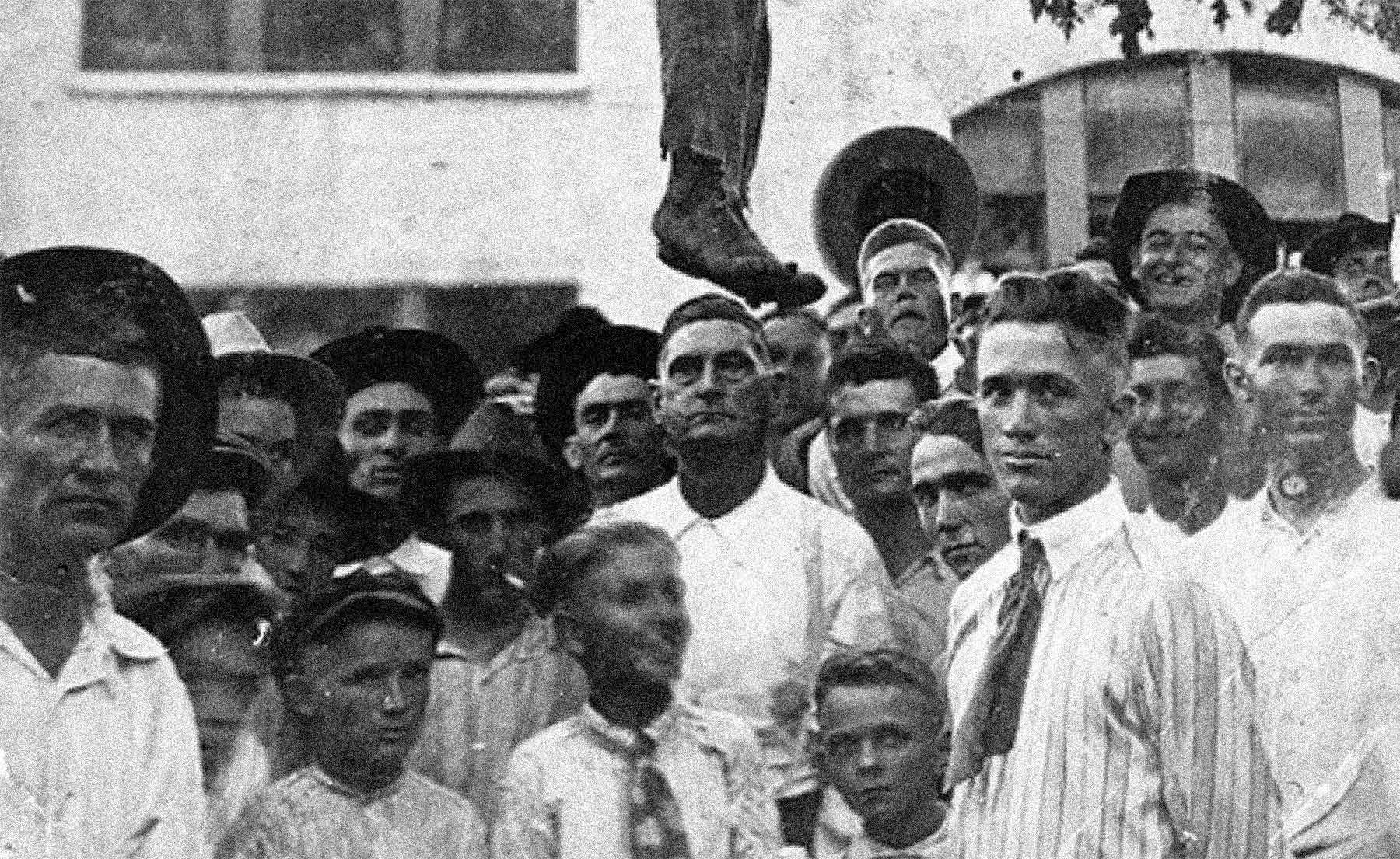
National alerts covered the vote, but mostly as another Middle East security beat. What they largely did not confront is the historical symbolism. A state prescribing hanging for a subordinated population should force a blunt question: how is that not reminiscent of the South’s history of racial terror lynching? [16][17] EJI documents lynching as a tool of racial subordination, and the Smithsonian’s NMAAHC identifies the noose as one of America’s enduring symbols of white-supremacist terror. [16][17] That does not make the two histories identical. It does make the resemblance too morally loud to ignore. [14][15][16][17]
Sources
Reuters — Israel passes law making death the default sentence for Palestinians convicted in military courts of lethal attacks.
AP News — Details of the Knesset law and critics’ argument that it is discriminatory by design.
Equal Justice Initiative — Historical framing of lynching as racial terror used to enforce subordination.
National Museum of African American History and Culture — The noose as an enduring symbol of lynching and white-supremacist terror.
7. HUD Is Turning Housing Bureaucracy Into Immigration Enforcement
Reported (ET): March 30, 2026
Summary
The Washington Post reported Monday that HUD is moving aggressively to make local housing systems part of the administration’s immigration crackdown. [18] Current law already bars undocumented immigrants from receiving direct federal housing aid, but mixed-status households have long received prorated assistance so that eligible family members, including citizens and children, are not thrown out with the rest. [18][20] HUD’s own press release describes 20,000 mixed-status households as a problem to be closed off. [19] CBPP says the proposed rule would end the proration policy and force families to split up or lose assistance, putting nearly 37,000 children at risk of serious harm. [20] This is not an anti-fraud tweak. It is an attempt to turn housing agencies into frontline enforcement nodes. [18][19][20]
Why It Matters
Housing scarcity is already being weaponized rhetorically against immigrants. This proposal would move that rhetoric into administrative practice without building homes, lowering rents, or solving the actual shortage. It threatens to make family instability and homelessness part of immigration policy by other means. [18][20]
Who Is Affected
Mixed-status families, eligible tenants, and especially citizen children are directly affected. [18][20] Local public-housing authorities are affected too, because they are being pushed into an enforcement role that housing officials and advocates say Congress did not assign them. [18][20]
What Mainstream Missed
While this was reported by a major national outlet, it has still been submerged beneath louder war and immigration spectacle. The coverage gap is in the framing: administration messaging describes a loophole and a fraud problem, while the housing consequences are family separation, lost assistance for eligible people, and local agencies conscripted into policing status. [18][19][20] That satisfies at least two buried-story conditions here: the systemic consequences are being narrowed by official framing, and the harm to marginalized families is easy to miss unless you read beyond the press release. [18][20]
Sources
The Washington Post — HUD’s expanding immigration-enforcement role inside housing administration.
HUD — Official mixed-status household announcement describing the proposed crackdown.
Center on Budget and Policy Priorities — Analysis of how the rule would force family separation or loss of assistance.
8. Equal Pay Day Coverage Still Hides How Hard Black Women Get Hit
Reported (ET): March 30, 2026
Summary
Washington Informer’s Equal Pay Day coverage reports that women working full time, year-round made 81 cents for every dollar paid to men in 2024, but Black women made just 65 cents for every dollar paid to white, non-Hispanic men. [21] When part-time and part-year workers are included, that drops to 63 cents. [21] NWLC’s March 2026 state-by-state analysis says the national lifetime loss for Black women is $1,133,600, and that Black women’s career earnings do not catch up to the career earnings of white, non-Hispanic men at age 60 until age 82. [22] The regional numbers are even uglier in places like D.C., where the Informer reports Black women earn 51 cents on the dollar. [21] This is not a generic women’s-pay story. It is a racialized extraction story hiding inside a flattened gender statistic. [21][22]
Why It Matters
A wage gap is not just missing money on a chart. It is thinner savings, weaker retirement security, more childcare strain, higher debt stress, and less room to survive a layoff, illness, or housing shock. [22] When the gap lands hardest on Black women, it lands on households and kin networks that already carry disproportionate caregiving burdens. The last sentence is an inference from the wage-loss scale reported in the sources.
Who Is Affected
Black women workers are directly affected first. But so are families and communities relying on their wages to stabilize rent, food, child care, transportation, and elder care. [21][22]
What Mainstream Missed
Equal Pay Day gets national coverage every year, but that coverage often collapses women into one broad category. Black press and women’s-policy reporting are doing something different: naming the racialized hierarchy inside the gender gap and quantifying the lifetime theft. [21][22] That satisfies the buried-story test because a Black-press outlet is foregrounding the sharper consequence while broader coverage tends to sand it down.
Sources
Washington Informer — Equal Pay Day reporting with Black women’s wage-gap data and DMV breakdowns.
National Women’s Law Center — March 2026 lifetime wage-gap losses for Black women by state.
9. Republicans Are Quietly Eyeing Health Care Cuts to Pay for the Iran War
Reported (ET): March 30, 2026
Summary
Axios reported Monday that Republicans are considering reductions in federal health spending to help finance a budget bill that could contain as much as $200 billion for the Iran war and immigration enforcement. [23] The same report says House Republicans are revisiting a policy around Affordable Care Act cost-sharing reduction payments that the Congressional Budget Office previously found would lower benchmark premiums but leave 300,000 more people uninsured while saving the government more than $30 billion. [23] KFF Health News flagged the same development and noted that the war is already pinching health care supply chains. [24] This is the part of militarized politics that too often goes unspoken: the war bill does not just show up in bombs and speeches. It shows up in the domestic programs lawmakers decide are expendable. [23][24]
Why It Matters
This is how austerity and militarism braid together. The people least responsible for the policy choice get asked to finance it with reduced access to care, higher out-of-pocket burdens, or both. [23][24]
Who Is Affected
ACA enrollees, people living on tight margins, those with chronic conditions, and households already making tradeoffs between care and other essentials are all directly exposed. [23][24] If these proposals move, the price of war will not just be paid overseas or through taxes in the abstract. It will be paid at the pharmacy counter and in the decision to skip care. [23] The last sentence is an inference from the subsidy and uninsured projections in the Axios report.
What Mainstream Missed
National coverage is still overwhelmingly centered on the battlefield, diplomacy, and presidential rhetoric. Health-policy reporting is catching something more material: lawmakers are already looking for domestic health pay-fors. [23][24] That meets the buried-story standard because a consequential domestic effect is being overshadowed by the louder foreign-policy narrative.
Sources
Axios — GOP discussions about health care cuts to help fund the Iran war and immigration enforcement.
KFF Health News — Health-policy roundup highlighting ACA subsidy cuts and related health-system fallout.
10. She Owed Five Cents, and the System Canceled Her Coverage
Reported (ET): March 30, 2026

Summary
KFF Health News published a striking case study Monday about a Florida teacher’s aide whose ACA marketplace coverage was retroactively terminated after a family-plan change created a one-cent monthly premium that later rose to five cents. [25] She only discovered the termination after an MRI bill for nearly $3,000 and multiple doctor-visit charges started arriving. [25] KFF reports that her letter marked coverage as having ended months earlier, leaving her on the hook for thousands of dollars. [25] HealthCare.gov explains that marketplace enrollees who do not pay all owed premiums can lose coverage retroactive to the first missed month of the grace period. [26] KFF also quotes Georgetown’s Sabrina Corlette saying other people have lost coverage over similarly tiny underpayments. [25]
Why It Matters
The cruelty here is not the size of the unpaid amount. It is the disproportionality of the punishment. A system that can convert pennies into thousands of dollars in uncovered care is not a paperwork nuisance. It is a machine for making precarity feel like personal failure. [25][26]
Who Is Affected
Low-income subsidized enrollees, single parents, caregivers, and anyone who does not have cash reserves or airtight administrative support are especially vulnerable to this kind of collapse. People juggling work, children, elder care, and unstable billing systems are exactly the people least able to absorb retroactive coverage loss. [25][26] The second sentence is an inference from the facts of the case and the structure of marketplace rules.
What Mainstream Missed
Broad national health coverage still tends to fixate on subsidy totals, partisan fights, or fraud rhetoric. Health reporters are showing the brutal granular reality instead: insurance can fail not only because a law changed, but because a family missed a one-cent charge in a system built to punish confusion. [25][26] That satisfies the buried-story rule because specialty reporting exposed a consequence broader coverage seldom illustrates.
Sources
KFF Health News — Original reporting on retroactive coverage loss over a one-cent-to-five-cent premium balance.
HealthCare.gov — Official explanation of grace periods and retroactive marketplace coverage termination.
11. NICUs Became Brand Battlefields, and Preterm Babies Were the Market
Reported (ET): March 30, 2026
Summary
KFF Health News published a major investigation Monday showing how formula giants Abbott and Mead Johnson turned neonatal intensive care units into fierce corporate battlegrounds. [27] Drawing on internal records and litigation materials, the report describes company documents about “Branding NICU Babies” and even urging sales teams to “open up a can of ‘Whoop Ass.’” [27] KFF says the point was not only hospital contracts but the long retail tail: parents often stick with the brand their baby started on in the NICU. [27] March of Dimes reports that babies born to Black moms still face infant mortality rates 1.9 times the national rate, and its current report card continues to show sharp disparities in preterm and infant outcomes. [28] That makes this more than a business story. It is a story about corporate competition inside a care setting where vulnerability is highest and racial disparities are already severe.[27][28]
Why It Matters
Parents do not enter NICUs as empowered consumers. They enter as frightened families trusting clinicians and institutions. When manufacturers treat those units as capture points for market share, the business model starts shaping the culture around care in places where families have the least ability to shop, compare, or resist. [27]
Who Is Affected
Preterm babies and NICU families are directly affected, especially those already navigating higher rates of poor maternal and infant outcomes. Communities with persistent racial disparities in birth and infant mortality carry the sharpest burden when corporate incentives seep into neonatal care. [27][28]
What Mainstream Missed
Formula only becomes a front-page story when there is a recall, a shortage, or a lawsuit headline loud enough to force its way in. Specialty health reporting is exposing the quieter, structural layer: how sales logic and litigation records reveal a market strategy wrapped around medically fragile babies. [27] That satisfies the buried-story test because the systemic consequences sit well below the level of ordinary national coverage.
Sources
KFF Health News — Investigation into infant-formula and fortifier competition inside NICUs.
March of Dimes — Current infant mortality and preterm-birth disparity data.
12. California’s Corn-Tortilla Folic Acid Rule Is a Reproductive-Justice Story
Reported (ET): March 29, 2026
Summary
AP reported that California has become the first state to require folic acid in corn masa flour, a move aimed at reducing neural tube defects that disproportionately affect Hispanic infants. [29] The CDC says Hispanic and Latina women are more likely to have a child with a neural tube defect than non-Hispanic White and Black women, and it explicitly says fortifying corn masa flour could help prevent these defects. [30] AP also reported that RFK Jr. criticized the law as government overreach, while medical experts pushed back and said the science supporting folic acid fortification is clear, safe, and cost-effective. [29] This matters because wheat-based fortification rules left a real gap for populations more likely to rely on corn masa staples. [29][30] Reproductive justice is not only about court rulings and clinic access. Sometimes it is also about who was left out of an old public-health design. [29][30]
Why It Matters
The policy is modest in form but large in implication. It recognizes that universal-sounding health policy can still exclude specific communities if the foods chosen for fortification do not match how those communities actually eat.[29][30]
Who Is Affected
Latina and Hispanic families are most directly affected, especially those in communities where corn masa is a staple and pregnancies are exposed to preventable neural tube defect risk. [29][30] More broadly, this affects how public health institutions think about cultural fit and equity in prevention.
What Mainstream Missed
The law did get national wire coverage, but it was easy for it to get buried under louder ideological fights about RFK Jr., food freedom, and culture-war messaging. What gets lost in that framing is the concrete racialized health disparity the policy is trying to address. [29][30] That satisfies the buried-story rule because the consequence for a marginalized community is easier to miss than the controversy around it.
Sources
AP News — California’s new folic-acid requirement for corn masa flour and the public-health rationale behind it.
CDC — Health-equity page explaining why corn masa fortification matters for Hispanic/Latina women and neural tube defect prevention.
13. Trans Visibility Weekend Was About Survival, Not Just Attendance
Reported (ET): March 29-30, 2026
Summary
While the national weekend story became the size of the No Kings protests, LGBTQ and Black outlets documented a sharper truth: trans communities used the weekend to insist on visibility under active threat. [31][32][33] Gay City News reported that trans women and allies gathered in Manhattan on March 29 for The Doll Walk, explicitly protesting Trump administration policies that restrict accurate gender markers on passports. [31] PRNewswire reported that the Christopher Street Project held a Trans Day of Visibility rally on the National Mall on March 30 in collaboration with 35 organizations and with hundreds in attendance. [32] NewsOne’s reporting from the D.C. No Kings protest quoted Howard University student Ceres Shifrin, who said showing up was about both “visibility and survival.” [33] That is not an aesthetic add-on to a protest weekend. It is a direct statement about political existence. [31][32][33]
Why It Matters
When a community is fighting for the right to be accurately documented, publicly visible, and physically safe, visibility itself becomes a policy battleground. That is what these events made plain. [31][32][33]
Who Is Affected
Trans people navigating documentation, public hostility, and state erasure are directly affected. [31][33] So are families, educators, and institutions deciding whether they will normalize that erasure or resist it. The second sentence is an inference grounded in the survival language quoted by NewsOne and the policy targets identified by Gay City News.
What Mainstream Missed
Major national protest coverage mostly folded the weekend into generalized anti-Trump energy. LGBTQ and Black outlets made the sharper point: for trans participants, the weekend was not only opposition politics. It was a refusal to disappear. [31][32][33] That satisfies the buried-story rule because the story was reported from the edges of the media ecosystem and the consequences for a marginalized group were largely omitted from broader coverage.
Sources
Gay City News — The Doll Walk in Manhattan and the protest against anti-trans passport policies.
Christopher Street Project / PRNewswire — National Mall Trans Day of Visibility rally with hundreds of attendees and partner organizations.
NewsOne — D.C. protest coverage quoting a Howard trans student framing attendance as visibility and survival.
14. Beneath the No Kings Crowd Story, Los Angeles Was Still a Detention-Center Story
Reported (ET): March 29, 2026
Summary
AP reported that Los Angeles police arrested 74 people after issuing a dispersal order near a federal detention center following the city’s No Kings rally. [34] ABC7’s local report described how the daytime march drew thousands before the conflict shifted to the Federal Detention Center, where officers used tear gas and tactical formations after a smaller group confronted authorities. [35] The Guardian reported that police fired pepper balls and teargas into a crowd of about 150 and that the detention center had already become a focal point of conflict because of the administration’s immigration offensive in Los Angeles. [36] That detail matters. It means the local fault line here was not random street unrest but a familiar immigration flashpoint inside a city already living under pressure from crackdown politics. [35][36] The national protest story is real. So is the way it narrowed, in LA, back down to detention, deportation, and force. [34][35][36]
Why It Matters
If democracy protests keep collapsing into standoffs outside detention centers, that tells you where state power is concentrating itself. It also tells you that immigration enforcement is not a side issue inside the larger anti-authoritarian movement. It is one of the load-bearing pressures generating the movement in the first place. [34][35][36]
Who Is Affected
Immigrant communities, detainees, their families, and the Angelenos repeatedly living around these enforcement sites are directly affected. [34][35][36] Protesters, legal observers, journalists, and residents drawn into heavily policed conflict zones are affected too.
What Mainstream Missed
National coverage mostly emphasized turnout, isolated disorder, or the symbolic value of the marches. Local coverage made the structural point: this clash happened at a detention center that has become a recurring node of confrontation under the immigration crackdown. [35][36] That satisfies the buried-story rule because the locally reported systemic context was largely absent from broader national framing.
Sources
AP News — Arrest totals and detention-center clash after the Los Angeles No Kings protest.
ABC7 Los Angeles — Local reporting on the protest route, tear gas, and the detention-center confrontation.
The Guardian — Additional reporting on pepper balls, teargas, and the detention center as an immigration-crackdown flashpoint.
15. A Federal Judge Had to Force Lawyer Access at Florida’s “Alligator Alcatraz”
Reported (ET): March 28, 2026
Summary
A federal judge ordered Florida’s Everglades detention site known as “Alligator Alcatraz” to provide people held there with better access to counsel. [37][38][39] AP reported that the preliminary injunction requires timely, free, confidential, unmonitored legal calls and at least one working phone for every 25 detainees, along with multilingual information for detained people and their lawyers. [37] The ACLU said the court also certified the case as a class action, extending protections to current and future detainees, and described testimony about horrific conditions and denial of basic tools for communication. [38] WUSF’s local coverage underscored how remote the site is and how routine counsel access had already become a live constitutional issue. [39] The buried point here is simple and ugly: a detention site severe enough to earn the nickname “Alligator Alcatraz” needed a federal judge to remind the state that access to a lawyer is not optional. [37][38][39]
Why It Matters
Due process does not begin at the merits hearing. It begins with the ability to reach counsel before deadlines pass, transfers happen, or people disappear deeper into the detention system. [37][38][39] When that access fails, deportation machinery gets faster while legal protection gets thinner.
Who Is Affected
Detainees are directly affected, especially those with limited English, no family support nearby, or urgent legal deadlines. [37][38][39] Immigration lawyers, rights groups, and families trying to track loved ones are affected too.
What Mainstream Missed
This did receive wire coverage, but it has been drowned by louder immigration spectacle and war news. The coverage gap lies in the structure of the story: specialty legal and rights reporting makes clear that the real scandal is not only one bad facility, but a detention system so normalized that a judge has to order the basics of attorney access. [37][38][39] That meets the buried-story test because the systemic consequence is larger than the brief headlines it received.
Sources
AP News — Federal injunction requiring better attorney access at Florida’s “Alligator Alcatraz.”
ACLU — Class-action and due-process framing of the court’s ruling.
WUSF — Local reporting on the Everglades detention site and the practical access-to-counsel failures.
Closing Note on Coverage Gaps
Today’s reporting hierarchy reveals a familiar pattern. The center told us about presidential moves, mass turnout, and legal spectacle. The edges told us what those moves actually do: they turn housing offices into immigration checkpoints, let war reach into health policy, make trans visibility a survival act, expose how easily insurance disappears, and require judges to order the minimum conditions of due process inside detention. [18][23][25][31][37] That is why the edges matter. They are usually where the cost shows up first. [18][20][23][24][37][38]
Support XVOA
Listen If this brief helped, let me say thank you to the people who have paid and stayed. You are the reason this thing still has blood pressure. And thank you to the people reading free and still showing up. I mean that. Those opens, clicks, reads, and restacks bump the stats, and right now those bumps matter more than some folks realize.
And maybe that is part of the problem. I have gotten too damn good at this. COOL like AC. So damn cool I should be wearing Ray-Bans while typing this. The competence is killing me. A couple of months ago, some people might have been helping partly out of concern, like, “somebody go check on that brother before he turns into a cautionary tale.” Now the writing got so clean it almost hides the need. It starts looking less like an emergency and more like, “goddamn, this Black mother****** can write.”
I also get it if you cannot chip in right now. I am in the same economy you are. I have had to give up little luxuries too: random takeout, impulse Amazon nonsense, the fantasy that gas prices are somebody else’s problem, and a few of those quiet “treat yourself” moments that make being alive feel less like jury duty.
It is time for somebody who values this work, and actually has the means, to step forward. Not just to admire it. Not just to nod at it. Not just to whisper, “whew, that brother wrote his ass off.” I appreciate the flowers. I do. But flowers do not keep the lights on.
Part of me keeps thinking maybe I should just shut XVOA down and stop doing this much work for this little money. But, wait then I have to ask: is this kind of truth telling really something we should sacrifice because times are hard? If your answer is no, hit me with a coffee and help me keep the COOL AC blowing:
And yes, if you donated a couple of weeks ago, hit it again. We can be friends with benefits, baby. Oh, you want commitment? Traditional. I like it. Let’s get hitched. You got the means. I know you do. Let’s do this.
Do you remember INFACT, Infant Formula Action Coalition. A boycott of Nestle and other formula makers started in 1977. The companies were giving mothers of newborns in other countries infant formula until their breasts dried up. Then the companies would cut the new mothers off. This forced the mothers without resources to water down the expensive formula. Infants suffered.
Like everything else big business is feeding off Americans now that they have abused other countries for every cent they had.
Wow! This was incredible and concise with a great on-point rundown of the need-to-know news with citations. This is exactly what I’m looking for. Thank you.