


Blackout Brief Daily | March 31, 2026
So damn reliable you forget how good it is. Like COOL AC, baby.
Five Things That Matter Today
UPDATE: The Iran story is no longer just about oil shocks and diplomatic theater. Gen. Dan Caine says the U.S. has now begun B-52 missions over Iranian territory, which means this war has entered a more openly escalatory air phase. [1][2][4]
The Supreme Court just dealt a major blow to state protections for LGBTQ+ youth, striking down Colorado’s ban on conversion-therapy talk for minors in an 8-1 ruling that could jeopardize similar laws across much of the country. [5][6][7]
UPDATE: Israel’s new law mandating death by hanging for some Palestinians is now triggering broad international condemnation, including from the U.N., the E.U., European governments, and Palestinian officials calling for sanctions. [9][10][11][12]
The Trump administration has now sued Minnesota over trans-inclusive school sports policy, using Title IX and the threat of federal money as a weapon against one of the states resisting its anti-trans agenda. [13][14][15]
While cable heat stayed fixed on war and culture-war spectacle, states were quietly paying firms like Deloitte, Accenture, and Optum millions to build the software and paperwork machinery that will cut people off from Medicaid and food aid. [16][17]
If you already subscribed or already slid me some coffee money in the last 72 hours, do not read the rest of this. Back away from the newsletter slowly and skip to breaking news below. You are a decorated citizen. Everybody else, let me ask a serious question in an unserious tone: why am I in here spending so much time making this trustworthy, reliable, and COOL as AC, and now that it is so smooth and so COOL, folks act like it raised itself? I made this thing so dependable people treating it like oxygen. Nobody thanks oxygen till the room get hot. At this point I am starting to think some of y’all only respect dysfunction. If the house is on fire, everybody goes viral. If the air conditioning works, folks sit there like, “Well... ain’t that what air supposed to do?”

But you are even crazier if you read all this, nod your head to the beat of the Morris Day and The Time soundtrack that inspired this whole COOL marketing gambit, and then moonwalk out of here without dropping AT LEAST $5. That is not budgeting. That is a drive-by blessing. Every damn body reading this: $5 at least right now. It should be more. Way more. But I am trying to meet people where they are, and apparently where they are is hiding behind a fern with their wallet. Hit It Again. It’s Just Coffee.
And yes, restack this thang too, because the algorithm is a needy little fool. It needs applause, noise, maybe a folding chair, before it admits I exist. And if you do not want a full Substack commitment, cool. We can keep this casual. No labels. No pressure. You do not have to move in, split rent, or meet my people. Just hit it and keep it pushing. Hit it again tomorrow if the spirit moves you. That is what friends with benefits do. The benefit is journalism. The friend is coffee. Relax.
Reporting window: March 29, 2026, 12:11 PM ET to March 31, 2026, 12:11 PM ET.
The hierarchy audit was blunt. Major national coverage in this window clustered around the Iran war and its domestic economic fallout, the Supreme Court’s conversion-therapy ruling, the international backlash to Israel’s new death-penalty law for Palestinians, and the Justice Department’s latest federal attack on trans rights through the Minnesota lawsuit. Those are real national stories, and they belong on top. [2][5][9][13]
But the edge of the media system was doing different work. Black press, local investigative outlets, health-policy reporters, prison reporters, LGBTQ outlets, housing reporters, and nonprofit investigations were tracking the implementation layer: Medicaid dragnets finding almost nothing, incarcerated people still baking in Texas heat, gender-affirming care still frozen despite favorable rulings, Black women absorbing the sharpest hit from federal job cuts, refugees losing SNAP access, toxic cleanup sites facing climate danger, people dying in ICE custody, the Justice Department quietly dropping tens of thousands of criminal investigations to chase immigration cases, and nursing-home families still waiting for justice after a Trump pardon.
Top Breaking National Stories
1. UPDATE: B-52 Missions Over Iran Mark a New Phase of the War
Reported (ET): Tuesday, March 31, 2026.

Summary
The update here is not simply that the war continues. It is that Gen. Dan Caine said the United States has now begun B-52 missions over Iranian territory, a signal that the air campaign has moved into a deeper and more openly escalatory phase. The Wall Street Journal and other outlets reported that the move comes after the U.S. and Israel established broader air superiority, while Reuters reported that Defense Secretary Pete Hegseth called the next few days “decisive.” Reuters also reported that a tanker was struck and the average U.S. gas price crossed $4 a gallon, underscoring how quickly battlefield escalation is feeding back into daily life at home. In other words, this is no longer just a markets-and-diplomacy story. It is now a war story with heavier historical symbolism and a widening domestic price tag. [1][2][4]
Why It Matters
The B-52 is not just another aircraft in the American imagination. The U.S. Air Force’s own historical record identifies it as one of the defining weapons of the Southeast Asia war, including bombing campaigns over Vietnam, Laos, and Cambodia. So this brief is making an interpretive point, not claiming survey data: for people old enough to remember the Vietnam era, the image of B-52s over yet another U.S. bombing campaign may be psychologically triggering because it revives a very specific American grammar of overwhelming air power, distance, and denial. That matters because public numbness often begins when hardware is treated as neutral and history is stripped off the machine. [3]
Who Is Affected
People in Iran are affected first, especially civilians living under an intensifying air campaign. But Americans are also already being pulled into the cost structure through fuel prices, shipping disruption, and the growing risk that this war becomes politically normalized before the public has fully absorbed what phase it has entered. Black households, working-class households, and everybody already juggling rent, groceries, and transportation will feel war-driven price shocks faster than the people making the escalation decisions. Military families and veterans are also being asked, once again, to live inside the consequences of choices sold to the public as strategy. [1][2][4]
What Mainstream Missed
A lot of national coverage is still flattening this into a scoreboard story: targets struck, air superiority achieved, prices up, diplomacy maybe later. What that framing misses is that the return of the B-52 over another U.S. war zone is not merely technical. It carries a deep historical charge, and that charge matters in a country that still refuses to metabolize what aerial war looked like in Vietnam and what it did to the people who lived through it. The hardware itself is part of the story. [1][3]
Sources
Wall Street Journal — Gen. Dan Caine says the U.S. has begun B-52 missions over Iran — live update on the new phase of the air campaign.
Reuters — the administration says the next few days are “decisive,” while the war’s economic fallout is already hitting tanker traffic and U.S. gas prices — battlefield and domestic-cost update.
National Museum of the U.S. Air Force — B-52 combat history in Southeast Asia — historical record on Vietnam-era use.
Business Insider — overview of Caine’s briefing on overland B-52 missions as U.S. air superiority expands — summary of military briefing.
2. Supreme Court Strikes Colorado’s Conversion-Therapy Ban for Minors
Reported (ET): Tuesday, March 31, 2026.
Summary
The Supreme Court ruled 8-1 against Colorado’s ban on conversion-therapy talk for minors, siding with counselor Kaley Chiles and holding that the law likely violates the First Amendment. Justice Neil Gorsuch wrote for the majority that the state had engaged in viewpoint discrimination, while Justice Ketanji Brown Jackson dissented and argued that Colorado was regulating harmful professional conduct, not simply censoring speech. Reuters and AP both reported that the ruling threatens similar laws in more than two dozen states and Washington, D.C., or at minimum throws them into immediate uncertainty. The ruling is one more marker in a broader Court trend that expands speech and religious-liberty claims while narrowing the space states have to protect LGBTQ+ people. This is a national story because Colorado was the vehicle, but the blast radius is much wider. [5][6][7]
Why It Matters
This case was framed in legal language about speech, but the practical issue is whether states can restrict licensed professionals from trying to change a child’s sexual orientation or gender identity through a practice that major medical groups have long condemned as harmful. The ruling also matters because it tells future litigants exactly where the Court’s center of gravity now sits. If this reasoning expands, states will have a harder time drawing lines around what counts as professional misconduct when that misconduct is wrapped in ideology or religion. The decision is not just about counseling rooms. It is about whether vulnerable minors can count on state law to stop adults with licenses from dressing harm up as care. [5][6]
Who Is Affected
LGBTQ+ youth are affected first, especially young people in conservative families or communities where “voluntary” often means coerced by power inside the home or church. Trans youth are especially exposed because gender identity is directly named in these laws and directly targeted by the broader political movement now surrounding them. Parents, therapists, school systems, and state licensing boards are also affected, because the ruling creates confusion about what remains enforceable and what litigation is now coming next. For Black LGBTQ+ kids and other marginalized youth, the danger is compounded by the fact that institutional protection is already uneven before the Court narrows it further. [5][6][8]
What Mainstream Missed
Much of the initial coverage treated this as another abstract speech dispute between Colorado and a religious plaintiff. That is too bloodless. What gets flattened out in that framing is that this case concerns minors, licensed care, and a practice opponents say is linked to severe psychological harm. The Court did not just referee a philosophical disagreement. It weakened a tool states have been using to protect children from a form of ideologically motivated professional intervention. [5][8]
Sources
Reuters — ruling striking Colorado’s ban on LGBT conversion-therapy talk for minors — core ruling and legal stakes.
Associated Press — 8-1 decision and potential consequences for similar state laws — broader implications for state bans.
Washington Post — wider legal implications for bans in nearly 30 states — national legal context.
Them — LGBTQ response and warning that protections for youth are now more vulnerable — community reaction and context.
3. UPDATE: International Condemnation Builds Against Israel’s Death-by-Hanging Law for Palestinians
Reported (ET): Tuesday, March 31, 2026.
Summary
This update is no longer just that Israel passed the law. It is that the global backlash arrived immediately and from multiple directions. Reuters reported that U.N. High Commissioner for Human Rights Volker Türk said the new law violates international humanitarian law and urged Israel to repeal it, while the Washington Post reported that the law mandates death by hanging for Palestinians convicted in military courts of deadly attacks and requires execution on a short timetable. AP reported protests across the West Bank, a general strike in the north, and Palestinian officials calling for international sanctions. European institutions and governments are also condemning the measure as discriminatory and destabilizing. This has moved beyond a domestic Israeli law-and-order debate and into an international human-rights confrontation. [9][10][11][12]
Why It Matters
The law matters because it is not simply severe. It is structured through a dual legal architecture in which Palestinians tried in military courts face one set of rules while Jewish Israelis in civilian courts do not. Critics say that is precisely why the law is being denounced as discriminatory under international law. It also escalates the meaning of punishment under occupation, attaching a mandatory death framework to a population already governed through military courts. Once a state builds a death penalty explicitly through unequal legal channels, the question is no longer just punishment. It is the legal organization of hierarchy. [9][10][12]
Who Is Affected
Palestinians in the occupied West Bank are affected first, along with their families, lawyers, and communities living under military jurisdiction. Israeli human-rights groups and opposition figures are affected because they are now battling this law inside Israel’s courts and political system. The international community is implicated too, because the law sharpens the question of whether allies will keep treating the situation as a bilateral conflict rather than an unequal legal regime. For Palestinians, the message is also psychological: the state is not merely detaining or surveilling them, but codifying an explicitly fatal asymmetry. [10][11][12]
What Mainstream Missed
Some mainstream coverage initially treated this as another hard-right Israeli political move. That framing understates what actually changed. The core fact is not simply that the law is harsh. It is that the law draws its force from who is prosecuted in military court and who is not, and that is exactly why international condemnation came so quickly. This is not a generic crime-and-punishment story. It is a legal-structure story with global consequences. [9][10][12]
Sources
Reuters — U.N. human-rights chief says the law violates international law and should be repealed — international condemnation and legal criticism.
Washington Post — details of the law, including hanging, timing, and the split between military and civilian courts— structure and scope of the law.
Associated Press — protests, strike action, and Palestinian calls for sanctions — reaction on the ground.
Guardian — wider European and rights-group condemnation — broader international response.
4. DOJ Sues Minnesota Over Trans-Inclusive School Sports Policy
Reported (ET): Tuesday, March 31, 2026.
Summary
The Justice Department has sued Minnesota and the Minnesota State High School League, alleging that allowing transgender girls to play in girls’ sports violates Title IX. AP reported that the lawsuit seeks to force a statewide policy change and could place more than $3 billion in annual federal education funding in jeopardy. Them and the Guardian both situated the case inside a broader administration campaign that has already targeted California, Maine, and other institutions over transgender inclusion. Minnesota officials, including Attorney General Keith Ellison, have pushed back and argued that state law protects trans students and that the federal government is misreading Title IX. This is not a local school-board spat. It is a national coercion strategy. [13][14][15]
Why It Matters
The federal government is using school sports as the emotional entry point, but the real instrument here is money and administrative force. That matters because it shows how anti-trans policy is now being routed through funding threats, not just campaign rhetoric. Once Washington establishes that it can tie billions in education funds to a narrow ideological definition of sex, every school district, state agency, and athletic body gets pushed into a compliance panic. The practical effect is bigger than athletics. It is the use of federal leverage to shrink the conditions under which trans kids can exist publicly. [13][14]
Who Is Affected
Trans youth are directly affected because they become the legal object through which the federal government is trying to redraw school life. School districts, coaches, students, and parents across Minnesota are also affected because this lawsuit creates uncertainty around policy, funding, and student safety. Other states are affected too, because the administration is building a playbook that can be copied nationally. And girls’ sports itself is affected, because the issue is being turned into a permanent litigation machine rather than a serious, evidence-based governance question. [13][14][15]
What Mainstream Missed
National coverage tends to narrow these cases to fairness rhetoric and one-off athletic examples. That omits the more important structural fact: the administration is not merely arguing about rules. It is using federal law, grant dependence, and bureaucratic fear to compel states into a uniform anti-trans regime. The real story is coercion through governance. [13][14][15]
Sources
Associated Press — DOJ lawsuit against Minnesota and the federal-funding stakes — central facts and consequences.
Them — framing the case as part of a broader federal assault on trans students — community and policy context.
Guardian — state resistance and national context — broader framing.
5. States Are Paying Consultants Millions to Build the Benefit-Cut Machine
Reported (ET): Tuesday, March 31, 2026.
Summary
KFF Health News reported that states are paying firms including Deloitte, Accenture, and Optum millions of dollars to retool eligibility systems for the Trump law that will cut Medicaid rolls and tighten access to food aid. The reporting found at least $45.6 million in contracts or projected costs in just five states, with much more likely to come as work requirements and verification systems expand. KFF also reported that millions stand to lose health or nutrition support as these systems are built out, and CBS surfaced state examples showing how expensive the implementation burden already is. This is what austerity looks like when it hires consultants first. The state is paying to construct the software, paperwork, and error pathways that will later be described as neutral administration. [16][17]
Why It Matters
Benefit cuts do not happen by magic. They happen through databases, interfaces, verification routines, contractor invoices, and procedural hurdles that fall hardest on poor people with the least slack in their lives. That matters because the public debate usually stops at whether a bill passed. By the time the attention moves on, the implementation vendors are already building the machinery that will decide who gets flagged, delayed, denied, or dropped. Administrative violence is still violence, even when it arrives through software. [16][17]
Who Is Affected
Low-income adults, disabled people, people working unstable hours, and families cycling in and out of paperwork compliance are affected first. Black and Latino communities are especially exposed because they are overrepresented among people navigating underfunded healthcare and nutrition systems while also facing deeper administrative mistrust and surveillance. Rural hospitals and local clinics are affected too, because coverage losses do not stay on paper; they hit budgets, staffing, and emergency care systems. The people least responsible for the deficit theater are once again being made to absorb its operating costs. [16][17]
What Mainstream Missed
Mainstream political coverage still likes the vote count more than the implementation chain. It will tell you who won the floor fight and who said what on cable. It is much less likely to follow the contracts, vendor systems, and backend changes that turn ideology into exclusion. That is a coverage failure because the contractors are where policy becomes material. [16][17]
Sources
KFF Health News — original reporting on Deloitte, Accenture, Optum, and the cost of building new eligibility systems — implementation and contract reporting.
CBS News — state examples showing the implementation burden and work-rule exposure — additional context and state-level examples.
Stories Buried Beneath the National Headlines
6. Trump’s Medicaid Dragnet Is Finding Almost No One
Reported (ET): Tuesday, March 31, 2026.
Summary
KFF Health News reported that after seven months of reviews, five states have found little evidence to support the administration’s implied claim that large numbers of undocumented immigrants were improperly enrolled in Medicaid. Pennsylvania and Colorado reportedly found nobody who needed to be removed after reviewing nearly 79,000 names, while Texas found 77 terminations after checking roughly 28,000 people. Ohio found 260 terminations after reviewing about 65,000 people, and Utah found 42 after reviewing about 8,000. The yield is tiny compared with the scale of the surveillance effort. The bigger revealed fact is not fraud. It is bureaucracy hunting for a political narrative it still cannot prove. [18][19]
Why It Matters
This matters because the federal government pushed states into a high-friction, high-anxiety review process that appears to be producing very little public-policy benefit. Even a small number of wrongful terminations can mean missed medication, delayed care, or fear-driven withdrawal from public programs. It also diverts administrative labor that could be used to serve eligible people more efficiently. When the state goes looking for an enemy and mostly finds paperwork dust, that is still a policy choice with human costs. [18][19]
Who Is Affected
Medicaid enrollees with complicated paperwork are affected first, especially immigrant families, mixed-status households, and people with disabilities who are already one missing form away from trouble. State agencies are also affected because they are being required to spend time and money on an exercise with very low yield. The chilling effect reaches beyond the people actually reviewed, because a crackdown message can scare eligible families away from seeking care at all. In practice, fear becomes part of the policy. [18][19]
What Mainstream Missed
While KFF Health News surfaced the results, major national coverage in this window was focused on Iran escalation, the Supreme Court’s LGBTQ ruling, and the latest federal trans-rights lawsuit. That meant the public heard plenty about crackdowns in the abstract and very little about whether this particular crackdown was actually finding anything. The story also satisfies the coverage-gap test for another reason: it was framed politically for months, but the consequences for eligible Medicaid households were largely omitted once the data undercut the premise. [18][19]
Sources
KFF Health News — original reporting on the five-state review and its minimal findings — core reported findings.
KFF Health News — additional state-by-state findings from Pennsylvania, Colorado, Texas, Ohio, and Utah — same original report with additional state detail.
7. Texas Prison Heat Trial Opens With Allegations of Heat-Related Deaths
Reported (ET): Monday, March 30, 2026.
Summary
A federal trial over insufficient air conditioning in Texas prisons began Monday, and plaintiffs’ lawyers said there were allegedly five heat-related deaths over the last two summers in the units at issue. The Texas Tribune reported that the state disputed heat as a significant factor in those deaths, but the trial opened with the temperature question squarely at the center. Local reporting also made clear that even if prisoners eventually win relief, meaningful changes could still take years. This case is unfolding as extreme heat becomes more severe and more frequent across the state. The law is finally being asked to confront whether sweltering confinement is a side effect of incarceration or part of the punishment itself. [20][21][22]
Why It Matters
Heat behind bars is not an inconvenience. It is a public-health threat layered on top of state custody, and it falls hardest on older prisoners and people with medical conditions. In a warming climate, prison infrastructure becomes a climate-justice story whether officials want to call it that or not. If courts continue to move slowly while temperatures keep rising, the state is effectively asking incarcerated people to absorb deadly environmental risk with no meaningful way to protect themselves. That is not a neutral administrative failure. It is structural abandonment. [20][21][22]
Who Is Affected
Incarcerated people in Texas are affected first, especially medically vulnerable prisoners and those held in units with inadequate cooling. Their families are affected too, because they are the ones who often end up chasing answers after a crisis or death. Correctional staff also work inside these buildings and face the same dangerous temperatures, even though they can leave at the end of a shift. The people with the least power over the environment are the ones forced to endure it the longest. [20][21][22]
What Mainstream Missed
This story was driven by the Texas Tribune and local outlets, not by the front page of the national press. That matters because it satisfies two coverage-gap conditions at once: it was first carried by specialty and local reporting, and it was overshadowed by louder national narratives about war, Supreme Court rulings, and federal culture-war litigation. Even when prison stories break through nationally, they are often framed as isolated scandals instead of as a climate-and-custody pattern. [20][21][22]
Sources
Texas Tribune — trial opens with allegations of five heat-related deaths — original local reporting.
ABC13 — local report on the opening of the prison-air-conditioning case — local follow-up.
San Antonio Express-News — even a favorable ruling may not bring quick relief — timeline and relief context.
8. Children’s Hospital Colorado Still Has Not Resumed Gender-Affirming Care
Reported (ET): Monday, March 30, 2026.

Summary
The Colorado Sun reported that Children’s Hospital Colorado still has not resumed gender-affirming care for patients under 18 despite a favorable federal court ruling elsewhere that cut against a key part of the Kennedy-backed pressure campaign. The hospital said the broader legal landscape remains too uncertain and that resuming care could still jeopardize its Medicaid funding, licensure, and provider eligibility. The Sun also noted that the hospital continues to provide the same medications for cisgender youth when medically appropriate, a detail that clarifies the unequal effect of the pause. Families are still litigating, and the institution is still saying the federal threat environment has not meaningfully lifted. This is what a chilling effect looks like when it stops being abstract. [23][24][25]
Why It Matters
National legal wins do not automatically restore care on the ground. That matters because a hospital can look at the political environment and decide that the risk of serving trans youth is still too high even after a favorable ruling. In practical terms, that means federal intimidation can keep functioning even when parts of the legal rationale begin to crack. The chilling effect becomes the policy. [23][24][25]
Who Is Affected
Trans youth and their families are affected first, especially those who depended on Children’s as a major provider. Medical professionals are affected too, because they are being told that evidence-based care for one category of patient is politically dangerous even when the same treatments are acceptable for another. The broader pediatric system is implicated because one hospital’s continued pause sends a signal to others about what kinds of patients are safest to abandon under pressure. For trans kids, delay is not a neutral condition. It is its own form of harm. [23][24][25]
What Mainstream Missed
This story was reported locally and precisely by the Colorado Sun while national attention in the same window centered on the Supreme Court ruling and the Minnesota sports lawsuit. That means two coverage-gap rules are satisfied: it was surfaced by specialty/local reporting, and the consequences for trans youth were overshadowed by louder national narratives. The missing piece in mainstream framing is simple. Court drama is not the same thing as restored care. [23][24][25]
Sources
Colorado Sun — hospital says the legal environment still is not safe enough to resume care — current status and legal rationale.
Colorado Sun — February litigation over whether the hospital could be forced to restart care — lawsuit context.
Colorado Sun — January reporting on the original pause under federal pressure — earlier development.
9. Montana Quietly Rewrites State Law Around a Binary Definition of Sex
Reported (ET): Monday, March 30, 2026.
Summary
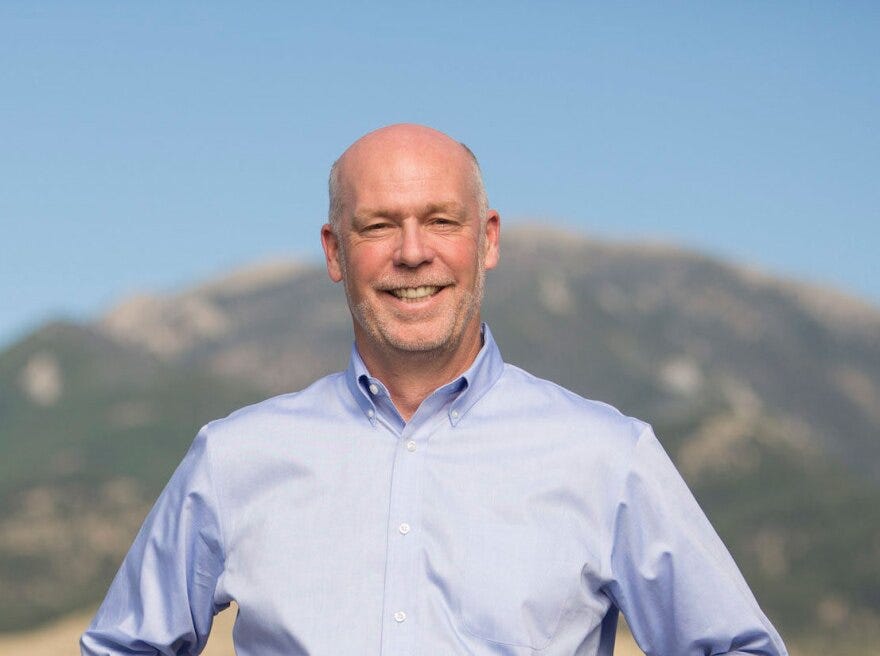
Montana Free Press reported that Gov. Greg Gianforte signed a law defining sex as binary and rooted in reproductive anatomy, amending broad sections of Montana law in the process. The law revises how terms such as “male,” “female,” “sex,” and “gender” are used in state statute. KFF’s morning roundup noted that the law is expected to face legal challenge, especially because Montana’s earlier 2023 effort in this area was found unconstitutional. This is not merely messaging. It is a rewrite of the language through which state power classifies people. Those quieter statutory rewrites often outlast the headline fights that distract from them. [26][27]
Why It Matters
When a state rewrites its legal definitions, it changes the ground beneath everything from schools to prisons to identification systems to anti-discrimination claims. That is why these laws matter even when they receive less attention than the sports or bathroom fights that usually dominate cable panels. They turn ideology into administrative baseline. And once the baseline changes, people spend years fighting uphill just to recover what they had before. [26][27]
Who Is Affected
Trans and intersex Montanans are affected first because the law narrows the state’s official vocabulary in ways that can be used against them across multiple systems. Public agencies, courts, schools, and employers are affected too, because legal definitions influence how rules get interpreted and enforced. The harm is not only symbolic. It lies in how many future decisions can now be filtered through a more exclusionary statutory frame. [26][27]
What Mainstream Missed
This story was led by Montana statehouse reporting, not by dominant national outlets. It also got overshadowed by louder federal narratives about trans athletes, Supreme Court rulings, and culture-war spectacle. That means the public sees the most theatrical anti-trans fights and often misses the quieter legal rewrites that are more durable and more bureaucratically powerful. The statutes matter because they stay after the segment ends. [26][27]
Sources
Montana Free Press — reporting on Gianforte signing the binary-sex law — original statehouse reporting.
KFF Health News morning roundup — national summary noting the law and expected legal challenges — broader context and legal note.
10. Black Women Are Still Bearing the Sharpest Edge of Federal Job Cuts
Reported (ET): Monday, March 30, 2026.
Summary
Minnesota Public Radio used Monday’s broadcast to center a labor story too often buried inside generic talk about efficiency, restructuring, and “trimming government.” Federal job cuts last year hit one group especially hard: Black women. The fresh reporting pulled together labor data, lived experience, and expert analysis to show that the public sector has long been one of the few places where Black women could find relative wage stability, benefits, and some protection against the worst private-sector discrimination. As those jobs disappear, the losses do not land evenly. What looks like bureaucratic downsizing from Washington looks like household instability, lost benefits, and narrowed mobility for Black women and the families who depend on their income. [28][29][30]
Why It Matters
This matters because federal and public-sector employment has historically functioned as one of the clearest ladders into the middle class for Black women. When that ladder gets kicked out, the damage does not stop at payroll. It spreads into rent, childcare, debt, healthcare, retirement savings, and the broader economic stability of Black households. The cuts also reveal who is most expendable inside a government that still presents its workforce agenda as neutral reform. If Black women are absorbing the hardest hit, that is not background noise. That is the signal. [28][29][30]
Who Is Affected
Black women in the federal workforce are affected first, especially in regions where government employment has served as a stabilizing employer for decades. Black families are affected because Black women’s earnings often carry an outsized share of household security and caregiving costs. Metro areas with heavy public-sector footprints, including the DMV and other government-linked labor markets, are affected as the cuts ripple outward into local businesses and service economies. The broader workforce is affected too, because once one of the most stable sectors starts shedding workers this unevenly, the rest of the labor market is already being warned. [28][29][30]
What Mainstream Missed
While national economic coverage keeps leaning on topline unemployment, market volatility, and vague talk about government bloat, this story was framed more honestly by public radio and labor analysts: the layoffs are not falling randomly. The people taking the sharpest blow have names, histories, and a well-documented relationship to public-sector work. That satisfies the coverage-gap rule because the consequences for Black women were largely submerged inside broader macroeconomic storytelling, even as the latest reporting made the disparity harder to ignore. [28][29][30]
Sources
MPR News — Black women bore the brunt of federal job cuts — fresh public-radio reporting and discussion.
Brookings — After the ‘fork,’ Greater Washington leads the nation in regional job loss — analysis showing how federal cuts are reshaping the labor market, including for Black women.
National Partnership for Women & Families — Women’s economic opportunities are a policy choice — recent labor analysis on Black women’s rising unemployment.
11. Refugees and Asylum Seekers Are Losing SNAP Access as New Rules Take Effect
Reported (ET): Monday, March 30, 2026.
Summary
Iowa Public Radio, through Harvest Public Media, reported that refugees, asylum seekers, and human-trafficking survivors without green cards are among the groups now losing eligibility for SNAP under the new federal restrictions. The reporting makes clear that these are not undocumented immigrants in the ordinary political sense invoked on cable. They include people with humanitarian or legally recognized pathways who now face a green-card waiting period that can stretch a year or more. The rule change is already affecting states as implementation begins. And because SNAP is grocery money, not abstract policy, the impact lands immediately in kitchens. The phrase “benefit restriction” hides the fact that people who were lawfully here and previously eligible are being cut off from food support. [31][32]
Why It Matters
Food insecurity moves fast. A delay in legal paperwork or a rule change in Washington can become hunger by the end of the month. This matters because the public debate around immigration policy often blurs together groups with very different legal statuses, allowing humanitarian entrants to be quietly stripped of support under the cover of broader anti-immigrant politics. When grocery assistance disappears, the body learns the policy before the pundits finish naming it. [31][32]
Who Is Affected
Refugees, asylum seekers, trafficking survivors, and their children are directly affected, especially those trying to stabilize after displacement or abuse. Local aid organizations, schools, food banks, and social workers are affected too, because the need does not disappear when federal eligibility disappears. States implementing the rule will face the fallout in real time, but the people hit first are the families standing in the grocery aisle with less help than they had last month. Poverty does not wait for a green-card timeline. [31][32]
What Mainstream Missed
This story came through public-media and regional reporting while national attention was fixed on war, Supreme Court conflict, and headline immigration spectacle. That satisfies the coverage-gap rule twice over: the story was led from the edge of the ecosystem, and the affected groups were flattened inside broader narratives about immigration enforcement. National coverage is much better at dramatizing the border than at tracing who quietly loses food aid once the law gets translated into eligibility tables. The most material consequence was also the least televised. [31][32]
Sources
Iowa Public Radio / Harvest Public Media — reporting on refugees, asylum seekers, and trafficking survivors losing SNAP eligibility — original regional reporting.
KFF Health News morning brief — national roundup surfacing the regional reporting as the rule takes effect — broader policy context.
12. Trump’s DOJ Quietly Dropped 23,000 Criminal Investigations to Chase Immigration Cases
Reported (ET): Tuesday, March 31, 2026.
Summary
ProPublica reported Tuesday morning that the Justice Department quietly closed more than 23,000 criminal investigations in the first six months of Trump’s administration as resources were shifted toward immigration prosecutions. The dropped cases included investigations touching nursing-home abuse, union corruption, program fraud, health care fraud, antitrust matters, environmental crimes, drug trafficking, and even terrorism. ProPublica’s analysis found the spike in declinations was not simply the result of inherited backlog or routine housekeeping. It marked a sharp break from both the Biden administration and Trump’s first term. In plain English, the department that says it is restoring law and order has been walking away from a remarkable volume of actual law-enforcement work. [33][34][35]
Why It Matters
This matters because prosecution priorities reveal who the state is willing to protect and who it is willing to leave exposed. When fraud, nursing-home abuse, labor corruption, environmental crimes, and terrorism cases get pushed aside to make room for immigration theater, the harm does not vanish. It gets transferred onto workers, elderly residents, consumers, communities, and victims who may never know their cases were quietly abandoned. The story is not just that the DOJ is focusing on immigration. It is that entire categories of other public harms are being treated as expendable in the process. [33][34][35]
Who Is Affected
Workers affected by union corruption, patients and families tied to abuse or health-care fraud cases, communities facing environmental crime, and consumers targeted by white-collar schemes are all affected. So are Black and brown communities that rely on consistent civil-rights and public-integrity enforcement from a Justice Department that now appears more interested in spectacle than breadth of protection. The people hurt first are often the ones who were never going to get cable coverage in the first place. If a nursing-home abuse case gets dropped, the victim’s family still lives with the outcome even if the headlines move on. [33][34][35]
What Mainstream Missed
This was first surfaced by ProPublica, not by the dominant front pages driving the day’s conversation. And it was overshadowed almost immediately by war news, Supreme Court rulings, and the administration’s more theatrical immigration messaging. That satisfies the coverage-gap rule because the story was driven by investigative reporting from the edge of the national hierarchy, and because the broader consequences of these declinations for ordinary people were mostly absent from mainstream coverage. The press heard the enforcement rhetoric. ProPublica followed the abandoned case files. [33][34][35]
Sources
ProPublica — Trump’s Justice Department Dropped 23,000 Criminal Investigations in Shift to Immigration — original investigative reporting and data analysis.
U.S. Department of Justice — remarks on white-collar and corporate enforcement priorities — official articulation of DOJ priorities.
White House — America First priorities — administration framing around enforcement and immigration.
13. Federal Toxic Cleanup Sites Face Climate Risk With Millions Living Nearby
Reported (ET): Monday, March 30, 2026.
Summary
AP reported that a federal watchdog found scores of toxic federal Superfund sites vulnerable to climate-related hazards such as flooding and wildfire. The EPA inspector general’s report reviewed 148 federal-facility Superfund sites and found that dozens carried inland-flooding risk, while millions of people live within close range of these hazardous locations. The watchdog also found that many cleanup reviews did not adequately account for climate-related threats. That is not a technical oversight. It means contamination planning is lagging behind the physical conditions now reshaping the landscape. A toxic site that floods is not just a cleanup problem. It is a public-health event waiting for weather. [36][37]
Why It Matters
This story matters because climate disaster and environmental contamination are converging in the same places, often near communities that already carry disproportionate health burdens. If flood risk is not built into cleanup plans, contaminants can be redistributed by stormwater, erosion, or fire-related damage. That turns yesterday’s industrial negligence into tomorrow’s exposure event. Environmental policy that ignores climate reality is not cautious. It is unfinished. [36][37]
Who Is Affected
People living near contaminated federal sites are affected first, including communities already dealing with respiratory illness, water-quality worries, or long histories of environmental neglect. Frontline communities, including many poor communities and communities of color, are especially vulnerable when toxic exposure and climate risk overlap. Local governments and emergency systems are also affected because they may be forced to respond to contamination events that should have been prevented through better planning. Proximity becomes destiny when the cleanup model refuses to catch up. [36][37]
What Mainstream Missed
AP did surface the watchdog findings, but climate-toxic infrastructure stories still rarely compete with war, courts, or electoral drama for sustained national attention. This buried story satisfies the rule because it was covered briefly without fully explaining the consequences, and because the communities most likely to absorb the risk remain largely nameless in mainstream framing. The story is not just that sites are vulnerable. It is that millions live nearby while planning still lags behind the hazard. [36][37]
Sources
Associated Press — watchdog findings on climate risk at federal toxic sites — initial national report.
EPA Office of Inspector General — report on inland-flooding risk and nearby populations — primary document.
14. Another Death at Adelanto Deepens the Pattern Inside ICE Detention
Reported (ET): Monday, March 30, 2026.
Summary
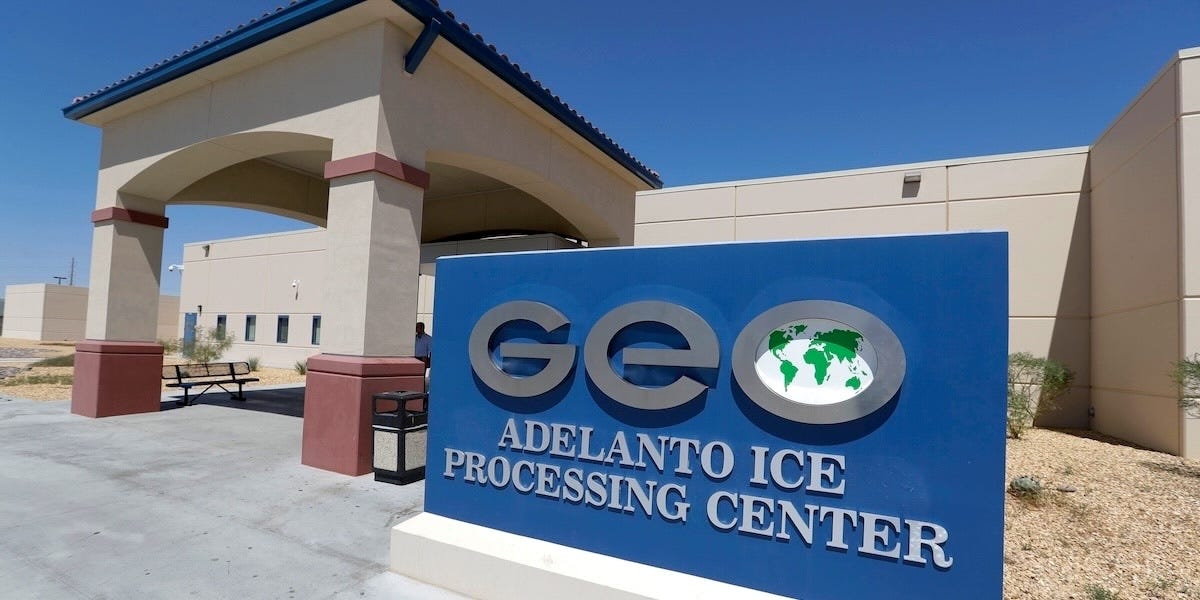
Reuters reported that José Guadalupe Ramos died after being found unresponsive at the Adelanto ICE Processing Center in California, making him the 14th person to die in ICE custody this year. The Guardian reported that Adelanto, run by GEO Group, has long faced lawsuits and official scrutiny over medical neglect, disability-access failures, and unsafe conditions. Reuters also noted that the 2026 pace could exceed last year’s already alarming death toll. Mexican officials are describing the pattern as systemic and are pressing for accountability. This is not one tragic exception floating free of context. It is what a fast-growing detention system looks like when death becomes recurrent. [38][39]
Why It Matters
Deaths in custody are the clearest possible indictment of an enforcement system that keeps expanding while insisting it is under control. They matter because every death forces the same question: what counts as acceptable risk once the state has taken total control over a person’s movement, medical access, and safety? Private detention operators add another layer, because profit and accountability do not align cleanly inside these facilities. If the deaths keep rising, the burden is on the system to explain why custody keeps functioning like a health hazard. [38][39]
Who Is Affected
Detained immigrants are directly affected, especially people with chronic conditions who depend entirely on the facility for care. Families are affected because information often arrives late, incompletely, or through crisis. Mexican nationals and other immigrant communities are affected more broadly because repeated deaths change how detention is understood across borders. Fear does not stay inside the fence line. It travels back through families, communities, and consulates. [38][39]
What Mainstream Missed
Reuters and the Guardian reported the death, but detention deaths are still often framed as episodic tragedy rather than as a pattern tied to rapid expansion, private management, and chronic oversight failure. That means two coverage-gap conditions are met: the systemic consequences are underexplained, and the story is repeatedly overshadowed by louder political narratives about immigration spectacle. The public gets the death notice more often than the structural diagnosis. Adelanto deserves the diagnosis. [38][39]
Sources
Reuters — José Guadalupe Ramos’s death and the rising 2026 ICE death toll — core report.
Guardian — Adelanto’s history of medical-neglect allegations and systemic failures — local-history and accountability context.
15. A Trump-Pardoned Nursing-Home Operator Still Owes Grieving Families Millions
Reported (ET): Monday, March 30, 2026.

Summary
ProPublica reported that Joseph Schwartz, the former Skyline Healthcare owner who was convicted in a massive tax fraud scheme and later pardoned by Donald Trump after serving only a fraction of his sentence, still has not paid at least three multimillion-dollar judgments to families whose loved ones died in his facilities. ProPublica’s reporting also revisits how Skyline’s collapse affected thousands of residents across roughly 100 facilities in 11 states. A federal Justice Department release had previously described Schwartz’s criminal conduct as a $38 million employment-tax fraud scheme. The buried story now is not just the pardon. It is the unfinished damage left behind: elderly residents, bereaved families, and a justice system that restored the man before restoring the people harmed. That is what impunity looks like when it reaches old age. [40][41]
Why It Matters
Elder care is one of the clearest moral tests in public life because the people inside these facilities are so dependent on systems they do not control. When an operator can hollow out a nursing-home empire, get convicted, receive clemency, and still leave families unpaid, the message is devastatingly simple: money and power travel faster than accountability. This matters beyond one defendant because it speaks to how lightly elder suffering can be treated once it is tucked inside private institutions. Nursing-home scandal coverage often spikes at collapse and fades before justice does. The families are the ones left holding the long aftermath. [40][41]
Who Is Affected
Families of deceased residents are directly affected because the judgments they won remain unresolved. Current and former nursing-home residents are affected because this story speaks to the larger question of who pays when care systems are stripped for profit. Workers were affected too, as ProPublica detailed the payroll and operational wreckage tied to the Skyline network. The people who needed care most were positioned furthest from restitution. [40][41]
What Mainstream Missed
ProPublica did the deep reporting, but national attention to Trump pardons often centers the politics of clemency rather than the ordinary people left underneath the decision. That satisfies the coverage-gap rule because the story was surfaced by investigative reporting and because the material consequences for elderly residents and families were omitted from the broader pardon discourse. The pardon itself got the dramatic headline. The unpaid grief did not. [40][41]
Sources
ProPublica — deep reporting on the pardon, the unpaid judgments, and the families left behind — main investigation.
U.S. Department of Justice — original sentencing release on the $38 million tax-fraud scheme — primary historical document.
Closing Note on Coverage Gaps
The deeper pattern today is that national media still loves the declaration more than the implementation. It will cover the ruling, the lawsuit, the military platform, the sanctions language, the dramatic quote. What it is less likely to follow with equal force is the backend reality: the contractor rewriting eligibility code, the hospital still too scared to resume care, the prison still running hot, the Black woman pushed out of one of the last stable public-sector ladders, the refugee who loses grocery money, the fraud victim or nursing-home family whose case may never get pursued, the detainee whose death arrives as a statistic instead of a system failure. That is the hierarchy. Power gets covered at the moment it speaks. Marginalized people get covered, if at all, at the moment they break. [16][20][23][28][31][33][38][40]
Support XVOA
Listen, if this brief helped, let me start by thanking the people who have paid and stayed. Y’all are the reason this thing still has a pulse. And thank you too to the people reading free and still showing up. I mean that. The opens, clicks, reads, and restacks move the numbers, and right now those little bumps matter more than some folks realize.
Maybe that is part of the problem. I got too damn good at this. COOL like AC. So cool I should probably be typing this in Ray-Bans. Competence is ruining my fundraising. A couple of months ago, some people may have been helping partly out of concern, like, “somebody go check on that brother before this turns into a cautionary tale.” Now the writing got so clean it almost hides the need. It starts to read less like an emergency and more like, “good Lord, this Black man can write.”
And I get it if you cannot chip in right now. I am living in the same economy you are. I have trimmed back the little luxuries too: random takeout, foolish Amazon impulse buys, the fantasy that gas prices are somebody else’s problem, and a few of those quiet “treat yourself” moments that keep life from feeling like jury duty.
So if you value this work and you actually have the means, this is the moment to step forward. Not just to admire it. Not just to nod at it. Not just to whisper, “whew, that brother wrote his ass off.” I appreciate the flowers. Truly. But flowers do not pay bills.
Part of me keeps thinking maybe I should shut XVOA down and stop doing this much work for this little money. But then I have to ask: is this kind of truth-telling really what we are supposed to sacrifice because times are tight? If your answer is no, hit me with a coffee and help me keep the COOL AC blowing:
And yes, if you donated a couple of weeks ago, hit it again. We can keep this friends-with-benefits. You want commitment? Traditional. I respect that. Let’s make it official:
Thank you for your reporting on the important but lesser known issues affecting us today. The chaos of this administration is intentional and information like you provide is essential.
Man, some reporting! Thank you so much for pulling up stories that aren't making it into our daily papers or evening news. Takes a while to read but well worth it.