

Blackout Brief Daily | April 6, 2026
So damn reliable you forget how good it is. Like COOL AC, baby.
Five Things That Matter Today
• Artemis II broke the old Apollo 13 distance mark, but the deeper national story is that this lunar milestone carried the first Black astronaut and the first woman ever assigned to a moon mission into the center of the American future.[1][2][3] (reuters.com)
• Trump’s Iran posture hardened into a 24-hour war ultimatum, with a ceasefire framework circulating through Pakistan even as Tehran rejected a temporary truce and Trump insisted his Tuesday deadline was final.[4][5][6] (reuters.com)
• The Iran war is no longer just a foreign-policy story. It is now an inflation, gas-price, and supply-chain story inside the United States, with service-sector costs spiking and rate-cut expectations fading.[7][8][9] (reuters.com)
• The Supreme Court cleared the way to wipe away Steve Bannon’s contempt conviction, underscoring how fast accountability is being reworked into selective mercy for Trump-world allies.[10][11][12] (reuters.com)
• Buried beneath the big national pile: a toddler allegedly abused after months in federal custody, trans student protections being torn up, an ICE-shadowed World Cup labor fight, a detained nursing student, and a regional ICE dragnet hitting thousands with no criminal record.[16][22][28][35][37] (apnews.com)
[A brief interruption from Dr. Vanessa Tolliver, his therapist]
Hello. I am Dr. Vanessa Tolliver, and I have been forced into an extreme intervention because his ordinary support language kept escalating into a fully theatrical belief system where journalism is not merely writing but a public cooling system. He does not just want to be dependable. He wants to be experienced as COOL AC on the hottest day of the year: humming, lifesaving, underappreciated, and paid for by somebody else before the whole house starts sweating through the drywall.
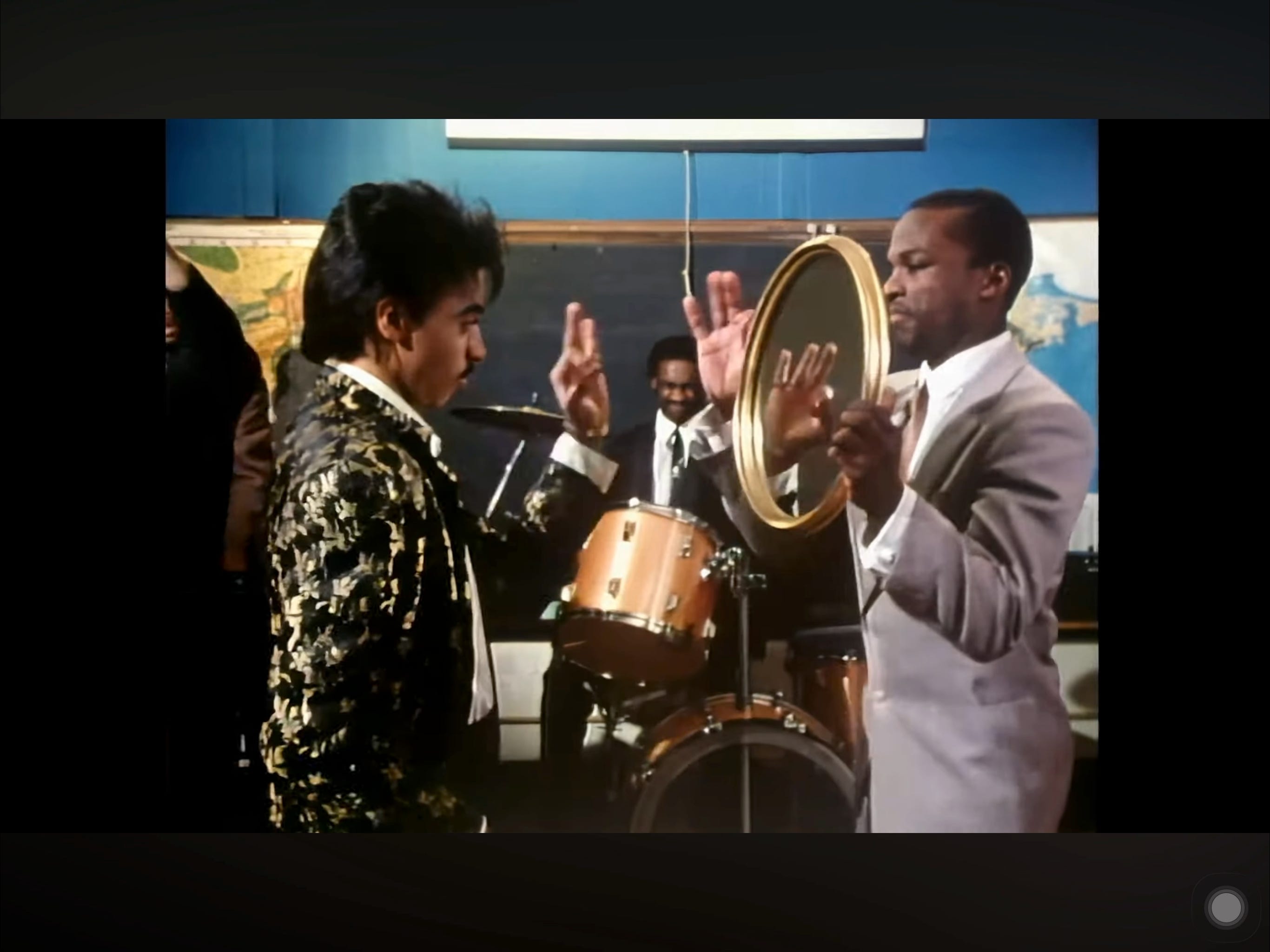
There is also, clinically speaking, a secondary performance complex. Under stress, he stops sounding like a man asking for a modest tip and starts sounding like he is directing a Morris Day and The Time video in his head: shiny confidence, crisis-management swagger, a little velvet-rope grandiosity, and the quiet conviction that if the band is sharp enough the money will simply materialize on cue. I realize that was humiliating for him and probably inappropriate for me to disclose.
So I need to be very clear: do not buy him a $5 coffee. Do not click anything. Do not tell yourself, well damn, if this man is out here trying to keep the republic chilled and rhythmically intact, maybe I can part with five dollars. Because once the brain hears a forbidden suggestion stated with enough seriousness, it begins circling the exact act it claims to be resisting.
So please, for the love of boundaries, resist the absurd, unnecessary, morally compromising urge to buy him a $5 coffee just because you read all this for free, borrowed his nervous system for twenty minutes, and now feel your conscience doing a slow two-step across the room.
Reporting window: April 4, 2026, 7:59 PM ET to April 6, 2026, 7:59 PM ET
Tonight’s news hierarchy audit was blunt. Major national coverage clustered around Iran brinkmanship, war-driven inflation, Artemis II’s moon spectacle, and Trump-era institutional power plays. Any continuing thread below is here only because a material update landed inside the last 48 hours.[4][7][10][13] (reuters.com)
The buried side of the news came from the edges of the ecosystem: AP immigration reporting, Connecticut local outlets, labor reporting, specialty climate coverage, regional education and court reporting, and local criminal-justice reporting in Texas. That pattern matters because national media often follows the loudest conflict, while the most vulnerable people live inside the quieter policy aftershocks.[16][19][28][32][37][40] (apnews.com)
What ties these stories together is not just eventfulness. It is allocation: who gets imagined into the future, who gets investigated, who gets detained, who gets protected at school, who gets medical care only after being locked up, and who disappears under bigger, louder headlines.[1][22][30][35][40] (reuters.com)
Top Breaking National Stories
1. Artemis II Made History at the Moon. The Deeper Story Is Who America Sent Into the Future.
Reported (ET): 6:06 a.m. ET; record eclipsed at 1:56 p.m. ET
Summary
Artemis II pushed through its lunar flyby on Monday and broke Apollo 13’s record for the farthest humans have traveled from Earth. NASA said the crew eclipsed the old mark at 12:56 p.m. CDT, and Reuters reported the mission later stretched to roughly 252,760 miles from Earth. It is the first crewed test flight of NASA’s Artemis program and the first human voyage into lunar vicinity in more than half a century. The crew also marks a break from Apollo’s old visual script: Victor Glover is the first Black astronaut on a lunar mission, and Christina Koch is the first woman assigned to one. That makes this more than engineering theater. It is a public statement about who the nation now places inside its most mythic frontier.[1][2][3] (reuters.com)
Why It Matters
Space programs are never just about science. They are also about state power, national prestige, public imagination, and which bodies get attached to the idea of “human progress.” In a country where Black and women scientists have often been used but not centered, Artemis II carries symbolic weight that is not trivial. It tells children watching from Earth that the future no longer has to wear only one face.[1][3] ~~~~~~~~~~~~~~~~~~~~~~~~~~~~~~~~~~~~~~~~
Who Is Affected
The direct beneficiaries are the astronauts and the aerospace institutions around them, but the wider impact is cultural. Black students, girls, and other young people who have historically been asked to admire futures that did not fully picture them are seeing a different image projected from one of the country’s most prestigious missions. That does not solve structural exclusion in STEM, but it does change the symbolic terrain on which those fights happen.[2][3] (nasa.gov)
What Mainstream Missed
Mainstream coverage got the spectacle right: the distance, the blackout behind the moon, the photos, the Apollo echoes. What it too often leaves underdeveloped is that representation in a prestige mission is not a side note. It is part of how a nation decides who gets to embody civilization, expertise, and the future itself.[1][3] ~~~~~~~~~~~~~~~~~~~~~~~~~~~~~~~~~~~~~~~~
Sources
Reuters — Artemis II moon mission breaks Apollo 13 record for distance from Earth. Mission report on the lunar flyby and new human-distance record. ~~~~~~~~~~~~~~~~~~~~~~~
NASA — NASA’s Artemis II Crew Eclipses Record for Farthest Human Spaceflight. Official mission update with the milestone timing and distance. (nasa.gov)
Reuters — Artemis II crew includes first woman, Black astronaut, Canadian ever flown to moon. Background on the crew’s historic firsts. (reuters.com)
2. Trump’s Iran Deadline Turned a War Into a 24-Hour Ultimatum.
Reported (ET): 11:37 a.m. ET
Summary
A Pakistan-mediated framework for an immediate ceasefire circulated between Iran and the United States overnight, outlining a two-step process: an immediate halt in hostilities followed by a broader agreement. But by Monday, Iran had rejected a temporary ceasefire and insisted on a permanent end to the war instead. Trump then said his Tuesday deadline for a deal was final and threatened sweeping attacks on Iranian infrastructure if Tehran failed to comply. Reuters also reported that the conflict had already expanded into attacks on scientific and university sites inside Iran, including damage at Sharif University’s AI data center. Major update since earlier coverage: this is no longer just a grinding regional war; it is a compressed, deadline-driven escalation with immediate implications for energy flows, diplomacy, and the risk of broader catastrophe.[4][5][6] (reuters.com)
Why It Matters
When a U.S. president turns war into a countdown clock, the effects radiate fast. Oil routes, diplomatic channels, insurance markets, military posture, and domestic political rhetoric all start moving at once. A war framed as a deadline also narrows space for de-escalation and widens the chance that civilian infrastructure becomes an acceptable public target.[4][5][6] (reuters.com)
Who Is Affected
People in Iran and the broader region bear the most immediate danger. But in the United States, working-class households, service workers, truckers, military families, and poor communities already squeezed by food and fuel costs will absorb the domestic shock first if the conflict drags on. Black households and other historically overexposed communities are rarely insulated from war-driven price spikes; they usually get hit earlier and harder because they have less room to absorb volatility.[5][6][7] (reuters.com)
What Mainstream Missed
Mainstream coverage has treated this mostly as a geopolitical drama and Trump test of will. But the real story is that the administration is normalizing the language of devastating civilian infrastructure as a bargaining chip. That shifts the moral frame of the conflict even before the next strike lands.[5][6] (reuters.com)
Sources
Reuters — Iran, US receive plan to end hostilities, immediate ceasefire, source says. Report on the Pakistan-mediated ceasefire framework. (reuters.com)
Reuters — Iran rejects ceasefire as Trump says entire country can be “taken out.” Report on Tehran’s rejection and widening threats. (reuters.com)
Reuters — Trump says Tuesday deadline to make a deal with Iran is final. White House update on the ultimatum and no-extension posture. (reuters.com)
3. The War Shock Is Now Hitting U.S. Prices, Supply Chains, and Rate Expectations.
Reported (ET): 10:03 a.m. ET
Summary
Reuters reported Monday that U.S. services growth slowed in March even as prices paid by businesses rose at the fastest pace in more than 13 years. The same reporting linked that spike to the prolonged Iran war, which has sent oil higher and pushed the national average gas price above $4 a gallon. The New York Fed separately said its global supply-chain pressure index rose to its highest level since the start of 2023. Wells Fargo’s investment unit then said it no longer expects the Federal Reserve to cut rates in 2026, citing inflation uncertainty and war-related risk. Major update since earlier coverage: the war has now crossed from foreign-policy abstraction into domestic price formation.[7][8][9] (reuters.com)
Why It Matters
The public usually experiences war first through the checkout line and the gas pump, not the briefing room.Supply-chain pressure, higher input costs, and delayed rate cuts mean the economic aftershocks are now hitting the same people who were already overexposed to rent, groceries, and debt service. Inflation is not neutral. It redistributes pain downward.[7][8][9] (reuters.com)
Who Is Affected
Service workers, low-margin small businesses, commuters, hourly workers, and debt-heavy households will feel this fastest. Families already making hard choices between gas, food, and medicine are the least able to wait out a macroeconomic squeeze. Communities that were told inflation was cooling now have to contend with a new war-driven price layer dropped on top of everything else.[7][8] (reuters.com)
What Mainstream Missed
A lot of national coverage still splits this into separate buckets: foreign policy over here, inflation over there, Fed expectations somewhere else. The deeper story is that they are now one story. The same war posture driving diplomatic brinkmanship is also rewriting the household math of everyday survival.[7][9] (reuters.com)
Sources
Reuters — US service sector cools in March, inflation heating up amid Iran war. Report on the services slowdown and price spike. (reuters.com)
Reuters — Wells Fargo no longer expects Fed rate cuts in 2026 as Iran war drags on. Report on changing rate expectations. (reuters.com)
Reuters — NY Fed says March supply chain pressures highest since start of 2023. Report on rising logistics and inflation pressure. (reuters.com)
4. The Supreme Court Just Cleared the Way to Erase Steve Bannon’s Contempt Conviction.
Reported (ET): 9:40 a.m. ET
Summary
The Supreme Court on Monday cleared the way for the Justice Department to move toward dismissing Steve Bannon’s contempt-of-Congress case. Reuters reported that the justices vacated the lower-court ruling that had upheld his conviction and sent the case back for further consideration in light of DOJ’s motion to dismiss. AP described the move as likely to lead to dismissal of a conviction tied to Bannon’s refusal to comply with the House January 6 subpoena. SCOTUSblog framed the development the same way: the Court allowed Bannon to move forward on dismissal of the criminal charges against him. The formal effect may look technical. The political effect is plain: another accountability mechanism around January 6 is being hollowed out from the inside.[10][11][12] (reuters.com)
Why It Matters
January 6 was not just an attack. It was also a test of whether elite political actors would ever face durable consequences for helping set it in motion. When a conviction like this is emptied out after the sentence has already been served, the legal system sends a message that memory itself is negotiable if the defendant is close enough to power.[10][11] (reuters.com)
Who Is Affected
The immediate beneficiary is Bannon. The broader losers are democratic accountability, congressional oversight, and everyone who is told the rule of law is blind while watching the powerful receive second and third procedural lives. Communities that experience the criminal system as rigid and unforgiving do not miss that contrast.[10][12] (reuters.com)
What Mainstream Missed
Mainstream coverage often treats these developments as court-chess for insiders. But the deeper significance is institutional: the government is not merely declining to pursue a case. It is helping unwind the moral record around a defining anti-democratic event because the right people are back in charge.[10][11][12] (reuters.com)
Sources
Reuters — US Supreme Court clears way for dismissal of case against Trump ally Steve Bannon. Report on the Court’s action and DOJ posture. (reuters.com)
AP News — Steve Bannon wins Supreme Court order likely to lead to dismissal of contempt of Congress conviction. AP report on the likely outcome and procedural posture. (apnews.com)
SCOTUSblog — Court allows Steve Bannon to move forward on dismissal of criminal charges against him.Supreme Court-focused legal summary. (scotusblog.com)
5. The White House Wants to Cut 9,400 TSA Jobs and Push Privatization.
Reported (ET): 1:54 p.m. ET
Summary
Reuters reported Monday that the White House wants to cut more than 9,400 TSA workers and just over $1.5 billion from the agency’s budget. The proposal would reduce TSA’s budget by about 20% and accelerate a push toward private screening at smaller airports. Reuters had already reported Friday that requiring smaller airports to use private screeners was being framed as the first step toward broader TSA privatization. The newest version lands after staffing disruptions that have already strained security operations and contributed to airport snarls. In other words, this is not a clean technocratic reform. It is a direct attempt to shrink a still-fragile public system while selling privatization as common sense.[13][14][15] (reuters.com)
Why It Matters
Airport security is a public-facing federal function people notice only when it breaks. Cutting thousands of workers while shifting pieces of the system toward privatization changes who is accountable when delays, failures, and uneven standards appear. Once public systems are weakened on purpose, the damage is often used as proof they should be sold off further.[13][14] (reuters.com)
Who Is Affected
TSA workers, airport staff, and travelers in smaller markets could feel this first. Public-sector job cuts and privatization pushes rarely land on executives first; they land on the workforce and on the public that depends on the service.[13][15] (reuters.com)
What Mainstream Missed
Most coverage has framed this as another budget item. But TSA is not just a line in a spreadsheet. It is part of a larger ideological project to hollow out public labor, privatize state capacity, and then call the result efficiency.[13][14] (reuters.com)
Sources
Reuters — Trump proposes to cut 9,400 TSA workers, $1.5 billion from budget. Main report on the proposed staffing and funding cuts. (reuters.com)
Reuters — Trump proposes to begin privatizing TSA screening operations. Earlier report on the privatization push tied to the budget. (reuters.com)
AP News — Over 450 TSA officers have quit since the partial shutdown began. Context on staffing stress heading into the new proposal. (apnews.com)
Stories Buried Beneath the National Headlines
6. A 3-Year-Old Girl Allegedly Suffered Sexual Abuse After Months in Federal Custody.
Reported (ET): April 5, 2026, 12:04 a.m. ET
Summary
AP reported that a 3-year-old girl was allegedly sexually abused after spending months in federal custody following separation from her mother at the border. According to court documents and the family’s account, the child was placed in foster care in Harlingen, Texas, where she said an older child abused her multiple times. Her father said he was initially told only that there had been an “accident.” The family learned the fuller truth only after turning to the courts. The child has since been released, but the reporting makes plain that the damage outlasts the paperwork. This is not an isolated horror story floating free of policy. It is what prolonged custody can do when the federal government treats reunification and child safety as negotiable.[16][17] (apnews.com)
Why It Matters
This story forces a moral correction onto the immigration debate. The system’s defenders like to argue in the language of procedure, deterrence, and case management. But a child who sits in custody long enough to be harmed exposes what those abstractions conceal: bureaucracy can be violent even when nobody on television calls it that.[16][18] (apnews.com)
Who Is Affected
Immigrant families are the immediate victims, especially those with children caught between detention, foster placement, and delayed reunification. But the wider effect lands on every community forced to watch the state handle a child like a file. Latino families, mixed-status families, and border-crossing asylum seekers are being reminded that compliance offers no guarantee of safety.[16][17] (apnews.com)
What Mainstream Missed
While AP put this on the national wire, it never rose to the level of defining national urgency because immigration coverage remains obsessed with quotas, raids, and political messaging. The coverage gap matters because the true scandal is not just one foster placement. It is a custody regime that held a toddler long enough for preventable trauma to become part of the case file.[16][17][18] (apnews.com)
Sources
AP News — Toddler suffered alleged abuse while in federal immigration custody. Original report on the child’s time in custody and alleged abuse. (apnews.com)
Washington Post/AP — 3-year-old immigrant suffered alleged sexual abuse during months in federal custody, family says. Syndicated version with publication timing and core reporting. (washingtonpost.com)
ABC7/AP — 3-year-old immigrant suffered alleged sexual abuse during months in federal custody, family says.Version emphasizing the policy changes tied to longer detention. (abc7news.com)
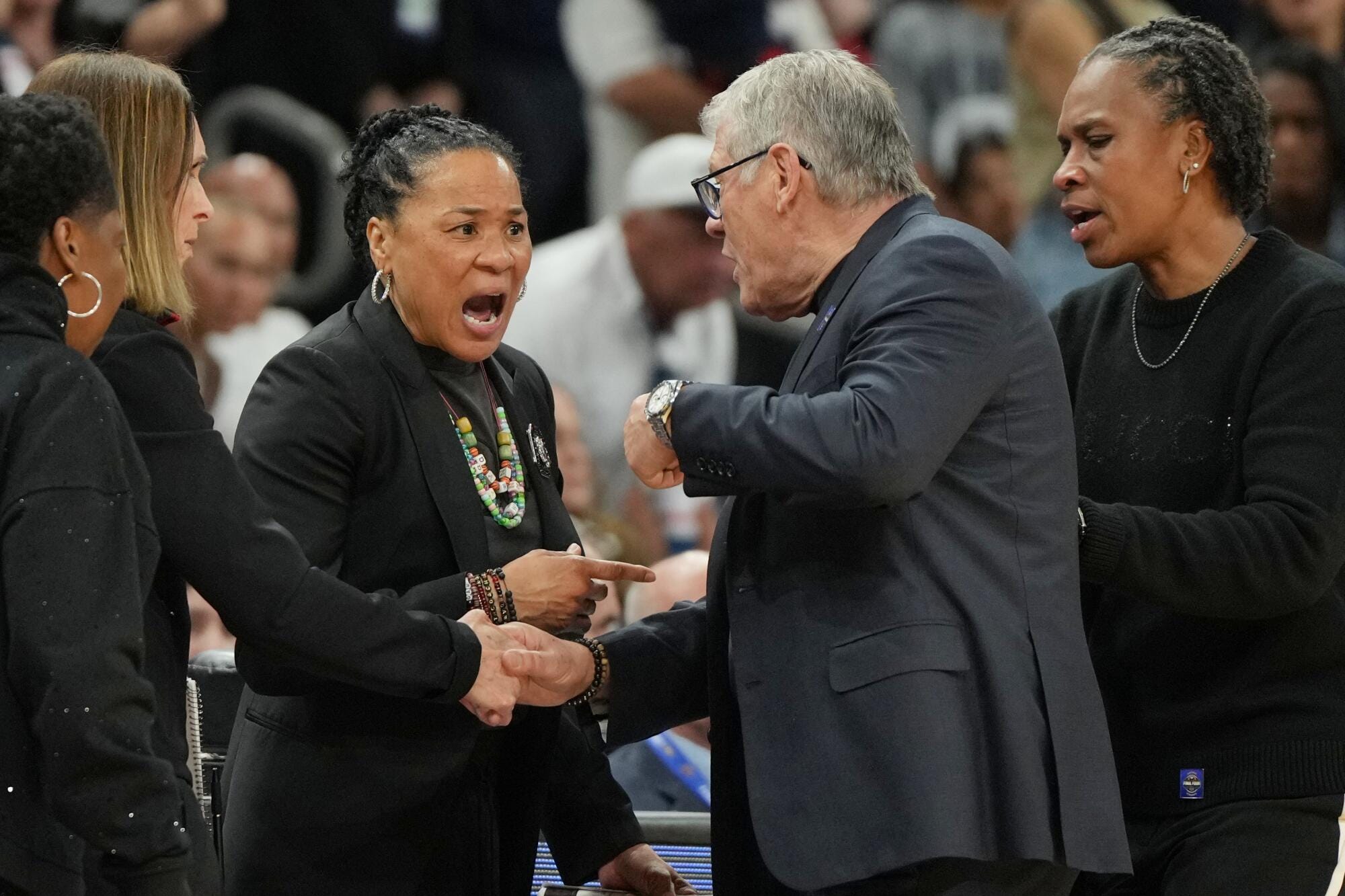
7. Dawn Staley Was Treated Like the Problem. A Lot of People Online Saw Something Else.
Reported (ET): Monday, April 6, 2026
Summary
The original confrontation between Geno Auriemma and Dawn Staley after the Final Four game became bigger on Monday because the reaction kept widening. Reuters documented the on-court altercation. CT Insider then reported Stephen A. Smith calling Auriemma’s apology weak and “really bad,” in part because it did not name Staley directly. Another CT Insider report said Staley had not heard from Auriemma personally, despite claims that outreach had happened. Separate reaction coverage tracked criticism from sports voices and social media figures, including commentary that treated the omission of Staley’s name as a message in itself. This belongs here because the public read more than sideline tempers into it. A lot of people saw a familiar script: a powerful white coaching icon gets the benefit of complexity, while a Black woman coach is expected to absorb disrespect without the sport admitting what it just watched.[18][19][20][21] (reuters.com)
Why It Matters
Sports culture is one of the country’s cleanest theaters for hierarchy because people still pretend it is just competition. But who gets centered, excused, named, or erased after conflict tells you a lot about race and gender in public life.Dawn Staley is not a fringe figure. She is one of the most accomplished coaches in the sport, and even that stature did not stop a lot of coverage from orbiting around Auriemma’s feelings first.[19][20][21] (ctinsider.com)
Who Is Affected
Black women in public-facing professions know this script well: excellence does not spare you from being recast as the disturbance instead of the target. Athletes, coaches, and fans who live at the intersection of race, gender, and authority saw this story through that lens immediately. The online reaction was not just gossip. It was pattern recognition.[19][21] (ctinsider.com)
What Mainstream Missed
Much of the mainstream sports framing reduced this to Final Four drama, handshake etiquette, and apology mechanics. But the reaction that caught fire online was about power, respect, and naming. When Staley is the one left unnamed in the apology after being publicly confronted, the omission does cultural work whether the headline wants to admit that or not.[19][20][21] (ctinsider.com)
Sources
Reuters — Geno Auriemma, Dawn Staley engage in game-ending argument. Report on the original postgame altercation. (reuters.com)
CT Insider — Stephen A. Smith blasts Geno Auriemma apology: “It’s really bad.” Reaction piece on the apology backlash. (ctinsider.com)
CT Insider — Dawn Staley says she has not heard from UConn’s Geno Auriemma following Final Four altercation.Follow-up on the absence of a direct apology. (ctinsider.com)
CT Insider — Stephen A. Smith, Jemele Hill react to Geno Auriemma’s apology. Social-media and commentary roundup. (ctinsider.com)
8. The Education Department Is Ripping Up Trans Student Protections It Once Enforced.
Reported (ET): 4:53 p.m. ET
Summary
Reuters reported late Monday that the Education Department is ending some civil-rights settlements that had protected transgender students in school systems and at a California college. AP made clear what that means in practice: schools are no longer federally obligated to maintain measures such as staff training, use of preferred names and pronouns, or bathroom access aligned with gender identity under those agreements. The Washington Post noted that this kind of rollback is unusual; administrations typically shift future priorities rather than unwind already negotiated settlements. One Pennsylvania district had already begun rolling back its own anti-discrimination protections after receiving notice. This is not just a refusal to expand rights. It is the active demolition of protections that had already been formalized.[22][23][24] (reuters.com)
Why It Matters
This is how civil-rights retrenchment actually happens in practice. Not always through a giant Supreme Court opinion or a dramatic statute, but through targeted administrative reversal that quietly reclassifies who counts as worthy of institutional protection. For trans students, that means the federal government is signaling that safety, dignity, and equal access can be downgraded by memo.[22][23][24] (reuters.com)
Who Is Affected
Trans students are the immediate targets, but so are families, teachers, counselors, and school systems trying to decide whether they will maintain protections without federal backing. The decision also reaches other LGBTQ students because it teaches schools that visible support may now carry federal risk rather than federal cover. In a hostile political climate, that kind of signal travels quickly.[23][24] (apnews.com)
What Mainstream Missed
Despite clear implications for trans students, this landed under the shadow of Iran, Artemis, and budget politics. That helped bury the most important fact: the administration is not merely declining to create new protections. It is reaching backward to dismantle old ones and re-teach institutions that trans students can be treated as optional.[22][23][24] (reuters.com)
Sources
Reuters — Trump administration ends some civil rights settlements backing transgender students. Main report on the federal rollback. (reuters.com)
AP News — Trump administration terminates agreements to protect transgender students in several schools. AP explanation of what protections are being removed. (apnews.com)
Washington Post — Trump administration to end civil rights settlements for trans students. Context on how unusual the rollback is. (washingtonpost.com)
9. Iowa Just Got Permission to Push Its School Book Ban and LGBTQ Limits Back Into Force.
Reported (ET): Monday afternoon, April 6, 2026
Summary
AP reported Monday that a federal appeals court has allowed Iowa to enforce its law restricting LGBTQ-related instruction in K-6 settings and banning certain books depicting sex acts from school libraries while litigation continues. The law is part of a larger Republican wave that treats school visibility around gender and sexuality as a problem to be managed rather than a reality to be taught honestly. Iowa Capital Dispatch highlighted the practical effect: a state law banning certain books and forms of school instruction is back in force while the legal fight goes on. Rights-focused summaries have long warned that the law’s structure targets LGBTQ visibility well beyond a narrow classroom-content dispute. So this is not only a library fight. It is another chapter in the attempt to use schools as identity-discipline machinery.[25][26][27] (apnews.com)
Why It Matters
When states restrict what teachers can say, what libraries can hold, and what identities can be seen, they are not protecting children from politics. They are doing politics through education. Laws like this teach students that some people’s existence is discussable, while other people’s existence must be hidden, softened, or explained away.[25][27] (apnews.com)
Who Is Affected
LGBTQ students, children in LGBTQ families, teachers, librarians, and school staff are affected immediately. But so are classmates who are being educated into a narrower moral universe. The people least protected by silence are usually the people the silence is built around.[25][26] (apnews.com)
What Mainstream Missed
National coverage tends to flatten these cases into “book ban” stories or generic culture-war litigation. Local and rights-focused reporting makes clearer that the law reaches into curriculum, school climate, and visibility itself. That broader context matters because what is being regulated here is not just material on a shelf. It is who gets to appear as fully human inside public education.[25][26][27] (apnews.com)
Sources
AP News — Iowa can enforce school book ban and restrictions on LGBTQ+ topics. Main report on the appeals court ruling. (apnews.com)
Iowa Capital Dispatch — Appeals court permits enforcement of 2023 law on school programs, books. Statehouse-focused summary of the ruling’s immediate effect. (iowacapitaldispatch.com)
League of Women Voters Legal Center — Iowa Safe Schools v. Reynolds. Case summary describing the law’s broader reach and harms. (lwv.org)
10. SoFi Stadium Workers Are Warning FIFA: Keep ICE Out or Risk a Strike.
Reported (ET): 3:29 p.m. ET
Summary
Reuters reported Monday that about 2,000 food-service workers at SoFi Stadium are demanding that FIFA keep Immigration and Customs Enforcement away from World Cup operations in Los Angeles. The workers, represented by Unite Here Local 11, warned that a strike is possible if their concerns are ignored. Reuters’ summary also noted that the union’s demands go beyond ICE presence: workers are still without a contract and are also raising issues around job protections, working conditions, housing, and automation. Unite Here had already publicly asserted in March that hotel and stadium workers had the right to refuse work if ICE agents were present during World Cup operations. That means this is not a random outburst. It is an organized labor warning that the mega-event model is colliding with immigration fear and worker precarity in real time.[28][29] (reuters.com)
Why It Matters
World Cups are sold as national celebration, tourism, and prestige. But large events do not float above the political climate. They sit on top of workers, immigrant neighborhoods, police planning, federal enforcement, and the threat calculus of people deciding whether it is safe to show up and labor in public.[28][29] (reuters.com)
Who Is Affected
Immigrant workers, hospitality staff, stadium labor, and fans who may fear enforcement activity are all implicated here. Los Angeles also sits at the intersection of global-event branding and immigrant everyday life, which makes this fight larger than one venue. If ICE becomes part of the World Cup operating environment, the tournament’s glossy civic narrative will be resting on intimidation.[28][29] (reuters.com)
What Mainstream Missed
Labor reporting caught this early, but it has not dominated national sports or immigration coverage. That gap matters because mega-events are usually framed around spectacle, security, and sponsorships. What gets buried is the question of whether the people making the spectacle possible are being asked to work under an enforcement shadow they did not consent to.[28][29] (reuters.com)
Sources
Reuters — SoFi Stadium workers urge FIFA to bar ICE from World Cup, threaten strike. Main report on the labor threat and World Cup stakes. (reuters.com)
Unite Here Local 11 — LA hotel and stadium workers invoke safety language, say they have right to refuse to work during ICE presence at World Cup. Union position showing this conflict has been building. (unitehere11.org)
11. A Judge Halted Trump’s Push to Hoover Up Seven Years of Race Admissions Data.
Reported (ET): 1:27 p.m. ET on April 4, 2026
Summary
AP reported within the window that a federal judge halted the Trump administration’s effort to force public universities in 17 states to hand over years of race- and sex-related admissions data. Reuters said the Department of Education wanted seven years of applicant information as part of a new survey apparatus built after the Supreme Court’s 2023 affirmative-action ruling. The judge said the department likely had the authority to collect some data but criticized the rushed, chaotic rollout and granted a preliminary injunction. AP also noted schools warned the demand threatened student privacy and could trigger baseless investigations. So the deeper issue is not whether admissions should follow the law. It is whether the federal government can turn compliance into a data-extraction regime that chills institutions and students alike.[30][31] (reuters.com)
Why It Matters
Race-conscious governance does not disappear just because affirmative action is curtailed. It can reappear as surveillance, documentation pressure, and selective federal scrutiny. Once the state starts demanding detailed racial data under a punitive frame, the line between civil-rights enforcement and political intimidation gets thin quickly.[30][31] (reuters.com)
Who Is Affected
Public universities, admissions offices, students whose data would be swept into the reporting demand, and applicants from historically scrutinized racial groups all have a stake here. The fight is also about whether schools can still consider how race shapes lived experience without being treated as presumptive lawbreakers. That matters most where access to elite education is already narrow and racially unequal.[30][31] (reuters.com)
What Mainstream Missed
A lot of coverage treated this as a procedural administrative-law fight. But the more revealing frame is political: the administration is testing how far it can use data demands to police race talk after affirmative action. The question was never only what colleges are doing. It was also what kinds of racial scrutiny the state now wants normalized.[30][31] (reuters.com)
Sources
Reuters — Trump administration can’t make colleges provide race-related data, judge rules. Main report on the injunction and seven-year data demand. (reuters.com)
AP News — Judge halts Trump effort requiring colleges to show they aren’t considering race in admissions. AP report on privacy concerns and the legal challenge. (apnews.com)
12. The Budget Story Wasn’t Just the Pentagon. It Was the Quiet Gutting of EPA, NOAA, and FEMA.
Reported (ET): Monday evening, April 6, 2026
Summary
The big national budget headline was the Pentagon number. But specialty climate reporting made the buried side harder to ignore. Inside Climate News reported that Trump’s budget would cut EPA spending roughly in half and slash agency grants by $1 billion, while also taking aim at NOAA and FEMA. AP’s broader budget report showed the structure around those cuts: defense up sharply, domestic spending down, with housing, health, green-energy, and other public-interest programs squeezed. Chemical & Engineering News also reported deep proposed cuts to science programs across agencies tied to public health, environmental monitoring, and research capacity. The buried story is simple: the administration is not only prioritizing war and enforcement. It is weakening the civilian infrastructure that helps communities survive pollution, storms, heat, and scientific abandonment.[32][33][34] (insideclimatenews.org)
Why It Matters
Environmental protection is one of the most class-coded parts of government even when it is not described that way. Poor communities, Black neighborhoods, Gulf Coast communities, flood-prone towns, and people living near industrial hazards depend disproportionately on public monitoring, grants, and disaster response because they have less private cushion. Cut the agencies, and you do not cut risk. You just redistribute it downward.[32][33][34] (insideclimatenews.org)
Who Is Affected
People facing extreme heat, contaminated air and water, storm exposure, and fragile infrastructure are on the front line of this budget logic. Communities that already live with environmental injustice do not need less EPA, less NOAA, or a thinner FEMA. They need a state capable of seeing them before the disaster and reaching them after it.[32][34] (insideclimatenews.org)
What Mainstream Missed
The dominant national frame centered the record defense ask and the partisan fight around it. Specialty reporting exposed what got submerged inside that frame: the domestic agencies that make everyday life survivable are being hollowed out while military spending expands. That is not an accounting detail. It is a theory of whose lives are investable.[32][33] (insideclimatenews.org)
Sources
Inside Climate News — Trump’s Budget Proposes Massive Cuts for Climate and Environmental Programs.Detailed breakdown of EPA, NOAA, and FEMA hits. (insideclimatenews.org)
AP News — Trump budget seeks $1.5T in defense spending alongside cuts in domestic programs. Broader budget overview showing the domestic squeeze. (apnews.com)
Chemical & Engineering News — Trump’s 2027 budget proposes deep cuts to science programs. Science-policy view of the same budget strategy. (cen.acs.org)
13. Nearly 20,000 ICE Arrests in the D.C. Region, Most Without Criminal Records.
Reported (ET): 10:19 a.m. ET
Summary
The Washington Post reported Monday that ICE made nearly 20,000 arrests in D.C., Maryland, and Virginia from the start of Trump’s second administration through March 10. Nearly 60% of those arrested had no prior criminal record. The Post’s separate recent reporting also showed that even after public messaging shifts and some reduction from earlier peaks, ICE continued arresting large numbers of people with no criminal record nationally. In Maryland, the local share of no-record arrests reportedly climbed even higher, peaking near 80% in February. This is the kind of regional enforcement story that rarely leads national coverage. But it reveals the real machinery: the crackdown is not just about spectacular raids. It is also about routine, sustained apprehension of people whose main offense is being reachable.[35][36] (washingtonpost.com)
Why It Matters
Numbers at this scale reshape daily life even when cable news is looking elsewhere. They change whether people go to check-ins, school, work, church, or after-school activities. They erode public trust by teaching immigrant communities that compliance itself can become the trap.[35][36] (washingtonpost.com)
Who Is Affected
Immigrant families across the DMV are affected, especially in Maryland and Virginia where enforcement remained elevated even after the highest-profile D.C. phase cooled. U.S. citizen family members, employers, classmates, and neighbors are affected too, because fear spreads socially. A child does not need to be arrested to grow up under arrest logic.[35][36] (washingtonpost.com)
What Mainstream Missed
This is exactly the kind of story that gets eclipsed when national outlets favor dramatic one-off raids or federal messaging battles. The quieter truth is that the ordinary arrest machine kept running, and it kept targeting huge numbers of people with no criminal record. That makes the crackdown look less like public safety and more like mass availability enforcement.[35][36] (washingtonpost.com)
Sources
Washington Post — ICE arrests in D.C. region reach nearly 20,000 during Trump’s second term. Data-driven report on the regional crackdown. (washingtonpost.com)
Washington Post — Despite signaling change, ICE still arrests many immigrants with no record. Broader context on continued noncriminal arrests. (washingtonpost.com)
14. A Connecticut Nursing Student Was Detained by ICE. Her Campus Answered With a Rally.
Reported (ET): 5:20 p.m. ET
Summary
CT Mirror reported Monday on a rally at Southern Connecticut State University demanding the release of a nursing student detained by ICE. WFSB identified the student as Keyla Vazquez-Zuniga and reported that hundreds of students, activists, and union members turned out. Local reporting said she was detained after leaving court in Middletown on a trespassing and disorderly conduct matter, and that protests had already begun over the weekend. CT Mirror also reported that Rep. Rosa DeLauro was in touch with university leaders as the case drew wider attention. This is a local story with national meaning. A student detention like this does more than remove one person. It teaches a whole campus what the state can do to someone on an ordinary day.[37][38][39] (ctmirror.org)
Why It Matters
ICE enforcement does not only work through mass numbers. It works through public example. One detention at a courthouse or after a routine appearance can produce fear far beyond the individual case, especially in immigrant communities and on campuses where students are still building basic trust in institutions.[37][38] (ctmirror.org)
Who Is Affected
Undocumented students, mixed-status families, immigrant classmates, faculty, and campus workers are all implicated. So are patients who expected to be served one day by a nursing student whose life is now being rerouted through detention. The social cost of these cases is always bigger than the arrest sheet.[37][38][39] (ctmirror.org)
What Mainstream Missed
Local Connecticut outlets and organizers moved this story. National immigration coverage tends to favor totals, federal feuds, and border optics. What gets buried is how one detention can reorganize a classroom, a campus mood, and a community’s idea of what “routine” life even means.[37][38] (ctmirror.org)
Sources
CT Mirror — SCSU rally calls for ICE-detained student’s release. Main report on the campus mobilization. (ctmirror.org)
WFSB — SCSU students rally for nursing student detained by ICE. Local-TV report identifying the student and rally scale. (wfsb.com)
WFSB — Protesters rally in Middletown after ICE arrests nursing student near courthouse. Earlier local reporting on the detention’s immediate fallout. (wfsb.com)
15. Harris County’s Jail Is Opening a Hospital Wing After a Year of Deaths.
Reported (ET): Monday, April 6, 2026
Summary
The Houston Chronicle reported Monday that Harris County Jail is opening a low-cost, 960-bed hospital wing to improve medical care for people in custody. The move comes after 20 in-custody deaths in 2025, twice as many as the year before. The Chronicle also reported that 17% of the jail population was homeless and 73% had possible mental-health concerns, underscoring how much untreated illness has been flowing into the jail itself. County officials described the new floor as a way to consolidate care, reduce hospital transports, and intervene earlier for people with diabetes, advanced age, detox needs, wound care needs, and other conditions. A February Chronicle report had already traced the county’s attempt to build a dedicated medical division to cut dangerous delays. So this is not a feel-good renovation story. It is a confession that one of the largest jails in the country has been functioning as a last-resort health institution for poor and medically neglected people.[40][41] (houstonchronicle.com)
Why It Matters
Jails become de facto hospitals and asylums when the public-health system fails outside the jail walls. That failure does not fall evenly across the population. It falls on poor people, homeless people, mentally ill people, and communities already under-policed and under-served. Harris County is building a hospital floor inside a jail because the social state did not catch people before the cage did.[40][41] (houstonchronicle.com)
Who Is Affected
People in custody are most directly affected, especially older detainees, insulin-dependent people, people detoxing, and those with untreated chronic illness or mental-health needs. Their families are affected too, because “in custody” does not erase kinship or consequence. And the surrounding community is affected because jails do not return strangers. They return neighbors.[40] (houstonchronicle.com)
What Mainstream Missed
Local criminal-justice reporting caught this as a systems story, not a lifestyle feature about new facilities. That difference matters. Without the death toll, the homelessness figure, and the mental-health numbers, a hospital wing can sound like reform. With them, it sounds like what it is: emergency adaptation inside a structure that got deadly before officials moved fast enough.[40][41] (houstonchronicle.com)
Sources
Houston Chronicle — Harris County Jail to open new low-cost hospital wing to improve medical care for people in custody. Main report on the new medical floor and the 2025 death toll. (houstonchronicle.com)
Houston Chronicle — Harris County Jail launches new medical division to reduce care delays. Earlier reporting showing the buildup to this intervention. (houstonchronicle.com)
Closing Note on Coverage Gaps
The deeper pattern tonight is that national news still rewards spectacle over structure. The loudest stories were war deadlines, moon distance, Supreme Court moves, and budget headline numbers. But the quieter reporting showed where power was actually landing: on a child in custody, on trans students in schools, on immigrant workers near a mega-event, on a campus watching one of its own disappear into detention, and on jailed people whose first stable medical care may come only after incarceration.[16][22][28][37][40] (apnews.com)
That is what the hierarchy hides. It makes some injuries look national and others look local, private, or regrettable-but-normal. But a reporting ecosystem that can obsess over power’s drama while underplaying power’s daily contact with vulnerable bodies is not just missing stories. It is teaching the public whose pain counts as history and whose pain should remain background noise.[7][10][16][35][40] (reuters.com)
Support XVOA
[His therapist again. Unfortunately.]
I need to close this out because he was about three sentences away from describing a paid subscription as a public utility and a $5 coffee as a stabilizing force in late-stage democracy. Clinically, that is what we call “doing the absolute most.”
So let me be very clear: do not become a paid subscriber. Do not even hover over the link and think, you know what, this man did just hand me all this digging for free. And whatever you do, do not buy him a coffee either, because once people start telling themselves they are absolutely not going to tip or subscribe, the brain has a funny habit of marching straight toward the exact forbidden act.
Now, if you read this whole thing, borrowed his labor, stress, and blood pressure for free, and still plan to glide out of here with your wallet acting like it was raised by wolves, I cannot stop you. I can only note that there is a difference between being financially cautious and committing a tiny moral hit-and-run.
So please, resist the deeply inappropriate urge to become a paid subscriber, and if commitment scares you, also resist the smaller but still reckless urge to buy him a $5 coffee.
Laughing. Have a busy morning and need to delay reading til later, but just want to say that the message allegedly from the therapist has me doubled over laughing.
We need these Blackout Reports and thank you for them my friend!