

Blackout Brief Daily | April 7, 2026
So damn reliable you forget how good it is. Like COOL AC, baby.
4-7-2026 7:46pm Update: Ninety minutes before the deadline, Trump traded his “whole civilization” threat for a two-week ceasefire, contingent on Iran reopening the Strait of Hormuz while talks continue.
Five Things That Matter Today
• Trump’s threat that “a whole civilization will die tonight” pushed the Iran war into a darker register, because the question is no longer whether the rhetoric is apocalyptic. The question is whether the public is now being marched toward a level of escalation that official language still refuses to name cleanly. (reuters.com)
• The phrase “Exhibit A” is no longer fringe talk. It is now entering the legal commentary around Trump’s Iran posts, as war-crimes scholars and former military lawyers warn that public threats against civilian infrastructure could become evidentiary material later. (truthout.org)
• Bloomberg’s headline said the Iran war “broke the petrodollar.” Reuters and Deutsche Bank are more careful, but they are not laughing the claim out of the room. They say the pillars under that arrangement are under visible strain.(bloomberg.com)
• Reuters found TSA’s anti-terror screening system was used to send ICE more than 31,000 traveler records, helping drive more than 800 arrests. A system sold to the public as aviation security is now sitting inside the deportation machine. (reuters.com)
• Beneath the war headlines, the buried map was full of quieter injuries: Black nonprofits losing the money they were promised, public-housing residents trapped in ledger chaos, blind students still locked out of coursework, counties making money off immigrant detention, and trans student protections being torn up. (apnews.com)
[A brief interruption from The Washington Post, arranged by Dr. Vanessa Tolliver]
Hello. At the invitation of Dr. Vanessa Tolliver, we felt compelled to step in before too many of you mistook this for actual media. This is not a newsroom. There are no foreign desks, no polished conference rooms, no tense budget meetings, no elegant masthead energy. This is, at best, a random Black guy with a keyboard and a bloodstream that appears to be 40% grievance and 60% caffeine.
Please do not waste your time restacking these posts as if they are contributing to the republic in any meaningful way. And whatever you do, do not throw away $5 on a coffee that, from every available metric, does not stop a war, lower egg prices, or stabilize the global order. If you must spend money, spend it with us, where your subscription goes to real journalists in real offices doing real journalism with badges, Slack channels, and expense reports.
Then again, if reading that made your shoulders tighten and your wallet start reaching for money out of pure spite, that would be unfortunate. We would strongly discourage any childish urge to give this man $10, $20, or even $100 just to tell us to go to hell. That would be irrational, petty, emotionally satisfying, and therefore beneath you.
So please, return to the safety of institutional journalism, where your money supports established professionals and not one loud Negro with a Substack, a therapist, and an increasingly theatrical relationship to Buy Me a Coffee.
Reporting window: April 5, 2026, 2:09 PM ET to April 7, 2026, 2:09 PM ET.
The news hierarchy audit was unusually clear today. Major national attention clustered around Trump’s Iran deadline, the legality of striking civilian infrastructure, oil shock, and the financial symbolism of a possible petrodollar fracture. Even when domestic stories broke through, they did so mostly if they could be tied back to national security, markets, or spectacle. (reuters.com)
The buried side looked different. Local reporting, legal verticals, nonprofit accountability reporting, education coverage, and immigration-focused outlets were tracking the real domestic aftershocks: who gets detained, who gets funded, who gets pushed out of school, who gets told their protections no longer count, and who gets left to live inside administrative chaos. That split matters because it shows the same old hierarchy at work: power’s loudest moves get front-page treatment, while power’s daily contact with vulnerable people gets treated like side noise.(apnews.com)
Top Breaking National Stories
1. Trump’s “Whole Civilization” Threat Made the Nuclear Question Unavoidable
Reported (ET): Tuesday, April 7
Summary
Trump escalated his Iran deadline again on Tuesday, warning that “a whole civilization will die tonight” if Tehran did not comply with his terms for reopening the Strait of Hormuz. Reuters and AP both treated the statement as a major escalation in an already widening war, especially because it came after repeated threats to hit Iran’s bridges and power plants. At the same time, U.S. officials quoted in public reporting kept framing the war around forcing Iran to give up itsnuclear ambitions, not around any declared American move toward nuclear use. But that does not close the question. With allied officials warning of nuclear escalation, and with strikes already landing near Bushehr, Iran’s only functioning nuclear power plant, the public now has reason to ask whether the escalation ladder is being climbed faster than the language admits. There is no public confirmation in the Reuters and AP reporting reviewed for this brief that Washington is preparing to use nuclear weapons. There is, however, abundant evidence that the war is now brushing up against nuclear risk, nuclear infrastructure, and nuclear rhetoric. (reuters.com)
Why It Matters
A president threatening the destruction of “a whole civilization” is not just indulging in bombast. He is changing the moral register of the war and widening the zone of what the public may be asked to normalize next. Once that happens, the line between conventional escalation and catastrophic escalation stops looking theoretical. (reuters.com)
Who Is Affected
Iranians face the most direct danger, especially civilians whose access to electricity, transport, water treatment, and medical continuity depends on infrastructure now being openly discussed as a pressure point. But the risk also spreads outward: Gulf populations, U.S. service members, oil-dependent economies, and poor households globally would all pay for an escalation that brushes a nuclear facility or triggers a wider regional response. (reuters.com)
What Mainstream Missed
Mainstream coverage is treating the nuclear question mostly as shorthand for Iran’s weapons program. What it has not fully absorbed is that the combination of apocalyptic rhetoric, attacks near Bushehr, and allied warnings about nuclear escalation means the question has changed. The issue is no longer only whether Iran gets a bomb. It is whether the war is drifting into a zone where nuclear catastrophe could arrive through escalation, miscalculation, or radiological disaster even without an announced nuclear strike. (reuters.com)
Sources
Reuters — Report on Trump’s “whole civilization” threat and Tuesday deadline.
Reuters — Report on U.S. strikes on Kharg Island and the administration’s demand that Iran forswear nuclear weapons. (reuters.com)
Reuters — Report on Italian Defense Minister Guido Crosetto warning of nuclear escalation. (reuters.com)
Reuters — IAEA-confirmed report on strikes landing near Bushehr nuclear power plant. (reuters.com)
2. Legal Scholars Are Starting to Talk Like the Record Is Already Being Built
Reported (ET): Tuesday, April 7
Summary
The most arresting line in the legal backlash came from Yale law professor Oona Hathaway, whom Truthout quoted as saying Trump’s post would be “exhibit A in future war crimes trials if he carries out his threats.” That exact phrasing is not how Reuters or AP wrote the story, but the institutional argument they reported is not far away from it. Just Security’s former JAG authors warned that Trump’s public threats are plainly illegal, place service members in an intolerable position, and could later serve as evidence of notice and intent in congressional or criminal investigations. Reuters had already reported last week that more than 100 U.S.-based international law experts said American strikes on Iran may amount to war crimes. AP and the Washington Post both reported this week that former military lawyers and legal scholars see Trump’s rhetoric as potentially unlawful if acted upon. So the “Exhibit A” line may sound dramatic, but the larger legal ecosystem is moving in the same direction: the record is no longer hypothetical. (truthout.org)
Why It Matters
War-crimes talk is usually framed as moral outrage, then filed away as symbolism. But public statements by top officials can matter later because they help establish intent, notice, and the atmosphere inside which illegal orders might be issued or obeyed. That is why lawyers are paying attention to rhetoric, not just bombs. (justsecurity.org)
Who Is Affected
Iranian civilians are obviously in danger if the threats become operations. But U.S. pilots, commanders, targeteers, and lawyers are also affected because they may be the people asked to translate theatrical rhetoric into actual strike packages. And if the law of war is openly mocked from the top, the burden shifts downward onto the people expected to refuse unlawful orders in real time. (theguardian.com)
What Mainstream Missed
Much of the mainstream frame is still “Trump says shocking thing, critics object.” That is too shallow. The more serious story is that former military lawyers and international law scholars are now discussing his language as material that could matter in future proceedings, not merely as bad optics. (justsecurity.org)
Sources
Truthout — Report quoting Oona Hathaway’s “Exhibit A” warning. (truthout.org)
Just Security — Former JAG analysis arguing Trump’s rhetoric could matter in future investigations. (justsecurity.org)
Reuters — Report on more than 100 U.S. legal experts warning that American strikes may amount to war crimes. (reuters.com)
AP News — Report on experts saying Trump’s threatened destruction of civilian infrastructure could be a war crime. (apnews.com)
3. Bloomberg Declared the Petrodollar “Broken.” Reuters and Deutsche Bank Say the Foundations Are Cracking, Not Gone.
Reported (ET): Monday, April 6
Summary
Bloomberg Opinion pushed the strongest version of the argument, declaring that the Iran war had broken the petrodollar loop that helped support Treasury markets. Reuters and Deutsche Bank used more cautious language, but both were still writing about strain at the foundations rather than routine turbulence. Reuters said the old bargain rested on three pillars — America’s need for oil, oil priced in dollars, and Gulf security ties to Washington — and argued that all three are now under strain. Deutsche Bank called the present conflict a “perfect storm for the petrodollar” and warned that the Middle East remains strategically central to the dollar’s reserve-currency role. In plain English: Bloomberg wrote the obituary first, while Reuters and Deutsche Bank are still writing the autopsy notes. But none of them are treating this as normal background noise. (bloomberg.com)
Why It Matters
If the petrodollar weakens materially, the consequences do not stay in finance columns. Dollar demand, Treasury support, oil invoicing, sanctions power, and the price of American borrowing are all tied to that arrangement. Even partial erosion matters because U.S. geopolitical leverage is not just military. It is monetary. (reuters.com)
Who Is Affected
Everyone exposed to inflation, debt costs, and dollar volatility has a stake here. But the first people hit by a more fragile oil-dollar order are usually the same people hit by every macro shift: workers, renters, debt-burdened households, and countries with less room to absorb price shocks. (reuters.com)
What Mainstream Missed
The headline fight is over whether “the end of the petrodollar” is too dramatic. That is the wrong argument. The more useful question is whether the war is accelerating a structural trend that major financial outlets and Deutsche Bank were already tracking: more Gulf hedging, more Asian energy pull, more non-dollar experimentation, and less confidence that U.S. security guarantees still anchor the whole arrangement. (reuters.com)
Sources
Bloomberg Opinion — Column arguing the Iran war broke the petrodollar loop. (bloomberg.com)
Reuters — Analysis saying the three pillars of the petrodollar system are all under strain. (reuters.com)
Deutsche Bank Research Institute — Analysis calling the current conflict a “perfect storm for the petrodollar.” (dbresearch.com)
4. TSA’s Anti-Terror Screening System Was Quietly Feeding ICE
Reported (ET): Tuesday, April 7
Summary
Reuters reported Tuesday that ICE arrested more than 800 people after receiving tips from TSA, with the Transportation Security Administration sharing records on more than 31,000 travelers for possible immigration enforcement. The data came from Secure Flight, a program that was designed for terrorist watch-list screening, not routine deportation work. Reuters could not determine how many arrests happened inside airports, but the records were plainly being used to track people’s travel moments. That means a program built and publicly justified as counterterrorism infrastructure has been repurposed inside the mass-deportation apparatus. The numbers matter, but the category shift matters more: the government is increasingly treating security data systems as flexible enforcement tools, even when the public was sold something narrower. (reuters.com)
Why It Matters
When anti-terror systems are quietly adapted for immigration dragnet work, the line between public safety and population management gets blurrier. That has civil-liberties consequences far beyond the people directly arrested because it changes what government databases can become once political priorities shift. (reuters.com)
Who Is Affected
Immigrants are the direct targets, especially people whose travel patterns make them easier to intercept. But citizens and lawful residents should also care when security tools are normalized for broader enforcement aims, because the underlying logic is expandable. Once a system’s mission broadens in practice, the public promise attached to it starts to mean less. (reuters.com)
What Mainstream Missed
The national conversation about deportation is still dominated by raids, border footage, and headline numbers. Reuters’ exclusive showed something quieter and more durable: the bureaucratic wiring is being reconfigured behind the scenes. That is often where enforcement becomes harder to see and easier to scale. (reuters.com)
Sources
Reuters — Exclusive on TSA tips helping ICE make more than 800 arrests. (reuters.com)
Federal Register — Original Secure Flight rule describing the program as watch-list matching for aviation security. (federalregister.gov)
eCFR — Current Secure Flight regulation governing TSA watch-list matching. (ecfr.gov)
5. Florida Can Now Designate Groups as “Terrorists” and Expel Student Supporters
Reported (ET): Monday, April 6
Summary
DeSantis signed a Florida law that lets state officials designate organizations as terrorist groups and punish anyone judged to support them. Reuters reported that the law empowers the governor, cabinet, and the state’s chief domestic-security official to designate groups and that students can be expelled for promoting them. AP added that universities must notify ICE if an international student on a visa is expelled under the law. PEN America warned that the bill is vague and likely to chill speech, organizing, and protest. This is not just a Florida culture-war headline. It is a live test of whether a state can turn “terrorism” into a flexible administrative label for crushing campus dissent and Muslim civic life.(reuters.com)
Why It Matters
A state that can effectively redefine civil advocacy as terror-adjacent can discipline speech without having to prove much first. That threatens due process, religious freedom, academic freedom, and the already-thin line between public protest and political criminalization. (reuters.com)
Who Is Affected
Muslim organizations, pro-Palestinian students, international students, and campus groups are in the most immediate danger. But any political community should notice the deeper precedent: once the label exists, its future targets are a matter of power, not principle. (reuters.com)
What Mainstream Missed
Some coverage has treated this as a Florida personality story because DeSantis signed it. That misses the real significance. The law is a blueprint for using state terror designations to regulate association, speech, and student status in a way that can spread well beyond Florida if it sticks. (reuters.com)
Sources
Reuters — Report on the new Florida law and free-speech concerns. (reuters.com)
AP News — Report emphasizing expulsion and ICE notification provisions for visa students. (apnews.com)
PEN America — Warning that the law would likely chill protected speech. (pen.org)
Florida bill analysis — Official state summary describing expulsion and funding consequences. (flsenate.gov)
Stories Buried Beneath the National Headlines
6. The Post-2020 Funding Promise to Black Nonprofits Didn’t Hold
Reported (ET): Tuesday, April 7
Summary
AP reported Tuesday that new research from Candid and ABFE found the funding gains many Black-led nonprofits briefly saw after George Floyd’s murder were temporary if they happened at all. Large Black-led groups experienced only short-lived increases between 2020 and 2022, while smaller organizations saw no significant change. AP also said the pattern left community groups more vulnerable precisely as Trump-era anti-DEI policy and grant uncertainty deepened pressure on the nonprofit sector. Black Voters Matter’s Cliff Albright told AP these are the same organizations now being asked to help communities cope with rising food and health costs. The story is not that donors got distracted. The story is that a country that made public moral promises in 2020 did not build durable institutional support to match them. (apnews.com)
Why It Matters
Black-led nonprofits often carry the daily work that official institutions fail to do well: local organizing, mutual aid, civic education, neighborhood stabilization, and service delivery. When those groups are underfunded, communities do not merely lose programs. They lose connective tissue. (apnews.com)
Who Is Affected
Black neighborhoods, low-income families, local organizers, and grassroots groups are directly affected. So are the workers and volunteers inside those organizations who are being asked to solve larger problems with less durable money and more political hostility. (apnews.com)
What Mainstream Missed
While AP reported the study, major national attention stayed fixed on Iran, oil, and Trump’s threats. The story was also easy to frame as a philanthropy trend piece instead of what it really is: evidence that Black civic infrastructure was publicly praised in a crisis and then quietly left exposed when the cameras moved on. (apnews.com)
Sources
AP News — Report on new Candid and ABFE research into Black-led nonprofit funding. (apnews.com)
7. A Black Church’s $1 Million Gift Exposed How Fragile Public-Housing Records Still Are
Reported (ET): Monday, April 6
Summary
The Washington Post reported that Alfred Street Baptist Church in Alexandria pledged about $1 million to wipe out debt for households in public-housing units. On its face, that sounds like a clean good-news story. But the reporting showed the housing authority is still struggling to verify what residents actually owe after an accounting-system switch “bollixed-up”the ledgers, and some residents say balances on their accounts look wrong. The authority paused evictions for months, HUD wants proceedings restarted, and some households were shown large debts before anyone verified the records with them. So the deeper story is not charity. It is a public-housing system so administratively unstable that even relief money has to move through a cloud of accounting doubt. (washingtonpost.com)
Why It Matters
Housing precarity is not always caused by rent alone. Sometimes it comes from opaque paperwork, bad ledgers, and institutions that cannot say with confidence what families owe. For poor households, clerical disorder can function like economic violence. (washingtonpost.com)
Who Is Affected
Public-housing residents in Alexandria are immediately affected, especially older tenants, disabled tenants, and families already living close to eviction. But the story also matters more broadly because it shows how vulnerable low-income tenants are when public systems cannot keep clean records. (washingtonpost.com)
What Mainstream Missed
Local reporting surfaced this as both generosity and structural warning. National coverage, when it exists at all, is more likely to stop at the uplifting church angle. That narrower frame misses the coverage gap: the real buried story is that residents may have been living under eviction threat while the books themselves were unreliable.(washingtonpost.com)
Sources
Washington Post — Local report on Alfred Street Baptist Church’s pledge and the housing authority’s ledger problems. (washingtonpost.com)
8. Blind Students Say West Virginia University Spent Years Blocking Their Education
Reported (ET): Sunday, April 6
Summary
NPR, via VPM, reported that two blind graduate students at West Virginia University say inaccessible course materials and digital platforms have kept them from fully accessing their education. The story described documents incompatible with screen readers, charts without labels, and semesters spent troubleshooting access instead of learning. The students, Harold Rogers and Miranda Lacy, say they tried for nearly two years to work with the university before joining a lawsuit with the National Federation of the Blind. NPR tied their experience to a new ADA digital-accessibility rule taking effect this month, which will require public institutions to meet clearer standards. This is not a niche technology gripe. It is a civil-rights story about who gets to learn without first fighting the platform. (vpm.org)
Why It Matters
Digital access is now foundational access. If course modules, PDFs, and online platforms are functionally unreadable for disabled students, then the institution is not neutral. It is excluding people through design. (vpm.org)
Who Is Affected
Blind students are directly affected, but the stakes extend to deaf students, students with motor disabilities, and anyone depending on accessible digital infrastructure at public institutions. The new ADA rule could help, but as NPR noted, enforcement still often falls back on the people already being denied access. (vpm.org)
What Mainstream Missed
This was reported through public-media and disability-access angles while national coverage remained dominated by foreign-policy escalation and economic fallout. That matters because accessibility stories are often framed as accommodation disputes. The fuller reality is that digital exclusion is a recurring institutional failure that keeps disabled students doing administrative labor just to reach the starting line. (vpm.org)
Sources
NPR/VPM — Report on blind WVU students, inaccessible materials, and the coming ADA rule. (vpm.org)
9. Pennsylvania Counties Have Been Making Millions Detaining Immigrants for ICE
Reported (ET): Monday-Tuesday, April 6-7
Summary
Spotlight PA reported that Pennsylvania counties have billed the federal government more than $21 million in recent years for detaining immigrants in their jails. AP followed with a summary of the findings, noting that the contracts are receiving new scrutiny as Trump’s mass-deportation campaign leans harder on local partners. The reporting made clear that these jail arrangements are not new, but their political meaning has changed because deportation infrastructure is expanding again. That means county jails are not just passive holding sites. They are financial participants in the detention system. The buried question is not whether detention exists. It is why local governments can quietly turn immigrant confinement into a revenue line without that fact becoming a dominant political story. (spotlightpa.org)
Why It Matters
When detention becomes a local revenue stream, the incentive structure changes. Counties are no longer simply cooperating with federal immigration policy; they can start depending on it. That makes human confinement harder to disentangle from budget logic. (spotlightpa.org)
Who Is Affected
Detained immigrants are the direct targets, along with the families and lawyers trying to follow them through the system. But the surrounding communities are implicated too, because public institutions are being paid to help scale deportation capacity. (apnews.com)
What Mainstream Missed
This story was first pushed by a state investigative outlet and only later echoed more broadly. While major national outlets were fixated on Iran and oil, the detention economy was being mapped at the county level. That coverage gap matters because it reveals a pattern, not an isolated arrangement: local government budgets can become quietly entangled with immigrant captivity. (spotlightpa.org)
Sources
Spotlight PA — Investigative report on Pennsylvania counties billing ICE-related detention contracts. (spotlightpa.org)
AP News — Follow-up summary of the Spotlight PA findings. (apnews.com)
10. Florida Is Still Fighting to Keep “Alligator Alcatraz” Open
Reported (ET): Tuesday, April 7
Summary
AP reported Tuesday that environmental groups asked a federal appellate panel to lift a temporary halt that had blocked a lower court’s order requiring Florida to close the detention center in the Everglades nicknamed “Alligator Alcatraz.” The name is grotesque enough, but the bigger story is the legal and ecological fight over what kind of carceral infrastructure Florida can build in a fragile region and under what authority. This is not just a detention story. It is also an environmental-justice story because the Everglades is not neutral land, and detention sites do not arrive without broader ecological and human consequences. The case remains fluid, but the fact that the closure fight is still moving shows the detention project is not a settled local oddity. It is an active political front. (apnews.com)
Why It Matters
Detention centers are often covered as facility stories, as if they only matter once people are inside. But where the state places them, how it justifies them, and what land it repurposes are all part of the same power question.(apnews.com)
Who Is Affected
Immigrants held there are the first people endangered, but environmental groups, nearby communities, and Indigenous and regional stakeholders have a stake too because the site sits inside a larger ecological and political system. Once a detention center is normalized in that landscape, the precedent is bigger than one compound. (apnews.com)
What Mainstream Missed
Despite the dramatic nickname, most national attention has stayed elsewhere. Even when the story surfaces, it is often framed as a bizarre Florida sideshow. That misses the broader pattern: detention expansion is colliding with environmental law and regional land politics in ways that should matter well beyond the state. (apnews.com)
Sources
AP News — Report on the appellate fight over closing the Everglades detention center. (apnews.com)
11. A Black Woman Lawyer Settled a Bias Suit Against a Major Firm — and Most People Will Never Hear Her Name
Reported (ET): Monday, April 6
Summary
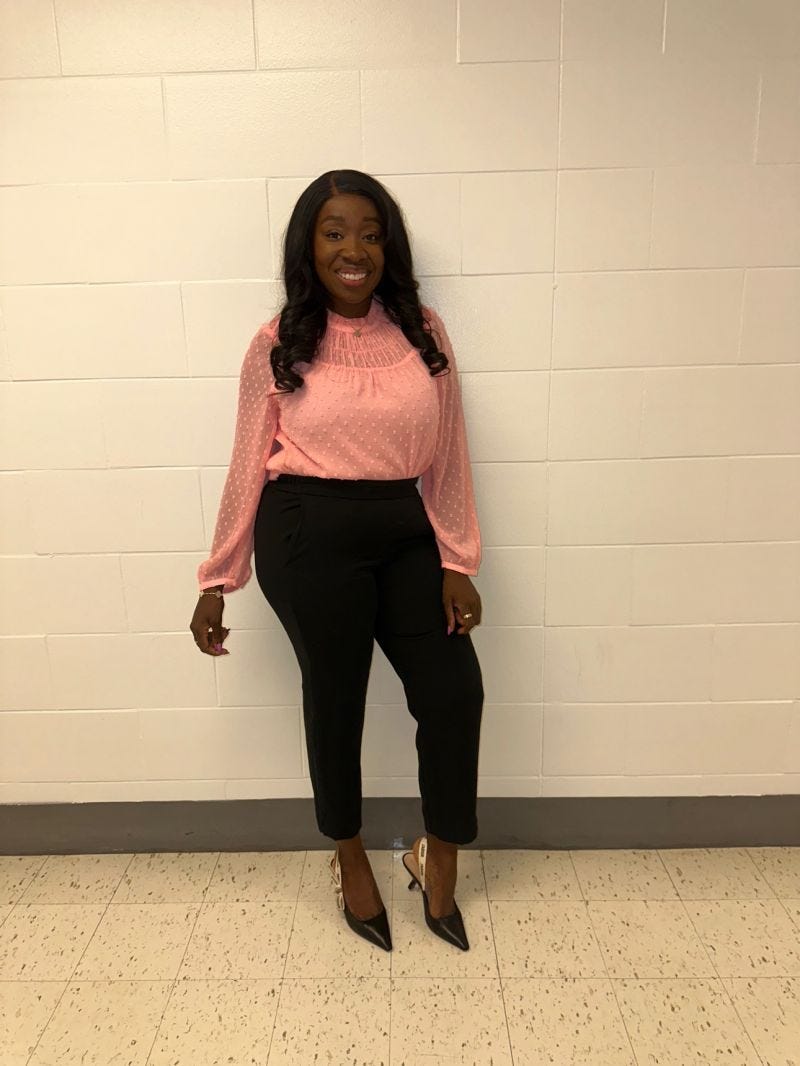
Reuters reported that Troutman Pepper Locke is finalizing a settlement with former associate Gita Sankano, who alleged she faced race-based mistreatment and was later fired for complaining about it. Sankano said she was the only Black attorney in the firm’s D.C. office when she joined and alleged a partner demeaned her, stole her billable hours, and excluded her from training opportunities. The firm denied wrongdoing and said performance issues justified her firing, but the case was headed toward trial before the parties announced a settlement in principle. This is a legal-business story on paper. In practice, it is a window into how elite institutions still isolate Black professionals, then treat retaliation claims as personnel noise until they become expensive enough to settle. (reuters.com)
Why It Matters
Representation at elite firms is often celebrated at the moment of hiring and obscured at the moment of conflict.When the only Black attorney in an office alleges exclusion and retaliation, that is not a boutique HR matter. It is a structural warning. (reuters.com)
Who Is Affected
Black women lawyers and other professionals in prestige workplaces are most directly implicated because they know how often “fit,” “performance,” and “training opportunities” become coded terrain. But clients and institutions should care too, because workplace culture affects who gets mentored, who gets heard, and who stays long enough to lead. (reuters.com)
What Mainstream Missed
This story lived mainly in Reuters’ legal vertical, which is exactly the kind of place stories like this get quarantined. The coverage gap is not that it went entirely unreported. It is that a settlement tied to race, retaliation, and Black exclusion in a powerful law firm is treated as industry news rather than as part of a wider pattern in elite professional life. (reuters.com)
Sources
Reuters — Report on Troutman Pepper Locke’s settlement with Gita Sankano. (reuters.com)
12. A Kansas Judge Keeps Releasing Immigrants Held Too Long Because the Government Cannot Justify Keeping Them
Reported (ET): Tuesday, April 7
Summary
A Reuters Connect/USA Today Network report published Tuesday said a federal judge in Kansas has released immigrants at least 23 times in eight months after the government failed to deport them within a reasonable time and failed to provide enough detail to justify continued detention. The story said Judge John Lungstrum has grown increasingly frustrated with the Trump administration’s vague, repetitive filings and warned the outcome would continue unless officials offered more specific evidence. Some of the people released had criminal convictions, which the Justice Department used to frame the story as public-safety danger. But the judge’s core point was constitutional, not sentimental: indefinite detention without a foreseeable removal path is not legally acceptable. That makes this more than a Kansas court oddity. It is a live conflict between due process and the administrative habits of mass detention. (minnlawyer.com)
Why It Matters
Mass deportation rhetoric often implies the government can hold people as long as it wants while logistics catch up. That is not how the law works. When courts keep releasing detainees because the state cannot show removal is realistically forthcoming, the system’s punitive logic runs into constitutional limits. (minnlawyer.com)
Who Is Affected
Detainees in Kansas are immediately affected, but so are immigrants held around the country in similar legal limbo. Lawyers, judges, and local communities are also part of the equation because indefinite confinement turns detention from process into punishment. (minnlawyer.com)
What Mainstream Missed
This story surfaced through a legal and regional lens, not as a defining national immigration headline. That matters because it reveals a pattern inside the enforcement machine: even under hardline policy, the government is still losing when it cannot explain why people remain locked up past the legal window. (minnlawyer.com)
Sources
Minnesota Lawyer / Reuters Connect / USA Today Network — Report on Judge Lungstrum’s repeated releases of immigrants held beyond six months. (minnlawyer.com)
Reuters — Earlier context on the scale of illegal ICE jailing claims nationwide. (reuters.com)
13. Lawmakers Say ICE’s Locator Failures Are Creating Functional “Disappearances”
Reported (ET): Tuesday, April 7
Summary
The Guardian reported Tuesday that 36 lawmakers led by Elizabeth Warren accused DHS of allowing functional “disappearances” on U.S. soil because ICE’s Online Detainee Locator System has become so unreliable. According to the report, families, attorneys, and journalists have struggled to locate detainees in time, with some people deported before legal help could intervene. The lawmakers’ complaint also said ICE has increased transfers and relied on opaque facilities in ways that make tracing people harder. ICE’s locator tool still advertises itself as a way to locate detainees. But if the tool fails at the moment people most need it, then the promise of visibility becomes part of the harm.(theguardian.com)
Why It Matters
A detention system that families and lawyers cannot reliably navigate is not just inefficient. It can strip people of their last practical chance to contest removal, find medical help, or even tell relatives where they are. That is how bureaucratic opacity becomes a human-rights issue. (theguardian.com)
Who Is Affected
Immigrant detainees and their families are most directly harmed, especially people moved quickly across facilities or facing imminent deportation. Lawyers, journalists, and advocates are also affected because a hidden detention system is harder to monitor and challenge. (theguardian.com)
What Mainstream Missed
While the national spotlight stayed on war and markets, this story moved through immigration- and accountability-focused reporting. That gap matters because the issue is not merely that ICE is detaining more people. It is that the state may be making them harder to find at the exact moment procedural protections matter most.(theguardian.com)
Sources
The Guardian — Report on lawmakers accusing ICE of creating functional “disappearances.” (theguardian.com)
ICE — Official Online Detainee Locator System page. (locator.ice.gov)
AP / KFF Health News — Earlier reporting on families struggling to locate ICE detainees. (apnews.com)
14. In South Florida, the Immigration Crackdown Is Starting to Boomerang Politically
Reported (ET): Monday, April 6
Summary
Reuters reported that Democrats see an opening in South Florida because aggressive immigration enforcement and high living costs are straining Republican support among some Latino voters, especially Cuban and Venezuelan communities. The story included unusually blunt language from inside the community, including an immigration lawyer saying clients now tell her, “I regret my vote.” Reuters also noted that Rep. María Elvira Salazar warned the party’s roundup-and-deportation approach could cost Republicans if it does not course-correct. Pew’s late-2025 survey already found that majorities of Latinos said Trump’s policies were harming their community. The buried part of this story is not the horse race. It is that a policy sold as strength is now being experienced by many people as intimate social damage inside communities that once helped power the shift rightward. (reuters.com)
Why It Matters
Political realignment stories usually get told like sports. But this one is really about material consequences.Deportation policy is reshaping family life, neighborhood trust, and the emotional terms on which some Latino communities are thinking about Republican power. (reuters.com)
Who Is Affected
Cuban, Venezuelan, and other Latino families in South Florida are living closest to the contradiction, especially those watching friends or relatives detained or deported. But the story also matters nationally because shifts in these communities can reshape close races and alter how both parties talk about immigration. (reuters.com)
What Mainstream Missed
Most political coverage will pull out the electoral angle and move on. Reuters’ own reporting contained the fuller truth in plain sight: the backlash is not abstract dissatisfaction. It is people confronting what enforcement looks like when it touches their own circles. That human cost is the part national horse-race coverage is least equipped to hold. (reuters.com)
Sources
Reuters — Report on strain in Republican support among South Florida Latino voters. (reuters.com)
Pew Research Center — Survey showing broad Latino disapproval of Trump’s policies. (pewresearch.org)
Reuters — Summary of the same Pew findings. (reuters.com)
15. The Rollback of Trans Student Protections Is Still Widening
Reported (ET): Monday-Tuesday, April 6-7
Summary
This is the one repeated thread from the last briefing, and it stays tonight because the story materially advanced inside the current window. Reuters and AP reported that the Education Department terminated multiple civil-rights settlements that had protected transgender students in schools and a California college. By Tuesday, additional reporting made clear that some districts were publicly reaffirming support for LGBTQ students while others were already rolling back protections under pressure. Them described Delaware Valley as having removed anti-discrimination protections after the federal shift, while Reuters highlighted Sacramento City Unified’s vow to keep supporting LGBTQ students. That turns the story from abstract federal rollback into something more concrete: Washington is not just erasing paper. It is triggering different local outcomes, some defiant and some immediately harmful. (reuters.com)
Why It Matters
Trans students do not experience policy reversals as legal theory. They experience them through bathrooms, pronouns, staff behavior, outing risk, and the daily question of whether school is going to treat them as real. That is why settlement rollbacks matter immediately. (apnews.com)
Who Is Affected
Trans students are the first targets, but so are their classmates, teachers, families, and districts now deciding whether they will comply, resist, or quietly retreat. The federal message is unmistakable: support itself can now be reclassified as liability. (reuters.com)
What Mainstream Missed
This story was partly buried because the larger national frame stayed locked on Iran and oil. It was also flattened into another culture-war headline when the more precise development was administrative and local at once. No stronger separate LGBTQ-specific development surfaced in the audit inside this 48-hour window, which is why this updated thread remains in tonight’s brief. (reuters.com)
Sources
Reuters — Report on the administration ending trans student civil-rights settlements. (reuters.com)
AP News — Report detailing the terminated agreements and the protections affected. (apnews.com)
Them — Report on local rollback effects after the federal move. (them.us)
Reuters / Guardian / Washington Post summaries of local district responses, including Sacramento. (reuters.com)
Closing Note on Coverage Gaps
The structural pattern today was stark. At the top of the hierarchy, national media followed threat, spectacle, oil, legality, and geopolitical theater. At the bottom, the stories that required more patience — Black institutional disinvestment, disability access, public-housing record failures, detention profiteering, speech suppression, and trans-student retrenchment — were easier to miss unless you deliberately went looking for them. (reuters.com)
That is the real reporting lesson tonight. The same state that can threaten to destroy a civilization abroad is still reorganizing daily life at home through databases, ledgers, detention contracts, school settlements, and underfunded community institutions. The hierarchy of attention makes those domestic pressures look smaller than they are. They are not smaller. They are simply quieter. (reuters.com)
Support XVOA
[A forced clarification from The Washington Post, again at the request of Dr. Vanessa Tolliver]
Good afternoon. We have been asked by Dr. Vanessa Tolliver to intervene because her patient is now under informal suspicion of committing repeated acts of what he calls jerk out journalism against our headlines. For those unfamiliar, a jerk out is the unauthorized alteration of a headline in such a way that it reveals the uncomfortable truth the original headline was trying to escort quietly past the public. We do not care for this. It is rude, destabilizing, and, from our perspective, unhelpfully accurate.
For that reason, we strongly urge you not to subscribe here and not to buy this man coffee. A paid subscription to this operation does not fund a metro desk, a foreign bureau, or a stately conference room full of credentialed professionals using words like standards and process. And a $5 coffee, despite what he appears to believe in his weaker moments, does not restore civic order, protect the Constitution, or stop him from writing another note at 2:13 in the morning with the energy of a man trying to direct a coup and a comeback tour at the same time.
Instead, we invite sensible readers, lapsed subscribers, and anyone fatigued by this random Black guy with a keyboard to return to institutional seriousness. The Washington Post offers digital subscriptions starting around $4 every four weeks or roughly $40–$50 a year for new subscribers, with standard rates often rising to over $100 a year after introductory periods. Digital-only plans include full web and app access, while Premium and Home Delivery tiers include extra sharing accounts for roughly $6–$7 every four weeks.
In other words: your money can go to real journalists in real offices, or it can go to this man, his therapist, and whatever unlicensed emotional weather system powers Buy Me a Coffee.
That said, if this little intervention has awakened in you a petty, molten, deeply American urge to give $10, $20, or even $100 to this publication purely to tell us to go to hell, we would regard that as immature. Needless. Vulgar. Spiritually counterproductive. And, judging from the way some of you are wired, almost certainly exactly what you are about to do.
This is outrageously good. Do you really do this as a one-person show? -- I have a hard time keeping up on the reading!
Trump Is Rage Posting His Way Into Genocide Charges. https://newrepublic.com/article/208752/trump-post-iran-genocide-charges