

Blackout Brief Daily | May 4, 2026
So damn reliable you forget how good it is. Like COOL AC, baby.
Five Things That Matter Today
• The Supreme Court temporarily restored broad access to mifepristone through telehealth, mail, and pharmacies, pausing a lower court restriction that would have narrowed one of the main abortion access routes left in the country. [1][2]
• Trump launched a U.S. Navy effort to guide ships through the Strait of Hormuz while the Iran war, oil prices, and Germany troop cuts keep spilling into the economy and the alliance system. The war is no longer over there. It is in gas prices, troop posture, and diplomatic fracture. [4][5][7]
• Prosecutors said ballistic evidence shows the White House Correspondents’ Dinner suspect fired the buckshot that struck a Secret Service officer’s vest. The headline is political violence. The buried question is how spectacle becomes security state oxygen. [8][10]
• Alabama and Tennessee moved toward new congressional maps after the Supreme Court weakened a key Voting Rights Act tool, raising the stakes for Black political representation before the midterms. The map war is now the midterm war. [12][14]
• Arizona’s top election official warned about a federal voter-data push while AP found extraordinary Trump administration defiance of court orders. The machinery of democracy is being contested in databases, court compliance, and bureaucratic choke points. [16][18][19]
If this briefing helps you see what the national headlines miss, restack it so someone else can see it too.
And if the room feels comfortable, that is the trick. This briefing is like COOL AC: reliable enough that you can walk away and forget somebody had to keep the machine running. Before you stroll out like the air just made itself cold, please consider a paid subscription first.
If paid is not in the budget today, the coffee jar is still sitting there looking underfunded and emotionally neglected.
The hierarchy audit was blunt today. National coverage clustered around the abortion pill, the Strait of Hormuz, the White House Correspondents’ Dinner shooting, redistricting, Trump’s approval numbers, and the legal drama around former officials. Those stories matter, but the center of the media system still has a habit of treating power as theater before it treats power as machinery.
Top Breaking National Stories
1. Supreme Court Temporarily Restores Broad Access to Mifepristone
Reported (ET): May 4, 2026, morning to afternoon ET
Summary
The Supreme Court temporarily restored broad access to mifepristone, allowing the abortion pill to remain available through pharmacies, by mail, and through telehealth while the justices consider emergency requests from manufacturers. AP reported that Justice Samuel Alito signed the temporary order after a federal appeals court imposed new restrictions last week. Reuters reported that the administrative stay pauses the 5th Circuit’s move to require in-person visits for the drug, with the stay set to expire May 11 unless extended. The Guardian reported that Danco Laboratories had warned the lower-court ruling would create confusion for patients, providers, and pharmacies. The court did not settle the fight. It held the door open while the machinery of restriction keeps pressing from below. [1][2][3]
Why It Matters
Medication abortion is now one of the main ways abortion access survives after Roe. That means the fight has moved from clinic doors to pharmacy rules, FDA authority, telehealth access, shipping systems, and emergency orders. A temporary stay can look like stability, but the underlying structure is still fragile.
The deeper story is not only abortion. It is whether courts can turn ordinary medical access into a permission slip that changes by circuit, by state, and by week.
Who Is Affected
Women, pregnant people, abortion providers, pharmacists, telehealth clinicians, and patients in restrictive states are directly affected. Black women, poor women, rural patients, disabled patients, young people, and people without reliable transportation face the sharpest edge because every in-person requirement becomes a cost, a delay, a risk, or a forced disclosure. Medication access is not abstract when the nearest clinic is hours away and the clock is running.
What Mainstream Missed
The mainstream frame is abortion politics and Supreme Court suspense. The deeper frame is administrative control over the body. The fight is not only whether abortion is legal somewhere. It is whether the state can make access technically possible but practically unreachable. A right that requires a maze is a right designed to exhaust the person trying to use it.
Sources
[1] AP: Supreme Court restores access to abortion pill mifepristone through telehealth, mail and pharmacies. Reports the temporary Supreme Court order and its effect on broad mifepristone access.
[2] Reuters: US Supreme Court lets abortion pill mail delivery restart for now. Explains the administrative stay, 5th Circuit restriction, and May 11 timeline.
[3] The Guardian: Abortion pill maker asks US supreme court to halt ban on mail-order access. Provides the emergency appeal context and manufacturer warning about chaos.
2. Trump Launches Project Freedom to Move Ships Through the Strait of Hormuz
Reported (ET): May 3 to May 4, 2026
Summary
Trump announced a U.S. Navy effort called Project Freedom to guide ships through the Strait of Hormuz after the U.S.-Iran conflict and blockade left hundreds of vessels trapped near one of the world’s most important oil corridors. AP reported that two American-flagged merchant ships crossed under U.S. military guidance as Iran disputed the situation and the administration rejected a new Iranian negotiation channel as insufficient. The Guardian reported that U.S. Central Command said the mission involved destroyers, aircraft, unmanned platforms, and roughly 15,000 personnel, while Iran warned that U.S. involvement could violate the ceasefire. Reuters reported that Trump’s Germany troop cuts are rattling NATO and showing the limits of European efforts to keep the U.S. anchored in the alliance. The war is no longer just a foreign-policy story. It is a supply-chain story, an oil-price story, a troop story, and a domestic legitimacy story. [4][5][6][7]
Why It Matters
The Strait of Hormuz is where military language becomes household economics. When ships stall there, gas prices rise here. When the administration describes a military corridor as humanitarian guidance, the public is being asked to accept escalation as rescue.
This is the old imperial trick with new branding: call the movement of force a service call, then ask the public to pay the invoice in fuel, fear, and deployed bodies.
Who Is Affected
Service members, military families, sailors trapped in the region, Iranian civilians, Gulf workers, shipping crews, commuters, small businesses, and working-class families all live inside the blast radius. Black and brown communities are often hit first by price shocks because fuel, food, and transportation take a larger share of household income. Veterans and active-duty families also carry the moral and psychological burden when foreign policy becomes permanent background noise.
What Mainstream Missed
Coverage can treat Hormuz like a chessboard and ships like pieces. The deeper frame is domestic consequence. A military corridor abroad becomes inflation at home, budget tradeoffs in Congress, pressure on alliances, and another permission slip for executive power. The question is not only whether ships move. The question is who gets moved by the cost of moving them.
Sources
[4] AP: The Latest: Trump launches a new effort to reopen the Strait of Hormuz. Reports Project Freedom, ships crossing the strait, Iranian claims, and related U.S. developments.
[5] The Guardian: Trump says US navy will guide trapped ships from Strait of Hormuz amid very positive talks with Iran. Details the mission, military assets, trapped ships, and Iranian warnings.
[6] The Guardian: Trump’s disapproval rating hits record high, new poll shows. Connects the Iran war, gas prices, and Trump’s declining approval.
[7] Reuters: Trump’s Germany troop cuts show limits of NATO efforts to keep US on board. Reports the NATO implications of Trump’s troop cuts from Germany.
3. White House Dinner Shooting Evidence Becomes a Security-State Story
Reported (ET): May 3 to May 4, 2026
Summary
Prosecutors said ballistic evidence shows the suspect in the White House Correspondents’ Dinner shooting fired the buckshot pellet that struck a Secret Service officer’s bullet-resistant vest. AP reported that U.S. Attorney Jeanine Pirro said forensic testing connected the pellet to Cole Tomas Allen’s Mossberg shotgun, and that Allen faces charges including attempted assassination and firearms violations. The Washington Post reported that Pirro released video and said the shooting was premeditated. The Guardian reported that a grand jury is expected and additional charges may follow. DOJ previously announced charges against Allen tied to attempting to assassinate the president, interstate firearm transport with intent to commit a felony, and discharge of a firearm during a crime of violence. This is political violence, but it is also the kind of event that can become raw material for expanded surveillance, harder perimeters, and louder claims of emergency authority. [8][9][10][11]
Why It Matters
A violent attack near the political-media class will naturally receive national attention. It should. But in American politics, shocking violence often becomes more than evidence in a criminal case. It becomes narrative fuel. It can justify broader crackdowns, new security rituals, and a public mood where fear makes people accept machinery they would otherwise question.
The danger is not only the gun. The danger is what power learns to do with the fear after the gun is fired.
Who Is Affected
The officer who was struck, law enforcement personnel, journalists, public officials, service workers at the venue, and the public are directly affected. Political violence also affects communities already treated as threats because security expansions rarely land evenly. Muslims, immigrants, activists, protesters, and Black and brown communities often experience the afterlife of national fear as more surveillance, more suspicion, and less benefit of the doubt.
What Mainstream Missed
The mainstream frame is motive, evidence, and courtroom drama. Those details matter. But the deeper frame is how a single violent event can become a ritual of political consolidation. The question is not whether the state should investigate. It should. The question is whether the event becomes a blank check for every preexisting appetite for force. The shooting is the story. The machinery built in its shadow may become the bigger one.
Sources
[8] AP: Agent hit by buckshot from the gun of man charged in correspondents’ dinner attack, prosecutor says. Reports the ballistic evidence, charges, and Secret Service officer injury.
[9] Washington Post: Pirro says ballistic evidence shows correspondents’ dinner suspect shot officer. Adds detail on Pirro’s announcement, video evidence, and court posture.
[10] The Guardian: Jeanine Pirro says evidence shows suspect shot officer at White House press dinner. Provides additional reporting on the attack, alleged planning, and possible grand jury action.
[11] Department of Justice: Suspect in White House Correspondents’ Dinner Shooting Charged with Attempt to Assassinate President. Provides the official federal charging announcement.
4. Alabama and Tennessee Move to Redraw Maps After Voting Rights Act Blow
Reported (ET): May 4, 2026
Summary
Alabama and Tennessee moved toward new congressional maps after the Supreme Court weakened a key Voting Rights Act tool. AP reported that Alabama Gov. Kay Ivey and Tennessee Gov. Bill Lee called special sessions to redraw districts after the Court’s Louisiana ruling opened the door for new map fights. The changes could help Republicans seek additional seats while threatening Black political representation, especially in Alabama and Memphis. Vox reported that the Court still has major democracy cases left this term, including election cases that could affect absentee ballots and campaign finance. The Guardian reported that the federal retreat from voting-rights protections has renewed attention to state-level voting rights acts. The map is not paperwork. The map is power drawn with a pen and defended with a robe. [12][13][14][15]
Why It Matters
Redistricting is often covered like partisan sports. Who gains a seat? Who loses one? But for Black voters, Latino voters, young voters, urban voters, and rural Black communities, a map can decide whether their political voice is represented or dissolved.
When the Court weakens the rule and states rush to redraw the field, democracy becomes less a vote than a design problem controlled by the people already holding the tools.
Who Is Affected
Black voters in Alabama and Tennessee are directly affected, especially communities whose voting power depends on district lines that do not crack or pack them into irrelevance. Latino voters, Asian American voters, young voters, working-class voters, and urban communities are also affected when mapmakers treat representation as a math problem to be solved for party control. The people most affected are often least likely to be inside the rooms where the maps become law.
What Mainstream Missed
The national frame is midterm arithmetic. The deeper frame is the reconstruction of minority political power after a Supreme Court decision that narrowed the tools available to defend it. This is not just a fight over districts. It is a fight over whether racial inequality can be remedied without the law pretending race does not exist. The Court did not merely decide a map case. It changed the terrain on which Black representation has to fight for oxygen.
Sources
[12] AP: Alabama and Tennessee move to draw new congressional districts in wake of Supreme Court ruling. Reports the special sessions, potential new maps, and stakes for Black representation.
[13] Vox: What the Supreme Court still has left to decide this term. Places the Voting Rights Act decision inside the Court’s broader democracy docket.
[14] AP: The Latest: Supreme Court weakens a key tool of the Voting Rights Act. Provides background on the Supreme Court ruling and civil-rights reaction.
[15] The Guardian: Push for state-level voting rights acts renewed after supreme court ruling. Explains the state-level response to weakened federal voting-rights protections.
5. DOJ Voter Data Push and Court Defiance Expose the Administrative War on Democracy
Reported (ET): May 2 to May 4, 2026
Summary
Arizona Secretary of State Adrian Fontes warned that Trump’s voter-data push risks creating a centralized master list of voters that could be used to control who participates in elections. The Guardian reported that Fontes described the effort as authoritarian and pointed to legal victories against the administration’s demand for voter rolls. Reuters reported last week that courts have rebuffed the Trump administration’s push for state voter rolls as the midterms approach, while critics say the strategy aims to nationalize elections. AP reported that the administration has been found in violation of court orders in an extraordinary number of lawsuits, including immigration cases and broader litigation. Taken together, the voter-data push and court-order defiance show democracy being pressured not only at the ballot box but inside the administrative systems that decide who gets counted, who gets purged, and whether court orders mean anything. [16][17][18][19]
Why It Matters
Democracy does not only collapse in dramatic scenes. Sometimes it erodes in spreadsheets, compliance fights, court delays, database requests, and agencies daring judges to stop them twice. The visible fight is fraud rhetoric. The deeper fight is control over the infrastructure of voting.
The danger is not only stolen ballots. It is the state building a suspicion machine and then calling the purge a maintenance task.
Who Is Affected
Voters with common names, naturalized citizens, young voters, students, Black voters, Latino voters, Native voters, elders, disabled voters, unhoused people, domestic-violence survivors, and people who move frequently are especially exposed to list errors, data misuse, and removal notices they may never see. Election workers are affected too, because federal pressure turns local administration into a battlefield.
What Mainstream Missed
The mainstream frame treats election denial as rhetoric and court fights as legal process. The deeper frame is operational power. A government does not need to prove fraud to make fraud claims useful. It only needs to build systems that let suspicion travel faster than correction. The buried machinery is the database, the subpoena, the court delay, and the bureaucratic shrug after the damage is done.
Sources
[16] The Guardian: ‘Apartheid in the US’: Arizona’s secretary of state fights Trump’s plot to amass a master list of voters. Reports Fontes’s warning and Arizona’s fight against federal voter-data demands.
[17] Reuters: Trump push for state voter rolls rebuffed by courts as midterms near. Explains the national voter-roll push, court setbacks, and midterm stakes.
[18] AP: Trump officials show extraordinary defiance of court rulings. Documents the administration’s record of violating or resisting court orders.
[19] AP: Takeaways from AP report on Trump’s defiance of court rulings. Summarizes AP’s findings on the scope and implications of court-order defiance.
Stories Buried Beneath the National Headlines
6. SNAP Fraud Claims Turn Food Aid Into a Suspicion Machine
Reported (ET): May 2 to May 4, 2026
Summary
The Trump administration intensified claims of fraud in the Supplemental Nutrition Assistance Program while critics said the evidence does not support the allegation of widespread abuse. The Guardian reported that Agriculture Secretary Brooke Rollins cited a report claiming 14,000 SNAP recipients owned luxury vehicles, but critics questioned the methodology and said the USDA had not verified the claim. AP fact-checked the broader claim that millions left SNAP because of fraud reduction and found that fraud disqualifications were less than 1 percent of participants in fiscal year 2023. The Wall Street Journal reported that millions have lost federal food aid under tighter eligibility rules and work requirements. The fraud frame turns hunger into a character test and bureaucracy into the punishment. [20][21][22]
Why It Matters
SNAP cuts rarely look like someone snatching food from a child’s hand. They look like eligibility changes, work-reporting portals, proof requirements, waiver restrictions, and political speeches about people gaming the system. That is how deprivation hides inside paperwork.
The trick is to call hunger fraud, then call the paperwork moral discipline.
Who Is Affected
Poor families, children, seniors, disabled people, low-wage workers, caregivers, students, rural families, and unemployed workers are directly affected. Black and Latino households are especially exposed because poverty, food deserts, unstable work schedules, and transportation barriers already make benefit access harder. Women, especially Black women, often become the family health managers who must stretch less food further.
What Mainstream Missed
Coverage gap: The story got fact-check and policy coverage, but the larger political conversation still treated fraud claims as ordinary messaging. The buried issue is that fraud rhetoric creates permission to cut benefits even when the evidence does not justify the scale of punishment. When the state cannot prove mass fraud, it can still manufacture mass suspicion.
Sources
[20] The Guardian: Trump administration claims food aid fraud but critics say there is no evidence. Reports the luxury-car claim, criticism of the evidence, and SNAP policy stakes.
[21] AP: FACT FOCUS: Why nearly 4.3 million people are no longer receiving food stamps. Fact-checks fraud claims and explains the role of eligibility and work requirements.
[22] Wall Street Journal: More Than Three Million People Have Lost Federal Food Aid. Provides enrollment-decline context and the policy mechanisms behind SNAP losses.
7. Trump Officials Threaten UN Funding While Selling a Trade Over Aid Agenda
Reported (ET): May 4, 2026
Summary
Trump officials threatened United Nations budget cuts while pushing a trade over aid agenda that would prioritize market-driven development and U.S. commercial interests. The Guardian reported that the administration is pressuring UN agencies and international aid organizations to adopt reforms and market logic, after the dismantling of USAID caused mass layoffs and service disruptions. Reuters reported that UN Secretary-General Antonio Guterres said money owed by the U.S. is non-negotiable after reports that Washington wanted to attach reform conditions to unpaid dues. Devex reported that U.S. internal memos demanded deeper cuts and China-related restrictions as conditions for UN funding. Oxfam has warned that U.S. aid cuts are already carrying severe human costs. Foreign aid is being remade from public obligation into leverage, and the people with the least power are being used as the collateral. [23][24][25][26]
Why It Matters
Aid policy can sound distant until food programs close, health systems lose staff, refugee services disappear, and public-sector jobs vanish. Trade over aid sounds efficient because it speaks the language of markets. But markets do not vaccinate a child because she is human. Markets do not keep a clinic open because a village needs one.
When aid becomes a bargaining chip, suffering becomes a negotiating position.
Who Is Affected
Women, children, refugees, displaced people, disabled people, poor communities, public-health workers, and communities in conflict zones are most exposed. Women in developing nations often bear the first burden when public services are cut, because care work expands when state support collapses. U.S. workers in global health, humanitarian logistics, and development programs are affected too.
What Mainstream Missed
Coverage gap: The UN budget story appeared in development, diplomatic, and specialist reporting, while domestic political coverage focused more heavily on war theater and court drama. The buried frame is that budget threats can kill quietly. A cut to international aid does not have to look violent to move death downstream.
Sources
[23] The Guardian: Trump officials threaten UN budget cuts as US pushes trade over aid agenda. Reports the administration’s UN pressure campaign and trade over aid strategy.
[24] Reuters: UN’s Guterres says money owed by US is non-negotiable. Explains the dispute over unpaid U.S. dues and reform conditions.
[25] Devex: Exclusive: US threatens to halt UN funding unless conditions met. Provides reporting on internal memos and funding conditions.
[26] Oxfam America: What USAID did, and the effects of Trump’s cuts on lifesaving aid. Gives humanitarian context on USAID cuts and their effects.
8. Pentagon Alarm Grows as Hegseth Purges Staff and Germany Troop Cuts Shake NATO
Reported (ET): May 2 to May 4, 2026
Summary

Alarm inside the Pentagon grew as Defense Secretary Pete Hegseth became increasingly isolated after staff purges and leadership shakeups. The Guardian reported that insiders described disarray after officers with strong reputations were forced out. Reuters reported that senior Republicans expressed concern over the Pentagon’s decision to withdraw 5,000 U.S. troops from Germany. AP reported that European leaders see the Germany drawdown as new evidence that Europe must prepare to go it alone. Breaking Defense reported that the withdrawal order is expected to unfold over six to twelve months. The chain of command is being treated like a loyalty filter while the alliance system absorbs the shock. [27][28][29][30]
Why It Matters
Military leadership is supposed to project steadiness, not palace intrigue. When the Pentagon is shaped by purges, personal loyalty, ideological messaging, and sudden force-posture changes, allies read weakness and adversaries read opportunity.
The military can survive disagreement. It cannot thrive when competence has to pass through a political purity checkpoint.
Who Is Affected
Service members, military families, civilian defense staff, NATO allies, German communities near U.S. bases, and veterans are directly affected. Black and brown service members are often asked to carry the burden of wars and deployments while having the least control over the political decisions that create them. Families near installations face uncertainty when troop moves become diplomatic retaliation.
What Mainstream Missed
Coverage gap: Hegseth’s purges and Germany troop cuts appeared in defense and foreign-policy reporting, while the broader national conversation still centered on Trump personality drama. The buried story is institutional degradation. The issue is not one chaotic cabinet member. The issue is a command culture being reorganized around obedience rather than judgment.
Sources
[27] The Guardian: ‘This is just disarray’: alarm inside Pentagon after Hegseth staff purges. Reports Pentagon insider concern and Hegseth’s isolation.
[28] Reuters: Top Republicans express concern over Trump plan to withdraw troops from Germany. Reports Republican concern over the 5,000-troop withdrawal.
[29] AP: European leaders see Trump’s troop drawdown from Germany as new proof they must go it alone. Adds European and NATO reaction to the withdrawal.
[30] Breaking Defense: Hegseth orders 5000 US troops to withdraw from Germany. Provides defense-specific reporting on the withdrawal order and timeline.
9. Nicole Saphier Nomination Puts the Public-Health Megaphone Back in the Culture War
Reported (ET): May 4, 2026
Summary
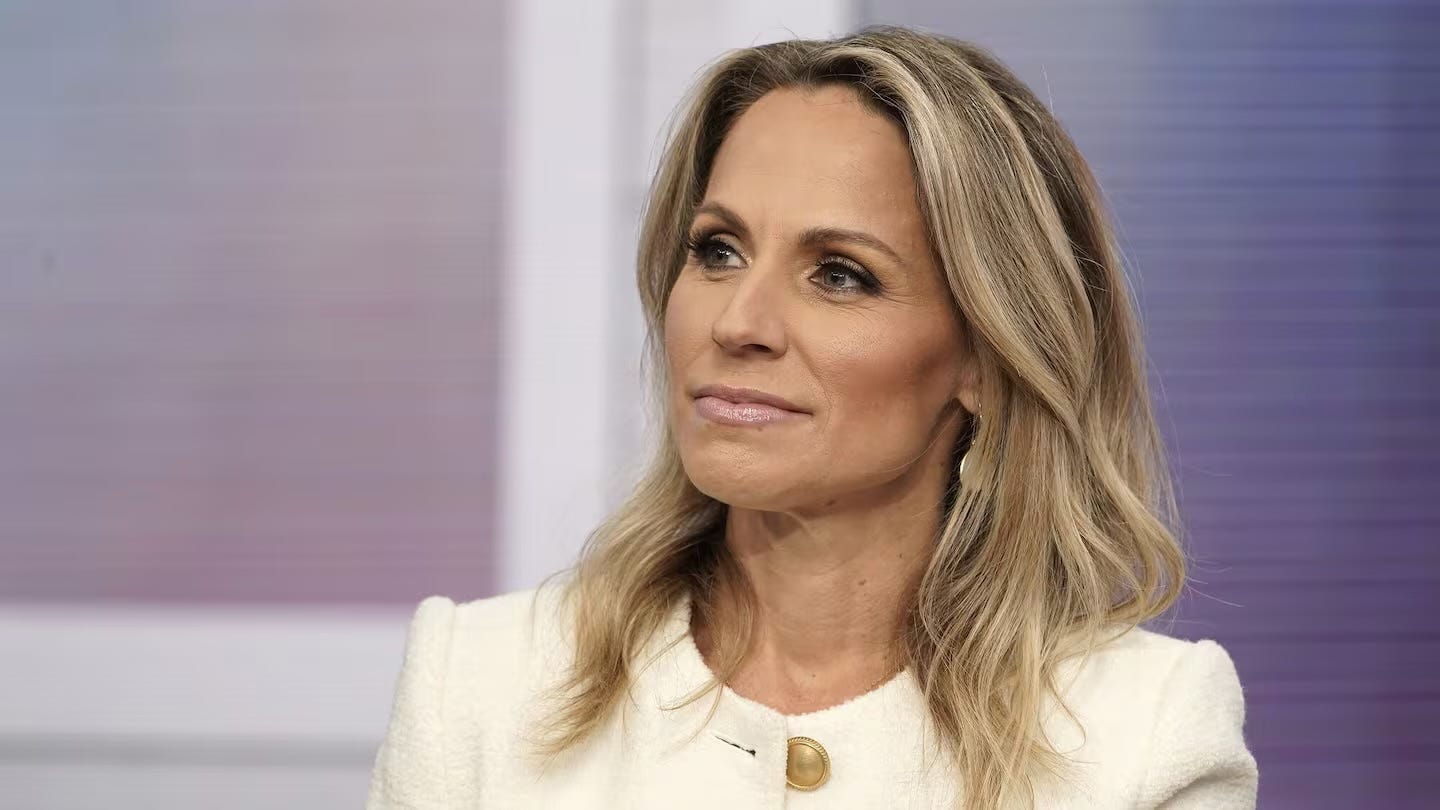
Trump’s new nominee for U.S. surgeon general, Dr. Nicole Saphier, came under scrutiny for her public-health views, Fox News profile, and ties to the Make America Healthy Again movement. The Guardian described Saphier as a radiologist and former Fox contributor who has questioned vaccine policy, Covid interventions, and gender-affirming care for transgender youth. AP reported that Trump withdrew Casey Means’s stalled nomination and selected Saphier after Means failed to gain enough Senate support. Reuters reported that Health Secretary Robert F. Kennedy Jr. is being pushed toward less controversial health initiatives ahead of the midterms after White House concern over vaccine politics. The office of surgeon general is not just a title. It is a national microphone for defining what counts as health, danger, normality, and trust. [31][32][33]
Why It Matters
Public health depends on trust. Once the national health message becomes a culture-war instrument, the people already underserved by medicine pay first. Vaccine confusion, anti-trans medical rhetoric, and wellness branding can travel faster than clinical nuance.
The danger is a public-health office that speaks in the language of care while sorting the public into worthy bodies and suspect bodies.
Who Is Affected
Patients, parents, children, trans youth, disabled people, immunocompromised people, public-health workers, doctors, and nurses are affected. Black communities carry particular risk because medical distrust already has history behind it, and misinformation finds oxygen where institutions have earned skepticism. LGBTQ families are affected when health leadership treats their care as a political problem instead of a medical and human one.
What Mainstream Missed
Coverage gap: The nomination was covered as a personnel story and a MAHA intrigue story. The buried frame is institutional voice. Surgeons general do not make every policy, but they shape public meaning. Who gets called healthy and who gets called a problem is one of the oldest forms of social control.
Sources
[31] The Guardian: Who is Nicole Saphier, Trump’s new nominee for US surgeon general?. Profiles Saphier and her public-health positions.
[32] AP: Trump pulls Casey Means’ stalled surgeon general nomination. New pick is radiologist Nicole Saphier. Reports the nomination switch and Senate context.
[33] Reuters: Warned off vaccine actions, Kennedy seeks quick health wins ahead of midterms. Places the nomination inside the administration’s health-politics recalibration.
10. Spirit Airlines Liquidation Shows the Iran War Reaching the Budget Traveler
Reported (ET): May 2 to May 4, 2026
Summary

Spirit Airlines officially ceased operations and told a bankruptcy court it had no viable choice but to liquidate. Reuters reported that Spirit’s CFO said the company had nearly reorganized but could not find a feasible path forward. Reuters also reported that budget travelers mourned the loss of one of the last ultra-low-cost carriers, especially because Spirit served people who needed the cheapest possible route to family, work, or emergency travel. The Guardian reported that Spirit was nearly done processing refunds after leaving passengers and crew stranded across the U.S., Caribbean, and Latin America. The Guardian also published practical guidance for stranded travelers trying to get home and recover refunds. The Iran war reached the checkout screen. [34][35][36][37]
Why It Matters
Airline collapse can sound like business news until the stranded passenger is a grandmother, a low-wage worker, a student, a caregiver, or someone trying to get to a funeral. Spirit was mocked for bare-bones service, but bare-bones service is often the only service many people can afford.
When the cheap option disappears, mobility becomes another class privilege pretending to be a market correction.
Who Is Affected
Budget travelers, low-income families, students, immigrants traveling between the U.S. and the Caribbean or Latin America, Spirit employees, airport workers, and stranded crew are directly affected. Black and Latino travelers are especially affected where low-cost routes helped connect families across regions and borders. Workers who cannot absorb sudden replacement fares pay in missed shifts, lost wages, and canceled obligations.
What Mainstream Missed
Coverage gap: Business coverage focused on bankruptcy, refunds, and merger blame. The buried story is mobility inequality. A low-cost airline’s collapse is not just a shareholder event. It is a reminder that freedom of movement has a price floor. When fuel shocks and market consolidation erase the cheap seat, working people lose geography.
Sources
[34] Reuters: Spirit Airlines says it has no choice but to liquidate operations. Reports Spirit’s bankruptcy-court liquidation statement.
[35] Reuters: Americans on a budget mourn loss of low-cost Spirit Airlines. Explains the airline’s role for budget travelers and working-class mobility.
[36] The Guardian: Spirit Airlines says it has nearly finished refunding customers after shuttering. Reports refunds, stranded passengers, and the political blame fight.
[37] The Guardian: Spirit Airlines shutdown: how to get home and get refunds. Provides guidance for stranded travelers and refund access.
11. New Orleans Relocation Warning Turns Climate Crisis Into a Managed Retreat Question
Reported (ET): May 4, 2026
Summary
A new study warned that New Orleans may need to begin planning relocation immediately because sea-level rise, land subsidence, coastal erosion, and climate change have pushed the region toward a point of no return. The Guardian reported that the Nature Sustainability perspective paper says southern Louisiana could lose much of its remaining wetlands and see shorelines migrate inland, potentially surrounding New Orleans and Baton Rouge. EurekAlert reported that Tulane researchers say Louisiana could become an early model for managing climate-driven migration. NOAA’s sea-level tools show that Gulf Coast sea-level rise projections are already a major planning concern. The question is no longer whether water is coming. The question is whether the poorest residents are forced to improvise an evacuation over decades while officials call it adaptation. [38][39][40]
Why It Matters
Climate relocation is not just an environmental story. It is housing policy, race policy, insurance policy, public-health policy, and memory policy. New Orleans is not merely a city on a map. It is Black culture, music, labor, food, burial grounds, family histories, and a national wound from Katrina that never fully healed.
Managed retreat without justice becomes displacement with better paperwork.
Who Is Affected
Residents of New Orleans, Plaquemines Parish, coastal Louisiana, renters, homeowners, elders, disabled residents, children, workers, small businesses, and cultural institutions are affected. Black communities face special risk because the geography of vulnerability follows the history of segregation, redlining, infrastructure neglect, and extraction. Poor residents are usually told to be resilient right up until resilience becomes unaffordable.
What Mainstream Missed
Coverage gap: The climate press and environmental reporters treated this as urgent, but national political coverage rarely treats long-term relocation as a civil-rights emergency. The buried frame is planning power. The people who contributed least to the crisis may be asked to surrender the most geography.
Sources
[38] The Guardian: ‘Point of no return’: New Orleans relocation must start now due to sea level, study finds. Reports the study’s warning about sea-level rise, coastal loss, and relocation planning.
[39] EurekAlert: Tulane researchers say Louisiana could lead global climate adaptation efforts. Provides university research context on Louisiana and climate-driven migration.
[40] NOAA: Sea Level Rise and Coastal Flooding Impacts. Provides official sea-level rise and coastal flooding planning context.
12. Republicans Split With Trump Over Haitians as Local Reality Hits National Rhetoric
Reported (ET): May 4, 2026
Summary
Some Republican lawmakers in Ohio are breaking from Trump’s hardline immigration posture to support Haitian immigrants, especially as Haitian communities have become economically important in places like Springfield. The Guardian reported that Republican Reps. Mike Turner and Mike Carey were among the few in their party to support extending protections for Haitians under Temporary Protected Status. AP reported that the Supreme Court is weighing the Trump administration’s effort to end protections for migrants from Haiti and Syria, a case that could affect up to 1.3 million people from 17 countries. Reuters reported that the Court appeared sympathetic to the administration’s position during arguments. PBS reported last month that the House considered legislation to protect Haitian immigrants in a direct pushback against the administration. Local economies are forcing some politicians to admit what national rhetoric tries to erase: immigrants are not an invasion. They are neighbors, workers, parents, church members, and taxpayers. [41][42][43][44]
Why It Matters
Immigration politics often works by turning real communities into symbols. Springfield was made nationally infamous by lies about Haitian immigrants. Now the practical reality is pushing back. Employers need workers. Churches know families. Towns feel the difference between propaganda and people.
The mask slips when the same politicians who fed the panic discover their districts cannot function without the people they helped demonize.
Who Is Affected
Haitian immigrants, mixed-status families, employers, schools, churches, healthcare providers, landlords, and local governments are directly affected. Black immigrants carry the double burden of immigration suspicion and anti-Blackness. Children in Haitian families face instability when adult status becomes a political bargaining chip. Communities like Springfield are affected when national lies produce local threats.
What Mainstream Missed
Coverage gap: This story appeared as a political split and local immigration story, but the national frame still treats immigration primarily as border control. The buried story is social reality. The people turned into campaign props are also holding together towns the campaign never bothered to understand.
Sources
[41] The Guardian: Republicans split with Trump and back Haitians to save their seats. Reports Ohio Republicans’ support for Haitian protections and local political pressures.
[42] AP: Supreme Court mulls Trump administration push to end protections for migrants from Haiti and Syria. Explains the TPS case and the number of migrants potentially affected.
[43] Reuters: Supreme Court leans toward Trump’s move targeting Haitian and Syrian immigrants. Provides legal context on the Supreme Court arguments.
[44] PBS NewsHour: House considers bill to protect Haitian immigrants in pushback against Trump administration. Adds congressional context on the Haiti TPS fight.
13. East Potomac Golf Course Fight Shows Public Land Being Pulled Toward Private Power
Reported (ET): May 3 to May 4, 2026
Summary
A federal judge told the U.S. government not to cut down more than 10 trees without notice amid a legal dispute over the historic East Potomac Golf Course in Washington, D.C. AP reported that Judge Ana Reyes issued the instruction during a dispute over Trump administration renovation plans for the public course. The Washington Post reported that the judge criticized the administration’s transparency and warned against significant work without notifying plaintiffs and the court. Democracy Forward said an emergency stay was sought to protect public access and prevent sudden changes. Its case page argues the administration is trying to convert a long-standing public recreational space into an exclusive golf course for the president. This is not just about trees. It is about whether public land remains public when private power wants a prettier view. [45][46][47][48]
Why It Matters
Public land is democracy you can stand on. It is where ordinary people walk, play, gather, and breathe without needing an invitation from wealth. When public space is quietly redesigned for elite access, the harm often arrives under words like renovation, maintenance, and improvement.
Privatization rarely knocks on the door wearing a top hat. It arrives with renderings, contractors, safety language, and a promise that nothing major is happening yet.
Who Is Affected
D.C. residents, public golfers, workers at the course, local communities, preservation groups, environmental advocates, and people who depend on accessible recreation are affected. Black Washingtonians are affected by any broader pattern of public space being remade for elite symbolism in a city already shaped by displacement, surveillance, and federal control.
What Mainstream Missed
Coverage gap: This was treated as a local public-space dispute and a quirky Trump golf story. The buried frame is public ownership. When public land becomes a presidential vanity project, the people lose more than grass. They lose democratic space.
Sources
[45] AP: Judge in dispute over Washington golf course tells Trump officials not to cut trees without notice. Reports the court instruction and the East Potomac dispute.
[46] Washington Post: Judge criticizes administration’s handling of D.C. golf course eyed by Trump. Adds detail on transparency concerns and the emergency motion.
[47] Democracy Forward: Emergency Stay Sought in Legal Battle Over Public Access to East Potomac Golf Course. Provides the plaintiffs’ emergency-stay framing.
[48] Democracy Forward: Challenging the Trump-Vance Administration’s Attempts to Convert a Longstanding Public Recreational Space Into a Private Golf Course for the President. Provides the case background and legal theory.
14. Comey Indictment Turns a Seashell Post Into a Test of DOJ Power
Reported (ET): May 3 to May 4, 2026
Summary

Acting Attorney General Todd Blanche defended the Justice Department’s criminal case against former FBI Director James Comey, saying it rests on more than a social media post showing seashells arranged as “86 47.” The Guardian reported that Comey deleted the post, apologized, denied intent, and said he did not know the phrase would be interpreted as violent. The same report noted criticism from legal experts and lawmakers who said the case may be politically motivated and legally weak. Reuters reported legal experts saying the prosecution is flawed and vulnerable on free-speech grounds. PBS previously reported that DOJ says Comey’s post crossed a line, while critics see the case as a warning about politicized prosecution. The spectacle is seashells. The machinery is prosecutorial discretion aimed at a political enemy. [49][50][51]
Why It Matters
The power to charge is one of the most serious powers the state has. Once criminal law becomes a tool for punishing ambiguous speech by political enemies, the public does not need to agree with the target to understand the danger.
A justice system that can inflate a symbol into a felony can shrink everyone else’s speech before the indictment ever arrives.
Who Is Affected
Comey is the direct defendant, but the broader affected group includes journalists, activists, former officials, protesters, comedians, critics, and ordinary people using political language online. People with fewer lawyers and smaller platforms are most exposed when prosecutors stretch ambiguous speech into criminal threat territory. The chilling effect rarely begins with the powerless, but it usually ends there.
What Mainstream Missed
Coverage gap: National coverage focused on the strangeness of the seashell post and Trump’s feud with Comey. The buried frame is selective prosecution. The question is not whether Comey is likable. The question is whether the criminal law becomes a mirror that only sees the president’s enemies.
Sources
[49] The Guardian: Todd Blanche says case against Comey based on more than just Instagram post. Reports Blanche’s defense of the indictment and Comey’s denial of wrongdoing.
[50] Reuters: Prosecution of Comey over seashell post is flawed, experts say. Provides legal-expert analysis of the indictment and free-speech concerns.
[51] PBS NewsHour: James Comey indicted over social media post Trump’s DOJ says crossed a line. Adds public broadcasting context on the indictment and DOJ’s framing.
15. Oklahoma Campground Shooting Shows the Everyday Pattern Behind Mass Violence
Reported (ET): May 4, 2026
Summary

Police searched for suspects after at least 13 people were injured in a shooting at a lakeside party near Arcadia Lake in Edmond, Oklahoma. AP reported that the Sunday night gathering drew young people and that no arrests had been made as of late Sunday. The Guardian reported that the heavily wooded scene complicated the search for evidence and cited the Gun Violence Archive’s count of mass shootings in 2026. Reuters reported the story while noting it was citing AP and had not independently verified details. The story is not only the number injured. It is how quickly mass violence becomes another ordinary Monday in America. [52][53][54]
Why It Matters
Mass shootings are often covered as isolated eruptions. Location, suspect, victims, weapon, motive. Then the country moves on. But the pattern is the story: young people at a party, public space turned into a trauma site, hospitals absorbing the aftermath, police looking for suspects, families waiting for updates.
America has turned gun violence into weather: tragic, recurring, and somehow treated as if no one controls the conditions.
Who Is Affected
The injured, their families, first responders, hospital workers, witnesses, young people at the gathering, and the Edmond community are directly affected. Black and brown communities often live with the double standard of being overpoliced before violence and underserved after trauma. Young people inherit the normalized fear of public gathering spaces, from schools to parties to parks.
What Mainstream Missed
Coverage gap: The shooting received breaking-news attention, but the national cycle rarely sustains focus unless death counts rise or political symbolism is obvious. The buried story is normalization. The country does not only have a gun problem. It has a forgetting problem that helps the gun problem survive.
Sources
[52] AP: Police search for suspects in Oklahoma shooting that sent at least 13 people to hospitals. Reports the shooting, injuries, location, and police search.
[53] The Guardian: At least 13 hurt in shooting at Oklahoma campground party. Adds context on the scene, evidence search, and mass-shooting count.
[54] Reuters: Shooting at lake near Oklahoma City injures at least 10, AP reports. Provides Reuters pickup of the AP-reported shooting.
Closing Note on Coverage Gaps
Today’s hierarchy tells the story before the stories do. The center covered the loud machinery: the abortion pill, Hormuz, the White House dinner shooting, redistricting, voter data, and Trump’s legal spectacle. The edges showed what that machinery does when it reaches bodies: a hungry family accused of fraud, a patient stuck in a legal maze, a worker stranded by an airline collapse, a Haitian family turned into a campaign prop, a New Orleans resident asked to surrender geography to the sea.
That is the Blackout pattern. Power performs in the headline and operates in the administrative detail. The harm rarely begins with the explosion. It begins with the court stay, the voter file, the eligibility rule, the troop order, the funding threat, the map line, the database request, the quiet definition of who counts.
Support XVOA
If this brief helps you see what larger outlets bury, support the work that makes it possible.
This thing is like COOL AC: so reliable and trustworthy you almost forget how much work it takes to keep the room comfortable.
Paid subscriptions buy me time to do the digging.
And if a paid subscription is not in the budget today, buy me a coffee too. I’m out here doing hours of work and somehow still acting humble enough to ask for coffee money instead of a newsroom budget.
There is a circle icon with arrows at the end of the publication in your email or at the top of the publication in the app. Click it and it will ask if you just want to restack or add a note and restack. Just restack.
Oh wow. Things are so different in Canada. So up this way there is district (we call them “ridings”) restructuring every ten years or so. As I understand it, in the United States, that question is answered, in most states, by politicians — the very people with the greatest stake in the outcome. In Canada, it is answered differently. Understanding that difference tells us something important not only about the two countries' electoral systems, but about two distinct visions of what democratic governance is actually for.
In the U.S. drawing electoral boundaries to favour one party over another has since become a sophisticated, data-driven science in the United States, where voters can be sorted by party affiliation, racial composition, income other variables, producing districts engineered to deliver predetermined outcomes. To a Canadian, certainly, but I know to some Americans as well, it seems batshit crazy that politicians select voters as opposed to other way around.
Here, t the federal level, in 1964, Parliament established independent electoral boundaries commissions to take the task of redistricting out of politicians' hands entirely. Every ten years, following a national census (we have just started one) ten provincial commissions are struck — one per province — each chaired by a sitting judge and joined by two additional members appointed by the Speaker of the House of Commons. These commissioners are usually judges, academics, or researchers, but definitely not active party members. They do not owe their appointments to the government of the day in any direct sense, and they do not answer to it when drawing their maps.
The primary criterion is population equality, no mean feat in a country where there are vast areas with relatively few folks, and small areas where bunches of us live in close proximity. Here each riding should contain roughly the same number of residents, with a permitted variance of plus or minus twenty-five percent to accommodate geographic realities — the sheer physical scale of northern and rural ridings makes perfect numerical equality impractical. Beyond population, the commissions does consider communities of interest, historical boundaries, and the need for manageable geographic size. Members of Parliament may make submissions and voice concerns, but they hold no final authority. The map, when it is drawn, belongs to the commission, not to the governing party.
Canada's commissions use no data on party affiliation for redistricting purposes, in part because Canada has no system of voter registration by party. There is simply no mechanism by which a Canadian federal commission could engineer a partisan outcome even if it wished to, because the raw material of American-style gerrymandering — detailed, precinct-level party registration data — does not exist in the Canadian context.
Look, our system ain’t perfect, and perhaps none can be, but this is one more area where I think American exceptionalism gets in the way of a massive rethink of how things are done. I say this respectfully, although pointing out to those Americans (they tend to live in the red regions of your country and voted for the Orange One) who go into utter shock when learning that we don’t want to be the fifty-first state. I’m very happy that we don’t gerrymander at the federal level. I am less satisfied with the electoral system that the fairly drawn boundaries serve. Canada uses First Past the Post voting — a system in which the candidate with the most votes in a riding wins, regardless of whether that candidate secured a majority, and in which votes cast for losing candidates contribute nothing to the ultimate distribution of seats in Parliament. In a two-party system, this produces rough-and-ready results that are, if not mathematically precise, at least broadly representative. In a multi-party system — which Canada emphatically has — it produces outcomes that can diverge sharply from the actual distribution of voter preference across the country. I would love to vote for the socialist New Democratic Party but in riding they have no chance at all so I hold my nose and vote Liberal (which does not live up to its name) to stave off the Progressive Conservatives (ditto…progressive they ain’t).
And so party that wins thirty-eight percent of the national vote, distributed efficiently across enough ridings, can form a majority government. A party that wins fifteen percent of the vote, concentrated in the wrong places, may hold a handful of seats or none at all. Millions of votes, cast in good conscience by citizens doing their democratic duty, simply evaporate. The map may be fairly drawn, but the system built on top of it can still distort the popular will beyond recognition. It urinates me off that were I to vote with my heart, it would be meaningless where I live (my federal Member of Parliament is Liberal, and I did vote for her, but her party was not my favorite one). Proportional representation — in any of its several workable variants — addresses this structural distortion directly.
The United States is a great and consequential democracy, with institutions and traditions that command genuine respect. But it is a democracy that permits the systematic manipulation of electoral geography for partisan gain, that has watched its Supreme Court decline to impose federal limits on partisan gerrymandering, and that is increasingly unable to guarantee that the composition of its legislatures bears more than an approximate relationship to the preferences of its voters. These are not trivial problems. They are structural failures that have contributed, over decades, to political dysfunction, minority rule, and a justified erosion of public confidence in democratic institutions.
Canada's federal system is not perfect. Its electoral system, in my view, is not even particularly good. But it does not allow politicians to draw the maps that determine their own electoral fate. It does not sort voters by party affiliation, and certainly not by something so absurdly trivial as skin colour, and so does not, can not, engineer outcomes before a single ballot is cast. It rests, in this one important respect, on the principle that a democracy's rules should be made by those with no stake in the outcome — a principle that, once lost, is exceedingly difficult to recover. That is not a small thing. And it is, among many other things, why Canada is Canada, and prefers to remain so. Sorry for the rant. I have to go and arrange some sea shells...happily I enjoy the freedom to do so, and sip some good Cuban rum whilst so involved.