

Blackout Brief Daily | May 11, 2026
So damn reliable you forget how good it is. Like COOL AC, baby.
Five Things That Matter Today
• The Voting Rights Act fallout has moved from doctrine into election administration, with Louisiana voters already casting early ballots that could land in the wrong districts and Alabama facing a possible House-primary do-over. The map is now the machine. [1][2][3]
• Trump said the Iran ceasefire is on “life support” after rejecting Tehran’s response to a U.S. peace proposal, while a Reuters/Ipsos poll found most Americans do not think he has clearly explained the war goals. That is war by opacity. [4][5][6]
• Senate Republicans are defending a $1 billion White House security proposal tied to the ballroom fight and attached to immigration-enforcement funding. The fortress is being routed through the budget. [7][8][9]
• Trump moved toward federal gas-tax relief and beef-market executive orders as oil and food prices put the Iran conflict into household arithmetic. War inflation has reached the kitchen table. [6][10][11]
• The State Department rejected a U.N. migration forum declaration while objecting to what it called “replacement immigration” in the United States and the broader West. The fringe vocabulary is walking through official doors. [12][13][14]
Restack it, send it to one person.
If this brief keeps you from getting lost in the noise, pay for the work that made the map.
Coffee is the backstop. Paid subscriptions are the oxygen.
The hierarchy audit was blunt today. National coverage clustered around Iran, Trump’s China diplomacy, prices at the pump and grocery store, the White House construction fights, and the latest electoral chaos from redistricting. Those stories matter, but the center of the media system still has a habit of treating power as theater before it treats power as machinery.
Top Breaking National Stories
1. Voting-Rights Fallout Turns Ballots Into Moving Targets Across the South
Reported (ET): May 11, 2026, morning ET
Summary
AP reported that Louisiana voters have already cast thousands of early ballots for congressional candidates in districts that could soon be changed, that Alabama may face a possible U.S. House primary do-over, and that a new Tennessee congressional map has scrambled races already underway. Reuters reported last week that the Supreme Court allowed a ruling weakening a key part of the Voting Rights Act to take effect ahead of schedule, and the Guardian published civil-rights activists warning that the ruling is another direct blow to Black enfranchisement. This is not a theory anymore. It is a ballot-level disruption. [1][2][3]
Why It Matters
The machinery is not only the map. It is the clock, the ballot design, the precinct database, the voter-education script, the county staff, the legal deadline, and the quiet panic inside election offices.
When a state redraws democracy after voters have started voting, confusion becomes a governing tool. That does not require a poll tax. It requires enough chaos that the citizen loses confidence, loses time, or loses the correct ballot.
Who Is Affected
Black voters across the South sit closest to the blast radius because the old Voting Rights Act protection was designed to stop exactly this kind of racial map manipulation before it hardened into political reality. Local election workers are also affected because they are being forced to administer maps that political actors are still moving under their feet.
The spillover hits every voter in those states. When districts become unstable, representation becomes unstable. The voter thinks she is choosing a representative, while the machinery is still deciding who gets to choose.
What Mainstream Missed
The loud frame is gerrymandering. The deeper frame is administrative suppression. National coverage often treats redistricting as a chessboard fight between parties, but this is also the state using timing, confusion, and bureaucratic overload to reshape Black political power after the Voting Rights Act was hollowed out.
The buried story is not just who wins the district. It is whether the voter can still recognize the district before the vote is counted.
Sources
[1] AP: GOP redistricting confuses voters and burdens election officials. Reports the immediate election-administration chaos in Louisiana, Alabama, Tennessee, and other Southern states after GOP redistricting pushes.
[2] Reuters: US Supreme Court lets Voting Rights Act ruling take effect ahead of schedule. Explains the procedural Supreme Court move that accelerated the fallout for Louisiana and related redistricting fights.
[3] The Guardian: We’re going backwards: five civil rights activists slam the supreme court’s gutting of Voting Rights Act. Provides civil-rights movement voices and Black voting-rights context for the ruling’s political meaning.
2. Iran Ceasefire Sinks While Americans Say the War Goals Are Still Unclear
Reported (ET): May 10, 2026, late evening ET, updated May 11
Summary
Reuters reported that Trump said the ceasefire with Iran was “on life support” after rejecting Tehran’s response to a U.S. peace proposal, raising fears that the 10-week conflict could resume after killing thousands and disrupting vital energy flows. A Reuters/Ipsos poll completed Monday found that two out of three Americans do not think Trump has clearly explained why the country is at war with Iran. Markets showed the consequences immediately, with oil rising as supply fears persisted and the Strait of Hormuz remained largely closed. The public is being asked to absorb the cost before it has been given the case. [4][5][6]
Why It Matters
War power always has two fronts. One is abroad, where people die. The other is at home, where consent gets manufactured after the machinery has already moved.
A war that is unclear to the public is still perfectly clear to the apparatus that profits, deploys, prices, sanctions, and polices around it. That is why the poll matters. It shows a gap between state action and democratic explanation.
Who Is Affected
Iranian civilians, U.S. service members, diplomats, shipping workers, energy workers, low-income drivers, and families already strained by inflation are all inside this story. Veterans and military families are affected too, because unclear wars have a habit of producing very clear trauma.
The impact also reaches poor and working-class households first. When oil jumps, the family with no cushion feels it before the think tank finds the right phrase.
What Mainstream Missed
The headline frame is diplomacy. The deeper frame is democratic opacity. Much of the coverage tracks who rejected what proposal and how markets reacted. That matters. But the moral center is simpler: the country is being moved through a war whose stated goals remain unclear to most of the public.
The buried frame is consent without clarity.
Sources
[4] Reuters: Trump says Iran ceasefire is ‘on life support’ after he rejects Tehran’s response. Reports Trump’s rejection of Iran’s response and the status of the ceasefire.
[5] Reuters: Americans don’t think Trump has explained Iran war goals, Reuters/Ipsos poll shows. Provides public-opinion data showing most Americans believe the war goals have not been clearly explained.
[6] Reuters: Dollar edges up as Trump rejects Iran peace move. Tracks the market and oil-price reaction to the Iran decision and Strait of Hormuz disruption.
3. Senate GOP Folds a $1 Billion White House Fortress Into an Immigration Funding Fight
Reported (ET): May 11, 2026, morning ET
Summary
AP reported that Senate Republicans added $1 billion in White House security money to a spending bill that would restore funding for immigration enforcement agencies Democrats had blocked since February. The proposal comes after a man was charged in an alleged attack connected to the White House Correspondents’ Association dinner. AP also reported that the security money could support heavily fortified ballroom-related features, while separate reporting on the criminal case shows the alleged attacker pleaded not guilty and is challenging potential Justice Department conflicts. A ballroom fight has become a budget fight, and the budget fight is tied to immigration enforcement. [7][8][9]
Why It Matters
This is what machinery looks like when it wears a tuxedo. The public sees a ballroom. The bill sees security infrastructure, immigration-enforcement restoration, a partisan budget maneuver, and a new physical footprint for executive power.
A fortress is not only built with concrete. It is built with appropriations language. The same package that protects the symbolic house of the president also reopens the funding pipeline for the enforcement state.
Who Is Affected
Taxpayers are affected because public money is being routed into security around a project Trump has described as privately funded. Immigrants and mixed-status families are affected because the same spending fight is tied to restoring immigration-enforcement money.
Congress is affected too, because using a partisan budget maneuver narrows the political path for resistance. The public is left watching a construction story while the funding apparatus moves behind it.
What Mainstream Missed
The easy frame is vanity architecture. The deeper frame is state capacity. This is not only about whether a ballroom is ugly, unnecessary, or legally vulnerable. It is about how quickly emergency-security language can convert spectacle into durable public expenditure.
The buried frame is executive protection fused with enforcement-state funding.
Sources
[7] AP: Senate Democrats to fight $1 billion White House ballroom proposal. Reports the Senate proposal, Democratic objections, and the connection to immigration-enforcement funding.
[8] AP: Cole Tomas Allen wants senior DOJ officials excluded from his trial. Provides background on the alleged attack and the defendant’s argument about Justice Department conflicts.
[9] Reuters: Man accused of attempting to assassinate Trump pleads not guilty. Reports the plea and the allegations in the criminal case tied to the White House Correspondents’ Association dinner.
4. Trump Turns to Gas-Tax Relief and Beef Orders as War Inflation Reaches the Kitchen Table
Reported (ET): May 11, 2026, midday to afternoon ET
Summary
Reuters reported that Trump said he would reduce the federal gas tax to blunt the effect of rising pump prices after rejecting Iran’s peace response. Reuters also reported that Trump was set to sign executive orders to allow increased beef imports and support rebuilding the U.S. cattle herd, which the White House linked to high beef prices and a herd that has fallen to its lowest level in 75 years. Oil climbed as the Iran conflict kept shipping and supply concerns alive. The war story, the gas story, and the grocery story are now the same story. [6][10][11]
Why It Matters
Price interventions are never just about price. They reveal where the state admits pain is politically dangerous. Gas and beef are not abstract indexes. They are daily rituals where families measure whether power is lying to them.
When foreign policy moves the pump and the plate, the machinery has entered the nervous system of the household. People may not follow every diplomatic turn, but they know when a tank of gas and a pound of beef become political messages.
Who Is Affected
Drivers, truckers, rural households, low-income families, cattle producers, meatpackers, grocery workers, and school-meal budgets all sit inside this. If prices keep rising, the burden lands hardest on families who cannot switch cars, move closer to work, or buy their way out of volatility.
The beef orders also affect farmers and ranchers dealing with a weakened herd, but increased imports can create pressure in ways that will not be evenly distributed.
What Mainstream Missed
The usual frame separates foreign policy from consumer prices. That lets leaders sell the war as grand strategy and the price pain as bad luck. The deeper story is that the same power choices are moving through diplomacy, shipping, energy, agriculture, and household budgets at once.
The buried frame is empire priced at the register.
Sources
[6] Reuters: Dollar edges up as Trump rejects Iran peace move. Tracks oil-market pressure connected to Trump’s rejection of Iran’s peace response and the Strait of Hormuz disruption.
[10] Reuters: Trump says he will reduce the federal gas tax. Reports Trump’s stated plan to reduce the federal gas tax amid rising pump prices.
[11] Reuters: Trump to sign orders to boost beef imports, rebuild cattle herd, White House says. Reports the expected executive orders on beef imports and cattle-herd renewal.
5. State Department Rejects U.N. Migration Declaration Using the Replacement Frame
Reported (ET): May 11, 2026, afternoon ET
Summary
Reuters reported that the State Department said the United States would not support an International Migration Review Forum “progress” declaration and objected to U.N. efforts it described as facilitating “replacement immigration” in the United States and the broader West. The State Department’s own release says the United States did not participate in the forum and would not support the declaration. The U.N. describes the forum as a review process for progress on the Global Compact for Safe, Orderly and Regular Migration. The most important part of this story is not the withdrawal. It is the vocabulary. [12][13][14]
Why It Matters
“Replacement” rhetoric is not neutral immigration language. It is a conspiracy-coded frame with a long afterlife in white nationalist politics. When that language moves onto official State Department letterhead, the government is not merely signaling a policy position. It is laundering a worldview.
The mask is not slipping. The mask is being issued as policy text. That is how fringe language stops sounding fringe. It becomes a press release, then a talking point, then a legal premise.
Who Is Affected
Immigrants, asylum seekers, mixed-status families, migrant workers, refugee communities, and diaspora communities are directly affected by the legitimization of this frame. So are local governments, schools, hospitals, and employers that depend on immigrant families but must operate under a political climate that describes them as demographic invasion.
The broader public is affected because dehumanizing language changes what policies become imaginable.
What Mainstream Missed
The standard frame is U.S. versus U.N. migration policy. The deeper frame is ideological normalization. This is not simply about rejecting a global declaration. It is about the federal government adopting a phrase that converts ordinary migration into existential threat.
The buried frame is conspiracy language entering diplomatic infrastructure.
Sources
[12] Reuters: US rejects UN migration forum declaration, State Department says. Reports the State Department’s rejection of the forum declaration and its use of the “replacement immigration” phrase.
[13] U.S. Department of State: The United States Rejects International Migration Review Forum. Provides the official U.S. government statement rejecting the declaration.
[14] United Nations Network on Migration: International Migration Review Forum 2026. Explains the forum and the purpose of the progress declaration process.
Stories Buried Beneath the National Headlines
6. EPA Opens a Faster Lane for Big Polluters’ Clean-Air Permits
Reported (ET): May 11, 2026, afternoon ET
Summary
Reuters reported that the EPA moved Monday to speed the process for large polluters to obtain Clean Air Act Title V operating permits, including for power plants, refineries, aluminum smelters, and other industrial facilities. EPA’s own release says the guidance is meant to streamline review and “shave additional time” from the permitting process while giving states flexibility. The agency also issued a guidance document on streamlining Title V reviews. The administrative verb here is “streamline.” The public-health verb may be “shorten.” [15][16][17]
Why It Matters
Permits are where environmental law becomes real. A community can have a right on paper and still lose the fight if review windows shrink, objections are harder to organize, and technical records move faster than residents can respond.
For fence-line communities, time is not red tape. Time is the space where evidence, asthma, cancer clusters, and public testimony can enter the file. Speed may help industry, but it can also weaken the civic process that keeps smokestacks from becoming destiny.
Who Is Affected
Residents living near power plants, refineries, smelters, factories, and other industrial sites are affected first. Black, Latino, Indigenous, and poor communities are often closest to those facilities and most exposed when regulatory shortcuts become business certainty.
Children with asthma, seniors with respiratory illness, workers inside the facilities, and local public-health systems are all part of the downstream cost.
What Mainstream Missed
Coverage gap: this appeared in environmental, legal, and agency reporting while national attention was pulled toward war, prices, and White House spectacle.
The buried frame is that air quality is often governed by documents most people never read. The rule change does not have to look violent to become administrative violence.
Sources
[15] Reuters: US EPA moves to speed clean air permits for power plants, industry. Reports the EPA move and the industries likely to benefit from faster permitting.
[16] EPA: EPA Issues Guidance on Streamlining Clean Air Act Title V Operating Permit Process to Expedite Approvals. Provides the agency’s official framing of the guidance and its stated purpose.
[17] EPA: Guidance on Streamlining Title V Operating Permit Reviews. Provides the underlying guidance document for Title V operating permit review.
7. ABA Committee Moves to Strip Law-School Diversity Rules to Protect Accreditor Status
Reported (ET): May 11, 2026, afternoon ET
Summary
Reuters reported that the American Bar Association is poised to eliminate or pare back three diversity and non-discrimination requirements from law-school accreditation standards because a committee warned that the ABA’s federal recognition and role in law-school oversight were under threat. The ABA’s notice-and-comment page shows the recent standards process around Standard 206, and Reuters has separately tracked state-level pressure on ABA influence over lawyer admissions. This is not just a campus culture-war story. It is a pipeline story about who gets trained to interpret power. [18][19][20]
Why It Matters
Law-school accreditation sounds sleepy until you remember that law schools produce judges, prosecutors, corporate counsel, civil-rights lawyers, public defenders, clerks, agency lawyers, and the people who write the next procedural trapdoor.
If diversity rules can be recoded as a threat to accreditation itself, the legal profession learns the lesson before students even arrive. The lesson is compliance. The lesson is retreat. The lesson is that access can be negotiated away by people calling it neutrality.
Who Is Affected
Black, Latino, Indigenous, Asian American, LGBTQ, disabled, first-generation, and low-income law students have a stake in this. So do faculty, admissions offices, public-interest programs, and communities that need lawyers who understand how race, class, disability, gender, and state power actually work.
The effects also reach clients. A less representative legal pipeline eventually becomes a less responsive legal system.
What Mainstream Missed
Coverage gap: the story lived mostly in legal and education-policy reporting, where the stakes can sound technical unless somebody says the quiet part clearly.
The buried frame is that anti-DEI politics is not only attacking slogans. It is entering accreditation, professional licensing, and the legal pipeline that decides who gets to speak in court.
Sources
[18] Reuters: ABA must axe law school diversity rules to retain accreditor status, committee says. Reports the ABA committee’s recommendation and the threat to federal accreditor recognition.
[19] American Bar Association: Notices and Comments. Provides the ABA’s public standards-revision notice process, including Standard 206 materials.
[20] Reuters: Alabama sidelines ABA for lawyer admissions while Tennessee weighs similar move. Provides context on state-level pressure against ABA influence in the legal profession.
8. Federal Contractor DEI Surveillance Moves From Slogan to Paperwork
Reported (ET): May 11, 2026, weekly policy window
Summary
AIP’s science-policy roundup reported that federal agencies are moving to implement a March executive order blocking federal contractors from engaging in diversity, equity, and inclusion activities. The Federal Register notice seeks clearance for a new information collection tied to contractor compliance with the order, including records, reports, and responsibility for subcontractor compliance. This is the part of the anti-DEI campaign that does not yell. It files forms. [21][22][23]
Why It Matters
The paperwork is the point. Federal procurement can turn ideology into a condition of doing business with the government. A contractor may not need an explicit ban on every inclusion program if the compliance risk is high enough to scare counsel, HR, managers, and subcontractors into retreat.
The state does not have to outlaw every program when it can make contractors prove they are afraid of the right things. That is how a political slogan becomes a procurement regime.
Who Is Affected
Federal contractors, subcontractors, workers inside those companies, universities, research institutions, small businesses, and civil-rights compliance officers are affected. Black workers, other workers of color, women, disabled workers, veterans, and employees who relied on inclusion infrastructure may feel the pressure through hiring, retention, training, mentoring, and promotion systems.
Small contractors may be especially vulnerable because compliance burdens often punish those without large legal departments.
What Mainstream Missed
Coverage gap: this story appeared in a Federal Register notice and specialist science-policy coverage, exactly the places where major civil-rights changes can hide in plain sight.
The buried frame is procurement as ideology. The culture war becomes real when it is written into the contract clause.
Sources
[21] Federal Register: Information Collection; Addressing DEI Discrimination by Federal Contractors. Details the proposed information collection for contractor compliance with the anti-DEI executive order.
[22] Federal Register: Addressing DEI Discrimination by Federal Contractors. Provides the underlying executive-order publication and contract-clause framework.
[23] AIP: Science Policy This Week: May 11, 2026. Tracks the contractor DEI implementation as part of the current science-policy week.
9. House Bill Would Turn Chinese-Vehicle Restrictions Into Lasting Industrial Policy
Reported (ET): May 11, 2026, afternoon ET
Summary
Reuters reported that House lawmakers are introducing legislation to toughen and codify a ban that effectively blocks Chinese automakers from selling passenger vehicles in the United States, building on a Biden-era connected-vehicle rule. Reuters also reported that Trump said he would discuss Taiwan arms sales with Xi Jinping during a Beijing meeting this week, underscoring how vehicles, data, Taiwan, AI, and U.S.-China industrial strategy are moving through the same geopolitical corridor. The car is no longer just transportation. It is a rolling data platform. [24][25]
Why It Matters
This is the machinery of techno-nationalism. The state is not simply deciding which cars Americans can buy. It is deciding whose software, sensors, supply chains, data flows, and industrial capacity can enter the country.
The next trade war is not only about factories. It is about data pipelines with wheels. Connected vehicles sit at the intersection of consumer markets, surveillance risk, industrial labor, and military-adjacent supply chains.
Who Is Affected
Autoworkers, consumers, domestic automakers, parts suppliers, software firms, port communities, and workers tied to electric-vehicle supply chains are affected. So are families who might otherwise benefit from lower-cost vehicles if the market were open.
The Taiwan angle matters because U.S.-China bargaining can quickly turn domestic industrial policy into leverage over security commitments.
What Mainstream Missed
Coverage gap: the story sat inside trade and technology coverage while the larger political spotlight stayed on Iran and Trump’s travel.
The buried frame is bipartisan state control over the future vehicle stack. The fight is not just who builds the car. It is who owns the data trail the car leaves behind.
Sources
[24] Reuters: House lawmakers introducing bill to toughen US ban on Chinese vehicles. Reports the proposed legislation and its bipartisan sponsors.
[25] Reuters: Trump says he will discuss arms sales to Taiwan with China’s Xi. Provides China-meeting context connecting trade, Taiwan, and strategic bargaining.
10. FinCEN Tells Banks to Watch IRGC Procurement Money as Iran War Risk Rises
Reported (ET): May 11, 2026, afternoon ET
Summary
Reuters reported that the U.S. Treasury Department’s Financial Crimes Enforcement Network issued an alert to financial institutions warning about Islamic Revolutionary Guard Corps efforts to evade sanctions, as concerns mounted over renewed hostilities with Iran. Treasury’s OFAC page also shows recent Iran sanctions alerts tied to Strait of Hormuz passage and oil-refinery sanctions risk. The war front runs through banks, compliance offices, flagged transactions, and shipping paperwork. [26][27]
Why It Matters
Sanctions are often described like a clean moral instrument. In practice, they are a sprawling compliance regime that turns banks into frontline enforcers of foreign policy.
The financial system becomes part of the battlefield before most people understand the battle plan. Once banks are told to look harder, whole categories of transactions, customers, and cross-border relationships can become risk objects.
Who Is Affected
Banks, shipping firms, importers, exporters, energy companies, compliance workers, and businesses with Middle East exposure are directly affected. Iranian diaspora communities can also feel spillover when banks overcorrect and legitimate transactions become harder to process.
The public is affected because sanctions regimes can reshape prices, trade, and access long before anyone calls it a domestic issue.
What Mainstream Missed
Coverage gap: sanctions alerts rarely receive the same attention as missile threats or presidential statements, but they are how conflict enters the plumbing.
The buried frame is financial surveillance as war infrastructure. The battlefield is also the suspicious-activity report.
Sources
[26] Reuters: US issues alert to banks on IRGC efforts to evade sanctions. Reports the FinCEN alert and its connection to renewed Iran hostilities.
[27] U.S. Treasury OFAC: Iran Sanctions. Provides Treasury’s Iran sanctions context and recent alerts linked to Strait of Hormuz and oil sanctions risks.
11. Reflecting Pool Lawsuit Exposes Monuments as Another Front in Executive Control
Reported (ET): May 11, 2026, afternoon ET
Summary
AP and Reuters reported that the Cultural Landscape Foundation filed suit to halt Trump’s renovation of the Lincoln Memorial Reflecting Pool, arguing the administration failed to follow federal historic-preservation review rules before applying a blue surface to the basin. The Washington Post reported that the Commission of Fine Arts did not review the new project and that the Interior Department awarded a $13.1 million contract for resurfacing after Trump had predicted the work would cost less than $2 million. This is not just a blue pool. It is public memory by executive shortcut. [28][29][30]
Why It Matters
Monuments are not neutral stone. They are rituals of national memory. That is why procedure matters. Review boards, preservation laws, contracts, and design approvals exist because the public owns more than the photo op.
When one president can repaint the civic mirror without the normal process, the nation’s memory becomes another executive surface. The legal fight is about whether public meaning can be altered by command and contractor.
Who Is Affected
D.C. residents, visitors, preservationists, historians, taxpayers, federal workers, and everyone who treats the Lincoln Memorial as civic space are affected. The memorial also carries special meaning for Black public memory because it is tied not only to Lincoln but to the March on Washington and the long struggle over freedom’s unfinished promises.
The contract amount affects taxpayers. The process affects legitimacy.
What Mainstream Missed
Coverage gap: some coverage understandably treats the story as strange or visually absurd. But the deeper issue is not taste. It is process.
The buried frame is unilateral control over civic memory. A country can lose public space one procurement file at a time.
Sources
[28] AP: Trump’s ‘American flag blue’ repaint of the Reflecting Pool faces a lawsuit. Reports the lawsuit and the preservation group’s request to halt work and restore historic elements.
[29] Reuters: Lawsuit seeks to halt Trump’s makeover of Lincoln Memorial reflecting pool. Details the National Historic Preservation Act claims and the Interior Department response.
[30] The Washington Post: Nonprofit sues to stop Trump’s changes to Reflecting Pool, a historic site. Adds reporting on federal review questions, the Commission of Fine Arts, and the contract cost.
12. Black Federal Officials Challenge a Purge of Independent-Agency Power
Reported (ET): May 11, 2026, morning ET
Summary
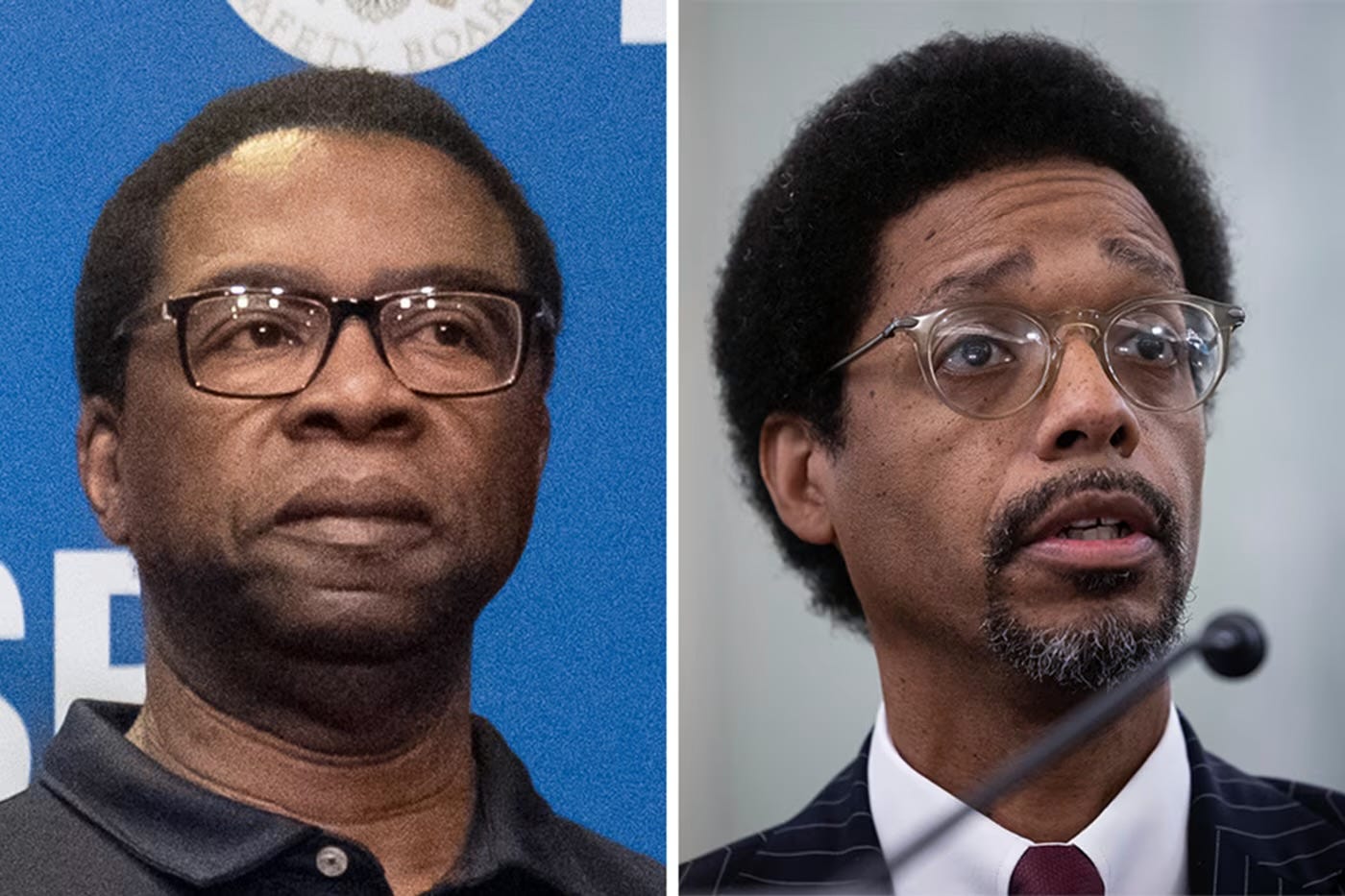
Capital B reported that former Jacksonville Mayor Alvin Brown and Robert Primus, who were the only Black board members at the National Transportation Safety Board and Surface Transportation Board when they were removed, are challenging their firings in court. The lawsuits argue that the dismissals defied legal protections and threaten independent agencies, while also alleging race played a role. The administration has denied improper motives and says the removals were based on competence and legal authority. The lawsuit turns the independent-agency fight toward the racial question sitting inside the removal-power fight. [31][32][33]
Why It Matters
Independent agencies are designed to resist direct political capture. When presidents try to remove protected officials, the fight is often framed as constitutional theory. But the racial composition of who gets removed matters too.
The purge is not only who gets fired. It is who becomes legally erasable. If independent boards can be emptied of Black officials while the public debate stays abstract, race disappears into separation-of-powers language.
Who Is Affected
Black federal officials, federal workers, public-interest lawyers, agency staff, and communities that rely on transportation safety and regulatory oversight are affected. The public is affected because independent boards exist to protect people from political pressure in areas where expertise and safety matter.
If the courts bless broad removal authority, the impact will reach far beyond these two officials.
What Mainstream Missed
Coverage gap: Capital B centered the racial pattern while broader legal coverage often emphasizes executive authority in the abstract.
The buried frame is race inside institutional capture. The Constitution does not stop being racial just because the brief calls it removal power.
Sources
[31] Capital B: Black Federal Officials Sue Trump Over Firings. Centers the lawsuits by Alvin Brown and Robert Primus and the racial-discrimination allegations.
[32] Lawfare: Litigation Tracker. Provides broader context on the volume of litigation challenging Trump administration actions.
[33] Bloomberg Law: Trump Mostly Fired Black Agency Officials, New Lawsuit Says. Reports the allegations in Brown’s lawsuit and the claim about Black independent-agency officials.
13. Scientists Push Back After Trump Fired the National Science Board
Reported (ET): May 11, 2026, morning ET
Summary
Scientific American reported that about 1,500 members of the National Academies of Sciences, Engineering, and Medicine, including 37 Nobel Prize winners, denounced the White House’s dismissal of the National Science Board. AIP’s current science-policy roundup also reported that National Academies members called on Congress to reinstate 22 fired board members. AP previously reported on the Trump administration’s firing of the board, which oversees the National Science Foundation. The fight is over whether scientific oversight remains public expertise or becomes another loyalty test. [23][34][35]
Why It Matters
The National Science Board is not a cable-news character. It helps govern the institution that funds basic research, shapes university science, and supports knowledge that the private sector later monetizes.
If you can purge the referee, you can call the future a foul. That matters for AI, climate science, public health, engineering, space research, education, and every community whose future depends on public science not being turned into patronage.
Who Is Affected
Scientists, students, universities, research labs, early-career researchers, public universities, HBCUs and other minority-serving institutions that compete for federal research funding, and the broader public are affected.
The long-term effects hit people who may never know the board exists, but whose medicine, infrastructure, weather forecasting, and technology depend on a functioning research ecosystem.
What Mainstream Missed
Coverage gap: science-governance fights rarely compete with war, prices, and White House spectacle, even though they can shape the next generation of public capacity.
The buried frame is institutional capture of knowledge production. A country that politicizes its science board is not just fighting scientists. It is fighting its own future.
Sources
[23] AIP: Science Policy This Week: May 11, 2026. Tracks the National Academies’ call for reinstatement of fired National Science Board members.
[34] Scientific American: National Academy of Sciences experts denounce Trump’s NSF board purge. Reports the open letter by National Academies members and Nobel laureates.
[35] AP: National Science Board members fired by Trump administration. Provides background on the firings and the board’s role overseeing the National Science Foundation.
14. Fertility Benefits Proposal Leans on Employers, Not Universal Care
Reported (ET): May 10, 2026, evening ET, continuing May 11
Summary
The Labor Department announced a proposed rule with HHS and Treasury to create a new category of limited excepted benefits so employers can offer fertility benefits directly to employees. DOL’s explainer says workers could access the benefit without enrolling in the employer’s other major medical plan, with employers able to tailor coverage for infertility treatment, including potentially IVF and non-IVF services, subject to a proposed $120,000 lifetime limit. The Washington Post reported that the model would operate more like standalone dental or vision coverage and would not eliminate all costs. The promise is access. The machinery is employer discretion. [36][37][38]
Why It Matters
Fertility care is expensive, emotionally brutal, and often rationed by money. Expanding benefits can help some families. But routing access through employer-designed coverage keeps the gate attached to work, plan design, and who has a job with a participating employer.
Access routed through employment is still a gate. The person outside the employer system, the gig worker, the unemployed worker, the low-wage worker, and the worker whose employer opts out may remain on the wrong side.
Who Is Affected
Workers seeking fertility treatment, people facing infertility, couples trying to build families, employers, benefits administrators, insurers, and reproductive-health providers are affected. Women often carry the medical and emotional burden most visibly, but fertility policy also reaches men, couples, and families navigating loss, age, cost, and stigma.
Low-wage workers and people without stable employer coverage may benefit least from a structure built around optional employer benefits.
What Mainstream Missed
Coverage gap: the story is easy to frame as pro-IVF progress or political fulfillment. The deeper policy question is who controls the doorway.
The buried frame is employer-mediated reproductive access. A benefit is not a right when your boss controls whether the door exists.
Sources
[36] U.S. Department of Labor: Trump Administration proposes rule to expand access to fertility benefits with new legal pathway for employers to offer benefits directly to employees. Provides the official announcement of the proposed rule.
[37] U.S. Department of Labor: Excepted Fertility Benefits. Explains the benefit structure, eligibility concept, flexibility, and proposed lifetime limit.
[38] The Washington Post: Trump administration moves to make fertility benefits easier to access. Provides context on the proposed standalone insurance model and its limits.
15. Medicare Fraud Sentence Shows How Private Vendors Mine Seniors and Disabled Veterans
Reported (ET): May 10 to May 11, 2026, afternoon ET
Summary

HHS OIG posted that former football player Joel Rufus French was sentenced to 196 months in prison for his role in a yearslong scheme to defraud Medicare and CHAMPVA out of nearly $200 million through patient information and sham doctors’ orders for orthotic braces patients did not want or need. DOJ said French was convicted after trial of health care fraud, wire fraud, money laundering, and kickback conspiracies. People reported that the scheme targeted seniors and disabled veterans. This is not just a fraud case. It is a data pipeline wrapped around vulnerable bodies. [39][40][41]
Why It Matters
The health-care fraud story often gets told as one bad actor stealing from the government. That is too small. This was a system of patient information, overseas telemarketing, sham orders, durable medical equipment companies, claims submission, and public insurance reimbursement.
The scheme shows how private intermediaries can turn vulnerability into a billing pipeline. Seniors and disabled veterans become the raw material. Their data becomes the key. The public program becomes the cash register.
Who Is Affected
Seniors, disabled veterans, Medicare beneficiaries, CHAMPVA beneficiaries, taxpayers, honest providers, and patients whose medical records are treated like inventory are affected.
The broader harm is trust. When fraud schemes exploit public health programs, they give privatizers and cutters a ready-made excuse to attack the program instead of the predatory apparatus around it.
What Mainstream Missed
Coverage gap: the case appeared in agency and crime coverage, but it deserves to be read as a warning about the privatized machinery around public health insurance.
The buried frame is patient data as prey. The fraud did not begin at the claim. It began when a vulnerable person became a commodity.
Sources
[39] HHS Office of Inspector General: Former NFL Player Sentenced to Over 16 Years in Prison for $197M Medicare Fraud. Summarizes the sentence and the Medicare and CHAMPVA fraud scheme.
[40] U.S. Department of Justice: Former NFL Player Sentenced to Over 16 Years in Prison for $197M Medicare Fraud. Provides the criminal-conviction details and investigation agencies.
[41] People: Former College Football Star Sentenced to 16 Years for $197M Scheme Targeting Seniors and Disabled Veterans. Adds plain-language reporting on the victims, scheme structure, restitution, and forfeiture.
Closing Note on Coverage Gaps
Today’s hierarchy revealed a familiar split. The loud stories were war, prices, Trump spectacle, and electoral combat. But underneath that noise, the state was also moving through permits, accreditation, procurement, sanctions alerts, science boards, benefit design, historic-preservation rules, and health-care billing systems.
That is the Blackout pattern. Power performs in the headline and operates in the administrative detail. The harm rarely begins with the explosion. It begins with the map redraw, the permit shortcut, the accreditor threat, the contract clause, the board purge, the benefit carveout, the procurement file, the quiet definition of who counts.
Support XVOA
If this brief helps you see what larger outlets bury, support the work that makes it possible.
This thing is like COOL AC: so reliable and trustworthy you almost forget how much work it takes to keep the room comfortable.
Paid subscriptions buy me time to do the digging.
And if a paid subscription is not in the budget today, buy me a coffee too. I’m out here doing hours of work and somehow still acting humble enough to ask for coffee money instead of a newsroom budget.
What’s going on in Tennessee is a crime on black votes. They are surpressing black peoples votes.
Brilliant move to include the "Stories Buried Beneath the National Headlines" - hard enough to keep our eyes on the bouncing ball for the big issues, but these lesser known ones are the ones also eating away our the heart and soul of the citizenry. Thanks much
btw- as for fraud and who gets punished....Rick Scott was CEO of a company that was fined $1.7 Billion for M-care and M-caid billing fraud. Not lost on me that he did not serve any prison time-and obviously no damage to his professional career. You have to worry about a state that would elect a person w/ this background to top govt position. At the time of the company's guilt it was billed as the biggest M-care fraud on record.