


I am old enough to have watched this sequence before, from Vietnam stories told at family tables, to Iraq and Afghanistan stories told in living rooms with the TV on but muted. We act shocked when a war touches us, and then we keep walking as if shock itself is a strategy.
This time, the timing bothered me in a way I could not shake. Not because accidents never happen, and not because generals never get replaced. But because the pattern felt too clean. A downed jet, one crew member rescued and one still missing, right as Washington is purging leadership and promising the war is nearly over.
That is when I started looking for the machinery underneath the headlines.
TLDR
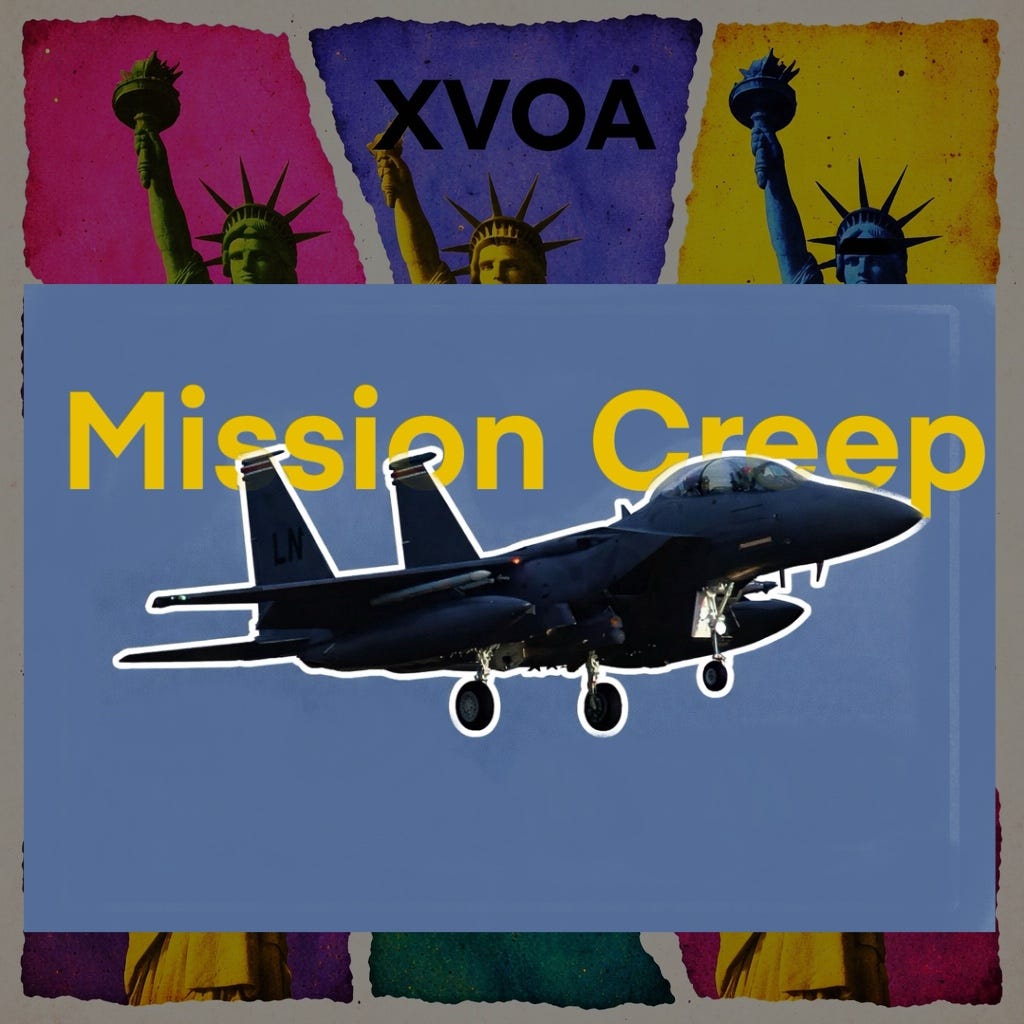
A U.S. fighter jet has gone down over Iranian territory, one crew member has been rescued, and the search continues for the second. The Pentagon has not publicly detailed what happened yet. [1]
The jet loss lands in the same 24-hour window as Defense Secretary Pete Hegseth forcing out Army Chief of Staff Gen. Randy George “effective immediately,” a rare wartime move with no official explanation. [4]
The deeper mechanism is not simply “Iran got lucky” or “U.S. tech failed.” Reporting and expert analysis describe an asymmetry of interests: Iran does not need to win the air war to pressure Washington, it needs to impose costs, disrupt energy routes, and outlast U.S. political patience. [10]
Domestic consent is thin. A Reuters/Ipsos poll shows widespread concern for troop safety and strong opposition to sending ground troops, while oil shock from the conflict is already feeding inflation fears. [9]
What many people are missing: when leadership gets purged and timelines get spun, the risk concentrates on the people doing the flying, refueling, guarding, and rescuing. The public gets slogans; military families get knock-on-the-door anxiety.
Restack it and share it.
Send it to one friend.
And let me make this real simple: if you read all this and got something out of it, leave a $5 coffee tip here: One button. One choice. No math problem.
I already dragged my nervous system through the news so you could get the clean version. Do not read all this, nod like I made sense, and then tiptoe off like generosity just got deployed overseas.
What Sent Me Looking and What Everyone Thinks This Is About
The surface story is simple: a jet went down; one crew member has been rescued; the second is still missing; the rescue is still underway. [1] On paper, it is a tactical event.
But the story is trending because it punctures the narrative Washington has been trying to sell since this war began on February 28: that the campaign is controlled, nearing completion, and advancing on a neat timeline. [7] A downed jet over Iran is the kind of event that makes the timeline feel like theater.
This is also why the search-and-rescue footage matters so much. Multiple outlets have described U.S. aircraft operating low over Iran during recovery efforts, and Iranian state media has simultaneously attempted to shape the story with competing claims about what was shot down and what happened to the crew. [2] The combination creates a public psychological hook: peril plus uncertainty plus national pride plus fear for the individuals caught in the middle.
In a war, the human brain latches onto the person before it can process the policy. That is not a weakness. It is the last healthy thing still working.
Then, right as that human story begins, the leadership story detonates.
Reuters and The Washington Post report that Hegseth forced out the Army Chief of Staff and other senior officers with no public reason given, an unusual move during wartime. [4] This matters beyond Pentagon gossip. When top leadership is removed abruptly, the message that travels down the chain is rarely “accountability.” More often it is: do not surprise the people above you.
And if you are a pilot, a maintainer, a pararescueman, or a spouse waiting by the phone, you already know what happens next. People stop telling the full truth upward. Risk gets renamed.
That is the smell of institutional danger.
The Receipts
Here is what is documented as of April 3, 2026.
Reuters now reports that a U.S. fighter jet was shot down over Iran, that one crew member was rescued, and that the search continues for the second. Reuters also notes this is the first such known incident since the war began on February 28. [1]
Reporting from The Washington Post describes the aircraft as an Air Force F-15E that crashed in southern Iran, with the two-person crew’s fate unknown and a recovery effort launched. The Post also reports this was the first known American aircraft loss inside Iranian territory during the month-long conflict. [2]
The Guardian adds more texture to how information warfare is operating in real time: Iranian state media initially claimed an F-35 was downed, while aviation experts identified the wreckage as an F-15E. It also reports Iranian calls for civilians to help locate the “enemy pilot,” and notes the visible signs of a U.S. combat search and rescue mission involving a C-130 and HH-60 helicopters. [3]
If you have never watched a combat rescue sequence, here is the part civilians often miss: a search-and-rescue mission is not just “going to get our people.” It is a second combat operation launched into the most dangerous part of the map, often under time pressure, into an environment where the enemy knows exactly what you want. [3]
The U.S. Air Force’s own fact sheet on the HH-60G Pave Hawk describes its primary mission as recovering isolated personnel “into hostile environments” in war, day or night. [13] That is the job. It is also the risk.
Now layer the leadership context.
On April 2, Reuters reported that Hegseth fired Army Chief of Staff Gen. Randy George, with the Pentagon confirming an immediate retirement and providing no reason. Reuters notes it is extremely rare to fire the head of a military branch during wartime. [4]
The Washington Post emphasizes how unusual the timing is and situates it within a broader remaking of senior military leadership, with repeated removals often happening without explanation and amid ideological clashes. [5]
Al Jazeera’s reporting, drawing from AP and other reporting, says the abrupt removal came amid a “string of dismissals,” and notes reporting that a key tension involved military appointments and promotion decisions, specifically allegations around blocking promotions of officers including two Black officers and two women. [6]
Pause here. I want to be precise about categories:
Documented fact: the general was forced out with no official reason publicly stated. [4]
Documented fact: credible reporting says there are disputes and ideological tensions around leadership reshuffles and promotions. [5]
Strong inference: when senior leaders are removed without explanation in wartime, it creates an incentive environment where honest dissent becomes career-dangerous.
Now the civilian narrative shaping.
On April 1, President Donald Trump delivered a primetime address claiming “core strategic objectives” are nearing completion and explicitly described a “two to three weeks” window for intensified strikes, including threats against Iranian power generation facilities. [7] This is not a sideline detail. It is the rhetorical frame the administration is asking the country to inhabit.
At the operational level, the U.S. Central Command statement early in the war gave casualty figures and confirmed “major combat operations continue.” [8] That is the institutional baseline: war, not raid.
And at the level of public mood, the Reuters/Ipsos poll is plain: most Americans are worried about troop safety and oppose sending U.S. ground troops to Iran, while anticipating financial fallout as energy prices rise. [9]
A downed jet, one rescued crew member, one still missing, leadership purges, and a public already bracing for cost. That is why this is catching fire.
The Machine Under the Story
If your first response is, “We underestimated Iran,” you are not alone. It is the oldest American foreign-policy reflex: if something goes wrong, assume it must mean the enemy was stronger than we thought.
Sometimes that is true. Often, it is incomplete.
The deeper mechanism here is asymmetry of interests plus asymmetry of time.
A Reuters analysis warns that a war meant to break Iran could leave Tehran stronger and Gulf states exposed, because surviving weeks of attacks and disrupting energy flows can itself create leverage. The analysis quotes regional experts arguing that Iran does not need air superiority to “win.” It needs to impose costs and keep pressure points engaged, especially around energy routes. [10]
A CSIS analysis takes that logic further and puts a name on it: a “multidomain punishment campaign.” It explains, in plain terms, that Iran does not have to sink every tanker or destroy every facility to change world behavior. It only has to disrupt movement long enough to spike insurance, rattle markets, and create political pain for energy-importing states. [11]
That is the machine.
If you are Iran, you can lose aircraft, lose radar, lose buildings, lose commanders, and still inflict global consequences by turning the Strait of Hormuz into a question mark and by hitting regional infrastructure in ways that create fear and delay. [10]
If you are the United States, you can win a thousand tactical engagements and still lose politically if the public loses faith, if energy shock keeps biting, and if the war’s objectives keep shifting in public. [9]
So where does the downed jet fit?
It is not proof that Iran has “won.” It is proof that the environment remains contested enough that a single failure, whether hostile fire, accident, or miscalculation, can force the U.S. into a second operation: recovery. [1] That second operation carries its own risks, and it turns a distant war into a personal story fast. [3]
Now bring leadership purges back in.
In a healthy institution, bad news travels upward fast, and the system adapts. In a politicized institution, bad news gets delayed, softened, and rebranded because people fear how it will be received. When the top of the Army is removed “effective immediately” with no public reason, it is reasonable to infer that future bad-news transmission becomes harder, not easier. [4]
That is the part most civilians never get briefed on: wars are not only fought against foreign enemies. They are fought against the human tendency to deny reality until reality breaks something.
The psychological name for this is group-level denial under threat. The moral name is institutional betrayal when the people doing the work are fed narratives instead of honest risk.
And the still-missing crew member becomes the price of that gap.
The Deeper Echo
I kept thinking about a detail from an older American story of overconfidence, not because history repeats exactly, but because it rhymes in the same places.
In 2002, the Pentagon ran a massive war game called Millennium Challenge, designed to test futuristic concepts of rapid decisive operations against an adversary often understood as Iraq or Iran. The exercise became controversial because the opposing force found ways to exploit assumptions and because, according to accounts at the time and later analysis, the game’s design and scripting became part of the lesson. [14]
What matters here is not the trivia. It is the warning embedded in the story’s aftertaste: if you build a simulation or a narrative that must end in U.S. victory, you stop learning from friction.
War on the Rocks frames the controversy as a lesson about hubris and about how institutions can resist feedback when feedback threatens a preferred doctrine. [14]
That is why the current moment feels so familiar to people who lived through Vietnam’s official optimism, Iraq’s “Mission Accomplished” mood, and Afghanistan’s long grind presented as a series of “turning points.”
When political leaders promise a short timeline, the institution experiences pressure to deliver a story that matches the promise. [7] When that promise coincides with sudden purges, the pressure intensifies. [4]
And then reality does what it always does.
Reality sends back a downed aircraft, a missing crew, and a rescue mission that has to fly low over hostile territory, because the laws of physics do not care about messaging. [3]
If you want one sentence that captures the echo, it is this: Hubris does not kill leaders first; it kills the people whose names the leaders do not know.
Who Benefits and Who Pays
There is a cruel clarity to who benefits from a war being framed as “almost over.”
Politically, “almost over” is a painkiller. It buys time. It defers accountability. It makes citizens tolerate another week. [7]
Economically, the conflict is already landing on households through energy shock and inflation anxiety. Reuters reporting shows oil prices surging above $110 as traders price prolonged disruption and the possibility that key routes remain constrained. [12] The Reuters/Ipsos poll reinforces what people feel: worry about troops and worry about personal finances are rising together. [9]
Militarily, the bill comes due in the bodies of the people who do the work and the families who hold their breath. A downed aircraft is not a symbol. It is a family whose phone is suddenly too quiet.
Now, the marginalized stakes.
When senior leadership disputes include allegations about blocking promotions involving Black officers and women, that is not “identity politics.” That is a signal about who is presumed loyal, who is presumed suspect, and who is treated as expendable in institutional reputation management. [6]
If you are a Black officer, a woman officer, or someone already accustomed to being evaluated through a double lens, military politicization is not abstract. It changes who gets backed when things go wrong, who gets scapegoated, and who gets protected.
That is not a claim about any one individual’s motives. It is a claim about what organizations do under stress when power gets nervous and begins sorting people into “ours” and “theirs.” [5]
And in war, sorting is deadly.
So when the public debates “Did we underestimate Iran?” I want us to widen the question.
Yes, adversaries can be underestimated. But Americans also underestimated something else: how quickly a war can become a stage where messaging must beat reality, and where the cost of that mismatch is paid by the same communities that always serve in disproportionate numbers and carry the aftermath for decades.
The Accountability Question and the Close
Here is the clean question I want to ask the institutions in charge.
To the White House and the Pentagon: If the war is on a “two to three week” track and “objectives are nearing completion,” why are we watching a frantic rescue operation over Iran with only one crew member recovered so far, and why is the Army’s top officer being removed “effective immediately” with no public reason given? [7]
To Congress: If this is a major war, where is the sustained, public, accountable debate that matches the scale of the commitment, the casualties, and the economic shock? [8]
To the rest of us: Do we still have the civic muscle to demand truth before we demand triumph?
I have one more thought, and it is not comfortable.
When a crew goes down in hostile territory and only one member has been recovered, a country has a choice. It can treat them as sacred, as human beings who must be recovered and honored. Or it can treat them as props inside a narrative about strength and inevitability.
The rescue mission suggests someone still believes in sacred. [3] The messaging, especially the promise of quick completion alongside escalating threats, suggests the narrative machine is hungry. [7]
Mutual coexistence of those two realities is where moral injury begins. Not just for those who pull triggers, but for those who watch institutions talk one way while people bleed another.
If you lived through Vietnam, Iraq, or Afghanistan, you know what comes next if we do nothing: the war will keep becoming normal, one press cycle at a time, until it ends abruptly or drags until we stop paying attention. Then, years later, we act surprised at the wreckage in families, bodies, budgets, and trust.
The downed jet is not the whole story, but it is a signal flare.
The question is whether we will read it as smoke, or as a warning about the wiring behind the wall.
Keep This Thing Going
If this helped you see the pattern more clearly, restack it and share it.
Send it to one person who still thinks this is just another headline.
Love first to the people already putting something on this. Y’all are the reason this does not turn into one of those sad little operations where everybody got opinions and nobody paid the light bill. And love to the free readers too. The opens, clicks, and restacks still tell the machine this work deserves to travel.
Listen, here is the simple version. If you want to keep this reporting sharp and alive, become a paid subscriber here:
And if full commitment is not in the cards today, just leave a $5 or more coffee tip here:
Do not read all this breaking-news stress relief, whisper damn that was good, and then disappear like your debit card just got redeployed.
Sources
Reuters | “Iran shoots down US fighter jet, one pilot rescued, media say” (Apr. 3, 2026) - Updated Reuters reporting that one crew member was rescued while the search continued for the second.
The Washington Post | “U.S. fighter jet crashes in Iran; search launched for 2 crew members” (Apr. 3, 2026) - Details on the aircraft type, the rescue effort, and the political context in the broader war.
The Guardian | “US F-15E jet confirmed shot down over Iran as Tehran releases wreckage images” (Apr. 3, 2026) - Additional detail on Iran’s claims, imagery, and indicators of combat search and rescue activity.
Reuters | “US Army chief of staff fired by Hegseth, sources say” (Apr. 2, 2026) - Establishes the abrupt wartime removal of the Army’s top uniformed officer and the lack of explanation.
The Washington Post | “Hegseth forces out Army’s top general, two other senior officers” (Apr. 2, 2026) - Broader reporting on leadership upheaval, internal clashes, and why the timing is extraordinary.
Al Jazeera | “Hegseth fires US Army chief of staff in reported string of dismissals” (Apr. 3, 2026) - Adds context on reported disputes over promotions and the marginalized-stakes dimension.
AP News | “Read the complete transcript of Trump’s address to the nation” (Apr. 1, 2026) - Primary source capturing the administration’s claimed timeline, objectives, and escalation threats in its own words.
U.S. Central Command | “Operation Epic Fury Update” (Mar. 2, 2026) - Primary official statement on early U.S. casualties and confirmation that major combat operations continued.
Reuters | “Americans have bleak views on Iran war, Reuters/Ipsos poll shows” (Apr. 3, 2026) - Public opinion and troop-safety anxiety data, including strong resistance to sending ground troops.
Reuters Analysis | “A war meant to break Iran could leave Tehran stronger, and Gulf exposed” (Apr. 1, 2026) - High-value mechanism analysis explaining Iran’s leverage strategy and the “impose costs” logic.
CSIS | “Iran’s Next Move: How to Counter Tehran’s Multidomain Punishment Campaign” (Mar. 23, 2026) - Specialist analysis naming the coercion model behind Iran’s strategy and the asymmetry of interests.
Reuters | “US crude jumps more than 11%, Brent nearly 8% after Trump vows more attacks on Iran” (Apr. 2, 2026)- Connects the war’s escalation to oil price shock and inflation risk, anchoring the economic stakes.
U.S. Air Force Fact Sheet | “HH-60G Pave Hawk” - Primary source describing the mission of the combat rescue helicopter used for personnel recovery in hostile environments.
War on the Rocks | “Millennium Challenge: The Real Story of a Corrupted Military Exercise and its Legacy” (Nov. 5, 2015) - Historical echo on how institutions resist bad-news feedback, and why “victory scripting” invites real-world surprise.
Brilliant analysis and heads-up! This is why I’m a paid subscriber. Please keep analyzing and writing!
Thank you. Those who are currently making the decisions to 'do war' (games) do not ever pay the price, the people they send into the fray do. Furthermore, dt&co are bereft of morals and have terrible decision making skills, so their atrocities are compounded. War is their ultimate playtoy, but is a horrible reality for their pawns and game pieces who just happen to be people, being killed , captured, with the taxpayers included when they foot the bills. Unfortunately, the world is their 'playing board'. We need to get them OUT of the game. The sooner the better. Then we need to work on systemic reformation.