

You know how I roll, y’all…here’s a cheat sheet.
TLDR Cheat Sheet
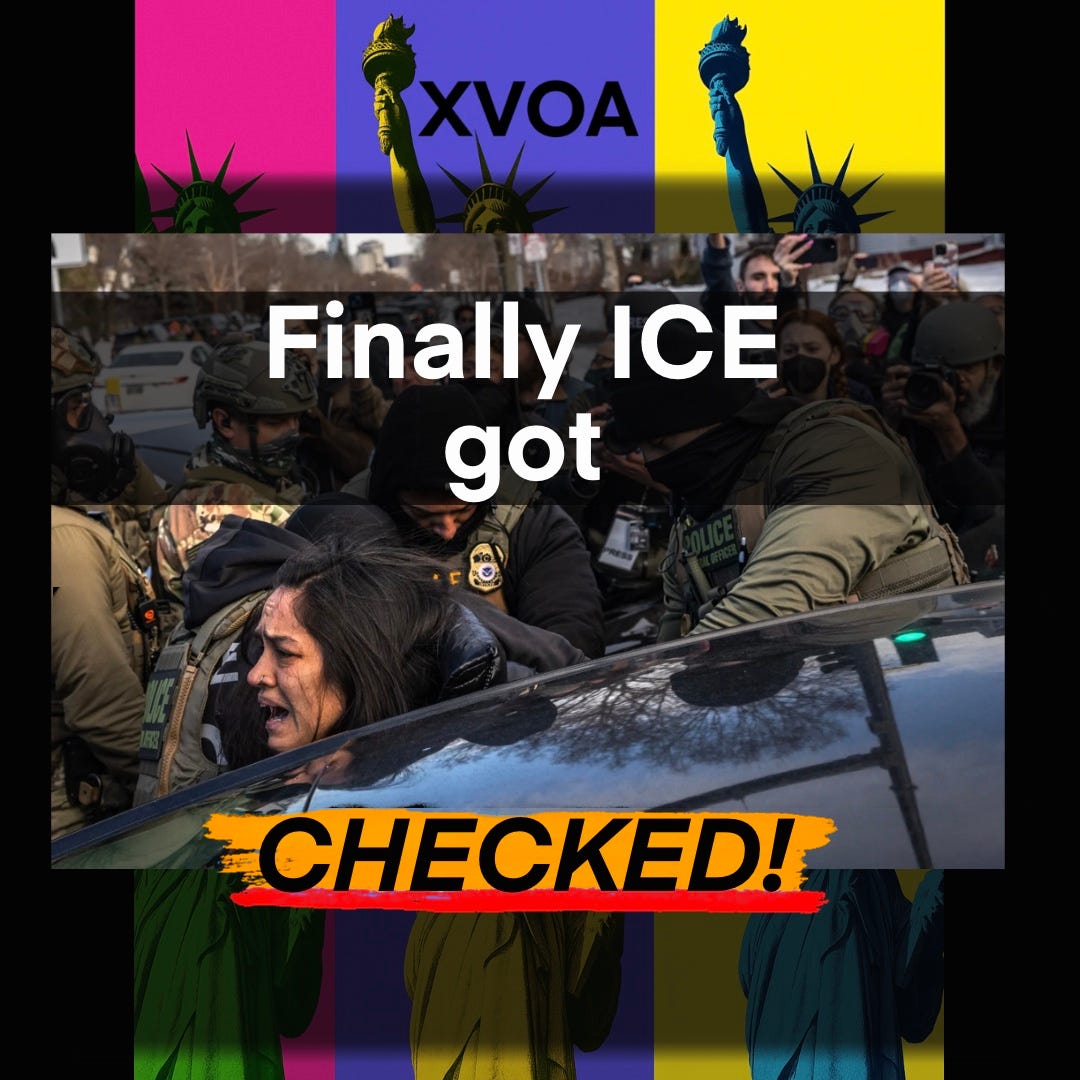
What happened: A federal judge in Minnesota issued an injunction limiting how ICE/DHS agents can treat peaceful protesters and observers during Operation Metro Surge. [1][2]
What agents can’t do: Retaliate against peaceful, unobstructive protest/observation; use force or chemical irritants on peaceful crowds; arrest/detain without lawful cause; stop vehicles without suspicion of forcible obstruction. [1][2]
What agents can still do: Enforce immigration law and act on probable cause or reasonable suspicion, including using force only when there’s a genuine threat. [1][2]
Why it matters: It draws a bright First Amendment and Fourth Amendment boundary: recording and peaceful protest aren’t crimes, and “annoying to law enforcement” is not legal justification. [1][2]
What to watch next: Real-world compliance, any contempt motions if agents violate the order, and whether the court expands relief or the broader challenge gains traction. [1][2][8]
Background: ICE Crackdown and Recent Shooting in Minnesota
For the past several weeks, Minneapolis-St. Paul has been the focus of “Operation Metro Surge,” a massive federal immigration enforcement crackdown involving thousands of ICE and Border Patrol agents. The operation has led to over 2,500 arrests and frequent street confrontations. Tensions escalated sharply after a January 7 incident in which an ICE agent fatally shot 37-year-old Renee Nicole Good during a raid, a confrontation captured on video that sparked public outrage. (The agent, later identified as Jonathan Ross, claimed Good tried to ram officers with her SUV; he was allegedly injured, and DHS has defended the shooting as self-defense.) [1][2][10]
In the wake of Good’s death, protests against the federal agents intensified, with crowds of bystanders often following ICE teams and demanding they leave Minnesota. State and local leaders, including Governor Tim Walz and Minneapolis Mayor Jacob Frey, have openly criticized the federal operation as unlawful and dangerous, urging protesters to remain peaceful even as they decry what Walz called a “campaign of organized brutality” by federal forces. Minnesota’s two U.S. Senators and local House members have also voiced outrage; Sen. Amy Klobuchar insisted “ICE needs to get off our streets. They are causing confusion, chaos and fear,” while Rep. Ilhan Omar argued the administration is “operating outside the bounds of law.” Amid this charged atmosphere, civil liberties advocates moved to challenge ICE’s tactics in court. [2][3][5][8]
Judge Menendez’s Injunction on ICE Tactics
Late on January 16, a federal judge in Minnesota issued a sweeping injunction to curb how ICE and other Department of Homeland Security (DHS) agents handle protesters. U.S. District Judge Katherine “Kate” Menendez granted the injunction in a case filed by six Minnesota residents (represented by the ACLU of Minnesota) during the early days of Operation Metro Surge. The order prohibits federal immigration agents from “arresting, detaining, retaliating against or using force and chemical irritants” on individuals engaged in peaceful protest or observation of the ICE operations. In effect, the judge imposed immediate limits on crowd-control and enforcement tactics that had been widely used by federal officers during the Minneapolis crackdown. Key provisions of the injunction include: [1][2][4]
No retaliation against protesters or observers: Agents may not “retaliate[] against those protesting or observing” the activities of Operation Metro Surge. In other words, simply watching, recording, or peacefully criticizing ICE actions cannot be met with force or arrest. [1][2]
No arrests or detentions without cause: Agents are barred from arresting or detaining any person absent probable cause that a crime was committed or reasonable suspicion of obstruction of enforcement. They cannot sweep up demonstrators unless they have a specific, lawful basis to believe the person is violating the law or actively impeding officers. [1][2]
No use of pepper-spray or tear gas on peaceful crowds: The use of pepper spray, tear gas, flash-bangs or other “crowd dispersal” munitions is forbidden against individuals who are peacefully protesting or observing and not posing a threat. Federal officers had repeatedly deployed chemical irritants on bystanders in recent weeks; under this order, such tactics are off-limits if the crowd is non-violent. [1][2]
No stopping drivers without suspicion of obstruction: Officers may not stop or detain vehicles (drivers or passengers) unless they have a “reasonable and articulable suspicion” that the person is “forcibly obstructing or interfering” with ICE operations. Simply driving near or following ICE convoys is not grounds for a traffic stop. Menendez’s order explicitly notes that safely tailing agents from an appropriate distance does not by itself create suspicion to justify a vehicle stop. [1][2][7]
Judge Menendez emphasized that the injunction protects anyone engaging in “peaceful and unobstructive protest activity,” including those who are merely observing or recording ICE enforcement actions. In her ruling, she recounted evidence of agents pointing guns, using pepper spray, and making “actual and threatened” arrests of people who were filming or objecting to ICE raids, actions that she found had a “chilling effect” on the protesters’ First Amendment rights. She concluded that federal officers likely violated the First Amendment by deploying force against peaceful protesters, and also likely violated the Fourth Amendment by stopping and detaining observers’ vehicles without sufficient cause. As Menendez wrote in the order, “safely following agents at an appropriate distance does not, by itself, create reasonable suspicion to justify a vehicle stop,” underscoring that monitoring law enforcement from afar is lawful. [1][2][7]
Legal Context and Implications
This injunction is a form of temporary relief (a preliminary injunction) that will remain in place while the underlying lawsuit proceeds. Judge Menendez ordered the federal government to notify all DHS agents participating in Operation Metro Surge within 72 hours about the new restrictions. The limits are binding at least until the operation concludes or until the court orders otherwise. [1][2]
In practical terms, ICE and Border Patrol agents in the Twin Cities must immediately adjust their tactics: they can continue to carry out immigration arrests and searches, but cannot use force, chemical agents, or arbitrary traffic stops as crowd-control measures against bystanders who are not physically interfering. Peaceful protesters now have a judicial order affirming their right to observe and speak out without being targeted. [1][2]
Notably, this ruling does not completely halt the federal immigration crackdown itself; it merely curtails how agents may respond to protesters. (Earlier this week, Menendez declined to issue a broader restraining order sought by Minnesota’s state government to suspend Operation Metro Surge entirely, saying that while the constitutional claims are “enormously important,” they raise complex issues with few clear precedents and would require more briefing.) Thus, DHS’s enforcement surge in Minnesota is still ongoing, but under the judge’s order agents must refrain from the aggressive crowd suppression tactics that prompted the lawsuit. Legal experts note that this outcome reinforces existing constitutional protections: courts have consistently held that peaceful protest and filming police are protected First Amendment activities, and that officers need objective cause (not mere annoyance at being recorded) to detain someone. The injunction effectively puts federal agents on notice that no one is above the law when it comes to respecting those rights. [1][2][8]
Reactions and Fallout
The court’s decision drew immediate praise from civil liberties and immigrant advocacy groups. The ACLU of Minnesota, which represents the plaintiffs, said it was “relieved” by the preliminary injunction, expressing hope that it will “prevent further First Amendment violations like the ones that have been harming Minnesotans since the start of ‘Operation Metro Surge.’” The plaintiffs, local activists who claim they were unlawfully arrested, held at gunpoint or pepper-sprayed simply for observing ICE raids, see the ruling as an important affirmation of their rights. “ICE and CBP’s practices are both illegal and morally reprehensible,” an ACLU attorney had argued, saying federal agents must be held accountable for “sweeping up Minnesotans through racial profiling and unlawful arrests” during the crackdown. [1][4][5]
With the injunction in place, advocacy groups expect a de-escalation of the most heavy-handed tactics. “This is a critical step to ensure that peaceful protesters don’t face police-state tactics for exercising their rights,” one civil rights lawyer noted, adding that observing law enforcement “cannot be treated as a crime.” (The ACLU and partnering law firms are continuing to pursue the class-action lawsuit to permanently bar DHS from practices like suspicionless stops and warrantless arrests of bystanders.) [1][4]
Federal officials have not directly commented on the ruling as of Friday night. The Department of Homeland Security did not immediately respond to requests for comment. In past statements, however, DHS and ICE have defended their agents’ conduct, claiming that officers faced “unruly crowds and agitated protesters” in Minnesota and had to respond to threats to ensure their own safety. Government attorneys argued in court that the deployed agents were acting within legal authority to enforce immigration laws and protect themselves, pointing to incidents where protesters allegedly threw objects (even snowballs) at officers or tried to block ICE vehicles. While Judge Menendez acknowledged that officers “may use force when genuinely threatened,” she found a “pattern of retaliation” against people engaged in constitutionally protected activities like recording and peacefully protesting. Going forward, any violation of the injunction by agents (for example, tear-gassing a non-violent crowd or stopping a car with no cause) could potentially lead to contempt of court or further legal action. [1][2][4]
Minnesota political leaders, who have been at odds with the Trump administration over this operation, largely welcomed the judge’s intervention. Gov. Tim Walz, in particular, has been outspoken in supporting the rights of residents to monitor federal agents. Just one day before the ruling, Walz released a video urging his “fellow Minnesotans” to document ICE activities, stating: “You have an absolute right to peacefully film ICE agents as they conduct these activities. … If you see these ICE agents in your neighborhood, take out that phone and hit record.” He implored the public to help “create a database of the atrocities against Minnesotans” as evidence for future legal action. [3][5]
Now that Judge Menendez’s order has affirmed those same principles, effectively protecting the citizen watchdog efforts Walz called for, state officials expressed a sense of validation. Mayor Jacob Frey of Minneapolis similarly has stood by the protesters, refusing to be “intimidated” and insisting his focus remains on keeping the city safe from “the chaos and danger [that] this Administration has brought to our streets.” (Frey and Walz themselves, however, are facing an escalating clash with the federal government: late Friday, news broke that the Justice Department has opened an investigation into whether their public statements and actions “impeded” federal immigration enforcement. Both leaders blasted the probe as a political intimidation tactic. Walz pointedly noted, “The only person not being investigated for the shooting of Renee Good is the federal agent who shot her.”) [3][8][9]
Immigrant community organizations and activists on the ground are hailing the injunction as a crucial reprieve. Many have been protesting daily outside the ICE field office (Bishop Henry Whipple Building) despite the risk of arrest or injury. The new rules should mean that peaceful vigils and demonstrations can continue without fear of retaliation, no more surprise clouds of tear gas for chanting on a sidewalk, and no more unmarked SUVs pulling over activists just for following ICE convoys. “This gives us some breathing room to keep protesting safely,” said one organizer, who noted that the community will be watching to ensure agents actually comply. [1][5]
There is also hope that the court’s order will set a precedent beyond Minnesota: “It sends a message that ICE can’t trample on people’s rights with impunity,” an attorney with the National Lawyers Guild commented. Legal experts agree the case could influence how federal agencies handle First Amendment activity in future operations, especially if the injunction is eventually made permanent or upheld on appeal. [1][4]
Connection to the Renee Good Shooting and Next Steps
The tragic shooting of Renee Good has become a focal point in this unfolding saga. Her death galvanized public opinion and drew national scrutiny to ICE’s actions in Minnesota. Polls show a majority of Americans believe the Good shooting was unjustified and indicative of deeper problems in ICE’s approach. [1][2]
Judge Menendez’s ruling, coming just over a week after that incident, directly addresses some of the circumstances that led to Good’s killing. Good was shot as she attempted to drive away from an ICE encounter; federal agents later claimed she was “forcibly obstructing” their operation with her vehicle. The injunction now makes clear that simply blocking or following agents’ vehicles, absent an imminent safety threat, is not grounds for lethal force or even a stop. It reinforces that officers must have specific evidence of obstruction or danger before detaining drivers, a standard that could factor into ongoing investigations of the shooting. [1][2][7]
Meanwhile, the investigation into Good’s death continues to unfold. DHS has said that the agent who shot her (identified as Officer Ross) fired in self-defense, and initial internal reviews deemed the shooting justified. However, Minnesota officials and community members are demanding an independent inquiry, noting inconsistencies: Good was reportedly unarmed, and eyewitness 911 calls described her as “shot point-blank… in her car” for not opening the door. Local authorities released dispatch logs showing Good suffered multiple gunshot wounds (to her chest, arm, and possibly head). The Justice Department’s Civil Rights Division may also be examining whether Good’s civil rights were violated. [1][10]
Given the fraught climate, Governor Walz and others have underscored the importance of accountability: “Not just protesters, but the agents who use deadly force must be held to account,” Walz said, lamenting that federal investigators seem more focused on muzzling local leaders than on the shooting itself. [3][8]
In the immediate term, ICE enforcement in Minnesota will be under a spotlight. Any reported breach of Judge Menendez’s injunction, for instance, if agents again use pepper spray on a peaceful crowd or pull over a legal observer without cause, could prompt swift legal action. The ACLU of Minnesota has set up hotlines for people to report violations, and attorneys are prepared to return to court if needed. [1][4]
On the other hand, if the order is respected, protests are likely to remain largely peaceful and non-confrontational, as activists will no longer be provoked by aggressive federal responses. Minnesota’s state lawsuit seeking to end Operation Metro Surge entirely is still pending before Judge Menendez, with further briefs due next week. That case raises broader constitutional questions, such as whether the mass deployment of federal agents infringes on state sovereignty or discriminates against minority communities, but for now, the injunction has provided a crucial check on how those agents interact with the public. [8][9]
Observers say this rapid court intervention is a testament to how quickly the situation in Minnesota was deteriorating. In less than a month, a combination of heavy-handed federal tactics and fierce local resistance created a powder keg. The judge’s ruling may cool down the temperature: “What we need most of all right now is a pause. The temperature needs to be lowered,” a Minnesota assistant attorney general had urged in court. [8]
While the long-term legal battles over immigration policy and federal authority are just beginning, Friday’s injunction sends an unmistakable message: peaceful protest is not a crime, and those who speak out against ICE’s operations cannot be silenced with retaliation or fear. As litigation continues, both sides will be watching closely, but for the protesters on the streets of Minneapolis, the judge’s order is an immediate shield ensuring their voices can be heard without tear gas or handcuffs. [1][2]
Sources: The Minnesota Star Tribune; Associated Press (via KSAT, Scripps News); The Guardian (live coverage); ABC News/ABC7; The National Desk/FOX Baltimore.
Conclusion
This injunction is not a magic off switch for Operation Metro Surge. It is a legal fence. It tells federal agents, in plain constitutional terms, that peaceful protest, lawful observation, and recording are not “interference,” and that intimidation tactics like suspicionless vehicle stops and crowd-control chemicals are not a substitute for probable cause. It also puts everyone on notice about what comes next: compliance on the street, litigation in the courts, and accountability questions that do not disappear just because the news cycle moves on. [1][2]
That is why I move fast and cite everything. If institutions are going to test the boundaries in public, we should document it in public, with receipts.
Support this work
This is what indie journalism looks like: fast, sourced, and accountable.
I do this work full time for YOU. Not a newsroom chasing clicks. Not a billionaire’s memo.
If this kind of coverage matters, subscribe here:
Color me cynical, but, the gang that won’t release the Epstein files despite a court order….Won’t stop threatening to invade Greenland despite NATO agreements….Won’t allow Minnesota to investigate the murder of their own citizen….Ignored a court order to not fly immigrants to CECOT in El Salvador….Is pursuing criminal charges against the governor of Minnesota and mayor of Minneapolis; congressional veterans who advised military personal they have the obligation to refuse illegal orders, et al, isn’t likely to give one hoot about a restraining order.
Until the state starts charging and arresting these out of control ICE agents, nothing will stop them.
That’s the best news I’ve heard in quite a while. Thank you for your work.