

I’m writing this as someone who has worn the badge and personally endured racism while wearing it. Down South, I worked in a department barely bigger than the one in In the Heat of the Night. The accents weren’t much different either. I faced barely concealed racial intimidation there, and even up North, I caught racial taunts a few times. A change in geography only got me so far.
So this ain’t gonna be an Officer Tatum whitewash. To the contrary, call it a blackwash exposé. I’ll be examining the reporting coming out of Charlotte with the experience of a Black retired cop who knows that putting on the uniform doesn’t put racism out of reach. And I want to know how far the attitudes described in those messages reached into these officers’ police work. That question concerns everybody who ever had to stand on the other side of their badges.
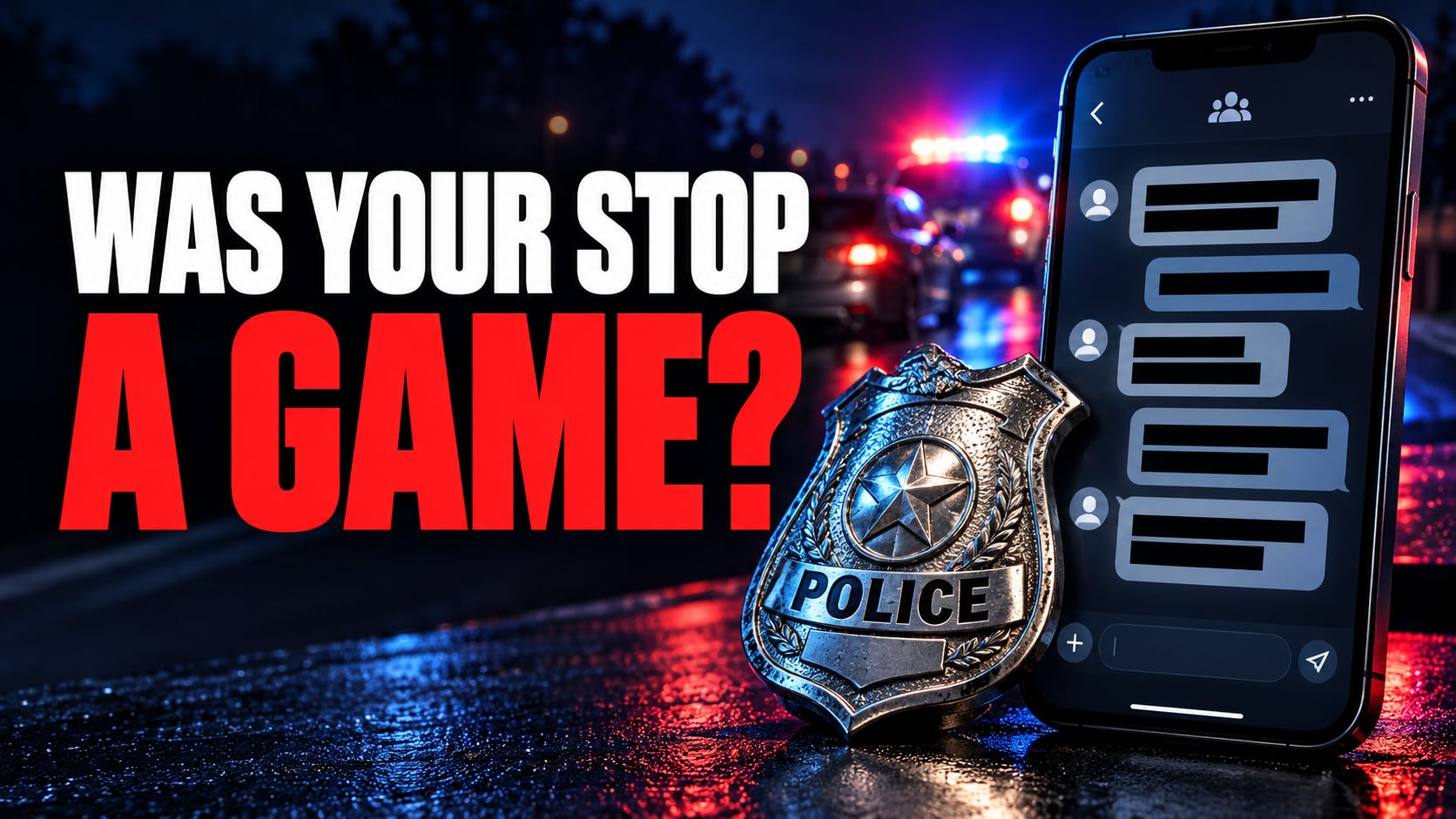
Charlotte-Mecklenburg police officers allegedly participated in a race to see who could stop the most Black drivers. [1]
What They Were Saying
According to unnamed sources who spoke to WBTV, there was a group text between Charlotte-Mecklenburg police officers that included a race to see who could stop the most Black drivers. The sources also told the station there were repeated uses of the N-word in conversations about using force and firing weapons at Black residents. [1]
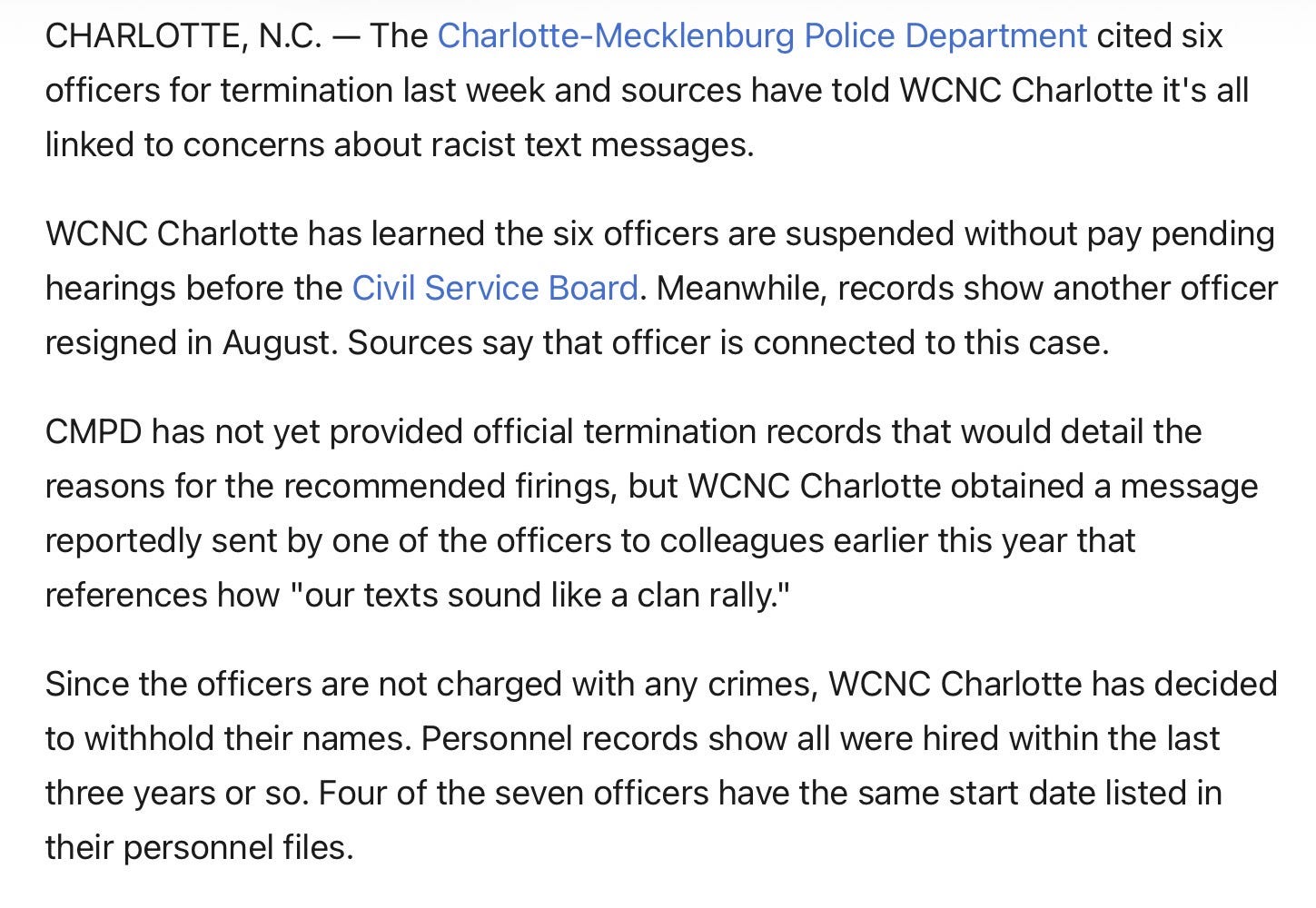
According to a news story by WCNC, an officer wrote, “our texts sound like a clan rally.” [2]
What I Say
I would like to read the context of that quote. Please share those text messages with me.
The text thread came to light in a state investigation into police officer Seth Elliott, who allegedly misused a controversial surveillance technology known as Flock, according to WBTV’s sources. Information taken from Elliott’s cell phone was shared with CMPD and prompted an internal investigation. [1] Six officers had been cited for termination, while others allegedly involved had resigned, WBTV reported on Tuesday, October 13. [3]
In response to questions from WBTV reporter David Hodges, the agency did not confirm or deny specific allegations but stressed the importance of upholding its high professional standards, integrity, and trust in the Charlotte-Mecklenburg community. [1]
CMPD needs to address what took place between police and citizens during police stops in this alleged race to stop Black people. If there was a race among police to see who could stop the most Black people, the department needs to review all of the reasons for those stops, release relevant body cam footage, and review all complaints from those citizens. Those Charlotteans deserve to know the truth. [2]
Defense attorneys Brad Smith and Tim Emery spoke with WBTV about how the officers’ text messages could raise credibility questions in pending cases involving those officers. [3] Emery added that prosecutors should also consider halting cases in which these officers played a central role. [3]
And they should: if you are being prosecuted, you would want to know whether an officer who testified against you is under fire for expressing racist sentiments.
Giglio v. United States, 405 U.S. 150 (1972), requires prosecutors to share with the defense material evidence that affects the credibility of the state’s witnesses. [4] That’s why prosecutors need to consider whether the texts at issue implicate Giglio, i.e., whether they need to be shared with the defense. People with their liberty at stake have a right to an answer to that question.
The Cases They Leave Behind
Speaking in generalities, Mecklenburg County’s district attorney’s office told WBTV that sustained findings of misconduct require prosecutors to determine whether an officer’s dishonesty or bias makes that officer unreliable as a witness for the state. [3]
Well, I have news for the district attorney’s office. You need to tell the public what you are doing. Tell the public what cases you are looking at and which defendants you’re notifying.
And yes, this should include past convictions, not just pending cases. You should be looking at cases where convictions were based in significant part on these officers’ testimony. Dig into these cases and determine if Giglio information was shared with the defense. Each case needs to be considered on its own, based on the evidence in it. People still feeling the reverberation of these officers’ actions are entitled to an answer, too.
Leaving city payrolls does not erase the cases they leave behind.
Let Us See the Record
I keep coming back to Nolan Wells, the 18-year-old found dead after a July Fourth boat trip in Mississippi. After a grand jury declined to recommend charges, his family asked for the investigative materials and official autopsy report to be released. [5] I understand why they want to examine that record for themselves.
And just so we’re clear, I’m no fan of putting “TRUTH” in the title of your interview, Brandon Tatum. [6] Yes, Warren Hudson is a friend of Nolan. Yes, that interview isn’t an official investigation. His account, nevertheless, should also be scrutinized.
As should the police’s. Having experienced racism and much more while wearing a badge and uniform, I never thought to use that badge to dismiss a family’s legitimate questions as grief-ridden hassles, much less to discourage scrutiny of an official account. So no, those Charlotte allegations don’t establish what happened to Nolan. They only embolden me to call for such scrutiny. In Charlotte, that means examining what the officers did on duty and providing answers to the people who may have been affected.
Listen, checking the local reporting and reading the court decisions takes time. Paid subscriptions give me the time to do that work. If you’re reading free and have room in your budget, become a paid subscriber.
Don’t leave it to somebody else to fund the Black voices you say you want to hear. If a subscription doesn’t fit, Buy Me a Coffee is the one-time option.
Already supporting this work? Thank you. And if money is tight, send this article to somebody who needs to read it.
Sources
David Hodges, WBTV reporting on the alleged chat and its discovery, October 12, 2026.
Alex Ocho, Complex’s account of WCNC’s reporting and the officer’s quoted message, October 14, 2026.
David Hodges, WBTV on disciplinary actions and potential case reviews, October 13, 2026.
U.S. Supreme Court, Giglio v. United States, 405 U.S. 150 (1972). Material evidence affecting a prosecution witness’s credibility.
Sophie Bates, Associated Press, Nolan Wells’ family seeks investigative records following the grand jury’s decision, via ABC News, September 24, 2026.
The Officer Tatum Show, Published title and description of Tatum’s interview with Warren Hudson, July 22, 2026.
Because I have the complexion of protection, I can mostly enjoy exemption from discrimination and profiling. I still get gut checks every time I see brothers and sisters diminished or disrespected. As the witness turns inward, I become the assailant and the victim. The healing must begin at home.