

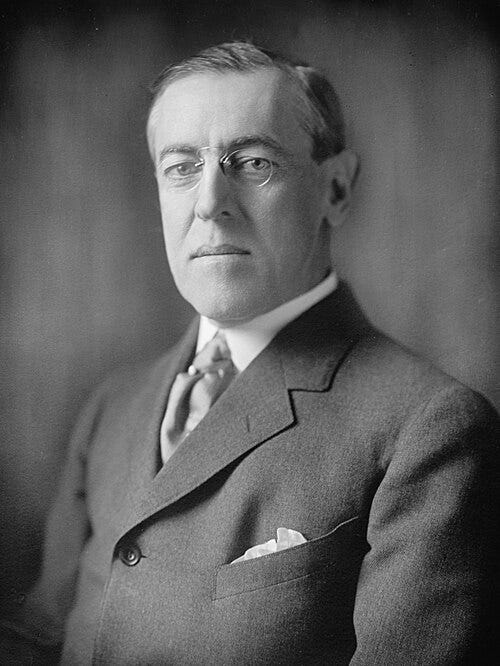
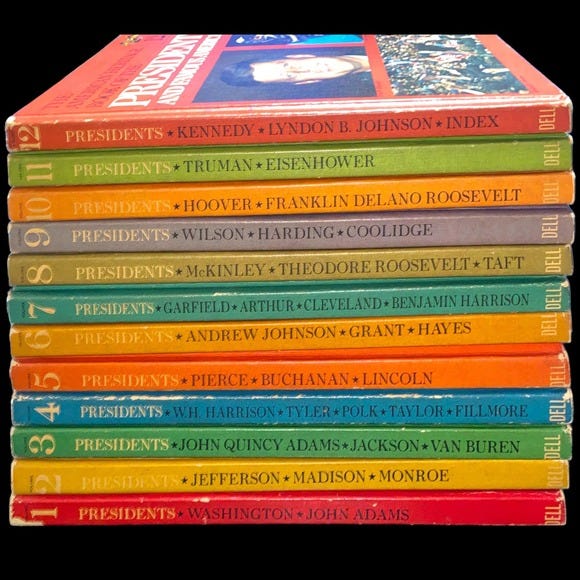
I missed it too. I’ll be the first to admit it. I believed in the myth. Woodrow Wilson was my favorite president. The idealistic proclamations about democracy were too intoxicating for a little Black kid with an overactive imagination and a stack of presidential biographies to resist. I was curled up with those encyclopedia-style books, American Heritage Book of The Presidents, one president per volume, all the way up to LBJ. Wilson, with his Fourteen Points, and Johnson, with his civil rights laws, came off like the good guys. Nobody told me there were two Constitutions, one printed on the page and one written in who gets left out. I didn’t know.
They didn’t mention that it was Wilson’s administration that opened the door to closing the door on Black folks working in the federal government. I didn’t know. They didn’t mention that his great democratic dream, the League of Nations, was a whites-only club dressed up as universal peace, a blueprint for a world where countries that looked like me were told to wait outside. I didn’t know. They didn’t mention that Wilson screened “The Birth of A Nation” in the same White House where, less than fifty years earlier, a president had taken a bullet to the brain for backing a version of democracy that terrified the same strain of white grievance that would become the Klan. Wilson called that movie “history writ with lightening.” I didn’t know.
I was nine years old, trying to love a country that had already decided how far it was willing to love me back.
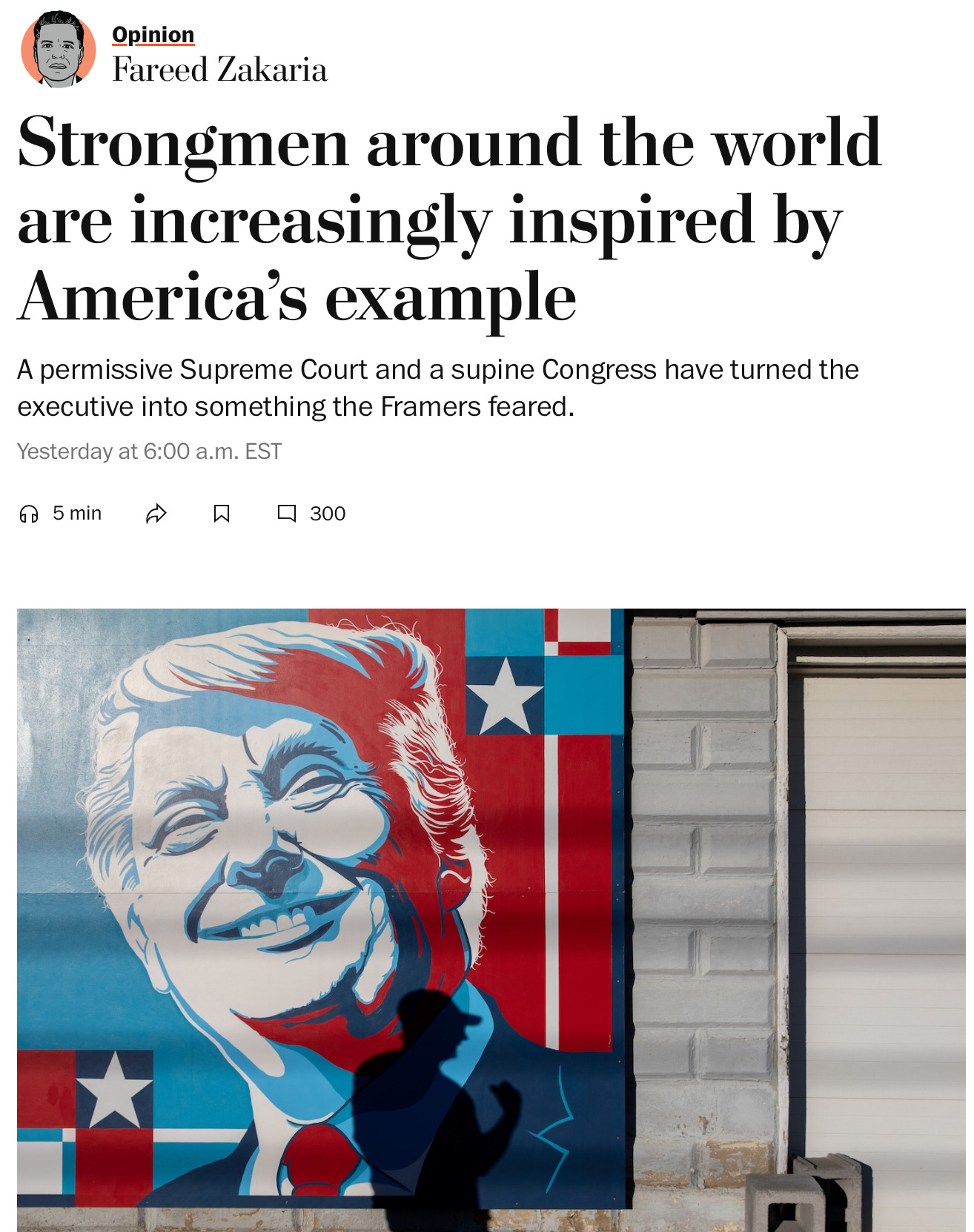
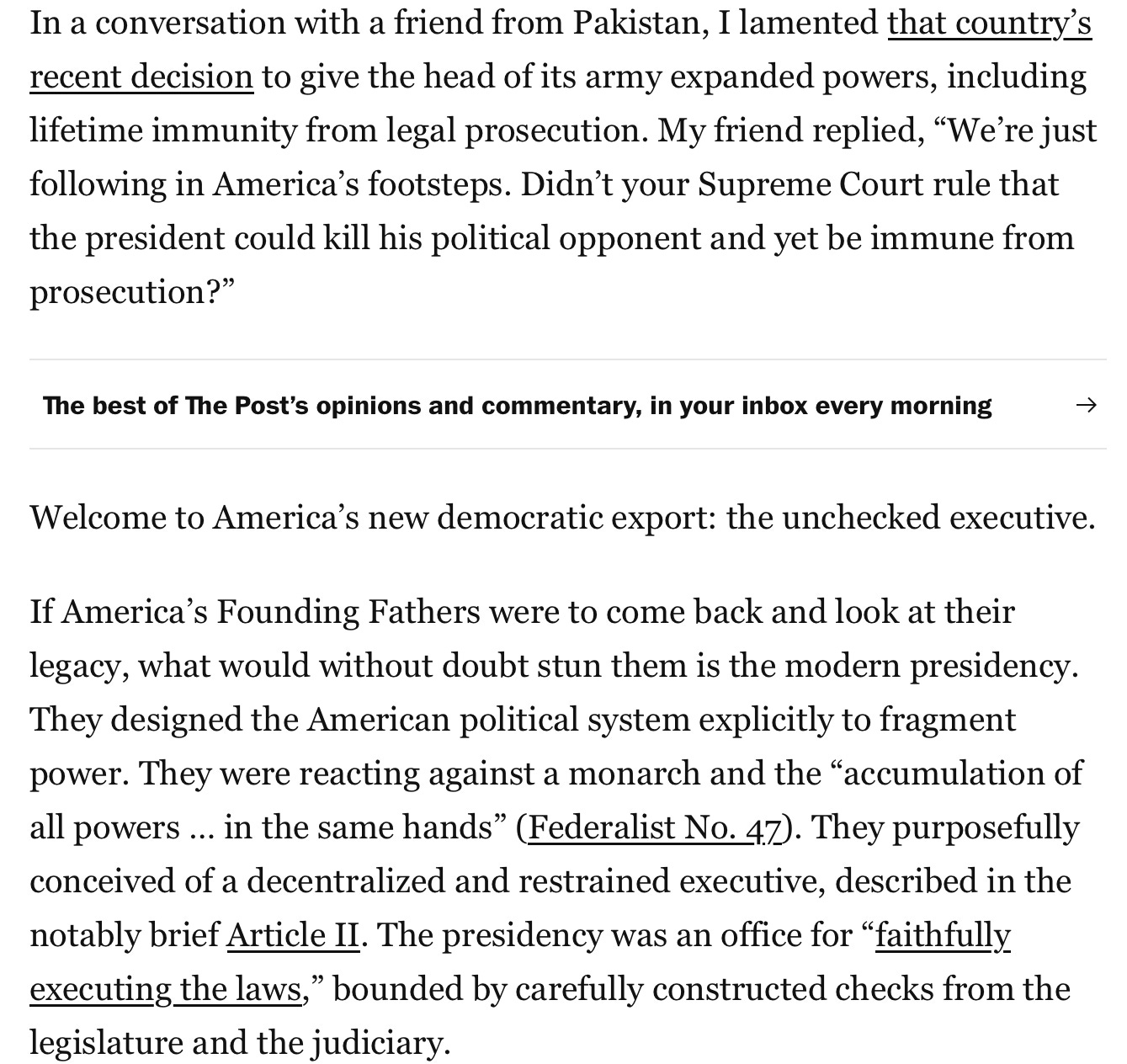
Fareed, you are a damn grown man. Why are you writing like you don’t know this brother? I can understand why the Washington Post, the same paper that tried to erase a historian from its pages while using her face as clickbait, would want to wrap itself in the myth of one Constitution for all. What I can’t understand is why you, one who surely knows this history better than I do, would choose to keep that myth alive.
A Noble Lie
The thing about a Noble Lie is it never shows up wearing a sheet. It comes dressed in a blazer with elbow patches, holding a textbook. It sounds like your favorite social studies teacher explaining that yes, America “made mistakes,” but the arc of the moral universe is bending and if we all just keep calm and color inside the lines, it’ll get there eventually. You walk out of class thinking racism is a sad chapter, not an operating system. The test on Friday is about the chapter. The operating system runs the school.
The lie gets reinforced in little rituals. Pledge of Allegiance in the morning. “Our boys won the war” on the History Channel at night. Sunday shows where people like Fareed sit at glass desks and tell us how America stands as a beacon, even when it stumbles. Nobody has to tell an outright falsehood. All they have to do is tell the truth in a way that keeps the second Constitution off camera. Wilson is “complicated.” LBJ “grew.” Reagan “believed in America.” The pattern of who gets to experiment with power and who gets lectured about norms is treated like weather.
If you are a good student, a first-gen kid, a striver, the Noble Lie feels like a life raft. You want to believe the rules are real because you are killing yourself to follow them. For immigrants like Fareed, the story of one Constitution is not just flattering. It is home. To admit that there have always been two would mean admitting that you built a whole career analyzing a rigged casino as if it were a math problem. That is a hard damn pill to swallow on live television. Easier to wring your hands about “strongmen abroad” than to say the quiet part out loud: our courts just handed the house keys and a get-out-of-jail-free card to one man and one base.
So here we are. The Noble Lie has done its job so well that a grown man in the Washington Post can look straight at a Supreme Court ruling that supercharges one presidency and still frame the danger as something other countries are imitating. Fareed warns us that strongmen are following America’s example, as if the example were a tragic fall from a single shining Constitution and not the latest upgrade to the VIP version that never really applied to us. That is how you get duped. Not by ignorance. By a story that is so comforting, even the people who “know better” keep telling it long after the lights flicker and the wiring starts to burn.
Two Constitutions
Picture it the way they never show it on the Fourth of July. A small hot room, the air thick with tallow and sweat, Jefferson bent over a desk while the candle burns low and the ink runs thick. Outside that room, Black hands are doing the work that lets him sit there and dream up sentences about freedom. Inside the room, he is weighing words like they are gold coins: inalienable, liberty, equal. He writes “all men are created equal” with a straight face, in a house where everybody knows exactly who can be bought and sold.
That line doesn’t come down from heaven. It comes out of negotiation. He drafts, he rewrites, he shows it to other men who own other people, and they all nod like this is the good stuff. There is a whole argument about whether to call out the slave trade, and the argument loses. The sentence stays, the substance goes. On the page they keep the poetry. In the ledger books they keep the property. Right there, in the glow of that candle, the country learns its first magic trick: one sentence for the pamphlet, another reality for the plantation.
You can almost hear the room practicing the Noble Lie in real time. Say “all men” and mean “our kind.” Talk about rights endowed by a Creator while a sixteen-year-old girl you own is sleeping in a room you can unlock without knocking. Put the universal on paper, keep the exceptions in the shadows, and trust the future to fill in the gaps with flattering stories. That is the pilot episode. Everything else, Wilson with his lightning-lit Klan movie, LBJ with his “we shall overcome,” Fareed at the glass desk mourning the fall of American democracy. Those are just spinoffs.
From the start, there were two Constitutions: the one Jefferson is drafting for the world to quote, and the unwritten one everybody in that room understands without saying a word. One will get carved into marble and recited at graduations. The other will decide who eats, who votes, who gets shot, who gets believed. When you see it that way, it’s almost funny ain’t it, in a bitter kind of way, to watch a man in 2025 act surprised that a court built on that split decided to give one president powers that were never meant for all. The system didn’t break, Fareed. It remembered which Constitution it serves.
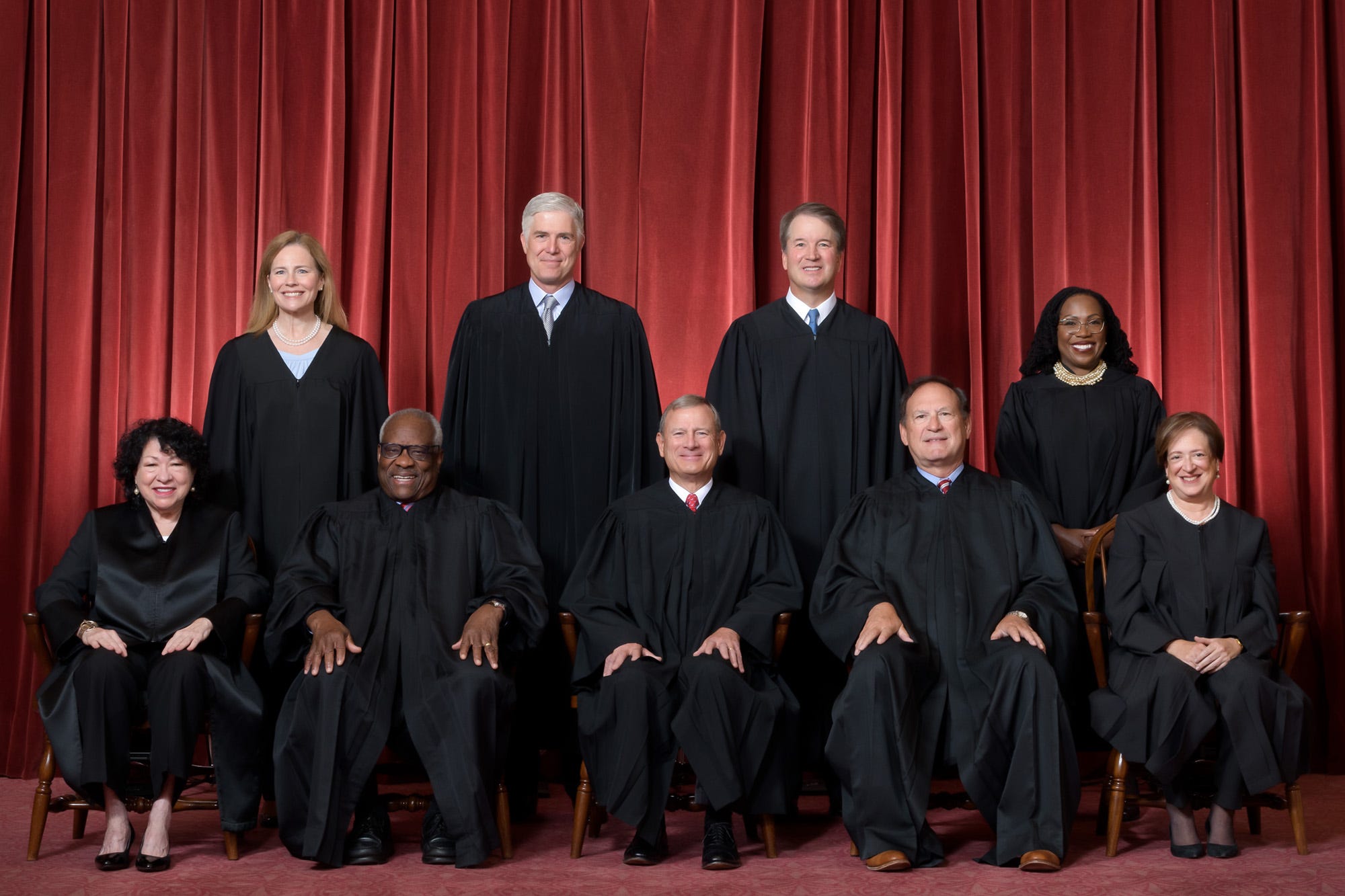
The Roberts Court
Fast-forward two and a half centuries. The room looks different now. No candles, just marble columns and soft-focus C-SPAN lighting, but the job is the same: decide which Constitution is real today. We call it the Roberts Court like it’s neutral architecture, but you can hear the old house creak every time race walks in the door.
You saw it when a justice named Ketanji Brown Jackson took her seat. Let’s be honest: that name on a random résumé would hit the trash can before the hiring manager’s eye ever made it down to “Harvard,” and everybody knows it. Now that same name is etched into the marble of the highest court in the land, and the majority treats her like she snuck in through the service entrance. The minute she dared to say out loud that history didn’t start yesterday, they found the time and energy to single her out by name in official opinions, like the problem was her eyesight instead of the record she was reading from. Nobody was surprised. We felt that hostility warming up in the batter’s box from the very first hearing.
That’s the second Constitution talking. One set of robes gets to wax poetic about “colorblindness” while ignoring who built the stairs. Another robe, with a Black woman in it, gets scolded for pointing at the broken boards. The same bench that could barely tolerate her saying race still matters somehow had no trouble stretching itself into a pretzel to hand a man like Trump a near-royal cloak of immunity. They can’t quite see systemic racism, but they have 6–3 clarity on why a president might need to use Navy SEALs in ways the rest of us would go to prison for. Funny how that works.
So when Fareed shows up in the pages of the Washington Post acting shocked that “strongmen around the world” are taking notes from America, I have to laugh to keep from screaming. Brother, the strongest signal didn’t come from some rally in Ohio. It came from a Supreme Court that publicly put a justice named Ketanji in her place while quietly elevating one presidency above the law. That’s not a bug in the software. That is Jefferson’s second Constitution, updated to the latest version, doing exactly what it was written, if not spoken, into existence to do.
Now let’s bring Fareed into the room and read him the way he reads everybody else.
He opens the WashPost opinion piece with that Pakistan anecdote: a friend shrugs, “We’re just following in America’s footsteps. Didn’t your Supreme Court rule that the president could kill his political opponent…?” On the surface, that sounds like an indictment, and it is, but notice the frame: America as tragic exporter of a new abuse, as if this all began with one bad ruling in 2024. In our world, that Pakistan line is not the beginning of the story, it’s the latest country joining a club Jefferson created in candlelight and Wilson upgraded with segregated desks and Klan cinema.
Then he gives you the tagline: “America’s new democratic export: the unchecked executive.” The problem isn’t that this sentence is wrong. It’s that it’s incomplete in a way that protects the myth. “Unchecked” for whom? Exported to whom? The executive has never been “unchecked” when it tried to check white supremacy or capital; ask Reconstruction, ask COINTELPRO, ask every movement that got spied on, infiltrated, or shot at when it aimed federal power down and not just out. He writes as if a neutral machine suddenly got hijacked, when the truth is the machine has always had facial recognition for who counts as “president” and who counts as “problem.”
He tells us the Founders would be “stunned” by the modern presidency and reminds us, correctly, that they designed a system to “fragment power” and feared the “accumulation of all powers … in the same hands.” What he doesn’t say is what we here have been saying: those “same hands” were never imagined as Black, Brown, or female. Fragmented for each other, concentrated for everybody beneath them. Jefferson’s candlelit magic trick, one Constitution for the pamphlet, another for the plantation, makes the Trump ruling less a shocking plot twist and more a season finale that was telegraphed from episode one.
He quotes Hamilton bragging that the president is “amenable to personal punishment and disgrace,” a humble servant who can’t declare war or chase foreign wealth without Congress. Again, the history lesson is solid. What’s missing is the racial caption: “amenable to punishment” has always landed hardest on the Black body, not the white executive. The idea that a president could order SEAL Team 6 to kill a rival and skate is horrifying, yes, but for Black readers who know about Fred Hampton in his bed, it’s not exactly a brand-new horror genre. Fareed tells it like a scary new hypothetical; you’re pointing to it as the logical endpoint of a system that already practiced targeted violence—just not usually at the golf-club level.
He walks us through Vietnam, Watergate, the war on terror, and the one-way ratchet of presidential power, culminating in Trump, a “super presidency that commands total attention and power,” enabled by a “permissive Supreme Court and a supine Congress.” All true. But you’ve already shown us the other ratchet: every time federal power moves in a direction that could supercharge racial or economic justice, that same system suddenly remembers the brakes. LBJ gets one Voting Rights Act, Black folks get a brief window of enforcement, and the Court spends the next fifty years sanding it down. Trump comes along and the brakes conveniently fail. That’s not just institutional cowardice. That’s the second Constitution doing exactly what it was built to do.
Finally, he warns that if the Court doesn’t push back, “the American presidency will become… an example of rule by a strongman wielding even more unbridled power than King George III.” Will become. Future tense. That’s the quiet dodge. For Black America, the presidency has always had a split personality: folksy constitutional neighbor on TV, unaccountable force when it sends in troops, cops, or spies. The Trump immunity ruling didn’t invent the strongman. It just dropped the mask, handed him paperwork, and called it precedent. Fareed is grieving the fall of one Constitution. He’s writing from inside the one that never got born.
Fareed, brother, lemme talk to you plain for a minute. I get it. I really do.
I wrote an essay called “It Don’t Hurt Now (until it does),” about that little lie Black folks tell ourselves just to make it through the day. You know the lie: the job passes you over, the cop who pulled you over hand on the holster treats you like a suspect (yes yours truly has been in this situation), the teacher mangles your child’s name every September, and you smile and say, “I’m fine.” You ain’t fine. You are bleeding in slow motion. But if you stop and feel all of it, you are not sure you’ll be able to get up in the morning and do what needs doing. So you tell your body, your kids, your God: it don’t hurt now.
What I’m saying to you is: I recognize that same move in your column. You came to this country and built a life on the promise that there was one Constitution, one rulebook, and that if you played the game right you’d be safe inside its lines. You married into a family that probably looks a lot like mine with uncles, aunties, cousins who worked twice as hard just to be called “qualified.” You sit on those panels and tell the story the way a good son-in-law is supposed to, the way a good immigrant is supposed to, because admitting there are two Constitutions feels like sawing off the limb you’re standing on. So you write about “strongmen abroad” and a tragic America “inspiring” them, and I hear a softer version of the same whisper I grew up with: it don’t hurt now.


I know you saw that clip, the one where a vice president in this country stood there and allowed his wife be disrespected on camera like she’s his damn piece of furniture that gets trotted out or away from the camera when its politically expedient. You know deep down inside how people watched it feeling that could be their auntie, their sister, their cousin, standing there with a tight smile while power looked right through her. You watched it. You felt that same feeling of disgust, surely you did.
You felt that little crack in the story you’ve been telling about institutions and norms, and instead of letting the crack widen, you papered over it with more talk about “checks and balances” and “the genius of the Framers.” You pretended it didn’t hurt to see exactly who gets disrespected in public and who everyone rushes to protect.
So when you write this WashPost piece like the problem is just a “super presidency” gone too far, I don’t read it as you being ignorant. I read it as you doing what I did at nine years old with my Wilson and LBJ books: choosing the myth that lets you sleep. You don’t want to say the second Constitution out loud, because once you say it, you can’t unsee it. You can’t unsee what it means that a court that side-eyed a woman named Ketanji would turn around and wrap a man like Trump in immunity. You can’t unsee what it means for every auntie, every sister, every brother who doesn’t have a presidential seal on their lapel. You can’t see a Black kid standing for the Pledge and hear “justice for all” as harmless background noise anymore. You can’t see your own children walking through an airport, brown faces under fluorescent lights, and still honestly believe the metal detectors are scanning everyone the same way.
I’m not asking you to stop loving this country. I’m asking you to stop pretending it doesn’t hurt. Because every time you tell us the story like this is some sudden fall from grace instead of a slow reveal of the second Constitution, you aren’t just comforting white readers. You’re asking folks who live in the blast radius to swallow their own pain one more time so the myth can stand. And brother, whether you meant to or not, that’s an altar you’re asking us to lay ourselves on.
I keep thinking about that kid version of me clutching those presidential books. Nine years old is a dangerous age in America. Your eyes are still soft enough to see angels, but sharp enough to start noticing cracks. Being nine is like getting one small, fleeting visit to heaven. You touch the possibility that the words are real, and once you touch it you spend the rest of your life trying to get back there. Not to the myth. To the reality.
We’ve had those touches. After the Civil War, when the flag went back up over Fort Sumter and Henry Ward Beecher stood on a “pulpit of broken stone” talking about “four bloody years” and a new national unity, you can hear a country trying to become what it said it was on paper. We touched it in the brief, bright flame of Reconstruction, when formerly enslaved men took seats in statehouses and Congress, and then watched it get bartered away in the Compromise of 1877 like it was just another line item in a backroom deal.
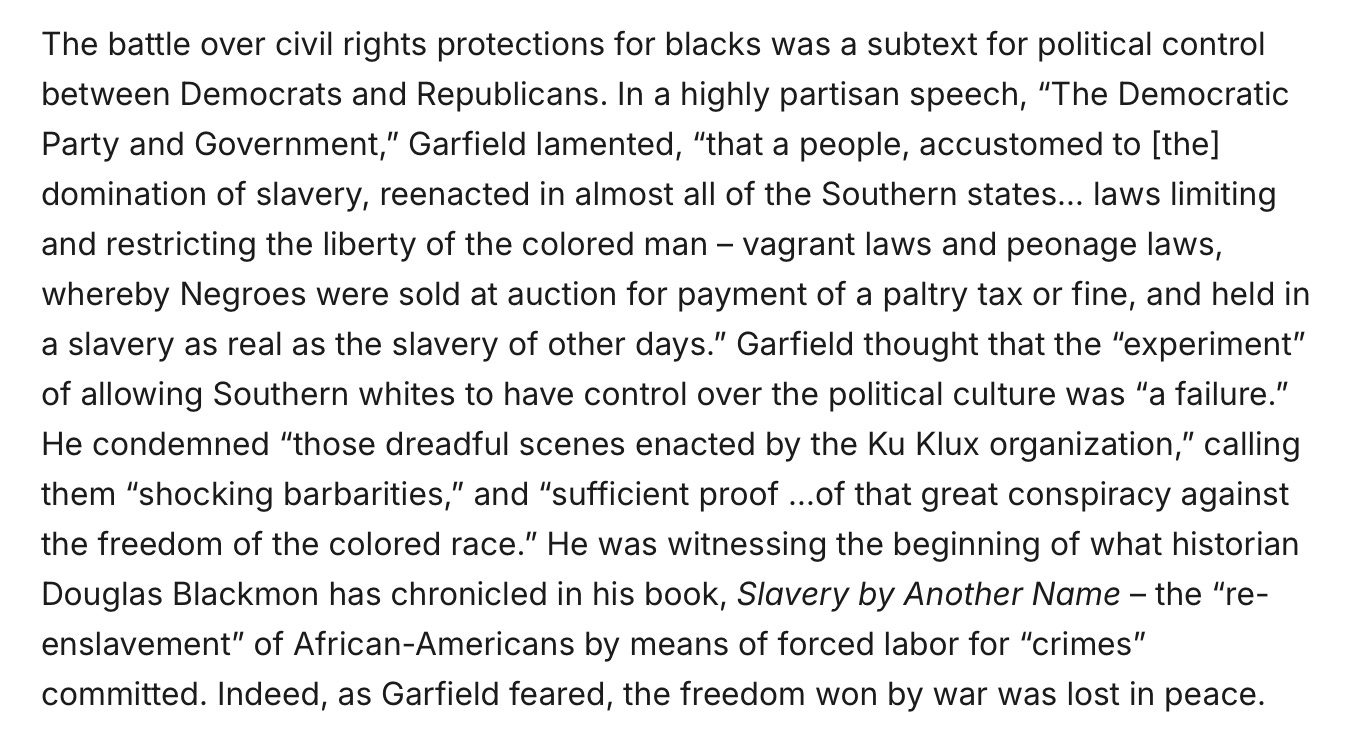
We touched it again with President Garfield, a real Lincoln Republican who actually wanted to drive the Redeemers and white supremacist terror back into the hole they crawled out of. Then we watched him bleed out from an assassin’s bullet, and the second Constitution slip right back behind the wheel.
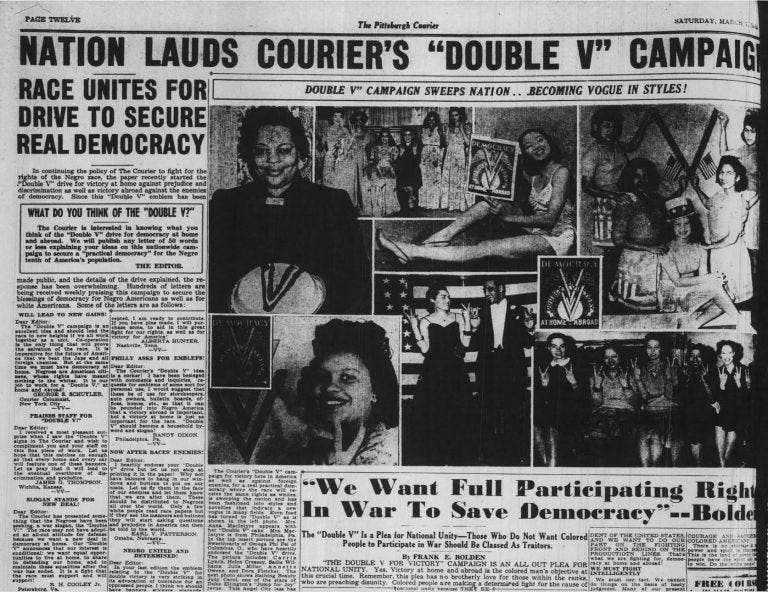
We touched it during World War II, when this country finally turned and faced a regime that had taken our own racial obsessions and studied them for blueprints. The Nazis literally sent lawyers to examine Jim Crow and American race law while they drafted the Nuremberg Laws, then radicalized what they found into something even more monstrous. For a moment, we got to believe we were the good guys, full stop. And then Black soldiers came home to redlining, segregated schools, and a boy named Emmett Till whose face still haunts every mention of “rule of law” some folks like to toss around on TV.
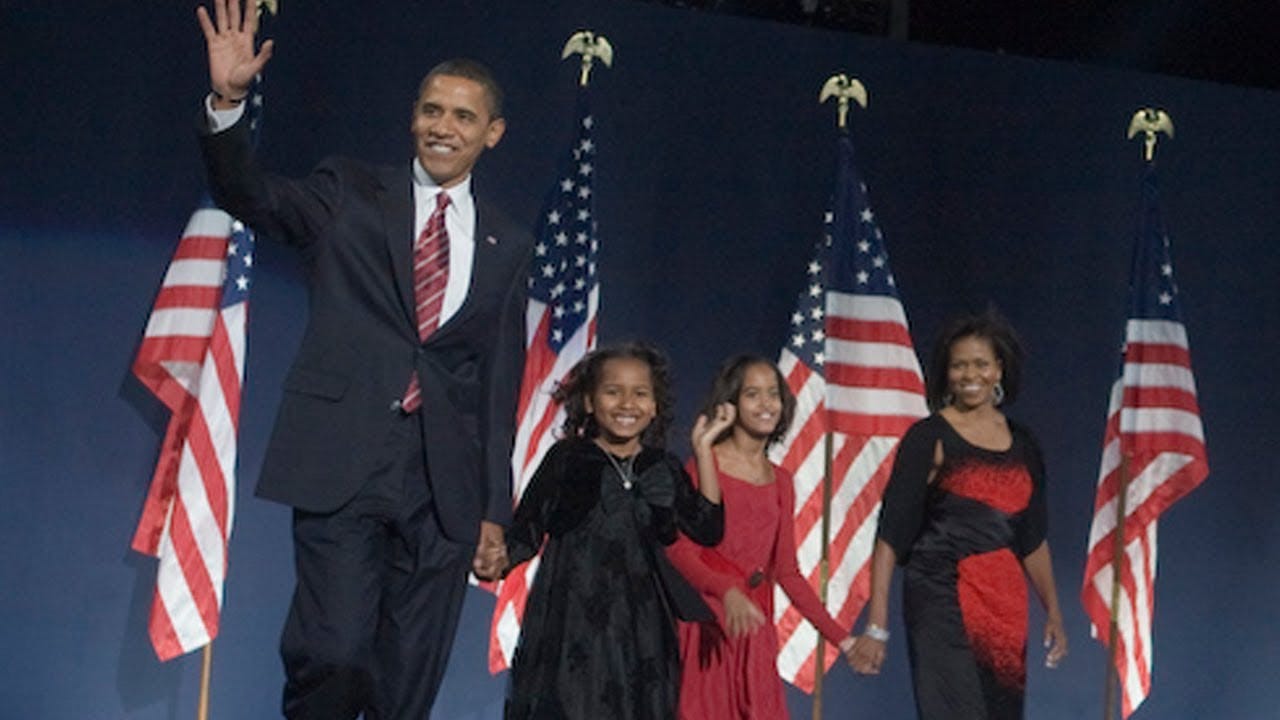
We touched it again on election night 2008, watching a man with a funny-sounding name, nappy hair, and brown skin stand in Grant Park and claim the title “leader of the free world.” For one long, loud night, nine-year-olds of every color saw the words “all men are created equal” flicker into something that felt almost solid. Then we watched his nemesis take power on a wave of grievance, and four years later his followers carried a Confederate flag through the Capitol like it was a homecoming parade.
That nine-year-old is still in all of us. In me. In you. Even in Thomas Jefferson. The same man who wrote the line while owning human beings spent his last years making sure the children he had with Sally Hemings were quietly freed and able to disappear into white society, even as hundreds of other Black families he owned stayed chained to his debts. That doesn’t redeem him; it exposes him. It shows how deep the hunger runs to at least make the lie hurt a little less for “your own,” even if you leave the larger injustice untouched. It’s a twisted kind of love, but it comes from the same place: that part of us that still believes the words could be true if we ever stopped flinching and told the whole story.
So when I say I see the nine-year-old in you, Fareed, I’m not being cute. I see the part of you that still wants to believe there is one Constitution, one rulebook, one story we can all stand under together without checking to see whose name is on the deed. I see it in every sentence where you mourn what America is “becoming,” like the fall from grace only just started when the cameras turned on Trump. I get it. We all want to go back to that first touch, to the moment when the promise felt bigger than the pain.
But here’s the thing. We can’t stay nine forever. At some point the choice in front of us is not hope versus cynicism. It’s childish myth versus grown-folk covenant. One Constitution on paper and another in practice, or a country brave enough to close that gap on purpose. I’m not asking you or my readers to give up on the angel we met at nine. I’m asking us to finally stop lying about the hell that’s been standing in the same room the whole time, and to build a world where a kid doesn’t have to choose between loving their country and seeing it clearly. That’s the altar call full stop no cap my brother. Not to worship the myth, but to fight like hell for the reality.
Look at what you done turned me into.
A week ago I was the retired cop yelling at history books in my living room. Then y’all showed up. That Heather/WashPost piece, “WasPost Put Dr. Heather Cox Richardson’s Face On It, Then Erased Her Name” blew the doors off this little corner of the internet, and suddenly I’ve got enough support that I can justify spending the whole day off doing exactly this: taking the thing you feel in your chest but can’t quite name and marching it, fully formed, straight up to the front desk of power. I am almost certain that post has already crossed a few Washington Post screens, if only because Heather’s own readers and colleagues have been passing it around like contraband in a newsroom that thought nobody would notice.
So if you’re reading this and feeling that mix of rage and relief, “Yes, that’s what I’ve been trying to say” , I’m asking you to lean into the trouble you already started. Help me make this obsession sustainable. Every paid subscription is one more hour, one more day off that I can spend digging receipts, breaking down Supreme Court rulings in plain language, and dropping our side of the story right on the doorstep of the people who keep pretending they don’t hear us. If you want more of this kind of truth-telling, if you want a Black, Jungian-obsessed history nerd taking our case directly to the folks who’d rather we stay nine years old and quiet, then upgrade to paid. If enough of you do this I can devote myself full time to taking this message Ben Meiselas style straight into the belly of the beast.
You already proved you can move the needle. Now let’s see what happens when we decide, together, that we’re done whispering our pain and ready to fund the voice that names it out loud.
great line: "you built a whole career analyzing a rigged casino as if it were a math problem"
Yep, you’re spot on.
I often appreciate Fareed’s analysis, but then he stumbles into these blind spots that feel less like oversight and more like avoidance. Either he’s too cautious to say the truth outright or unwilling to admit what’s painfully obvious. That’s not just disappointing, it’s complicit.
And sadly, it fits the pattern.