



It was all a dream, I used to read Popular Mechanics magazines. Michael Jackson and Prince in my radio. Hangin’ pictures on my wall, NASA astronauts, cutouts of news articles.
Every Saturday tinkering with Rochester Quadrajets carburetors and knockoff reproductions of GM parts to get the hideaway headlight covers on the Camaro to close.
Aight, that was a terrible rendition of Notorious B.I.G.’s “Juicy” opening. I stand by what I said, as corny as it is. NASA could get people to the moon. I was trying to get two headlight covers to cooperate. There was plenty of room in that world for both ambitions.
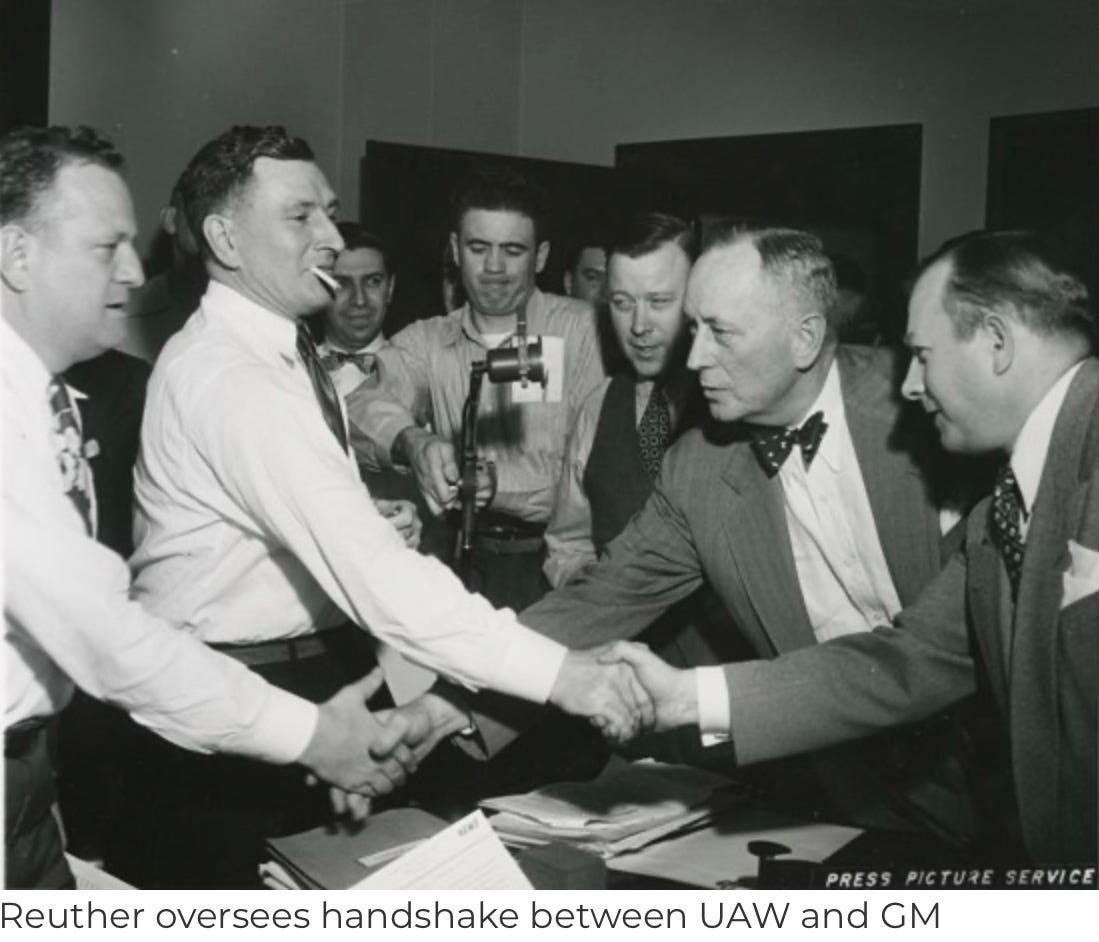
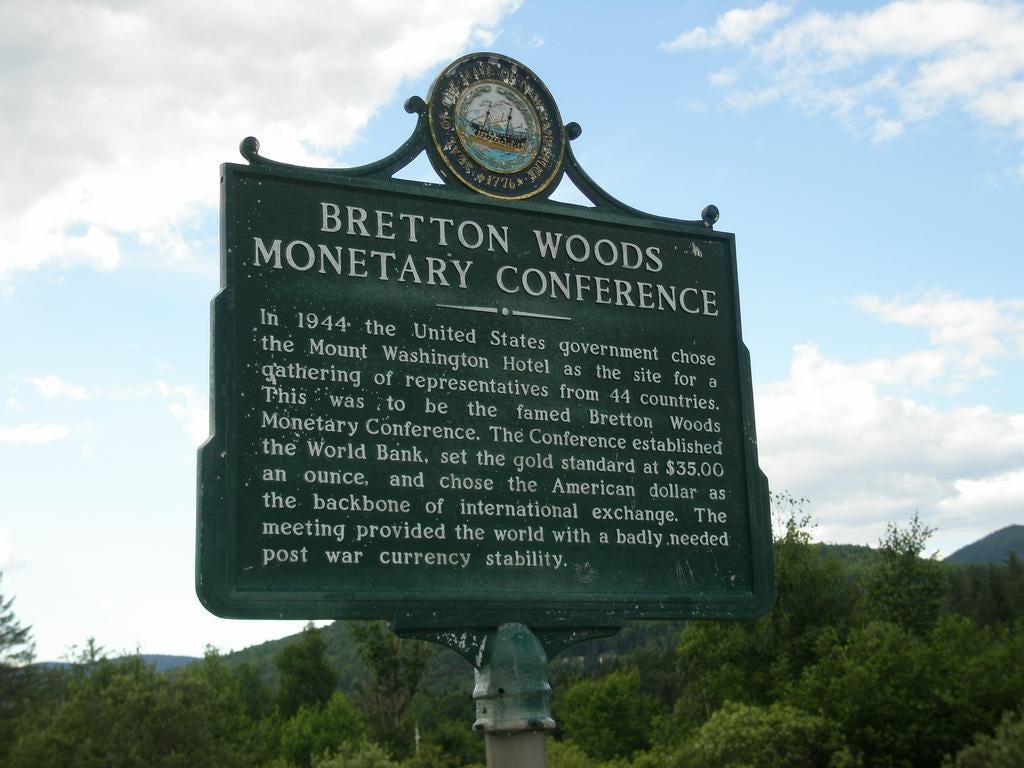
It took a lot of people I would never meet to help make that world possible. People who had survived depression and world war drew up plans for economic cooperation because they understood what happened when nations stopped thinking beyond their own immediate appetites. Workers organized to claim a share of what their hands produced. The UAW’s 1950 agreement with General Motors secured wage protections, health benefits and pensions. Behind the company that made that Camaro were people fighting to make a factory job support an entire life. [1][2]
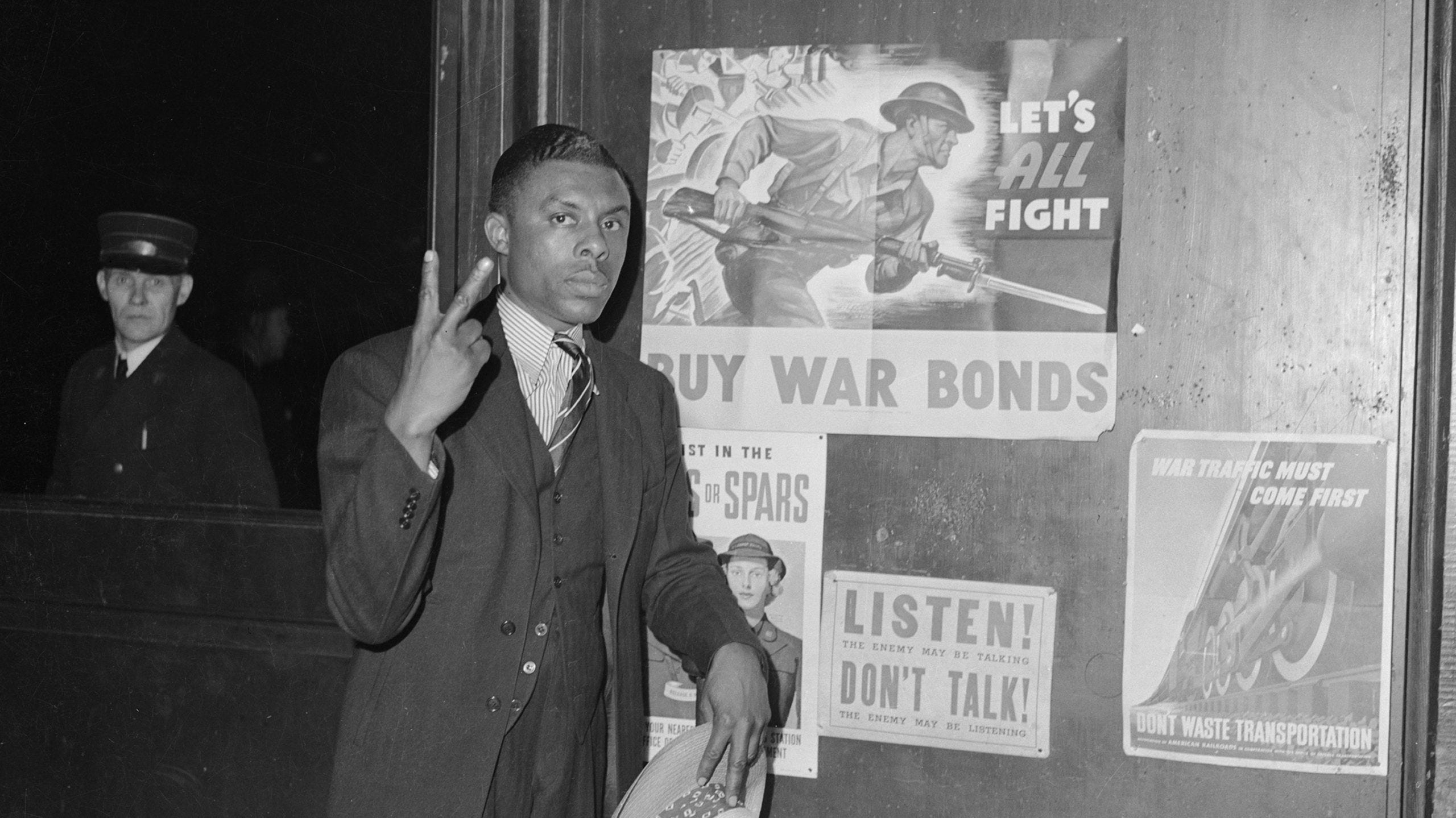
Black people were fighting to have a place in that future, too. In 1942, the Pittsburgh Courier took up the Double V campaign: victory against fascism abroad and racism at home. James G. Thompson’s letter asked whether the sacrifices of Black Americans would purchase anything better for the generation coming after them. That demand helped strengthen the struggle that would carry into the postwar civil rights movement. These people were working, serving, organizing and insisting that their children and grandchildren should inherit more freedom than they had been allowed. [3][4]
I was one of the children who came later.
That is what gets me when I look back at those pictures on the wall. Other people’s work had reached into my life before I understood how much I owed them. Their victories helped widen the possibilities available to somebody like me. Their arguments, their organizing, their refusal to accept the terms they had been handed helped shape the world in which I could have those ordinary Saturdays.
The house I grew up in and the house I now live in today was financed with a VA home loan, a benefit rooted in the 1944 GI Bill. [5]
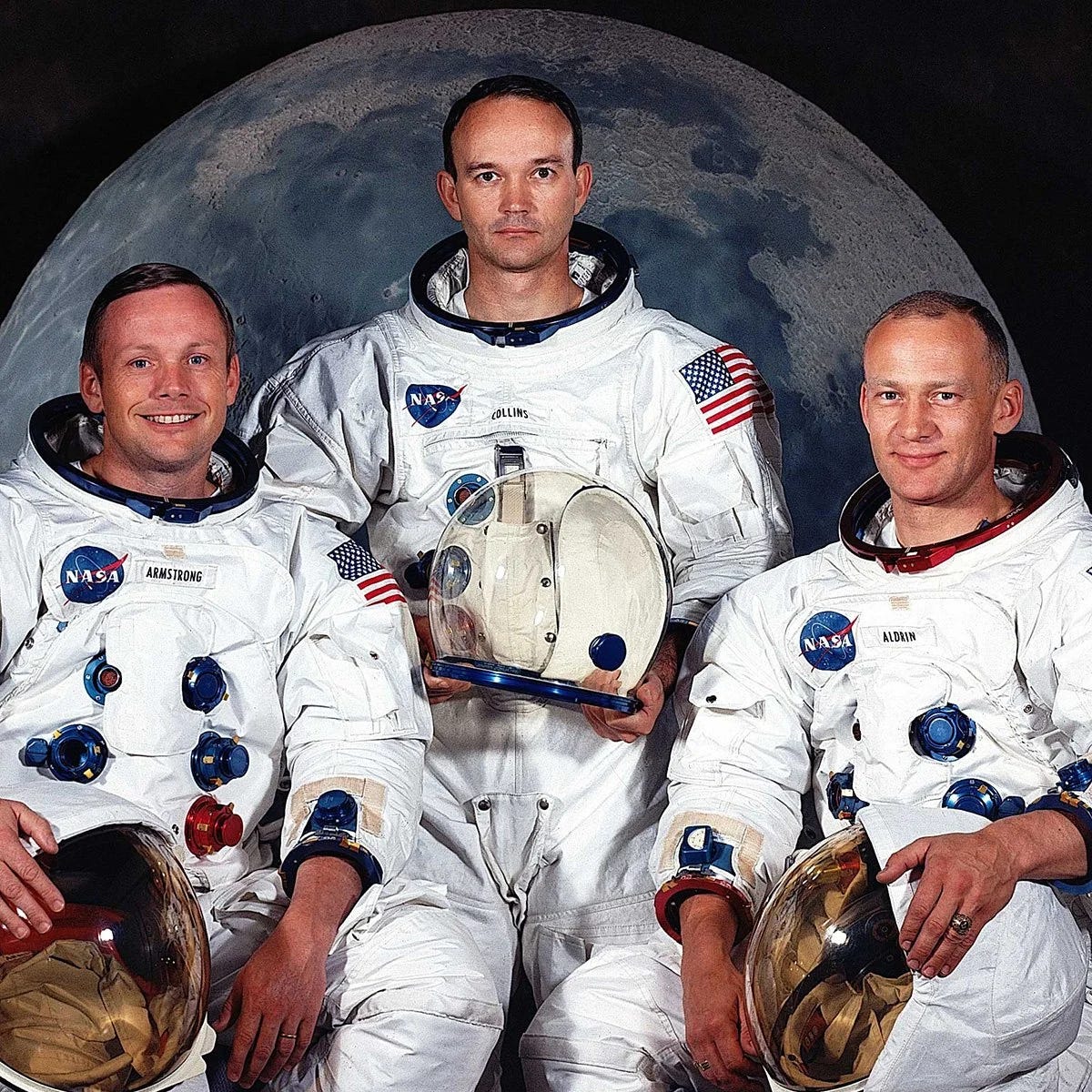
And somebody had committed the country to ambitions big enough to put astronauts on a kid’s wall. NASA was created in 1958, in the middle of a dangerous rivalry with an already nuclear-armed Soviet Union. Even inside that danger, we could undertake something whose rewards would reach people years into the future. [6]
That world had blueprints. Plenty of people had to fight their way into them, correct them, demand another room, insist that the foundation support everybody it claimed to serve. There were smart people doing that work, including people history books would barely bother to name.
Now look at the people tearing it apart.
Some of the children of those smart people seem too stupid to read the blueprints they inherited, much less compose a workable vision of their own. They can recognize an opportunity to enrich themselves. They can find a camera. They can identify somebody weaker to blame. Understanding why a functioning society requires obligations that extend beyond their own comfort appears to be asking too much.

The people whose wages, homes and futures depend on that society are expected to absorb the damage.
I can accept that my childhood is over. What I have trouble accepting is the contempt for everybody still waiting for their chance. Somebody is growing up right now, putting pictures on a wall, becoming interested in how something works. That person deserves adults who take the future seriously. The people who fought to expand mine deserved successors who understood what they had been entrusted with.
Which brings me to the sentence somebody will probably file away for an attack ad if I ever decide to run for office. I suppose I can kiss that doorway goodbye.
Fine. Let them have the bomb.
If preventing an Iranian nuclear weapon requires a war that kills people, punishes ordinary households and further undermines the rules meant to protect countries from attack, then I want that price examined. Especially when other governments may watch the destruction and conclude that a nuclear weapon is precisely what they need to avoid the same fate.
How much of the future are we supposed to surrender to this operation? How many families have to accept less, endure more, and listen to another explanation of why their suffering is necessary?
Let them eat cake national security.
Somebody still has to explain who is being made safer.
Everybody dies. Somebody still has a job to do.
In an NPR interview released September 24, Tucker Carlson described warning Donald Trump, shortly before the Iran war, about its consequences. According to Carlson, Trump replied:
“Yes, you’re right. But in the end, we all die anyway, so it doesn’t matter.”
Carlson said he pressed him about the children, the grandchildren and the country. This is Carlson’s account of a private conversation so of course I cannot independently verify it. NPR reported that the White House did not address the specifics of his claims. [7]
Having said that, I have a problem with the last part of that sentence. Everybody dies. The timing and circumstances still matter quite a bit to the people doing the dying. So does whether somebody with authority could have prevented it.
Mortality is a peculiar defense for a man whose decisions can bring death to somebody else’s door. It would get you nowhere in a patrol briefing. It ought to get you nowhere in the Oval Office.
And listen, we have enough public evidence to examine this war without asking anybody to take Tucker Carlson on faith.
TLDR
The Congressional Budget Office estimated $38 billion in additional Defense Department costs for the Iran operation through August 1, 2026. That estimate does not measure the full economic burden on households or the people living through the fighting. [8]
The IAEA reported in September that it could not verify the status of Iran’s declared nuclear facilities and associated material during the reporting period. A claim of military success still needs an answer about what happened to the nuclear danger. [9]
After China’s first nuclear test in 1964, President Lyndon Johnson publicly emphasized America’s continuing nuclear superiority. Another country’s bomb presented a danger that required judgment; its existence did not settle the case for preventive war. [10]
Restack or send this to somebody willing to examine what this war is costing and what it is accomplishing.
Somebody has to call off the pursuit
After decades in patrol, this is where my mind goes. Suppose you are pursuing somebody who presents a real danger. You have a reason to start. Then the speed increases, traffic thickens and people who have nothing to do with the original offense are suddenly in the middle of your operation.
Now what?
You have to keep asking what happens if this person gets away, what other means you have to apprehend him, and what you are putting the public through by continuing. The reason you started matters. So does everything that has happened since you turned on the lights.
A supervisor who gets on the air and asks what your justification is for a pursuit has not become the suspect’s accomplice. He is still responsible for the people out there trying to just walk and drive through the streets to get to where their going.
Imagine answering that supervisor with “The suspect just drove off and is refusing to stop” Ok. That’s pretty damn obvious but what are the charges? There have been more than an handful of unscrupulous patrol officers who just made a charge up to justify a pursuit.
That is the question I want asked about this war. Are we making up charges to justify this pursuit of Iran. Do these charges justify the danger we have unleashed. Count those targets struck. Then tell me whether the danger we were sent to stop has diminished, what new dangers we have created, and what would justify continuing. A government should be able to answer all three without treating the questioner as an accomplice.
We have lived with bombs before
The Soviet Union got the bomb. Harry Truman announced evidence of its atomic explosion in September 1949. America had to live with the end of its monopoly. That history was dangerous and expensive, and it included wars elsewhere. It also left room for building things at home. [11]
China tested its first nuclear device in October 1964. Johnson’s public response included the judgment that “Its military significance should not be overestimated.” He emphasized the United States’ enormous remaining advantage. [10]
Think about that alternative history for a moment. Suppose Washington had decided that preventing a Chinese arsenal justified whatever war, expense and sacrifice the mission required. How much of the prosperity we remember would have survived that decision? How many ambitions would have been postponed indefinitely while somebody explained that there was simply no alternative?
We cannot calculate an alternate history. We can recognize that the actual history included choices.
Israel belongs in this conversation, too. A 1969 Kissinger memorandum recorded a Defense Department view that America could live with Israeli nuclear weapons provided they were not deployed. Other officials wanted stronger measures to prevent them. Even inside that administration, the discussion involved conditions, tradeoffs and competing judgments. [12]
Even apartheid South Africa built an arsenal: six completed devices, with a seventh unfinished. It later dismantled them, and the IAEA examined that dismantlement. There is a nuclear history that ended with the weapons being taken apart. [13]
So yes, I started with “we let them have it.” More precisely, we learned to live with dangers we could not wish away. These countries were different; their governments, alliances and nuclear histories were different. Those differences deserve examination. They do not relieve anybody of explaining why this particular danger requires this particular war at this particular price.
Show me what the operation accomplished
The administration has listed preventing an Iranian nuclear weapon among the objectives of Operation Epic Fury, alongside destroying missile capabilities, degrading its navy and curbing its support for armed groups. The nuclear argument is central, though it is not the only stated objective. [14]
Then we ought to be precise about nuclear results.
Uranium enrichment, the decision to build a weapon and possession of a usable bomb are different questions. On September 7, the IAEA director general reported that the agency had received neither the information nor the access needed to verify the status of Iran’s declared facilities and associated material during the reporting period. The agency had lost continuity of knowledge about previously declared uranium inventories at facilities affected by the June 2025 attacks. [9]
Iran bears responsibility for its cooperation with inspectors. A September statement from the United States, Britain, France and Germany specifically faulted Iran for withholding information and preventing access. [15]
That leaves us with a serious verification problem. It gives us no basis for pretending certainty in either direction. A destroyed building is visible. The status of nuclear material, the intentions of a government and the durability of an outcome require evidence beyond a photograph of the damage.
Back at the patrol briefing, somebody would still be asking whether we found what we went there for.
The bill finds YOUR house
On September 15, the Congressional Budget Office estimated that the Iran operation had generated $38 billion in additional Defense Department costs through August 1. That included replacing expended munitions and lost equipment, along with operating costs. It excluded costs to other federal agencies and routine expenses that would have occurred anyway. [8]
That is one part of the bill. CBO also identified disruptions to energy supplies and shipping as causes of higher global energy prices. Those costs travel through the economy, including through the expense of transporting goods. [8] An Iranian family trying to survive the fighting is paying a price that does not appear in our defense accounts at all.
Producing oil at home does not insulate us from a global oil market. Dallas Fed research explains why disrupted supplies abroad can still affect American prices, even as it finds the U.S. economy more resilient to oil shocks than it once was. Those findings can both be true. A relatively resilient national economy can contain a family that has run out of room in its budget. [16]
That is where my argument about economic independence begins. A household’s independence includes having some say over what happens to its paycheck. Money redirected into higher essential expenses cannot also go toward the repair, the savings or the ordinary pleasure somebody worked for.
Every price increase cannot honestly be charged to this war. Every sacrifice demanded in its name ought to be justified.
People who are always telling Americans to take responsibility for their finances should be able to explain the responsibility they are taking for these decisions. National security is a purpose. It does not pay a mortgage.
What are other governments learning?
Here is the possibility I just can’t let get obscured in this argument. A government watching this may decide that complying with international rules offers less protection than possessing a weapon powerful enough to make an attack prohibitively dangerous.
That is an argument about incentives. It does not establish that another government will start a program tomorrow. But an operation intended to discourage proliferation can strengthen the political argument for it. We ought to examine that possibility before congratulating ourselves on the lesson we have taught.
The rules meant to restrain powerful countries were already applied selectively. We should have been working to make them more credible. When a preventive war is defended by pointing to what another country might someday possess, other powerful governments can borrow that reasoning. The countries on the receiving end have to consider what will actually protect them.
And yes, an Iranian nuclear weapon would introduce serious dangers. Miscalculation, coercion and pressure for neighboring countries to acquire their own weapons belong in this argument. I am not asking anybody to treat a bomb as harmless. I am asking the people advocating war to compare those risks with the risks of the war they have chosen.
Give me the case for enforceable limits and restored inspections. Explain the possibilities and limits of diplomacy. Explain deterrence. Then explain why this operation offers a better outcome. The IAEA itself has called a return to diplomacy and negotiations imperative. [9]
A country serious about preventing catastrophe has to stay interested in how catastrophe is prevented. At some point, insisting that the pursuit continue can become a way of avoiding an honest examination of where it has taken us.
Their turn is still coming

I keep thinking about how little I understood while I was messing with that Camaro. I knew what I wanted those headlight covers to do. I did not yet understand all the decisions, struggles and public commitments that had helped make an ordinary Saturday like that possible.
The people who did that work had lives of their own to worry about. Plenty of them had every reason to be bitter about what this country had denied them. They still insisted on something better for people they would never meet.
That is a demanding inheritance. Especially for a Black man who knows that the promise was never handed over whole. Somebody had to press for it. Somebody had to make the country answer for the distance between what it said and what it allowed.
We owe the children that much effort. We owe our grandchildren adults who can look beyond their own remaining years. We owe the people living under the consequences of our decisions an answer more serious than the observation that life eventually ends.
Let them have time to grow. Let them have a home they can afford to keep. Let them have work that leaves enough life in them to enjoy the people they love. Let them get absorbed in something so small and stubborn that an entire Saturday disappears before they think to look at the clock.
I would like them to grow old enough to worry about their grandchildren.
When I ask what all this power is for, that is the future I have in mind. Somebody worked to leave me a place in it. I am still here, and there are people coming after me.
Their turn matters.
Checking the nuclear claims, tracing the history and putting the costs where readers can see them is the work of this Black-led desk. Paid subscriptions help keep that work going. If you read free and can make room for it, become a paid subscriber.

If you already support XVOA, thank you for helping finance reporting that stays available to everyone. If a subscription isn’t workable right now, you can buy me a coffee with a one-time contribution toward the research and writing.
Wait. There’s a three-minute read in the XVOA app for every article published on the site. There’s also the suppressed news we expose every day. Now I need some of you to help me test it.
Read a few stories. Tell me what works, what’s confusing and what breaks. I want to know how this thing works in your hands. If you’re a paid subscriber with an iPhone or iPad, comment BETA below and I’ll send you an invitation.
Sources
U.S. Department of State, Bretton Woods–GATT, 1941–1947.
Walter P. Reuther Library, Reuther timeline, including the 1950 UAW–GM agreement.
National WWII Museum, African Americans in World War II.
National WWII Museum, The Double V Victory.
U.S. Department of Veterans Affairs, VA Home Loans: History.
NASA, The National Aeronautics and Space Act of 1958 Creates NASA.
NPR Newsmakers, September 24, 2026, Carlson interview transcript reproduced by Podscripts. The account concerns an alleged private conversation. The Elliott Connie reaction video you supplied contains an excerpt.
Congressional Budget Office, September 15, 2026, Estimating the Cost of Combat Operations Against Iran.
IAEA director general, September 7, 2026, Statement to the Board of Governors, reproduced by Iran Watch.
Lyndon B. Johnson, October 16, 1964, Statement on the First Chinese Nuclear Device.
Harry S. Truman, September 23, 1949, Statement Announcing the First Atomic Explosion in the USSR.
Henry Kissinger to Richard Nixon, July 19, 1969, Memorandum on the Israeli nuclear program.
IAEA Bulletin, 1995, Verification of South Africa’s initial declaration.
White House, March 2026, Operation Epic Fury: stated objectives.
France, Germany, the United Kingdom and the United States, September 9, 2026, Statement to the IAEA Board of Governors.
Federal Reserve Bank of Dallas, June 23, 2026, Research on U.S. resilience to oil shocks.
This is why I'm jealous of the way you do this. That was excellent, and that opening crushed.
Rap on, brother, rap on.