


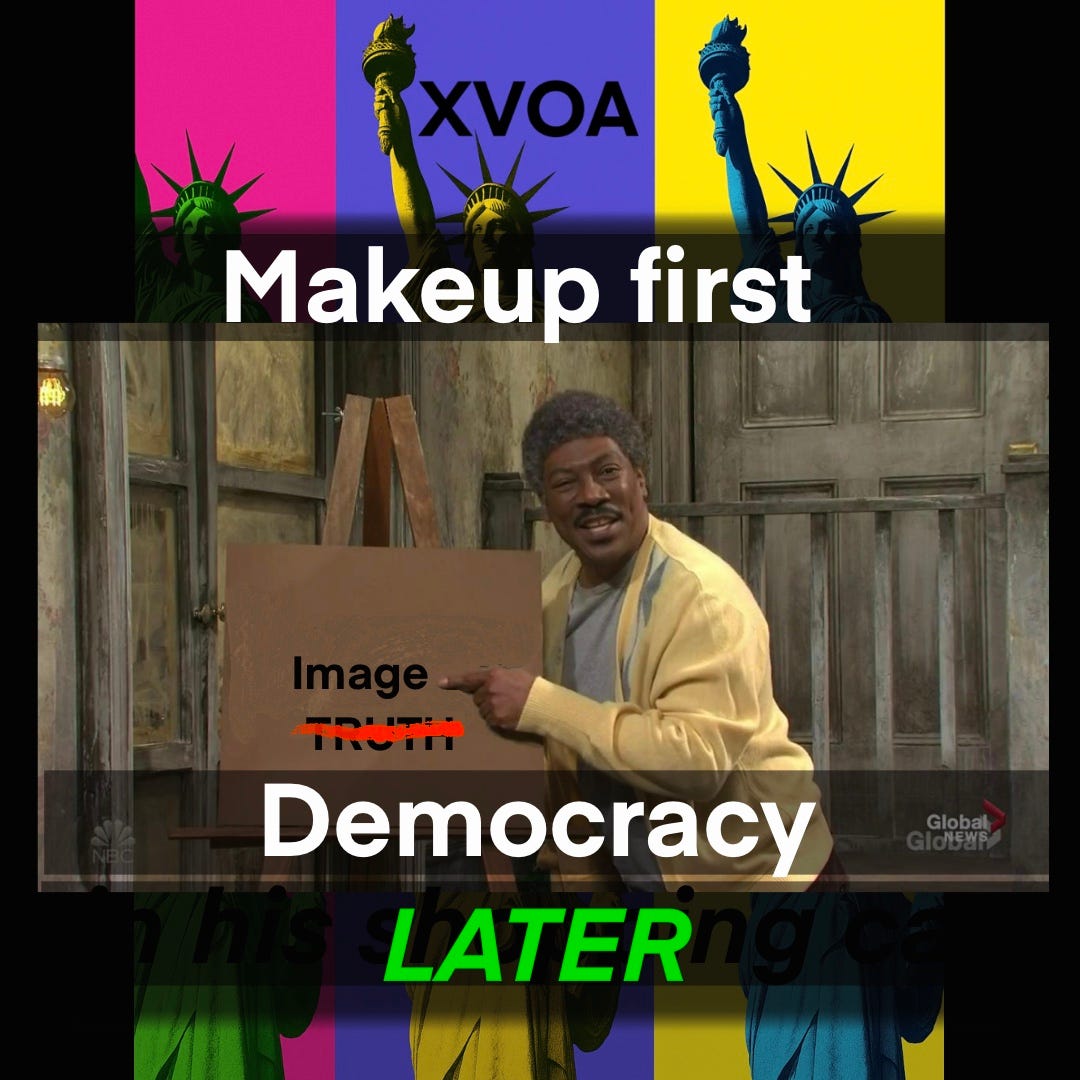
The moon cut through a narrow opening in the blinds, its light rays soothing my eyes as if to giving me the permission to publish this. That right there sounds batshit crazy.
I have not slept in a bed for so long I’ve forgotten how long it’s been. I think after I retired I needed that night shadow energy to work on my novel even if it was just to stay awake through the night so I could hear the voices in my head without falling asleep. The discomfort from laying (not sleeping) on a couch at night keeps me productive. That right there sounds batshit crazy.
But you know what else sounds batshit crazy?
Yesterday, I texted a personal friend of mine, a retired legacy media professional with real broadcast experience, and I asked him to do one simple thing: click two links and watch at least five minutes. The first link was my livestream about Don Lemon being arrested and what that signals for free speech. The second was another piece of mine in the same lane. I wasn’t asking for applause. I wasn’t asking for validation. I was asking him to just stay long enough for the topic to register, and yes, to not have his quick click-out punish me algorithmically like a slap on the wrist for showing up imperfect.
He told me he stopped at 17 seconds.
Not because the facts were wrong. Not because the subject didn’t matter. Not because I said something defamatory. He stopped because he couldn’t stand the “personal,” because the lighting was bad, because the background was distracting, because my hat was backwards from the mirrored camera, because shadows sat under my eyes, because I looked tired. He told me to stop with the explanations. He told me to shut it down. Again.
The first time I shut it down ended up spawning this publication. The next time who knows what’s next.
Now here’s the part that matters, and I want to say it clean: I agree with him about the craft. The lighting wasn’t great. The frame isn’t perfect. I’m not pretending these first two lives are pristine, studio-polished television.
And this isn’t some random critic in my comments.
This is a friend I’ve been building with since before YouTube even existed, back when we were doing podcasts in the early, dusty days and trying to stitch together something new with what we had. That blend, my technical obsession and his mainstream production standards, helped me get coverage in real outlets, including Black Enterprise. I’m not new to this game. Neither is he.
Which is why this is haunting me.
Because we went back and forth about my jacket, my background, my shadows, my “opening,” my professionalism, my personal disclosures, my whole presentation. The conversation had plenty of energy for all of that.
And it had almost none for the sentence that started the whole thing: a journalist got arrested in broad daylight for doing his job.
TLDR
• A legacy-media friend told me to shut down my livestream after watching 17 seconds not because the truth was wrong, but because the production wasn’t polished.
• Meanwhile, journalists are getting arrested in broad daylight, and too many people keep treating “professionalism” like the real emergency.
• “Don’t get personal” is BS when the truth has always been personal America’s contradictions birthed the blues, and the blues birthed whole genres of truth-telling.
• Truth doesn’t wait for lighting, makeup, or the perfect camera position. It shows up when it shows up.
Listen, don’t just nod at it in silence. Restack it. Then restack it again somewhere else where people pretend they “don’t do politics.” And if you know somebody who still thinks lighting is the point, restack it one more time and send it directly.
Become a paid member and support truth over image:
My interview of Harold Michael Harvey
Why the livestream looked the way it looked
I need to add one layer of context before you think this was some grand, carefully staged production that I botched.
This was a hastily arranged live broadcast. A “drop everything and hit Go Live” situation. I felt compelled to push it out right now in support of journalists, because when the state starts treating reporting like a punishable act, you don’t wait until your lighting kit arrives to have an opinion. The plan was never to go live that day. The plan was to go live three or four days later, after I had my setup complete, after I’d fixed the frame, after I’d cleaned up the background, after I’d done all the little things that make a show look like a show.
Between the live broadcast and writing these essays, there was no time for makeup, elaborate lighting, or even time to populate my bookcase with books that are currently spread out across my house. If anything, this is a case of poor time management, not moral failure. The crime scene was the calendar and the clock.
And if you want a little comedic relief, here it is right here. As I’m literally banging this section out on the keyboard and my daughter interrupts me to ask, dead serious, as Roland Martin’s show is streaming live, “Daddy…why is Roland Martin’s face blue?”
I look up, and sure enough, his blue screen is lit wrong, and the spill is bouncing right onto his face. So I’m explaining chroma key lighting to an eight-year-old while writing an essay about lighting critiques, respectability, and the state of journalism. She has no idea what the hell I’m typing. I’m sitting here thinking, Jung’s synchronicity in action? The moon? Now this?
I digress.
Mr. Xplisset enters the neighborhood!
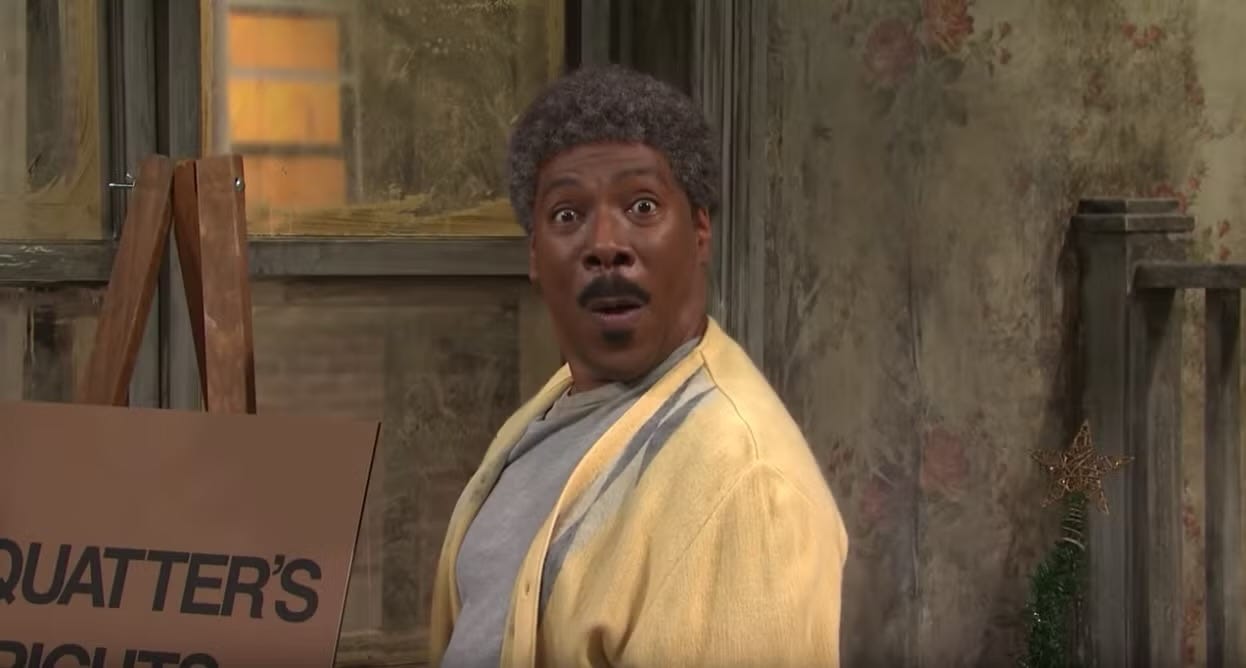
While the First Amendment is getting treated like a designer napkin for billionaires, let’s do a little neighborhood programming. Not with Mr. Rogers. With me. Mr. Xplisset, Media Critique Extraordinaire. Kids, today’s lesson is how “professionalism” gets weaponized right up until the moment the state decides to make an example out of somebody.
My daughter just asked me why Roland Martin’s face is blue, and I had to explain bad lighting spill like I’m teaching a master class in Chroma Key 101. And that’s when it hit me. America will ignore the story, but it will never miss a lighting mistake. So fine.
We’re going to critique an experienced indie journalist’s livestream from right before she was taken in by federal agents, because apparently the lighting matters more than the motherfu***** handcuffs.
Live Stream Review as Satire
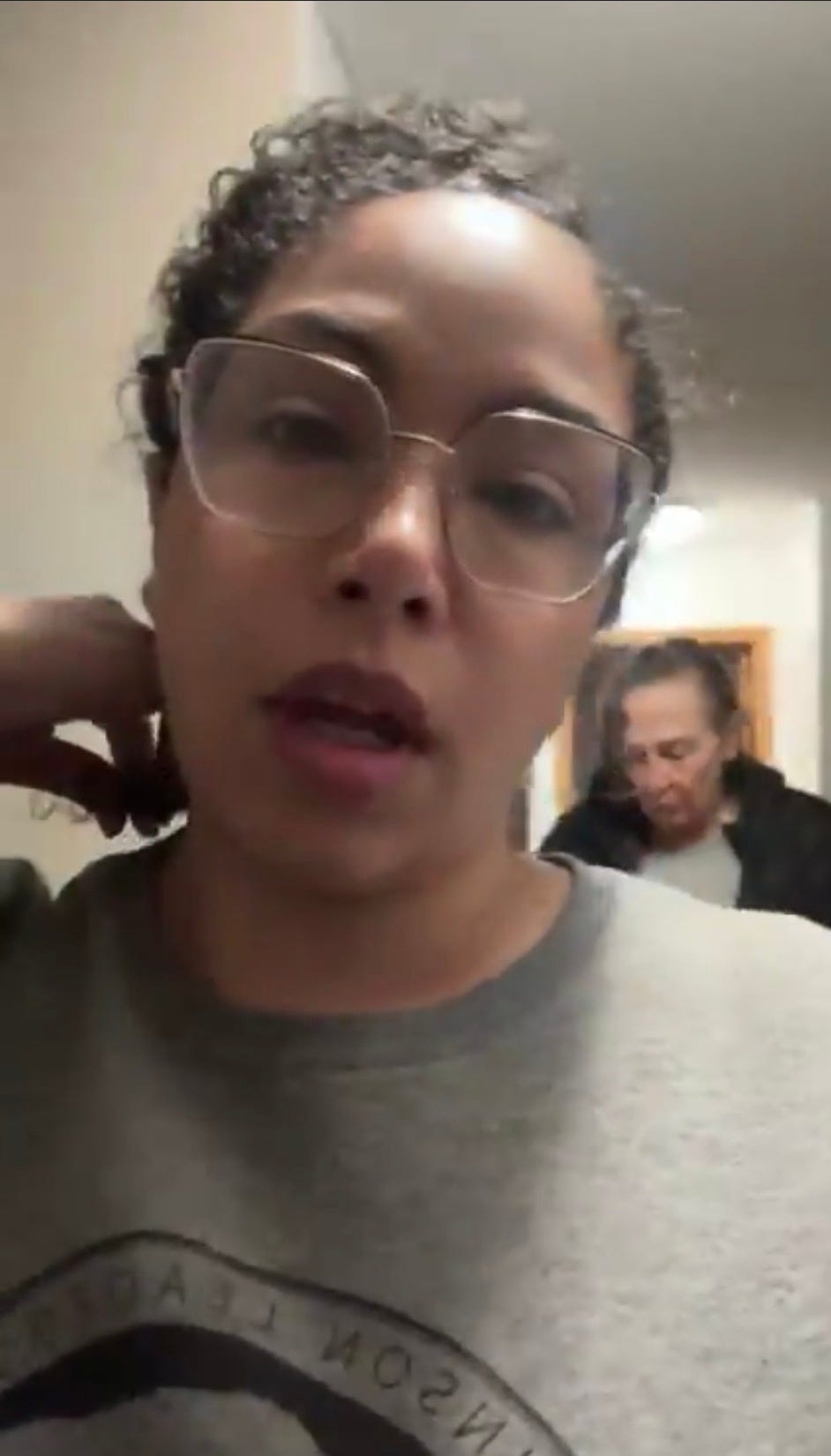
Look at the lighting. That overhead bulb is doing the classic “motel bathroom special,” throwing a hard highlight on the forehead and leaving the rest of the face to negotiate with shadow. The phone is hunting for focus like it’s sniffing around for a reason to behave. Exposure keeps pumping up and down, like the camera is getting nervous. And the background? The background is trying to audition. Random movement, random shapes, random depth. The frame can’t decide if it’s a news report or a hallway confession.
Because this is the ritual. This is what we do. We grade the frame. We grade the lighting. We grade the “look.” We act like the mic is the moral issue and the glare is the national emergency. We act like “professional” is the same thing as “safe.”
My daughter asked me why Roland Martin’s face is blue, and I explained light spill like I’m teaching Chroma Key 101. But watching this, I’m seeing a different kind of spill. Not blue light. Authority. Power. The state bleeding into a room and turning a livestream into a record.
Because right after all this petty little “production critique” energy, the moment shows up. The tone shifts. The air changes. The frame stops being a show.
What happened: the facts in plain language
Here’s what happened, in plain, report-style language.
On Jan. 30, 2026, independent journalist Georgia Forté went live on camera from inside her home and told viewers that federal agents were at her door and said they had a warrant for her arrest. In the video, Forté says agents told her they had gone before a grand jury within the last 24 hours, and she says her attorney advised her to go with them “down to Whipple.”
Forté’s arrest, along with the arrest of former CNN anchor Don Lemon, was tied to a Jan. 18 protest that interrupted a church service at Cities Church in St. Paul, Minnesota. Coverage describes a federal indictment alleging civil-rights related offenses connected to the disruption of worshippers’ rights, and notes Lemon and Forté have said they were there as journalists documenting the protest.
That’s the clean sequence the public can verify which is that a journalist livestreams her own arrest, says agents have a warrant, references grand jury timing, and says counsel tells her to report to a location named by the agents. The arrest is connected to coverage of a church protest that federal prosecutors framed as a civil-rights violation.
When the state shows up, the visuals suddenly matter in a different way. Not because lighting is important, but because power likes to be filmed beautifully, and “professionalism” can become a velvet glove over a clenched fist.
Fascism Is Beautiful
Here is the trap. It is not that power only wins by force. Power also wins by looking right.
When the state shows up at your door, the human nervous system does something predictable. It looks for cues. Order. Authority. Clean lines. Calm voices. Credentials. The brain wants to believe the people who look organized must also be legitimate. That instinct kept our ancestors alive. It also makes modern people easy to manage.
This is why the obsession with “professionalism” can become more than annoying. It can become a muzzle with good posture.
Most people have never heard of Leni Riefenstahl, so listen let me keep this plain. She was a German filmmaker whose most famous work was made for the Nazi regime. Her films did not persuade by argument. They persuaded by image. The camera angles were heroic. The crowds were choreographed. The light was flattering. The movement was hypnotic. The message was not “believe this.” The message was “feel this.” She made political domination look like destiny.
That is the phrase I want you to hold. Domination made to look like destiny.
Because once the visuals are beautiful, the violence can hide inside the beauty. Once the frame is clean, the moral question gets dirty in the viewer’s mind. The audience starts grading craft instead of judging power. They start talking about lighting, not legitimacy. They start talking about tone, not coercion. They start talking about whether somebody “should have known better,” instead of asking why the state is turning journalism into a courtroom problem.
That is not a history lecture. That is a mirror.
In our little modern version, the temptation is to treat arrests like weather and presentation like morality. A shaky phone video feels unserious. A clean studio shot feels credible. A messy human being looks guilty. A polished narrator looks trustworthy. You do not even have to agree with that. You just have to notice how quickly your attention gets pulled.
So when I say “fascism is beautiful,” I am not trying to be poetic. I am naming a tactic. If power can keep you arguing about the camera, it has already moved past the story. If power can make you ashamed of looking tired, it has already trained you to self-censor. If power can make handcuffs look like “procedure,” it has already won the first round.
Now go back to the scene we just laid out. Federal agents. A warrant. A journalist livestreaming from inside her home. Kids in the house. The moment is ugly in the way real life is ugly. The frame is imperfect. The audio is rough. And that is exactly why the “professionalism police” show up so fast, even when no one asked them.
Now, I’m going to use that lens to explain why people keep reaching for production critique in moments that should trigger moral clarity. It is not because they are evil. It is because beauty is a sedative, and fear loves a checklist.
Morning Joe and the costume of resistance
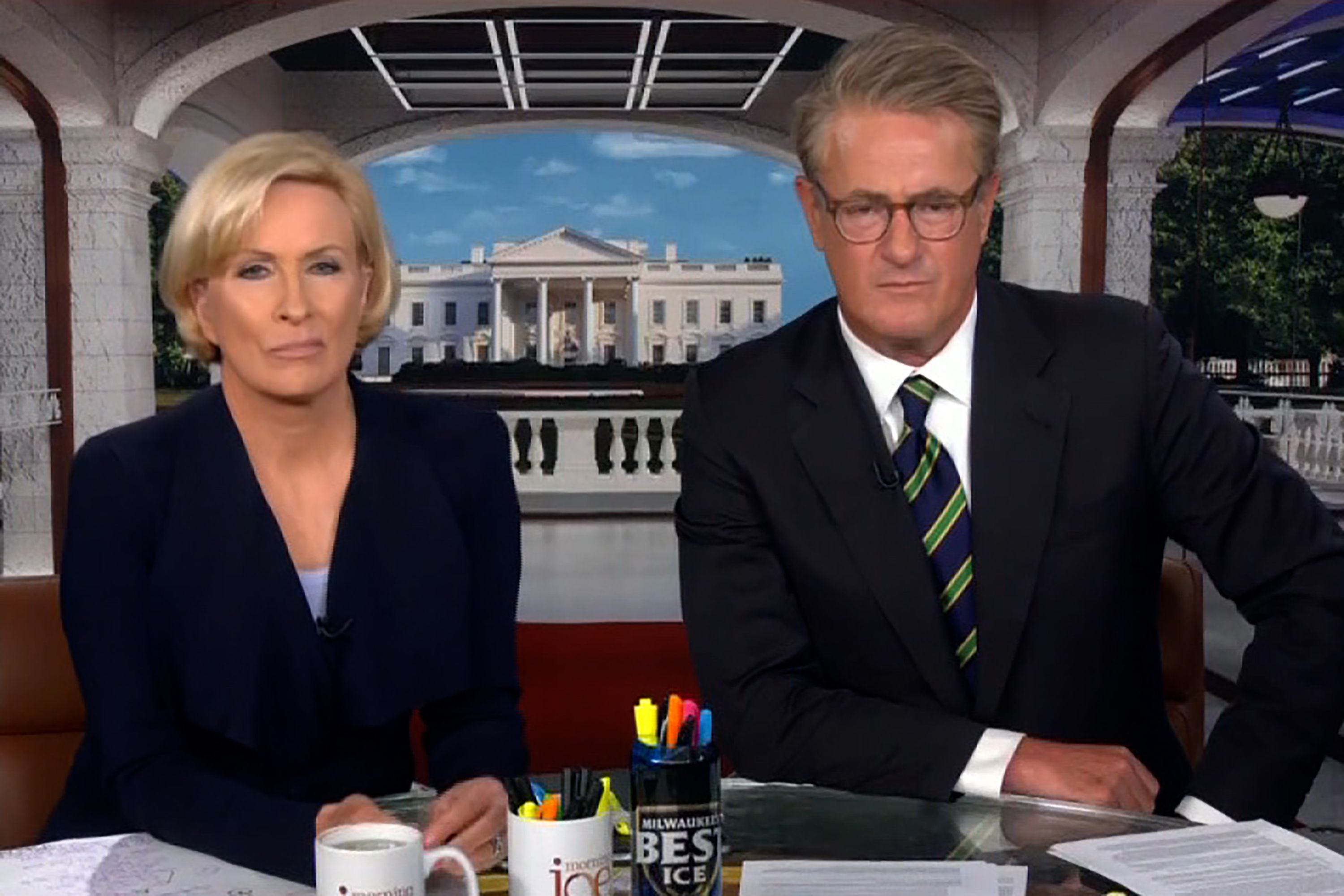
Morning Joe used to feel like a daily anti-fascism vigil. Same set, same beautiful lights, same posture of alarm, day after day: “This is dangerous. This is unprecedented. This is not normal.” And for a while, that performance mattered. It gave anxious people language. It gave worried people a place to put their dread.
But here’s what makes it relevant to everything I’m writing about lighting, “professionalism,” and handcuffs. The show was also the perfect example of how anti-fascism can become a costume when it’s built for television first and reality second.
Because television loves one thing more than truth and that’s a stable format. Same chairs. Same camera angles. Same “serious faces.” Same righteous cadence. A contained moral panic that still fits the clock. And when that’s your medium, there’s a temptation to believe that naming the threat is the same thing as stopping it. That if you say “fascism” clearly enough then under the right lights, with the right graphics you’ve done the work.
Then fascism didn’t just keep walking. It won ground.
And when it became clear that the threat they’d been describing wasn’t a segment anymore, that it was becoming the air itself, Joe Scarborough and Mika Brzezinski did what a lot of legacy power does when it realizes it’s not holding the steering wheel: they pivoted from warning to negotiating. From “we will not normalize this” to “we need access.” From moral language to survival language. From cosplay to court.
That’s what “kissing the ring” means in media terms. It’s not romance. It’s surrender with good lighting. It’s the quiet moment when the people who built careers on alarm decide the safest move is to be let back into the room.
And the reason I’m bringing it into this essay is simple: it’s the same mechanism as the production critique. The same instinct to treat presentation as power. The same reflex to prioritize being acceptable to the system over telling the truth about the system. The same seduction: if I look professional, I’ll be safe. If I’m invited, I’ll be relevant. If I’m tasteful, I’ll be protected.
But that’s not how this works. When authoritarianism wins, it does not reward you for having the best lighting. It rewards you for being useful. And if you can’t be useful, it rewards you for being quiet.
That’s the bridge to the conclusion: the beautiful lights don’t stop the handcuffs. Sometimes they just help the handcuffs look like policy.
Conclusion
Listen, I want to say right here and right now to my friend:
Respectfully. No way man.
You’re telling me “don’t get personal” at the exact moment I’m watching Don Lemon livestream pictures of himself sitting in his grandmother’s lap as a child. That’s not some “Red Table Diaries” confessional where we wring tears out of the camera until the well runs dry. That’s a human being saying, I came from somewhere. I got held. I got shaped. And the world you’re watching me report on has a cost.
I understand guardrails. I do. I’m not trying to turn my work into therapy. I’m not trying to take every private ache and staple it to the internet like a confession booth with a subscribe button.
But here’s the problem, and I need you to hear me. We don’t take it personal enough. We act like pain is unprofessional. We act like outrage is childish. We act like fatigue is weakness. We pretend it don’t hurt, and then we get swallowed by that black hole where nothing is real, nothing matters, and the only safe job is to critique the lighting while the room is on fire.
And that’s not objectivity.
This country has been “objective” since the first lie was printed clean on expensive paper. The founding document says it plain: “all men are created equal.” Thomas Jefferson put that sentence into the air like a bell. And ever since then, America has been haunted by the sound of it. Because the nation never matched the words. Not in practice. Not in policy. Not in the body.
So what did our people do?
We turned the contradiction into a form of reporting. We created a whole American newsroom before we were allowed in the white one. Spirituals. Work songs. Blues. The first journalists a lot of this country ever had were singers, chronicling what was happening to the soul in real time. And out of that came jazz. Out of that came R&B. Out of that came rock. Out of that came rap and Hip Hop. An entire lineage of truth-telling built from the insistence that, yes, it hurts. Yes, it’s personal. Yes, it’s real.
So don’t tell me: “It don’t hurt now.”
Don’t tell me: “Don’t get personal.”
Don’t tell me: “Keep it objective.”
Don’t tell me: “Don’t believe your eyes.”
Don’t tell me: “They lie.”
Don’t tell me: “Truth is a lie.”
F*** that.
Truth is the truth. A lie is a lie. And if we can’t say that in 2026, with journalists getting arrested in broad daylight and everybody trying to grade the production like that’s the emergency, then the lights already won.
Indie journalists don’t need pretty lights. Indie journalists don’t need an 8K camera. Indie journalists don’t need a perfect set. Indie journalists don’t need a bookcase curated like a museum exhibit.
Indie journalists need the truth.
We need to search it out, dig it out, verify it, and spread it. Because truth ain’t waitin for lighting. Truth ain’t waiting for makeup. Truth doesn’t wait for the perfect camera position.
Ok ok ok ok now do indie journalists need good audio?
Yes. Yes we do. Because if the mic sounds like it’s recording inside a blender, the only thing the audience will hear is the blender. Even the truth needs to be audible.
Alright. I’ve said my piece. I gotta run to The Home Depot to get some flowers to pretty up my background.
Bye. Oh wait hold up!
If you’re sick of a world where the rich get richer, buy prettier lights, and then tell the rest of us to shut it down, here’s your move: become a paid subscriber.
Because every time an ordinary voice goes live with imperfect lighting and a real story, the system doesn’t argue the facts, it grades the image, then quietly starves the truth. Paid subs are how you tell my legacy-media friend and every gatekeeper like him that we’re funding the message, not the makeup.
If you value truth over polish, don’t just read this. Back it.
Ok now I’m going out to get makeup you know I’m kidding. Bye.
Wow, I’m going to attempt to swim against the tide here and give you some elder aunt advice. You have a viewpoint and writing style worth following. That’s why I’m here. Video, however, is not your natural strength. You know that, so you asked for the critique by your friend. He was harsh in his assessment. And, yes the message, the arrest of journalist Don Lemon, was the main point that he seemed to miss. But, you were asking for his opinion of your performance, not, the content, weren’t you?
Your friend understands something we often eschew in our high mindedness’s. The medium is part of the message, visuals matter, unspoken cues evade conscious thought and go straight to the amygdala. If you want your videos to succeed, you will need to take all of this into account. So watch your videos with a critic’s eye and see for your yourself what is and isn’t supporting your message. One of the hardest lessons in journalism is editing out whatever doesn’t focus on the essentials: who, where, when and why.
Now for the love of all that matters, GET SOME SLEEP.
A little story that may be relevant. When not painting birds - pictures of them, not the mistreating actual birds -- I work as an advocate for animals, especially wildlife (my expertise), and conservation. When I started doing this work, possibly ere your birth, or end to the need for diapers, I was asked to help a group in a town near me to prevent a plan to trap muskrats with cruel leghold traps in a community where there was a lot of concern about an increase in muskrats, the fear being they'd be "out of control" with dire consequences to humanity...at least in that small town.
I was new at this and so went to immense work (very pre internet...all books and calls to appropriate scientists) and put together an elegant argument against trapping with explanation of wildlife population dynamics, compensatory mortality and immigration, dispersal of cohorts, additive vs compensatory mortality, and stuff of that nature, all fact-based, and presented it to the town council.
Then an official from the provincial government's ministry in charge of regulating trapping strode in, in uniform, and with a handgun on his hip. This is Canada and so even back then seeing anyone other than a cop enter a public meeting while so armed was nearly unheard of.
He uttered nothing but the usual bromides, and yet the council agreed with him. I had refuted, in advance, all his arguments with facts and figures, but it was who he was and how he looked that mattered; I mean, the guy had a gun, a uniform, so he must know what's what, eh?
But the story does not end there...I told the aggrieved citizens to picket the council and to get as many people as they could to convince, with demos, phone calls and letters the councillors up for re-election that they would be voted against if they did not reverse the decision. I urged them to make public their support of any councillor or challenger who was on their side.
They won. The traps were not set, the muskrats were free to ramble, and the dire consequences predicted if they were not "controlled" never happened, as I predicted.
The Resistance is right, and facts and figures, reporting and so on matters, but is not enough. And no one gives a flying f-bomb what you look like. What is needed is people in the streets and on our computer screens both, making their majority views known, and politicians seeing the crumbling of their assumed support.
Just don't give the fascists the excuse to suspend voting and other rights and enact some sort of martial law. It is dangerous, and an old guy sitting in safe comfort in a safe place has no "right" to tell you what to do, but I hope to hell you all keep doing it for your sake, and mine and what is left of the free world. It all matters! Each has a role to play that must be played...or else.