

TLDR
Maryland’s redistricting fight was framed as a bid to “boost Democrats,” but the buried argument was about Black representation and what Wes Moore called “political redlining.” [1]
Video blew up the federal narrative in the Minneapolis ICE shooting, while Stonewall’s Pride flag had to be sued back into public view. [2][3]
Tennessee’s library firing and the Census citizenship test show how suppression gets renamed as child safety or bureaucratic procedure. [4][5]
The culture side looked stronger: Hollywood workers challenged consolidation, Whoopi Goldberg launched a new imprint, Mississippi refused history laundering, and the WNBA draft put women’s labor on a brighter ledger. [6][9][10][12]
Restack it and share it.
If it would not trouble your delicate schedule, and only if you feel spiritually, emotionally, and cosmetically prepared, you may consider supporting the work here:
Then again, to hell with the timid little curtsy. Everybody who just got fed by this brief needs to drop at least $5 in Buy Me a Coffee and act like they have some home training. This is a one-man newsroom, not a Victorian fainting couch. My apologies for the interruption, and thank you so much for your grace and understanding.
Part I: The Five Ways They Tried to Fuck Us Over Today
1. The horse-race headline that buried the Black stakes in Maryland
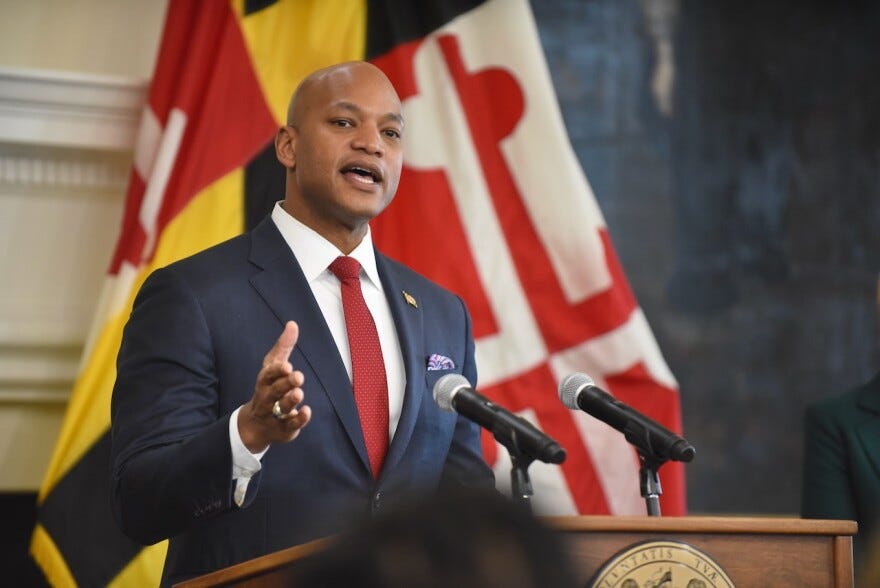
The first trick today was familiar: take a power struggle with racial stakes and repackage it as regular campaign chess. The Associated Press framed Gov. Wes Moore’s failed push to redraw Maryland’s congressional map as an attempt to “boost Democrats.” But inside the story, Moore explicitly argued that Trump-backed redistricting efforts amount to “political redlining” and an attempt to silence Black elected leadership. What got centered was partisan advantage. What got buried was the fact that the nation’s only serving Black governor was naming a direct threat to Black representation. [1]
Why this matters.
When coverage makes a Black-representation fight look like ordinary party maneuvering, readers are trained to miss the racial stakes even when those stakes are being named out loud. The cleaner frame is this: district lines are not just electoral plumbing. They are a way of deciding whose voice counts, whose leadership gets diluted, and whose future gets called “too political” to defend. [1]
2. The Minneapolis ICE shooting narrative that lasted until the video arrived
In Minneapolis, a city-released video forced a second look at an ICE shooting that had already been fed to the public through the usual law-and-order funnel. Charges against two Venezuelan men were dropped. The city opened an investigation into whether federal officers lied under oath. Mayor Jacob Frey said the federal account did not match the facts visible on video. What was centered first was the officer narrative. What was buried was the possibility that the most misleading thing in the story was the government’s story itself. [2]
Why this matters.
This is how procedural violence works in media form. The badge gets a presumption of truth. The target gets a presumption of threat. Then the public is asked to revise its moral memory later, after the charges, the fear, and the headlines have already done their work. A more honest frame would begin with uncertainty and evidence, not automatic faith in armed federal power. [2]
3. Stonewall’s Pride flag was treated like décor instead of history
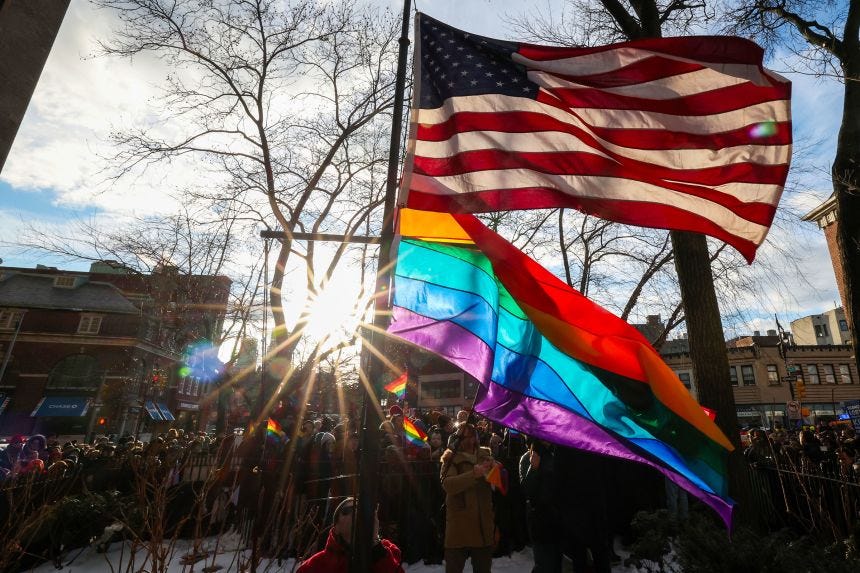
The Trump administration said Monday it will resume flying the Pride flag at Stonewall National Monument after removing it in February, and only after LGBTQ and historic-preservation groups sued. The administration had defended the removal as compliance with federal flag guidance. But Stonewall is not just another federal property. It is a site of rebellion, memory, and queer public history, and the government’s own guidance allows displays in historical context. What got centered was policy tidiness. What got buried was the attempt to make queer history look optional. [3]
Why this matters.
Calling erasure “flag policy” is a classic bureaucratic disguise. The point is to make a removal look neutral so the politics disappear with the symbol. The truthful frame is simpler: people had to sue the federal government to stop it from pretending Stonewall could be commemorated while stripping away one of the clearest public signs of what Stonewall means. [3]
4. Tennessee sold censorship as child protection and punished the worker who wouldn’t play along
A Tennessee school librarian was fired after refusing to move more than 100 LGBTQ-themed books from the children’s section to the adult section. Board members said the books promoted “gender confusion.” The librarian said carrying out the order would amount to viewpoint discrimination and violate the First Amendment. What was centered was child-protection language. What was buried was the actual machinery of censorship: isolate the books, stigmatize the subject, then punish the worker who refuses to do the laundering. [4]
Why this matters.
This script is bigger than one library. The move is not just to suppress access, but to declare certain lives and stories inherently suspect. Once power gets to rename exclusion as care, it no longer has to defend the exclusion on the merits. It only has to keep asking who could possibly object to “protecting children.” [4]
5. The Census citizenship question is being floated as a test, not the power move it is
The Census Bureau plans to use a questionnaire that includes a citizenship question as part of a practice test for the 2030 census. Critics warn the question could deter immigrants, including people in mixed-status households, from responding. That matters because the census shapes congressional seats, Electoral College votes, and about $2.8 trillion in annual federal funding. What got centered was administrative procedure. What got buried was the political memory of what these questions do when vulnerable communities hear them from the state. [5]
Why this matters.
Black folks know the count is never just a count. It is about resources, legitimacy, and who can be rendered smaller on paper so they can be governed with less accountability. The truthful frame is not “practice test.” It is whether the state is again experimenting with tools that make entire communities more invisible while insisting nothing ideological is happening at all. [5]
Part II: Entertainment
1. Hollywood workers are calling the Paramount-Warner deal what it is: concentration
More than a thousand actors, writers, directors, and other film workers published an open letter opposing the proposed $111 billion Paramount-Warner Bros. Discovery deal. Their warning was blunt: fewer jobs, fewer opportunities for creators, higher costs, less choice for audiences, and a reduction of the major U.S. film studios to just four. This is not promo chatter. It is workers telling the public that “synergy” is often just the polite word for concentration. [6]
Why this matters.
Entertainment news loves to treat mergers like scoreboard events for executives. The people who actually make the art understand the deeper story. When ownership tightens, the first casualties are usually risk, labor, and the creators who were already fighting to be seen in the first place. [6]
2. The Rock Hall class keeps confessing what “American music” has always depended on
The 2026 Rock & Roll Hall of Fame class includes Wu-Tang Clan, Luther Vandross, and Sade, while the Early Influence category honors Queen Latifah, MC Lyte, Celia Cruz, and Fela Kuti. Mariah Carey, Lauryn Hill, and Shakira were nominated but did not make the class. Even in a building still called “rock,” the canon keeps circling back to the fact that Black and diasporic artists built much of the architecture the institution spends decades trying to sort, delay, and rename. [7]
Why this matters.
This is bigger than trophies. It is about who gets cast as central to the American story and who gets filed under influence, innovation, crossover, or exception. The correction continues because the erasure never fully held. [7]
3. Sajida Obaid’s death shows what entertainment can be when freedom is rationed
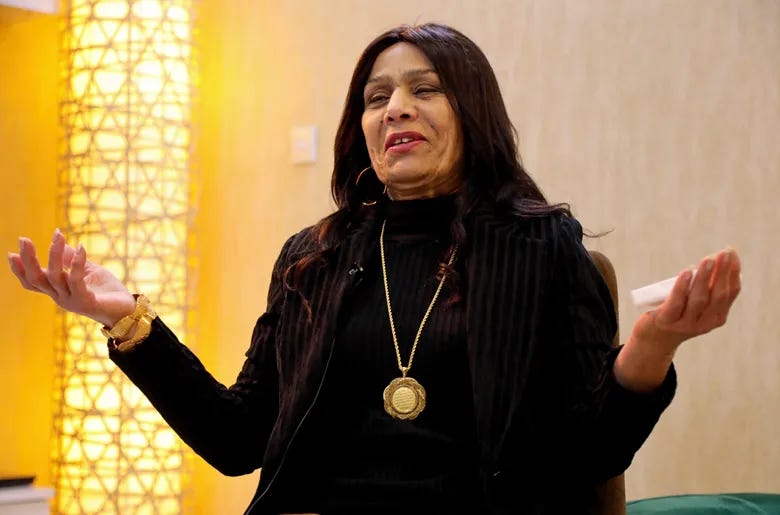
AP’s report from Iraq on mourners gathering for singer Sajida Obaid did something a lot of culture coverage fails to do: it treated entertainment as social infrastructure. Obaid’s women-only parties gave Iraqi women a place to dance without male surveillance, phones, or public shame. Her death was overshadowed by war news, but her fans described her voice as a temporary form of freedom. [8]
Why this matters.
When formal freedom is thin, music often becomes an unofficial institution. It creates a room inside the room. Coalition politics gets shallower when we forget that joy, gendered public space, and the right to move your body without punishment are also governance questions. [8]
Part III: Arts
1. Whoopi Goldberg is not just publishing books. She is building entry points
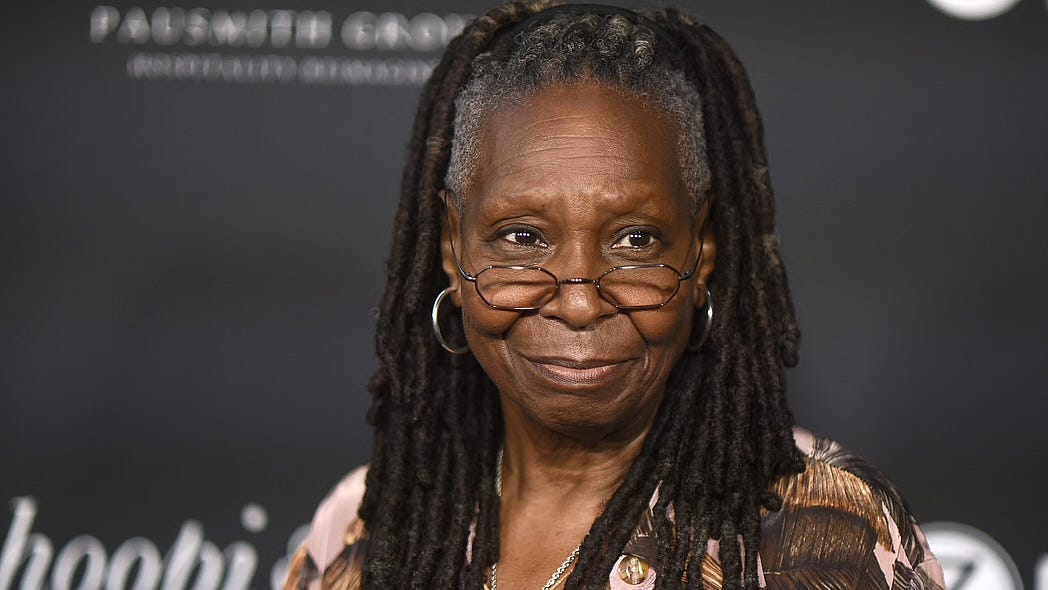
Whoopi Goldberg launched WhoopInk, a Blackstone Publishing imprint aimed at bringing “fresh, diverse new talent” into the market, with Goldberg involved from cover design to promotion. In an era when publishing still loves to talk inclusion while consolidating taste and access, this is a meaningful intervention in who gets ushered toward legitimacy. [9]
Why this matters.
Publishing power is not just about writing. It is about acquisition, packaging, positioning, and who gets treated as worth betting on. A new imprint does not solve the gatekeeping problem by itself, but it does create another door, and doors matter. [9]
2. Mississippi’s museums are refusing the patriotic lie
As the country moves toward its 250th anniversary, Mississippi’s state museums are drawing a direct contrast with federal pressure to tell a version of history less focused on racial violence and discrimination. The museums explicitly include Native removal, slavery, Jim Crow, Emmett Till, and other brutal truths. Their guiding principle was not to brush over or whitewash anything. Imagine that: Mississippi teaching the country what honesty looks like. [10]
Why this matters.
Public memory is part art, part politics, part moral nerve. When federal institutions are nudged toward patriotic amnesia, any museum willing to tell the full story becomes more than a museum. It becomes a defense against national self-deception. [10]
3. A blind woman “seeing” art by touch is not a feel-good side story. It is an aesthetic correction
At the Omero Tactile Museum in Italy, an AP photographer used a Picasso-inspired long exposure to visualize a blind woman exploring a sculpture by touch. The reporting makes clear that blind participants described art not as absence, but as a fuller sensory encounter involving touch, voice, scent, and intimacy. That is not a deficit story. That is a challenge to the lazy assumption that access and artistic depth are separate categories. [11]
Why this matters.
Too much arts coverage treats accessibility as accommodation after the fact. This story points somewhere better. It suggests that expanding who art is for can also expand what art is. [11]
Part IV: Sports
1. Azzi Fudd’s draft night made the money visible
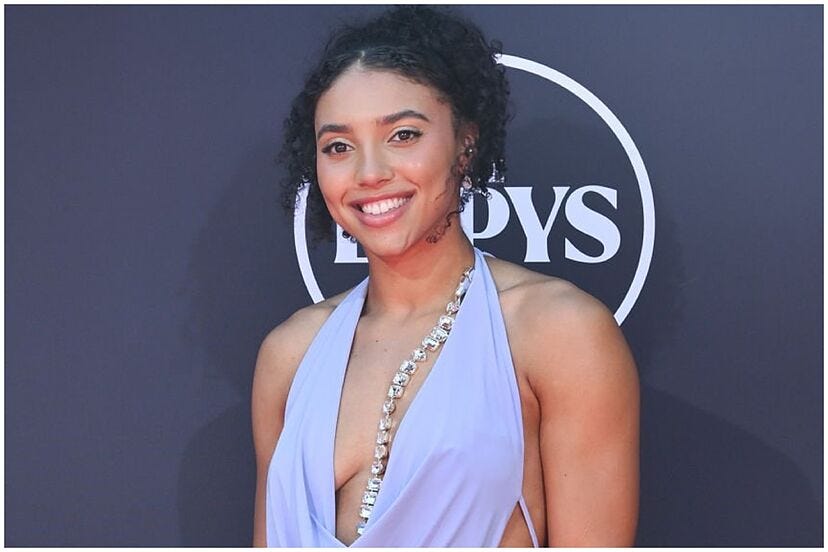
Azzi Fudd went No. 1 to Dallas in the WNBA draft with a $500,000 rookie payday waiting, and UConn extended its record to seven No. 1 picks. That headline is about talent, yes. It is also about money finally being forced into the same sentence as women’s excellence, instead of being treated as an awkward afterthought. [12]
Why this matters.
For years, women athletes were told visibility itself was the reward. Draft night said something else. Prestige without pay is a con, and the growing economic seriousness around women’s basketball is part of the sport story, not separate from it. [12]
2. Imane Khelif is still being made to carry the surveillance state on her back
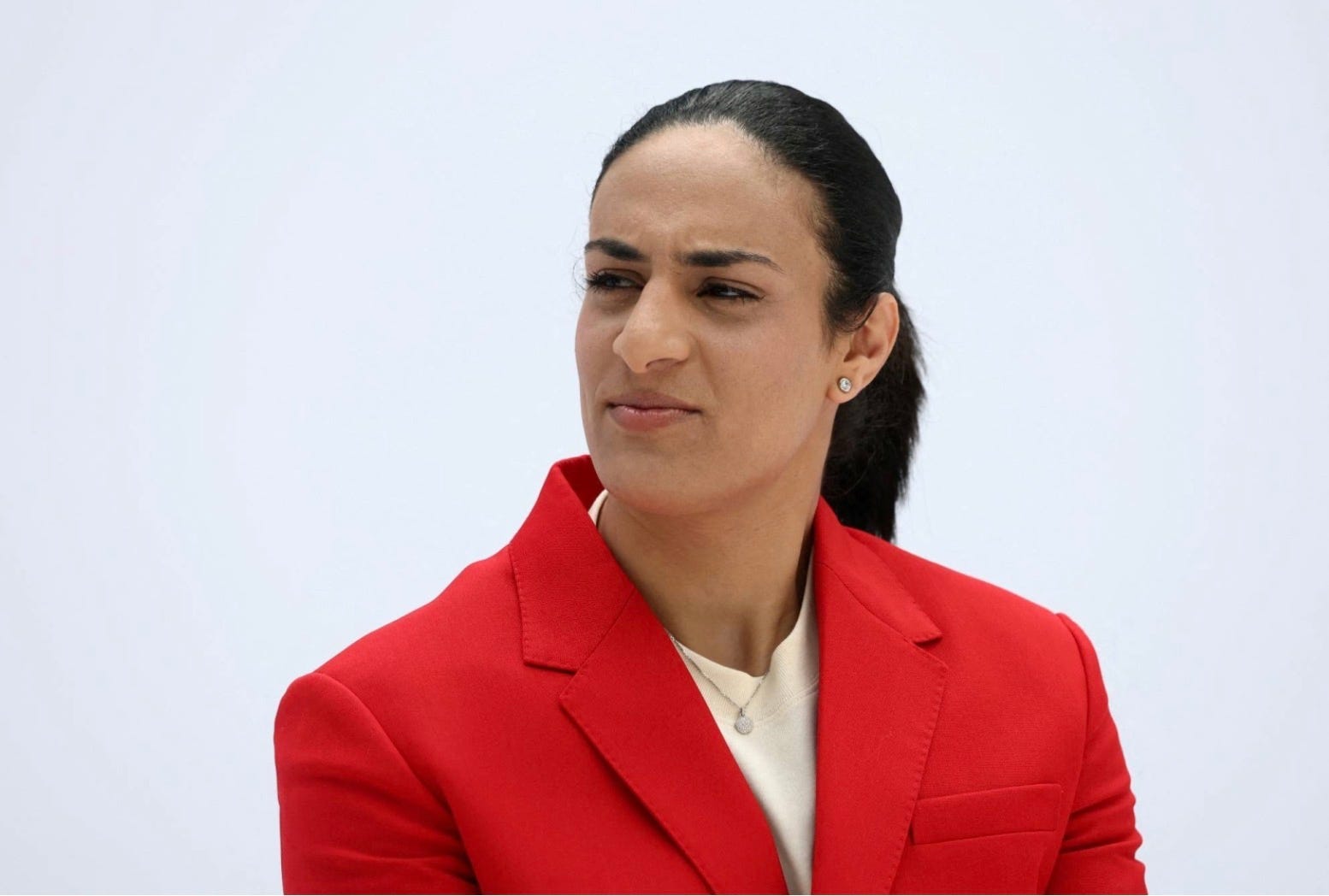
Imane Khelif’s first professional fight in Paris was postponed because of a shoulder injury. But the Reuters report also notes that she has not competed officially since winning Olympic gold amid a gender-eligibility dispute, and that World Boxing announced mandatory sex testing for all competitors last year. So even an injury update arrives wrapped in the larger story of athletic scrutiny and gender policing. [13]
Why this matters.
Sport keeps pretending it is merely protecting fairness while repeatedly turning certain women into compliance objects. The body becomes a site of bureaucracy, suspicion, and public argument. That is not incidental to the competition. It is now part of the competition. [13]
3. Bob Hall’s death is a reminder that inclusion in sport was fought into existence
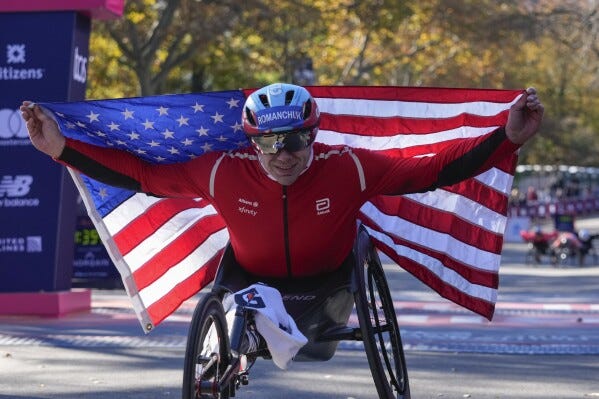
Bob Hall, the childhood polio survivor often called the father of wheelchair racing, died at 74. He convinced Boston Marathon organizers to let him race in 1975, sued for wheelchair access in New York, and built racing chairs used by later champions. AP notes that this year’s Boston Marathon will include 50 wheelchair racers and 50 others across eight para divisions competing for more than $300,000 in prize money. None of that opened up by magic. [14]
Why this matters.
Sports institutions love to celebrate inclusion once the hard part is over. Hall’s life is the hard part. The lanes were opened by pressure, invention, lawsuits, and refusal. Disabled athletes did not get invited into the story. They forced the story to expand. [14]
Support This Work
Restack this. Send it to the person who still thinks these are five separate stories and a few unrelated culture items.
And if this brief keeps doing that rude but useful thing where it names the con before lunch, please accept my most humble and decorous request. Only if it is convenient. Only if the heavens part. Only if your financial adviser, prayer circle, dermatologist, and ancestral spirits all sign off in writing. You may wish to consider supporting this exhausted little operation. Ok enough of that.
If this one-man newsroom just saved you time, clarified the lie, and did the reading you did not feel like doing, then everybody needs to drop at least $5 in Buy Me a Coffee and stop acting brand new.
Not someday. Not when the moon is in Capricorn. Now. And if you are one of the respectable people who prefers a more formal arrangement, then subscribe here:
My sincerest apologies for the disturbance, and thank you for your immediate cooperation.
Sources
Associated Press, Gov. Wes Moore falls short in push to redraw Maryland’s congressional map to boost Democrats— provided the headline frame and Moore’s explicit warning about Black representation and “political redlining.”
Associated Press, Video brings new scrutiny to Minneapolis ICE shooting after charges collapse — documented the city video release, dropped charges, investigation into possible false testimony, and the mayor’s rejection of the federal account.
Associated Press, US will resume flying Pride flag at Stonewall after lawsuit settlement — established the restoration of the flag, the legal settlement, and the historical-context stakes.
Associated Press, Tennessee librarian fired after refusing to relocate LGBTQ books — documented the board’s rationale, the librarian’s refusal, and the censorship dispute.
Associated Press, Census Bureau to use citizenship question in 2030 practice test — established the test plan, the undercount concerns, and the implications for representation and federal funding.
Associated Press, Hundreds in Hollywood declare opposition to Paramount-Warner deal — documented the open letter, the signatories, and the labor and concentration concerns around the merger.
Associated Press, Phil Collins, Iron Maiden, Sade, Oasis, Wu-Tang Clan and Luther Vandross get into Rock Hall — provided the 2026 induction class and related Early Influence honorees.
Associated Press, Iraqi women mourn popular singer Sajida Obaid — supplied the account of Obaid’s women-only parties and their meaning as zones of freedom.
Associated Press, Whoopi Goldberg’s WhoopInk aims to bring diverse voices to the market — documented the launch of Goldberg’s imprint and its stated mission.
Associated Press, Mississippi’s take on America at 250 is a stark contrast to federal efforts — established the museums’ refusal to whitewash history and the direct contrast with federal pressure on race-focused history.
Associated Press, Inspired by Picasso, an AP photographer visualizes a blind person “seeing” art — documented the tactile-image concept and the accessibility-centered artistic process.
Associated Press, Dallas Wings select Azzi Fudd of UConn No. 1 in WNBA draft with a $500,000 payday waiting— provided the draft result, salary figure, and broader draft context.
Reuters, Khelif’s first professional fight in Paris postponed due to injury — documented the postponement and the continuing shadow of gender-eligibility disputes and mandatory sex testing.
Associated Press, Bob Hall, the father of wheelchair racing and a 2-time winner of the Boston Marathon, dead at 74 — established Hall’s legacy in wheelchair racing, litigation, and adaptive equipment innovation.
Another well articulated and delivered piece that informs, influences (in a good way) and also entertains. Nice formula you got there. Must be the coffee.
Wes Moore first came on my radar after the Frances Scott Keys bridge collapse. His measured, calm handling of the disaster was admirable. He’s a great example of a competent executive.
Our entire system favors wealth and power, yet every effort to rebalance it is vilified as partisan or, God forbid, wealth redistribution. We need to loudly reject this nonsense.