

Headline
They Called It Integrity, Merit, Safety and Beauty
Today’s trick was linguistic. A voter-list fishing expedition became “election integrity.” Gatekeeping became realism. A deportation machine became public safety. Imperial architecture became taste.
Introduction
Today’s con was mostly verbal. The administration and its allies kept reaching for clean words like integrity, merit, safety, efficiency, and respect to describe moves that would shrink the electorate, whiten the legal pipeline, bulk up a deportation machine, centralize union-election power under presidential appointees, and put 350,000 Haitians back on the edge of paperwork death. That is not neutral governance. That is power laundering itself through respectable nouns.[1][2][3][4][5] (reuters.com)
On the culture side, the day kept proving that the fight over who gets to belong is never confined to legislatures or courtrooms. It is in ticket prices, studio mergers, dead actors’ likenesses, who owns a publishing house, what monuments get built, who gets jailed for comedy, and whether women athletes and coaches are treated like labor or like symbolism. Proof of life arrived anyway. [6][7][8][9] (apnews.com)
TLDR
The Justice Department’s Rhode Island voter-data grab was sold as “election integrity,” but a judge called it an “unprecedented” fishing expedition and the administration wanted DHS involved in checking citizenship. [1] (reuters.com)
The same euphemism machine showed up in law schools, ICE hiring, union elections, and Haiti policy: gatekeeping called merit, lowered standards called safety, centralization called streamlining, and Black migrant precarity called procedure. [2][3][4][5] (reuters.com)
Entertainment exposed the money trail: a jury said Ticketmaster and Live Nation ran a harmful monopoly, theater owners challenged the Paramount-Warner pitch, and Hollywood kept inching toward the monetization of the dead with an AI Val Kilmer performance. [6][7][8] (apnews.com)
Arts looked like a censorship and ownership map: authors revolted against Vincent Bolloré’s influence, Washington got one step closer to a triumphal-arch vanity project, and a Tunisian comedian got prison in absentia for satire. [9][10][11] (reuters.com)
Sports kept telling the truth about gender, labor, and dissent: Iranian players thanked Australia for protection, Marie-Louise Eta hit a glass ceiling disguised as respect, and Napheesa Collier’s supermax deal made women’s basketball money impossible to ignore. [12][13][14] (reuters.com)
Restack it and share this pleeeeze.
For the full thing and to support the work
I get it if a full blown commitment is too much right now. Just Buy Me Coffee then.
Part I: The Five Ways They Tried to Fuck Us Over Today
1. “Election integrity” turned out to mean a voter-list fishing expedition
A federal judge rejected the Justice Department’s attempt to force Rhode Island to hand over non-public data on nearly 750,000 registered voters. The administration said it wanted the records to probe “election integrity,” clean the voter rolls, and flag people who should be purged, including by having DHS check citizenship. The judge called the request “unprecedented” and said the government lacked authority to conduct the kind of “fishing expedition” it was seeking. [1] (reuters.com)
The institutional trick here was ugly and familiar. The Civil Rights Act provision the department invoked was meant to help detect voting-related racial discrimination. Instead, it was being repurposed to pry open voter files in a Democratic-led state under the banner of “clean” rolls. What got centered was administrative hygiene. What got buried was that this kind of pressure always lands hardest on communities whose right to vote has historically been treated as conditional. [1] (reuters.com)
Why this matters.
When power says it is merely protecting elections, ask who gets scrutinized, who gets chilled, and who gets quietly invited to disappear from the rolls. The more truthful frame is not election integrity. It is state power testing how far it can push voter suppression without calling it that.
2. They are trying to make the legal profession whiter and more male, then calling it realism
The American Bar Association’s legal education council is considering scrapping the rule that requires law schools to show commitment to diversity in recruitment, admissions, and student programming. Reuters reported that commenters defending the rule warned repeal would signal capitulation to a right-wing movement hostile to civil rights, while others stressed that the legal profession remains more white and more male than the country it serves. [2] (reuters.com)
The failure is not just institutional. It is rhetorical. The ABA suspended the rule and now says the “legal landscape” has made compliance challenging. Critics call the rule unlawful or corrosive. But what gets buried in that polished language is the actual question: who gets to enter the pipeline that produces prosecutors, judges, partners, professors, and public defenders? What benefits from this reframing is the old gatekeeping order, which gets to pose as common sense rather than ideology. [2] (reuters.com)
Why this matters.
A profession that helps decide liberty, contracts, debt, education, housing, and policing does not get to pretend its own composition is a side issue. If diversity is treated as optional in legal education, the downstream effects are not abstract. They show up in who is believed, who is represented, and who keeps meeting institutions that already look like they were built to misunderstand them.
3. ICE’s hiring spree tells you what “public safety” means when speed matters more than standards
The Associated Press found that ICE’s recruitment drive for 12,000 new officers and agents, backed by a $75 billion congressional windfall, brought in people with questionable backgrounds: bankruptcies, lawsuits alleging misconduct, academy failure, and unstable law-enforcement job histories. ICE says most new hires are veterans or former police, but AP found evidence that some were not fully vetted or were hired despite serious red flags. [3] (apnews.com)
That matters because the agency’s public story is security, enforcement, and professionalism. The buried story is a mass-deportation apparatus expanding so fast that it appears willing to lower its standards while asking the public for maximum trust. What benefits from that framing is the entire machinery of crackdown politics. If you call it safety long enough, people stop asking who is wielding the force and whether those people should have been hired in the first place. [3] (apnews.com)
Why this matters.
A state that wants more armed agents than it wants scrutiny is not stabilizing anything. It is building liability and calling it order. For Black, Latino, immigrant, and working-class communities that already know what under-vetted authority feels like on the ground, this is not a clerical problem. It is a warning.
4. They called it streamlining. It was a power grab over who gets to unionize
A coalition of unions sued the Federal Labor Relations Authority after it moved to strip career staff of the power to oversee federal-worker union elections and hand that power to a three-member panel appointed by the president. The change is set to take effect with just 30 days’ notice. Reuters reported that the FLRA said the old process was redundant and time-consuming, but the unions said the move would upend decades of practice and put political appointees in charge of deciding who can join unions and whether elections were improperly influenced. [4] (reuters.com)
There is the euphemism again: efficiency, collaboration, streamlining. What gets buried is that political appointees would now sit closer to the choke point of workplace democracy. In a moment when Trump has already moved against federal collective-bargaining rights, that is not a technical adjustment. It is a direct attempt to narrow worker leverage while pretending to improve process. [4] (reuters.com)
Why this matters.
When the state starts centralizing the machinery that decides who can organize, workers should hear the alarm the first time, not the fifth. You do not move election power from career civil servants to presidential appointees because you love neutrality. You do it because you want more control over the outcome.
5. Too much of the Haiti story was about vote math, not Black diaspora vulnerability
The House voted 224-204 to extend Temporary Protected Status for 350,000 Haitians after DHS moved to terminate it. Ten Republicans broke ranks, and the bill heads to a Republican-led Senate with an uncertain future. Reuters also noted that more than 1.4 million Haitians have been displaced by violence and instability and that the Supreme Court is set to hear arguments on April 29 over whether the administration can move ahead with ending the protections. [5] (reuters.com)
The media failure here is subtler but real. A lot of the framing turned this into a story about a rare House rebuke, procedural maneuvering, and partisan surprise. Those facts matter. But the buried core is this: a Black migrant population of 350,000 people was nearly reduced to an expiration date in a deportation file while Haiti remains in collapse. That framing benefits everyone who wants Black diaspora suffering to read as administrative management instead of a moral and political choice. [5] (reuters.com)
Why this matters.
When Haitians become paperwork before they become people, the public is being trained to accept disposability in a softer voice. The truthful frame is not simply that Congress embarrassed Trump for a day. It is that Black life in migration is still being treated as negotiable.
Part II: Entertainment
1. A jury finally said out loud what fans have been saying for years about Ticketmaster
A New York jury found that Live Nation and Ticketmaster maintained a harmful monopoly over big concert venues. AP reported that consumers in 22 states paid an extra $1.72 per ticket, that the company could face hundreds of millions in damages, and that the remedy phase could even force venue divestitures. Jurors also saw internal messages in which one employee called prices “outrageous,” mocked customers as stupid, and bragged the company was “robbing them blind.”[6] (apnews.com)
Why this matters.
This is bigger than bad service fees. It is about who gets to tax joy. Live music has become one of the clearest places where corporations convert community, fandom, and ritual into extraction. When the price of being present gets engineered upward by monopoly power, culture itself gets stratified.
2. Hollywood keeps promising that consolidation will somehow produce abundance

At CinemaCon, David Ellison told theater owners that if regulators approve Paramount Skydance’s proposed $110 billion purchase of Warner Bros. Discovery, the combined company will release at least 30 films a year and keep them in theaters for at least 45 days. Theater operators were skeptical, and the head of Cinema United warned that consolidation historically means fewer films, not more. Reuters also reported that nearly 3,500 signatories, including Jane Fonda, J.J. Abrams, and Mark Ruffalo, oppose the deal because it could mean fewer opportunities for creators, job losses, and higher costs for consumers. [7] (reuters.com)
Why this matters.
Entertainment executives love to sell mergers as bold futures. Workers and exhibitors know better. Fewer owners usually means fewer bets, fewer jobs, fewer weird little chances for something original to get made. The problem is not that Hollywood lacks speeches. It is that corporate concentration keeps eating the conditions required for creative risk.
3. Val Kilmer’s AI afterlife is here, and Hollywood is trying to normalize it one consent form at a time
Reuters reported that the makers of As Deep as the Grave defended their use of an AI-generated Val Kilmer performance, saying they had the consent of Kilmer’s children. The film is about archaeologists exploring Navajo history in New Mexico, and the filmmakers said they used archival footage, photographs, and voice recordings to construct Kilmer’s role after his death. Social media reaction was unsettled. [8] (reuters.com)
Why this matters.
This is not just a tech story. It is a labor, consent, and memory story. A dead actor’s likeness is not merely content inventory. The question is not whether one family agreed. It is whether Hollywood is building a future in which grief becomes licensing infrastructure and performance becomes something a studio can reconstruct after the body is gone.
Part III: Arts
1. The Grasset revolt is about more than one French publisher. It is about ownership colonizing culture
More than 100 authors quit the storied French publisher Grasset in protest over the growing influence of billionaire Vincent Bolloré, whose outlets have moved sharply right and regularly platform Marine Le Pen’s National Rally. Reuters reported that the authors described themselves as being made hostages in an ideological war and that President Emmanuel Macron publicly defended editorial diversity and the identity of publishing houses. [9] (reuters.com)
Why this matters.
Publishing is never just about books. It is about who controls the channels through which a society narrates itself. When ownership concentration drags a literary institution toward a political project, the damage is not confined to a catalog. It reaches criticism, legitimacy, translation, promotion, and whose voice gets treated as culture rather than noise.
2. Trump’s triumphal arch is not just ugly architecture. It is regime aesthetics
The U.S. Commission of Fine Arts approved the design concept for Trump’s proposed 250-foot triumphal arch, along with a plan to paint the gray granite Eisenhower Executive Office Building white and an underground visitor-screening facility near the White House. AP reported that the EEOB paint idea was justified as a way to create a “homogenous environment” and a greater “sense of belonging” for staff. [10] (apnews.com)
Why this matters.
This is what happens when power gets sentimental about stone. A triumphal arch is not a neutral public-improvement project. Painting a historic building white to create aesthetic harmony is not a harmless refresh. It is an attempt to make authority look eternal, seamless, and purified. Architecture can flatter a republic, or it can flatter a ruler. This proposal knows exactly which job it is applying for.
3. A Tunisian comedian got prison in absentia, and the state still expects us to call that accountability
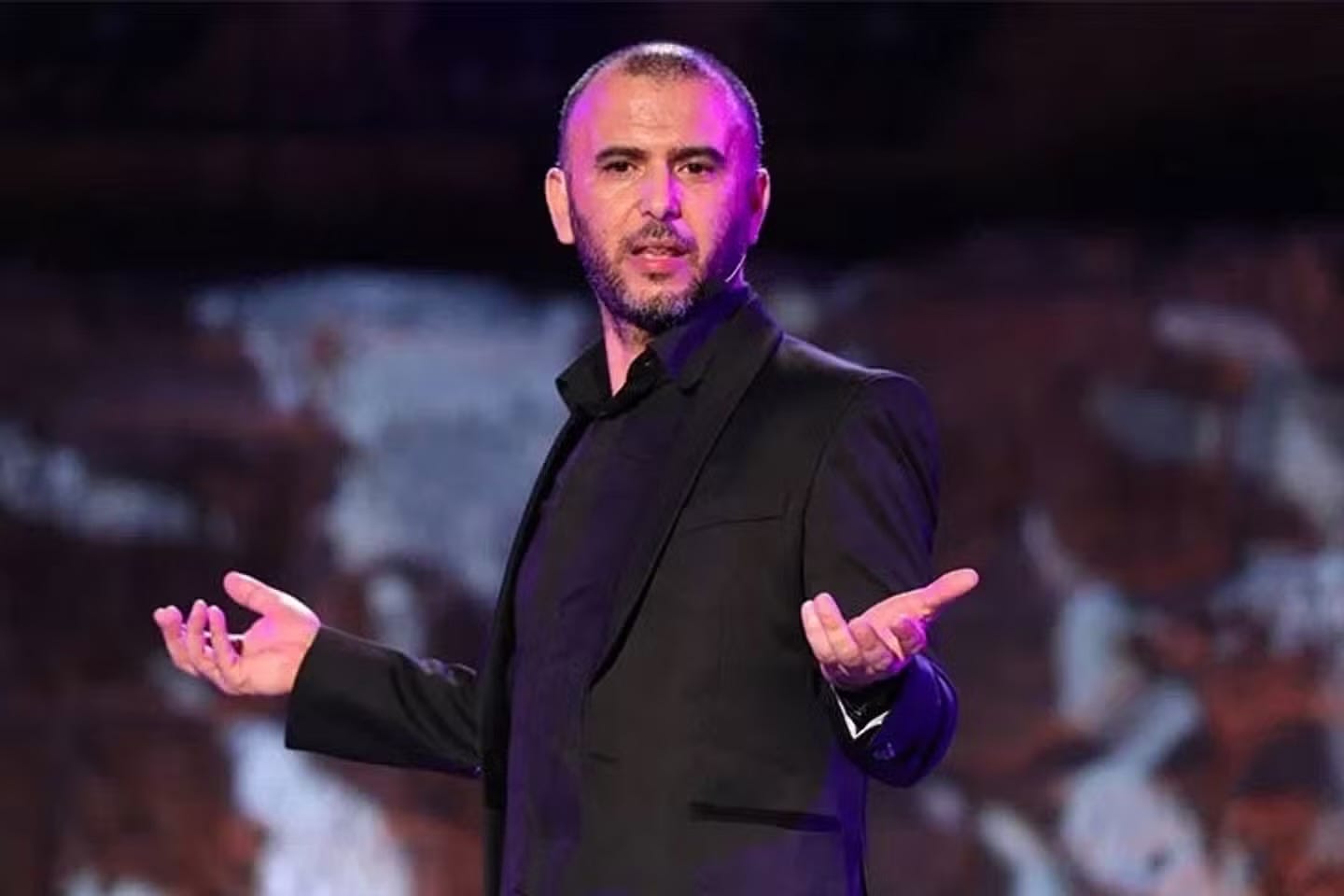
Tunisian comedian and actor Lotfi Abdelli said a court sentenced him in absentia to 18 months in prison over an old play. Reuters reported that Tunisian media said he was charged with insulting state officials and offending public morals, while Abdelli called the verdict politically motivated and aimed at intimidating artists and silencing critical voices. The case arrives amid broader claims from rights groups that President Kais Saied’s rule by decree has deepened the crackdown on dissent. [11] (reuters.com)
Why this matters.
Comedy is often one of the last places a frightened public still hears honesty. That is why insecure states keep trying to criminalize satire while pretending they are defending decorum. When a regime wants the artist jailed and the language cleaned up, the audience should hear the verdict for what it is: fear in judicial clothing.
Part IV: Sports
1. For two Iranian women players, asylum became part of the job description

Reuters reported that Iranian soccer players Fatemeh Pasandideh and Atefeh Ramezanisadeh thanked Australia for granting them humanitarian protection and a “safe haven.” They said they hoped to rebuild their lives and continue their careers there. Their safety fears intensified after several Iranian players declined to sing the national anthem at an Asian Cup match and Iranian state TV labeled them “wartime traitors.” [12] (reuters.com)
Why this matters.
This is why sports coverage that stops at the field is dishonest. For some athletes, the uniform is not just a uniform. It is a negotiation with the state, the nation, and the risk of punishment. When safety, exile, and work all collapse into the same story, sport becomes a record of political courage.
2. Marie-Louise Eta hit a glass ceiling wrapped in the language of respect
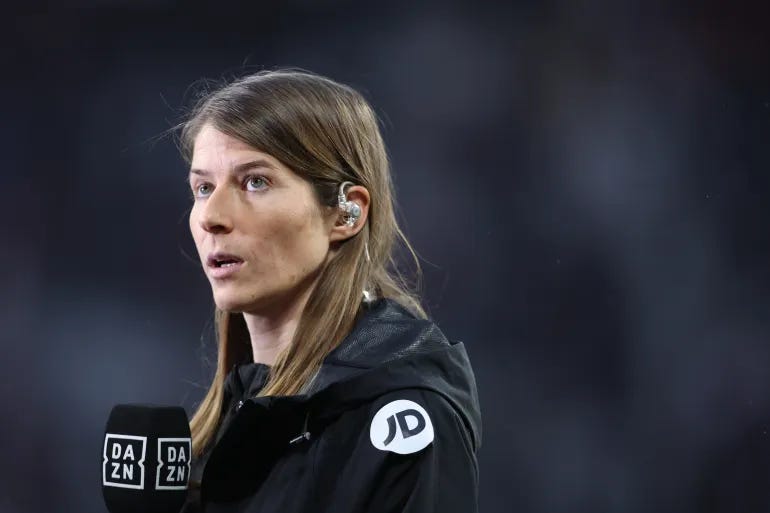
Union Berlin’s president ruled out giving Marie-Louise Eta a permanent men’s coaching job even as she prepares to become the first woman to coach in one of Europe’s five biggest men’s leagues during her interim stint. AP reported that club president Dirk Zingler said he was acting out of respect for women’s soccer and that Eta would take over the women’s team afterward. [13] (apnews.com)
Why this matters.
The most durable glass ceilings no longer always talk like exclusion. Sometimes they talk like principle, stewardship, and respect. But when a pioneering woman is told she cannot even be seriously considered for the permanent men’s job because that would somehow slight women’s soccer, what you are hearing is not reverence. It is containment with better manners.
3. Napheesa Collier’s deal made women’s basketball money impossible to ignore

Reuters reported that Napheesa Collier is re-signing with the Minnesota Lynx on a one-year, $1.4 million supermax contract. When official, it will make her one of only three WNBA players with supermax deals. Collier is coming off another elite season and is also expected to miss the start of the year after ankle surgery. [14] (reuters.com)
Why this matters.
The money is the story. Women athletes have been asked for years to deliver excellence, branding, authenticity, leadership, and endless symbolic uplift while being paid as though visibility itself were a salary. Collier’s deal does not fix that structure. But it does make one thing harder to deny: women’s basketball labor is becoming too valuable to keep patronizing at old prices.
Closing
Today’s pattern was not hidden. It was practically labeled for us. Voting rights got dressed up as roll maintenance. Exclusion in legal education got dressed up as common sense. An agency binge-hiring for deportation got sold as professionalism. Anti-union centralization got sold as efficiency. Haitian precarity got folded into vote math. The lie kept arriving in respectable clothes. [1][2][3][4][5] (reuters.com)
The cultural counterweight was just as clear. People are still fighting over who owns access, who gets to speak, what gets built, whose body is used, who is safe, and what labor is finally worth. That is the real value of a brief like this. It does not just tell you what happened. It shows you where power tried to rename itself and where life kept refusing the new label. [6][7][8][9][10][11][12][13][14] (apnews.com)
Support This Work
Become a paid subscriber first. That is the cleanest way to keep this thing from turning into a volunteer hobby performed for people who keep mistaking labor for ambiance.
If a subscription is too much right now I get it. Support with whatever amount you feel comfortable with and just buy me a coffee.
Sources
Reuters, Judge rejects US Justice Department effort to obtain Rhode Island’s voter data — established the judge’s rejection of the DOJ request, the “fishing expedition” language, and the administration’s plan to use voter data to flag people for possible removal from the rolls. (reuters.com)
Reuters, Law professors defend ABA’s law school diversity rule ahead of elimination vote — provided the pending ABA vote, the rule’s content, and the comments arguing repeal would intensify gatekeeping in a profession that remains whiter and more male than the country. (reuters.com)
AP News, ICE went on a hiring spree. Sterling credentials not required — supplied AP’s reporting on ICE’s rapid expansion, questionable backgrounds among some new hires, and concerns about lowered vetting standards. (apnews.com)
Reuters, Unions sue US labor board over bid to concentrate legal powers in DC — documented the FLRA policy change, the 30-day notice period, and the shift from career staff to political appointees in federal union-election decisions. (reuters.com)
Reuters, US House votes to defy Trump, extend Haitians’ temporary protections — provided the House vote, the size of the Haitian TPS population, Senate uncertainty, and the displacement crisis in Haiti. (reuters.com)
AP News, Jury finds that Ticketmaster and Live Nation had an anticompetitive monopoly over big concert venues— established the monopoly verdict, the $1.72-per-ticket overcharge figure, and the internal messages mocking customers. (apnews.com)
Reuters, Ellison takes Paramount, Warner Bros case straight to theater owners — provided Ellison’s 30-films-a-year and 45-day-window pledges, plus exhibitor skepticism and creator opposition to the merger. (reuters.com)
Reuters, Filmmakers defend Val Kilmer movie made with AI — documented the AI-generated Kilmer performance, family consent, and the ethical debate around posthumous image use. (reuters.com)
Reuters, France’s Macron sympathises with authors who quit Bollore-owned publisher — provided the Grasset author exodus, Bolloré’s influence, and Macron’s defense of editorial diversity. (reuters.com)
AP News, Federal agency approves concept for Trump’s Triumphal Arch — documented the approval of the triumphal arch concept, the EEOB repaint proposal, and the “homogenous environment” justification. (apnews.com)
Reuters, Tunisian comedian Abdelli sentenced in absentia, says ruling targets free speech — provided the prison sentence, the alleged charges, and Abdelli’s argument that the ruling was politically motivated and aimed at silencing artists. (reuters.com)
Reuters, Iran women players thank Australian government for protection — established the humanitarian protection granted by Australia, the players’ desire to resume their careers, and the state-media backlash after the anthem controversy. (reuters.com)
AP News, Club boss rules pioneering female soccer coach out of a permanent job with men’s team — documented Marie-Louise Eta’s historic interim role and the club president’s decision to rule out a permanent men’s appointment. (apnews.com)
Reuters, Report: Lynx re-signing Napheesa Collier to 1-year supermax deal — provided the $1.4 million contract figure, Collier’s supermax status, and her current injury-recovery context. (reuters.com)
The news is absolutely disgusting and infuriating. I can't stand the way language is being manipulated by those in power. I absolutely love how you untwist and expose their manipulations. Thank you for your excellent scribblings, as Adam puts it. :)
I absolutely love this new style.