

I Hate The News: The Soft Words Did The Damage
Intent. Neutrality. Patriotism. Security. Access. These were the clean words of the day, and every one of them came with a broom, a badge, or a receipt printer.
Introduction
Today’s brief is about institutions using neutral words to hide power.
Intent. Contracts. Guidance. Security. History. These are the soft words that make hard things sound procedural. But underneath them sits the same old question: who gets protected, who gets documented, who gets translated, who gets disappeared, and who gets told the harm does not count unless somebody confesses to it on government letterhead?
The weak frame is procedure. The deeper frame is power teaching itself how to sound innocent.
TLDR
The anti-DEI machine moved from vibes to contracts, and 19 states plus D.C. sued over the administration’s federal contract terms. [1]
Civil rights enforcement got narrowed to intent, which is a very convenient standard for institutions smart enough not to leave a villain monologue in the minutes. [2]
Trans families and migrant families were both pushed into paperwork hell, one through medical-record subpoenas and the other through third-country deportation plans. [3][5]
Public memory fought back, with park visitors using a Trump-era “negative history” reporting system to defend fuller, harder history instead of sanitize it. [4]
Culture kept building counter-memory anyway, from Questlove’s Earth, Wind & Fire documentary to NMAAHC’s new abstraction exhibitions to Black sports business gathering at Howard. [6][11][18]
Fundraiser Update: We Are Down To The Last $55
Quick desk note before the brief gets back to the foolishness.
The XVOA fundraiser is now at $1,145 toward the $1,200 goal.
That means there is $55 left.
Not $550.
Not $300.
Not “we still have a long way to go” nonprofit wallpaper language.
Nah.
Fifty-five dollars.
That is the last little bridge between this desk and the goal that helps keep the tools running, the research moving, the clips processed, the sources checked, the drafts built, the livestream machine fed, and this entire operation from turning into one man whispering “I Hate The News” into an unplugged microphone at 2:17 in the morning.
So first, thank you.
Seriously. If you already contributed, subscribed, restacked, shared, or quietly pushed this thing forward when nobody else was looking, you helped drag this desk to the edge of the finish line.
Now we are standing right there.
If you have been waiting for the dramatic final scene where somebody kicks in the door with the last assist, this is your cue. The movie has reached the part where the music swells and somebody says, “Fine, I’ll do it myself.”
Except please do not make me do it myself.
The goal is $1,200.
We are $55 away.
If this brief gives you the news without embalming it, if it helps you see the machinery without losing your mind, if it turns the daily insult into something you can actually read, understand, laugh at, and survive, help close the gap.
Or, if a subscription is not in the cards today, help finish the fundraiser directly:
Part I: The Five Ways They Tried to Fuck Us Over Today
1. They tried to turn anti-DEI into a contract clause
A coalition of 19 states and Washington, D.C. sued the Trump administration in federal court in Baltimore over anti-DEI terms inserted into federal contracts. The lawsuit argues that more than two dozen agencies moved too fast, too broadly, and without proper rulemaking when they began enforcing the administration’s anti-DEI order through contract language. [1]
The weak frame is “federal compliance.” The deeper frame is the government trying to make anti-Black institutional panic a condition of doing business with the state.
Who benefits? The contractors, agencies, universities, employers, and political actors who want the money but not the obligation to confront discrimination. The beauty of the trick is that nobody has to say “segregation.” They just say “certification.”
Why this matters.
Contracts are not boring. Contracts are where morality goes to get laundered into paperwork. Once civil rights gets rewritten as a compliance risk, the people who were supposed to be protected become the alleged threat to the institution.
The paperwork was not beside the politics. The paperwork was the weapon.
2. They tried to make discrimination disappear unless somebody admits intent
The U.S. Department of Transportation moved to rescind regulations that prohibit policies with discriminatory “disparate impact,” following the administration’s broader push to stop enforcing rules against policies that produce unequal outcomes without explicit proof of intent. [2]
The lazy frame is “merit.” The deeper frame is a civil-rights rollback designed for institutions smart enough to discriminate without saying the quiet part out loud.
That is the whole point. Modern discrimination does not need a burning cross when it has a fitness test, a zoning rule, a hiring screen, a highway route, a risk model, a grant formula, or an algorithm that just happens to land hardest on the same people every time.
Why this matters.
Disparate impact exists because America learned how to hide the body without confessing to the crime. Take that doctrine away, and the burden shifts back onto the harmed person to prove what the institution already knows how to conceal.
Intent is a lovely standard if the institution has already learned to wear gloves.
3. They tried to turn trans children’s medical privacy into a federal fishing expedition
A federal judge in Maryland rejected a nationwide class-style effort to block DOJ subpoenas seeking records about transgender youth who received gender-affirming care. The same judge did block DOJ from obtaining patient records from Children’s National Hospital, calling that subpoena oppressive, but declined to issue a broader nationwide order. [3]
The weak frame is “investigation.” The deeper frame is state power pressing its face against the hospital window and calling that child protection.
The immediate ruling offered one shield but not a national wall. That distinction matters. A family should not need a lawyer, a judge, and a panic room to keep a child’s medical records from becoming political material.
Why this matters.
Medical privacy is not abstract when the state has decided your child is a campaign prop. The target is not only treatment. The target is trust, the parent’s trust in doctors, the doctor’s trust in documentation, and the child’s trust that adulthood will not begin with a subpoena.
Bad faith always asks for records first. Then it calls the fear evidence.
4. They asked the public to snitch on “negative” history and got handed a mirror
An AP analysis found that a Trump administration effort asking national park visitors to flag “negative” historical information produced a public backlash instead. Many commenters defended fuller historical truth, and watchdogs documented altered or removed park signs, including signs dealing with slavery, civil rights, and Native American history. [4]
The weak frame is “patriotism.” The deeper frame is memory control wearing a red-white-and-blue customer service badge.
This is how sanitized history tries to enter the room. It does not say, “Please erase slavery.” It says, “Please report material that makes America look bad.” And suddenly the archive is being asked to smile for the brochure.
Why this matters.
Public history is not a comfort product. National parks, museums, monuments, and plaques are part of the civic unconscious. When a government asks people to report “negative” history, it is asking them to protect a fantasy from evidence.
The good news is the public did not all play along. Some people saw the broom and said, no, leave the dirt where the children can see it.
A country that cannot survive accurate signage is not protecting patriotism. It is protecting delusion.
5. They tried to make deportation sound like logistics
Reuters reported that the Trump administration planned to deport several Iranians and other migrants to the Central African Republic, including two Iranian women who had been granted withholding of removal because they faced danger if returned to Iran. [5]
The weak frame is “third-country agreement.” The deeper frame is geography being used as a due-process trapdoor.
This is what happens when paperwork learns to travel. The state says it is not sending someone back to the place where they may be persecuted. Fine. It sends them somewhere else unstable, unfamiliar, and politically convenient, then calls that legal compliance.
Why this matters.
The machinery of removal does not only remove bodies. It removes context, language, community, legal visibility, and the ability to be found. Once a government can make a person vanish into an administrative arrangement, the cruelty no longer needs a stage.
Bad translation becomes extraction. Bad paperwork becomes exile.
Part II: Entertainment
1. Questlove brought Earth, Wind & Fire back as Black spiritual technology

HBO’s new Questlove-directed Earth, Wind & Fire documentary revisits the band’s rise, centering Maurice White’s vision and the group’s fusion of soul, funk, jazz, pop, gospel, classical, African rhythm, and spiritual uplift. [6][7]
The shallow frame is nostalgia. The deeper frame is Black music as infrastructure, not background music for people who only remember the hook.
Earth, Wind & Fire did not simply make hits. They built a sonic cathedral for Black joy, discipline, mysticism, precision, and escape without surrender. That matters in a week when the state keeps trying to reduce Black history to grievance management.
Why this matters.
Black Music Month gets flattened when institutions treat Black sound as playlist décor. This documentary insists the music had theory inside it. It had theology inside it. It had a survival plan inside the horns.
The groove was never just the groove. The groove was a map.
2. Tribeca rewarded a prison recording studio documentary because the archive keeps escaping custody
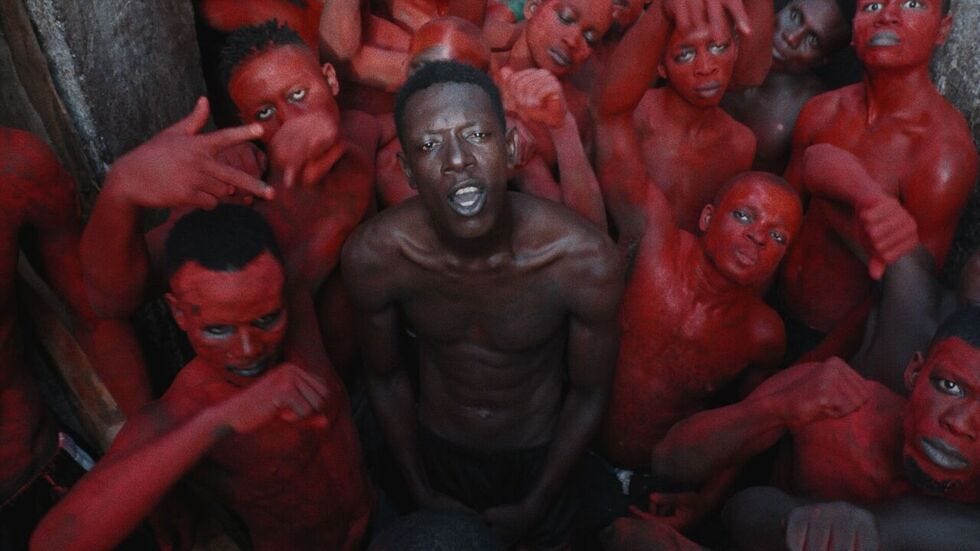
At the 2026 Tribeca Festival, Jail Time Records won Best Documentary Feature. The film profiles the first prison recording studio on the African continent, located inside New Bell Prison in Cameroon, and follows incarcerated artists who use music as expression and therapeutic outlet. [8][9]
The weak frame is “inspiring prison story.” The deeper frame is incarcerated people refusing to let the state become the only narrator of their lives.
That distinction matters. A prison file says offense, sentence, number, risk. A song says memory, grief, desire, humor, anger, mother, God, hunger, dream. One is control. The other is testimony.
Why this matters.
The archive is not only held in museums. Sometimes the archive is a recording booth inside a cage. Sometimes it is a verse written under a ceiling the state controls. Sometimes the human record survives because somebody found rhythm where the system wanted silence.
A cage can hold a body. It cannot automatically own the story.
3. Alicia Keys is turning Hell’s Kitchen into a memory machine
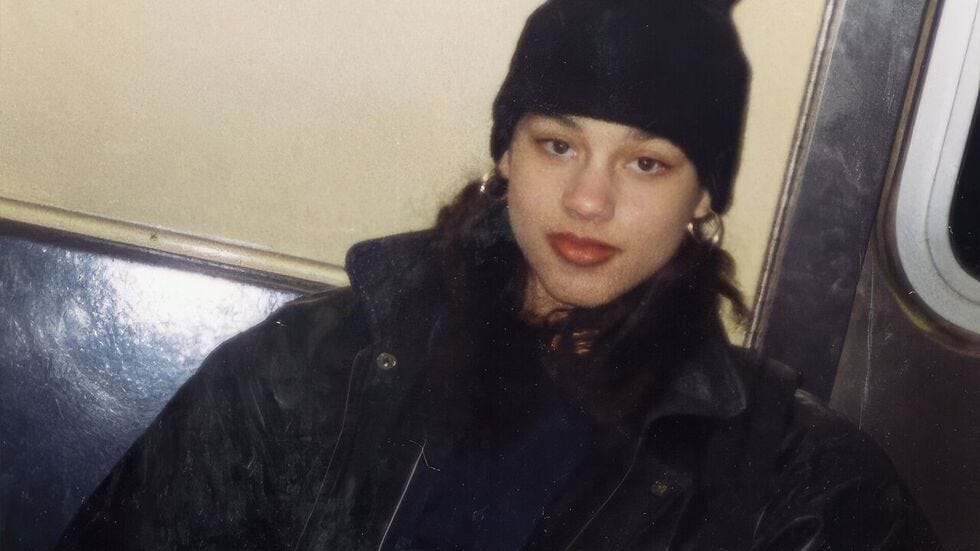
Tribeca’s closing-night documentary, Alicia Keys: Girl From Hell’s Kitchen, follows Keys from her childhood in Manhattan’s Hell’s Kitchen to the creation and production of her Broadway musical. The film includes archival footage, family materials, and a Q&A with Keys and director One9. [10]
The lazy frame is celebrity self-documentary. The deeper frame is a Black woman artist controlling the translation of her own origin story before the market does it for her.
That is not small. The entertainment machine loves the neighborhood when it can sell grit, but it gets nervous when the person who survived the neighborhood also controls the music, the stage, the archive, and the testimony.
Why this matters.
Authorship is not ego. Authorship is protection. When Black women artists hold the frame, they keep the industry from turning pain into texture and calling that depth.
The story belongs to the person who survived it, not the person who found it marketable.
Part III: Arts
1. NMAAHC opened an abstraction show in the middle of a history war
The National Museum of African American History and Culture opened Revelation: A Journey into Abstraction on June 12, exploring African American abstract art from the mid-20th century to the present, with key works from the museum collection and new acquisitions. [11]
The weak frame is “new exhibition.” The deeper frame is Black artists refusing the demand that Black art always explain Black pain in a language institutions find easy to catalog.
Abstraction matters here. It says Black art does not have to report for duty as trauma evidence. It can be form, thought, experiment, refusal, spirit, code, atmosphere, and motion.
Why this matters.
In a political climate obsessed with controlling how Black history gets seen, abstraction becomes its own kind of freedom practice. It does not abandon history. It refuses to let history become a cage.
Black art is not required to testify before it is allowed to exist.
2. NMAAHC’s Reset turned furniture into an argument about the body
NMAAHC’s Reset: Abstraction Embodied in Design features chairs, rugs, and lighting that use abstraction as design practice and as a way to shift bodies, feelings, and points of view. [12]
The lazy frame is “decorative design.” The deeper frame is the room itself is part of the work.
That matters because Black cultural memory is often discussed as if it only lives in speeches, marches, songs, and photographs. But bodies remember rooms. Bodies remember chairs. Bodies remember waiting areas, classrooms, sanctuaries, kitchens, stoops, galleries, and the places where rest was either permitted or denied.
Why this matters.
Design is never neutral. Someone decides who fits, who rests, who waits, who feels welcome, who is watched, and who is made uncomfortable enough to leave.
Access is not only the door. Access is the room after you enter.
3. Manchester’s Nello James Centre proved the archive is what happens after the building closes

The Guardian reported on efforts to preserve the legacy of Manchester’s former Nello James Centre, a Black community space named for Trinidadian writer and activist C.L.R. “Nello” James. The Rekindling Nello James project includes restored archival films, oral history workshops, exhibitions, and a permanent archive. [13]
The weak frame is “heritage project.” The deeper frame is a Black community refusing to let closure become erasure.
The building closed. The memory did not. That is the part institutions keep misunderstanding. A community center can be sold, neglected, repurposed, or forgotten by city planners, but the people who learned there still carry the map.
Why this matters.
Black public memory often survives in fragments because power keeps destroying the container. Oral history becomes infrastructure when the state, the market, or the landlord has already taken the address.
The archive is the battlefield because memory is what the bulldozer cannot finish.
4. Cleveland’s $600 million museum campaign is a reminder that money decides memory
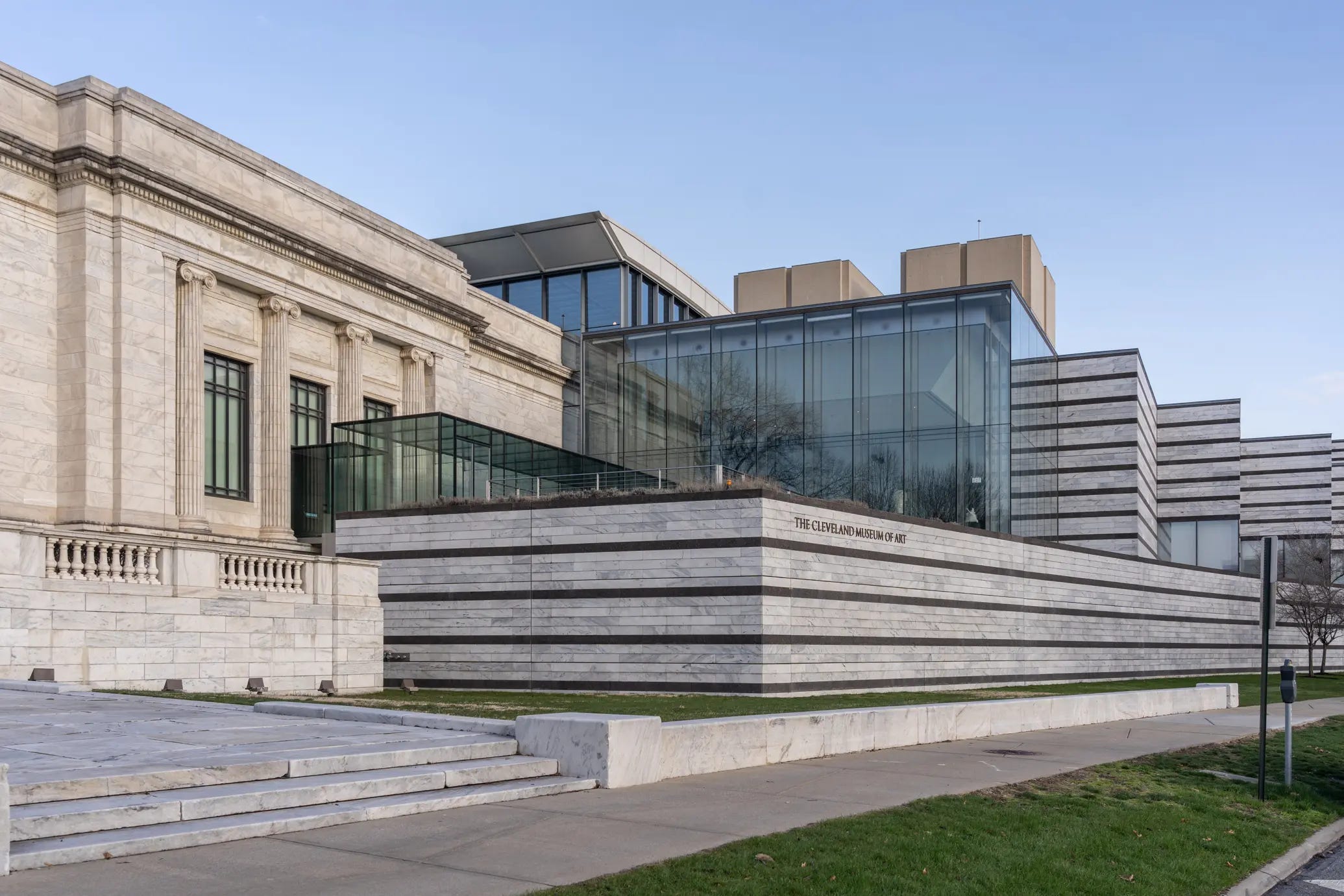
The Cleveland Museum of Art launched a $600 million fundraising campaign, the largest in its history, with hundreds of millions already secured through private donations and pledges for programming, restoration, and the institution’s future. [14]
The shallow frame is “arts philanthropy.” The deeper frame is cultural power raising money to decide what gets preserved, restored, interpreted, and made permanent.
This is not an attack on one museum. It is an audit. Whenever a major institution raises this kind of money, the question is not only how much. The question is whose objects, whose labor, whose absences, whose neighborhoods, whose schoolchildren, and whose cultural memory get included in the future being purchased.
Why this matters.
Museums are not neutral vaults. They are memory banks with boards, donors, acquisition priorities, political pressures, and temperature-controlled rooms. Money does not just keep the lights on. It decides what the light falls on.
A campaign is never just a campaign. It is a map of whose past gets climate control.
Part IV: Sports
1. The World Cup opened with music while families of the disappeared marched outside the frame
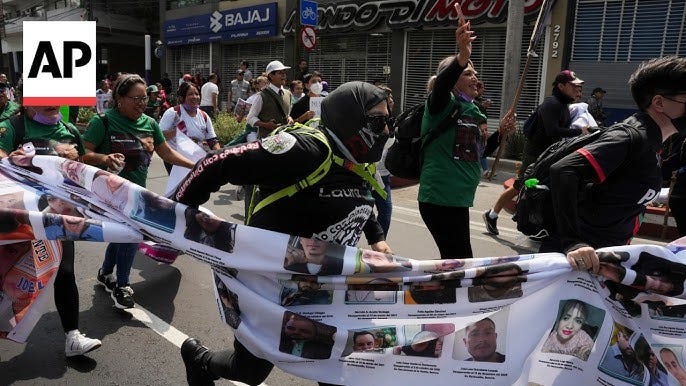
As the World Cup opened in Mexico, Reuters reported that hundreds of families of Mexico’s missing marched in Mexico City to demand attention to nearly 135,000 missing people. At the same time, the opening ceremony featured a global entertainment spectacle with Shakira, Burna Boy, J Balvin, Maná, and others. [15][16]
The weak frame is “sports celebration.” The deeper frame is spectacle trying to outrun grief in a city where grief knows the route.
This is what global sports does best and worst. It can gather the world. It can also make suffering feel like bad lighting outside the stadium.
Why this matters.
Sports are never just sports when the state is hosting, policing, branding, and selling the national image. The families who marched understood the assignment better than half the broadcasters. They used the world’s spotlight to say: look here too.
A tournament can open. So can a wound.
2. Fever-Sky gave the media a rivalry toy, but the box score told a team story
The Indiana Fever beat the Chicago Sky 114-106 in overtime, with the official WNBA recap noting that Caitlin Clark and Aliyah Boston became the first WNBA teammates with 30-point double-doubles. [17]
The lazy frame is individual rivalry. The deeper frame is women’s basketball keeps producing team labor while the content machine keeps begging for a single face to argue over.
Aliyah Boston being part of that milestone matters. Not because every game needs to become a racial seminar with sneakers, but because the public story of women’s basketball keeps getting flattened into marketable conflict. The game itself keeps being richer than the packaging.
Why this matters.
Media literacy in sports means reading past the bait. The box score is often less stupid than the discourse. A league grows when fans learn the systems, the teammates, the screens, the rebounds, the passes, and the Black women whose labor keeps getting turned into somebody else’s narrative.
The sport is bigger than the storyline they keep trying to sell you.
3. Black sports business gathered at Howard because ownership is also a pipeline
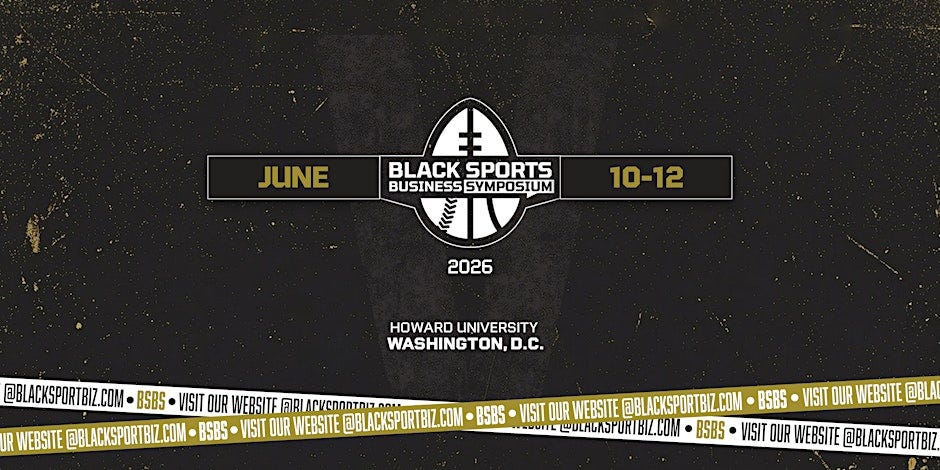
Howard University hosted the 5th Annual Black Sports Business Symposium from June 10 to 12, bringing Black professionals, students, and industry leaders together around talent acquisition, career development, networking, and sports business access. [18]
The weak frame is “conference.” The deeper frame is Black people building the rooms where the deals, jobs, language, and ownership pathways get learned.
That matters beyond the stage. Sports culture loves Black performance. Sports business has not always loved Black control, Black executives, Black agents, Black strategists, Black women decision-makers, or HBCU pathways unless somebody made the room unavoidable.
Why this matters.
The game is not only played on the field or court. It is played in contracts, sponsorships, production rooms, ownership meetings, media rights, NIL strategy, venue operations, and who gets called “executive material.”
Representation on the highlight reel is not the same as power in the room.
Closing
Today they tried to make anti-DEI panic sound like contract language. They tried to make civil-rights retreat sound like intent-based fairness. They tried to make medical surveillance sound like child protection. They tried to make deportation sound like logistics. They tried to make historical censorship sound like patriotism.
But then life broke through.
Earth, Wind & Fire came back as Black spiritual technology. Jail Time Records reminded us that testimony can survive inside a cage. Alicia Keys held her own origin story before the market could soften it. NMAAHC opened abstraction as freedom practice. Manchester’s Nello James community kept memory alive after closure. Black sports business gathered at Howard because access without ownership is just a nicer waiting room.
That is the brief.
The manipulation is real. So is the proof of life.
Keep This Thing Alive
You know what to do.
Restack this before somebody with a better suit and worse instincts turns the same idea into a panel discussion called “America at a Crossroads.” Send it to the friend who keeps saying they hate the news but somehow still wants to know who is lying, who is laundering, and who is walking away with the furniture.
And if this brief did what it was supposed to do, become a paid subscriber here:
That is the grown-up move. That is how this keeps going. That is how one person with a keyboard, a bad attitude, and a suspicious relationship with sleep keeps showing up with receipts.
And today, the ask is not abstract.
The XVOA fundraiser is sitting at $1,145 toward $1,200. That means we are $55 away from closing this thing out.
Fifty-five dollars between this desk and the goal.
So if a paid subscription is not in the cards today, buy the coffee and help finish the fundraiser. Because after all this labor, walking out without leaving at least $5 is between you, your conscience, and whatever little committee in your spirit convinced you this much work runs on compliments.
Let’s close the gap.
That is the brief.
The manipulation is real. So is the proof of life.
Sources
Reuters: States sue Trump administration over anti-DEI terms in federal contracts: Reporting on the multistate lawsuit challenging anti-DEI terms added to federal contracts.
Reuters: US transport agency rescinds “disparate impact” civil rights regulation: Reporting on DOT’s move away from disparate-impact civil-rights enforcement.
Reuters: US judge rejects “unprecedented” bid to block DOJ transgender health subpoenas nationwide: Reporting on the Maryland ruling involving DOJ subpoenas for transgender youth medical records.
Associated Press: A Trump order asked national park visitors to flag “negative” historical info. They had other ideas: Reporting on public comments and altered or removed park signage involving slavery, civil rights, and Native history.
Reuters: US plans to deport Iranians to Central African Republic, sources say: Reporting on planned third-country deportations and the risks facing migrants with protection from return to their home countries.
Axios: HBO’s new Earth, Wind & Fire doc chronicles a musical revolution: Context on Questlove’s HBO documentary and its focus on Maurice White and Earth, Wind & Fire’s musical legacy.
People: How Earth, Wind & Fire’s Maurice White went from a fractured childhood to creating timeless hits: Reporting on the documentary’s treatment of Maurice White, the band’s brotherhood, and the group’s genre-blending mission.
TheWrap: Tribeca 2026: “Cotton Fever,” “Labrador,” “Jail Time Records” take top prizes: Reporting on the 2026 Tribeca Festival award winners.
Tribeca Festival: Jail Time Records: Official festival description of the documentary about the first prison recording studio on the African continent.
Tribeca Festival: Closing Night: Alicia Keys: Girl From Hell’s Kitchen: Official festival description of the Alicia Keys documentary and closing-night presentation.
National Museum of African American History and Culture: Revelation: A Journey into Abstraction: Official exhibition page for NMAAHC’s June 12 opening on African American abstraction.
National Museum of African American History and Culture: Reset: Abstraction Embodied in Design: Official exhibition page on abstract design objects, space, and embodied experience.
The Guardian: “Important for future generations”: behind the fight to resurrect Manchester’s Nello James centre: Reporting on the Rekindling Nello James project, oral history, archives, and Black community memory in Manchester.
Axios Cleveland: Cleveland Museum of Art launches record $600M campaign: Reporting on the museum’s historic fundraising campaign for programming, restoration, and institutional future.
Reuters: Families of Mexico’s disappeared march in the capital as World Cup kicks off: Reporting on families of missing people protesting in Mexico City during the World Cup opening.
The Guardian: Entertaining, even educational: Mexico’s World Cup opening ceremony delivers: Cultural coverage of the opening ceremony featuring Shakira, Burna Boy, J Balvin, Maná, and other performers.
WNBA: Chicago Sky vs Indiana Fever Jun 11, 2026 Game Summary: Official game summary noting the Fever’s overtime win and the Clark-Boston double-double milestone.
Howard University: Black Sports Business Symposium: Event listing for the June 10 to 12 symposium at Howard University.
Some journalists report events. Others spin them. Not enough of the first kind. Too many of the second. Writers, on the other hand, interpret all of it. Thank you for being a writer!
Can't get the Buy me a Coffee link to work