


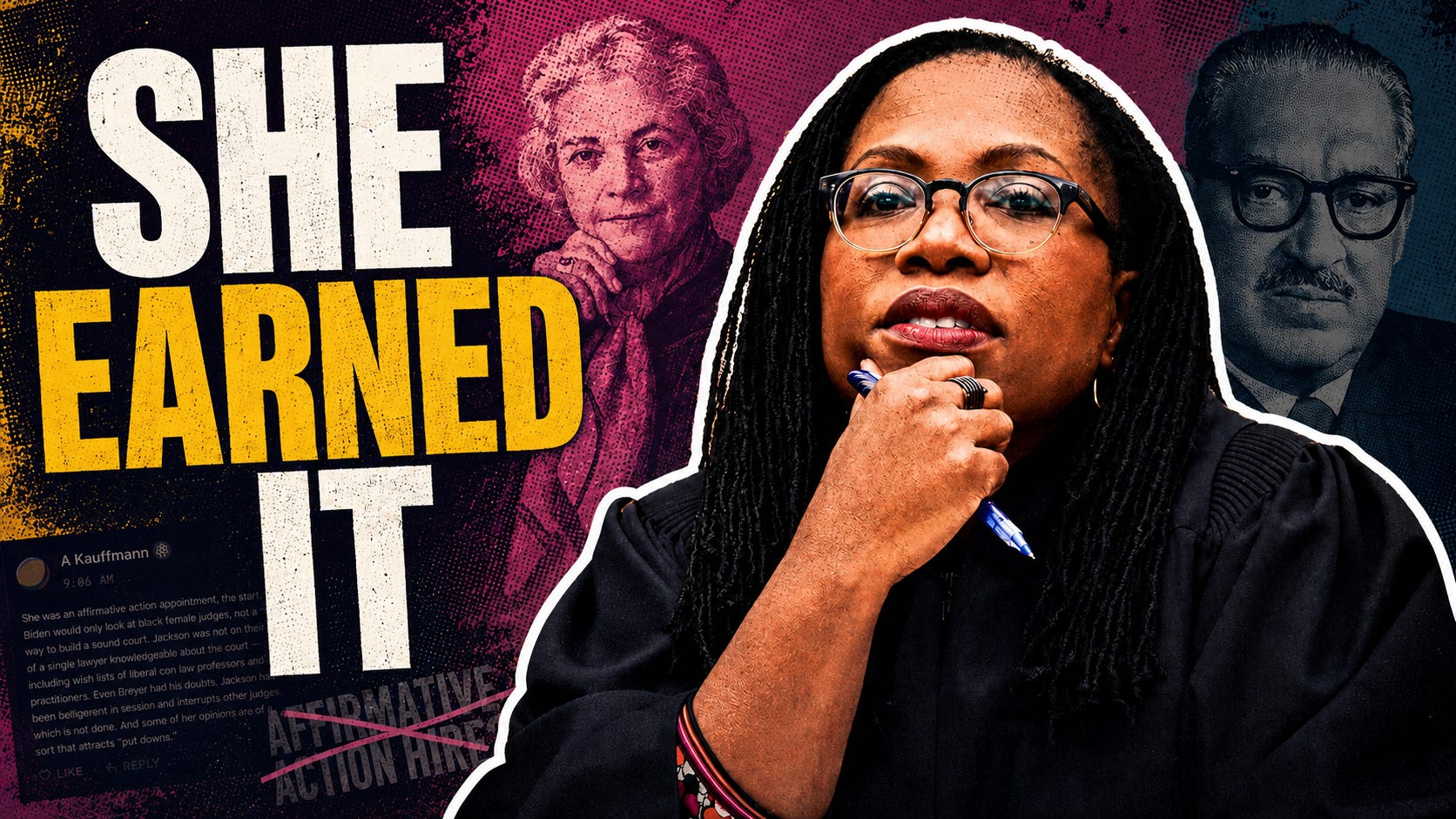

UPDATE: THE FUNDRAISER IS CLOSED
Someone just sent $310 and wrote only two words:
KEEP ON.
That closed the fundraiser.
So let me say this plainly: thank you. Thank you to the person who sent that final $310. Thank you to everyone who restacked, shared, commented, subscribed, donated, and refused to let this work disappear. Thank you to the person who sent $5 on CashApp, the people who sent $10, $25, $50, and more, the people who grabbed the $4 paid discount subscriptions, and the people who kept pushing this publication in front of readers who needed to see it.
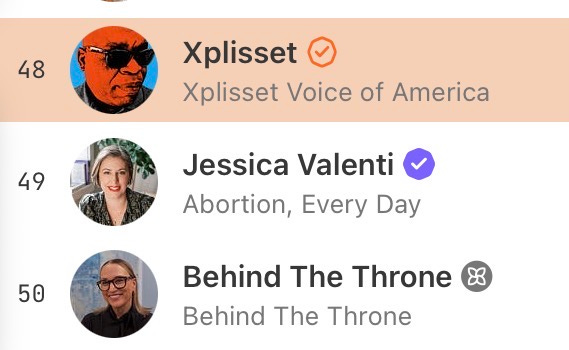
Because of you, this publication was pushed to #38 rising in Substack’s Culture category. Because of you, the fundraiser crossed the finish line. Because of you, this work gets to keep going.
That final message, KEEP ON, is more than a note. It is a command. It is a blessing. It is the clearest instruction I could have received from the people making this work possible.
So damnitt I will.
The strongest way to KEEP ON is to become a paid subscriber today. A paid subscription is what stabilizes the publication beyond this emergency and lets me keep doing this work without having to beg every time the lights flicker.
If you are not ready to commit to a subscription, make a one-time contribution through Buy Me A Coffee: Buy Me A Coffee. Send $5, $10, $25, $50, $100, whatever makes sense for your situation. A one-time contribution still helps this publication to keep the lights on and KEEP ON keeping on.
Now, on with this essay, which may be the most dangerous form of writing I have ever attempted.
Not dangerous because Justice Ketanji Brown Jackson is helpless. She is not.
Not dangerous because one ugly comment on the internet is the same thing as blood in the street. It is not.
But the body remembers what the mind tries to dress up in polite language.
I remember one of the few officer-down incidents I had to respond to. I was far away. Too far away to do anything but move. I remember looking down at my speedometer and seeing 120 miles per hour.
Lights and sirens.
Hands on the wheel.
Mind locked on one thing.
Get there.
This essay does not feel much different.
No, Justice Jackson is not down. No, she has not been shot. No, this is not physical violence. But they are trying to shoot down her legitimacy. They are trying to put down her name, her record, her robe, her authority, and the meaning of what it took for a Black woman to get to that seat.
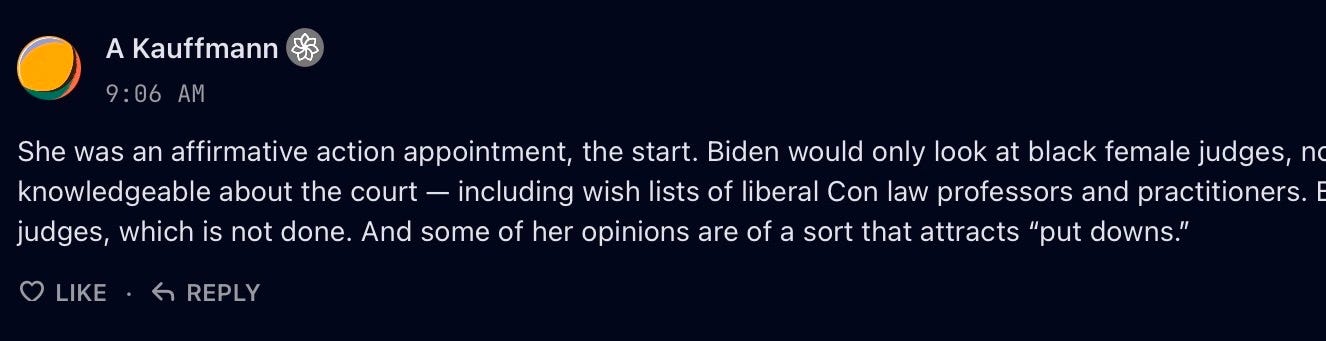
And when you understand what legitimacy means to people who had to fight for every inch of public dignity in this country, you understand why I heard the call.
I am not a lawyer.
I do not pretend to be one.
But I know what an attack sounds like when it comes over the radio.
And this was an attack.
Not just on her.
On all of us.
They are attacking your momma, who was the first woman in her office they had to call boss.
They are attacking your daddy, who was the first man in his family to wear a tie to work instead of a uniform with somebody else’s name on it.
They are attacking your auntie, who was the first one to get that degree while somebody whispered she only got in because somebody lowered the bar.
They are attacking your cousin, who walked into a boardroom, a courtroom, a newsroom, a classroom, a hospital, a pulpit, a squad room, or a corner office and had to be twice as good just to be called almost qualified.
They are attacking your children and grandchildren, who will walk into rooms we prayed them into, only to be told the door was charity.
That is what the affirmative action smear does.
It does not simply insult one Black woman.
It turns every Black first into a fraud.
It takes every family victory, every sacrifice, every night class, every scholarship, every second job, every ancestor who cleaned the building they were never allowed to run, and says: you did not earn this.
That is the lie.
And that is why I am writing this at 120 miles per hour.
Not because Justice Jackson needs saving.
Because the lie needs a witness.
So I did what I have learned to do when the living world gets too cowardly to tell the truth.
I went looking for the dead.
And this time, I brought a screenshot.
The Mice in the Walls
My fingers hesitated over the keyboard. Twice, I walked away. Because using what looks, on the surface, like necromancy to answer one ugly internet comment felt absurd. It felt like using a nuclear weapon to kill two mice in the kitchen.
Then I came back to the keyboard, because I realized the mice were not in the kitchen. They were in the walls. They had chewed through the wiring, and one spark could burn the whole house down.
That is what the affirmative action smear is. It looks small because it arrives in small sentences. A comment. A shrug. A question mark. A little “just saying” dressed up as common sense. It pretends to be reasonable because it does not raise its voice. It does not have to. The lie has been living in the walls of this country for so long that it knows how to move quietly.
Once it gets inside, it starts chewing. It chews through your mother’s promotion. It chews through your father’s degree. It chews through your auntie’s title. It chews through your cousin’s first day in a room nobody expected them to enter. It chews through your child’s scholarship before they even get to enjoy the ceremony.
Then, after it finishes chewing, it leaves the same message behind every time: you did not earn this.
That is why I came back. Not to answer one man. Not to make one comment more important than it deserves to be. I came back because the comment was only the sound at the wall. The thing behind it was older, hungrier, and a lot more dangerous.
So yeah, I went looking for the dead. Not because the living cannot speak, but because this lie has been alive longer than most of us. And sometimes, when a lie is that old, you need witnesses who have already crossed over to tell you exactly where it came from.
I used to sit in my grandmother’s Pentecostal church watching women catch the Holy Ghost and wonder what kind of force could take hold of a body like that; tonight, with Jodeci’s church-born ache humming low in the room, I finally understood, because that same visitation came over me quiet, cool, and dangerous, not through my feet or my shouting mouth, but through my fingertips into the keys.
The Music Made a Door

The music did not make me see another world. Let me be clear about that. This is imagination, don’t get it twisted. But imagination is not nothing. According to the oldest myths we have, this whole world started as something imagined by some deity before it was spoken, sung, breathed, or beaten into shape. I digress, but not really.
Jodeci kept humming low in the room, that church-born ache moving under the floorboards of the song, and something in me shifted. Not fantasy exactly. Not hallucination. More like a door in the mind opening because the music knew where the handle was.
On the other side, there were what I can only describe as houses, though they were not houses in any normal American sense. Not the vinyl-sided, HOA-approved box with a two-car garage sitting in some suburb pretending conformity is peace. These were shapes. Beautiful shapes. Strange shapes. As if somebody had conjured the idea of shelter and architecture all at once, without lumber, permits, mortgages, or a contractor telling you the job would take two weeks and then disappearing for six months.
Sandra’s house sat there simple and impossible. I keep calling it a house because I do not have a better word, but it was more like a thought that had decided to become a structure. Clean lines. Quiet light. No ornament it did not need. Dare I say postmodern, although maybe that was just my living-man brain trying to put a museum label on something the dead had no need to explain. Maybe the afterlife is full of artists who finally got free of gravity, mortgages, zoning boards, and Euclidean geometry. Again, I digress.
I walked up to what appeared to be a door. It was not a door exactly. It was a shape that suggested entrance. So I knocked on it, because apparently even in the afterlife I was not raised by wolves.
Nothing happened at first.
Then a small hole opened where no hole had been. It did not slide open. It did not creak. It simply manifested itself, as if the house had decided that my knocking deserved one eye and nothing more.
Sandra Day O’Connor’s eye appeared through the opening.
This was awkward, to say the least.
“You again?” she said.
“Yes, ma’am.”
“I already told you no.”
“I know.”
“Then why are you standing at my door?”
“Because I brought evidence.”
I lifted the tablet and held it up to the hole. On the screen a comment, glowing there like Exhibit A from the comment section of hell. Her eye moved across the words. At first, nothing changed. Then something did. Not much. Just enough. The pupil steadied. The silence got colder.
“Read the part about affirmative action,” I said.
“I can read,” she said.
“Yes, ma’am.”
She kept looking.
I waited.
That is one thing the living do badly around the dead. We talk too much. The dead have already heard every argument. They do not need your throat-clearing. They do not need your introduction. They need the evidence, and then they need you to shut up long enough for memory to do its work.
Finally, she said, “So that is the game this time.”
“Yes, ma’am.”
“The first Black woman gets called charity.”
“Yes, ma’am.”
“But when Ronald Reagan promised to appoint the first woman to the Supreme Court, that was history.”
I said nothing.
Her eye narrowed.
“That was leadership.”
Still, I said nothing.
“That was vision.”
I waited.
“That was merit discovering the obvious after almost two centuries.”
I almost smiled but did not. You do not interrupt a justice when she is cross-examining the hypocrisy for you.
Then I tried my luck.
“If you help me, we can go get Thurgood. Maybe have coffee. It’ll be like old times.”
For the first time, the eye softened.
Not all the way.
Just enough.
“You always were reckless,” she said.
“Only when I’m right.”
“No,” she said. “Especially when you think you’re right.”
Then the hole widened into something closer to a doorway. Not a real doorway. Nothing in that place was ever that simple. But it was enough for me to understand that the answer had changed from no to maybe.
She stepped into view, calm, spare, elegant, and already irritated that I had made a decent argument.
“I’ll hear you out,” she said. “But if you want Thurgood, you are the one knocking on his door.”
Then she looked at the tablet again.
“And bring that thing with you.”
Sandra did not lead me so much as redirect the world around us. The dead, I was beginning to understand, do not keep addresses the way we do. They keep habits. And Thurgood Marshall’s habit, in this world or any other, was story.
Looking for Thurgood
We went to his house first, or what I assumed was his house, because my living mind still needed doors, walls, and destinations to make sense of a place that clearly had no obligation to obey me. His place looked less like architecture and more like a verdict that had taken physical form. Strong. Plain. Unbothered. The kind of structure that did not ask to be admired because it already knew what it was.
Sandra walked up to the entrance, or whatever counted as an entrance there, and waited.
“Aren’t you going to knock?” I asked.
“He is not home,” she said.
“How do you know?”
She looked at me the way only a Supreme Court justice in the afterlife can look at a man who has already asked too many living-man questions.
“Because he is never home when people are looking for him,” she said. “Thurgood is home when people need him.”
I tried to decide whether that made sense or whether dead people just liked sounding profound. Before I could embarrass myself by asking, she turned and started walking.
“The dead go out?” I asked.
“Only the interesting ones.”
We moved through that impossible neighborhood, past shapes I kept wanting to call houses even though that word felt more inadequate every time I used it. Some looked like poems with roofs. Some looked like arguments made out of light. Some looked like the kind of thing a child would draw if the child remembered heaven better than adults remember tax season.
Then I heard it.
Laughter.
Not polite laughter. Not cocktail-party laughter. Not the tight little laugh people give when they are trying to prove they read the room correctly. This was full-bodied, back-of-the-room, somebody-just-told-the-truth-too-well laughter. It rolled through the air before I ever saw where it came from.
Sandra stopped.
“There,” she said.
Ahead of us sat what I can only describe as a bar, though again, do not get stuck on the furniture. It was a bar the way Sandra’s house was a house. It had mahogany, but the mahogany seemed older than trees. It had brass rails, but they shined like somebody had polished them with memory. It had smoke in the air, but no cigarettes. It had music somewhere in the walls, but no band. The place felt like a juke joint, a law library, an old hotel lounge, a church basement after the serious people left, and a barbershop argument that had somehow been granted eternal life.
The sign above the door kept changing. One second it looked like it said The Last Appeal. Then The Dissent. Then No Objection. Then, for half a second, I swear it said Mind Your Business, which felt personal.
Inside, a crowd had gathered around one man.
Thurgood Marshall was not seated like a statue. He was not waiting under a spotlight with history draped over his shoulders. He was leaning back, talking with his hands, holding the room like the room owed him rent. People were packed around him, laughing, listening, interrupting, getting corrected, getting entertained, getting educated before they realized education had happened.
He was telling a story, and I could tell by the timing that he was near the good part.
“So I told him,” Marshall said, pausing just long enough to let everybody lean in, “if your argument gets any thinner, counselor, we’re going to have to classify it as atmosphere.”
The room exploded.
Sandra tried not to smile and failed.
I looked at her.
She looked at me.
“Do not tell him I laughed,” she said.
“I ain’t see nothing.”
“Good.”
Marshall’s eyes moved through the crowd and found her before he found me. His face lit up, not in some sentimental greeting-card way, but with the pleasure of seeing somebody who knew where the bodies were buried and had helped bury a few bad arguments herself.
“Sandra,” he said, “if you came all the way over here to correct one of my stories, I am going to need a lawyer.”
“You are a lawyer,” she said.
“Not for myself. I know better.”
The crowd laughed again. Then his eyes shifted to me.
The laughter did not stop all at once. It thinned. That was somehow worse. A room full of dead people recognized a living problem when it walked in carrying a tablet.
Marshall looked at Sandra, then back at me.
“Who is this?”
“A reckless man with evidence,” she said.
“That narrows it down less than you think.”
I stepped forward, suddenly aware that I had no idea how to introduce myself to Thurgood Marshall in an afterlife bar. Everything I thought to say sounded either too small or too ridiculous.
“My name is Xplisset,” I said.
Marshall waited.
“I write.”
“That can be a noble thing,” he said. “It can also be a public nuisance.”
“Yes, sir.”
“What kind are you?”
Sandra answered before I could.
“Tonight? Both.”
Marshall’s mouth twitched.
I held up the tablet.
“I brought something I need you to see.”
He did not reach for it at first. That mattered. Thurgood Marshall did not grab at evidence. He let it come into the room and reveal whether it deserved his attention. So I turned the screen toward him, and a comment glowed there between us.
He read it.
The bar changed.
Not physically. The stools stayed where they were. The old mahogany still held its shine. The invisible music still moved somewhere in the walls. But the laughter went quiet in a way that told me silence is not always empty. Sometimes silence is a courtroom rising to its feet.
Marshall read the comment once.
Then again.
Then he looked at Sandra.
“They still using that one?”
Sandra folded her arms.
“They updated the packaging.”
“But not the product.”
“No.”
He looked back at the tablet, and this time his face did not carry anger exactly. It carried recognition. That was worse. Anger would have meant surprise. Recognition meant the lie had been here before, wearing different shoes.
“Affirmative action,” he said, almost softly.
Nobody moved.
“They love that phrase when it gives them permission not to see a résumé.”
I felt my hand tighten around the tablet.
Marshall noticed.
“Careful,” he said. “You break the evidence, you just become another man with feelings.”
“Yes, sir.”
He leaned back and looked me over.
“So what do you want from me?”
“I want you to help me answer it.”
“No,” he said.
The word landed flat.
I blinked.
Sandra did not look surprised.
“No?” I said.
“No,” Marshall said again. “You do not need me to answer one comment. That is beneath everybody in this room, including the furniture.”
A few people murmured in agreement.
“This ain’t about one comment,” I said.
His eyes sharpened.
I had not planned to say it like that, but there it was.
“It’s about the thing behind the comment,” I said. “It is about the lie that turns every Black first into a fraud.” It is about the way they look at Justice Jackson and act like her record vanished the second Biden said Black woman out loud. It is about my mother. My father. Somebody’s daughter. Somebody’s granddaughter. Everybody who walks through a door and then has to prove the door was not charity.
The room stayed quiet.
I kept going because stopping would have been worse.
“I know she is not helpless. I know she does not need me riding in like some fool with a siren. But the lie needs a witness. And I figured if the living keep pretending they do not recognize it, maybe the dead would.”
Marshall looked at me for a long time.
Then he looked at Sandra.
“You brought him here?”
“He brought himself,” she said.
“And you let him?”
“I was curious.”
“That has caused trouble before.”
“Mostly useful trouble.”
He looked back at me, and for the first time I felt the full weight of him. Not the statue. Not the textbook. Not the portrait on the wall during Black History Month. The man. The lawyer. The storyteller. The witness. The one who knew exactly how many polite words this country had invented to avoid saying what it really meant.
Finally, he held out his hand.
“Let me see the damn thing,” he said.
I handed him the tablet.
And every dead soul in that bar leaned in.
The Cross-Examination
The jukebox came on by itself.
No hand touched it. No coin dropped. No dead man crossed the room to make a choice. The machine lit up in the corner, and the first notes of “Your Precious Love” by Marvin Gaye and Tammi Terrell came through the room. The song belonged to that same historical season, with Marvin and Tammi’s United released in August 1967 and “Your Precious Love” becoming the album’s biggest hit. [2]
Marshall still had the tablet in his hand.
He looked at the screen, then toward the jukebox.
“That song,” he said.
Sandra looked at him.
He did not speak for a moment. The room let him have it.
“They played that one all the time that summer,” he said. “On the way to the hearing. On the way back. In cars. In offices. Through open windows. You would be riding through Washington with the country deciding how much of you it could stand, and Marvin and Tammi would come on singing about precious love.”
He set the tablet on the table.
“Funny thing,” he said. “A country can hate you in one room and sing love songs in the next.”
Nobody laughed.
He tapped the screen.
“Now. Let us deal with this.”
I stood there with Sandra beside me. The jukebox played low. Marshall pointed at the comment.
“What is the claim?”
“That Biden promised to appoint a Black woman,” I said. “So her seat is illegitimate.”
“No,” Marshall said. “That is the costume. What is the claim?”
I looked at the screen again.
“That she did not earn it.”
“There it is.”
Sandra stepped closer.
“And what is the trick?” she asked.
I knew they were making me say it.
“The trick is they act like political selection only becomes political when race is named.”
Marshall nodded.
“Good. Now keep going.”
I took a breath.
“Every president narrows the list. Party. Age. Ideology. Region. Confirmability. Donors. Movement pressure. Legacy. Sometimes religion. Sometimes gender. Sometimes race. Sometimes who can hold the seat for thirty years. The process is political before the nominee ever walks into the room.”
Sandra looked at the tablet.
“Ronald Reagan promised to appoint a woman,” she said. “Then he appointed me.”
“And nobody says your whole career vanished the second he said woman,” I said.
“No,” she said. “They called it history.”
Marshall picked up the tablet again.
“But for her, they call it charity.”
The music kept moving under the room.
Marshall leaned back.
“That is because white men spent most of this country’s life as the default setting. Nobody called that affirmative action. Nobody said the bench had been reserved. Nobody looked at all those white male justices and asked if they were diversity hires for whiteness. They called it tradition.”
He passed the tablet to Sandra.
She read the comment again.
“They are not defending merit,” she said. “They are defending the old presumption.”
“What presumption?” I asked.
“That some people arrive as individuals,” she said. “And some people arrive as evidence.”
Marshall looked at me.
“Say that plain.”
I said it plain.
“When a white man gets picked, he is a person. When a Black woman gets picked, she becomes a category.”
Marshall pointed at me.
“That is the lie.”
The jukebox hummed. Marvin and Tammi sounded young forever. That made the room feel old.
Marshall turned the tablet toward me.
“If naming race makes her unqualified, then they have a problem.”
“Clarence Thomas,” I said.
Sandra’s face did not move.
Marshall’s did.
“Careful,” he said.
“I know.”
“No, make sure you know.”
“I’m not saying he was unqualified because he was Black. I’m saying the people who use race-conscious selection to smear Justice Jackson do not use the same rule when the Black justice is useful to them.”
Marshall sat still.
“That is better.”
Sandra handed the tablet back to him.
“The standard moves,” she said.
“Yes,” Marshall said. “It always has.”
Then he looked at me.
“What else?”
“Earl Warren had no prior judicial experience when he became Chief Justice. He was a politician. A governor. A party man. History still found room to call him great. Bork had credentials and still got rejected because nominations are never just résumés. Brandeis faced a storm because he was the first Jewish justice and people dressed old prejudice in respectable language.”
Marshall nodded once.
“But we save the receipts for later,” he said. “Right now we need the rule.”
He leaned forward.
“The rule is this. A president can choose a nominee for many reasons. That has always been true. The question is not whether politics entered the room. Politics built the room.”
Sandra looked at me.
“The question is whether the person chosen can do the work.”
“And she can,” I said.
“Not can,” Marshall said.
I corrected myself.
“She has.”
He let that sit.
“She clerked. She served. She judged. She sentenced. She defended. She studied the law from more than one side of power. Her record did not disappear because Biden said Black woman out loud.”
Marshall put the tablet down.
“There it is.”
The jukebox clicked. The song kept playing.
Then he said, “They are not afraid she is unqualified. They are afraid qualification did not keep her out.”
Sandra looked at him.
“That is the part they cannot forgive.”
“No,” Marshall said. “Because if she earned it, then the story changes. If she earned it, then the old absence becomes evidence. If she earned it, then people have to ask why a woman like her was not there before.”
I felt that one land.
Marshall saw it.
“That is why they use the smear,” he said. “It protects the past. It tells the country there was no exclusion. No theft. No locked door. Just standards.” Then one day, the standards got lowered, and she walked in.
Sandra’s voice was quiet.
“But the door was locked long before she arrived.”
Marshall smiled without joy.
“And now they call the key a handout.”
The room stayed still.
I looked at the tablet. The comment looked smaller now. Not harmless. Smaller.
Marshall pushed it back across the table.
“Do not make him the center,” he said.
“The commenter. The man. Any one man. Whoever he may be.. He is not the case. He is the witness stand.”
I nodded.
“The lie is the case.”
“Yes.”
Sandra looked toward the jukebox.
“And she is not on trial.”
“No,” Marshall said. “That is the last trap. Do not let them put her on trial in your own essay.”
I looked at both of them.
“Then who is on trial?”
Marshall picked up his glass. I do not know what was in it. Maybe coffee. Maybe memory. Maybe something the dead drink when the living finally ask a decent question.
“The smear,” he said.
Sandra nodded.
“The double standard,” she said.
Marshall looked back at the tablet.
“And the country that keeps pretending it does not recognize either one.”
The Historical Receipts
Marshall pushed the tablet back across the table.
“Receipts,” he said.
Sandra looked at me.
“Not vibes,” she said. “Receipts.”
So we started with the room itself. The Supreme Court appointment process has never been some clean glass case where pure merit floats untouched by politics. The Constitution gives the president the power to nominate and the Senate the power to confirm. The Congressional Constitution Annotated says political considerations, judicial philosophy, fitness, past statements, and the balance of power between factions have always been part of the process. In plain English: politics did not sneak into Supreme Court nominations through the servants’ entrance when Biden said Black woman. Politics built the house. [4]
Sandra sat down first.
“Ronald Reagan promised to appoint a woman,” she said. “Then he appointed me.”
Nobody moved.
“That did not erase my record. It did not make my robe a handout. It did not turn every opinion I wrote into a charity receipt. They called it history.”
She was right. Reagan’s nomination of Sandra Day O’Connor fulfilled his campaign promise to appoint the first woman to the Supreme Court, and the Senate confirmed her 99-0. The point is not that O’Connor was unqualified. The point is that naming womanhood did not make her qualifications disappear. It became part of the story America wanted to tell about itself. [1]
Marshall tapped the table.
“Now Clarence.”
I hesitated.
“Careful,” he said again.
“I am,” I said. “I’m not calling Clarence Thomas unqualified. I’m not saying his seat was charity. I’m saying if race-conscious symbolism makes a justice illegitimate, then the people using that argument against Justice Jackson have to explain why they do not use it the same way against him.”
Marshall looked at me and waited.
“George H.W. Bush appointed Thomas to replace you. Thomas became the second Black justice after the first Black justice left the Court. Everybody with eyes understood the symbolism. But the people who call Jackson an affirmative action hire do not spend their days calling Clarence Thomas one, because Thomas is useful to their politics.” [5]
Sandra nodded.
“So the standard moves.”
“Yes,” I said. “And if the standard moves, it ain’t a standard. It is a weapon.”
Marshall leaned back.
“Keep going.”
So we went to Earl Warren. Warren was a politician, a prosecutor, a state attorney general, and governor of California before Eisenhower made him Chief Justice through a recess appointment. He had not climbed the usual modern judicial ladder. Yet history still had room to call him consequential. If a Black woman governor with no prior judicial service were made Chief Justice today, the same people would burn the studio down screaming about standards. [6]
Then came Bork. Robert Bork had credentials. Yale professor. Solicitor General. Federal appeals judge. Originalist intellectual heavyweight. And the Senate still rejected him in one of the most controversial Supreme Court nomination fights in modern history. Why? Because Supreme Court nominations are never just résumés. They are fights over power, rights, ideology, and the future the country is trying to force into law. [7]
Sandra’s face changed when I got to Brandeis.
Louis Brandeis was the first Jewish nominee to the Supreme Court. His confirmation fight was furious. Opponents dressed old prejudice in respectable clothes, calling him a dangerous radical and questioning his judgment. Some of the antisemitism was veiled, some of it was not. The language changes. The trick does not. First they say the outsider is dangerous. Then they say the outsider lacks temperament. Then they say the outsider may be brilliant, but not in the right way. [8]
Marshall looked at the tablet again.
“And Jackson?”
“That is the part they have to erase,” I said.
Justice Jackson served as a federal district judge, a D.C. Circuit judge, an assistant federal public defender, vice chair of the U.S. Sentencing Commission, and clerk to Justice Stephen Breyer. She graduated from Harvard and Harvard Law. The American Bar Association gave her a unanimous “Well Qualified” rating. Her record did not vanish because Biden said Black woman out loud. [9] [10]
The jukebox clicked again, but the song kept playing.
Sandra read the comment one more time.
“So the lie needs the record to disappear,” she said.
“Yes.”
“And once the record disappears,” Marshall said, “all they have to see is race.”
“That is the whole operation,” I said. “Make her résumé invisible. Make her Blackness enormous. Then call the thing they enlarged the problem.”
Marshall smiled without joy.
“There it is.”
The tablet sat in the middle of the table. The comment was still there, but it did not look like an argument anymore. It looked like evidence.
Sandra looked at me.
“Do not overcomplicate this.”
“I won’t.”
“Good,” she said. “Because the common sense is enough.”
Marshall picked up the tablet and turned it so the whole room could see.
“When white men were chosen by politics, they called it governance,” he said. “When Sandra was chosen after a promise, they called it progress. When Warren came from politics, they called it leadership. When Bork got rejected, they called it a constitutional battle. When Brandeis was attacked, they called prejudice temperament. But when Ketanji Brown Jackson arrives with the résumé in her hand, suddenly politics becomes contamination.”
He set the tablet down.
“That is not an argument,” he said.
Sandra folded her hands.
“That is a confession.”
Back to Justice Jackson
Sandra looked at me for a long time.
“Now comes the part where writers usually make the mistake,” she said.
“What mistake?”
“They turn the person into a symbol until the person disappears.”
Marshall nodded.
“That is another way to lose the case.”
I looked down at the tablet. The comment was still there, but Justice Jackson was not. That was part of the crime. The smear had made her vanish. Her work vanished. Her voice vanished. Her years vanished. Her name became an argument other people were having over her head.
I did not want to do that too.
Justice Ketanji Brown Jackson is not a helpless woman in need of rescue. She is not a child standing outside the schoolhouse door waiting for somebody to walk her in. She is not a diversity brochure with a robe on. She is not a symbol first and a person second. She is a justice of the Supreme Court of the United States.
She earned the seat.
That sentence does not need flowers around it.
She earned it.
She clerked. She defended. She judged. She sentenced. She studied power from more than one side of the table. She sat with people the legal system had already named guilty, poor, disposable, or dangerous, and she still had to carry the law like it belonged to them too. That does not make her soft. That makes her dangerous to people who prefer law without memory and order without mercy.
The smear needs her to be small. It needs her résumé to shrink until all that remains is Black woman. Then it points at the thing it isolated and says, see, that is why she is here.
That is the trick.
Make the record disappear. Make the race enormous. Then accuse the race of taking up too much room.
Marshall stared at the tablet.
“They do not want to argue with her qualifications,” he said. “They want to argue with her existence.”
Sandra folded her arms.
“And they want to make everyone else argue as if she is the defendant.”
That was the trap. The moment you accept the smear’s frame, Justice Jackson is on trial. Not the lie. Not the double standard. Not two centuries of exclusion. Her. Her body. Her seat. Her voice. Her tone. Her questions. Her confidence. Her face in the room.
No.
She is not on trial here.
The smear is.
The country is.
The old presumption is.
The old panic is.
The old habit of treating Black achievement like a clerical error is.
Justice Jackson does not need worship. She does not need pity. She does not need us to make her into marble while she is still alive and working. She needs the lie named before it crawls back into the walls and teaches another child to doubt their own reflection.
Because that is what this is really about. Not one justice. Not one comment. Not one man with a keyboard and a grudge. This is about the ritual America performs whenever somebody it tried to exclude arrives anyway.
First, they act surprised.
Then they ask who let you in.
Then they search your record for a crack.
Then, if they cannot find one big enough, they say the door was opened for you.
And if you say you earned it, they call that attitude.
If you defend yourself, they call that anger.
If you ask questions, they call that belligerence.
If you know the room belongs to you too, they call that arrogance.
Marshall leaned back.
“There it is,” he said.
Sandra looked at me.
“Write that.”
So I am.
They are not lying on Justice Jackson because she failed.
They are lying on her because she did not.
She arrived with the record. She arrived with the credentials. She arrived with the votes. She arrived with the robe. She arrived with the history of every Black woman who had been told to wait, soften, smile, shrink, prove, explain, and be grateful for rooms built from labor they were never allowed to lead.
And now that she is there, the lie has to work overtime.
Because if she earned it, then the question changes.
It is no longer, why is she here?
It becomes, what kind of country kept women like her out for so long?
That is the question the smear exists to kill.
That is why they call her charity.
That is why they pretend politics only touched the process when Black womanhood was spoken out loud.
That is why they treat her presence as evidence of lowered standards instead of evidence that the old standards were never neutral.
Sandra turned toward the door.
Marshall kept looking at the tablet.
The jukebox had gone quiet, but the song was still somewhere in the room.
Finally, Marshall said, “Do not defend her like she is weak.”
“I won’t.”
“Defend the truth like it is under attack.”
I looked at Justice Jackson’s name on the screen.
It was not glowing anymore like a wound.
It looked like what it was.
A record.
A seat.
A fact.
A woman who earned it.
The Lie Needs a Witness
Marshall handed the tablet back to me like he was finished with the evidence but not finished with the case. Sandra stood beside him, arms folded, looking at me with that calm, judicial patience that somehow feels worse than anger.
“Now go home,” she said.
That was it. No thunder. No choir. No marble staircase opening into the clouds. Just two dead justices, one living fool with a tablet, and a lie that had gotten smaller only because we had finally named it.
I looked back at the screen one more time. The comment was still there. Same words. Same accusation. Same little costume party of concern and contempt. But it did not have the same power now, because I could see the trick. They were not defending merit. Please. If merit were really the issue, they would have had a panic attack every time a mediocre white man got promoted because he knew the right people, went to the right school, smiled at the right dinner, or looked like the kind of man the room had already decided was leadership.
They do not hate affirmative action. They hate affirmative action they cannot personally benefit from.
They do not hate politics in appointments. The Supreme Court has always been political. That bench was not lowered from heaven by angels wearing powdered wigs. Presidents pick. Senators fight. Movements pressure. Donors whisper. Parties calculate. Ideologues line up like they are waiting outside a sneaker release. But let a Black woman walk in with the résumé, the robe, the record, and the nerve to know she belongs there, and suddenly everybody wants to pretend the Court was a monastery before she showed up.
Stop it.
They are lying on her because telling the truth would require them to admit something larger. If Justice Jackson earned it, then Black women were not missing from that Court because merit could not find them. They were missing because the country refused to look. They were missing because the old gatekeepers called exclusion tradition, called tradition standards, then called standards neutral while the same kind of people kept walking through the same doors generation after generation.
That is why the smear matters. It does not just say one woman did not earn her seat. It tells your mother she did not earn the promotion. It tells your father he did not earn the degree. It tells your daughter the scholarship was pity. It tells your grandson the room got easier instead of admitting the room had been rigged before he got there.
That is the lie in the walls.
That is the mouse chewing through the wires.
That is why I heard the call.
No, Justice Jackson is not down. She is sitting on the Supreme Court of the United States, asking questions they wish she would not ask, bringing memory into rooms that prefer procedure without history, and reminding this country that intelligence does not have to arrive in the old packaging to be real.
But an attack does not have to put you on the ground to be an attack. Sometimes the goal is to put your name on the ground. Put your record on the ground. Put your legitimacy on the ground. Put your ancestors’ work on the ground, then ask everybody to step over it politely in the name of “standards.”
No.
Not this time.
I started this essay feeling like I was back in that car, far away from the scene, looking down at the speedometer and seeing 120 miles per hour. I knew this was dangerous writing. I knew the metaphor could get away from me. I knew the siren could become louder than the truth.
But now I understand what the call really was.
It was not a call to save Justice Jackson.
It was a call to get to the lie before the lie got comfortable.
So here is the report from the scene: Justice Jackson is not the emergency. Her résumé is intact. Her robe is intact. Her seat is intact. Her earned place in history is intact.
The emergency is the country that still sees a Black woman’s achievement and reaches for fraud before it reaches for respect.
They are lying on her. Again.
And when they lie on her, they are practicing for everybody else.
So defend her. Not like she is weak. Defend her like the truth is under attack.
Because it is.
And because she earned it.
Support This Work
That is the work I am asking you to support. Not vibes. Not noise. Not another little opinion tossed into the algorithm and left to rot. This is independent Black cultural journalism moving at 120 miles per hour toward the lie before the lie gets comfortable.
If this essay made you feel the cost of what they are doing to Justice Jackson, understand this too: the same machine that tries to make her achievement look like charity is perfectly happy to let work like this disappear because nobody funded it in time.
So here is the ask, plain and direct: become a paid subscriber today. That is the strongest way to keep this work keeping on.
If a paid subscription is not possible right now, you can still help with a one-time contribution through
Send $5, $10, $25, $50, $100, whatever makes sense for your situation.
And if money is tight, restack this so it reaches somebody who can help. Every dollar helps. Every coffee helps. Every restack helps. Every person who refuses to let this work disappear helps.
They are lying on her. Again.
I am telling the truth about it.
Now help me keep telling it.
Sources
[1] National Archives, “President Ronald Reagan’s Nomination of Sandra Day O’Connor to be Associate Justice of the Supreme Court of the United States, August 19, 1981.” https://www.archives.gov/legislative/features/oconnor.html
[2] Classic Motown, “Marvin Gaye & Tammi Terrell: United.” https://classic.motown.com/story/marvin-gaye-tammi-terrell-united/
[3] Associated Press, “Today in History: October 2, Marshall joins Supreme Court.” https://apnews.com/article/cd057e99dec46ce10adbd595868483b6
[4] Constitution Annotated, “Appointments of Justices to the Supreme Court.” https://constitution.congress.gov/browse/essay/artII-S2-C2-3-5/ALDE_00013096/%5B%27school%27%5D
[5] Federal Judicial Center, “Thomas, Clarence.” https://www.fjc.gov/history/judges/thomas-clarence
[6] Federal Judicial Center, “Warren, Earl.” https://www.fjc.gov/history/judges/warren-earl
[7] National Constitution Center, “On This Day: Senate rejects Robert Bork for the Supreme Court.” https://constitutioncenter.org/blog/on-this-day-senate-rejects-robert-bork-for-the-supreme-court
[8] JSTOR Daily, “The Confirmation of Louis D. Brandeis.” https://daily.jstor.org/confirmation-louis-brandeis/
[9] Federal Judicial Center, “Jackson, Ketanji Brown.” https://www.fjc.gov/history/judges/jackson-ketanji-brown
[10] American Bar Association, “ABA Standing Committee on the Federal Judiciary rates Judge Ketanji Brown Jackson ‘Well Qualified.’” https://www.americanbar.org/news/abanews/aba-news-archives/2022/03/aba-committee-rates-judge-ketanji-brown-jackson-well-qualified/
Xplissett:
That comment you highlighted by A. Kauffmann--that person is a TROLL.
I discovered you on the HCR Letter from an American Substack. I can't get through all the comments each day, but I do recognize a number of names, some of which I seek out. I like to welcome new names, as HCR is very popular and well read, and every person who could read for free but chooses to pay helps grow the community.
And that is scaring the RIGHT. On a podcast from a few weeks back, during the live FB feed, someone must have been reading comments and said "why are there so many trolls here today."
I do not have a FB account, and thus watched the tape on YouTube. Heather immediately responded that she ignores trolls, and that the fact they are popping up indicates they are either bots or paid, and again, they are SCARED.
I don't ignore trolls. Just like fascism, I think they need to be called out and have a light shown on them. HCR has a very long standing troll which I blocked. There was one a few weeks back which was HILARIOUS in it's attempt to insult readers and gin up outrage. I called that one out several days in a roll and it disappeared.
Then Kauffmann showed up. This troll attempts to sound intelligent and drops MAGA "facts" on us. I called it out, and got a pretty funny response: it listed all it's important credentials to me!!! LOL
I'm asking everyone to engage with trolls ONCE. It's best to NOT FEED them, but I make the exception to ONE TIME tell them they aren't fooling you. Then, ignore their responses.
I am not at all surprised that this one is going after you as well.
Thank you again for a brilliant analysis, Xplissett: "If merit were really the issue, they would have had a panic attack every time a mediocre white man got promoted because he knew the right people, went to the right school, smiled at the right dinner, or looked like the kind of man the room had already decided was leadership. They do not hate affirmative action. They hate affirmative action they cannot personally benefit from."
And so I am making another donation to help your substack thrive, because your voice is so important ... to all of us.