


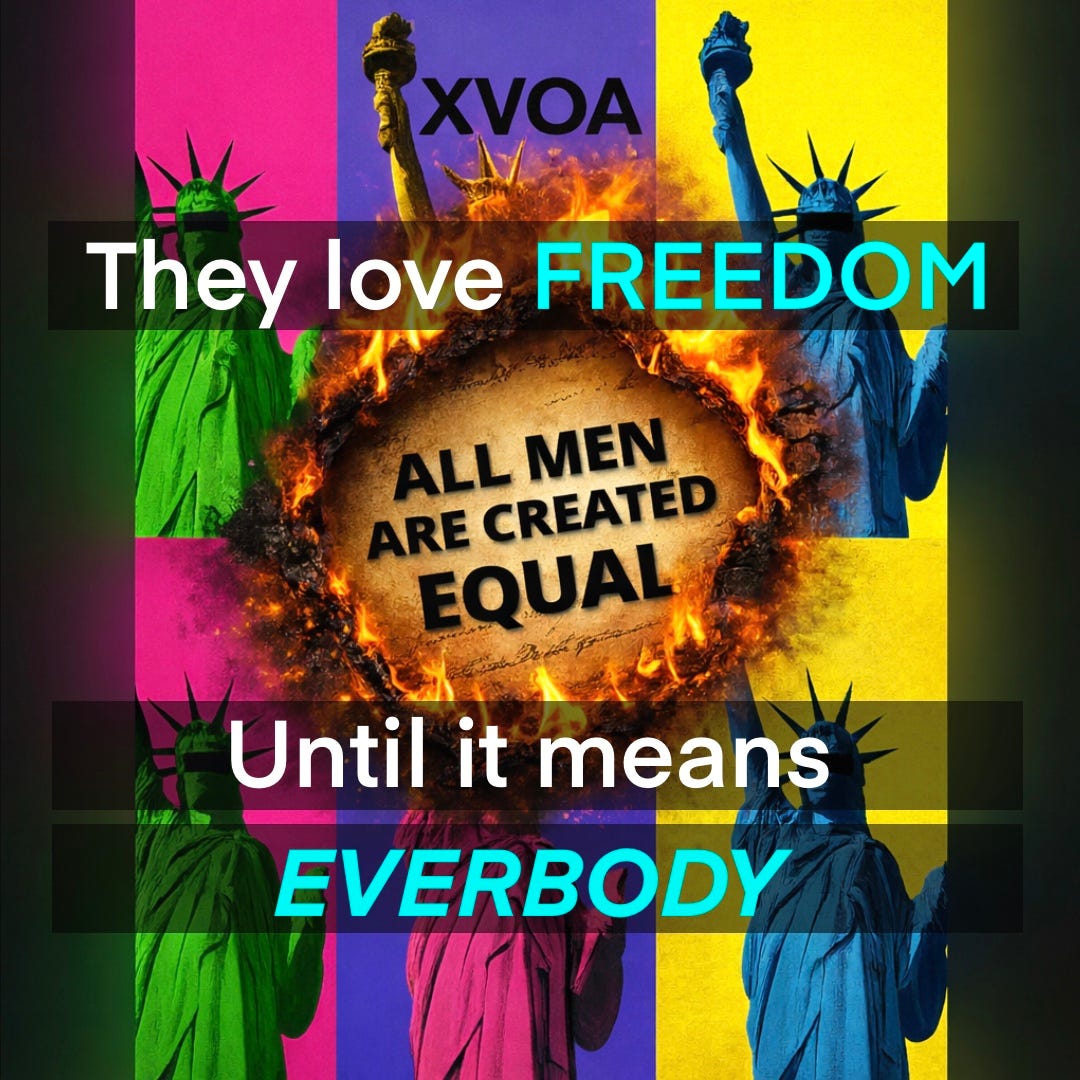
I’m in hell. We’re all in hell.
I hear the voices of our forefathers. I’m usually up at 3:00 am. I’m not always writing at 3:00 am. I’m listening. I’m walking back and forth. I’m drinking Mountain Dew for the caffeine.
And let me not let it go without saying: this is a luxury. I’m free of the worries of having to satisfy an employer at the break of dawn, thanks largely in part to you. That last fundraiser campaign astonished me, not just because the goal was reached, but because of the speed. It reminded me there are still people out there who want the truth more than they want comfort.
Even so, the response to the last several essays and posts has been downright depressing. “I’m Still Standing. The Algorithm Just Cut Me Off” was a lone exception. The last one in particular took a whole day of research and almost two days of editing, and it failed spectacularly.
In hindsight, it makes a grim kind of sense. Who wants to sign up for a writer who keeps pointing at the platform and saying out loud what everybody quietly suspects: it has a reward system, and it has a basement. Some people get sunlight. Some people get stored like a crazy uncle nobody mentions until Thanksgiving.
I said the quiet part because I’m trying to tell the truth. And the truth is hell. The truth will get you in trouble. The truth is rarely profitable.
That’s the irony that keeps gnawing at me. A lot of us fled mainstream media because of its lies. Some were lies by silence: glaring issues that demanded attention, met with a shrug and a segment change. Others were outright deception, the kind of performance you could watch on a show like Morning Joe and feel your own nervous system tighten because you knew you were being managed, not informed.
So here it is. I’m a retired Black cop with a keyboard, trying to do what mainstream media gave up on decades ago. And I’m starting to see what they saw, and why they surrendered.
Those who embrace lies get heaven on earth. Those who cling to truth get hell on earth.
TLDR
• This is a hell/heaven story: truth brings heat, isolation, and consequences. Lies bring applause, comfort, and proximity to power. [1]
• The SOTU showed it in real time: Tim Scott performed loyalty and got treated like air, while Al Green, Ilhan Omar, and Rashida Tlaib spoke up and got shouted down. [2]
• America’s “truth in hell” line runs straight through Douglass, Lincoln, Jim Crow, Black GIs in WWII, Dr. Martin Luther King Jr., and today’s progressive movement. Same pattern, different costumes. [3]
• The right’s mission is “Make America America Again.” My mission is to make America America again by making “equal” mean something again. [4]
• If you can feel the difference between a republic and a kingdom in your bones, you already know which side is telling the truth. [5]
If this moved you in any kind of way, do two things: restack it and share it.
Send it to one friend who keeps saying “it’s just politics” as if incentives don’t change outcomes.
If you’ve been on the fence, hop it. A paid subscription is how you keep this indie outlet alive and keep this kind of reporting coming. Join here:
Hell, Heaven, and the Price of Truth
So here’s what I mean about imagination, and why it is not some airy “power of positive thinking” thing.
When a genius like Einstein uses imagination grounded in reality, you get a version of reality that is more demonstrable, and more “real,” than the reality we swear we are seeing with our own eyes. Because what most of us call “reality” is often just the surface feeling of things. It is the way it seems from where we are standing. Einstein’s gift was that he did not confuse “how it feels” with “how it is.” He used imagination like a flashlight. Not to invent a fantasy, but to expose the hidden structure underneath the familiar world.
Take gravity. Most people think gravity is a force that reaches out and pulls you down. Einstein said, hold on. Let me run a simple mental test. Imagine you are inside a sealed elevator. If that elevator is sitting still on Earth, you feel weight. Now imagine the elevator is out in space, far from planets, but it is accelerating upward. You would feel that same weight. Your body could not tell the difference. Same sensation, two different situations. That is his point: the feeling you trust is not proof of the cause you assume. What you call “gravity” might be the experience of acceleration. Or more precisely, your body is reading the world in a way that can be fooled. The illusion is not that you fall. The illusion is that you think you know why you fall.
Then he does it again with time. He asks you to imagine two people and a clock. One stays put. The other moves extremely fast, like on a ship or a train that keeps speeding up until it is near the speed of light. Common sense says time is time. One minute is one minute for everybody. Einstein says, run the experiment. If the laws of physics hold, then time cannot behave the way your gut says it behaves. Motion changes the pace of time. It is not mystical. It is measurable. But you had to be willing to imagine a situation outside ordinary life to see what ordinary life was hiding from you.
That is the whole point of a thought experiment. You create a clean situation in your mind, using rules you already trust, and then you watch what those rules force you to admit. It is a way to test your assumptions before the world tests them for you. It is how you move from “this is what it looks like” to “this is what must be true if the evidence is true.”
And that is why I said imagination grounded in reality is closer to reality than reality alone. Reality alone is what people use when they want to stay comfortable. It is the surface story. It is the vibe. Grounded imagination is what you use when you are trying to find the mechanism, the motive, the pattern that does not announce itself. That is what I’m doing in this essay. I’m going to run a thought experiment on America, using the evidence we already have, and we are going to see what that evidence forces us to admit, even if it burns.
I hear the voices of our forefathers.
And I can already hear some of y’all in my head going: “Forefathers. Really. These white men. The ones who would have enslaved you. Those are YOUR forefathers?” I get it. But I’m not playing cute with the word. I’m telling you something simple: you do not get to choose your father, and you sure as hell do not get to choose your forefathers. You can spend all day doing the family-tree Olympics, sorting which one was a saint and which one was a monster. Meanwhile, the whole damn house is on fire.
So let me set the boundary right here. I’m not interested in semantic games that end in paralysis. “All men are created equal” is a sentence that either means something or it means nothing. And the only people who have a problem with that sentence are the kind of people I would never invite to the barbecue, much less claim as kin. Follow me. Stay with me.
Because those men were not writing from heaven. They were writing from a kind of hell.
Their truth was not safe. Their truth was not popular. Their truth was not guaranteed to win. The King was a tyrant, or at least that is how he felt to them when Parliament and crown could reach across an ocean and squeeze the life out of a colony whenever it got convenient. Europe was a blood-soaked mess of warring empires and rival crowns, where borders moved the way street corners move in a gang war, and the common people paid the price.
And here’s the part that still shocks me when I slow down long enough to really look at it. Some of them were open-minded enough to admit, at minimum, that indigenous people had forms of government worth studying. Not because they suddenly saw indigenous tribes as equals. They did not. But because reality was loud, and pride was less useful than survival.
There is a long argument about how much direct influence the Haudenosaunee Confederacy had on the Constitution, and people fight about it like it’s a sporting event. What matters for what I’m saying is simpler which is that there were colonial leaders who clearly admired Indigenous political ideas about union and governance, and they talked about it out loud. That alone tells you they were not simply copy-pasting “Western heritage” and calling it destiny. (blogs.loc.gov) [7])
Now let’s deal with the Christian nationalism piece, because it matters for where we’re going.
These were not a bunch of right-wing Christian nationalists trying to build a holy kingdom with a flag on it. Many of the key minds behind the founding were shaped by Enlightenment “reason-first” religion, including deism, or at least a strong suspicion of churches having political power. Deism, plain English, is God as Creator, not God as Party Boss. It’s the belief that faith is a matter of conscience and reason, not coercion and law. (britannica.com) [8])
And they were not subtle about their fear of theocracy. Madison, for example, argued that religion cannot be directed by “force or violence,” and he fought political efforts to tax people to support Christian teaching. That’s not Christian nationalism. That’s the opposite of it. (constitutioncenter.org) [9])
Even the Puritan legacy, that whole “city on a hill” mythology people like to weaponize today, came with a dark reputation for religious intolerance that later leaders looked back on with alarm, not nostalgia. Jefferson, for instance, wrote explicitly about New England religious intolerance as a cautionary tale, not a model. (loc.gov) [10])
So when I say I hear the voices of our forefathers, I’m not saying they were angels. I’m saying they were men facing hard truths about tyranny, chaos, and the way religious power can turn cruel when it gets a government badge. They were trying to build something that could survive that kind of world.
And that is where the hell comes back in.
Because truth like that, truth that threatens crowns and priesthoods and inherited power, does not usually get rewarded with peace. It gets rewarded with backlash. It gets rewarded with accusations. It gets rewarded with people calling you dangerous for naming what is right in front of everybody’s face.
Then they wrote the Declaration of Independence, and they put a sentence in it that still sets people on fire: “All men are created equal.” Not “some men.” Not “men who look like us.” Not “men who agree with us.” Equal. In 1776, that was a moral grenade tossed into a world that ran on bloodline, crowns, and inherited rank. Whatever their hypocrisies, that sentence was still more progressive than the vibe we just heard dressed up in patriotism at the State of the Union, where equality gets treated like a scam and hierarchy gets marketed like common sense.
And unlike the billionaires of today who hide behind lobbyists, NDAs, and a PR team, those men put skin in the game. They were not posting takes. They were signing their names. A signature then was not branding. It was a death wish if it failed. They knew that. That’s why they didn’t just write pretty words. They closed by pledging their lives, their fortunes, and their sacred honor. They were basically saying: if we’re wrong, hang us. If we’re right, let the world change.
Now, don’t romanticize it. They were complicated. Some were cowardly in private and bold on paper. Some were brave in battle and weak on slavery. But the point is this right here. When they aimed their truth at a king, it brought hell down on them. War. Hunger. Disease. Friends turning into enemies. Men watching their towns burn. Men freezing. Men bleeding. Men losing everything.
That is the part modern power always wants to skip. Today’s elites want the benefits of freedom without the risk of truth. They want the flag, not the sacrifice. They want “America” as a brand, not as a burden.
But the Declaration was a willingness to die in hell for a truth that had not yet become reality. And that’s why it still haunts us. Because if they could say “equal” while standing in the shadow of the gallows, what does it say about a country that hears that word now and flinches?
And then America kept doing what America does. It kept making promises with one hand, and making hell with the other.
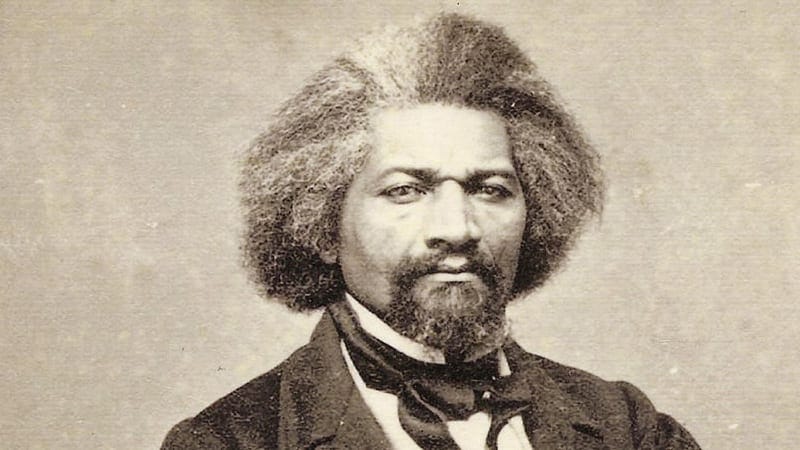
Frederick Douglass lived in that hell first, not as a metaphor, but as a system. And the thing about Douglass is he refused to let America hide behind its own poetry. He took that “all men are created equal” line and held it up like a mirror in the sun. He forced the country to look at itself without makeup. That kind of truth-telling does not get you invited to polite society. It gets you watched. It gets you threatened. It gets you labeled “dangerous” by people who call themselves “reasonable.” Hell.
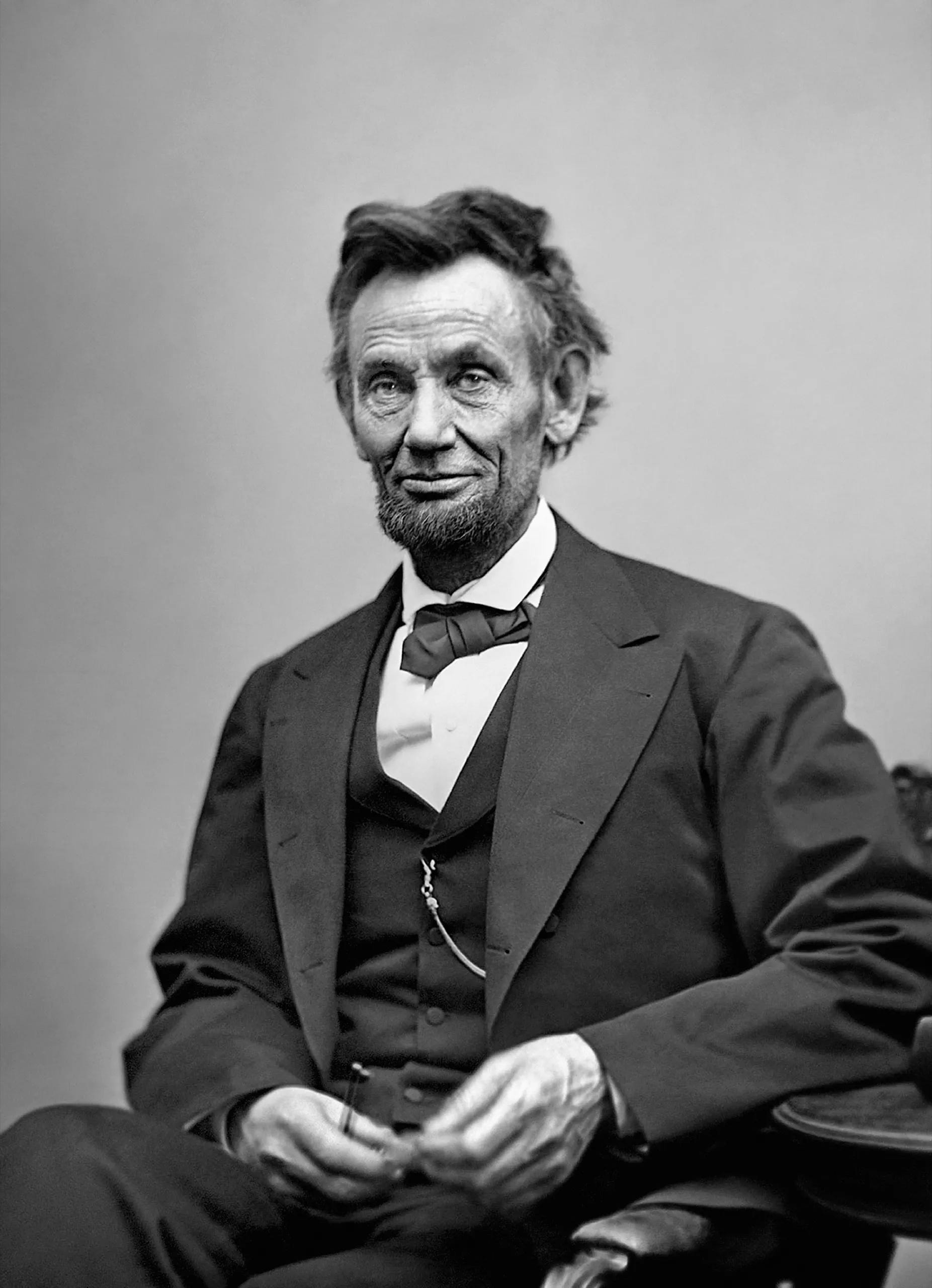
Abraham Lincoln, too, walked into hell. Not because he was perfect, not because he had clean hands, but because he touched the third rail of his era: the expansion of slavery and the political power built on it. He was slow to come around, and Frederick Douglass said as much. But he did come around. Step by step, the war and the truth kept forcing him forward, until he was talking about Black citizenship and a country that owed the formerly enslaved compensation, repair, something real, not just paper freedom. And when he finally made it round, that’s when the cost came due. The only time Lincoln got to “touch heaven” was when he died, because he was taken out by a white supremacist who could not stand the idea of Black freedom. [12][13]
And even with Lincoln gone, when the war ended, Black people were not escorted into heaven. They were shoved into another kind of hell with different rules and the same message. Jim Crow. Lynching. Terror as public policy. A society where you could be right and still be dead. Where you could be talented and still be trapped. Where the law was not a shield, it was a club. Hell.
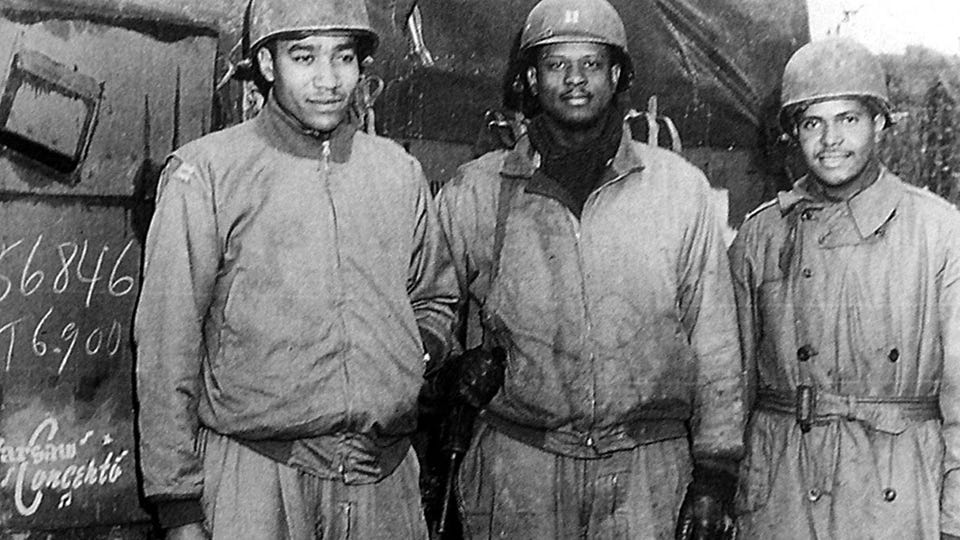
Generations later, America sent its young men across the ocean to fight authoritarianism and Nazism in World War II. And I want you to sit with how brutal that irony is. Black GIs in uniform fighting for democracy abroad, then coming home to drink from “colored” water fountains and get called “boy” by men who never left their county. They went to war against the idea that some people are born to rule and others are born to serve, then came home to a country still trying to keep that idea alive. Hell.
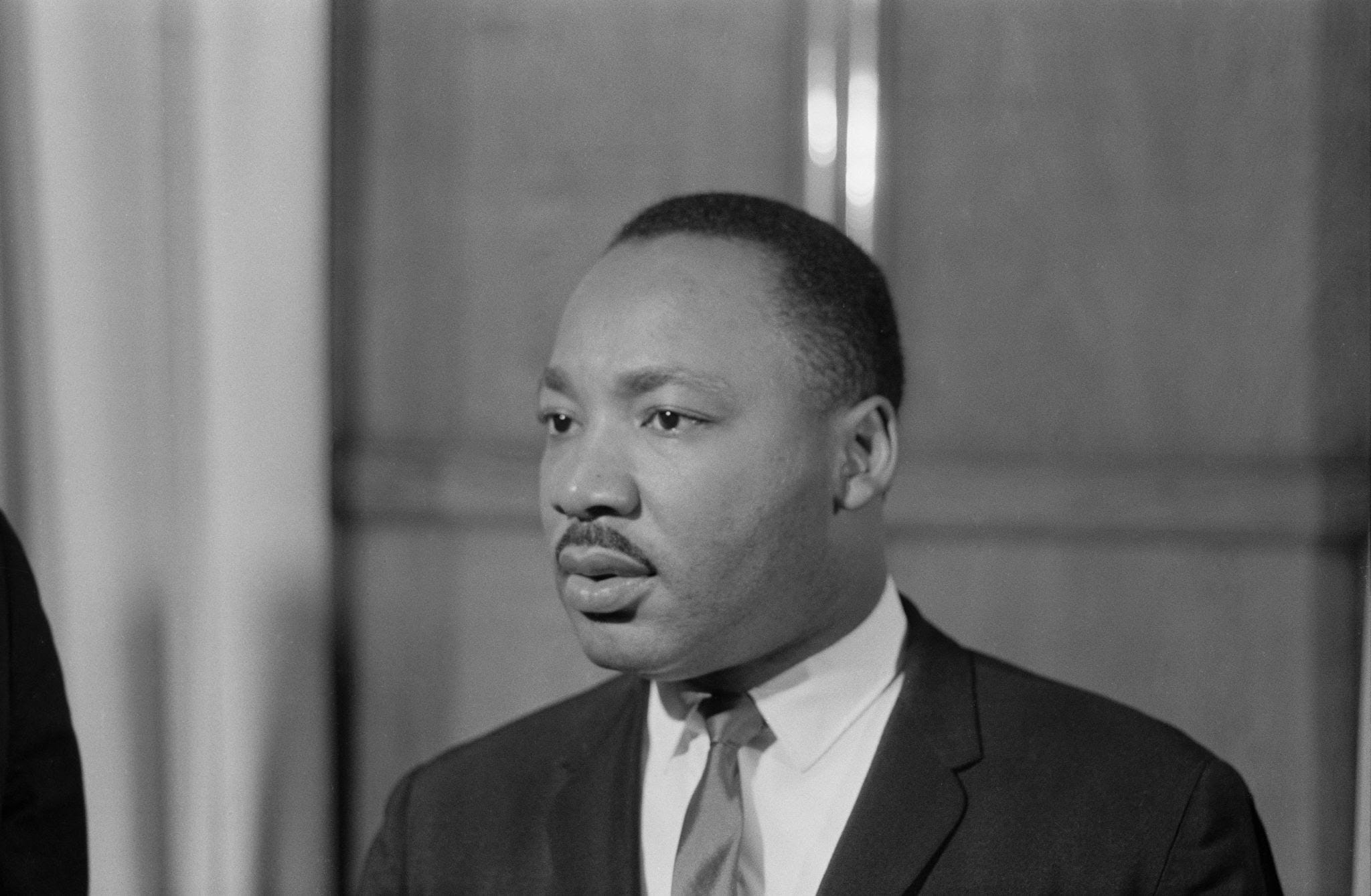
Then comes Martin Luther King Jr. and the civil rights movement, and people love to turn that era into a warm documentary. But it was hell. It was children getting spit on. It was dogs and hoses. It was jail cells. It was bomb threats. It was the constant decision to keep your soul intact while the country tried to break your body. And the truth King carried was simple but unbearable for a lot of Americans which is you cannot call yourself righteous while you build your comfort on somebody else’s humiliation. Hell.
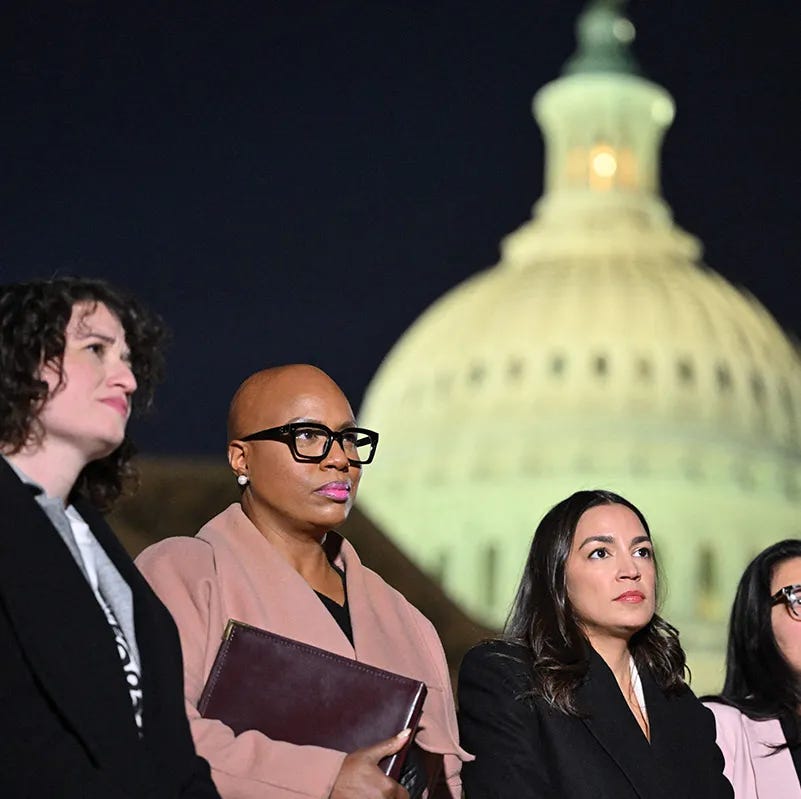
And now, today, here we are again. The progressive movement and the adjacent left are still trying to drag the country back to its own stated values, and the rewards are strikingly familiar: mockery, suppression, distortion, surveillance, burnout, split coalitions, and a constant chorus of “be practical” from people who are comfortable with cruelty as long as it is organized. That is the pattern. Tell the truth, and the system answers with hell.
So when I say “we’re all in hell,” I’m not being dramatic. I’m naming the price tag that has always been attached to the American experiment which is that the closer you get to the truth, the hotter it gets.
SOTU Thoughts
And that’s why the State of the Union hit me the way it did.
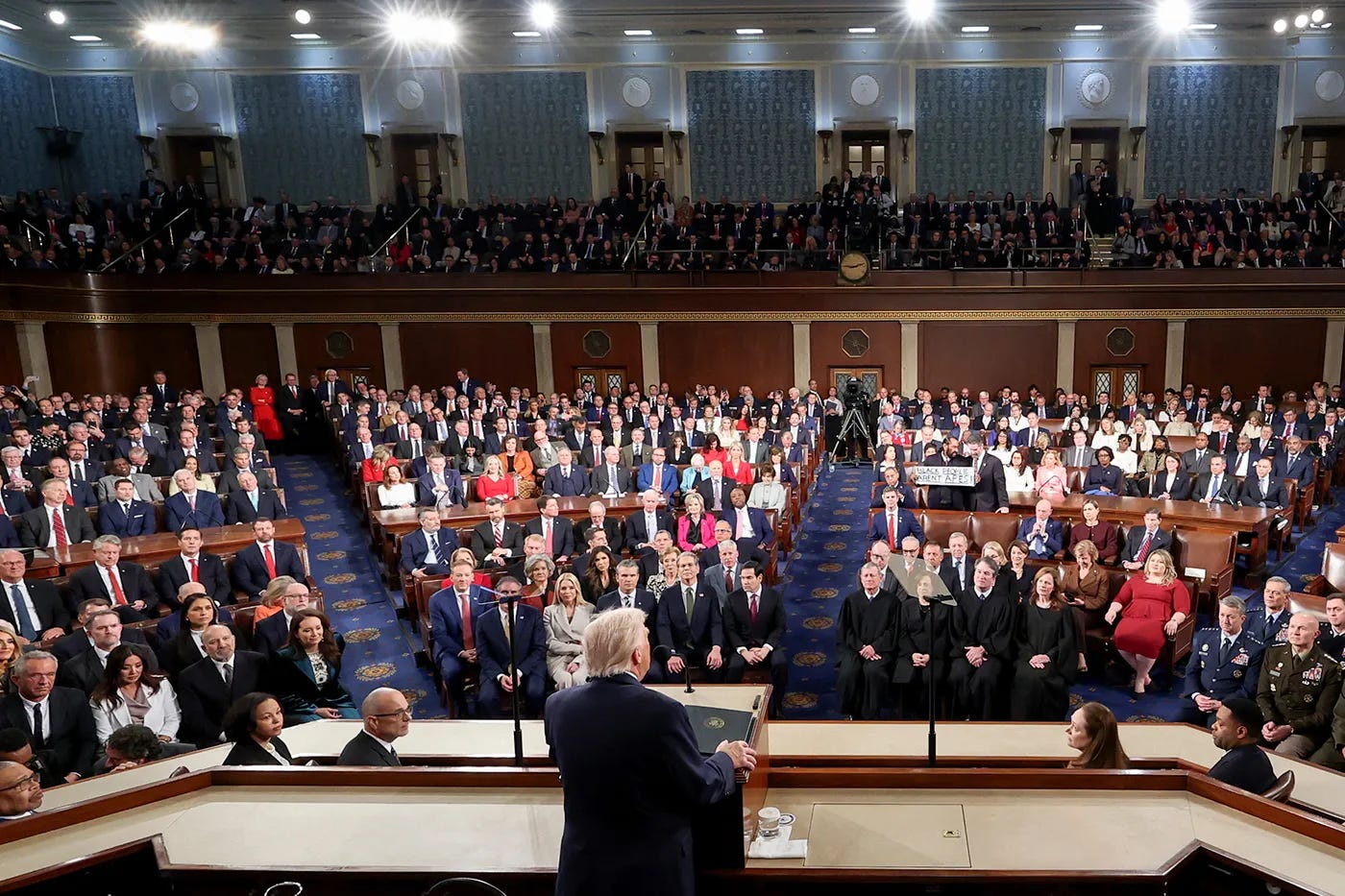
Because you could look across that chamber and see two different spiritual weather systems. On the right, a whole lot of people acting like they were already in heaven. Standing ovations on cue. Smiles on cue. The kind of applause that says, “Just tell me where to clap so I can keep my seat near the sun.” And underneath it all was that quiet reversal of the Declaration. Not “all men are created equal,” but “some of y’all need to remember your place.” Not always said outright, but felt. Performed. Normalized.
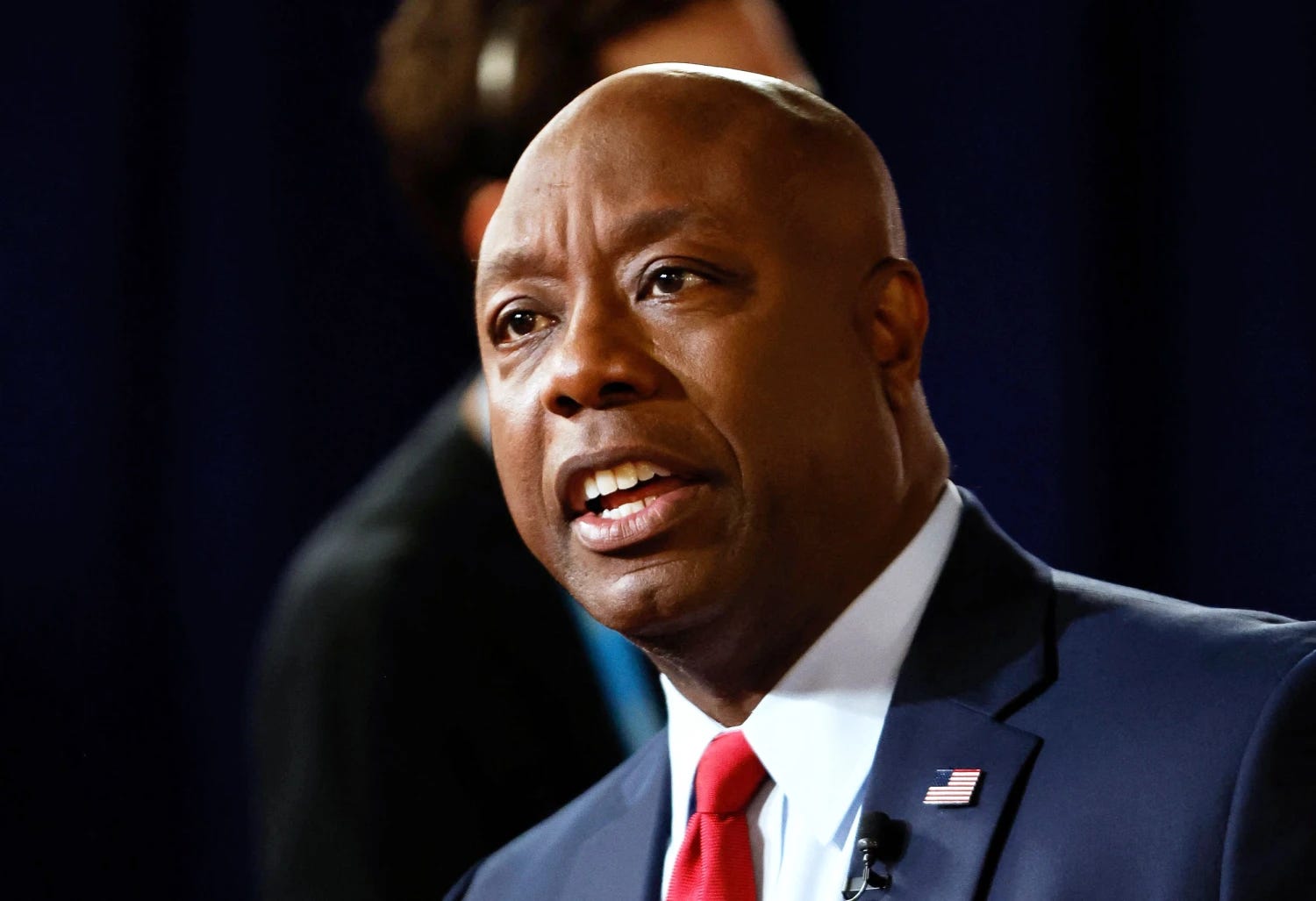
And then there’s Senator Tim Scott, which for me is the clearest picture of “lie in heaven.” This is a man who, just weeks earlier, publicly called out that racist Obama-ape post as the most racist thing he’d seen come out of that White House. (axios.com) [5]) And yet there he was at the SOTU applauding anyway, playing his part anyway, doing the political version of swallowing glass and smiling through it.
Then the scene that people can’t stop replaying. The clip that went viral. Scott standing there after, like a man waiting for some little signal of recognition, some acknowledgement that his loyalty bought him entry. And Trump moving right past him like he wasn’t even there. No pat. No nod. No “good boy.” Just air. (facebook.com) [6])
That’s the whole bargain in one picture.
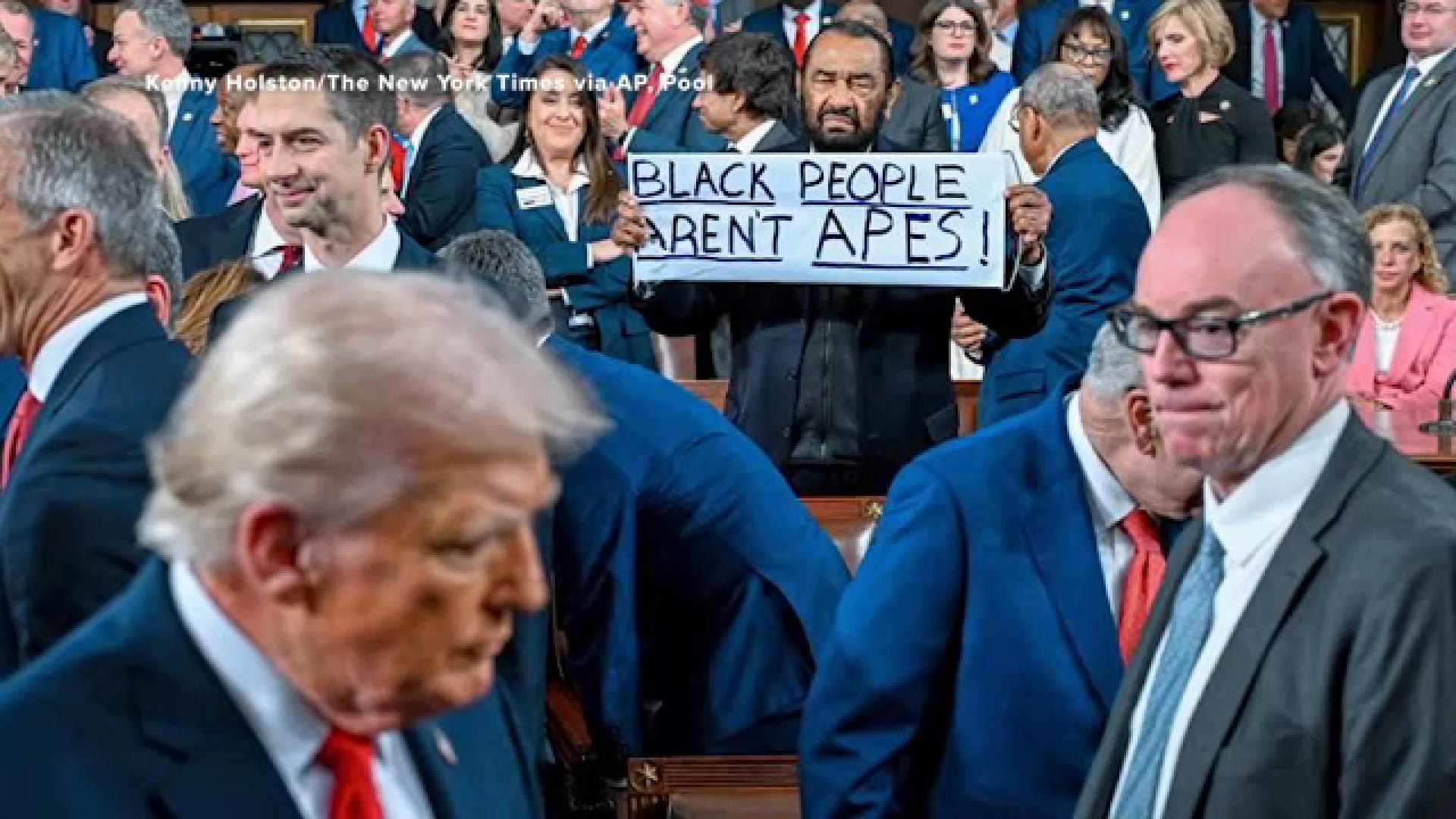
Because on the other side of the room you had Rep. Al Green holding a sign that said what needed to be said in plain English, after that Obama-ape mess and after a lifetime of watching this country flirt with dehumanization like it’s a tradition. “Black people aren’t apes.” He gets confronted, he gets removed, and immediately the machine starts spinning up the punishment talk. (axios.com) [3])

And it wasn’t just him. Rep. Ilhan Omar broke the script and shouted it plain while Trump kept talking: “You have killed Americans.” And when he singled out Minnesota’s Somali community, she snapped back: “That’s a lie… you’re lying.” Rep. Rashida Tlaib joined in too, yelling “You’re killing Americans,” calling him corrupt, and at one point hollering, “How’s those Epstein files?” [1][2]
Then came the moment that told you exactly what room you were in. [2] As Republicans rose and chanted “U-S-A, U-S-A” to drown them out, Tlaib mouthed “K-K-K” right back. The crowd answered with louder applause, louder chants, a wall of sound built to smother the interruption. [2]
That’s what always happens in America. The lie gets a microphone. The truth gets shouted down. Truth in hell.
So don’t tell me you don’t get rewarded for lies in this country. Tim Scott is the receipt. Al Green is the receipt. One man tries to survive by staying agreeable inside a system that does not respect him, and he gets a front-row seat in “heaven” for a night, until the king walks right past him. The other man refuses to play along with being degraded, and he gets dragged into the aisle like the problem is his honesty, not the racism that made the sign necessary.
The Thought Experiment: Founders in the Front Row
Somewhere between the caffeine and the pacing, I slipped into a state of active imagination. That’s the closest name I have for it. Not a hallucination. Not a fantasy. More like the mind doing what it does at 3:00 am when the defenses are tired: it starts staging the truth as a scene you can finally look at.
And I ran it like Einstein would. A thought experiment. Seal the room. Change one variable. Watch what reality reveals.
So I pictured the State of the Union as if the founding fathers had a front-row seat, not as saints, but as witnesses. Men who knew what it cost to break with a king. Men who knew what it sounded like when power stops pretending and starts demanding. They had the full backstory in their bones. The war. The gamble. The blood. The fragile experiment of trying to build a republic out of a world that preferred thrones.
And then I imagined the speech landing on their ears like a temperature change.
First, there was the tone. Not the policies. The posture. That subtle royal certainty. The kind of certainty that does not persuade, it declares. The kind of certainty that expects the room to agree because the room has already been trained to applaud.
I heard Thomas Jefferson before I saw him, because Jefferson is always the one with the pen sharpened like a knife. In my mind he leaned toward the microphone of history and said something like: When a man starts sounding like a king, check what the crowd is willing to call “order.” Kings love order the way wolves love quiet. It makes the hunt easier.
And then I heard Thomas Paine. If you want to know why, go read him with fresh eyes. He was out here arguing that kings were a problem, that ordinary people had rights, that equality was not a cute idea but the whole foundation. He condemned slavery and pushed for abolition, which means if he showed up in today’s political climate the right wing would call him a radical before he even finished his first sentence. In that chamber, watching a man speak like a king and watching a crowd clap like subjects, Paine would not be impressed. He would tell them the same thing he told his own era: liberty is not safe when it is built on obedience.
And then I heard John Adams. Not because he was soft, and not because he was trying to please anybody, but because he understood that you can’t build a republic on liberty talk while you’re chained to human bondage. He never owned enslaved people, which already makes him a rare exception in that early circle of presidents. He hated slavery on principle and on moral instinct, and you can feel it in his writing: he knew it was a rot that would eventually come back for the whole house. Sitting in that chamber, watching people clap for kingly posture and call it patriotism, I know Adams would have cut straight through the velvet and said it plain: this is how republics die. Not by invasion first, but by citizens rehearsing obedience until they start calling it virtue. A republic survives on truth and character, or it slides back into monarchy with better costumes.
Then Abraham Lincoln. Not the marble statue Lincoln. The exhausted, human Lincoln who carried a country’s grief like a sack of stones. In my experiment he didn’t shout. He just looked at the spectacle, the clapping, the tribal certainty, and I could feel him thinking: This is how a union breaks. Not all at once. It breaks when people decide loyalty is more important than truth, and then they call that loyalty “patriotism.” He had buried too many boys to respect a room full of men playing with fire like it is a toy.
Then Frederick Douglass, sharp-eyed, allergic to self-deception. He didn’t care about the choreography. He listened for the moral math. Who is included. Who is named as fully human. Who gets talked about like a problem to be managed. In my mind he didn’t even bother with eloquence. He said the thing he always says in different clothes: You can measure a nation’s soul by who it needs to degrade in order to feel righteous. When the powerful start speaking as if equality is optional, the next step is always somebody’s chains.
Then FDR. I felt him the way you feel a radiator kicking on in winter. Not warmth exactly, but a refusal to let the house freeze. He had fought a war against authoritarianism abroad, and he had fought a war against despair at home with the New Deal. In my experiment he watched the kingly tone and the billionaire-friendly atmosphere and I could hear him thinking: The people don’t drift toward strongmen because they love strongmen. They drift because the ground beneath them feels unstable, and somebody promises certainty. If you want to beat that promise, you have to make life livable again. Wages. Work. Dignity. You cannot lecture hungry people out of fear. You have to feed them out of it.
Then Dr. Martin Luther King Jr. Not the dream quote King. The targeted, surveilled, exhausted King. The one who knew the country could smile while it killed you. In my mind he watched the performance and heard the same old seduction: order without justice. Unity without truth. Peace without repair. And he said, quietly but with steel: When power demands silence in exchange for “unity,” it is not asking for peace. It is asking for permission.
And right when the scene was starting to fade, Jefferson came back in with one more thought, the kind that always shows up late and ruins everybody’s comfort.
He said:
A republic does not die when people stop saying the right words. It dies when they stop meaning them. When “equal” becomes a slogan instead of a standard, the nation is already in trouble. And when the crowd starts calling submission “strength,” you are watching the birth of a king, whether he wears a crown or a suit.
And this is where the thought experiment stops being a parlor trick and starts being a mirror.
The Two Offers
Because if you listen long enough, if you get quiet enough at 3:00 am as I do nightly, you can hear it: America has always been a fight between two offers.
Offer one is the lie. And the lie always comes with a little heaven attached to it. Comfort. Belonging. Applause. A seat close to power. The lie says: don’t make it complicated. Don’t bring up the hard parts. Don’t name what you see. Just clap when everybody claps and you’ll be fine. The lie gives you a warm room and a cold soul.
Offer two is the truth. And the truth comes with hell attached to it. It costs you. It isolates you. It makes people roll their eyes at you like you’re ruining dinner. It makes you “difficult.” It makes you “divisive.” It makes you the person they whisper about, the person they avoid, the person they tell to calm down. Truth doesn’t hand you heaven. Truth hands you a cross and asks if you’re still walking.
And if you want to hear the heaven-versus-hell dichotomy I’m talking about inside a distinctly American sound, listen to the blues. Folks called it the devil’s music for the same reason they fear any raw truth. It named pain without asking permission. It named desire without pretending to be pure. In daylight, people wanted to perform an exorcism on the musicians like the guitar had a demon in it.
Then night came. The same folks who were casting out devils at noon would sneak out after dinner and end up at the juke joint moving like the music had grabbed them by the spine. You could almost hear the double life in the footsteps. By day: “Turn that mess off, you gonna bring the devil in here.” By night: “Just one song.” Next thing you know Auntie is in the corner sweating, two-stepping, and acting like she never said a word.
And here is the part that makes me feel some type of way. The lie’s heaven is temporary. It is always temporary. It lasts exactly as long as you’re useful. Ask Tim Scott how warm that heaven feels when you’re standing there waiting for the pat on the head and the king walks by like you’re air. That’s the deal. That’s the whole deal. You can rent a little heaven from power, but you can’t own it. Power never gives you dignity. It gives you proximity and calls it love.
Truth is the opposite. Truth feels like hell at first. But if you hold it long enough, if you keep carrying it even when your arms shake, truth is the only thing that can build a heaven that doesn’t require somebody else to live in a basement. Truth is the only thing that can make a country safe for your children without selling their souls for access.
That’s what the enemies of democracy have been doing. Not just trying to take votes. Not just trying to take rights. They’ve been trying to take America out of America. They want the flag without the promise. They want the anthem without the agreement. They want the language of freedom without the burden of equality. They want a country that looks like America but behaves like a kingdom. And the saddest part is they don’t even have to conquer us with tanks. They can do it with exhaustion. With cynicism. With the steady drip of “nothing matters” until you stop caring who gets crushed.
And I know how tempting it is to give up. I know how tempting it is to say, let the liars have their heaven, because at least heaven has air conditioning. I know how tempting it is to stop writing, stop speaking, stop hoping, stop believing you can move anything in a system that seems rigged to reward performance over courage.
But I’m telling you this: that temptation is part of the trap.
Make America America Again
Making America America again is not nostalgia. It is not a hat. It is not a slogan. It is the decision to drag that sentence back into the center of the room and mean it again: equal. Not as a vibe. As a standard. Equal in dignity. Equal in protection. Equal in the right to breathe without somebody’s boot on your neck, whether that boot is a law, a lie, or a wink from a man who sounds like a king.
And if you need one line from the old radical to steady your legs, Thomas Paine already told you what time it is:
“Tyranny, like hell, is not easily conquered; yet we have this consolation with us, that the harder the conflict, the more glorious the triumph.” [11]
So yes, we are in hell. But hell is not the end of the story. Hell is where you find out what you really worship. Hell is where you find out whether you’re living for applause or for truth. Hell is where you find out whether you’re willing to be lonely for a season so your kids don’t have to be afraid for a lifetime.
And if you can hear the voices of the forefathers, and Douglass, and Lincoln, and FDR, and King, then hear this part too: they didn’t win because they were comfortable. They won because they refused to surrender their conscience to the crowd. They walked through hell with the truth in their mouth and the future in their hands.
So I’m asking you: don’t trade your soul for a little temporary heaven. Don’t clap for a lie just to stay warm. Don’t stand in line waiting for a pat on the head from power.
Hold the truth, even when it burns.
Because the only way we ever get back to America is by telling the truth until the lie can’t breathe.
And yes, I titled this “the last great essay you’ll ever read” on purpose. Some of you have left. Some of you are leaving. I can see it in the stats, and I can feel it in the way it gets harder to shore this up with enough subscriptions to keep the lights steady.
Maybe my writing sucks. Maybe the algorithm is playing games. Maybe Substack just isn’t the same as when I started. I’m not even going to pretend I know which one it is. But I do know this: I’m going to keep writing essays that move you. I’m going to keep telling the truth, even when it lands me in hell.
So stay with me. And here’s my promise: when you open my emails, you’re getting the writing. No videos. No podcasts. Just the essays.
If you felt your chest tighten anywhere in this piece, that’s your spirit recognizing the pattern. Heaven for the lie. Hell for the truth. That is not a metaphor. That is the business model.
So here’s my ask. If you have been reading me for free while the people selling lies keep getting richer, don’t stay on the fence. Step off it. Become a paid subscriber right now. Your subscription is not a tip. It is protection. It buys me time to keep walking into the basement with a flashlight. It keeps this work alive, and it keeps it honest, even when the algorithm punishes it.
If you believe America is still worth fighting for, if you want to make America America again in the only way that matters, by making equality real, then back the work that refuses to clap for a lie. Upgrade here:
SOURCES
https://www.pbs.org/newshour/politics/watch-you-killed-americans-lawmaker-says-as-trump-asks-congress-to-stand-for-protecting-citizens — PBS NewsHour clip/article on Rep. Ilhan Omar shouting “you have killed Americans” during the State of the Union.
https://abcnews.com/Politics/trump-omar-tlaib-institutionalized-shouting-state-union-address/story?id=130486313— ABC News recap of Reps. Ilhan Omar and Rashida Tlaib’s interruptions (incl. “How’s those Epstein files?” and the “U-S-A” chant moment).
https://www.axios.com/2026/02/26/al-green-censure-state-of-the-union-protest — Axios on Rep. Al Green holding the “BLACK PEOPLE AREN’T APES!” sign and the push to censure him.
https://www.reuters.com/world/us/us-rep-al-green-escorted-house-chamber-during-trump-speech-2026-02-25/ — Reuters on Al Green’s protest and the Obama-apes video context.
https://deadline.com/2026/02/trump-racist-truth-social-post-obama-reaction-1236711128/ — Deadline on Sen. Tim Scott condemning the Obama/Michelle Obama ape post.
https://www.facebook.com/TheCarlManleyShow/videos/trump-walked-right-past-south-carolina-senator-tim-scott-like-he-didnt-even-see-/1235132238685107/ — Viral clip referenced for Trump appearing to ignore Tim Scott as he exits.
https://blogs.loc.gov/law/2023/09/the-haudenosaunee-confederacy-and-the-constitution/ — Library of Congress Law Library blog on the Haudenosaunee Confederacy and the U.S. Constitution.
https://www.britannica.com/topic/The-Founding-Fathers-Deism-and-Christianity-1272214 — Britannica overview of Deism and religion among the Founding Fathers.
https://constitutioncenter.org/the-constitution/historic-document-library/detail/james-madison-memorial-and-remonstrance-against-religious-assessments-1785 — National Constitution Center: Madison’s “Memorial and Remonstrance” against religious assessments.
https://www.loc.gov/loc/lcib/9805/religion.html — Library of Congress background on religion in early America (including Jefferson’s warnings about intolerance).
https://teachingamericanhistory.org/document/the-american-crisis-2/ — Text of Thomas Paine’s “The American Crisis” (includes: “Tyranny, like hell…”).
https://www.factcheck.org/2022/04/posts-make-unfounded-claims-about-political-affiliation-of-john-wilkes-booth/— FactCheck.org on John Wilkes Booth as a Confederate sympathizer and white supremacist.
https://www.theatlantic.com/politics/archive/2015/04/john-wilkes-booth-and-the-higher-law/385461/ — The Atlantic on Booth’s white supremacist ideology and hostility to Black freedom/citizenship.
Outstanding mind experiment! Please keep writing, I need to hear your voice. And I won't stop fighting for everyone's equality.
Hang in there. The truth is worth it. I appreciate your insights and candor. Your voice is important and needed. Thank you