

I wasn’t sure if I wanted to post this. I wondered just how much patience you had for a history lesson. Then I thought of Amina Seck, a Kentucky State basketball player who said she was put in isolation during ICE detention because she wouldn’t remove a brace she needed for her injured knee.
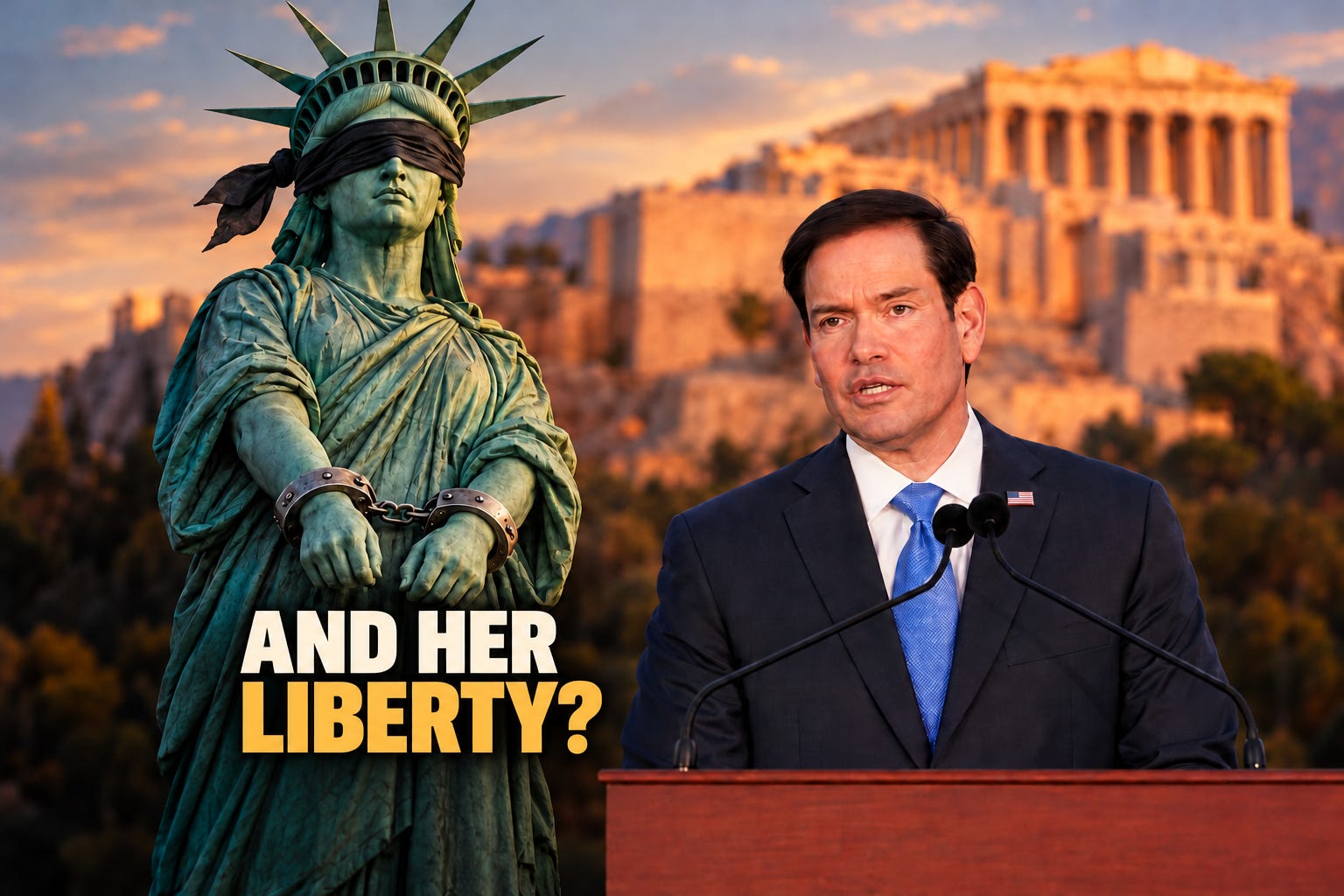
Secretary of State Marco Rubio gave a speech in Greece about Western civilization. In it he praised “the unapologetic pursuit of national power.” [1] I thought to myself that a Western civilization strong enough and unapologetic enough to pursue national power would help and not ignore a Black woman who needed a knee brace. Kentucky State basketball player Amina Seck was recently released after being in ICE detention for two months. She said she spent about a week of that in isolation because she wouldn’t remove her knee brace. Since her release she’s stated she wants to get her knee fixed, finish school, and get a master’s. [2]
As much as I like to ponder concepts such as the fall of Western civilization sometimes, I wonder if we pay enough attention to the actual people within the confines of that civilization.
Who Gets His Sympathy
That brings me to Jane Doe, a former Cornell student and plaintiff who stated that she was gang raped in October 2024 by seven members of a fraternity. Three have come forward and stated the claims are false. [3] Cornell has also imposed disciplinary actions and hired a third party to review how the university responded. [4] New York Attorney General Letitia James has been appointed special prosecutor in the case. [3]
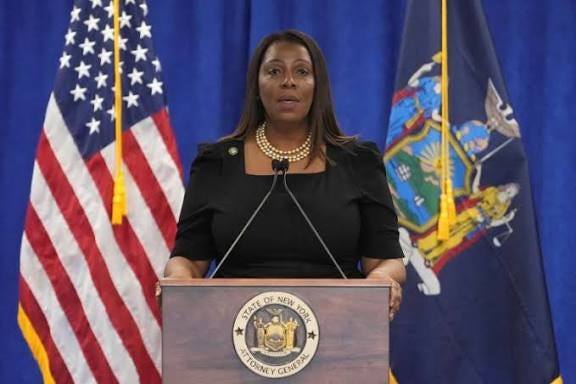
On October 2, Trump was asked about James’ appointment as special prosecutor. In his response the president bad-mouthed Letitia James and stated, “I feel badly for whoever she’s looking at because they won’t get a fair shake.” In that answer, he did not call for a full and thorough investigation of Jane Doe’s claims. [3] In his statement James is the villain, but Jane Doe was still denied basic human dignity.
Maybe Trump’s response should be the catalyst for a larger conversation around power and what powerful men owe the women affected by their decisions.
The Ordinary People
“We hold the most exceptional things among us hostage to the average, the ordinary, the mediocre.” I’m thinking about Rubio’s remark [1] on the importance of industry and defense and international competition, and wondering what would happen if we apply it to Amina’s situation. Most people’s lives won’t make it into any museum. We work and raise kids and get sick. Our achievements may be of a local and not national variety. And listen, that’s okay. We can hold space for exceptionalism and achievement and greatness, and also allow that much of life will consist of the ordinary.
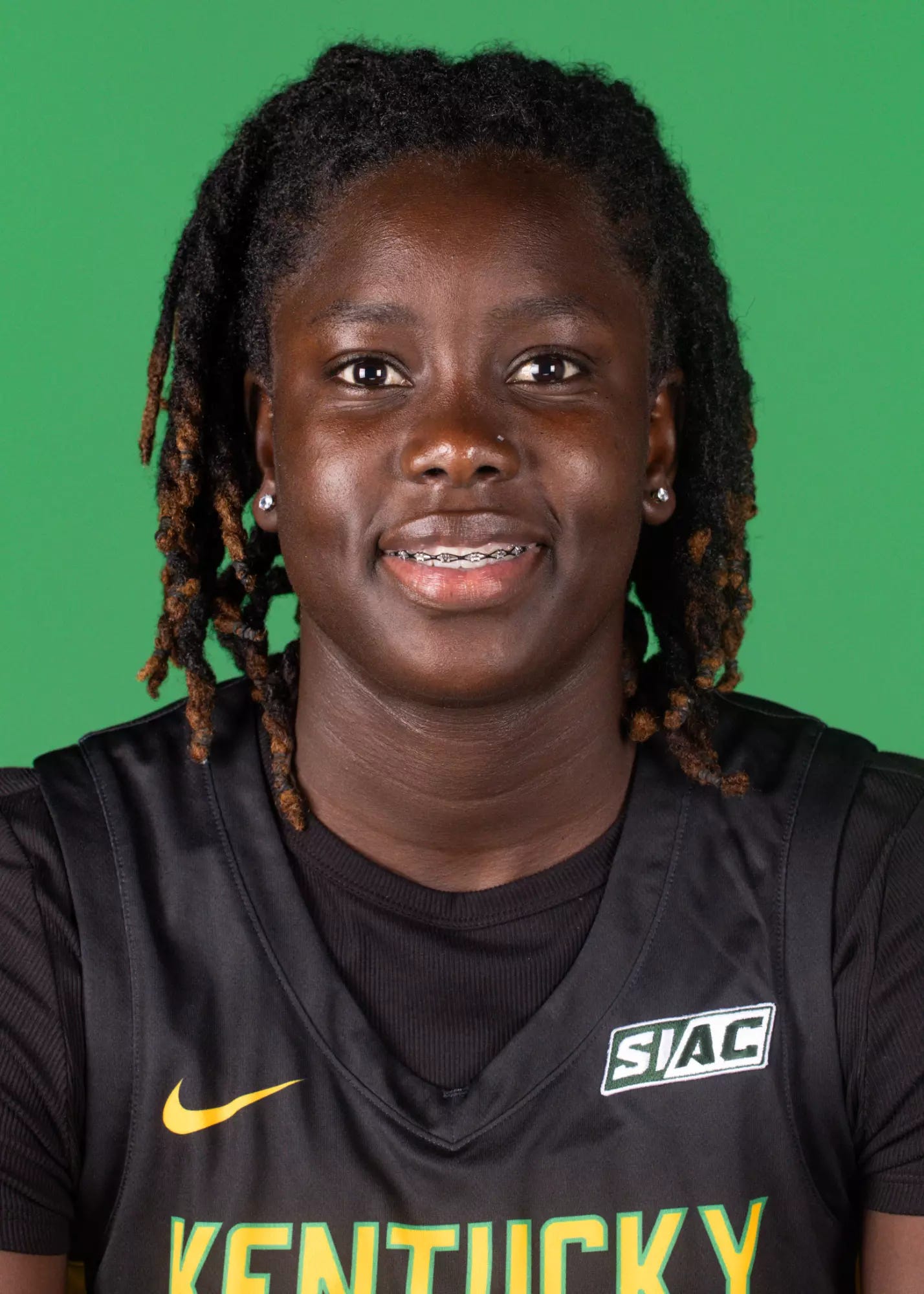
Part of Amina’s prominence has to do with her being a college athlete. But she shouldn’t need to be athletically talented for her medical needs to matter. Somebody without an athletic bone in their body should also be entitled to medical attention in a similar situation. According to DHS, Amina missed an immigration proceeding and overstayed her visa; she had an order of removal. Her immigration case remains pending. DHS did not respond to a request for additional comment. [2] That immigration history doesn’t answer her allegation that she was put in isolation for refusing to remove the brace. When the government takes somebody into custody, it has all sorts of power to control their access to medical care. And that power represents a responsibility. Regardless of whether it comes up in a speech, people being detained is another way that our country flexes its muscles, wields its sovereign might.
The Women Living There
Rubio described the classical Greek city as “an arena for great men to test and prove themselves.” [1]
But wait, before we applaud, let’s think about who was allowed to participate in this great democracy. In classical Athens, women were excluded from the political rights afforded to male citizens. Girls commonly married at ages fourteen or fifteen. Moreover, their consent was not required, as a father could contract for his daughter’s marriage and effectively hand her off to another man’s family. [5] Thucydides writes of the horrors visited upon Melos after it surrendered to the Athenians: the adult men they captured were put to death, and the women and children were sold into slavery. [6]
Jane Doe. Now Amina. Different topics (sexual violence/consent on the one hand and medical care/custody on the other) but the same fundamental concern at their cores which is how much power should other people be permitted to exercise over my life and choices, and what happens when they abuse it? What ideals did we inherit from classical Athens, and what do we make of those ideals in the context of Jane and Amina’s stories?
What We Made Power Do
Rubio also invokes “the English genius for liberty.” There is something here worth pursuing. [1]
While Magna Carta was, in its immediate historical context, a settlement between a king and his barons with narrow protections, the centuries of struggles against arbitrary government which followed in its wake gave its clauses more expansive meanings and extended its influence to people it had originally left out. [7]


Roosevelt signing the Wagner Act to protect the right of many workers to organize and collectively bargain, Johnson signing Medicare, Medicaid, and the Voting Rights Act: these uses of government affected what it was actually possible for a worker dealing with her boss, an older person in need of medical care, a Black person trying to register to vote, to do with their freedom. The barons’ demands were about reining in a king. The American examples show the positive force federal government has sometimes been. [8, 9, 10]
However, those voting-rights protections required pressure on the White House. The persistence of Black voting-rights activists, in the face of violence, helped secure federal protections that had eluded them under previous administrations. [10]
But crediting Johnson completely for these voting-rights advancements follows a long tradition of crediting key leaders for changes achieved by the people. [10] And regardless of their impressive nature, the achievements of his administration do not cancel out his escalation of the war in Vietnam, just as Roosevelt’s achievements do not cancel out his decision to incarcerate Japanese Americans.
We can acknowledge the accomplishments of their administrations without forgetting what their actions meant for real people. [11, 12, 13]
Rubio says that “we preoccupy ourselves more with the comfort of the worst than the potential of the best.” I’d like a lot more thought put into such a statement. You should be able to expect a doctor to take care of your knee or an investigator to examine your story about sexual assault without having to convince someone in power that you have potential. [1]
What Amina Is Owed
“The story of our civilization is the greatest story ever known to man,” Rubio said. [1]
I love the Parthenon. I want our country to be able to defend itself. But I also expect a response to Amina’s story. I expect the president to take a woman’s allegations seriously.
Demanding accountability for one part of the government doesn’t mean pretending there aren’t tons of good things our country has done. But loving our country and wanting it to be strong means we have to continue to make it a good one. If Amina was indeed isolated because she wouldn’t relinquish a medically necessary item such as her knee brace, the people responsible need to be held accountable. You can’t take away a person’s ability to take care of herself without taking responsibility for the care she needs.
It seems morally depraved to demand that people admire power, while making it difficult for them to acquire the most rudimentary protections against it.
If an administration that claims to represent the guardians of civilization cannot protect a woman who is defenseless, then that administration must not resent being called to account. It can’t justify its failure to live up to its legacy.
Amina has told reporters, “I’m ready to go back to school, get my master’s, and get this surgery done.” [2] Regardless of how her immigration case turns out, she shouldn’t have to show us that she’s extraordinary in order for us to care about her suffering.
So, I need XVOA to keep doing the work that lies behind these posts: reading the speech, verifying the records, tracing back the events enough to know who gets left out. Paid subscriptions buy me time to do that. If you read for free, please consider becoming a paid subscriber.
Or, if that isn’t feasible, there’s always Buy Me a Coffee, which offers a one-time way to support the work.
To those who have already subscribed to this publication, thank you for making this possible.
Sources
[1] Marco Rubio, remarks at the Pnyx, October 7, 2026. State Department transcript reproduced by Forth.
[2] WDRB+WAVE, Amina Seck’s account after release, October 7, 2026; republished by KFVS.
[3] ABC News, Cornell investigation and Trump’s response, October 2, 2026.
[4] Reuters, Cornell appoints Sally Yates to review its response, October 6, 2026.
[5] Colette Hemingway, Women in Classical Greece, Metropolitan Museum of Art.
[6] Thucydides, History of the Peloponnesian War, book 5, section 116.4, Perseus Digital Library.
[7] National Archives, Magna Carta Legacy.
[8] FDR Presidential Library and Museum, FDR and the Wagner Act.
[9] U.S. Government Publishing Office, Medicare Law of 1965.
[10] National Archives, Voting Rights Act (1965).
[11] National Archives, Japanese-American Incarceration During World War II.
[12] LBJ Presidential Library, Johnson and McNamara discuss troop increases in Vietnam, July 2, 1965.
Well said.