



I’ve been so focused on Mississippi I’ve been neglecting to look elsewhere. So let’s look at Alaska for a moment.
Two years ago, Peltola, a Yup’ik woman and the first Alaska Native elected to Congress, lost her House seat to Republican Nick Begich. [1]
Now, as of November 8, Peltola leads Sullivan by 637 votes. [2]
This race isn’t officially called, but as of November 8, Peltola is ahead of incumbent Republican Senator Dan Sullivan, 102,962 to Sullivan’s 102,325, with about 74 percent of expected votes in. [2]
If Peltola wins, and it’s close enough that she could very well win, she will be the first Native woman to serve in the United States Senate. [3]
Donald Trump, who doesn’t like the idea of Peltola potentially winning, declared on Saturday that Sullivan won because the votes for two other candidates should count for Sullivan. [4]
It’s a reminder of a dynamic we’ve seen play out elsewhere: Women can be winning and men in power can declare they’re not.
I know, I know. Subscription fatigue is real. Honestly asking for subscriptions isn’t my strong suit, aight?
But if I don’t stick up for my own stuff, who the hell is gonna?
I’m not about to sit twiddling my thumbs hoping some Substack Digest editor decides to feature my writing alongside a bunch of cookie-cutter, pretty faced Substackers who would never in a million years write the word “ain’t” in one of their essays.
Nah.
So if you are lovin’ these deep dives and articles the mainstream press will never cover, consider subscribing to my free newsletter. It’s one less way the MSM can manipulate you. And hey, one less time you’ll have to read some Substack Digest featuring Karen’s lackluster, forgettable essay.
Ok, is my jealousy coming out just a lil bit?
I digress.
If for whatever reason you’re not down to subscribe…
RESTACK this biatch and keep reading.
Bye.
The ballots will show if Trump’s math checks out
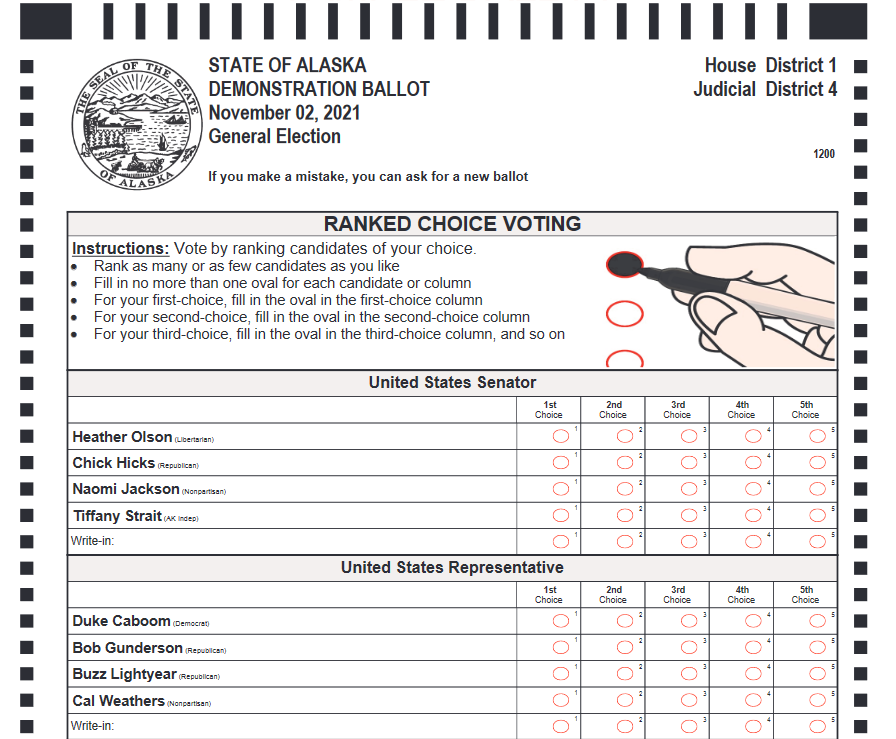
Alaska’s ranked-choice voting system allows voters to indicate their back-up candidates in case their first choice does not win. Here’s how it works: Voters rank as many or as few candidates as they like. If no candidate gets a majority of first-place votes, the candidate with the fewest votes is eliminated, and his or her votes are reallocated to each voter’s next ranked candidate still in the race, if any. The process repeats until there are two candidates left. The one with the most votes wins. [5]
Voters are free to rank as many or as few candidates as they like, which means that just because someone puts one candidate first does not give the president license to decide who their second choice should be. [5]
Alaska Public Media reported that of the ballots they were able to analyze, just over a quarter of Daniel J. Sullivan Jr. backers had Peltola as their second choice. About 16 percent put Sen. Dan Sullivan second. Some did not make any other choices. [6]
The senator also has an opportunity to pick up votes: In the ballots analyzed, about half of Gerald Heikes’s backers ranked Sullivan somewhere on their ballots. [6]
But those ballots are just a snapshot. Hand-counted ballots from rural precincts are missing from the data, along with early and absentee votes still awaiting counting. [6] Ranked-choice tabulation is scheduled for Nov. 18, once all qualified ballots have been counted. [7]
So we do not know yet whether Peltola has won. Sullivan can still win through Alaskans’ first choices and later rankings. Trump wants votes cast for Gerald Heikes and Daniel J. Sullivan Jr. to count for incumbent Sen. Dan Sullivan. [4] But Alaskans get to decide that. Some clearly put Peltola ahead of the senator. [6]
The fight over which ballots count
On October 22, the Justice Department sued to block certification if Sen. Dan Sullivan lost but would have won if the votes cast for the other Sullivan were added to his total. It also asked a federal judge to set aside ballots cast for the other Sullivan so it could investigate whether those voters intended to vote for the incumbent senator. The state’s Department of Law fought back, and on November 1, U.S. District Judge Sharon Gleason dismissed the case, ruling that the Justice Department hadn’t shown it had standing to bring the suit or explained how a court could implement such a remedy consistent with ballot secrecy. The government appealed. [8][9]

On November 6, Mary Peltola’s campaign committee, Alaskans for Mary, filed a separate lawsuit in Alaska Superior Court seeking records pertaining to rejected absentee ballots, including who submitted them and why they were rejected. The group says it first asked for the information on October 27 and again after Election Day, seeking information about ballot acceptance or rejection and expressly not seeking information about the contents of ballots. The group alleges state officials’ delay is preventing it from finding out whether ballots cast by qualified voters are being improperly rejected during the counting process. [10]
The state’s Department of Law says the records Alaskans for Mary seeks are preliminary and confidential and subject to change. It says election observers are allowed to review some of the records it deems confidential under confidentiality agreements, but copies aren’t allowed. It says providing the information Alaskans for Mary wants could impose additional burdens on election workers and delay the counting process. [11]
The New York Times reported that members of Peltola’s staff were involved in recruiting the other Sullivan to run in the election. Peltola denies knowledge of that effort. [8] Whatever the truth of that claim, ballots must be counted according to the preferences voters actually marked. [5]
Who gets a seat at the table
Representation in government is important to me. Representation in government is about who’s at the table, in the room, who’s shaping and making policy, who’s holding power. And for Alaska Natives, who’ve historically faced restrictions on political participation in Alaska, for example in 1915 Alaska as a territory enacted a law stating Native people who wished to apply for citizenship had to be vouched for by five white citizens and renounce tribal affiliation. After the passage of the Indian Citizenship Act in 1924 citizenship was granted to all Natives born in the U.S. and in 1925 Alaska’s territorial legislature passed a law requiring an English literacy test in order to vote [12], so having Peltola potentially become the first Native woman ever to serve in the U.S. Senate feels monumental. [3]
But representation and who is at the table shaping policy isn’t simply symbolic, and shouldn’t be reduced to only symbolism. Who’s at the table conducting hearings, striking deals, making laws does and should matter to us as it relates to whose experiences and histories inform the policies being decided upon.
Peltola, who has been an outspoken advocate for the importance of fisheries and has worked with Alaska Native tribes having served as executive director of the Kuskokwim River Inter-Tribal Fish Commission from 2017-2022 and in the Alaska House of Representatives from 1999 to 2009, has policy stances on a number of issues pertinent to Alaska Natives and Alaskans: energy costs, missing and murdered Indigenous people, increased resources for law enforcement, increased oil and gas drilling, to name a few. [13][14]
And it’s important for us as voters to educate ourselves about those stances and scrutinize them as we follow her bid for the U.S. Senate. It was disheartening to realize how little I knew about Peltola going into this election. Peltola has a career, opinions, stances; a history. And it’s important for us to consider all of that as we consider who we want holding power in the U.S. Senate.
Alaska has my attention now
Mississippi may still get my attention, but Alaska will get some of it as well.
Alaska’s Senate election is too close to ignore and, as I understand it, too close to call. As of Nov. 8, Peltola’s 637-vote margin is in first-choice votes. [2] Ranked-choice tabulation is scheduled for Nov. 18, once all eligible ballots have been reviewed and counted. [7] People’s ranked choices matter, and can change the outcome. [5]
I’ll be paying attention to the details such as which ballots get counted, how the ranked choices are counted, and what happens with the suit to try to get some information about some of the rejected absentee ballots. [5][10] When an election is this close, it deserves that kind of scrutiny. People should be able to find out why some of their ballots were rejected, and whether everyone was treated the same.
I hadn’t been paying a ton of attention to Alaska, because Mississippi has been hogging all my political energy. Listen, If that’s been true for you, too, hopefully this post helps you get caught up.
Sources
Associated Press, Nick Begich defeats Mary Peltola for Alaska’s House seat, November 20, 2024.
ABC News, Alaska 2026 live midterm election results, updated November 8, 2026.
Center for American Women and Politics, Rutgers University, Results from the August 18th Primaries in Alaska, Florida, and Wyoming, updated September 4, 2026.
New York Post via AOL, Trump declares Alaska Senate race ‘over’ in favor of GOP candidate, November 7, 2026.
Alaska Division of Elections, Election information: Ranked-choice voting.
Eric Stone, 4 interesting things we’ve learned from Alaska ballot data, Alaska Public Media, November 6, 2026.
Alaska Division of Elections, 2026 general election results and ranked-choice tabulation schedule.
Liz Ruskin, Judge tosses DOJ lawsuit that sought to block election results if Republican Sen. Dan Sullivan loses, Alaska Public Media, November 1, 2026.
U.S. District Court for the District of Alaska, United States v. State of Alaska: Order dismissing action, November 1, 2026.
Alaska Superior Court filing, Alaskans for Mary v. Dahlstrom: Complaint and exhibits, November 6, 2026.
Alaska Department of Law, Department of Law Responds to Lawsuit from Mary Peltola Campaign, November 6, 2026.
Alaska Advisory Committee to the U.S. Commission on Civil Rights, Alaska Native Voting Rights, June 2019, historical background on page 17.
U.S. House of Representatives, History, Art & Archives, Mary Sattler Peltola: Concise biography.
Becky Bohrer and Haven Daley, Sullivan, Peltola seek support from Alaska Native voters ahead of crucial Senate race, Associated Press via ABC News, October 24, 2026.
Yep. This is what I signed up for. Restacked my man.
If Trump says she lost, she is probably slated to win.