



While Minneapolis was turning into a powder keg of rage over Renee Good’s senseless and unnecessary death, yours truly, Xplisset, was sitting there holding my iPad, twiddling my thumbs like the wrecking news was just another wave I could outscroll. Then it hit like a tsunami. Not the kind that knocks over furniture. The kind that knocks over your faith in the story you tell yourself just to make breakfast, go to work, and act normal. The kind that threatens to swallow us in one more layer of despair.
Back to back tsunamis with the same name. Despair.
I’m not going to lie. This is one of those moments I tried to run from. That’s why I took an early retirement from the police in the first place. To free my mind from the knowing and the seeing, because knowing and seeing will start to feel like a curse when the world keeps handing you receipts you never asked for.
But this is what happens when you run. The skeletons come out. Not the cute Halloween ones. The real ones. The ones you buried under “I’m fine.” The ones you stacked under “that’s just politics.” The ones you wrapped in “it is what it is.” They don’t just haunt you. They chase you. They surround you in a fog of regret and memory until your running turns into a strange little dance to a slow, sad tune you did not pick.
At that point, we all have a choice. We can pretend it don’t hurt. We can keep sprinting and calling it resilience. Or we can stop. We can turn around. We can look the skeletons in the face.
Because sometimes the skeletons are not here to destroy you. Sometimes the skeletons are the only honest witnesses left. Sometimes, if you stare long enough, they start to look less like monsters and more like messengers. Like angels, if there is such a thing, trying to guide you out of the smoke.
So yes. The running stops now. The dancing stops now. The twiddling thumbs stop now.
If there is any kind of guidance left for us, it starts right here with this iPad. With this pen to page. With the nerve to name what payback does. It always leaves a crime scene.
TL;DR AND THE FRIDAY NEWS DUMP
TL;DR: This post makes a simple case. First, Minneapolis was avoidable, and the scramble to spin it is creating a backlash bigger than the administration expected. Second, “Payback Policy” produces unforced errors: Democrats wasted their window, and now MAGA is overreaching in public. Third, Reconstruction shows how vengeance can sabotage the work that actually secures freedom. If you have the time, keep reading. I’m going to lay out the parallels step by step and explain why this moment could be a turning point.
Please share and restack this right now. They are counting on the Friday News Dump to bury it before it can breathe. Do not let them. Get it out of your feed and into someone else’s today. Restack Restack Restack Share
CIVIL WAR 2.0
Now, I’m going to say the quiet part out loud: we are in a civil war. Civil War 2.0 is a faint, enduring echo of Civil War 1.0. It is not dueling armies in gray and blue. It is dueling realities. Dueling versions of the truth. Dueling memories of what America was, what it is, and who it belongs to. All of it wrapped up in modern techno information warfare schemes that can turn a lie into a lifestyle before breakfast.
And Charlottesville is where that echo dragged the skeletons out of the closet and into the street. Not with cannons. With torches, chants, and the permission structure that comes when people realize they can do it on camera and still feel protected. The part of America that wanted to run from the truth found out the truth can run faster. The skeletons do not stay hidden. They chase you until you stop and face them.
Black folks, on the surface, seemed to blow it off. Not because it wasn’t terrifying. Because we’ve been sounding the alarm so long that alarm fatigue becomes a survival skill. Ronald Reagan kicked off his 1980 campaign in Mississippi with a “states’ rights” speech, not far from where civil rights workers were hunted down and slain, and America still managed to call itself innocent the next morning.
That’s the part people miss. For us, despair doesn’t arrive like breaking news. It arrives like weather. A slow, grinding, generational tsunami that never fully recedes, so you learn how to cook dinner with the water still in the house. You learn how to laugh with the sirens in the background. You learn how to keep moving because stopping is a luxury.
So when Charlottesville happened, a lot of us weren’t “surprised.” We were tired. We were watching the country finally say out loud what we’d been saying since forever, and we were bracing for what always follows the admission.
THE TOURNIQUET
And to their credit, a lot of white people were alarmed. They finally admitted what their eyes were seeing, not what they were trained to deny. That’s how we got Biden. Not as a happy ending. As a collective flinch toward stability, a tourniquet slapped on a wound that never really stopped bleeding, and a man who was willing to walk toward the shadows in the closet instead of pretending they were not there. Like Sherman marching to the sea, he moved straight into the haunted territory, not to make friends with the lie, but to break the spell long enough for the rest of us to breathe.
A tourniquet doesn’t solve a crime. It just keeps the victim alive long enough to tell the truth. And what we did with that borrowed time matters, because the “crime scene” wasn’t only what happened in the street. It was what didn’t happen in the halls of power afterward. The first crime scene of this era was omission.
THE UNFORCED ERROR

From January 20, 2021, when Biden took office, through January 3, 2023, Democrats controlled the White House and both chambers of Congress. That window was the early lead. That was the moment to stitch the wound, disinfect it, and stop the infection from spreading. Instead, we watched an unforced error unfold in slow motion. And the tragedy is that it wasn’t a crime of commission. It was a crime of omission. A whole governing coalition looked at the most predictable threat on the field, and decided to play soft coverage and hope the clock would save them.
Start with the Justice Department. A Gorsuch-shaped caution settled over it to not look “political,” don’t move too fast, don’t make it messy, don’t do what your opponents would do to you in half a heartbeat. Meanwhile the country is asking a simpler question: are we a nation that prosecutes attempted coups or a nation that writes op-eds about them? The unwillingness to prosecute Trump early and decisively didn’t read like neutrality. It read like permission.
Then there’s the other kind of omission. Silence where sunlight should be. Even the Epstein files stayed locked away during Biden’s term, as if the public is too fragile for truth, as if institutional comfort is a higher good than civic clarity. This is how distrust metastasizes. You don’t have to lie; you just have to withhold.
And then, the part that still feels like satire is when Senators Joe Manchin and Kyrsten Sinema, in 2021 and 2022, throttled the party’s agenda like it was a personal hobby. Not because the country demanded it. Not because voters asked for gridlock. But because petty anthills can feel like mountains when your identity is built on being “the decider.” You don’t just betray policy in moments like that. You betray the people who dragged you into office in the first place.
If the Democratic consulting class had more football fans, they might understand what happened here without needing a focus group. When you’re up, you don’t get cute. You don’t take your foot off the gas and call it “unity.” You don’t punt on fourth-and-inches because you’re worried about the headline. You run the play that wins, and you accept the boos as the price of victory.
Republicans understand this, even when their strategy is ugly. They talk like football coaches. They exploit weaknesses. They play for field position. Democrats keep playing like the goal is to look calm on camera while the other team is sprinting toward the end zone with a knife in its teeth.
CIVIL WAR 2.0 AS INFORMATION WAR
And that’s how payback policy is born, because when you refuse to use power responsibly, you don’t eliminate power. You just hand it to the people who will use it vindictively. And in Civil War 2.0, that vindictiveness is not boots on the ground. It is memes, edited clips, algorithmic outrage, and manufactured realities. It is information warfare, not armies on a field. You call your restraint “principle,” and your opponent calls it opportunity. Then, when they come back onto the field, they don’t govern as if they’re building a country.
They govern as if they’re settling a score.
RECONSTRUCTION
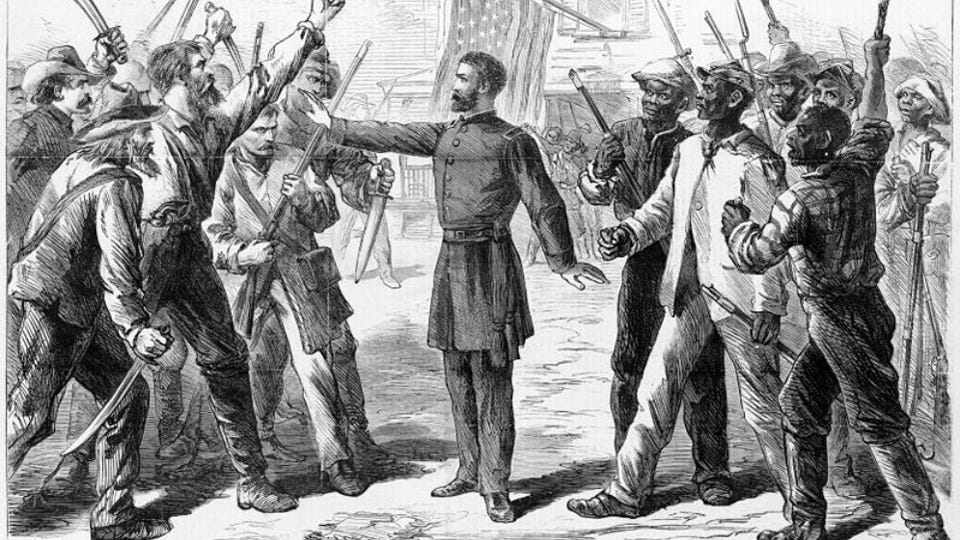
Which brings us to Reconstruction, another moment when the winning side had the leverage, had the moral case, had the chance to build something durable, and still managed to fumble the future.
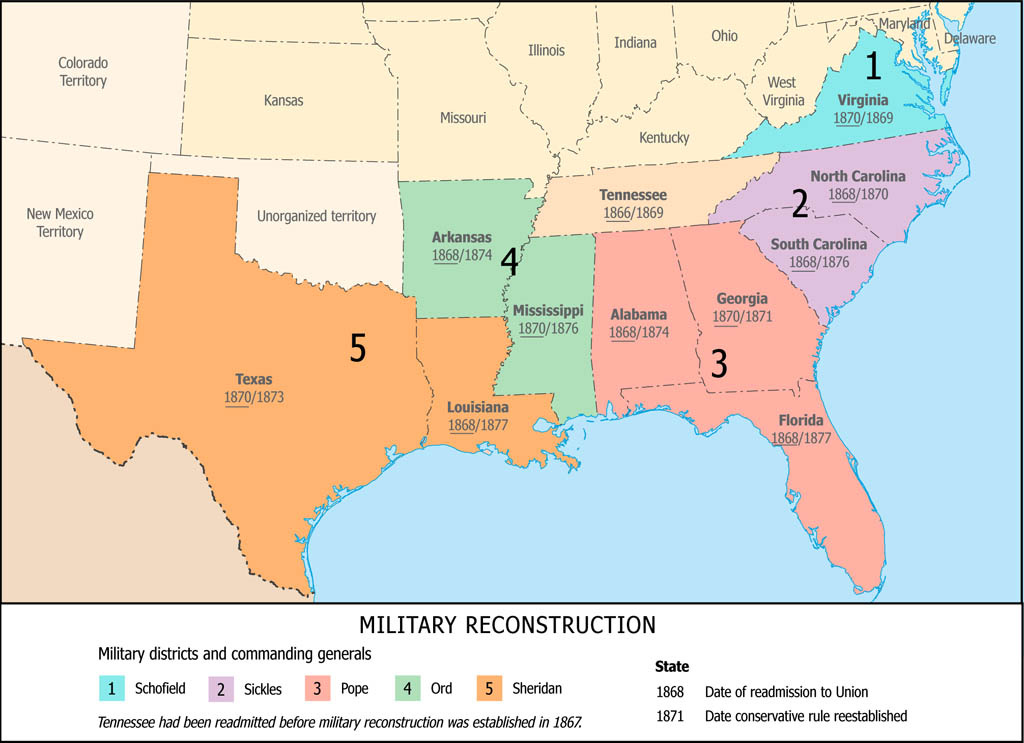
Reconstruction deserves a translation before it deserves a verdict. When the Civil War “ended” on paper, the country still had to answer the real question which is what does freedom look like when the people who lost the war are still standing in the courthouse, still armed in the night, still determined to make Black citizenship a temporary rumor? Reconstruction was the long, contested attempt to reintegrate the former Confederate states and remake the South’s political order, and by 1867 Congress essentially said: this is not going to happen on vibes. It carved much of the former Confederacy into five U.S. Army military districts and put those states under military oversight while they rewrote constitutions, extended voting rights to Black men, and ratified new constitutional terms of citizenship.
That’s why I keep calling it a confrontation and not a “policy era.” Because it was. White supremacist organizations did not argue Reconstruction down in debate club. They tried to assassinate it. The Ku Klux Klan and other groups organized to intimidate and kill Black citizens and Black and white Republican officials, to stop voting, stop jury service, stop governance, stop the very idea of a biracial democracy before it could grow teeth. This wasn’t random cruelty. It was political warfare, and it was widespread.
WAR AFTER WAR
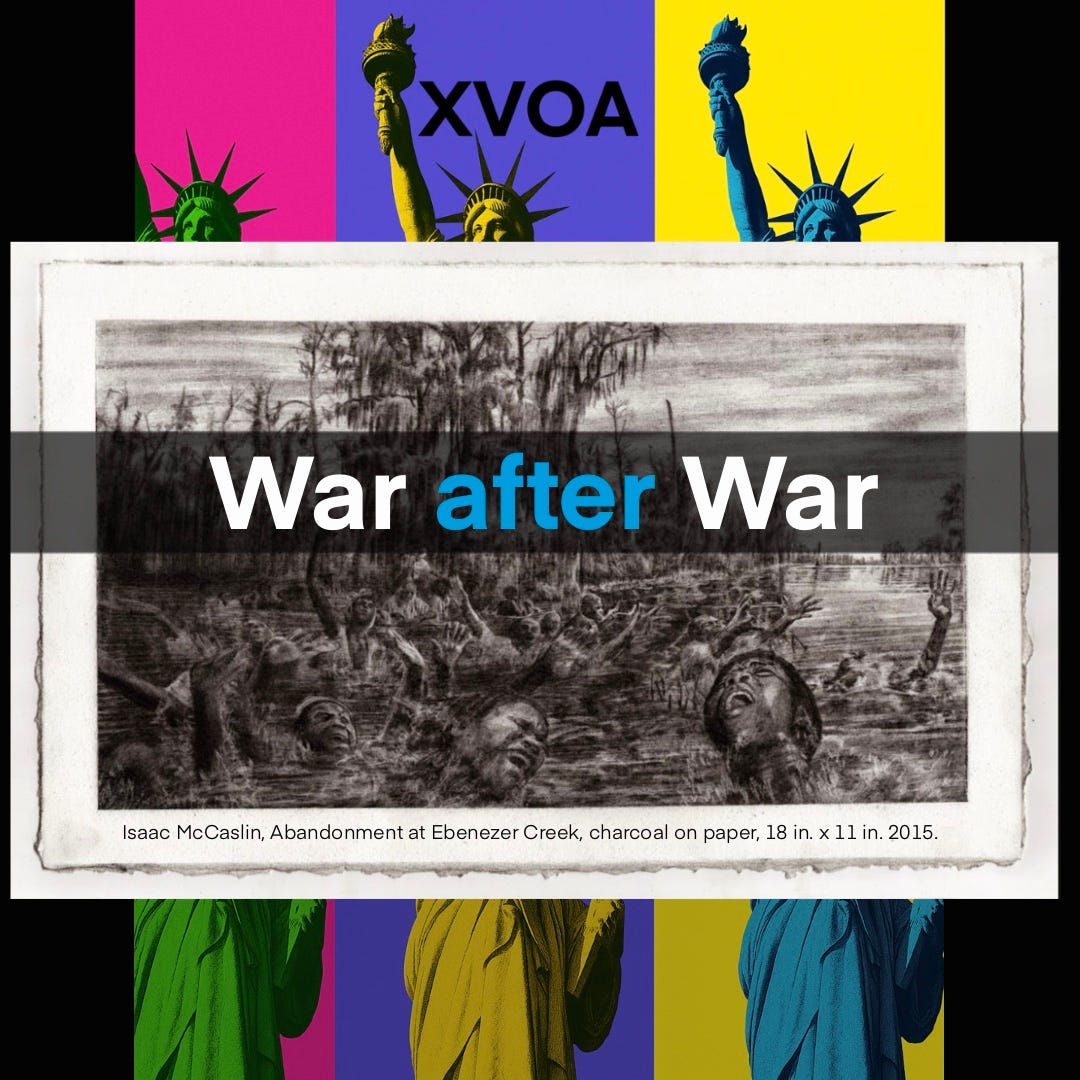
And this is where my whole War After War premise lives. People talk about Appomattox like it was a period at the end of a sentence. It was a comma. The war did not end when the surrender ink dried. The War After War began the moment the peace was signed, because the battlefield simply moved. It moved into courthouses. It moved into county registrars. It moved into labor contracts, night riders, stolen elections, and the daily argument over whether a freedman’s life was protected by the law or merely tolerated by the mood of white power.
That is why I keep insisting we do not understand America if we treat the “after” as an epilogue. The after was the real fight. The after was where memory got weaponized. The after was where the country decided whether it meant what it said. That is the spine of my novel War After War, and if you want to watch me build that spine in real time, that’s what the Author Room is for. But even if you never set foot in the Author Room, stay with the record here and keep following along, because the next move matters.
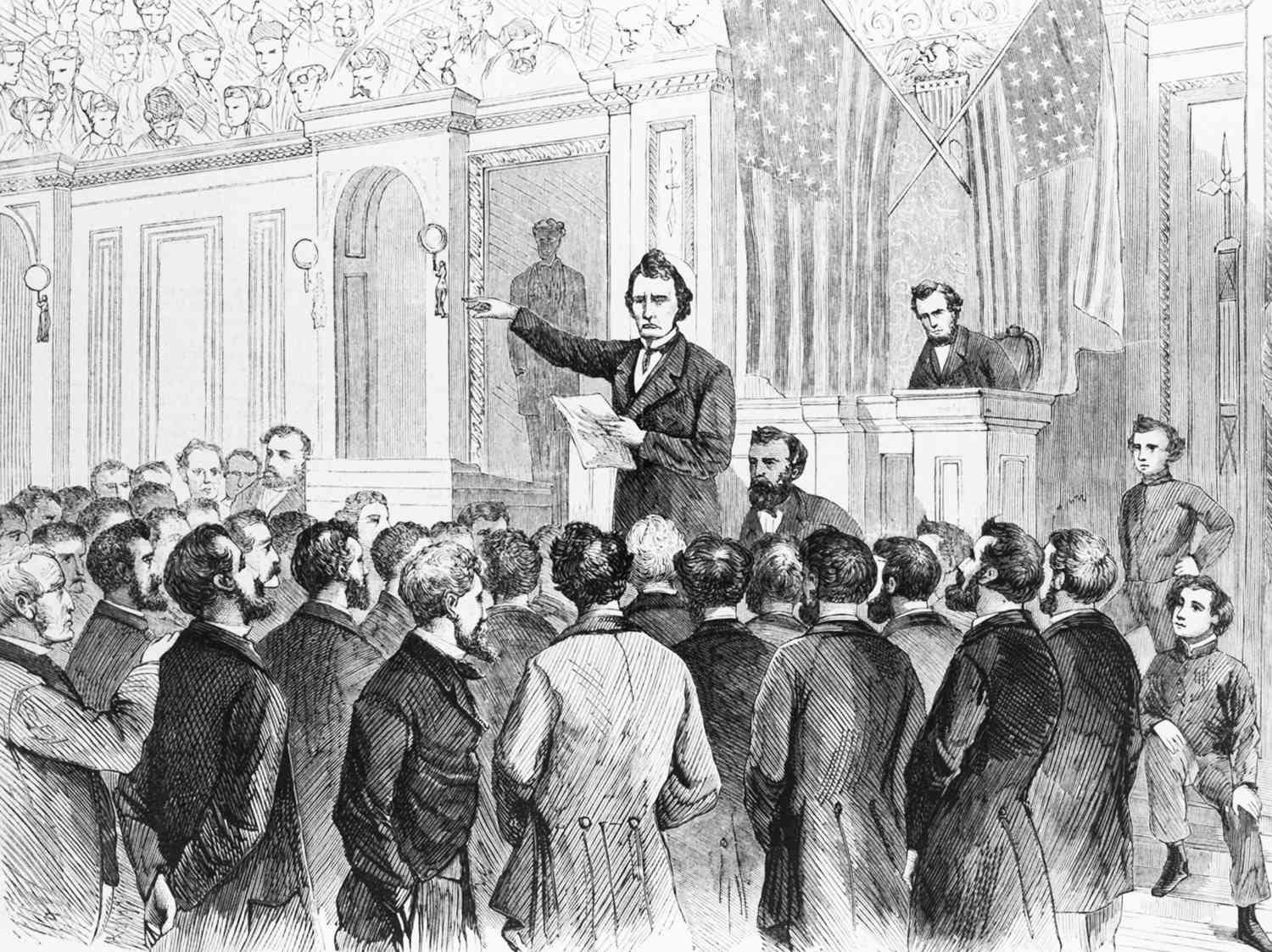
Up North, people really did start crying for blood, not in the poetic sense, but in the legal one. Congress responded with the Enforcement Acts and the Ku Klux Klan Act, trying to give the federal government tools to prosecute conspiracies that were stripping citizens of their rights by terror. President Grant even used federal power and troops against the Klan in places where the violence had become open season. That’s the part folks forget when they talk about “national healing.” The nation was healing with one hand and fighting domestic insurgency with the other.
WHAT SHOULD HAVE BEEN
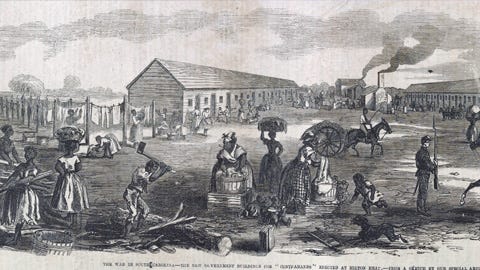
Now, here’s the eerie part. You can feel what Reconstruction could have been by looking at the moments when freedom briefly touched the ground and started acting like it planned to stay. The Sea Islands experiments and the coastal land set-asides showed the shape of a future: Black families on land, building schools, building communities, turning former plantations into proof that slavery wasn’t “necessary,” it was theft. And “forty acres” was not just a slogan drifting through folklore. It rose out of war, out of policy, out of a concrete plan to reserve and redistribute coastal land in the South.
THE GEORGE FLOYD MOMENT
The Ebenezer Creek Massacre is one reason that future felt so urgent. It was the George Floyd moment of their time in the sense that it exposed, in one brutal scene, the gap between emancipation on paper and protection on the ground. When freedpeople following Union General William T. Sherman were abandoned at the creek and left exposed to Confederate violence, the country was forced to look at what “emancipation” meant without protection and without a material floor.
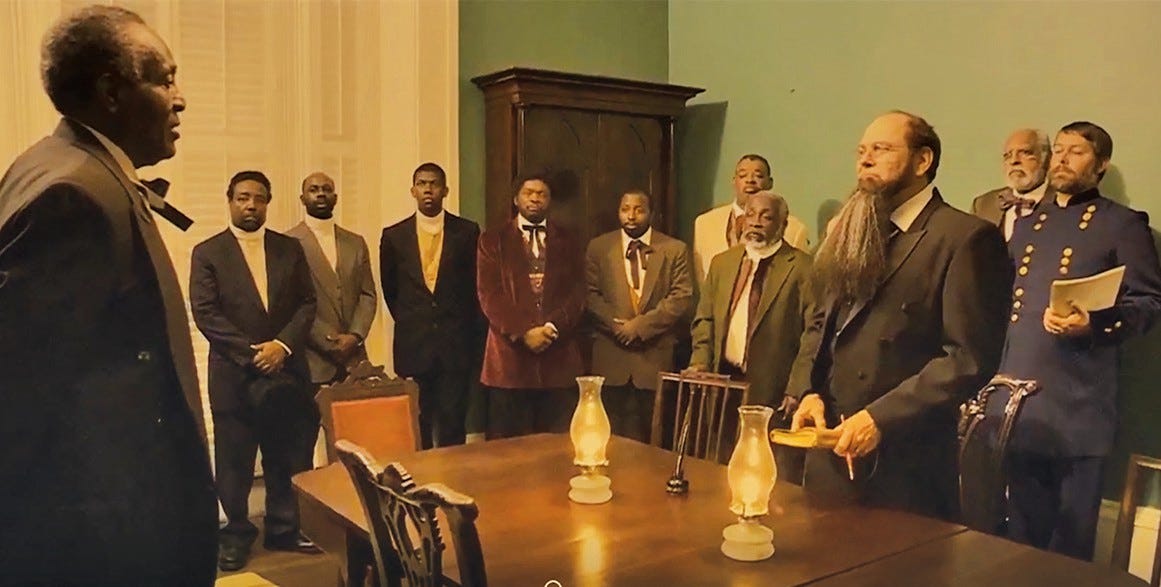
And this is where people get the story backwards. “Forty acres and a mule” was not only a response to slavery in the abstract. It was a direct response to the crisis that followed and to the outrage stirred by investigations and reports about what had happened at Ebenezer Creek and similar betrayals of freedpeople on the march. Under that pressure, Secretary of War Edwin M. Stanton traveled to Savannah, met with Sherman, and sat down with Black leaders to hear what freedom actually required. Days later came Special Field Orders No. 15, the policy seed behind “forty acres.” I won’t call it magic or pure motive, but I will call it what it was: a moment when blood on the ground pushed power to answer a question it wanted to postpone.
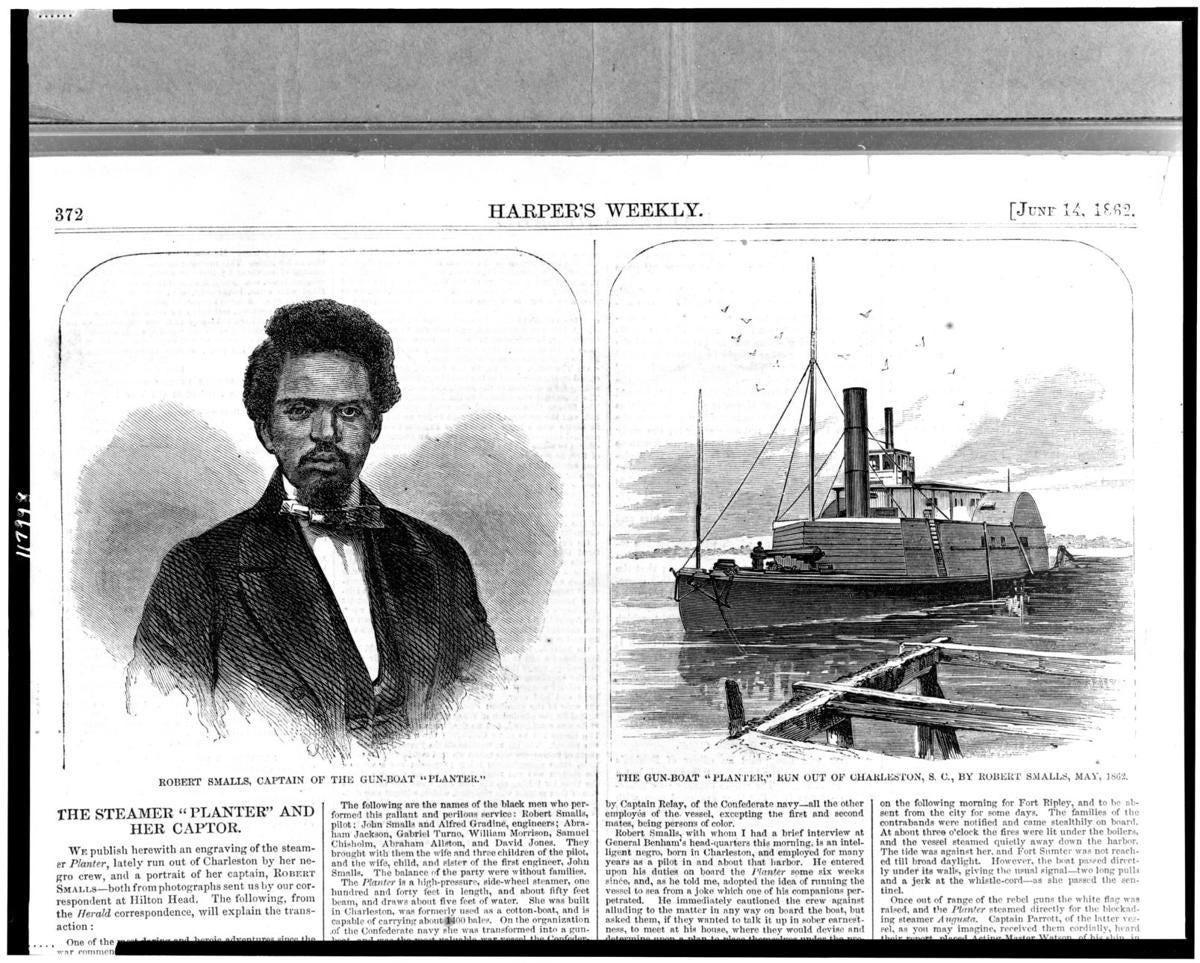
If you want a single image of that whole fight over sovereignty, look at what happened on the Planter. Enslaved families and crew took a Confederate ship out of Charleston Harbor, past Fort Sumter, and when they finally reached Union lines, they scrambled to take down the Confederate flag, raise surrender flags, and then hoist a proper United States flag. That is Reconstruction in miniature: which flag gets to stay up, and who gets to live under it without terror.
THE SUMTER CEREMONY
So yes, Reconstruction should have been the healing. Not the “be nice” healing. The expensive healing. Land. Schools. Protection. Courts that actually worked for the people who had never been allowed to testify as human. It should have been a national decision that the war did not end at Appomattox because the war was never only about surrender. It was about whether freedom would be real, economic, protected, and permanent.
But instead, it got dragged into vengeance. And the truth is, you could hear hints of that vengeance in the air even before Lincoln was assassinated. On April 14, 1865, the country staged what should have been one of those permanent milestone memories. The old flag was raised again over Fort Sumter, the very place the war began, and the principal orator was the Reverend Henry Ward Beecher, the famous preacher and abolitionist, Harriet Beecher Stowe’s brother.
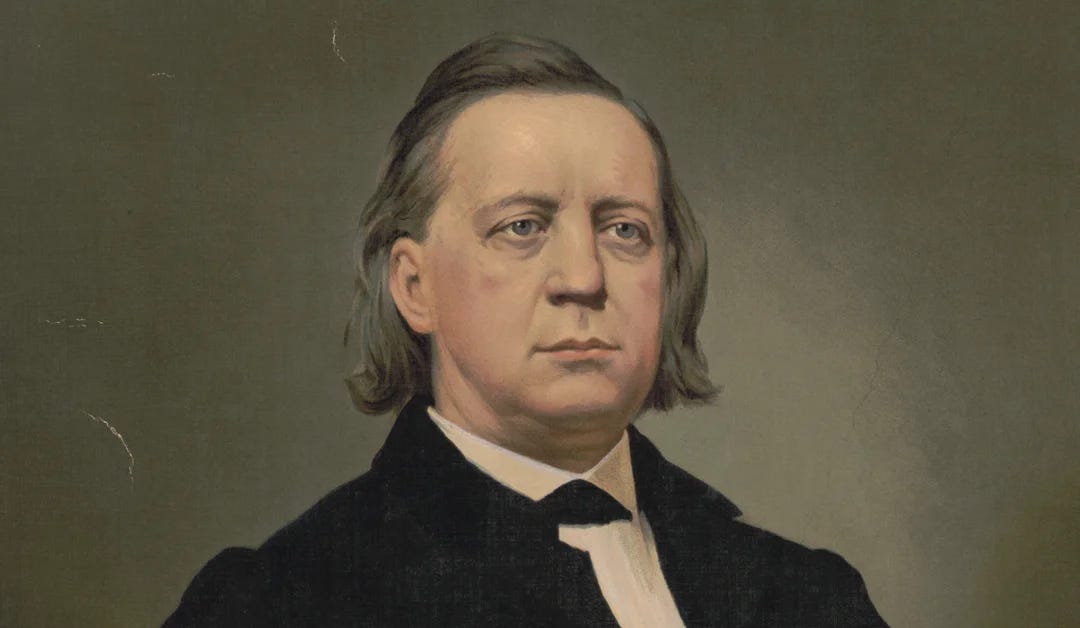
And Beecher did not just preach closure. He preached judgment. He opened with prayers for the flag to be protected from treason and handed down to the children, but then he turned and named the rebels as traitors, and he described Charleston’s ruin and desolation as the wage of rebellion. He used the kind of language that sounds like holy music until you realize it is also a warning: “solemn retribution hath avenged our dishonored banner,” and “ruin sits in the cradle of treason.” That is not a man talking like the war is over. That is a man talking like the bill has come due, and somebody is going to pay it.
That ceremony was meant to be stitched into the national scrapbook forever, a holy kind of closure. Instead, it got shoved into the closet within hours, because that same night Lincoln was shot. The milestone became a skeleton. The memory got eclipsed by murder.
PAYBACK POLICY THEN
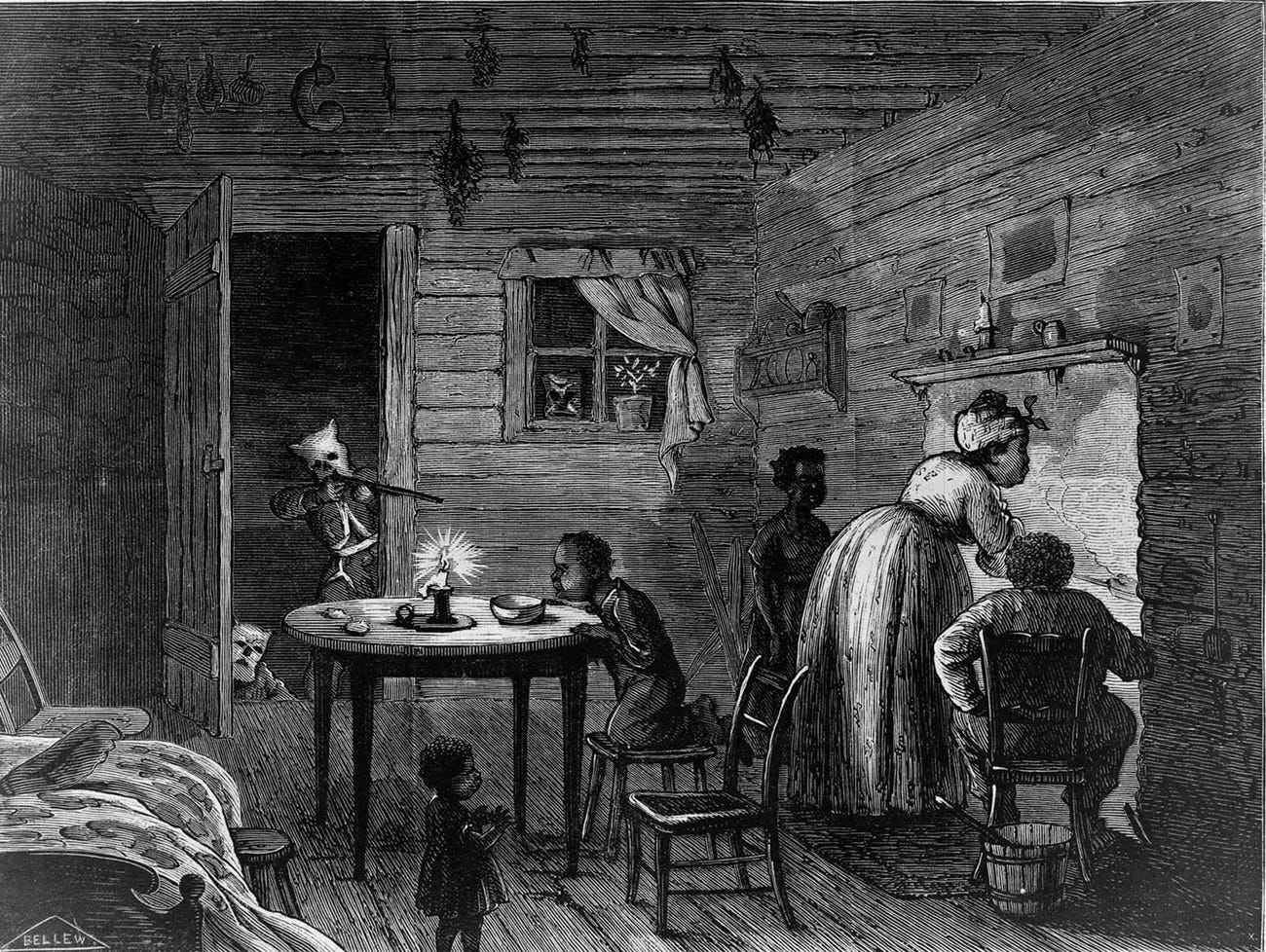
Then vengeance took over. Vengeance for Lincoln’s death. Vengeance for President Andrew Johnson, the Tennessee Unionist who inherited Lincoln’s chair and then, with a whiskey-breathed intransigence, vetoed, undermined, and sabotaged Reconstruction in the open. Vengeance as a mood, vengeance as a posture, vengeance as politics. And vengeance is loud, but it is rarely strategic. It will spend its best years humiliating an enemy while that enemy organizes, recruits, and learns how to make the cost of federal intervention too high to sustain.
That is the unforced error sitting inside Reconstruction, and it’s why it belongs right here. When you let rage drive the steering wheel, you start confusing punishment with construction. You start treating Black political power like a stage prop in a national morality play instead of building the durable economic self-determination that would have outlived everybody’s temper. And once you do that, you don’t just leave a mess.
You leave a crime scene.
PAYBACK POLICY NOW
Reconstruction is the closest mirror we have, not because the cast is the same, but because the psychology is the same. A country tries to stitch itself back together while the people who lost power refuse to accept the terms of reality. The fight moves from battlefield to courthouse, from uniforms to “law,” from open rebellion to organized sabotage. The violence does not stop. It just learns new clothes.
Back then, the federal government drew lines on a map and called them military districts. That was not symbolism. It was an admission that the South was not simply “returning to normal.” It was being governed under federal oversight because local power structures could not be trusted to protect the basic terms of citizenship. Reconstruction was a domestic confrontation over sovereignty, carried out with ballots, bayonets, and a federal promise that Black political life would be defended long enough to become real.
Now look at the rhyme. In 2026, the lines are not called military districts. They are called “operations,” “task forces,” “surges,” “enforcement.” Different language, same underlying question: whose authority is legitimate in the street, and who gets to define what happened afterward. Minneapolis is not Charleston. ICE is not the Union Army. But the pattern is familiar. Federal power shows up inside a contested moral landscape, and then the real battle becomes the story we are ordered to believe about what that power just did.
That is where payback enters the room. Payback is not only about what you do. It is about what you must say to justify what you did. When revenge is the fuel, truth becomes optional. Your ego needs a villain more than your conscience needs accuracy. So you swing at the narrative first, because if you can win the story, you can survive the act.
That is why the administration’s reaction to the Minneapolis killing matters as much as the killing itself. Within hours, top officials framed the dead woman as a “domestic terrorist” and treated the public like it was supposed to accept the label as evidence. Local and state leaders pushed back hard, and video coverage and reporting became part of the dispute itself. This is not just spin. This is the payback mind at work, the compulsion to punish and then baptize the punishment in moral language, even when the facts are still bleeding on the pavement.
Reconstruction had its own version of that. When white supremacist militias and the Klan used terror to crush Black voting and Republican governance, the federal government eventually responded with Enforcement Acts and the Ku Klux Klan Act, and there were moments when Washington did, in fact, move with force against domestic insurgency. But the country also learned how quickly “justice” turns into fatigue, and how fast Northern will collapses when the work requires sustained protection, sustained money, and sustained moral clarity. The opposition did not have to win outright. It only had to outlast the stamina of the people who claimed they were rebuilding the nation.
Here is the difference that matters. In Reconstruction, federal power was, at its best moments, used to defend the newly freed against organized terror and to enforce constitutional change. In our moment, federal power is being sold as payback, as a settling of scores, as a demonstration that someone is finally going to make “them” feel it. That shift changes everything, because it invites the same unforced error every time. When you govern as vengeance, you stop managing consequences. You start chasing emotional satisfaction. You escalate when you should consolidate. You double down when you should correct. You turn a single incident into a national litmus test for cruelty, then act shocked when coalitions form against you.
That is the rhyme I cannot unsee. Reconstruction’s tragedy was not that conflict existed. It was that the country could not stay committed to building a durable peace that required protection, land, schools, and a long federal spine. Payback politics today is flirting with the same trap from the opposite direction. It is mistaking punishment for strength, narrative warfare for legitimacy, and intimidation for order.
And this is why payback always leaves a crime scene. Not only because people get hurt. Because the lie you tell to justify the hurt becomes a second violence. And once you make that your policy, you are not just enforcing the law.
You are reenacting the war.
SUPER BOWL LI
If you don’t watch football, you still understand a choke. You’re winning. You can taste the victory. And then, for reasons that make sense only to the part of the brain that panics when it’s almost safe, you start doing things you don’t need to do. You stop taking the simple points. You stop protecting what you have. You start trying to win “beautifully” instead of winning clean. That’s Super Bowl LI in a sentence.
Atlanta was up 28-3. That’s not “we’re doing okay.” That’s “the game is basically over.” And yet the Patriots didn’t win because they discovered magic. They won because Atlanta made a series of unforced errors, decisions that weren’t forced by the opponent so much as seduced by their own confidence and speed. A sack that knocks them out of field goal range. A holding penalty at the worst possible time. A choice to keep throwing the ball when all they had to do was bleed the clock. The Falcons didn’t get beaten by genius. They got beaten by panic disguised as aggression.
That’s the political analogy, plain as day. Republicans have been ahead, not just electorally, but structurally. They’ve got possession of courts, statehouses, media ecosystems, and are lucky enough to have an opposition party addicted to “norms” even when norms are being used like a weapon against them. And when you’re ahead like that, your biggest threat is not the other team.
Your biggest threat is your own unforced error.
Because when you’re already winning, every unnecessary escalation becomes a gift. Every lie told too loudly becomes a receipt. Every act of cruelty performed for applause becomes a clip that builds the coalition you were trying to prevent. And that is where Payback Policy is dangerous, not only because it harms people, but because it makes the leadership intoxicated. They stop playing to win the long game and start playing to satisfy the crowd in the stands. That’s how you turn a lead into a rout.
Football is a game of deception. Every play begins with a lie. You line up to run and you pass. You line up to pass and you run. You fake left to go right. And the best teams don’t just deceive the opponent. They deceive the opponent into helping them.
Politics is the same. War is the same. And the first casualty in war is always the truth.
But deception has a limit. Eventually the film catches up. Eventually the clock becomes your enemy. Eventually your own lie forces you into one more unnecessary move, and that move is the unforced error that turns a comfortable lead into a fourth-quarter collapse.
SPLIT BRAINS
Payback has a tell. It isn’t just rage. It’s the strange confidence that comes with rage. The part of you that feels “right” starts acting like it’s also “smart,” and that’s where the sabotage begins. Because a payback-compulsion doesn’t only want to punish the enemy. It wants to erase humiliation. It wants to rewrite the story. And the moment you’re trying to rewrite the story, you start lying to yourself first.
This is where the conflict inherent within us matters. We like to imagine we have one mind, one intention, one clean moral spine. But most of human behavior is a negotiation between competing parts. One part wants power. Another part wants innocence. One part wants revenge. Another part wants sleep. One part wants the thrill of domination. Another part wants to be seen as a good person. That internal civil war is the real engine. You don’t need a courtroom to convict yourself when your own psyche is running surveillance on you 24/7.
IN SECRET, THE MOVIE

That’s why I need to slow down and explain In Secret. It’s a film, an adaptation of a 19th-century novel, set in that prim, buttoned-up world where everybody is polite on the surface and starving underneath. I stumbled across it by accident, and I almost clicked away, because I thought it was going to be a cheap sex scandal with costumes, the kind of story that tries to sell sin without making you look at what sin does.
But then surprisingly it revealed its real premise. It isn’t a scandal. It’s a morality play. Not moral in the church-lady sense, moral in the forensic sense. It shows you how repression and politeness do not always restrain desire. Sometimes they ferment it. They trap it in the dark until it turns rancid, and then it comes out sideways as cruelty, secrecy, and a kind of hungry, unhinged lust for power.
Spoiler alert. In Secret is about two lovers who decide their problem is not their desire, it is the man standing in the way of it. Thérèse is married to Camille, and when she begins an affair with his friend Laurent, they convince themselves there is only one clean solution. They lure Camille out, and they murder him, drowning him and letting the water do the talking.
They cover it up. They marry. They step into the life they think they stole fair and square. And then the punishment begins, not from the police, but from the mind. Guilt turns their home into a haunted house. Camille shows up in their sleep and in their skin. Touch becomes repulsion. Love turns to suspicion. Every silence becomes an accusation.
Even worse, the mother of the dead man is right there, watching the whole unraveling. When she realizes what they did, she is trapped in her own body, unable to speak, forced to witness their slow collapse. The ending is the kind of ending that tells you the writer knew exactly what he was doing by having the two of them choose a self inflicted death right in front of her, and the crime scene becomes complete.
And I cannot help wondering if the writer’s intention was to prove a simple truth: which is that you don’t escape consequences by hiding them. You just move them into your body and your home, and then you live inside the crime scene you created.
And here’s the cruel irony. It isn’t the police who break them. It’s their own guilt. Their own internal fracture. The secret doesn’t stay neatly in a box. It leaks into the body. It leaks into sleep. It leaks into paranoia. They start seeing the dead man everywhere because the mind does that when you try to build a future on top of a crime. The crime becomes the foundation, and the foundation starts talking back.
Their “crime scene” isn’t just the moment of violence. The crime scene follows them home and becomes the life they try to live afterward. Every dinner tastes like evidence. Every touch turns into recoil. Every smile in public feels like perjury. That’s what guilt does when you build a future on top of a body: it expands the scene until there’s nowhere left to stand that doesn’t feel contaminated.
GUILT AS A FORCE
That’s the part I want readers to feel in their gut when you turn back to the present. The state can spin. Parties can message. Consultants can workshop. But guilt is not a press release. Guilt is a physiological force. It makes you sloppy. It makes you theatrical. It makes you overconfident in public and frantic in private. It makes you add extra lies because the first lie didn’t quiet the noise.
That’s what I see in how Republicans are handling this era of violence and enforcement. It’s not just the harshness. It’s the compulsion to narrate harshness as virtue while the facts are still warm. It’s the rush to label, to pre-frame, to declare the moral before we even agree on what happened. That is a tell. That is not strength. That is the psyche trying to outrun consequences by controlling the story.
And this is where “payback policy” becomes self-sabotage. When your governing fuel is vengeance, you keep producing scenes that require a cover story. Then the cover story requires escalation. Then the escalation produces more scenes. That loop is how regimes, movements, and whole parties walk themselves into a corner. Not because their opponents are brilliant. Because their own guilt and arrogance keep widening the crime scene until everybody can smell it.
So when I say payback always leaves a crime scene, I mean it literally. Bodies on pavement, yes. But also the broader scene: the rushed statements, the doubled-down narratives, the brittle certainty, the growing pile of omissions that eventually starts to look like intent. And once that happens, the confession doesn’t always come from investigators.
Sometimes it comes from the perpetrators themselves, collapsing under the weight of the story they tried to force the world to believe.
I’m not doing a Spin Spectrum report for this one. A mother of three getting killed on a snowy residential street in South Minneapolis at around 9:30 in the morning deserves more than a neat stack of bullet points and hyperlinks. This is the kind of moment that’s supposed to stop the room, because a country that can watch something like that and keep scrolling is a country teaching itself how to disappear.
MY TRAINING
And yes, this is exactly the kind of scenario I was trained for. Decades of in-service days, training videos, “officer safety” modules, use-of-force briefings, the same grainy reenactments passed hand to hand through departments like scripture. One lesson comes up so often it gets ingrained into your bones. That is don’t shoot at a moving vehicle unless you have no other choice, because it turns everybody into a target and it rarely ends the way the shooter thinks it will. Use-of-force experts are already saying the same basic thing here which is that the positioning and the decision to fire don’t look consistent with accepted tactics.
So when I say “they know,” I mean it literally. ICE trainers have seen the same training library patrol cops have seen. They’ve watched the same cautionary tapes. They’ve sat through the same “what not to do” case studies. They know what it looks like when an officer steps into a bad position and then calls the consequences “self-defense.” And they know what it looks like when leadership rushes to protect the badge before the facts finish bleeding.
THE PROBABLE CAUSE TRAP
That’s why the administration’s response is the unforced error that could derail their whole payback agenda. Not the killing alone, terrible as it is, but the doubling down afterward. Within hours, federal leaders labeled Renee Nicole Good a “domestic terrorist,” claimed she used her vehicle as a weapon, and framed the shooting as justified, even as local and state officials called that propaganda and video and reporting raised serious contradictions.
Here’s what makes it politically fatal: this isn’t an abstract policy debate. This is a face. A U.S. citizen. A 37-year-old mother of three. A poet. Killed in broad daylight, in a snowy residential neighborhood, in front of a family member, just blocks from where she lived. You can’t workshop that into a talking point without revealing the rot. You can’t launder it through the words “domestic terrorism” without making the public feel the insult in their teeth.
And because I’m not going to pretend we don’t all know how these “decision trees” work in real life, let’s name the part people dance around. The Supreme Court has already signaled, again, that skin color and perceived ethnicity can be treated as a “relevant factor” in immigration-stop reasonable-suspicion analysis when combined with other factors, a form of racial profiling the Court effectively blessed. That’s not me editorializing. That’s the legal lane they’re driving in. The policy world calls it probable cause to stop and investigate. The street knows it as looks like the kind of person we’re here for.
Now watch what that legal cover invites. When you tell agents that skin color and perceived ethnicity can be part of the equation, you hand them a decision tree where a face can become probable cause, and a hunch can become a stop. It turns the street into a sorting machine.
And if you are built like Renee Good, a complexion and hair texture that can get read as Latina in a split second, you can get flagged as the kind of person they are hunting. Maybe that misread happened consciously. Maybe it happened subconsciously. Either way, that is the point. The system rewards the snap judgment.
But here is the unforced error that can undo an entire administration. In the end, the machine that is built to chase Latino bodies left a U.S. citizen mother of three dead, and in the public mind she reads as white. That collapses the story they need to survive. It is one thing to brutalize the people you have already trained your base to dehumanize. It is another thing to do it in broad daylight to someone the country recognizes as a neighbor, a mother, somebody’s daughter. Civil War 2.0 is fought in this space, in optics and narrative and disbelief, and that is why this can become the fourth-quarter collapse.
When you green-light that mindset, you don’t just scoop up undocumented folks. You sweep up citizens. You sweep up bystanders. You sweep up the “wrong” person on the “right” day because your operation is built on appearance, urgency, and numbers. And then, when you’re wrong, you don’t correct. You justify. That is payback psychology. That’s the split brain at work where one part of the mind holds the image of what happened, clear as day and the other part starts drafting the story it needs in order to live with what it just did.
SKELETONS
That’s why I keep coming back to the skeletons in the closet. The ones we swear we do not see. The ones we tell ourselves are old history, old news, somebody else’s problem. The ones that come out anyway and chase us down the hallway, not to scare us, but to stop us from sleepwalking past another body.
Because there is a moment, if you can stand still long enough, when the skeleton stops looking like a threat and starts looking like an angel. Not the soft, pretty angel people put on a Christmas card. The angel with a hard assignment. The angel that says, Look. Do not look away. Tell the truth. Protect the living.
A WORD TO MAINSTREAM JOURNALISTS
To any mainstream journalist reading this: yes, I’m talking to you. I know you’re reading because that’s what you do when the official story starts wobbling. You read the independent folks, the locals, the people who do not have to ask permission to name what your editors keep trying to sand down. You check what the crowd is saying before you decide what you can safely say.
So hear me plain. Do not take your orders from a billionaire balance sheet. Do not tuck this below the fold while the administration gas lights the public in broad daylight. Do not help them launder a killing into a slogan just because the press secretary can smile through it with a cross on her neck.
A cross is not a truth serum. A cross is not a warrant. A cross is not a halo. Evil can wear a cross. The KKK wore crosses. They lit them on fire to intimidate my ancestors. And I am still here. I can still speak truth to power after being in the belly of the beast, and that alone tells you something. Good not only can prevail. Good will prevail. Renee Good did not die in vain.
DO NOT DESPAIR
And if you are sitting there watching the circus of it all, watching how people can disparage Good and still get hired, still get platforms, still get rewarded, while you can say one sentence about you know who and get shown the door, do not despair. That is not a sign that evil is winning. That is a sign that the game is rigged to reward the lie.
Do not despair. The lie always looks invincible right before it collapses, because it has to get louder to keep you from hearing your own conscience.
Do not despair. If you have ever been punished for telling the truth, you are in ancient company. The prophets always get called “too much” before history calls them correct.
AMERICA WILL ALWAYS BE IN AMERICA
America will always be in America, no matter how much you try to intimidate good people into silence, no matter how much you try to kill the Good in us. Politicians love to invoke “the American people” like an overconfident chant for some highly partisan agenda. Like “the American people” is a hostage note they get to read on TV. Like “the American people” is an endorsement deal. Like Colonel Sanders quoting how his chickens support him. Congratulations, sir, the poultry has spoken.
But what about the Good. The quiet good. The tired good. The good that is not trending, not funded, not protected by a PR team, and still shows up anyway.
THE VIETNAM WAR CAVEAT
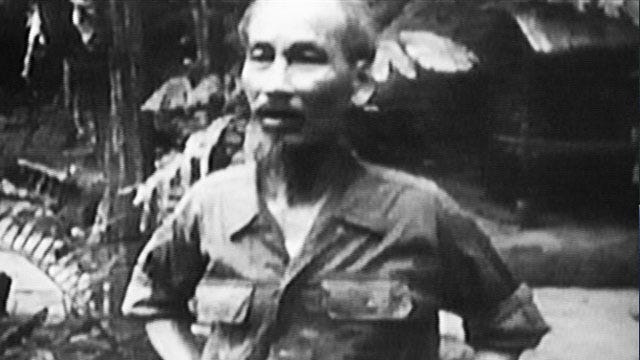
That’s why I’m coming back to that Vietnam line, and do not get it twisted. I’m not quoting Ho Chi Minh because I’m auditioning to be some Jane Fonda type radical. I served in the military proudly. I marched under flags and prayers, with my M16A2 rifle, that embodiment of the sword of capitalism itself, defender of Coca Cola, processed food with too much sugar, v8 engines that burn too much gas, and Jay Z playing on the Bose system with the windows down at the stop light loud enough for pedestrians to hear the boom in the speakers. I digress.
The reason Vietnam is relevant is because Vietnam was the ultimate unforced error stretched out over a decade. A superpower with every advantage still managed to get trapped by its own pride, its own narratives, its own refusal to admit the plan was broken. That is what payback does. It turns correction into humiliation, and humiliation into escalation.
Whether Ho Chi Minh said it exactly like this or not, the truth still stands: Americans can be in Vietnam, but Vietnam will always be in Vietnam. Translate it for this moment. America will always be in America. You can flood the zone with agents. You can flood the zone with propaganda. You can slap labels on a dead woman named Good and call it policy. And if you do not feel the irony of Renee Good’s name in your chest, I don’t know what the hell to tell you. In Jungian terms, call it a synchronicity if you want. A little flare from the unconscious. A message that says the thing you are trying to bury is the very thing that will indict you.
But you cannot punish your way into legitimacy, because this place, this country, these streets, these mothers, these neighbors, does not become your stage just because you brought a microphone.
And here is the part they keep forgetting, the part payback always forgets. When the first casualty is truth, the next casualty is trust. Once trust dies, the entire operation becomes a crime scene that keeps expanding, one lie requiring another lie, one omission requiring another omission, one “domestic terrorist” label requiring more force to prove you were right to use it.
That’s the unforced error. That’s the fourth-quarter collapse. And that’s why Minneapolis doesn’t just matter as a headline. It matters as a mirror, because when a movement decides it can kill the wrong person in public and then bully the country into agreeing with the story, it’s not just testing the law. It is testing reality.
This is Civil War 2.0 in its purest form. Not cannons across a field, but competing timelines, competing edits, competing memories. A body on the ground, then a battle over what your eyes are allowed to mean. The weapon is not only the gun. It is the narrative that follows it, the algorithm that amplifies it, the intimidation that dares you to doubt yourself.
It’s testing the soul.
Still, we shall prevail.
Let me close with the part writers do not like to admit out loud. These essays cost time. Hours of reading, watching, cross-checking, thinking, writing, rewriting, and then rewriting again until the words stop lying. I do it anyway, because somewhere out there is one person crying alone, trying to decide if the world is safe to stay in.
If one line in this piece turns despair into strategic clarity, it was worth the loss of sleep on my end.
If one line in this piece keeps somebody from giving up in the dark, it was worth the loss of time could have spent with my family.
If one line in this piece persuades one editor in the mainstream news media we here love to hate to fight back against the temptation to coddle billionaire owners instead of seeking to uncover the truth, it was worth the loss valuable time on my end I should have spent drying my own tears so I can walk outside and pretend it don’t hurt no more.
I saw the women in Don Lemon’s Lemon Nation feed cracking open in tears for Renee Good. I saw a grown man on cable news choke up and apologize for it, tears he could not keep behind his teeth. I saw Rep. Jasmine Crockett fight back tears and ask if there is any decency, any heart, any courage left on that side of the aisle, and you could feel who those tears were for. That is the country speaking through bodies when the spin runs out.
So I have no fear anymore in asking for your support. This is what I do for a living now, and I’m proud of it. If this work steadies you, back it. Share it. Subscribe. Upgrade. I work for you, not sponsors and not some goddam billionaire overseer.
SOURCES (plain links)
https://www.washingtonpost.com/nation/2026/01/09/ice-shooting-victim-minneapolis/
https://www.theguardian.com/us-news/2026/jan/09/white-house-minneapolis-ice-killing
https://www.notus.org/trump-white-house/jd-vance-fatal-shooting-minneapolis-ice-far-left
https://people.com/jd-vance-blames-renee-nicole-good-for-ice-death-11881946
https://transcripts.cnn.com/show/ctmo/date/2026-01-08/segment/01

https://www.senate.gov/artandhistory/history/common/generic/Civil_War_AdmissionReadmission.htm
https://www.teachingamericanhistory.org/document/forty-acres-and-a-mule-special-field-order-no-15/
https://www.georgiahistory.com/ghmi_marker_updated/march-to-the-sea-ebenezer-creek/
https://www.zinnedproject.org/news/tdih/ebenezer-creek-massacre/
https://www.scencyclopedia.org/sce/entries/port-royal-experiment
https://blackpast.org/african-american-history/port-royal-experiment-1862-1865/
https://www.zinnedproject.org/news/tdih/reagan-speech-at-neshoba/
Thank you.
The line that ‘got’ me, no, I’m not a journalist in main stream media, so I have limited venues to share this wonderful essay, regardless, it was this: ‘When the first casualty is truth, the next casualty is trust.’
And that’s where this nearly 80 year old white girl is, I cannot trust the government of the country I love. Speaking to my friends it is clear I am not alone. So many are totally gobsmacked.
What gives me hope is reading this, from you, and reading Heather Cox Richardson, Joyce Vance, Richard Reich, other thinkers. I know I’m not alone, and I know for sure that we will get through this. Again, thank you!
I don't know how you do it, Xplisset. You give us so many of these long, thought-provoking, informative essays. There are so many good ideas in each of them. One grabbed me right at the beginning - "when you refuse to use power responsibly, you don’t eliminate power. You just hand it to the people who will use it vindictively." In that sentence you nail the principal failure of the Biden administration. They governed well, promoted good policies and did good things for the country in general. But they failed disastrously when they failed to recognize and to use the power they had.
The section about Reconstruction and its failures is brilliant.
And as a retired Vietnam specialist, I especially appreciated your final observation, which you attribute to Ho Chi Minh: "Vietnam will always be Vietnam." This is my own observation, after 50+ years of direct engagement with the language, history, culture and politics of that country. Let us hope that your extension of this observation to our own beloved country is correct. Flawed though we may be, we are still America.