

A warning before we start. Some of you are going to hate me for this essay because I am not going to hand you a soothing King quote that lets you keep your self-image intact and your hands clean. I am going to take the holiday costume off the country and show you the seams. I am going to talk about the exits we keep taking and why we keep calling them “reasonable.”
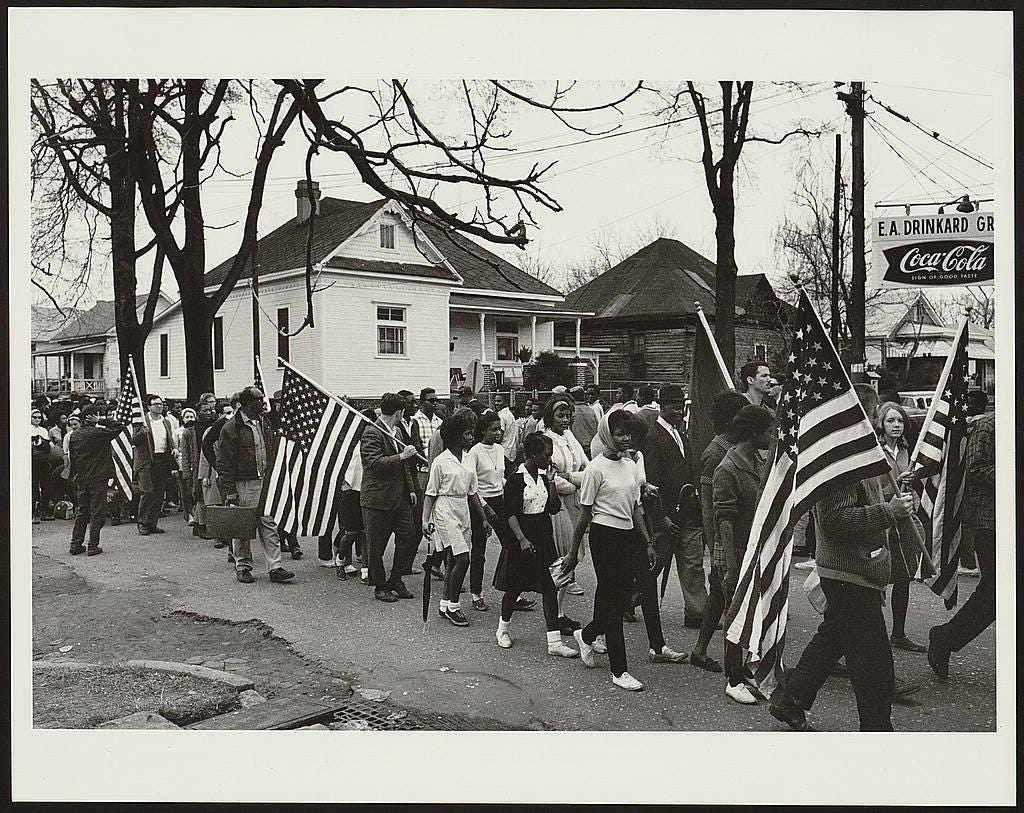
And I hate myself for the feeling I’m about to confess. Sometimes the public memory of King plays like a looped montage, summer demonstrations under punishing heat, faces shining with sweat, bodies moving like a living hymn, and somewhere in the background a nostalgic Coca Cola sign smiling like the nation’s unofficial stained glass. I see it and I feel something close to cynicism, and then I hate myself for feeling that way, because those marches were not content. They were courage. Still, I do not want to hear or promulgate another cliche King quote that has been sanded down for corporate hands. I want the living medicine, not the souvenir.
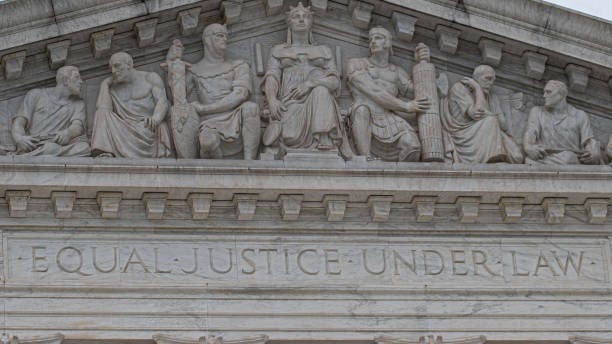
So look at the word JUSTICE for a second. Do not think. Just look. There is ICE inside it. That is not a gimmick. That is a warning.
I did not want to write this.
I am supposed to tell you it is going to be all right. I am supposed to tell you the arc of the moral universe bends toward justice, like that sentence can cover everything we are watching in real time. I am supposed to point at a Black president and call it progress, full stop, end of sermon, stop asking the next question. I am supposed to make MLK Day feel like a warm commercial that cuts away before the hard part.
Here is what I left off the page: I do not feel warm today. I feel alert. The kind of alert you get when your body knows the room is lying before your mind can prove it. And who am I to even write this at a time like this. I am a retired Black cop with a keyboard. Not an activist. Not Ivy League. Not even an HBCU. Just a man who has watched people cling to a story because the truth costs too much in one payment.
This morning I stood in my kitchen with a dry mouth and a screen full of King. The same clips. The same soft-focus courage. The same safe lines we repeat so we do not have to touch the dangerous ones. Outside, the world kept moving like it always does, loud and transactional, and I felt something simple and unforgivable settle in my chest.
MLK Day is the one day America insists it loved the man it would not protect.
And I cannot unsee what that means now. Somewhere the Dream worked. This is not that place. This ain’t the timeline he died for. We did not wake up here by accident. We took an exit. We kept taking it. Over and over. Quietly. Proudly. With paperwork. With applause. With the kind of “reasonable” that always seems to land on somebody else’s neck.
So if you are here for comfort, I need to disappoint you early. If you are here for a clean hero story, you are going to hate the middle of this. If you are here for the truth, stay close. Watch your body when you feel yourself reaching for the easy sentence. That is where the story changes.
The Exit Ramp Wasn’t a Moment. It Was a Habit.
I keep my old things in a closet I pretend not to have. Not because I’m sentimental. Because objects can argue back if you let them. A folded uniform becomes a credential. A badge becomes a permission slip. A radio becomes a lullaby.
Here’s what I left off the page, and I’m putting it on the table because it matters. I did not turn in all my uniforms like I was required to. I turned in enough to be “in compliance,” the way institutions love that word, and I kept the rest. Not because I was planning a comeback. Because some part of me still wanted proof that I had been authorized to stand where I stood. That’s the addiction right there. Not power. Legitimacy.
On MLK Day, I opened that closet anyway.
The fabric still holds a kind of authority. Not magic. Authority. The stiff, trained kind that teaches your shoulders to square up even when your insides want to soften. And I stood there touching seams like I was checking for a tear, like the problem was material and not moral, like you can stitch a country back together if you just keep your posture right.
I’ll own this too. There were years when I thought “order” was the highest form of love.
That’s what made the job seductive. It gave me a language for fear that sounded like virtue. It gave me a script where “keeping the peace” never had to ask who was being kept in their place. It gave me the comfort of procedure. Step one. Step two. Step three. And if the outcome was ugly, you could always point to the steps and say, “See. We did it the right way.”
But I also remember the other side of it. The part nobody puts in the brochures. Sirens set to code 3, throttle pinned wide open to the floor, and that gas-hungry V8 drinking the city like it was free. The sound is not just loud. It’s commanding. It tells everybody, move. It tells you, you matter right now. It’s a hell of a feeling for a human being who still has wounds they won’t name. Sometimes the humor is that you don’t even have to say you’re scared. You just step on it and let the engine say it for you.
And in the summer, there was the refuge nobody writes sermons about. You would be outside in that heavy heat, trotting around in black outer vest covers like a walking skillet, and then you’d slide back into the cruiser and let the vents blast ice cold air in your face like a small, selfish baptism. For a second you could believe cold meant clean. For a second you could confuse relief with righteousness. That is how the word JUSTICE starts to feel haunted, because the body learns to crave the ICE inside it.
That is the first wrong exit: the moment we made procedure holier than people, and then we let adrenaline baptize it.
You can feel it everywhere on MLK Day. The country dresses King up in safe verbs. Dream. Hope. Unity. Service. It keeps him floating, far from the ground where his words had weight. The nation loves him most when he’s abstract, when he’s a soundtrack behind a commercial, when he’s one quote on a poster held by somebody who does not want to talk about wages, housing, war, or the state’s appetite for punishment.
King becomes a permission slip not to change.
And I’m not saying that as someone pure. I’m saying it as someone who watched institutions launder themselves in real time. The system is rarely a monster foaming at the mouth. It is usually a committee. It is usually a training. It is usually a form you sign while telling yourself you’re just doing your job.
Here’s the part people do not want to admit because it implicates everybody. Most exits are taken with a smile.
We didn’t take the wrong exit by declaring hatred out loud. We took it by protecting comfort. We took it by choosing immediate quiet over difficult repair. We took it by calling unrest “violence,” and calling violence “policy.” We took it by turning “law and order” into a sacred phrase you could say and never have to define, because defining it would force you to confess who it was built to restrain.
My mind still writes reports. Date. Time. Location. Narrative. Witness statements. Actions taken. Outcome. That training never fully leaves your nervous system. So let me write this day up honestly.
Date: MLK Day.
Time: All day.
Location: A country performing reverence while clutching the same old exits.
Narrative: America holds a candle with one hand and grabs the leash with the other.
Exhibit A: We celebrate integration while refusing repair.
We love the image of the door opening. We hate the bill that arrives after the party. We want the photo. We don’t want the audit. So we keep telling ourselves “progress” is a vibe, a montage, a highlight reel. Then we act offended when somebody asks about wealth, schools, health, and housing, like those are rude topics at a memorial.
Exhibit B: We turned civil rights into personal manners.
We trained a nation to think racism is mostly tone. A slur. A private hatred. Because it is easier to police a mouth than a system. If the problem is “bad people,” then good people get to rest. If the problem is a machine, then everybody has to decide whether they are feeding it.
Exhibit C: We made violence invisible by calling it normal.
When the state punishes, it calls it accountability. When the market punishes, it calls it efficiency. When history punishes, it calls it inevitability. And when the punished react, suddenly we rediscover the word “chaos,” and we reach for the oldest comfort we have: clamp down.
And that clamp down has a temperature. It can look fair on paper, then feel freezing in practice. JUSTICE on the letterhead, ICE in the bloodstream.
That comfort is an archetype too. The Father who can control but cannot nurture. The Father who confuses obedience with safety. The Father who cannot bear the humiliation of being questioned, so he doubles down and calls it strength. Nations do that. Families do that. Institutions do that. I have done that.
So no, we did not fall into this timeline like somebody slipping on ice. We built it. Layer by layer. Policy by policy. Apology by apology. We built it so smooth we forget we built it at all.
And that’s where discomfort becomes useful. Because the question is not “How did we end up here?” like it’s weather. The question is: which exits are you still taking because they feel familiar.
If you are here for comfort, I need to disappoint you early. If you are here for a clean hero story, you are going to hate the middle of this. If you are here to blame one villain and keep your own hands clean, you are going to feel exposed. If you are here for the truth, stay close.
Because the next part is where we stop talking about “America” like it’s a stranger, and we start naming the exact bargains that trained us into this alternate universe one “reasonable” step at a time.
The Choices That Dragged Us Here
Let me stop speaking in fog and start naming exits.
Because “alternate universe” is a cute phrase until you realize how ordinary the engineering was. Nobody needed a portal. Nobody needed a conspiracy. Just enough people choosing the same comfort at the same time, over and over, until it felt like nature.
Here is the ugly cheat code. Most of the country’s worst turns did not arrive wearing a villain cape. They arrived as “reasonable.”
Exit 1: We crowned calm as morality.
I have been in rooms where everybody said the right words and still wanted the same see-through outcome. They wanted quiet. Not justice. Quiet. And quiet is seductive because it feels like control. It feels like adulthood. It feels like the grown-ups are back in the room.
But calm is not virtue. Calm is just the temperature of a room.
Some of the most violent decisions in American life are made with soft voices and good posture. They call it de-escalation when it is really displacement. They call it stability when it is really a lid pressed down on a pot that is already boiling. We started treating discomfort like a threat instead of a signal. That was a choice.
And once you worship calm, you start resenting anyone who interrupts it. You start calling their urgency “divisive.” You start calling their pain “political.” You start treating their truth like a noise complaint.
Carry this line if you need one: A nation that confuses quiet with peace will always punish the people who refuse to whisper.
Exit 2: We turned King into a mascot.
This is where MLK Day becomes a mirror that does not flatter.
We did something wickedly American. We took a living man with a dangerous analysis and embalmed him in a few safe sentences. We trimmed him down to a quote we can put on a poster, then used the poster to avoid the demands he actually made. That is not remembrance. That is containment.
When you reduce King to “be nice,” you do not have to talk about the machinery. You do not have to talk about the money. You do not have to talk about housing, labor, healthcare, war, and the state’s appetite for punishment. You can clap for the Dream while refusing the invoice.
That was a choice too.
And I am implicated. I have leaned on the safe King when the real King would have required me to change my posture, my friendships, my assumptions, my definitions of order. I have hidden behind “it’s complicated” when courage would have cost me something.
Exit 3: We privatized sin and protected systems.
This one is a national magic trick.
We trained ourselves to think racism is mostly a feeling. A slur. A private hatred. Something you can locate inside a villain’s heart, cut it out, applaud yourself, and go home. It is a comforting story because it lets the rest of us stay innocent.
But if racism is also design, then the question changes. Not “Who is bad?” but “What is built, what is funded, what is enforced, what is excused?”
Institutions love the private-villain story because it keeps scrutiny off the machine. It keeps the conversation emotional instead of structural. It keeps the solution moralistic instead of material.
Here is how that choice looks in real life. We punish a person for saying the quiet part out loud, then keep the policy that produces the same outcome. We fire somebody, then keep the incentives. We shame a mouth, then keep the blueprint.
And we do it while insisting it is “fair,” the way frozen things insist they are “preserved.” That is how ICE hides inside JUSTICE and calls itself professionalism.
Exit 4: We made adrenaline a substitute for meaning.
This is where my old life keeps tapping my shoulder.
Sirens. Wide open throttle. Gas-hungry V8s drinking the night. You learn fast that adrenaline can feel like purpose. It can feel like you are finally needed. It can feel like the world makes sense because there is a clear problem and you are allowed to move toward it at speed.
The danger is that a society can live on that feeling too.
We built a culture where we confuse intensity with truth. Where “tough” becomes the proof that something is right. Where punishment becomes the only language we trust. Where the quickest way to feel safe is to watch somebody else get controlled.
That is not just politics. That is psychology.
Carl Jung would call it a possession. The Shadow does not announce itself as Shadow. It shows up as urgency, as certainty, as the thrill of finally having an enemy simple enough to hate. When you do not integrate your fear, you outsource it. You hand it a uniform. You hand it a badge. You hand it a ballot. You hand it a script. Then you call the whole thing “common sense.”
And in a deck, a trump suit can override the rest. Too many people decided winning was the highest good, so spectacle became a trump card, and decency got played like a weak hand.
Exit 5: We chose image over repair.
This is the one that hurts because it is so ordinary.
We love progress as a story. We hate progress as a bill.
We want the first. The first Black this. The first woman that. The first milestone. We want the photo, the applause, the montage. But when repair shows up as policy, as redistribution, as accountability, as truth-telling that cannot be edited into a neat paragraph, we stall. We bargain. We ask for “unity” first, which is another way of saying, “Can you bleed quietly so the room stays comfortable?”
That is how you end up in a country that celebrates King and still fears what he meant.
So here’s where the piece went next: it stopped treating “how did we get here” like a mystery and started treating it like a ledger. Not vibes. Not fate. A list of decisions we keep repeating because they feel normal, because they feel safe, because they let us keep our self-image intact.
And that’s the punchline nobody wants: we don’t live in the wrong timeline by accident. We live here because the exits were paved, well-lit, and labeled “reasonable.”
Pick the Exit You Still Take
I used to think the danger lived out there, in the people who were obviously wrong.
Now I think the real danger is the part of us that can feel the wrongness and still reach for the same old comfort anyway. Not because we are evil. Because we are tired. Because we are afraid. Because we want to believe we can keep our lives intact and still call ourselves decent. That is how a whole country gets trained.
So let me make this uncomfortably practical. Pick one exit. Not the one you like to condemn on social media. The one you personally still take.
The one you defend a little too fast.
For me, it is the exit called “reasonable.” I have worn it like cologne.
I have said things like, Let’s be calm. Let’s not make it worse. Let’s wait for the facts. Let’s be fair. Let’s hear both sides. And look, those sentences are not always lies. Sometimes they are wisdom. Sometimes they are restraint. But sometimes they are a leash dressed up as maturity. Sometimes they are my nervous system trying to restore comfort, not my conscience trying to restore truth.
Here is the tell. Watch your body.
If you feel your shoulders drop with relief when you say “calm down,” ask yourself who benefits from that relief. If you feel irritated when someone is urgent, ask yourself what their urgency is threatening in you. If you find yourself longing for a “normal” that never really protected everybody, ask yourself who you were allowed to forget in order to call it normal.
That is the psychological move. The Shadow is not just the nasty part of us. It is the part of us that wants the reward without the reckoning. The part that wants the peace of innocence. The part that says, I am not one of those people, while quietly enjoying the structure those people maintain.
I am not pointing at you from a clean distance. I’m implicated. I have been comforted by the same machinery I now want to name. I have benefited from being seen as “credible” because my background makes certain readers relax. I know how easy it is to turn that into a shield instead of a responsibility.
So if you want to know how we ended up in this timeline, start here. Not with the loud villains. With the small personal bargains that feel like adulthood.
The bargain sounds like:
I will trade discomfort for stability.
I will trade honesty for harmony.
I will trade repair for a headline about progress.
I will trade the living King for the safe King.
Because the safe King never asks you to change your budget. The safe King never asks you to change your neighborhood. The safe King never asks you to change what you call “crime,” what you call “order,” what you call “deserving.” The safe King never asks you to confront how much of America’s peace has been purchased by somebody else’s silence.
But the real King does.
And that is why the holiday has to be more than a candle. If this day is not a diagnostic, it is a performance. If it does not locate the lie we keep living inside, it becomes another ritual that soothes us back to sleep.
Here is your assignment, and yes I mean it like that.
Name the small cost in your story.
The cost you pay to keep calling yourself “reasonable.” The relationship you avoid because it would force a conversation you cannot control. The policy you tolerate because it keeps your taxes low. The joke you let slide because you do not want to be the difficult one. The news story you scroll past because it makes you feel powerless.
Write it down. One sentence. No fancy words. Just the cost.
Because once you name it, you can stop pretending it is an accident. And once you stop pretending, you can choose something else.
Not the perfect thing. The human thing.
One exit at a time. One refusal at a time. One truth at a time.
What Should Have Been Was Not Utopia. It Was Maintenance.
Let me tell you what the “right timeline” looks like, and I am not talking about flying cars or everybody holding hands in a pastel commercial.
I am talking about boring, holy maintenance.
In that timeline, King does not get turned into a mascot. He gets treated like a diagnosis. The country hears him say justice and understands he meant budgets, housing, wages, schools, healthcare, and the refusal to solve social problems with punishment because it feels fast.
In that timeline, we do not build a national identity around being “tough.” We build it around being honest.
We do not confuse punishment with protection. We do not confuse calm with peace. We do not confuse a milestone with repair. We do not call it progress because the room has better manners while the outcomes stay the same. We do not let the photo substitute for the audit.
And yes, I know how this sounds. It sounds like a fantasy because we have been trained to think cruelty is realism and care is childish. That training is part of the spell.
Here is the part that makes the alternate universe feel so close you can taste it. None of what I just described requires saints. It requires incentives. It requires policy. It requires a different definition of “order.” It requires a public that stops treating other people’s suffering as an acceptable price for our own comfort.
That is what should have been.
What is, is this.
We built a culture that treats the siren like a solution. When something scares us, we hit the lights, hit the throttle, and call the noise “action.” We built a politics that worships enforcement because enforcement feels like control. We built an economy that can make a person work full time and still live one crisis away from collapse, then we blame their character for the math. We built a mythology where the individual is responsible for everything, and the system is responsible for nothing.
That is not an accident. That is a worldview.
And worldview is psychological. It is the collective story the nervous system prefers. The Father archetype gone rigid, obsessed with command, allergic to tenderness, furious at dependency, suspicious of the vulnerable, addicted to obedience because obedience makes the chaos quiet for a moment.
That is why MLK Day is so haunted.
Because we celebrate the man and reject the medicine.
Here is the human move, the one that changes a timeline without pretending you are a superhero. Pick one place where your comfort is subsidized by somebody else’s silence, and stop calling that “normal.”
Not forever. Not perfectly. Start with one refusal you can actually sustain. One meeting you can show up to. One policy you can learn well enough to argue about without hiding behind vibes. One institution you can pressure with your name attached. One friend you can disappoint without collapsing.
That is how the dream works again. Not as a slogan. As maintenance.
The Alternate Universe Has a Password
There is a moment in every good con where the mark thinks they’re choosing freely.
That’s the part that still keeps me up, not because it’s dramatic, but because it’s familiar. We have been living inside a set of choices that feel like common sense, and that is exactly why they work. The alternate universe doesn’t need force every day. It runs on consent, on habit, on the little sigh you exhale when you decide, again, not to make trouble.
Here is what I mean by “password.” It’s the phrase you say to yourself right before you take the exit.
I’m just being realistic.
I’m not trying to start something.
It’s not my lane.
Both sides are bad.
I’ve got my own problems.
What can I do anyway.
Those are not just sentences. They are spells. They shrink your imagination so the world can stay the same.
And listen, I’m not calling you weak. I’m naming the mechanism. Because I’ve used those words too. I have told myself “stay professional” when I meant “stay comfortable.” I have told myself “wait for the facts” when I meant “I don’t want to feel implicated.” I have told myself “be reasonable” when I meant “don’t let the room turn on you.”
That’s the Shadow, not as evil, but as self-protection that has outlived its usefulness.
In the wrong timeline, the Shadow gets rewarded. It gets called maturity. It gets called pragmatism. It gets called being an adult. And then it gets promoted into policy.
You can see the pattern if you squint at history the way a cop squints at a scene. Not to judge the person bleeding. To locate the tool that made the wound.
First we get taught to fear disorder more than injustice.
Then we get taught to admire force more than repair.
Then we get taught to treat suffering as a character flaw.
Then we get taught to call that whole chain “freedom.”
And by the time you notice the cost, your nervous system is already loyal to the story.
This is the part where people want me to offer a clean villain. A single name. A single party. A single decade where everything went off the rails.
But the truth is uglier and more useful. The wrong exit is bipartisan. It’s cross-cultural. It’s intergenerational. It’s the American promise that you can keep your comfort and still call yourself righteous.
That promise is a lie.
And MLK Day is the annual attempt to keep believing it. We honor a man whose life was a rebuke to the lie, then we use the honor to avoid the rebuke. We act like the Dream was a destination instead of a discipline. Like it was a poster instead of a practice. Like it required applause instead of maintenance.
If you want to step out of this alternate universe, you do not need purity. You need a new password.
The new password is not “hope.” Hope is too easy to sell. The new password is responsibility. The unsexy kind. The kind that shows up when no one is clapping. The kind that keeps working even when the outcome isn’t immediate. The kind that refuses the exit even when the exit is paved and well-lit and called “reasonable.”
So try this, just once, the next time you feel yourself taking the old ramp.
When your mouth reaches for “calm down,” ask: Who is being asked to pay for this calm?
When your mind reaches for “both sides,” ask: What is the concrete harm, and who is carrying it?
When your chest reaches for “not my lane,” ask: What lane did I inherit, and who built it?
When you feel the urge to scroll past, ask: What would it cost me to stay with this for five minutes longer?
That is not activism as performance. That is individuation as citizenship.
Because the whole point of Jung’s work is that what you will not face in yourself will be faced for you in the world, usually in distorted, violent form. A society that refuses its Shadow does not become innocent. It becomes possessed. And possessed societies do not need monsters. They create them.
So no, this is not a story about how America lost its way. It is a story about what we have been rewarding in ourselves.
And if that’s the diagnosis, then the treatment is not a holiday. It’s a practice.
We’re not going to get the right timeline by posting the right quote.
We get it by refusing the exit.
MLK Day, Unembalmed
I keep thinking about that closet.
Not the uniforms, exactly. The feeling behind them. The part of me that wanted proof I belonged to something powerful, something clean, something certain. The part of me that wanted the story to end with the good guys winning and the bad guys getting exposed, and then we all go home.
That is the childish dream I had to bury before I could hear King clearly.
Because the Dream King talked about is not a bedtime story. It is a discipline. It is maintenance. It is the daily refusal to let your fear borrow a suit and call itself “reasonable.”
And I know what some of you want me to do right here. You want me to soothe you. You want me to tell you this is just a rough patch. You want me to sprinkle a little moral glitter on the wound and call it healing.
I can’t.
Somewhere the Dream worked. This ain’t that timeline.
But here is the part that changes everything. Timelines are not magic. They are choices stacked so high they start to look like fate.
So let me be plain, and let me be tender in the only way that matters. I am not asking you to be perfect. I am asking you to stop lying to yourself about the exits you keep taking.
If you are here for comfort, I need to disappoint you early. If you are here for a clean hero story, you are going to hate the middle of your own reflection. If you are here to watch villains burn while keeping your hands clean, you are going to leave angry. If you are here for the truth, stay close. If you are here because your body has been telling you something is wrong and you are tired of being gaslit by “progress,” I wrote this for you.
Here is the human move, the one that can’t be monetized and can’t be outsourced.
Pick one small lie you tell yourself to stay comfortable. Put it on the table. Call it by name.
Then pick one small refusal you can sustain.
Refuse the joke that trains cruelty.
Refuse the meeting where “calm” means “shut up.”
Refuse the policy you tolerate because it doesn’t hit your zip code.
Refuse the easy sentence that lets you stay innocent.
Do not do it loudly for a performance. Do it quietly like a vow.
Because that’s what King was doing. Not dreaming in the clouds. Building on the ground. Paying the price of truth in public, over and over, until the country had to either change or kill him. And since we know what it chose then, we should stop acting surprised by what it chooses now.
MLK Day is not a day for quotes. It is a day for inventory.
What should have been was a country that treated repair like a duty, not a debate.
What is, is a country that treats repair like an insult, then calls the insult “common sense.”
How the hell we got here is that too many of us learned to love the feeling of innocence more than the work of justice.
And here is the cold fact hiding in plain sight, the one that makes the word look haunted. JUSTICE contains ICE. We keep begging for the warm part while building the cold part, then acting shocked when our hands go numb. We keep saying we want justice, then we keep choosing the chill of distance, procedure, and plausible deniability. We keep picking the cold because it lets us call ourselves “reasonable.”
I’m a retired Black cop with a keyboard. That means I know what a script sounds like when it is trying to keep people calm while the house is burning. It also means I know this. A siren is not a solution. Speed is not salvation. Control is not care.
The Dream doesn’t fail because it was naïve. It fails when we turn it into a holiday and refuse to turn it into a practice.
So here is my last sentence, the one I want you to carry like a small hard coin in your pocket.
The timeline changes the moment you stop taking the exit called “reasonable” and start paying, on purpose, for the world you keep saying you want.
I’m not going to make any money writing essays like this. I almost didn’t post it, not out of reverence for King, but because I could already hear the unsubscribe clicks warming up. Fine. Not today. If you’re still here anyway, just know I work for you. This is what I do all day and night. I put words to the feelings you can’t quite name. If you want me to keep doing it, the paid button’s there.
And I believe you are absolutely correct. Once again I honor your courage to be completely truthful. You don't seem to hide from anything, and I admire that.
Truth: "That is how you end up in a country that celebrates King and still fears what he meant."
I have been experiencing this my whole life. People whom I loved and respected and some I hardly knew preaching goodness until it hit home. I have been so very confused and I've often felt very betrayed when people turned on me because of honest choices of integrity. I'm not saying I've never take the easy exit. I have, and that's mine to own. I'm moving into the lane that says "no more."
I work regularly in a food pantry and as one of the leaders I told the other leaders a few years ago that if officials came into our pantry, I would put my body between them and our guests who are mostly not white. At that time, the others had no problem with that. Recently, as all this became a possible reality, we got a notification from the institution that governs many food pantries in our area that if ICE or CPB showed up we should be respectful (??!!) and not interfere. As I read the 6-page document, I was in shock. I was told I absolutely had to follow these guidelines. I sat on that for a couple of weeks, but now I know I will not honor that document that wants us all to "calm down." I now know that no matter the consequences I will put my body between those officials and our amazing, incredible guests.
On Jan 14, Rebecca Solnit included this in her newsletter:
“A striking thing all through 2025 was the presence of clergy in the demonstrations and protests to protect immigrants and refugees and their rights. This week Rob Hirschfeld, Bishop of the Episcopal Diocese of New Hampshire, announced, ‘I have told the clergy of the episcopal diocese of New Hampshire that we may be entering into that same witness and I've asked them to get their affairs in order, to make sure they have their wills written, because it may be that now is no longer the time for statements but for us with our bodies to stand between the powers of this world and the most vulnerable.’”
I don't live in NH, but reading that increased my resolve to do the right thing, not the nice thing to make some folks feel better.
There are far too many good points and useful phrases in this essay to recount or emphasize here. Because Dr. King was taken from us the way he was, he has become a martyr for the American ideal. We recount and remember the soaring phrases because they remind us of what we like to think we are. This is normal, and not all bad. Dr. King is an American icon. What we fail to remember is the "good trouble" he caused. And that we need to make "good trouble" ourselves if we are to continue to struggle toward that ideal. The arc of history doesn't bend toward justice unless people become committed to bending it. And this will be an ongoing process of "repair." Perhaps it would be a good time to paraphrase and remember the speech a great white man gave a century before Dr. King was killed, "It is rather for us to be dedicated to the great task remaining before us -- that from this man we honor we take increased devotion to that cause for which he gave the last full measure of devotion -- that we here highly resolve that he shall not have died in vain -- that this nation, under God, shall have a new birth of freedom -- and that government of the people, by the people, for the people, shall not perish from the earth."