


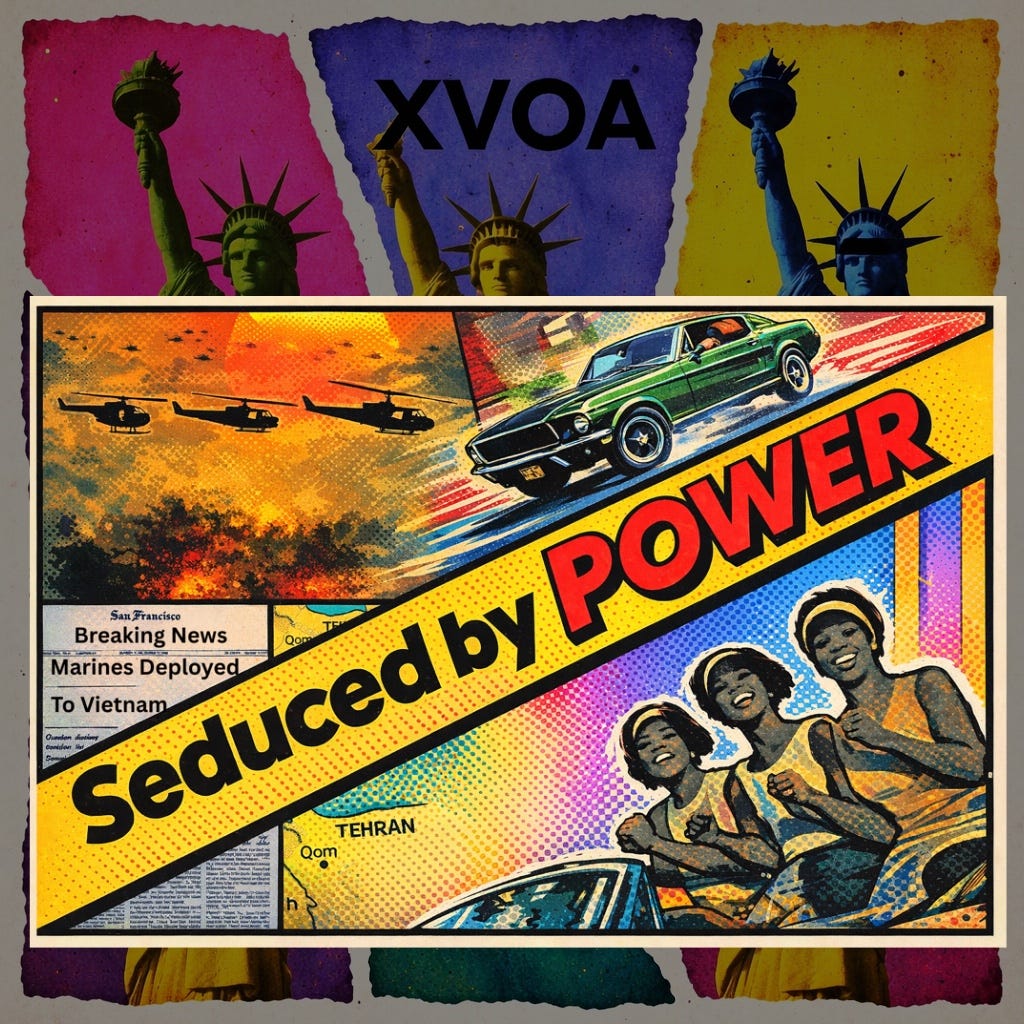
I learned America from the inside of an engine before I ever tried to understand it as a country.
Back in high school, I met the owner of a mechanic shop through a classmate in a drafting blueprint class. His boss needed hired help. Turns out the boss was good at math. I needed help with college Algebra. He agreed to help me out and gave me the job disassembling engines. Small block Chevys. Big blocks. Ford 351 Windsors. All of them. I got to touch the iron itself. Not the poster version. Not the movie version. The real thing. I learned weight. I learned smell. I learned how power is laid out piece by piece. I learned how something can sit quiet on a stand looking dead as a doornail and still carry the promise of violence once it is brought back to life.
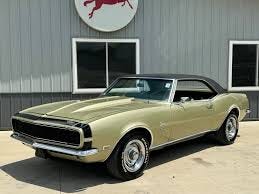
At home, my father and I were restoring a 1968 RS Camaro. Vinyl top. Hideaway headlights. A factory 327 engine. Bucket seats. A gauge cluster pack in the center console. Some parts were cobbled together from junkyards because it was the late eighties and you could still find classics rotting under the hot Florida sun, discarded like somebody’s trash. I remember 67 fastback Impalas. A 67 Camaro. A Nova SS. That Nova is where I got the gauge cluster. Finding parts back then was a hunt. No Amazon. No eBay. No online marketplace with a guy three states over selling exactly what you needed. It was junkyards, a few mail order companies, and luck. You walked through weeds and rust and broken glass hoping some dead machine still had one good organ left in it.
That was the mood of the culture too. The arrow on the nostalgia clock was pointed straight at the sixties. Ray Bans were back. Certain fashions from the sixties were back. Old cool had come back around for another lap. On television, Nick at Nite was running Dragnet reruns with that clipped law and order voice from another America, replaying like the country was trying on its old certainty again. And then you had Tour of Duty bringing Vietnam into living rooms as memory, wound, and atmosphere. So even if people were dressing up the decade, they were still surrounded by reminders that the decade had ended in smoke, body bags, and televised shame.
What I did not understand then, with grease on my hands and a half restored Camaro in my head, was that I was standing inside more than nostalgia. I was standing inside a national habit.
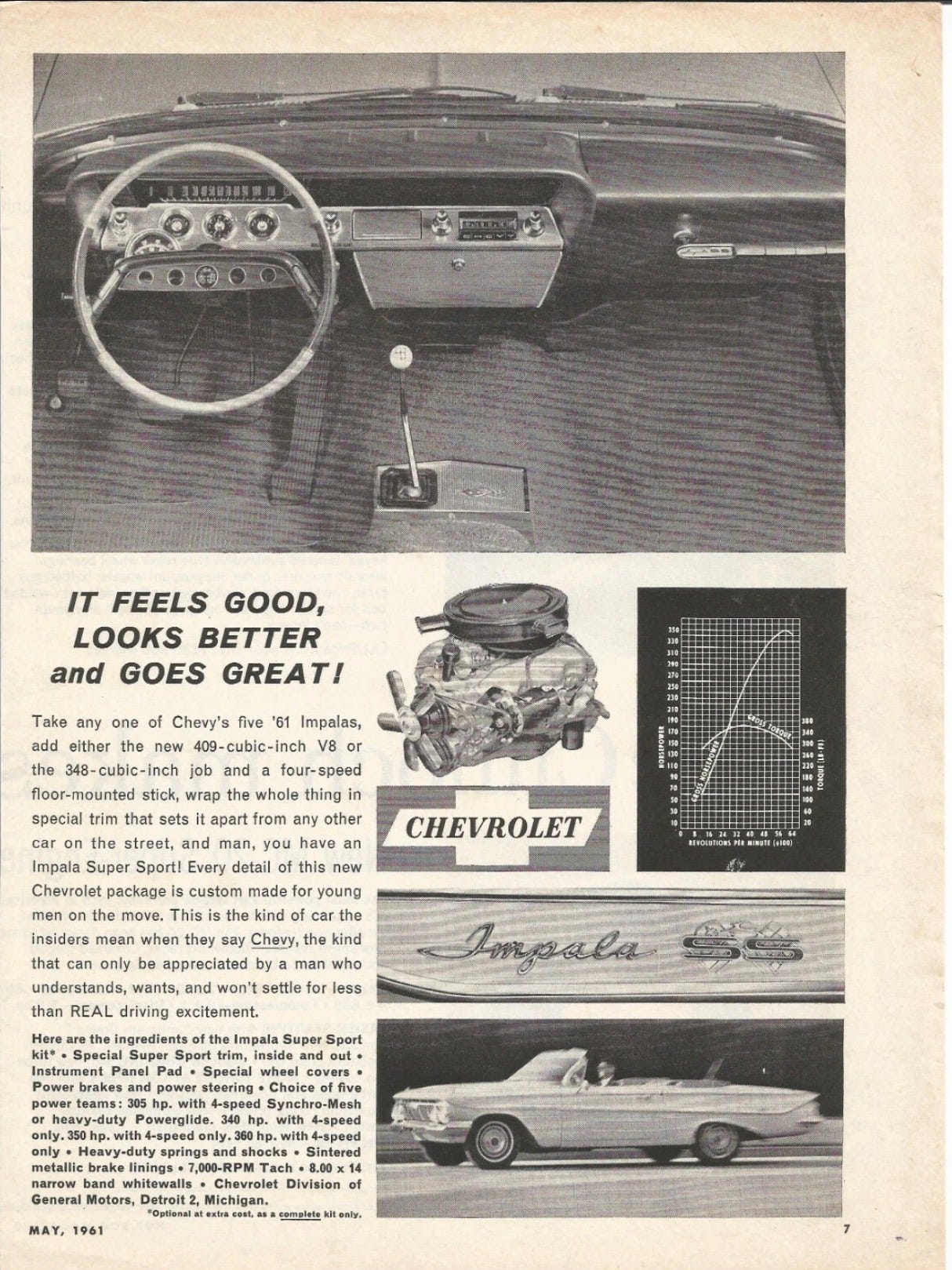
The oh crap realization hit me when I started laying the timelines next to each other. The muscle car era and the Vietnam era do not just overlap. They move with eerie symmetry. Just as Detroit was learning how to drop bigger engines into midsize bodies and sell raw horsepower as freedom, the United States was deepening its military involvement in Vietnam and selling firepower as strategy. The Impala SS arrives in 1961 just as Kennedy expands U.S. involvement in Vietnam. The Chevelle appears in 1964 as Gulf of Tonkin opens the floodgates. By 1965, Chevrolet is dropping the 396 into the Chevelle as Rolling Thunder begins and Marines land at Da Nang. By 1970, the Chevelle SS 454, Camaro Z28, and redesigned Corvette arrive at the very moment the war widens into Cambodia. By 1975, catalytic converters and the collapse of the old street monsters sit on one side of the ledger while Saigon falls on the other [1][4][5][6][15][21].
Same country. Same appetite. Same reckoning.
That is the core of this essay. America has a way of falling in love with power at the exact moment it most needs to reckon with consequence. It does not just admire the machine. It asks the machine to save it. To make the limits disappear. To drown out memory with noise. To outrun guilt with speed. More horsepower. More firepower. More machine. More force. Enough of it, and maybe nobody will ask what it is doing to the world around us. Enough of it, and maybe we never have to slow down long enough to face the bill.
TLDR
The muscle car era and the Vietnam era rose together because they were driven by the same American faith that more power could outrun consequence [1][5][6].
Martha Reeves singing “Nowhere to Run” inside a Mustang plant, and Hollywood turning Bullitt and American Graffiti into scripture, show how America learned to worship the machine [7][8][9].
The late 1980s return of the Mustang 5.0, Camaro IROC Z 350, GNX, and later the ZR 1 mirrored America’s post Vietnam attempt to believe power had come back smarter, cleaner, and under control [26][27][28][33].
That same feeling has now migrated from the dashboard to the smartphone and into AI, where ordinary people, presidents, and war planners alike are seduced by the illusion that compute power can make even the Iran war look manageable [35][37][39][40][46].
Restack it and share it. Send to one friend who still thinks horsepower, firepower, and compute power are separate stories. Paid subs help me keep doing this work:
If you can’t swing a paid subscription right now no problem. But Me A Coffee!
Martha Reeves & the Vandellas at the Ford plant
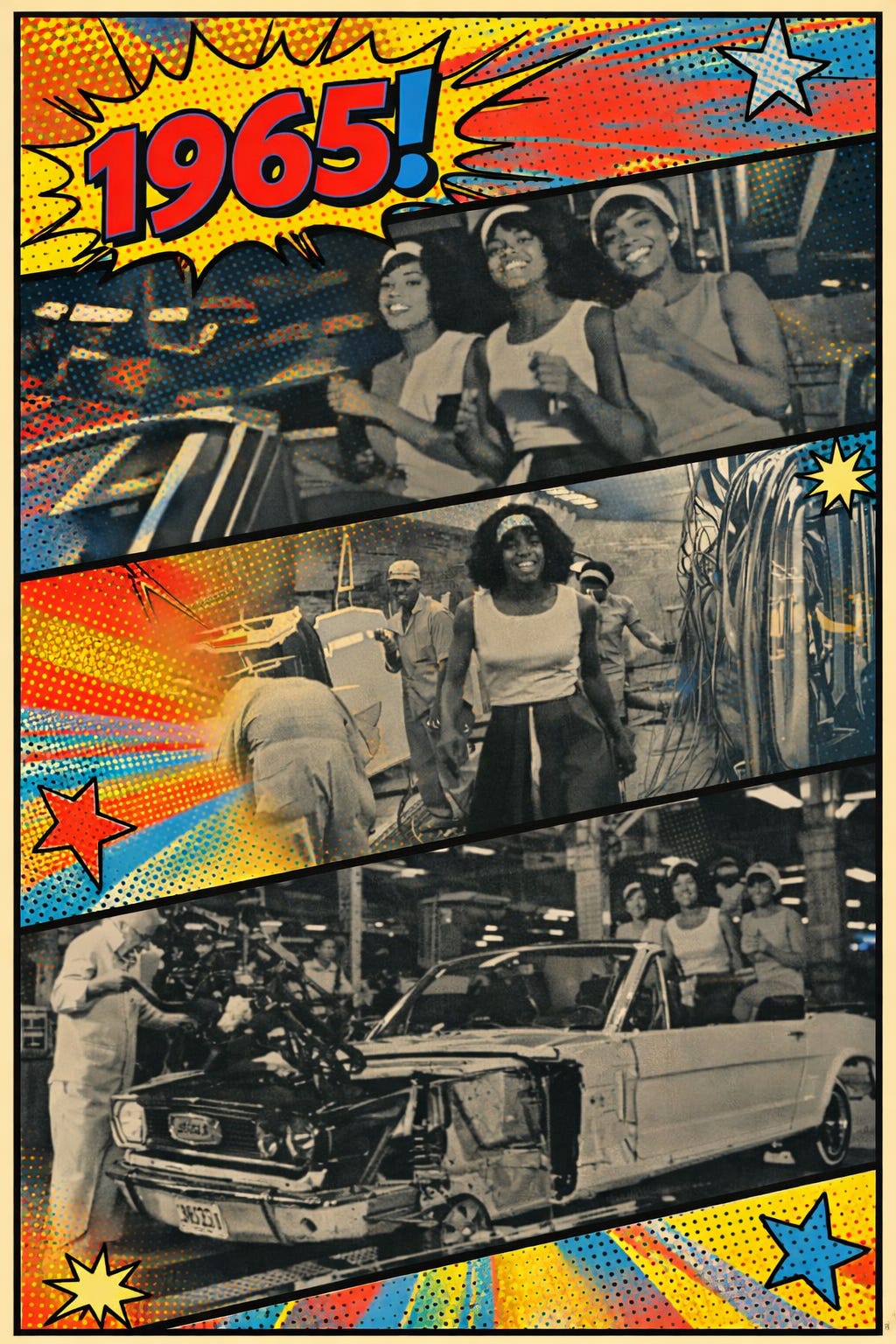
Martha Reeves & the Vandellas at the Ford plant
I cannot get over the image of Martha Reeves and the Vandellas singing “Nowhere to Run” in a Ford Mustang plant in 1965. The Motown Museum presents it as Motown’s first music video, which means this was not some random backstage oddity or a story that got inflated years later. It was a real piece of pop history, staged against an assembly line backdrop where America was literally building one of its great icons of youth, speed, and swagger [7].
The timing matters too. The performance was tied to the CBS special It’s What’s Happening, Baby!, which aired on June 28, 1965 [8][9]. So before MTV, before the phrase music video had hardened into a category, here were three Black women singing a song about entrapment while moving through the machinery of American industrial fantasy. That alone is almost too perfect. The song says one thing. The backdrop says another. And together they tell the truth.
Now, one of the most irresistible details in the story is the sense that the whole thing happened in a blur of favors, hustle, and institutional looseness. Later reporting, drawing on Ford archival leadership, says there is no surviving internal paperwork that cleanly explains how formal the authorization was. Some accounts suggest the line was operating. Others are less definite. So the most honest way to write it is not as courtroom certainty, but as something even more interesting: a corporate media hybrid that slipped into existence because industry, entertainment, and marketing were already learning how to use each other [10].
And the making of that promo is half the point. Ford appears to have allowed a camera crew into an active Dearborn assembly plant while Mustangs were actually moving down the line [10]. Berry Gordy seems to have called in favors. Lee Iacocca, seeing the publicity value for the brand new Mustang, appears to have let it happen [10]. Martha and the Vandellas wound up dancing near an open painting area, moving among quarter panels drying on the line, and even climbing into an unfinished Mustang convertible while workers were still trying to do their jobs [10]. Reeves later remembered the men shouting for them to get out of the way because they were trying to work [10].
The factory becomes the stage. The machine becomes the scenery. American power does not just produce cars. It produces spectacle around the cars. It teaches the public how to feel about them. It wraps steel, motion, labor, and desire into one bright image and calls it culture. That is why this ain’t just trivia. It is evidence.
The timing matters too. The performance was tied to the CBS special It’s What’s Happening, Baby! which aired on June 28, 1965. Before MTV, and before the phrase music video had hardened into a category, three Black women were singing a song about entrapment while moving through the machinery of American industrial fantasy [8][9].
Later reporting notes there is no clean paper trail explaining how formal the authorization was. That makes the moment even more revealing. Industry, entertainment, and marketing were already blending into one system [10].
That is why the image matters. The factory becomes the stage. The machine becomes the scenery. American power does not just produce cars. It produces spectacle around them.
Hollywood, horsepower, and the worship of the machine
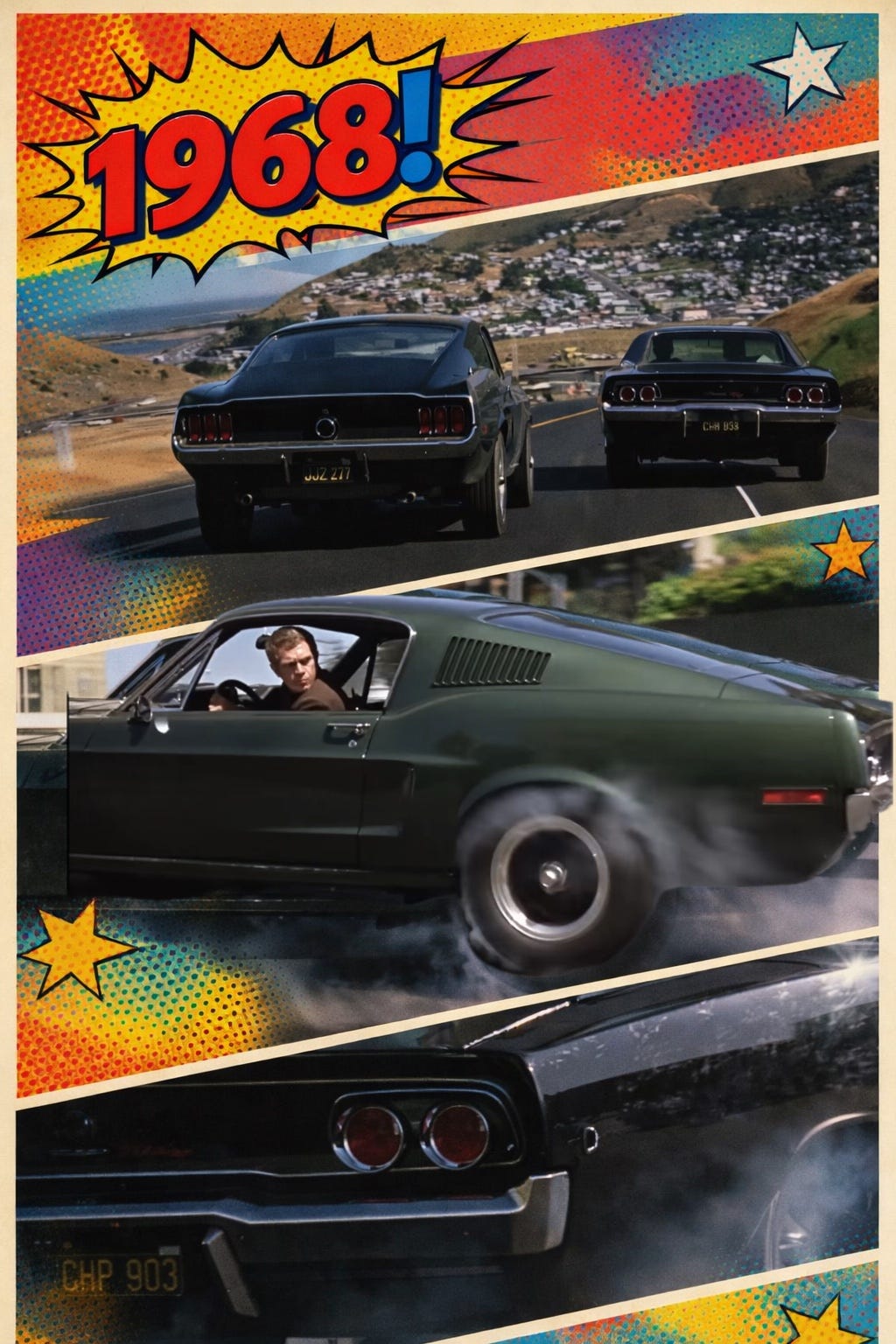
If I am going to argue that America did not just build these cars but worshiped them, then I need to deal with the movies. I need to deal with them as evidence.
Start with Bullitt. The Library of Congress added the film to the National Film Registry, and its description does not treat the chase scene as some side attraction. It calls that eleven minute San Francisco pursuit one of the greatest in cinema history [48][49]. That matters because Bullitt did not simply feature a car. It canonized a car. It fused Steve McQueen’s cool, masculine restraint, urban danger, and mechanical authority into one image the culture never really got over.
And the making of that sequence matters. AFI’s production history notes that part of the chase was set to be filmed on the Golden Gate Bridge with a lane shut down on an early Sunday morning, and McQueen planned to do his own driving at speeds reportedly up to 100 miles per hour [64]. Warner Bros. even sent him an insurance form asking him to refrain from racing cars and riding motorcycles off set for the duration of production. McQueen refused to sign it, saying, “There are some things that aren’t for sale and one of ’em is my soul” [64]. The picture was also the first shot exclusively on Arriflex cameras, which were smaller and more mobile than standard film cameras, helping Peter Yates capture the immediacy and violent momentum that made the chase feel less staged than lived [64].
The film arrives in 1968, the same year Tet ripped through the illusion of American control in Vietnam [13]. That is part of why the chase scene feels so charged. It offers, on city streets, the same fantasy of command that the war was offering from the sky. Behind the wheel, the man and the machine merge into a kind of secular godhood. Streets open. Gravity seems negotiable. Other people become obstacles, targets, or scenery.
In Vietnam, the helicopter had become the military version of that same intoxicating idea. Army histories would later call Vietnam America’s helicopter war for a reason. The Huey and the Cobra did not just move men. They gave them altitude, reach, and the feeling that technology could lift them above ordinary human limits and ordinary human consequences. Bullitt translates that feeling into civilian mythology. The car becomes the street level cousin of the gunship. Speed, force, control, masculine cool. Same fantasy. Different machine.
And the worship did not stop with the film itself. One of the surviving 1968 Mustang hero cars was later recorded in the National Historic Vehicle Register, a preservation project tied to the Library of Congress and the Department of the Interior [50][51]. In other words, the machine did not just live in memory. It entered the archive.
That is not trivial. That is national mythmaking. A car chase became heritage. A movie prop became an artifact. The country looked at a mass produced machine and decided it carried enough symbolic weight to be treated like cultural patrimony. That is what worship looks like in a secular empire. We do not kneel. We preserve.
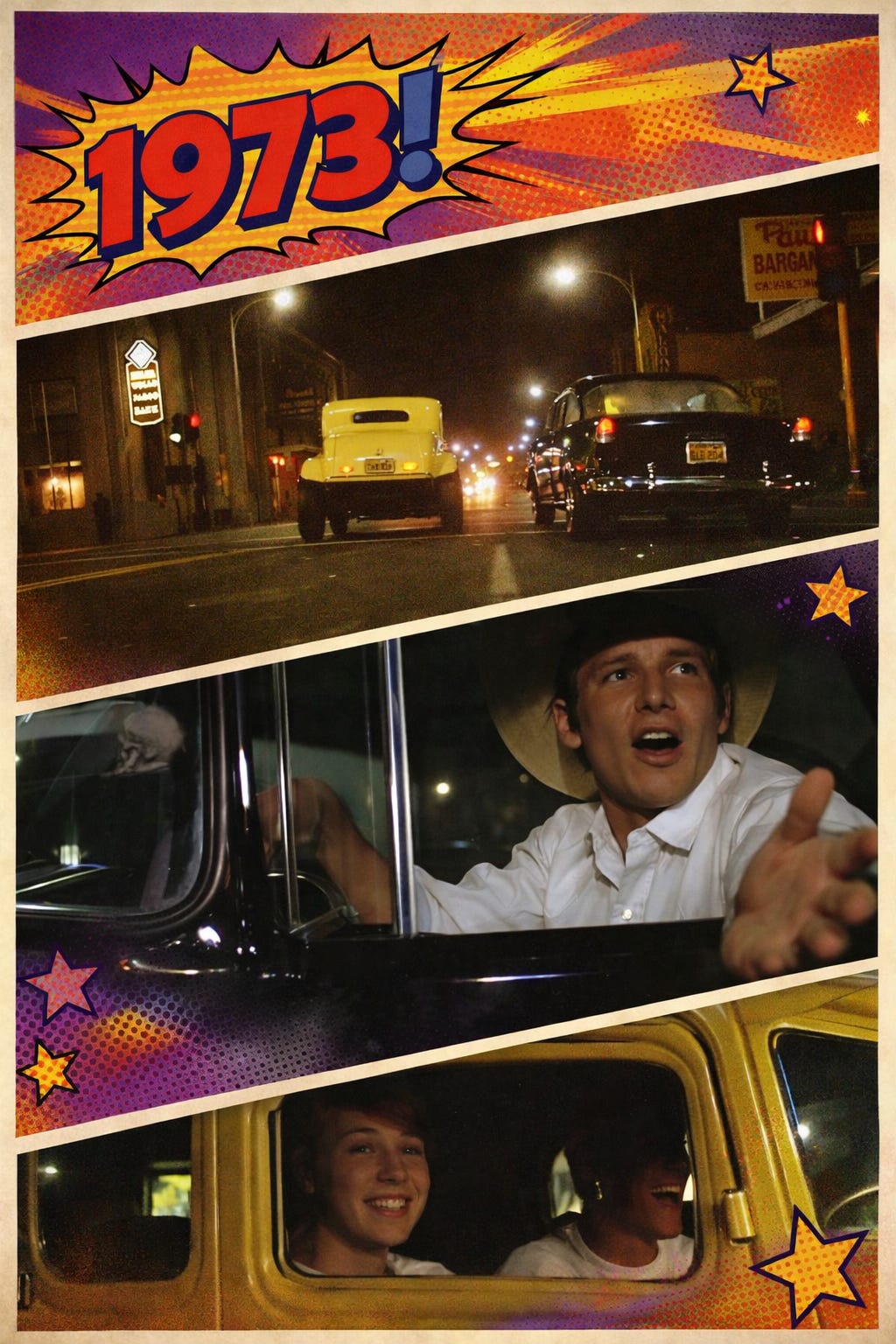
Then there is American Graffiti, which may be even more important for this essay because it turns the car from an instrument of masculine cool into the center of a whole social world. The Library of Congress says the film helped spark a nostalgia craze and appealed to audiences through its wistfulness for a pre Vietnam simplicity [52]. That phrase is doing a lot of work. Lucas was not just showing kids driving around. He was staging a whole American ritual of cruising, radio, chrome, anticipation, and adolescence right on the edge of historical rupture. The cars are not background in that movie. They are the room where youth becomes legible to itself.
And Lucas was not some detached observer dropping symbols in from a distance. AFI notes that before filmmaking took over his life, he planned to become a racecar driver until a terrible car accident changed his path [53]. Which means the man who made American Graffiti was not merely interested in cars as scenery. He had skin in the game. He understood speed not only as style, but as desire, danger, identity, and fate.
Put those two films together and the pattern sharpens. Bullitt turns the car into a weapon of cool. American Graffiti turns the car into a vessel of memory, belonging, and youth ritual. One gives us the machine as sovereign male force. The other gives us the machine as social heartbeat. Between them, Hollywood helped teach America how to feel about horsepower. Not as transportation. Not even as engineering. As destiny.
Together, these films teach America how to feel about horsepower. Not as transportation. As identity.
GM performance models and Vietnam escalation aligned
1961 to 1975 year by year alignment table
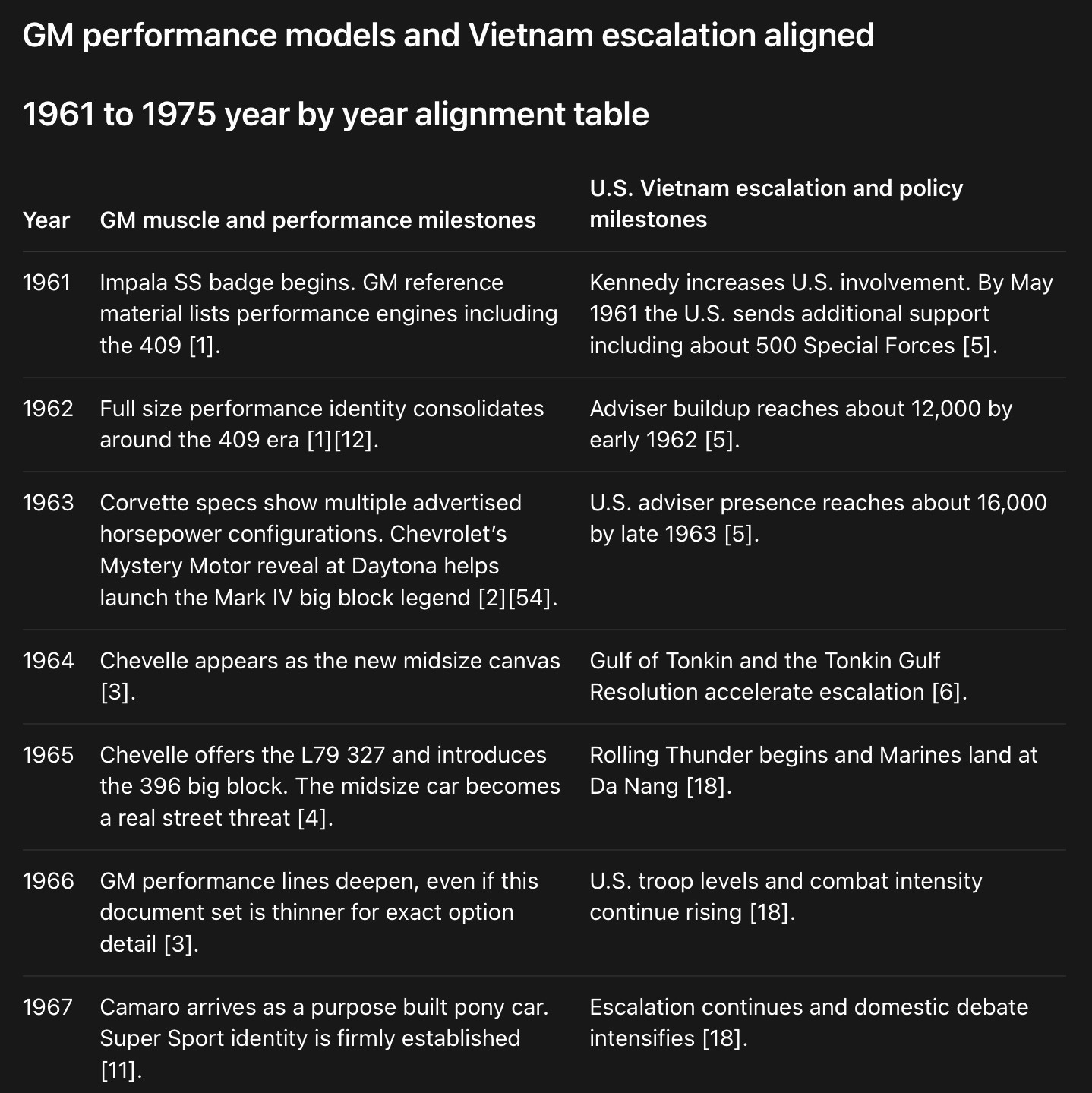
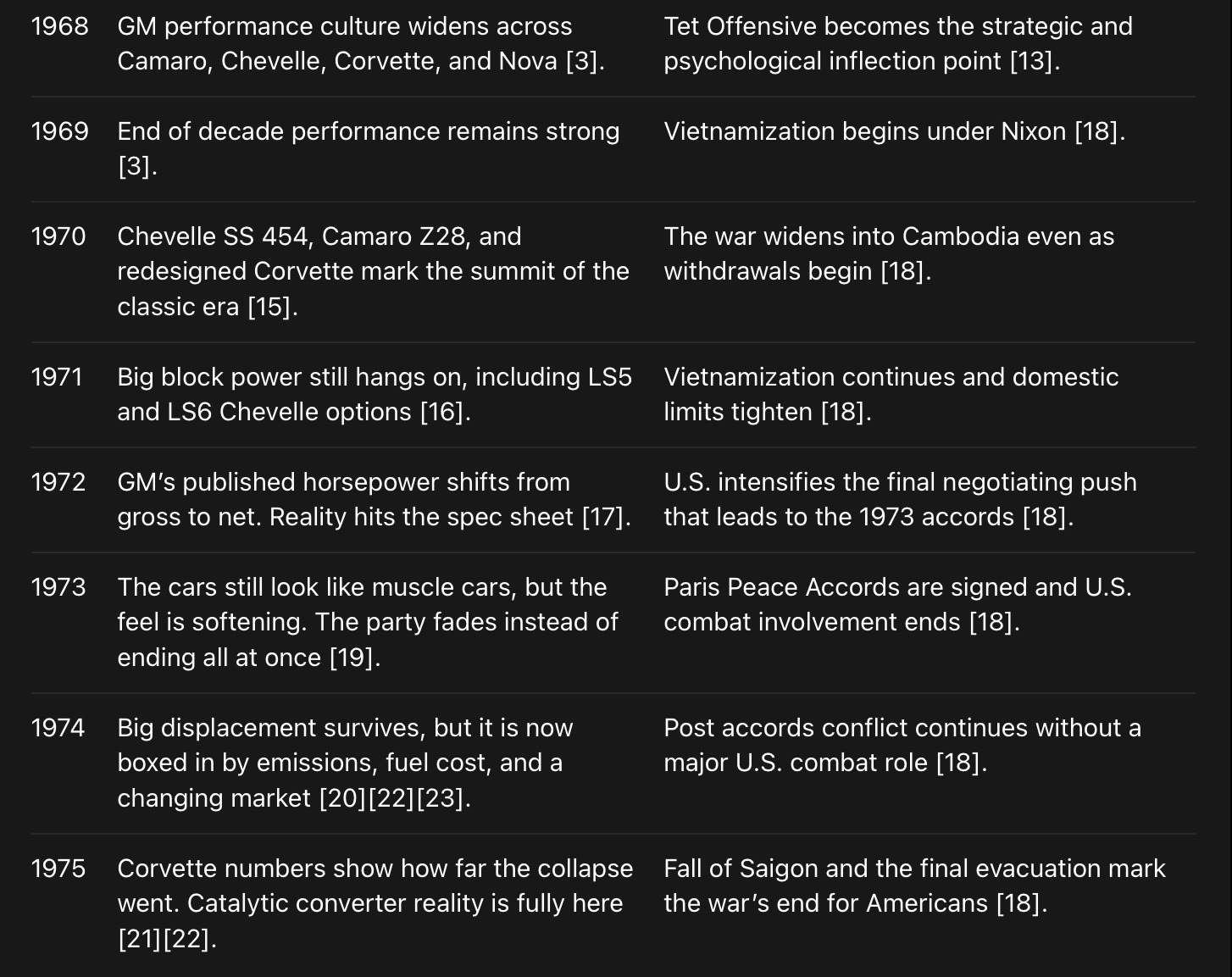
Before we get lost in numbers, here’s how to read this table if you don’t live in car culture.
Think of horsepower like volume on a stereo. The higher the number, the louder the machine can shout. In the 1960s, Detroit kept turning that volume knob up. A big block engine simply means a physically larger engine that can burn more fuel and make more power.
Early on, manufacturers advertised gross horsepower. That was the engine tested in ideal conditions, with nothing attached. By 1972, the industry had to shift to net horsepower, which measured the engine as it actually sat in the car. Same engine family. Lower numbers. Reality finally showed up on the spec sheet [17].
So when you look at this table, you are not just looking at engineering. You are watching a story. The numbers climb through the mid to late 1960s, peak around 1968 to 1970, then drop hard as emissions rules, fuel shocks, and new standards force honesty back into the system [22][23][24].
And while all this is happening, Detroit is not operating in a vacuum. There is a rivalry animating the whole thing like a bar fight that never quite ends. Camaro versus Mustang. Ford fires the first big shot with the Mustang in 1964. Chevrolet answers with the Camaro in 1967. From there it is escalation in both performance and identity [11][31].
That is why this table matters. It is not just a list of cars and wars. It is a visual of escalation. On one side, engines getting bigger, louder, and more powerful. On the other, a war getting bigger, louder, and more intense.
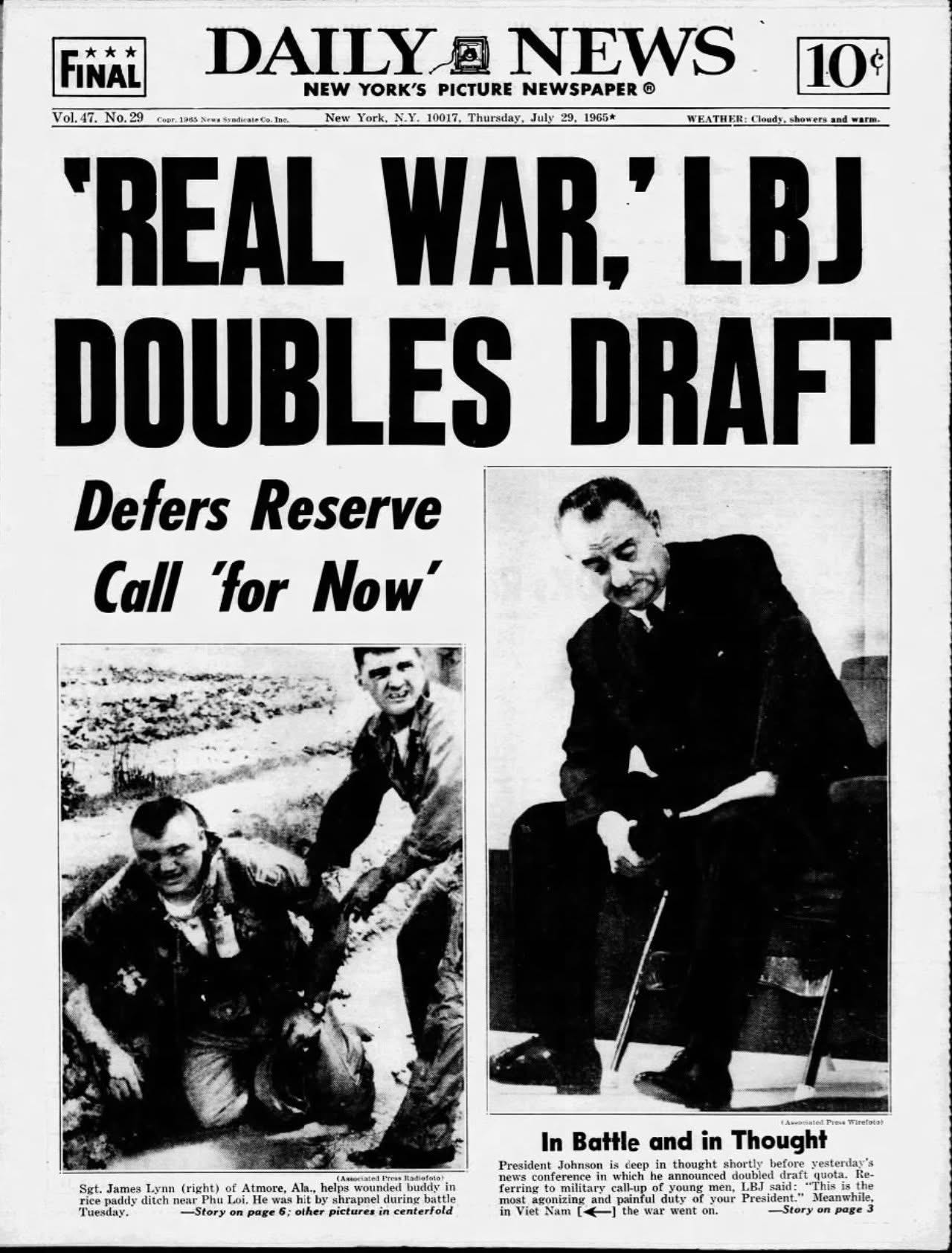
The deeper correlation is not that Detroit caused Vietnam. It is that both spheres were being driven by the same American emotional logic. In Detroit, power meant bigger engines, louder claims, and a constant push to outrun the other guy. In Vietnam, power meant more troops, more bombing, more helicopters, more tonnage, more escalation. In both cases, the answer to uncertainty was not restraint. It was more machine [5][13][18].
And then the comedown arrives in both worlds. In the car world, emissions rules, fuel shocks, catalytic converters, and new measurement standards bring the fantasy down to earth [17][22][23]. In the war, the body count logic rots, the client state comes apart, and Saigon falls anyway [18].
So this is not just a chart about cars and war sharing a calendar. It is a chart about a nation trying to solve spiritual and political limits with machinery.
Gulf War era performance revival alignment
1987 to 1991 performance revival vs Iran Iraq War endgame and Gulf War milestones
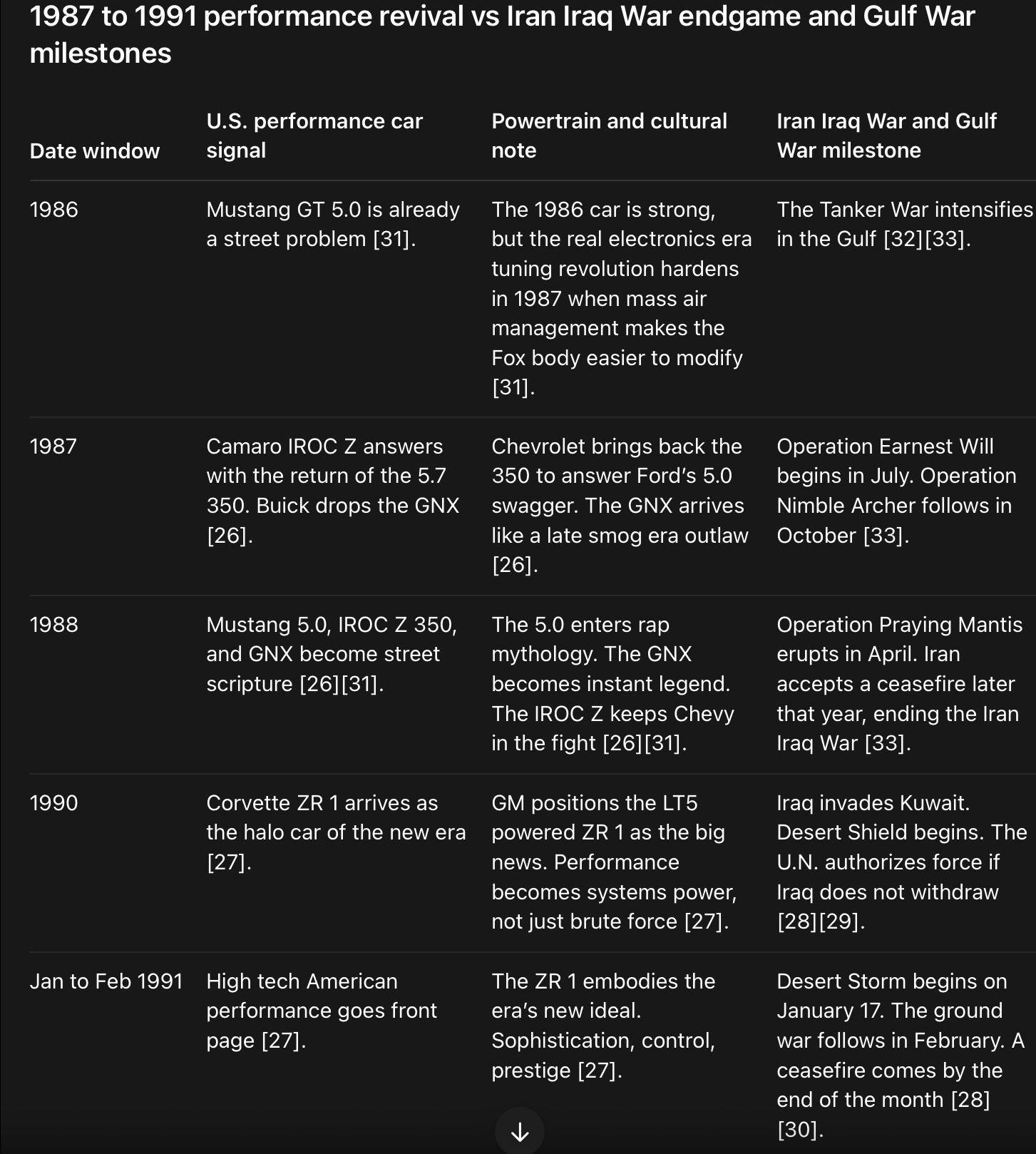
Here’s what this chart means in plain English.
It shows two different worlds going through the same comeback at the same time.
On the car side, the late 1970s and early 1980s felt like a letdown. The fast, loud muscle cars people loved were gone or watered down.
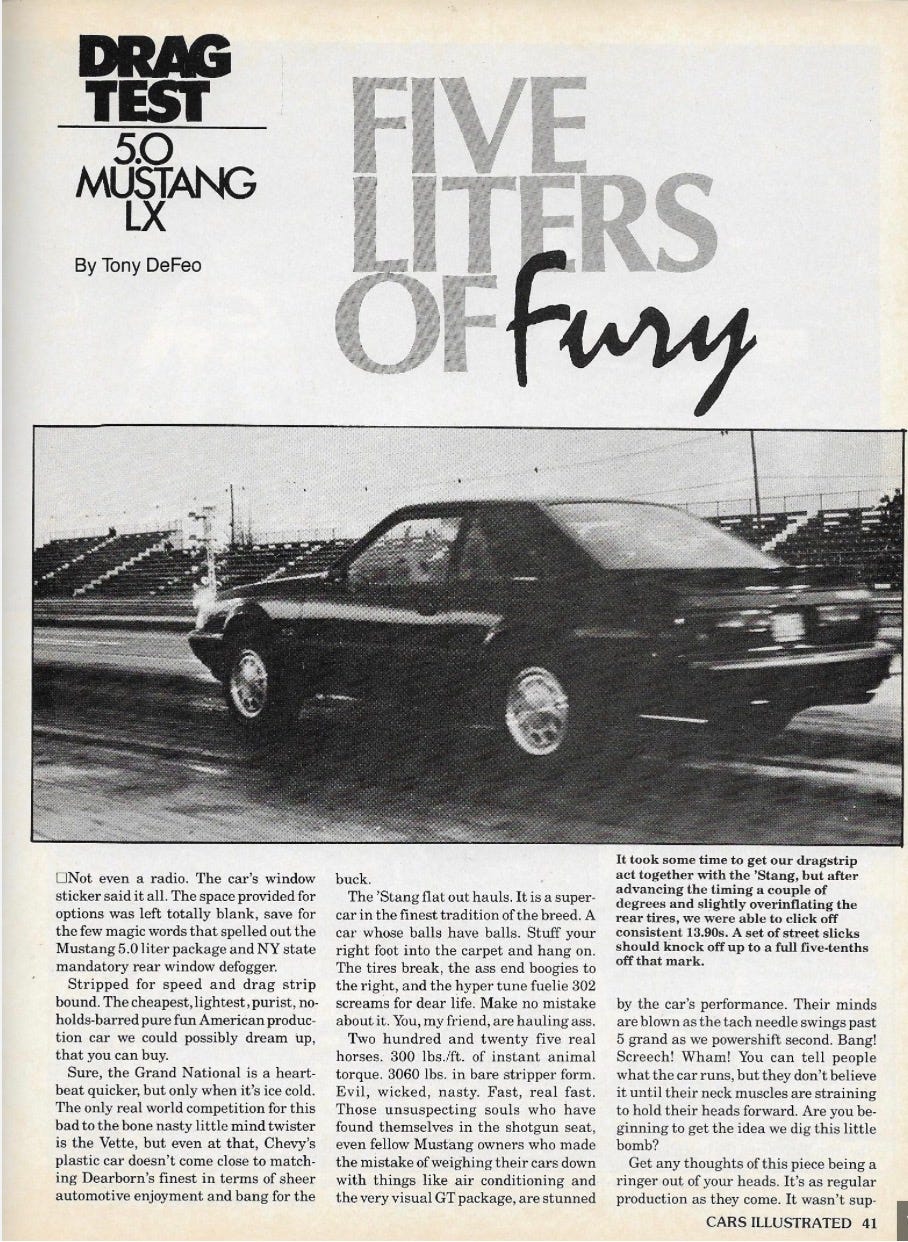
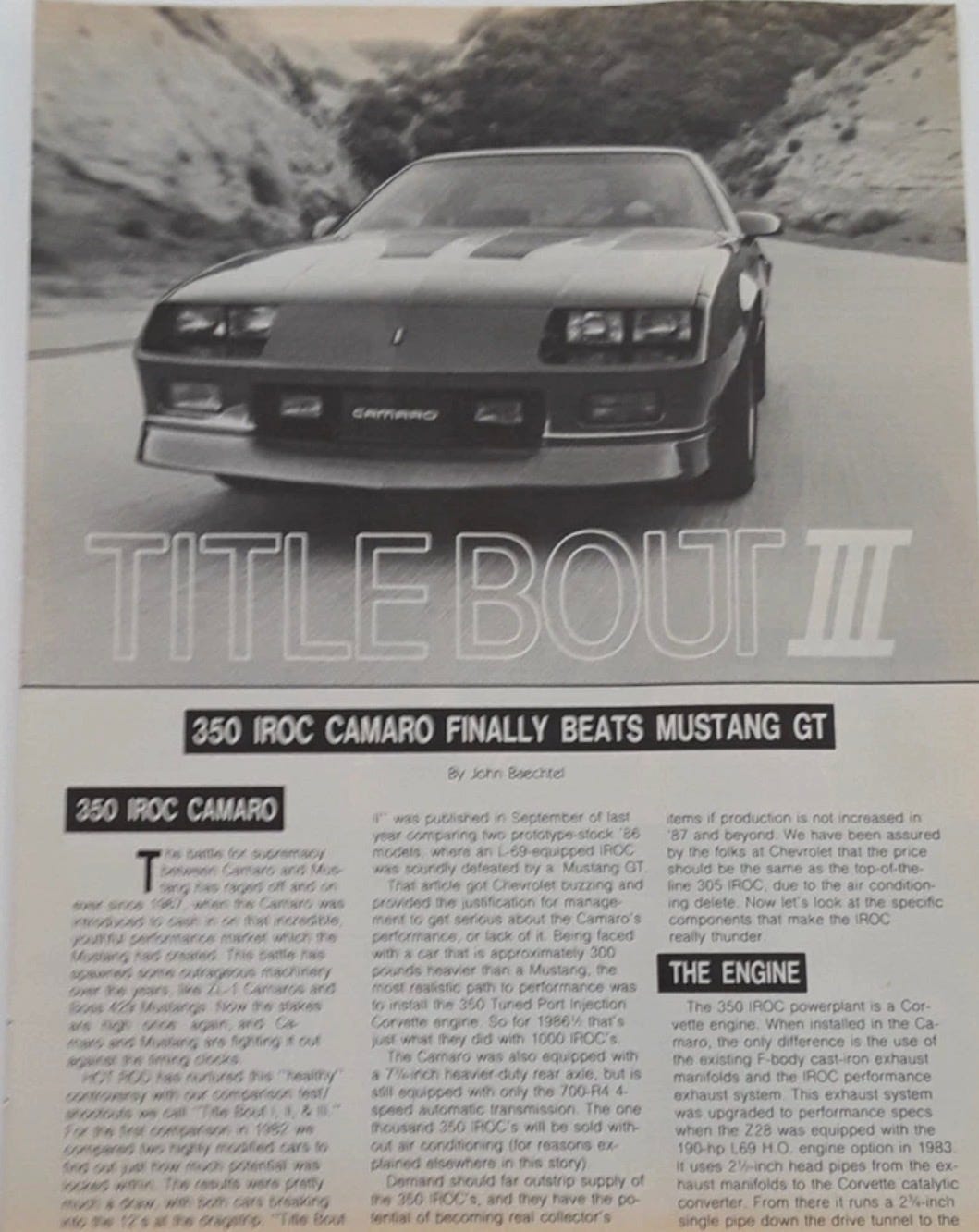
Then around 1987, things changed. The Mustang 5.0 got smarter and easier to tune. Chevy put the 5.7 back into the Camaro. Buick dropped the GNX, a car that felt like it should not even exist in that era. To regular people, this just looked like new cars. To enthusiasts, it felt like power had come back from the dead [26][31].
But there is a catch. These cars were constantly being judged against the legends of the 1960s and early 1970s. Is this as good as the old days? Is it real power, or just a cleaned up version? That comparison never went away.
Now look at the military side. After Vietnam, the country did not trust big military moves the same way. So when the U.S. got involved in the Persian Gulf, escorting tankers, striking targets, showing force, everything was judged against Vietnam. Is this another mess, or have we learned how to use power the right way this time [28][33]?
That is the connection. Both sides of the chart are about a comeback, but a cautious one. Power is returning, but now it has to prove itself.
From Horsepower to Compute: How AI Replaced the Feeling
If the muscle car was the everyday person’s first taste of controlled power, the smartphone, and now AI inside it, is the successor.
In the 1960s, you felt power with your body. You pressed the pedal and the car answered back. The machine amplified you. It made you faster than you were, louder than you were, more dangerous than you were. That is why those cars mattered.
Today, that feeling has migrated into your pocket.
And the numbers help explain why. Smartphones are nearly universal among the young. Pew found that 95 percent of U.S. teens have access to a smartphone, and nearly half say they are online almost constantly. Among younger adults, ownership is even higher [55].
That shift matters because interest in driving has fallen at the same time. Federal data shows the share of 16 year olds with driver’s licenses fell from 44 percent in 1990 to 26.2 percent in 2016 [56]. The old rite of passage weakened while the phone became the portable stage where youth culture performed itself.
AI is the next turn of that screw.
The smartphone gave ordinary people access to information, navigation, communication, and reach that used to belong to institutions. AI adds something else. Command. The device does not just connect you. It thinks with you. It drafts, analyzes, codes, designs, summarizes, and predicts [35][39][42][44][45].
That produces a familiar sensation. Not speed on asphalt, but speed of mind. Not torque, but capability. You ask, it responds. You imagine, it executes. The gap between intention and outcome shrinks.
And this is no niche toy. Pew found that 34 percent of U.S. adults had used ChatGPT by early 2025, including a majority of adults under 30 [57]. What the muscle car once did for the body, AI is beginning to do for the ordinary person’s sense of mental reach.
That same feeling scales up.
On the battlefield, AI is already used to process surveillance, identify patterns, support targeting, optimize logistics, and compress decision time. It promises a cleaner picture, faster action, better prediction [58][59].
If the Huey in Vietnam gave soldiers altitude and mobility, AI gives commanders and analysts a different kind of altitude. A view across data, patterns, and possible actions that no single human could hold at once.
That is where the danger creeps in.
Because that elevation can feel like certainty. And certainty breeds confidence. And confidence, when paired with powerful systems, can slide into arrogance.
Different machine. Same temptation.
From big block engines to smartphones to cloud models, America keeps finding new ways to hand ordinary people, and its own institutions, a feeling that borders on the godlike.
And every time, the same question waits underneath it.
What happens when that feeling outruns reality?
Conclusion
I still feel it when a clean 66 Chevelle SS rolls by. You hear it before you see it. The idle. The weight of it. The way the car seems to gather itself even at a stoplight. It is not just transportation. It is a promise. Step into this and you will be faster, stronger, harder to ignore.
That promise scales.
Put an ordinary citizen behind the wheel of a 1967 Chevrolet Impala SS with a Turbo Jet 427 and every bell and whistle on the option sheet. Climate controlled air. Power steering. Power windows. Power seats. The cabin tells you comfort. The engine tells you command.
Now lift that same feeling a few floors up.
Picture a Johnson administration adviser pulling up to the White House in a brand new 1965 Pontiac GTO. Or picture somebody in the current regime arriving in a 2026 Mustang GT, engine ticking as it cools, phone buzzing with updates, the whole machine radiating force before a single word is spoken. The point is not the make or model by itself. The point is the emotional atmosphere.
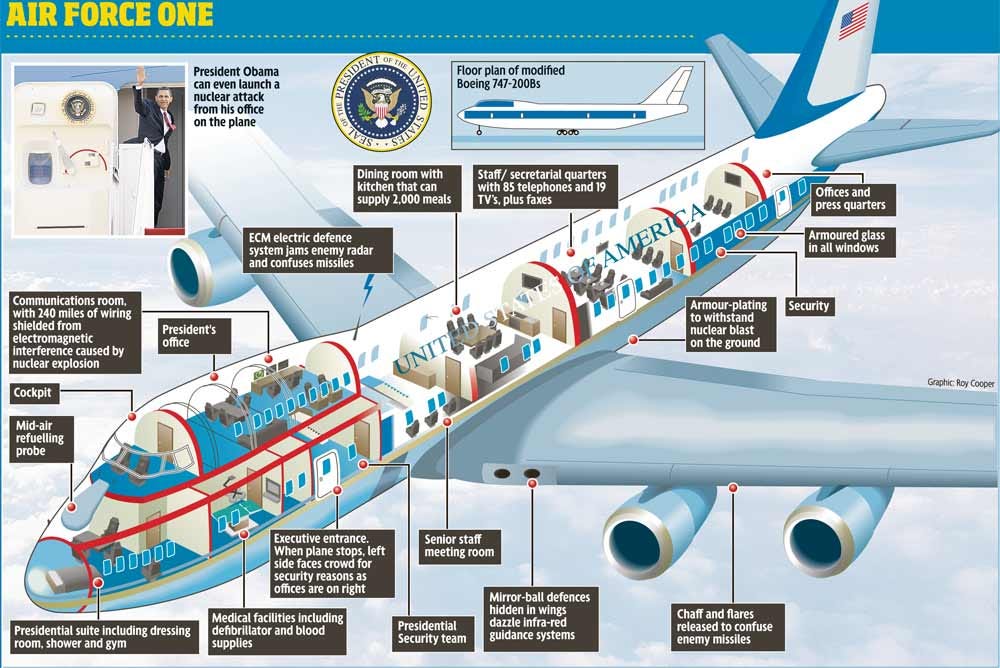
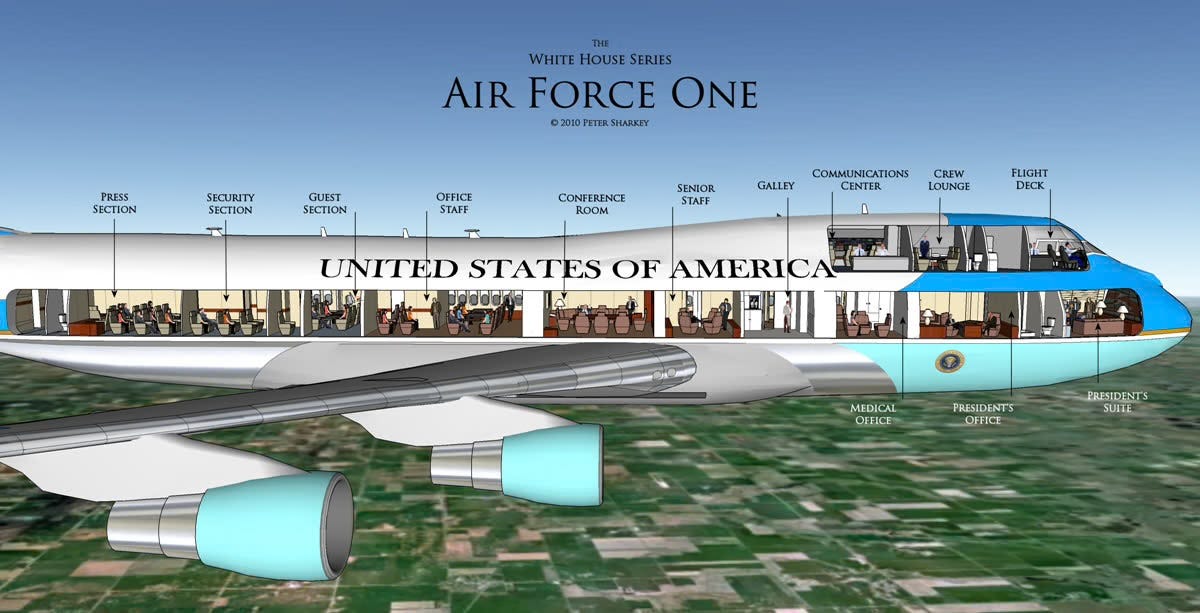
Then put a President on Air Force One. Give him a secure line to any leader on earth. Put the nuclear football within reach. Surround him with screens, maps, briefings, and real time feeds. The system is built to compress distance and time. Decisions travel instantly. Consequences start to look manageable at scale.
And now add one more layer.
Add AI. Systems that summarize the battlefield, flag targets, prioritize risks, suggest options, and present the ongoing Iran war for what it is, a large scale conflict that began in 2026 with waves of coordinated strikes, regional escalation, direct attacks on U.S. bases, and a cascading energy shock [46][58][60][61]. The machine reframes it. The picture looks sharper. The timeline looks shorter. The path looks obvious. You ask and it answers. You decide and it moves.
At every level, the machine tells the same story.
You are in control.
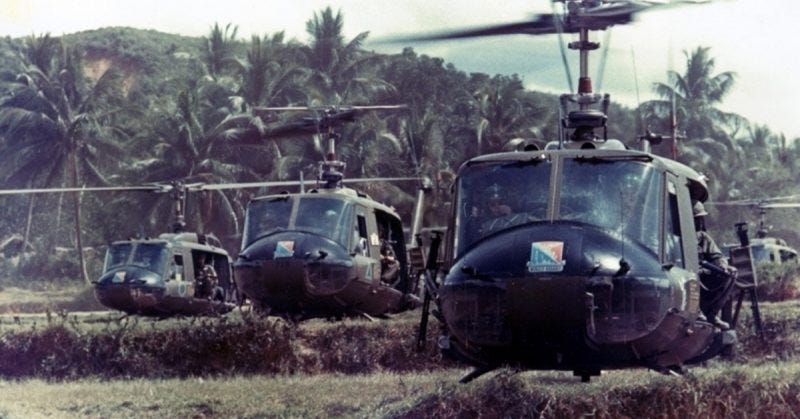
That story is seductive. It was seductive in the 1960s when horsepower climbed and Vietnam escalated. It was seductive when helicopters lifted men above the tree line and made terrain look solvable from the air. It is seductive now, when data and models make conflict look like a set of problems that can be optimized, whether in a briefing room, on a phone, or in the middle of the Iran war itself [18][40][58][60].
And it is not only leaders who feel it.
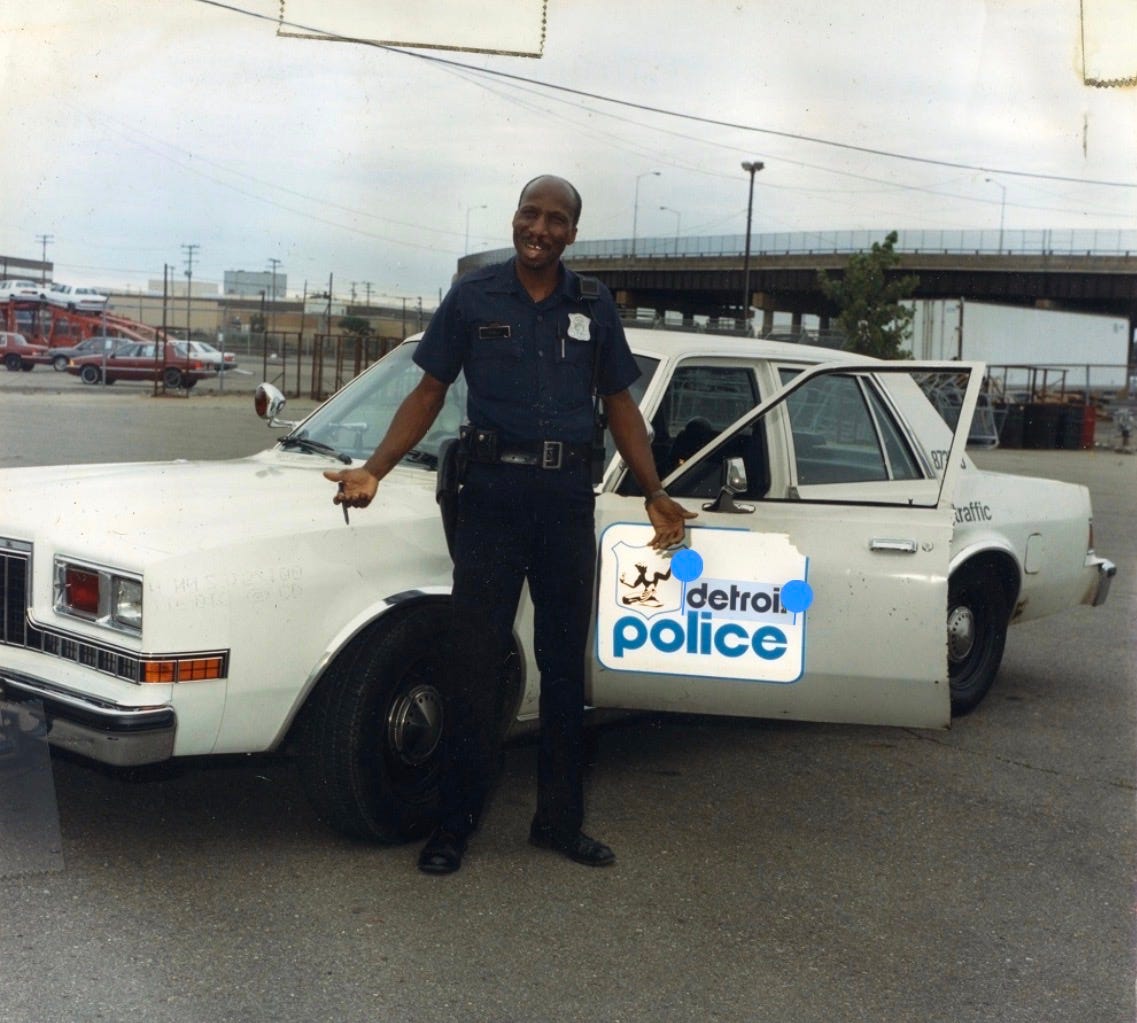
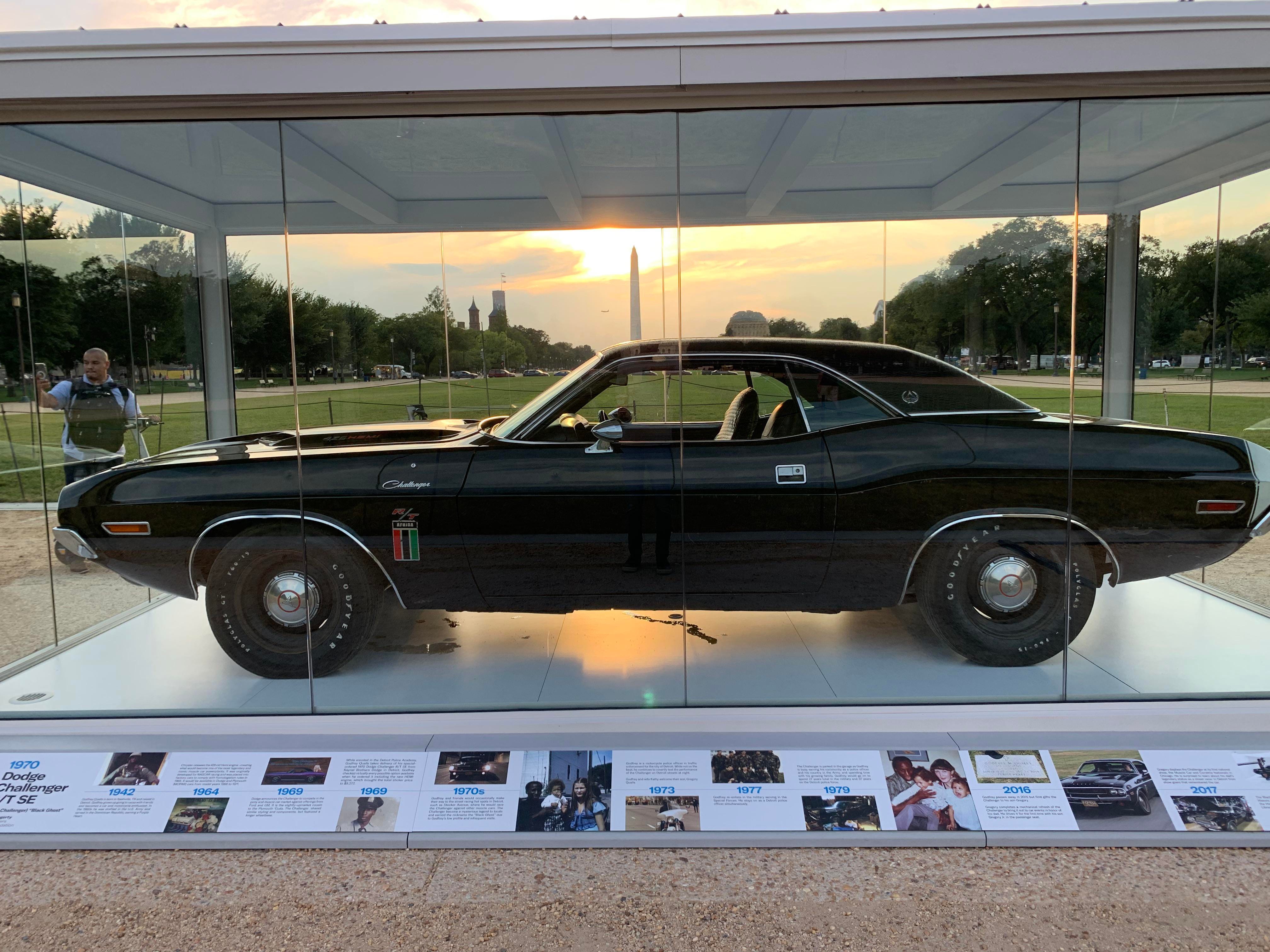
A Black Detroit officer and Army veteran named Godfrey Qualls lived inside that current long before a company ever put a badge on it. He took delivery of his 1970 Dodge Challenger R/T SE on December 5, 1969, and historians of the car place its street-racing legend in the early to mid 1970s, with the strongest evidence pointing to roughly 1970 through 1975, before the car disappeared from the scene and was last registered for street use in March 1976 [63][64]. By day he wore the uniform. By night he was street racing that black Challenger, lining up on Woodward and vanishing into the dark. The car and the man fused into a story that outlived both the races and the era. Decades later, Dodge honored that mythology with the 2023 Black Ghost edition [62][63].
That is how deep the feeling runs. It does not stay with the driver. It becomes culture. Then memory. Then something close to scripture.
The danger is not the machine by itself. The danger is the story the machine tells about us.
A powerful car can make a driver believe the road will yield. A powerful military can make a nation believe distance will collapse. A powerful model can make a leader believe uncertainty has been reduced to calculation. And when that feeling spreads from the Oval Office to the advisory team, from the advisory team to the driveway, from the driveway to the rest of the culture, a whole people can begin to think the same thought. We are too advanced to lose. We are too powerful to be checked. We are too smart now to repeat the old mistakes.
But people are not roads. Countries are not dashboards. War is not a tuning problem.
1975 taught that lesson in two languages. Under the hood, the rules changed and the cars lost their edge.
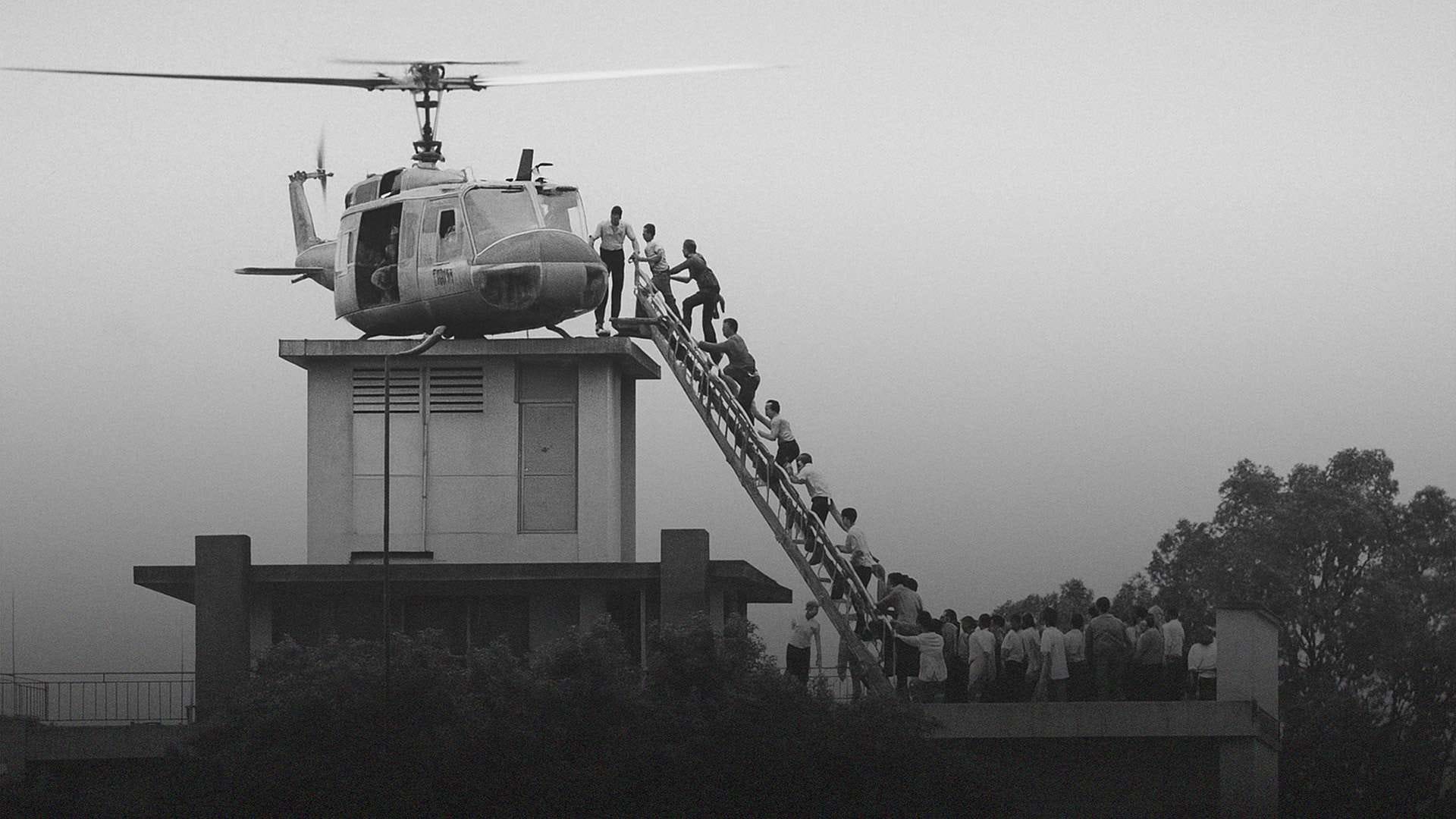
On a rooftop in Saigon, helicopters lifted the last people out and the illusion of control lifted with them [18][21][22].
We keep building better machines. We keep getting better at using them. We keep telling ourselves that this time the power is cleaner, smarter, more precise.
Maybe it is.
But the feeling is the same.
And if we do not watch that feeling, if we do not question the quiet confidence it produces, then the president will be seduced, his advisers will be seduced, and the rest of us will be seduced right along with them.
You can hear it in an engine. You can feel it in a cockpit. You can see it on a screen.
It sounds like control.
Until it doesn’t.
Support This Work
Look, you already know this was not some ten minute skim masquerading as insight. This was the kind of twenty minute read that you settle into and that takes a lot longer to think through than it takes to read. The kind that stays with you because it is not just about cars, or war, or AI, but about the machinery underneath all of it. About the American habit of falling in love with power and mistaking it for wisdom.
I do that here because I work directly for readers, not advertisers, not party handlers, not some corporate editor nervously sanding the edges off the truth. Free subscribers matter to me. Paid subscribers matter to me. The whole point of this publication is that I answer to the people reading, thinking, arguing, restacking, and keeping this thing alive.
So yes, I am going to brag a little. You are not crazy for noticing that this essay went deeper than most of what the media class throws at you. That is the advantage of independent press with skin in the game.
And since we are being honest, if you made it all the way down here, you probably already know whether this kind of work is worth backing. Paid subscriptions do not just flatter me. They buy time. They buy documents, long reads, second passes, and the stubborn independence it takes to publish work like this without asking permission.
So if you want this publication to keep tracing the throughline from the muscle car to Vietnam, from the helicopter to the smartphone, from the dashboard to the war room, become a paid subscriber here:
And if a full subscription is not your move right now, no side eye, no sermon. Hit the one time support link here:
Either way, you are not supporting a brand. You are backing a writer who works for the readers.
Sources
1961 Chevrolet Car VIN and engine reference card — GM reference card used for early Impala SS and engine-option context.
1963 Chevrolet Corvette vehicle information kit — GM primary spec material for 1963 Corvette performance context.
GM Heritage Archive vehicle information kits — Main GM archive hub for model-year documentation.
1965 Chevrolet Chevelle vehicle information kit — GM primary source for 1965 Chevelle specs and 396-era context.
JFK Library on the Cold War — Background on Kennedy-era escalation and adviser buildup in Vietnam.
U.S. State Department: Gulf of Tonkin — Official history of the 1964 turning point in Vietnam escalation.
Motown Museum: Martha and the Vandellas — Source for the Ford plant performance and Motown context.
Paley Center listing for It’s What’s Happening, Baby! — Broadcast archive entry for the 1965 TV special.
Broadcasting magazine, July 5, 1965 — Contemporary trade coverage of the CBS special.
Hour Detroit on Martha Reeves at the Ford plant — Reporting on the plant shoot and the thin paper trail around approval.
1967 Chevrolet Car VIN reference card — GM reference material for 1967 Camaro and Super Sport-era context.
MotorTrend on the 1961 Impala SS — Secondary source on the significance of the Impala SS launch.
U.S. State Department: Tet Offensive — Official history of the 1968 inflection point.
National Archives: Remembering Vietnam, Episodes 5–8 — Archival background on midwar escalation and public memory.
1970 Chevrolet Chevelle vehicle information kit — GM primary specs for the Chevelle SS 454 peak year.
1971 Chevrolet Chevelle vehicle information kit — GM primary specs for 1971 big-block carryover.
1972 Chevrolet Chevelle vehicle information kit — GM primary source for the gross to net transition in published horsepower.
U.S. State Department: Ending the Vietnam War, 1969–1973 — Official background on Vietnamization and the war’s late phase, including Saigon’s fall.
1973 Chevrolet Chevelle vehicle information kit — GM source for early post peak Chevelle context.
1974 Chevrolet Chevelle vehicle information kit — GM source for the shrinking but surviving big block era.
1975 Chevrolet Corvette vehicle information kit — GM source for 1975 emissions era Corvette specs and catalytic converter context.
EPA transportation air pollution timeline — Federal timeline for emissions regulation context.
NHTSA on Corporate Average Fuel Economy — Federal overview of the fuel economy squeeze on performance cars.
Federal Reserve History: Oil Shock of 1978–79 — Background on the second major oil shock.
GM global manufacturing milestones — GM historical manufacturing overview.
Hemmings on the 1987–1990 Camaro IROC Z — Secondary source on the 5.7 IROC Z revival.
1990 Chevrolet Corvette vehicle information kit — GM primary source for ZR 1 and LT5 era specs.
U.S. State Department: The Gulf War — Official Gulf War background.
UN Security Council Resolution 678 — U.N. authorization context for force in 1990.
Air Force history: Desert Shield and Desert Storm — Official military summary of the 1991 war.
Edmunds 1990 Ford Mustang specs — Secondary reference for Fox body Mustang context.
State Department short history of Iranian crises — Official background on U.S.-Iran tensions.
U.S. Navy H Gram on Operation Earnest Will — Official naval history covering Earnest Will and related Gulf operations.
State Department briefing, April 6, 2021 — U.S. posture on indirect diplomacy with Iran.
OpenAI: Introducing ChatGPT — Official launch page for ChatGPT.
Joint statement on Mahsa Amini and women’s rights — Diplomatic response context for Iran’s 2022 unrest.
NIST AI Risk Management Framework — U.S. AI governance framework.
U.S. State Department Iran 2022 Human Rights Report — Official human rights reporting on Iran.
OpenAI: GPT 4 research — Official GPT 4 release materials.
Federal Register: Executive Order 14110 on AI — Official text of the 2023 AI executive order.
State Department on release of detained U.S. citizens in Iran — 2023 U.S.-Iran diplomatic context.
OpenAI: GPT 4o announcement — Official GPT 4o release page.
U.S. Embassy statement on Iran’s attacks against Israel — Official April 2024 response.
OpenAI: Introducing GPT 5 — Official GPT 5 launch page.
OpenAI: Introducing GPT 5.4 — Official GPT 5.4 launch page.
Reuters on major global oil supply disruptions, March 2026 — Current reporting on energy shock context.
White House archive statement on ending U.S. participation in the Iran deal — Official 2018 U.S. withdrawal statement on the JCPOA.
Library of Congress National Film Registry listing for Bullitt — Registry inclusion and preservation context.
Library of Congress essay on Bullitt — Registry essay discussing the film and its iconic chase scene.
Historic Vehicle Association on the Bullitt Mustang — Background on the surviving hero car and its archival significance.
National Historic Vehicle Register — Preservation project tied to the Library of Congress and Department of the Interior.
Library of Congress essay on American Graffiti — Preservation essay on the film’s nostalgia and cultural role.
AFI biography of George Lucas — Background on Lucas’s early racing ambitions.
MotorTrend on Chevrolet’s Mystery Motor — Secondary history of the Daytona reveal and its big block legacy.
Pew Research Center on teens, social media, and technology — Smartphone access and online behavior among teens.
U.S. Department of Energy on decline in licensed 16 year olds — Federal data on reduced youth licensure.
Pew Research Center on ChatGPT use in the U.S. — Adoption of ChatGPT among U.S. adults.
Washington Post on AI use in military planning and targeting — Reporting on AI assisted decision support in conflict.
Yahoo News on U.S. military AI systems — Overview of advanced AI battlefield applications.
Encyclopaedia Britannica on the 2026 Iran conflict — General background on the current war’s escalation.
Wall Street Journal live coverage on U.S. strikes in Iran — Reporting on strike scale and operational tempo.
Motor Authority on the 2023 Dodge Challenger Black Ghost — Dodge’s tribute edition to Godfrey Qualls’s legend.
Hagerty on Godfrey Qualls and the Black Ghost story — Background on Qualls, street racing on Woodward, and the car’s mythology.
AFI Catalog entry for Bullitt — Production history on the bridge shoot, McQueen’s driving, Arriflex cameras, and the making of the chase scene.
The American evolution of hubris.
I make time to read/listen to your work, HCR, Hubbell, Rosenburg, Craven's and more whenever I can. I appreciate all of you -- your thoroughness, thoughtfulness, and insights. Thank you!
This is another excellent piece -- and I encourage you to write a book based on this piece or any of your others. I believe you are writing a novel, but you have many nonfiction possibilities. Thanks for your time and efforts! Outstanding work~