

A badge teaches you some things no consultant can explain.
*Important desk note near the end.
It teaches you to study behavior before language. Posture before alibi. The room before the statement. You learn that people rarely reveal themselves when they are comfortable telling their story. They reveal themselves when consequence enters the room and they realize the people they dismissed have been keeping count.
I thought about that last night watching New York’s primary results come in.
Because what happened was not just a progressive win. It was a behavioral event. It was the sound a protected class makes when it discovers that protection has an expiration date.
For a year, New York’s Democratic establishment tried to reduce Zohran Mamdani to an accident: a fever, a fad, a one-election malfunction caused by young voters, tenant anger, social media, Gaza, rent, vibes, whatever explanation could keep the old order from admitting the thing it feared most.
The coalition was real.
Last night, that coalition traveled.
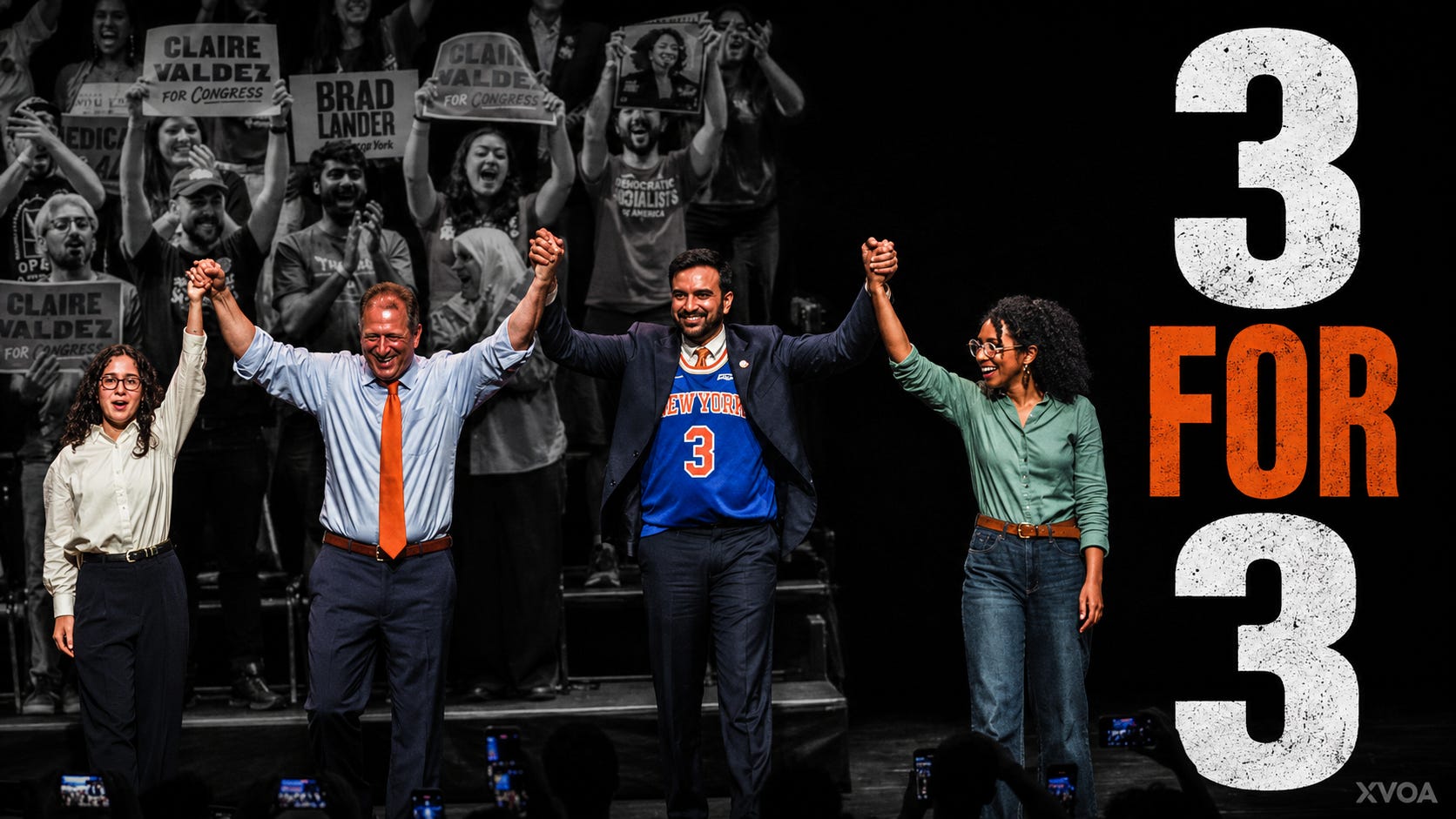
Mamdani endorsed three congressional candidates. Brad Lander. Claire Valdez. Darializa Avila Chevalier. All three won their Democratic primaries. Two sitting members of Congress were denied renomination. One open seat was claimed by a candidate the old succession machine could not control.
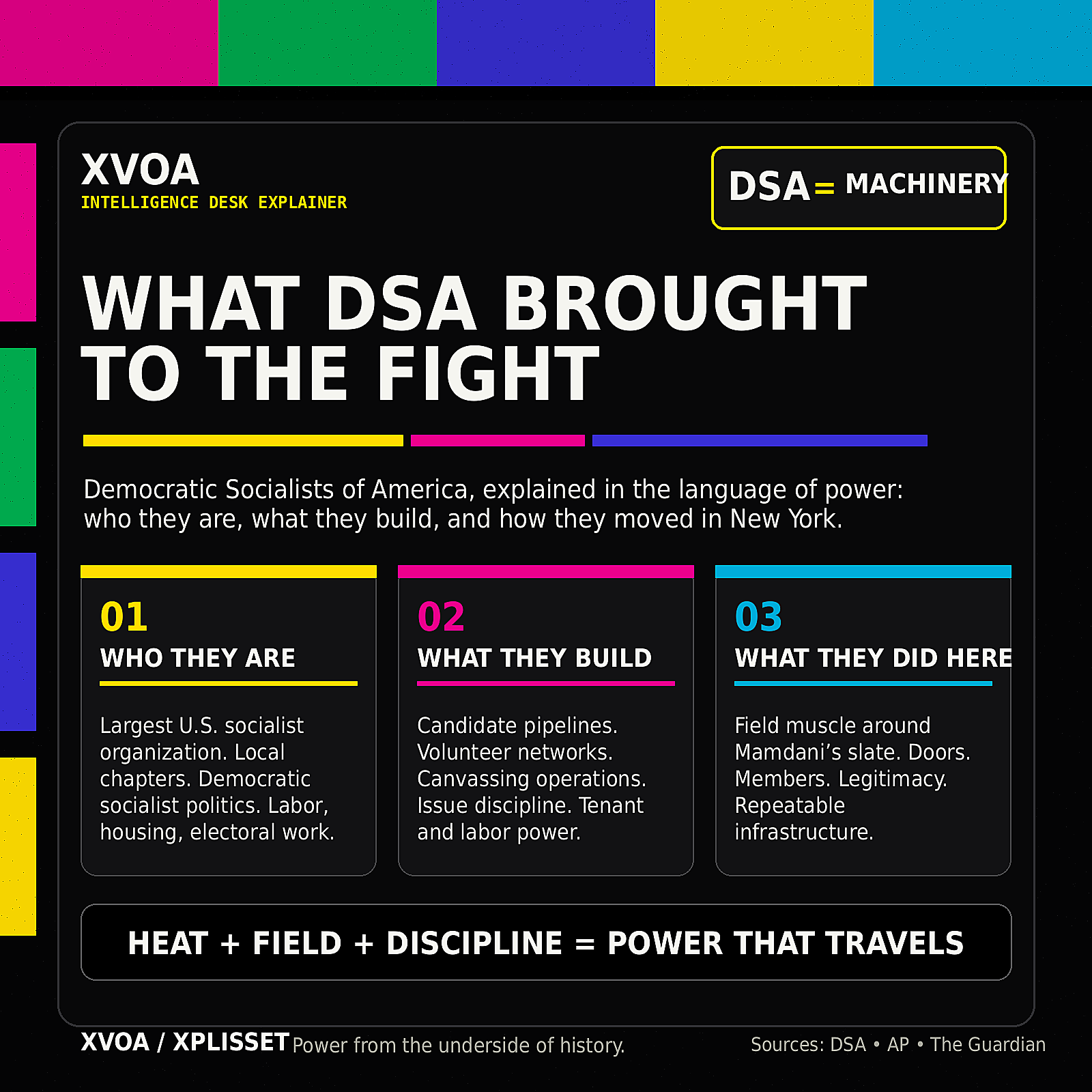
The coalition traveled through infrastructure. DSA, Democrtic Socialists of America, supplied muscle: volunteers, doors, candidate pipelines, ideological discipline, tenant politics, labor politics, anti-war politics, and a working theory of power built for confrontation with the party’s old landlords. Mamdani gave the slate heat. DSA and allied organizers gave it machinery. In New York last night, the acronym carried votes.
That is why the word is PAYBACK.
Payback is what the powerful call consequence when it finally reaches them.
The establishment spent the year acting like voters were still where they left them: angry but manageable, loud but containable, useful but subordinate. That is an old American mistake. Black history is full of institutions confusing patience with permission, silence with consent, and survival with surrender. Then the people underneath the system organize, and suddenly memory is called extremism.
Last night was memory with a field operation.
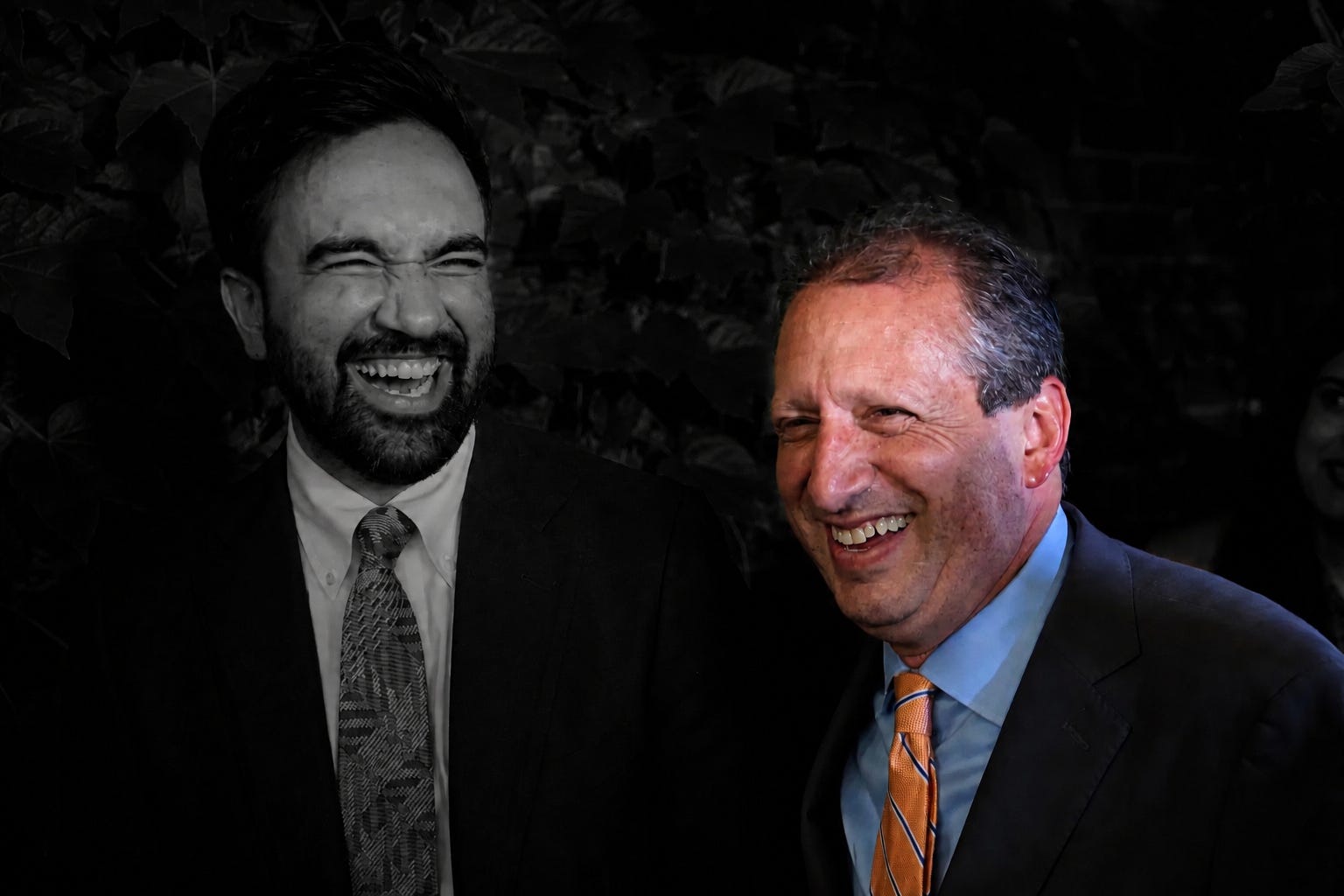
In NY-10, Brad Lander defeated Rep. Dan Goldman. The reason that race matters is because Goldman represented a familiar Democratic profile: credentialed, wealthy, visible, anti-Trump, institutionally legible. In another season, that would have been enough. But in a deep-blue district under pressure from housing costs, war, inequality, and disgust with donor politics, “I oppose Trump” no longer answered the whole question.
Voters asked something sharper: when the party says democracy is at stake, whose democracy does it mean? The democracy of donors and committee chairs, or the democracy of tenants, immigrants, workers, students, organizers, and families trying to stay in the city they keep being priced out of?
Lander’s victory says anti-Trump branding without material accountability is losing its magic. Voters were not only rejecting Goldman. They were rejecting the idea that moral urgency can be outsourced to impeachment credentials while the local machinery keeps running for people who already have access.
In NY-7, Claire Valdez broke the handoff model.
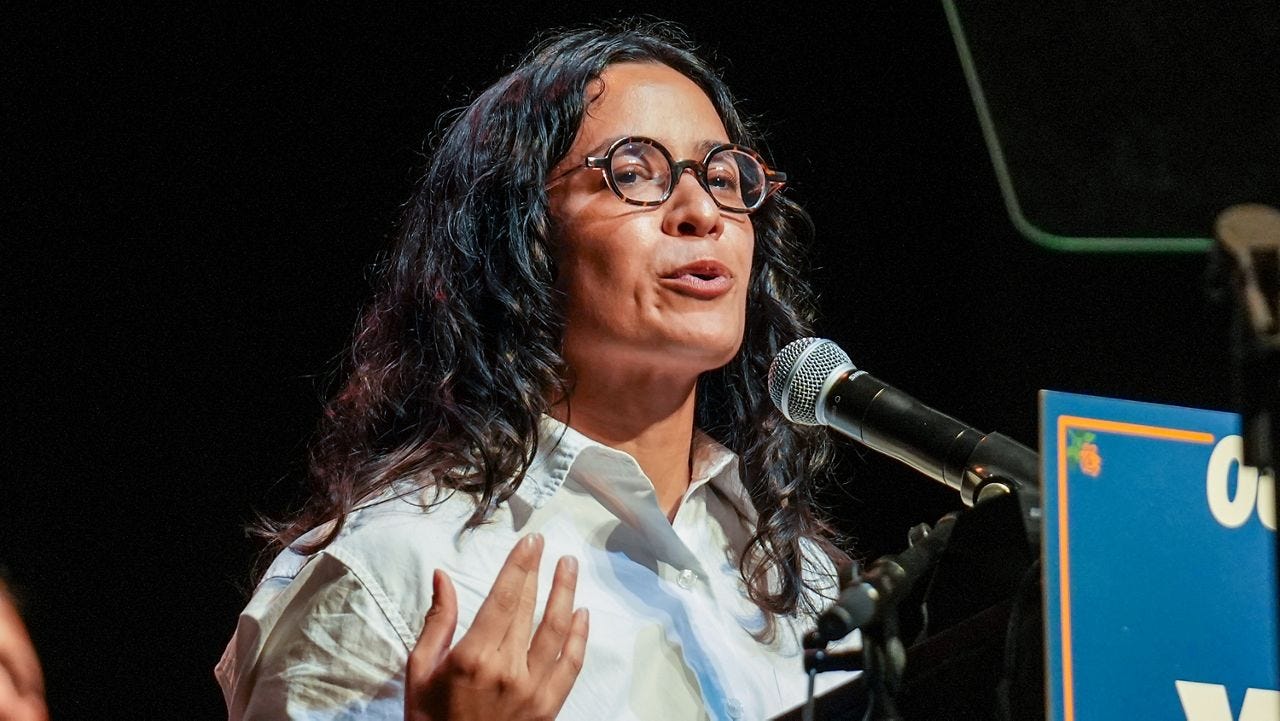
That seat could have become another insider inheritance. The script was familiar: a longtime member retires, the preferred successor steps forward, institutional endorsements gather around the chosen name, and voters are expected to ratify a decision already made somewhere else. Valdez interrupted that script.
Her win over Antonio Reynoso was not simply a left victory over a moderate. Reynoso had progressive credentials. That is what makes the result more interesting. This was a fight over who gets to define movement politics once movement language becomes fashionable. Valdez came with labor roots, DSA power, Mamdani’s endorsement, Bernie Sanders’ support, and the sense that the district did not need another negotiated succession. It needed a break in the chain.
Then came NY-13.
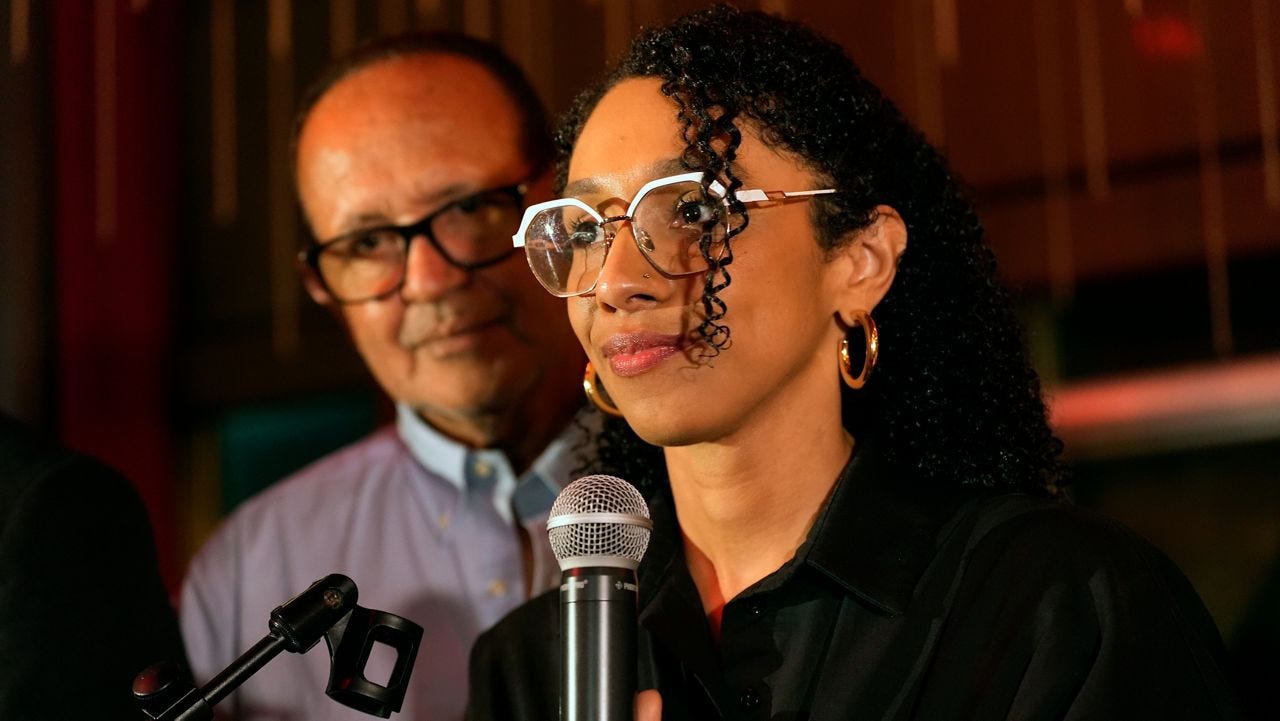
Darializa Avila Chevalier defeating Rep. Adriano Espaillat was the earthquake. Espaillat was not weak on paper. He was a five-term incumbent, chair of the Congressional Hispanic Caucus, and a major figure in Dominican and Latino political power. He had seniority. He had institutional memory. He had the aura of someone the system assumed would be protected.
Chevalier broke that aura.
That matters because incumbency is not only a title. It is a psychological weapon. It teaches challengers to shrink before the fight begins. It teaches voters that change is unrealistic. It teaches donors, reporters, and party officials to treat the incumbent as the district’s permanent landlord.
Last night, the tenant changed the locks.
Chevalier’s victory also forces a deeper conversation about representation. Espaillat’s biography mattered. It still matters. But biography is not a shield against accountability. Identity can open a door. It cannot become a moat. Voters in working-class Black and Latino neighborhoods are allowed to ask whether the person who made history is still making change, or just occupying history while the district struggles underneath him.
That question is uncomfortable. Good. Democracy should make protected people uncomfortable.
This is the machinery the mainstream political class will try to flatten into “left versus moderate.” That frame is too small. Last night was also organized voters versus inherited power. Tenants versus real estate common sense. Young people versus wait-your-turn politics. Anti-war voters versus donor discipline. Black and brown communities versus symbolic access. The underside versus the room where decisions are made before the public is invited to applaud them.
Mamdani is center stage because his power did not stay attached to him alone. It moved through other candidates. That is what makes this more than a personal brand. A politician winning once can be dismissed as atmosphere. A politician helping three allies win congressional primaries becomes a different kind of problem.
The old order can survive a charismatic exception. It has a harder time surviving reproduction.
That is the real warning from New York. Mamdani’s movement did not simply win City Hall and stop. It exported itself into congressional politics. It turned endorsement into infrastructure. It turned a mayoral coalition into a bench. It told Washington that the left is not just available for turnout, slogans, and moral language. It is coming for seats.
So is this the beginning of a tidal wave for progressives?
Maybe. But XVOA should not sell euphoria as analysis.
A wave is not one good night in New York City. A wave requires repeatability. It requires candidates who can survive money, fear campaigns, red-baiting, racism, Islamophobia, donor retaliation, party pressure, and the slow institutional seduction that teaches insurgents to call surrender strategy. It requires turning anger into doors, doors into votes, and votes into governing power without losing the thread.
New York is not America. A safe Democratic primary is not a swing district in November. The rest of the map is rougher, whiter, older, more rural, more suburban, more controlled by different fears and different machines. Progressives should not confuse momentum with destiny.
But the establishment should not be allowed to minimize this either.
Last night proved three things.
First, Mamdani was not a fluke. His coalition can move outside his own name.
Second, incumbency is vulnerable when voters stop treating it as destiny.
Third, the Democratic left is no longer just a pressure group asking leadership to listen. In New York, it has become a candidate-producing, seat-winning, career-ending force.
That is why the panic will come dressed as concern. They will say the party is being pulled too far left. They will say these candidates are risky. They will say the movement is unrealistic. They will say voters were emotional. They always say that when people beneath the machine start operating machinery of their own.
But from the underside of history, this looks familiar.
Power calls obedience maturity. It calls delay strategy. It calls donor comfort electability. It calls insurgency chaos until insurgency wins, then it calls the district unusual.
No. The district was not confused. The voters understood the assignment.
They looked at a party that keeps asking them to save democracy while offering them managed decline. They looked at leaders who want their votes but not their demands. They looked at incumbents and successors wrapped in old permission slips. Then they chose the candidates who sounded less afraid of consequence.
That is PAYBACK.
It’s the kind of payback that arrives when the people who were supposed to stay grateful decide to become dangerous.
The bridge is not fully down. The wave is not guaranteed. The old machine is not dead. It will adapt. It will flatter. It will fund opposition. It will weaponize fear. It will try to turn each winner into an exception and each demand into a liability.
But last night, the old machine took a public hit.
Mamdani did not just endorse three candidates.
He proved that organized consequence can travel.
That is how a moment becomes machinery.
And that is why the people who spent the year pretending not to be afraid woke up this morning studying the waterline.
Support XVOA
This desk runs on reader support, not institutional permission.
Paid subscriptions are the first ask because subscriptions build the base. But the daily operating floor is Buy Me a Coffee. That is where most of XVOA’s day-to-day support actually comes from.
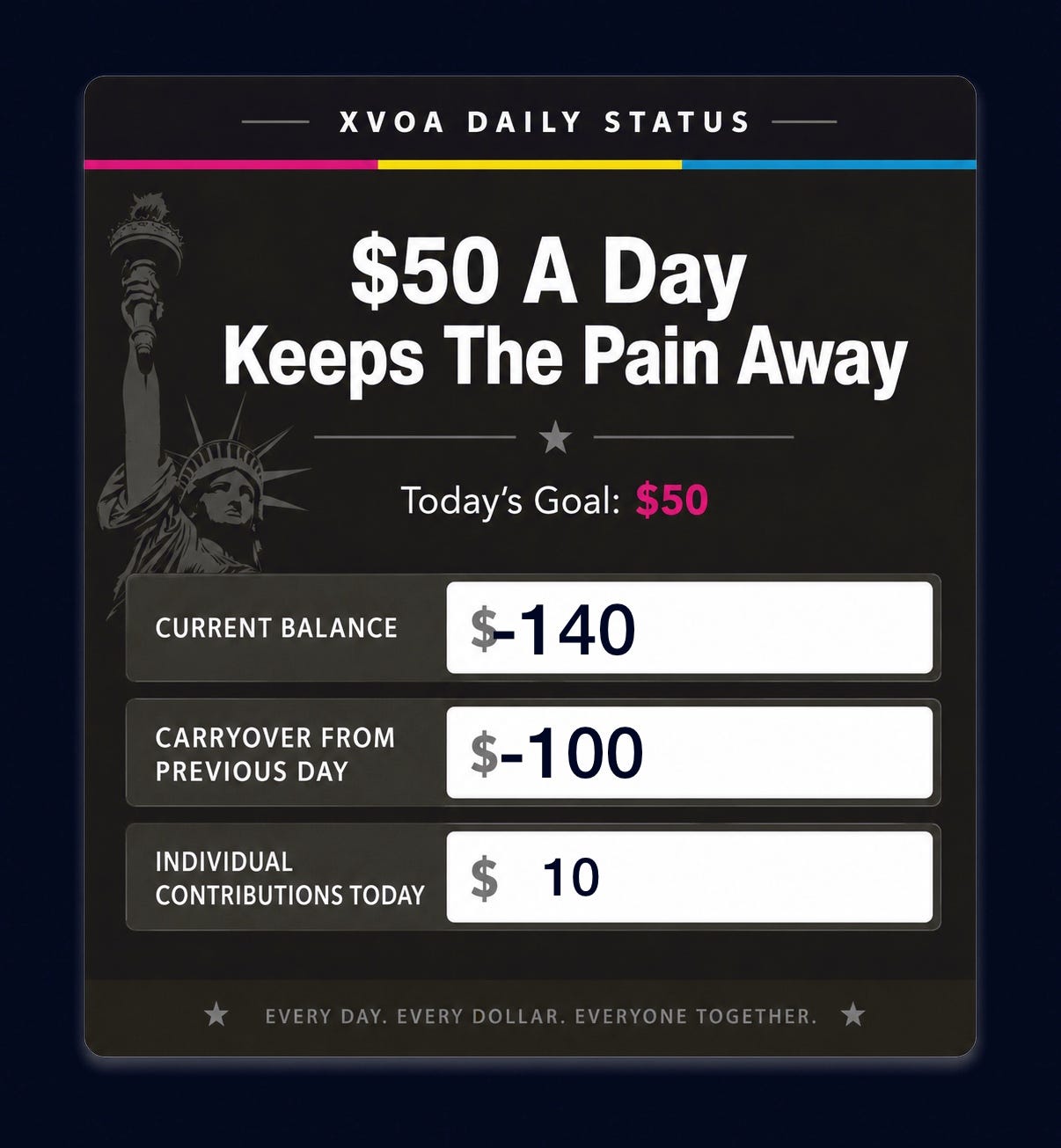
The house rule is $50 a day keeps the pain away.
That floor covers the unglamorous things that make the work possible: equipment maintenance, source access, production tools, platform costs, and enough breathing room to keep publishing without begging the people being watched for permission to watch them.
After two zero-contribution days, and with today still uncovered, XVOA is $150 behind the operating floor.
Update 6-24-26 5:30PM: So far 1 person has contributed $10 to clear the operating gap. Thank you. Let’s get to the finish line $140 more to go. That’s 7 people contributing $20.
That is not a crisis yet. Progress has been made to close the gap. But that is exactly why the floor exists: to catch the shortfall while it is still small, honest, and fixable.
And $150 is not some impossible hill. It is 15 people putting in $10. It is 5 people putting in $30. It is 3 people putting in $50 and closing the gap before it has time to grow teeth.
Paid subscriptions build the base.
Daily contributions keep the desk breathing.
Help close the daily floor with a small contribution:
SOURCES
Fact posture: Results and winner calls are based on election-night projections and reporting available the morning of June 24, 2026. Check official Board of Elections totals before final publication if you plan to cite exact percentages.
1. AP: “Mamdani slate sweeps Democratic primaries in New York...”
3. The Guardian: “Mamdani-backed candidates sweep Democratic primaries in New York City.”
4. Vox: “Zohran Mamdani just became a congressional kingmaker.”
Yes, I did miss this post, so thanks for resending! But I did not miss the wins in NYC, and the possible implications. Hooray!
Hoping this little trickle becomes a powerful wave, to benefit us all!
Older, white woman from Maine.
Let's hope. What would it be like if everyone treated each other with fairness and love! I know: I'm a dreamer, but I'm not the only one.