

Blackout Brief Daily | May 15, 2026
So damn reliable you forget how good it is. Like COOL AC, baby.
Five Things That Matter Today
Trump’s election order landed in federal court while Louisiana’s Senate moved a new map that would erase one of the state’s two majority-Black congressional districts. The ballot is no longer just being counted. It is being pre-screened, redrawn, and moved while people are trying to vote. [1][2][3]
The Supreme Court preserved mail and pharmacy access to mifepristone for now, but Louisiana’s lawsuit keeps the Comstock shadow alive over pregnant patients, abortion providers, telehealth networks, and rural women who cannot simply drive their way out of a ban. [4]
The House tied 212-212 on an Iran war powers resolution, which means Trump’s war keeps moving without fresh congressional authorization, even as his China trip produced warm pictures and no obvious breakthrough on Iran, Taiwan, or the Strait of Hormuz. [5][6][7]
Vice President JD Vance and CMS turned health-care fraud into a funding weapon, announcing a $1.3 billion Medicaid deferral for California and a six-month national freeze on new Medicare enrollments for hospice and home health providers. Seniors, disabled people, home-care workers, and low-income patients are the people inside that paperwork. [8][9]
EPA moved on two fronts for polluters, delaying vehicle-pollution enforcement and proposing to loosen toxic wastewater limits for coal-fired power plants. Industry gets time. Communities near highways, smokestacks, rivers, and coal ash get exposure. [10][11]
Restack it, send it to one person.
If this brief keeps you from getting lost in the noise, pay for the work that made the map. Paid subscriptions buy me time to keep digging through the machinery before the official story hardens into common sense:
If a paid subscription is not in the budget today, buy me coffee can be the alternative that still helps this newsroom stay in the fight and keep on keepin on.
The hierarchy audit was plain this morning. National coverage clustered around Trump and Xi, the Iran war, the Supreme Court, abortion pills, redistricting, and the health-care fraud crackdown. Those stories matter. But the buried machinery moved through school investigations, private detention contracts, hospice enrollment rules, disability-access legislation, commuter-rail labor deadlines, environmental rollbacks, and deportation deals that sent Latin American migrants to African countries they had no connection to.
The public saw power performing. The quieter story was power pre-positioning the next excuse.
Top Breaking National Stories
1. Trump’s Voter List Order Hits Court While Louisiana Moves to Erase a Black District
On Thursday, lawyers for Democrats and civil-rights groups urged U.S. District Judge Carl Nichols to block Trump’s March 31 election order, which tells the Department of Homeland Security to compile lists of adults the federal government claims it has confirmed as U.S. citizens and share those lists with states at least 60 days before federal elections. The order also seeks to stop the Postal Service from sending absentee ballots to people not on those state-approved lists. Nichols, a Trump appointee, did not rule from the bench. The Justice Department argued the challenge was premature because the list has not been created yet. [1]
That same day, Louisiana’s state Senate voted 27-10 for a new congressional map that would eliminate one of the state’s two majority-Black House districts. This is the new material development from the voting-rights fallout covered earlier this week. On Monday, the danger was early ballots and unstable maps. By Thursday, Louisiana’s Senate had turned that instability into a bill. The map would likely produce a 5-1 Republican congressional delegation and would reshape Rep. Cleo Fields’s District 6 away from its current majority-Black design. [2]
The common thread is not subtle. One lane tries to make federal power a gatekeeper over who is eligible to receive a ballot. The other uses state power to decide whether Black voters can elect candidates of their choice after the Supreme Court weakened Voting Rights Act protections. Civil-rights leaders are already organizing a new defense of Black representation because the assault is no longer theoretical. It is happening in calendars, databases, maps, courtrooms, and ballots. [3]
Why it matters: The old trick was to say Black voters could cast a ballot while making sure the ballot could not move power. The new machinery is more technical and more polite. It talks about eligible lists, constitutional authority, map compliance, and district design. But the result is familiar: Black voters in Louisiana, Black voters across the South, absentee voters, elderly voters, disabled voters, rural voters, and local election workers all get pushed into uncertainty while the state calls it procedure.
Sources
[1] AP, “Lawyers aim to block Trump order that would create eligible voter list” - Reports the federal court hearing over Trump’s March 31 election order and the proposed DHS voter list.
[2] The Guardian, “Louisiana senate passes bill to eliminate one of two majority-Black congressional districts” - Reports the Louisiana Senate vote, the proposed map, and the impact on District 6.
[3] WABE, “Supreme Court voting rights ruling fuels a new push to defend Black representation” - Tracks the civil-rights mobilization after the Supreme Court’s voting-rights ruling.
2. The Supreme Court Keeps Mifepristone Access Standing, But the Trapdoor Is Still Open
On Thursday, the Supreme Court preserved women’s access to mifepristone while Louisiana’s lawsuit against the FDA continues. The order allows people seeking abortions to keep obtaining mifepristone through pharmacies or by mail without an in-person doctor visit, likely keeping access uninterrupted into next year while the case moves forward. The justices granted emergency requests from Danco Laboratories and GenBioPro, the drug’s manufacturers, after a federal appeals court ruling would have required in-person visits and blocked mail delivery. [4]
The ruling protects the status quo for now, but that phrase is doing a lot of work. Louisiana’s lawsuit argues that FDA prescribing rules undermine the state’s abortion ban and questions the drug’s safety, even though FDA scientists have repeatedly deemed mifepristone safe and effective. Justices Clarence Thomas and Samuel Alito dissented. Thomas pointed to the Comstock Act, the 19th-century anti-obscenity law that abortion opponents have been trying to drag back from the crypt and repurpose as a national abortion weapon. [4]
This was not a final liberation. It was a temporary refusal to let the Fifth Circuit turn the mail into an abortion checkpoint before the litigation plays out.
Why it matters: Pregnant patients, rural women, poor women, disabled women, Black women in maternal-health deserts, abortion funds, telehealth providers, and clinics in states surrounded by bans are all inside this ruling. Mail access matters because distance is policy. Time is policy. Transportation is policy. Child care is policy. When courts pretend this is only about a drug label, they erase the person sitting at home calculating whether she can travel, pay, hide, recover, and survive.
Sources
[4] AP, “Supreme Court order leaves access to abortion pill unchanged” - Reports the Supreme Court order preserving mifepristone access while Louisiana’s lawsuit continues.
3. Congress Failed by a Tie Vote to Rein In Trump’s Iran War
On Thursday, the House voted 212-212 on a Democratic-led war powers resolution that would have stopped Trump from continuing military operations against Iran unless Congress authorized them. A tie is not enough, so the resolution failed. Three Republicans, Tom Barrett of Michigan, Brian Fitzpatrick of Pennsylvania, and Thomas Massie of Kentucky, backed the measure. One Democrat, Jared Golden of Maine, opposed it. [5]
This was the third House vote this year on an Iran war powers resolution and the first since the conflict crossed the 60-day deadline on May 1 under the War Powers Act. Reuters reported that the Senate has now seen seven failed votes on the question, with the margins narrowing as some Republicans break from Trump. Democrats argued that the Constitution gives Congress the power to declare war and warned that Trump has pulled the country into a long conflict without a clear strategy. [5]
The administration says Trump’s actions fit within commander-in-chief authority. That is the familiar mask. The deeper issue is that the public keeps getting asked to pay the cost of a war whose goals are still being narrated after the machinery moved.
Why it matters: U.S. service members, veterans, military families, Iranian civilians, low-income drivers, grocery shoppers, and workers hit by price spikes all sit inside this vote. War power is not abstract constitutional weather. It becomes deployments, trauma, inflation, sanctions, surveillance, and grief. When Congress fails to force authorization by one missing vote, the country gets another lesson in how easily democratic consent becomes an after-the-fact press release.
Sources
[5] Reuters, “US House narrowly rejects bid to rein in Trump Iran war powers” - Reports the 212-212 House vote, the Republican defections, and the war powers context.
4. Trump Left China With Warm Words, Few Wins, and the Same War at Home
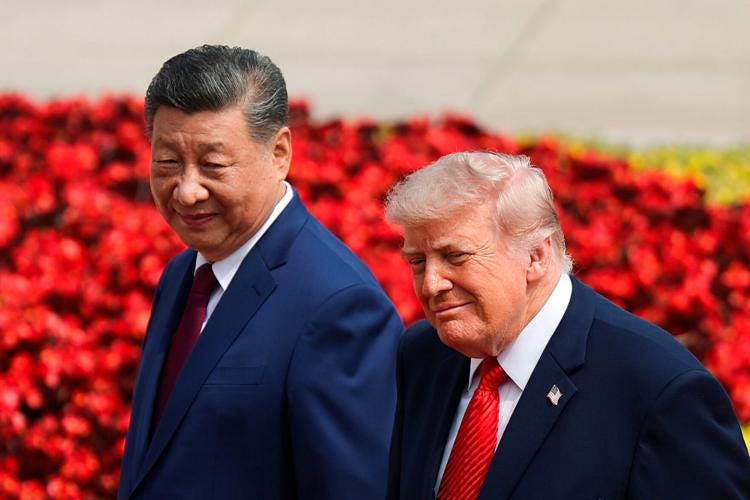
Trump’s two-day China trip ended Friday with both sides declaring success, but Reuters reported no major breakthroughs on trade and no tangible help from Beijing to end the Iran war. The summit centered on Iran, Taiwan, trade, and the Strait of Hormuz, with Xi Jinping warning that diplomatic failure over Taiwan could create a dangerous situation. [6]
The trip was designed to show movement, with China rolling out ceremony and Trump seeking deals on soybeans, Boeing planes, and broader economic relief. But Reuters reported Thursday that the spectacle was overshadowed by the U.S.-Israeli war with Iran, rising prices, gas above $4.50 a gallon, and domestic pressure over affordability. Trump said before leaving that he did not think about Americans’ financial situation when deciding whether to strike a deal, saying his motivation was stopping Iran from getting a nuclear weapon. [7]
That is the line readers should not let disappear. A president abroad seeking diplomatic theater while households at home pay war prices is not merely a foreign-policy story. It is the imperial split-screen.
Why it matters: Farmers, autoworkers, energy consumers, military families, Taiwanese people, Chinese workers, Iranian civilians, and American households are all caught in a machinery that connects trade, war, oil, semiconductors, shipping lanes, and political survival. The public gets the flag display. The bill arrives at the pump, the grocery store, the port, and eventually the deployment notice.
Sources
[6] Reuters, “Xi and Trump declare summit a success but differences remain on Iran and Taiwan” - Reports the second day of Trump’s China summit and the lack of major breakthroughs.
[7] Reuters, “Beijing trip unlikely to ease Trump’s problems at home” - Analyzes how the China trip was overshadowed by Iran, inflation, and domestic affordability pressure.
5. Vance Turns Health-Care Fraud Into a Funding Lever
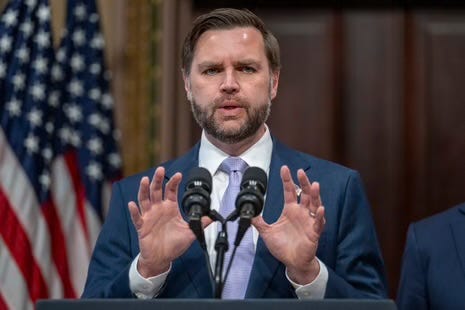
On Wednesday, Vice President JD Vance announced new steps in the administration’s federal health-care fraud campaign, including a $1.3 billion deferral in Medicaid funding to California. AP reported that CMS Administrator Dr. Mehmet Oz called it the largest deferral the agency had ever made, citing questionable expenditures and anomalies in California’s home-care program. California Gov. Gavin Newsom’s office disputed the claim and argued the growth reflected efforts to keep people out of more expensive nursing homes. [8]
The administration also announced a six-month national moratorium on new Medicare enrollments for hospice and home health providers. Reuters reported that the freeze blocks new providers from registering for reimbursement while leaving existing providers in place. CMS cited widespread fraud, but Reuters also reported that Oz did not provide specific evidence to explain why a national freeze was needed rather than targeted regional action. [9]
Fraud is real. So is the way fraud becomes a political skeleton key. Once the government says “fraud,” it can hold funds, freeze provider entry, demand state compliance, and make access problems sound like moral hygiene.
Why it matters: Medicaid patients, seniors, disabled people, elderly people who rely on home care, family caregivers, hospice patients, low-income Californians, home health workers, and legitimate small providers are closest to the blast radius. The state says it is protecting the program. Maybe sometimes it is. But broad tools can punish the people who depend on the program before they ever touch the bad actors. The scammer becomes the excuse. The patient becomes the collateral.
Sources
[8] AP, “Officials say $1.3 billion in Medicaid money to California will be deferred over suspicions of fraud” - Reports Vance’s announcement, California’s dispute, and the broader Medicaid and Medicare fraud campaign.
[9] Reuters, “US freezes Medicare enrollments for new home healthcare and hospice providers” - Reports the six-month nationwide Medicare enrollment freeze for new hospice and home health providers.
Stories Buried Beneath the National Headlines
6. EPA Gives Automakers Time and Coal Plants a Cleaner Excuse
On Thursday, Reuters reported that EPA proposed delaying enforcement of a Biden-era vehicle pollution rule until the 2029 model year. The rule covers six pollutants responsible for smog, and EPA said the delay would save automakers $1.7 billion. Environmental groups warned it would increase harmful pollution, preventable illness, and premature deaths. [10]
The same day, AP reported that EPA moved to roll back limits on toxic wastewater from coal-fired power plants, including heavy metals such as mercury, arsenic, and selenium leaching into groundwater and waterways. EPA framed the rollback around energy demand, including demand from AI data centers. [11]
Why it matters: Black, Latino, Indigenous, poor, working-class, and rural communities are often closer to highways, industrial corridors, coal ash, and polluted water. EPA’s language is cost, compliance, and energy reliability. The bodies receiving the pollution do not speak in that dialect. They speak asthma, cancer risk, contaminated water, and children missing school.
Sources
[10] Reuters, “US EPA proposes delaying enforcement of Biden vehicle pollution rule” - Reports EPA’s proposed delay of vehicle-pollution standards and the projected automaker savings.
[11] AP, “Trump administration aims to roll back limits on toxic wastewater from coal-fired power plants” - Reports EPA’s proposed rollback of toxic wastewater rules and the AI energy-demand framing.
7. Florida’s New House Map Gets Its First Court Test
On Friday, a Florida court was set to hear challenges to new U.S. House districts signed by Republican Gov. Ron DeSantis after a rapid special session. AP reported that lawsuits filed on behalf of voters argue the map violates Florida’s 2010 state constitutional amendment banning partisan gerrymandering and barring maps that diminish racial or language minorities’ ability to elect candidates of their choice. [12]
This is the local-state sequel to the national Voting Rights Act story. The U.S. Supreme Court said federal courts cannot decide partisan-gerrymandering claims, but state constitutions can still matter. That makes Florida’s court fight one of the places where the remaining machinery of democracy is being tested.
Why it matters: Black voters, Latino voters, language-minority communities, and voters in reshaped Florida districts are affected before the country notices. National coverage tends to count possible seats. XVOA has to count the people whose electoral power gets melted down into a partisan projection.
Sources
[12] AP, “New Florida US House map faces partisan gerrymandering claims” - Reports the Florida map challenge and the state constitutional claims.
8. A Former Private Prison Executive Is Moving Into ICE Leadership

On Wednesday, AP reported that David Venturella, a former executive at GEO Group, will serve as acting head of Immigration and Customs Enforcement after current acting director Todd Lyons steps down at the end of May. Venturella left GEO in 2023 and has been working at ICE leading the division that oversees detention contracts. GEO houses about one-third of ICE detainees, and AP reported the company has benefited from Trump’s mass-deportation push, including a $1 billion, 15-year deal for a detention center in Newark. [13]
This is the revolving door doing what revolving doors do. A man moves from detention industry leadership into detention-contract oversight and then into acting leadership of the agency that fills the beds.
Why it matters: Immigrants, asylum seekers, Black immigrants, Latino immigrants, Muslim immigrants, detainees, detained parents, local communities fighting facilities, and detention workers are all inside this appointment. The mainstream version is personnel. The machinery version is profit alignment. If the state expands detention while choosing leaders shaped by the detention industry, the cage becomes a business model with a badge.
Sources
[13] AP, “Former private prison executive David Venturella will become ICE’s acting leader” - Reports Venturella’s appointment, GEO Group ties, and ICE detention expansion context.
9. A Judge Ordered the Government to Bring Back a Colombian Woman Sent to Congo

On Wednesday, U.S. District Judge Richard J. Leon ruled that the deportation of Adriana Maria Quiroz Zapata to the Democratic Republic of Congo was likely illegal and ordered the Trump administration to bring her back. Zapata, a 55-year-old Colombian woman with diabetes and a thyroid condition, had been sent to a country that reportedly refused to accept her because it could not provide sufficient medical care. [14]
AP also reported Friday on 15 Latin American nationals deported to Congo under Trump’s third-country deportation agreements. One 29-year-old Colombian woman told AP she was sent in shackles despite a U.S. immigration judge’s protection order and was left with an impossible choice: return to a country where she fears persecution or stay in Congo, a country she had never heard of before she arrived. [15]
Why it matters: This is not immigration enforcement. This is human displacement by paperwork. Colombian women, Latin American migrants, asylum seekers, disabled and medically vulnerable deportees, Black and brown immigrants, and families separated across continents are being pushed through deals most Americans will never read. The cruelty is not only removal. It is removal to nowhere.
Sources
[14] AP, “Federal judge orders US to bring back Colombian woman deported to Congo” - Reports Judge Leon’s order requiring the return of Adriana Maria Quiroz Zapata.
[15] AP, “Latin American deportees from the US are now held in Congo” - Reports on Latin American deportees held in Congo under third-country deportation deals.
10. Federal and Congressional Pressure Moves Against Trans Inclusion in Schools
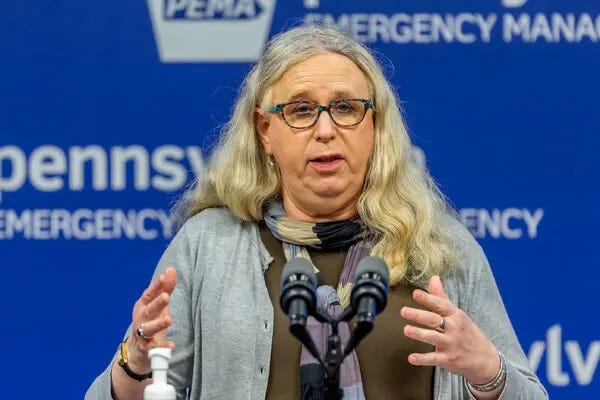
Them reported Thursday that the Trump administration’s Title IX investigation into Smith College may have been triggered by the school’s honorary degree for Dr. Rachel Levine, one of the nation’s highest-ranking transgender public officials. The Department of Education is investigating Smith’s policy allowing transgender women to enroll, arguing that the law’s single-sex school exemption applies only to what it calls biological sex. [16]
The San Francisco Chronicle reported the same day that San Francisco Superintendent Maria Su is expected to testify before a Republican-led House education committee on June 10 as part of a hearing on parental rights, school content, and civil-rights compliance. The inquiry is expected to target LGBTQ-inclusive education, gender-neutral restrooms, gender-identity access to facilities and activities, and ethnic studies. [17]
Why it matters: Trans students, Black trans students, queer students, LGBTQ educators, ethnic-studies teachers, women’s colleges, and school districts serving diverse communities are being pulled into a civil-rights inversion machine. The language says protection. The target is inclusion. The state is using the vocabulary of rights to discipline the people civil rights were supposed to protect.
Sources
[16] Them, “Did An Honorary Degree for Dr. Rachel Levine Lead to Title IX Probe of Smith College?” - Reports on the Smith College Title IX investigation and its possible connection to Dr. Rachel Levine’s honorary degree.
[17] San Francisco Chronicle, “S.F. schools chief to testify before Congress as GOP targets ‘indoctrination’ in classrooms” - Reports the planned congressional hearing involving San Francisco, Chicago, and Loudoun County school leaders.
11. Disabled Women Got a Reproductive-Justice Bill While the Court Fought Over Pills
On Thursday, Rep. Ayanna Pressley and Senators Patty Murray and Tammy Duckworth reintroduced the Reproductive Health Care Accessibility Act, aimed at improving access to reproductive care for women with disabilities. Pressley’s office said the bill is designed to help disabled women get timely, informed, culturally competent reproductive health care amid the broader national assault on reproductive rights. [18]
This story did not have the dramatic court posture of mifepristone. That is exactly why it belongs here. The court gets the siren. Disabled women get the policy detail.
Why it matters: Disabled women face discrimination, inaccessible facilities, provider ignorance, transportation barriers, cost barriers, and reproductive coercion. Black disabled women and poor disabled women face those barriers layered with racism and class punishment. A reproductive-rights conversation that only talks about the legal status of abortion and ignores disability access is not liberation. It is partial access with better branding.
Sources
[18] Rep. Ayanna Pressley, “Pressley, Murray, Duckworth Introduce Bicameral Bill to Help Women with Disabilities Access Reproductive Health Care” - Announces the Reproductive Health Care Accessibility Act.
12. Long Island Rail Road Workers Reached a Strike Deadline With 250,000 Daily Riders Watching
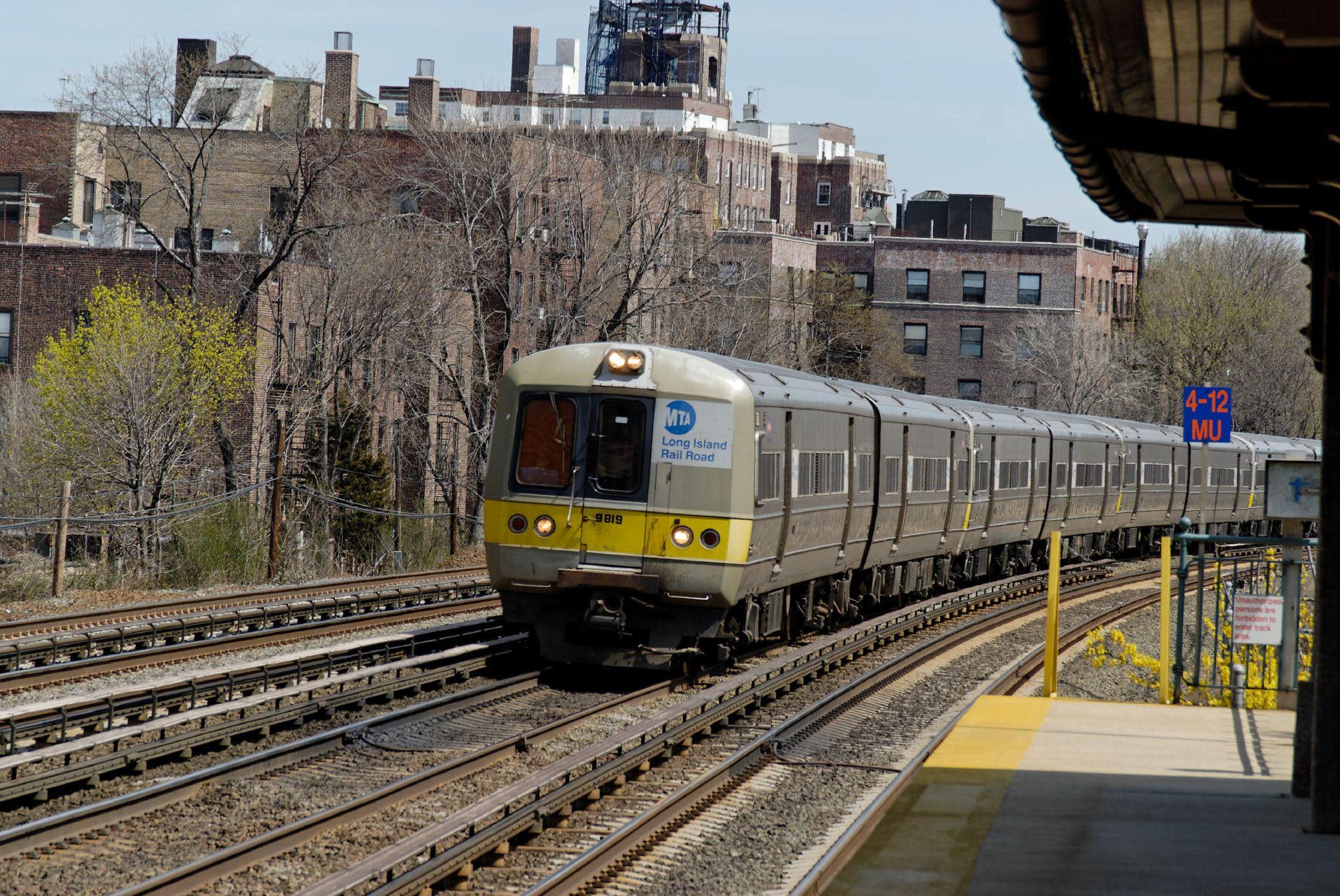
AP reported Thursday that the Long Island Rail Road, North America’s busiest commuter railroad, faced a possible shutdown as a Saturday 12:01 a.m. deadline approached. The unions represent locomotive engineers, machinists, signalmen, and other workers. The MTA proposed a 9.5 percent raise over three years, while unions sought 16 percent over four years and said anything less would amount to a cut in real wages. [19]
Gov. Kathy Hochul urged riders to work from home if possible, while the MTA planned limited shuttle buses for essential workers and riders who cannot telecommute. That sentence contains the class structure of the story.
Why it matters: Rail workers, essential workers, domestic workers, hospital workers, food-service workers, hourly employees, disabled commuters, low-income riders, and caregivers do not all experience a strike deadline the same way. Some people can open a laptop. Some people have to cross the island. The labor story is also a class story about who gets flexibility and who gets told to improvise.
Sources
[19] AP, “North America’s largest commuter rail system faces a potential shutdown” - Reports the LIRR strike deadline, union demands, MTA offer, and commuter impact.
13. Trump’s Law-Firm Punishment Orders Hit a Skeptical Appeals Court
Reuters reported Thursday that a federal appeals court heard the Trump administration’s bid to revive executive orders punishing four major U.S. law firms after judges in Washington rejected the measures as unlawful. The Justice Department framed the case as presidential power. Law firms and legal groups argued that the orders attacked constitutional protections and legal independence. [20]
This can sound like rich lawyers fighting inside marble buildings. Do not be fooled. When presidents can punish law firms because they dislike their clients, former employees, or litigation posture, the pressure eventually reaches anyone who needs representation against power.
Why it matters: Civil-rights clients, immigrants, whistleblowers, workers, protestors, political opponents, targeted institutions, and poor people who depend on a functioning legal ecosystem are all downstream from this. The state does not have to ban dissent if it can make lawyers afraid to touch the file.
Sources
[20] Reuters, “US appeals court questions Trump’s push to punish major law firms” - Reports the appeals court hearing over Trump’s executive orders targeting major law firms.
14. Border Patrol’s Chief Resigned While the Deportation Machine Kept Turning

On Thursday, AP reported that U.S. Border Patrol chief Michael Banks resigned effective immediately. Banks led an agency that has increasingly been tapped by the Trump administration for immigration operations in American cities, and his departure became another leadership shake-up inside the mass-deportation apparatus. [21]
The resignation matters less as biography than as signal. The immigration machinery is being recalibrated, not retired. In the same window, ICE’s next acting leader was tied to private detention, federal courts were ordering a deported Colombian woman returned from Congo, and Black immigrant advocates were still responding to the State Department’s embrace of “replacement immigration” language from earlier this week. [13][14][22]
Why it matters: Immigrants, Black immigrants, Haitian families, Latino communities, asylum seekers, mixed-status families, protestors, local schools, local health systems, and detention workers are inside this churn. Personnel stories can make the machine look unstable. But instability can also be how the machine mutates.
Sources
[21] AP, “US Border Patrol chief Michael Banks is resigning” - Reports Banks’s immediate resignation and the DHS leadership shake-up.
[22] Haitian Bridge Alliance, “Haitian Bridge Alliance Condemns U.S. Rejection of International Migration Review Forum” - Responds to the State Department’s rejection of the migration forum and its use of “replacement immigration” language.
Closing Note on Coverage Gaps
Today’s noise was loud enough to do what noise is designed to do. Trump in China. The Supreme Court. Iran. War powers. Redistricting. Health fraud. All legitimate stories. All major stories.
But the deeper movement happened in the connective tissue. The same week that courts heard election-list arguments, Louisiana moved on Black districts. The same day abortion-pill access survived, disabled women needed a separate bill to get care treated as real. The same administration claiming to protect patients froze provider access and deferred Medicaid money. The same state talking about border security put a private detention veteran closer to ICE power. The same EPA praising affordability gave polluters more room and communities more risk.
That is the Blackout pattern. The headline says one thing happened. The machinery says the same thing happened five different ways.
Support XVOA
This work takes time because the machinery does not announce itself honestly. It hides in court calendars, agency notices, local papers, trade stories, school-board fights, environmental rules, immigration contracts, and the soft language of “efficiency.”
Paid subscriptions buy the hours it takes to track that mess before it becomes the official story.
If you cannot subscribe right now, buy me coffee is the backstop.
The world just keeps on turning & the haters keep the hatred burning. That's life in America.
PS: Restacked with a vengence, of course!
Thank you for this report. Excellent job!!!!