

Listen I didn’t want to write this. Not tonight. Not about Lennon.
I’m not some Lennon biographer. There are men and women who know every chord he ever strummed, every hotel room he ever wrecked, every tabloid fight with McCartney. Why me? Why now?
Because the shadow wouldn’t let me go.
Writing isn’t a career you happily choose. It’s a draft notice. You get conscripted. Some nights it feels like a curse. Knowledge burns a hole in your chest until you find words sharp enough to pass it on. Robert Reich reminded me of that when he posted Yeats and Auden, old poems that still sound like alarms today. He has the gift of translation. He can hand the burden over to the people in language they can carry. Tonight I’m trying to do the same.
And here’s the part that surprised me. For all my distance from Lennon, I always carried one of his songs. Nobody Told Me.
Yesterday I put those first 20 seconds in that video on repeat, a hundred quick cut backs just to hear the riff in those first seconds. For the first time, I listened with a third ear. I heard the blue-note bending of Chuck Berry, the lineage of Lonnie Johnson. I heard the shadow in the sound which happens to be the same shadow Lennon had to face, the one he finally confessed belonged to Black America.
And now I have to say something that feels awkward in this space. This is a Black platform, open to anyone, however built to honor our sound, our soul, our lineage. Why am I talking about a white artist here? It’s because Lennon isn’t the center. The shadow lineage is.
Lennon’s confrontation is just a mirror. The fire came from Black music. He said it himself over and over. “If you tried to give rock and roll another name, you might call it Chuck Berry,” Lennon told interviewers in the 1970s. About Little Richard he said, “He was better than Elvis. When I heard him, my whole life changed.” When the Beatles were asked how they built their harmonies, Lennon pointed straight to Detroit: “It was mainly the black artists we listened to—Smokey Robinson, the Motown sound. We were trying to be like them.”

And he didn’t just say it in interviews. He lived it on stage. In 1972, when Lennon finally got to perform “Johnny B. Goode” side by side with Chuck Berry on national TV, he called it one of the greatest thrills of his life. The same Lennon who told reporters, “We wanted to be black, singing the blues, that’s all.”
And McCartney backed him up. He once explained the Beatles’ early years this way: “Our big influences were black singers. We loved Chuck Berry, Little Richard, Fats Domino. That was what turned us on.” To him, covering those records in grimy Liverpool clubs wasn’t imitation. It was initiation.
That’s not nostalgia. A white working-class band in postwar Britain admitting their entire musical identity was born out of Black American rhythm and blues is just telling it like it is. Lennon’s real greatness was that he named it out loud while others stole in silence. He didn’t pretend rock was his invention. He pointed straight back to the shadow he drew from. That naming set him free. That’s the lesson.
Carl Jung, famous groundbreaking psychologist, wrote, “Until you make the unconscious conscious, it will direct your life and you will call it fate.” That’s the shadow. Every human being carries one, and so does every nation. You can ignore it, repress it, or try to pretty it up but it still runs you. Lennon named his. America still refuses. And when a nation refuses its shadow, the shadow writes history in blood.
And here’s where I’m supposed to tell you about a war in a jungle in Asia.
You know the story. Young men drafted into a jungle nobody could map. Politicians lying in the papers. Stories leaking of villages torched, civilians slaughtered, and soldiers writing home confessing what they’d seen, others burying it. A divided nation back home with anti war protectors marching in the streets, veterans against the war, and even within the Black community, bitter argument over whether this was our fight.
That’s Vietnam, right?

Nope it’s 1898. The Philippine War. Our first quagmire in Asia. Our first jungle catastrophe. Soldiers wrote home about burning whole villages, about shooting men with their hands tied. Atrocities piled up. Filipino voices said openly, “The Americans came here to make slaves of us.” Some were convinced it was true. And back in the States, Black leaders split. Some said Black soldiers had no business killing brown brothers overseas for a nation that lynched them at home. Others believed maybe this was the path to respect which meant proving loyalty in war and maybe America would finally grant equality.
Sound familiar? Different century, same damn playbook.
We called it “benevolent assimilation.”

Just like we later called our enlightened Vietnam strategy “winning hearts and minds” Same shadow, new mask. Mark Twain didn’t mince words. He called it butchery with the Stars and Stripes draped over it. That war was supposed to teach us never again. We swore we wouldn’t play empire. That vow lasted about five minutes.
This is America’s cycle: moments of shadow confrontation, followed by shadow relapse.
1776—monarchy was the shadow. We ripped free.
1864–1877—slavery was the shadow. We tore it down, then tried, haltingly, through Reconstruction, to build something new.
World War II—fascism was the shadow. We crushed it, but we exported our own white supremacy into the global order. Japan excluded from leadership after WWI because they weren’t white which created a grudge. That wound festered, and we all know how the mushroom clouds fell. Even in victory, the shadow sat at the table.
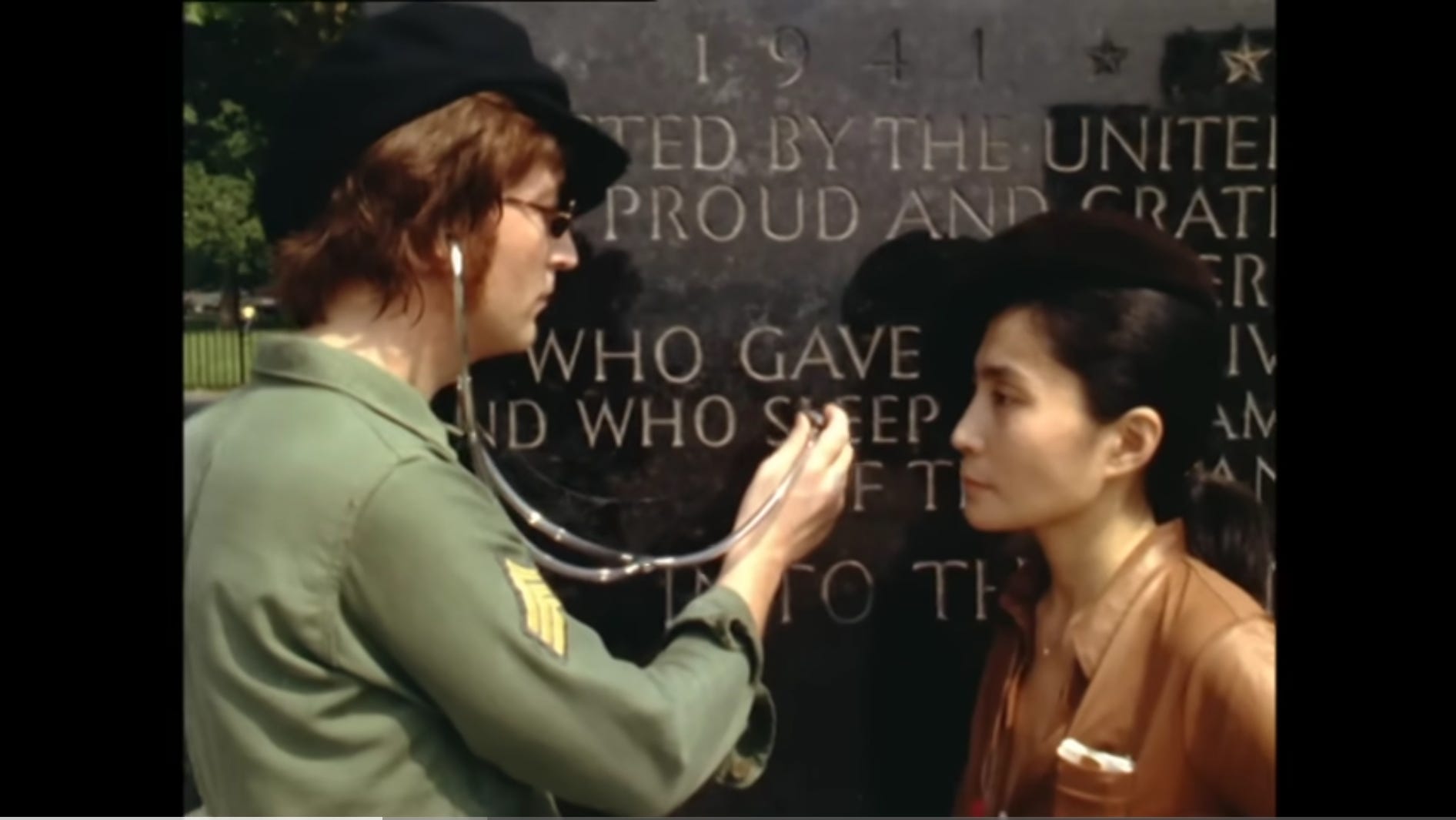
“Everybody’s running and no one makes a move. Everybody’s a winner and nothing left to lose.” Lennon’s line could have been written for us. Strange days indeed.
Then came Vietnam. Different jungle, same shadow. Napalm instead of Krags, helicopters instead of horses, but the lie was the same: we’re liberators. The f*** we were. We were empire again, bleeding young men and foreign children into the soil for nothing.
And out of that war came fire at home. The Civil Rights Movement. Bull Connor’s dogs. Marches and funerals. A people demanding America face its broken promises. For a moment—just a moment—we confronted the shadow again. Voting Rights Act. Civil Rights Act. King’s thunder.
But we didn’t stay there.

By the 1980s, the empire turned inward. The Drug War. Mandatory minimums. Crack hysteria. Whole communities caged. Lennon’s song fades, and Big Bub takes over.
“Telling me stories, all the time.”
We told ourselves we weren’t targeting Black communities. That mass incarceration was about safety, not control. That prisons popping up like weeds weren’t the new plantations. Story after story, while families were ripped apart and futures stolen.
“Why do you lie? That cause fuss and fights…”
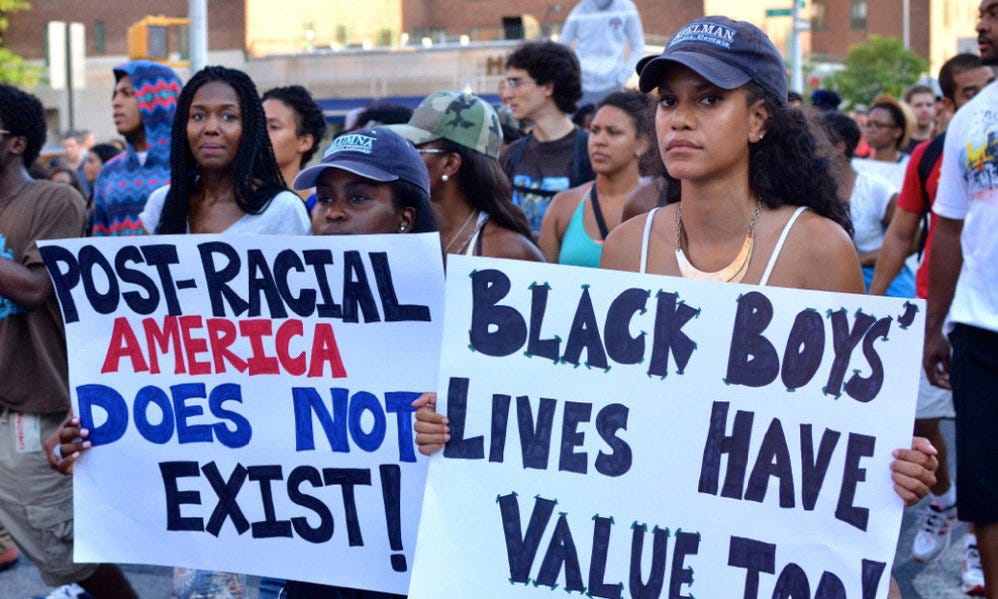
From the Drug War to the nineties to right now, America has been telling itself stories. “We’re colorblind.” “We had a Black president, so racism is over.” “History doesn’t matter.” Bull****. Every time the shadow knocks, the powerful cover the mirror with a flag and say move along, nothing to see here.

Jung said, “One does not become enlightened by imagining figures of light, but by making the darkness conscious.” That’s the difference. America doesn’t just need to deal with shadows in passing. It needs to confront the source of the shadow. It isn’t enough to dab at symptoms with drug laws here, book bans there. We have to name the source: the fear of losing white male dominance. The refusal to confess that the whole damn system was built on it. Until then, the shadow keeps running the show.
And here’s the hard truth: the shadow ain’t going away. We either reconcile with it or get swallowed whole.
But here’s the hope. We’ve faced it before.
After monarchy, democracy.
After slavery, emancipation—even if fragile.
After fascism, a global order that, for all its flaws, spared us from another world war for generations.
After Jim Crow, Civil Rights victories that still echo.
We’ve leapt before. We can leap again. Lennon named his shadow and was freed to create. We can name ours and be freed to build.
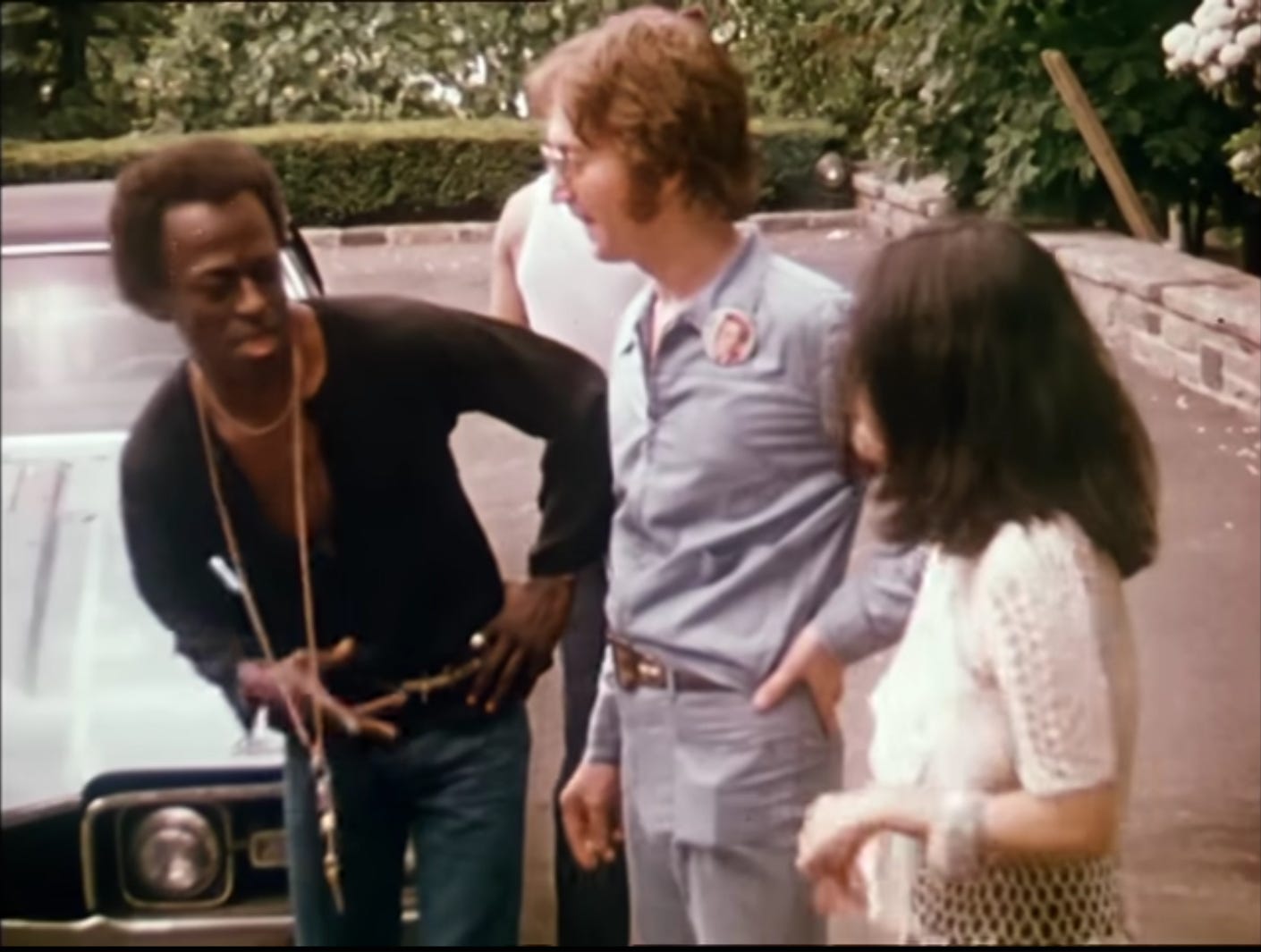
“Nobody told me there’d be days like these. Strange days indeed.” Lennon’s chorus still rings.
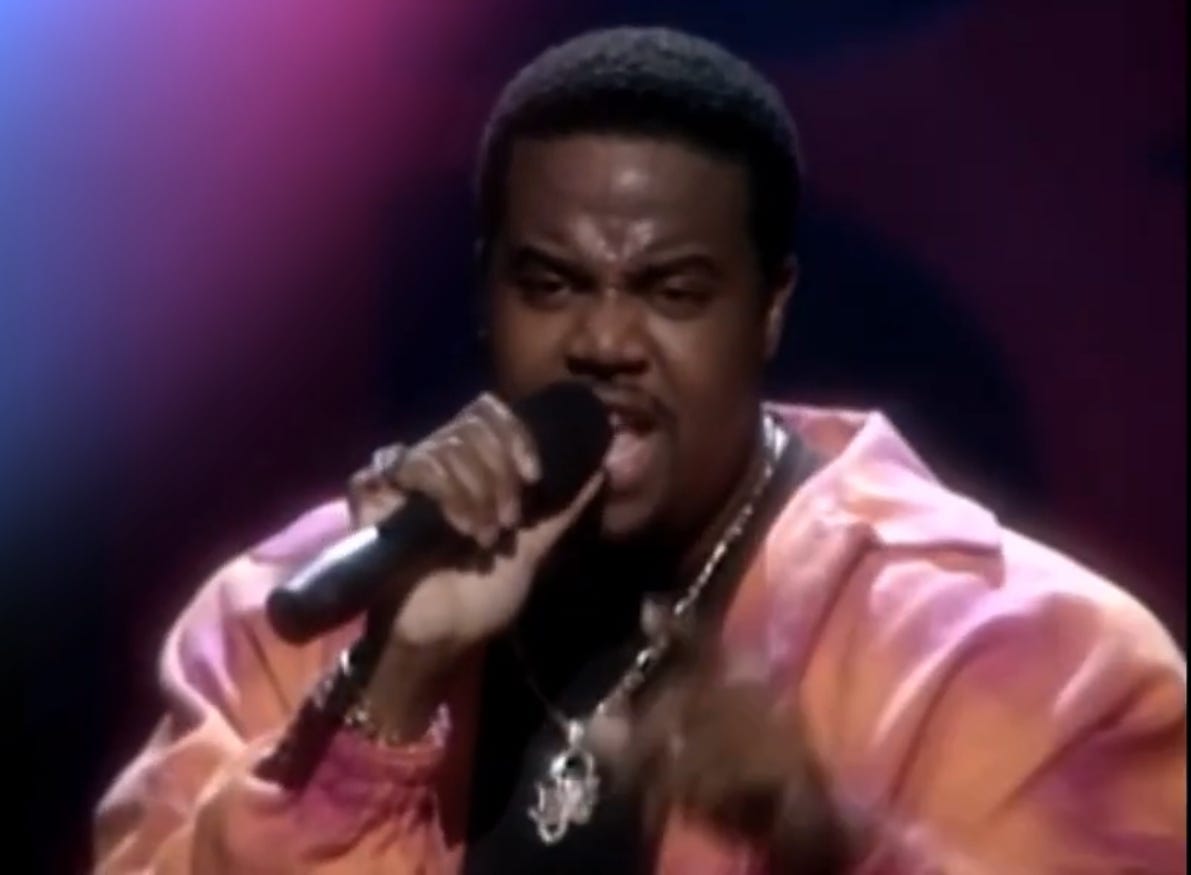
But so does Bub’s lament: “Telling me stories, all the time.” Which voice we choose next is up to us.
The shadow is calling. The question is whether we’ll tell another lie or finally face the source.
Confronting the shadow costs something. It always has. Lives in a jungle far from home. Marchers beaten on bridges. Artists who sang the truth and paid with their peace. History shows us the bill always comes due.
If you believe in keeping this voice independent and unbought, an $80 annual carries more weight than you might think.
And if that feels too steep right now, there’s always the $8 monthly.
Either way, what matters is keeping the light steady while we face the shadow together.
This was so good. I'm saving it. If I still taught, I'd make my students read it. I taught a music appreciation course, and --since I knew I'd be retiring soon--asked my students (all Black) if they minded my changing the syllabus from what the antiquated text included , so we could learn real music appreciation. They were all game, so I re-wroet it to a 25 page history of music in America. Bottom line: Black people created music way back then, and continue to create new genres today. I could see the faces light up as I lectured about the history and played (thanks Youtube) old snippets from the early days of spirituals, jazz, blues and country, etc. I had them choose a song and research its history and how many people had covered it over the years, and the last week of class, they became the instructor and told the class about something they had been encouraged to research regarding music. It was awesome. My parting words on that last day were these: white people will try to re-write music history (and take credit for inventing various genres), but now you know better! Don't let them steal that from you, too. Jung was right: “Until you make the unconscious conscious, it will direct your life and you will call it fate.” As a white person, I can no longer tolerate the lies and, "I think I should just stay out of this; it isn't my fight" bullshit. White people invented "race" so they could become racists. White people have to end it. This IS my fight!
"One doesn't become enlightened by imagining figures of light, but by making the darkness conscious." Another light came on in this disorienting darkness. Only by seeking and confronting the source of all our shadows can we be truly free. Especially true for us White folk.