

Know Your Place
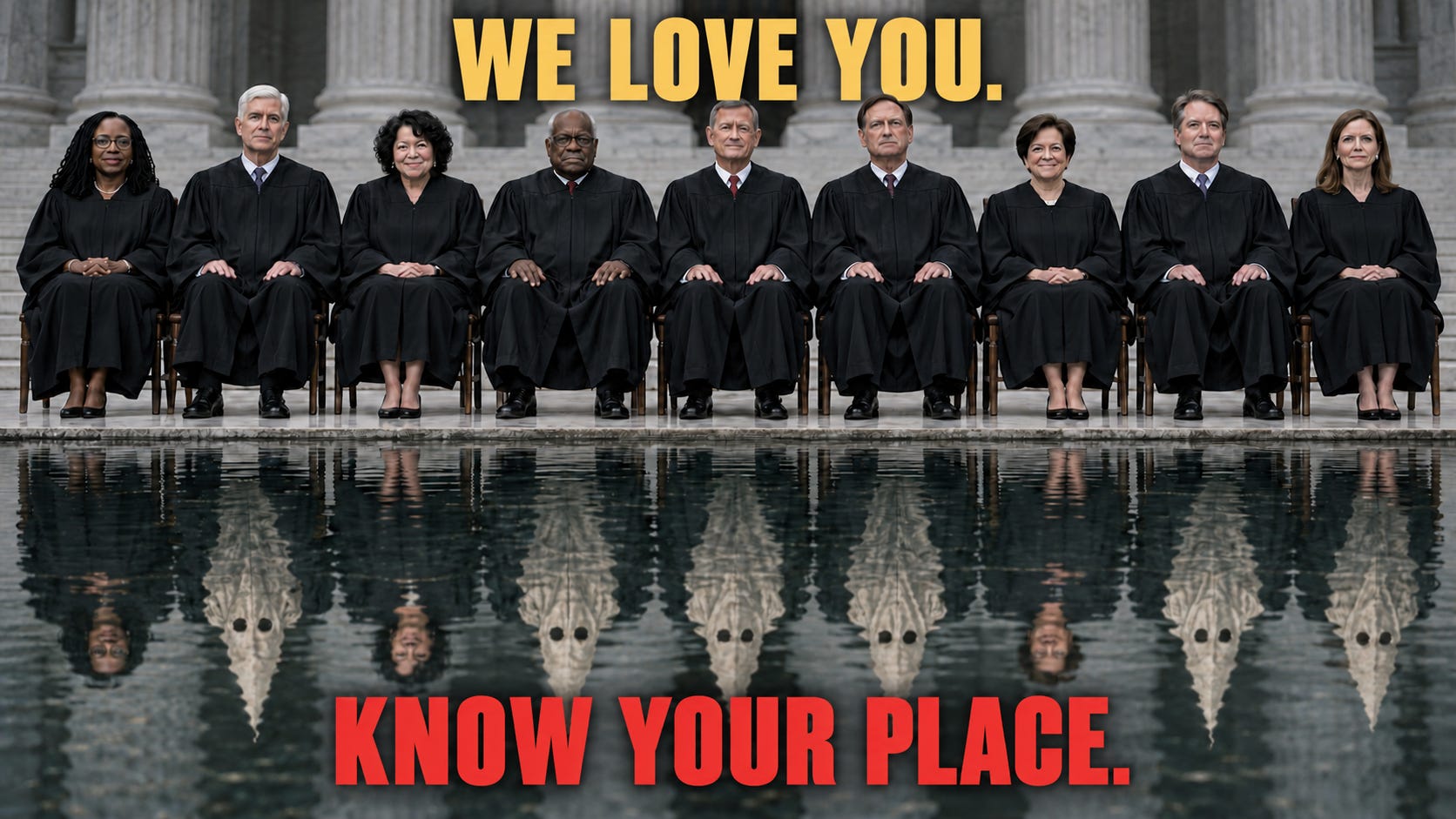
The other day I was watching Thom Hartmann’s interview of Greg Palast on voting rights, and at one point Palast described the Supreme Court justices as wearing black robes over white sheets. [1]
I was triggered.
I’m not sure exactly what got triggered. Maybe the combination of Black robes and white sheets and hoods conjured up too many other images from deep in my subconscious for comfort. But one theme was love, or at least an apparent affection for Black people that comes with the expectation that we know our place.
On trips down South I joked among friends how you could be picked out and greeted from way down the parking lot. There is a love down there. But love doesn’t always translate to allowing you to participate equally in running things.
In law enforcement I heard plenty from white lieutenants about the good old boy network. When a job opened up, you could bet your ass somebody’s favorite was going to get it. Still you interviewed. Still you prepared. Sometimes just for practice, to keep your skills up in case you ever did get chosen. Still you prepared to try to impress people you figure already had their mind made up about who they wanted to pick. Still you prepared.
That’s love, right? People can like you. Admire you. Think the world of you. And still get pissed at you if you think you’re equal to them or have any right to help run things.
Love. And pissed. Both genuine.
And that brings me to voting and the Supreme Court. Voting is asserting you have a right to participate in choosing your leaders, your laws, who rises to prominence and who gets tossed aside. It’s not something some nice person can bestow on you or take away.
So what say has SCOTUS left for Black folks to run things, even when nice loving people are pissed we think we can?
After Colfax
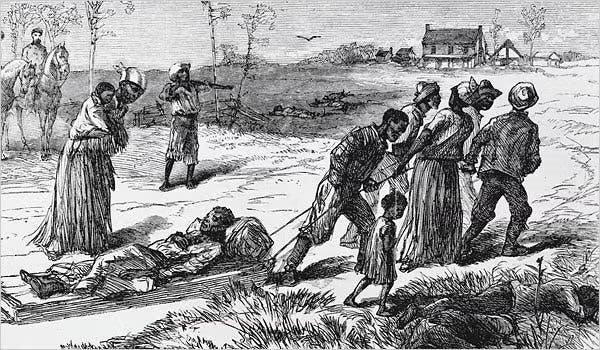
In 1873 there was a political battle in Colfax, Louisiana that ended in a massacre of Black people. Three men were convicted under federal civil-rights law, but in 1876 the Supreme Court set them free in United States v. Cruikshank. [2] (fjc.gov)
As to the charges involving voting rights, the Court opined, “We may suspect that race was the cause of the hostility; but it is not so averred.” Because the indictment did not specifically allege the requisite racial motive, the charges involving voting rights failed. Additionally, the Court also held that the Fourteenth Amendment applied to state action while leaving private violence outside that amendment’s direct reach. [3] (law.cornell.edu)
The point being, nice loving people can limit Black people’s ability to participate in running things under the guise of constitutional interpretation.
In 2013 SCOTUS decided Shelby County v. Holder. Prior to Shelby County certain jurisdictions could not change their voting rules without prior federal approval, the so-called preclearance provision of the Voting Rights Act. SCOTUS declared the coverage formula in §4(b) unconstitutional because it relied on out-of-date information about which jurisdictions should be covered. The preclearance provision itself, §5, remained on the books. Yes SCOTUS recognized voting discrimination still occurs. But they nevertheless disabled preclearance for the jurisdictions covered by that formula. [4] (law.cornell.edu)
Once again nice loving people limiting Black people’s ability to participate in running things under the guise of constitutional interpretation.
The Fifteen-Cent Degree
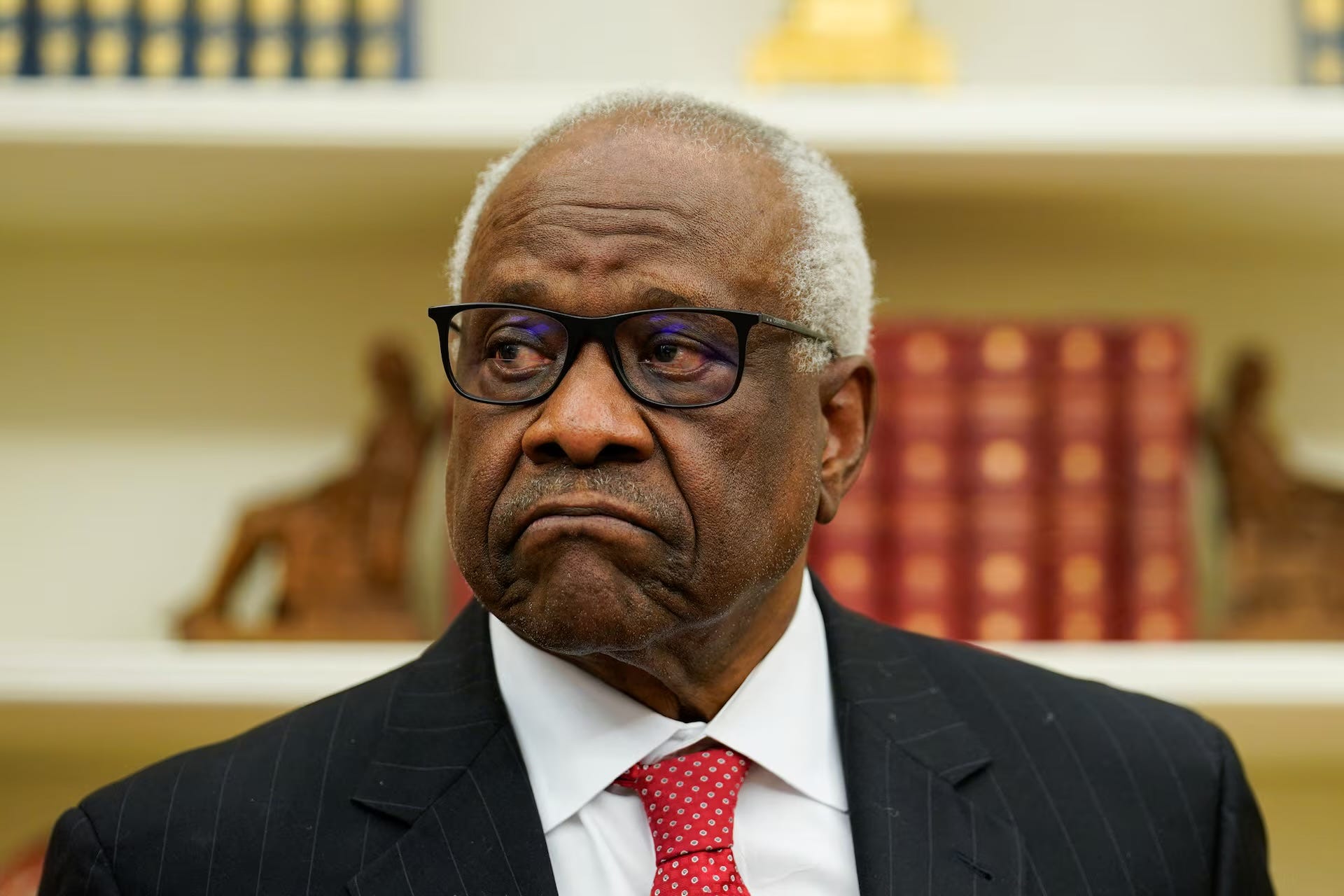
Justice Thomas was part of this majority. But Justice Thomas went even further. He stated he would have invalidated the entire preclearance provision, §5 of the VRA. Justice Thomas argued that conditions had changed, and thus the extreme intervention of the federal government was no longer justified. [4] (law.cornell.edu)
In 2007 Thomas described keeping his Yale diploma in the basement with a fifteen-cent sticker on its frame. [5] (cbsnews.com) Thomas resented how he believed affirmative action led people to discount his degree and assume Yale let him in because he was Black. This experience became part of the basis of his opposition to affirmative action. [6] (pbs.org)
I can understand his resentment. You work your ass off to get into some establishment only to find out everybody in there already thinks you are the exception they graciously let in the door.
But when Justice Thomas voted in Shelby County v. Holder to help disable preclearance, how can he not understand the Black folks left with weaker voting-rights protections feel the same way about their country? Yes times have changed, but did times change for the people whose protections he helped strip away?
Justice Thomas holds a lot of clout in this country. His presence on SCOTUS is evidence of how high a Black man can climb. But in Shelby County v. Holder he was ruling on protections for people that will never be in those chambers, that will never have powerful friends, that will never be exceptions anybody is gracious enough to let in the door.
Voting rights must mean something for those people. For the Black man or woman that is not likable, that asks all the inconvenient questions, that wears everybody’s patience thin. For the Black folks that when given the time, space and welcome to cross the parking lot will still be reminded where they are not allowed to go.
When the Welcome Wears Out
And that’s why it pissed me off. Because whether we’re talking Shelby County v. Holder or Cruikshank or interviews with Greg Palast or any other topic I’m discussing here at XVOA, it’s about who gets to control Black people.
I’ve got more to say about those robes, and more reading to do before I say it.
Help me make time for that.
If you’ve got enough subscriptions already, buy me a coffee.
I appreciate the help.
Black robes, white sheets. I want to live in a country where I can recognize a fellow human without figuring out where we rank each other. But I still want the welcome. I still want the friendly faces across that goddamn parking lot.
But damn if my citizenship stops when I start asking for equal treatment.
And listen if that equality costs us your love, then so be it.
I want my dignity.
Sources
Thom Hartmann’s interview with Greg Palast, passage beginning around 10:54.
Federal Judicial Center: United States v. Cruikshank and the Colfax Massacre.
United States v. Cruikshank, 92 U.S. 542 (1876), discussion of the Fourteenth Amendment and voting-rights charges.
Shelby County v. Holder (2013), majority opinion and Thomas concurrence.
PBS FRONTLINE: Clarence Thomas’ Long Battle Against Affirmative Action.
That's a terrific, attention-grabbing title for this post. And the post itself was also terrific. I particularly liked your discussion of Thomas, whose motivations I confess I have never remotely understood.
We can deal with Love later. KEEP INSISTING!