

Introduction
Jeffrey Epstein didn’t build an empire by being slick. He built it because powerful people made sure nobody stopped him. Lawyers bent the rules. Universities handed him keys. Banks moved his money like nothing was wrong. He wasn’t hiding in the shadows—he was standing dead center in rooms full of people who could’ve stopped him, and didn’t.
Some of those people wore robes. Some wore lanyards. Some signed off on “philanthropic gifts” while girls were being trafficked a few zip codes away. And depending on who you ask, some of them had three-letter job titles and national security clearance. Because somewhere in the fine print of all this, you start hearing a whisper: “intelligence.” As in, maybe this wasn’t just money that kept him safe. Maybe it was secrets.
This isn’t about one man with a private jet. It’s about how a whole system—legal, financial, academic, political—closed ranks around him. In Part 2, we walk through who built the armor. From Dershowitz to Acosta, from Mar-a-Lago to Harvard, JPMorgan to the modeling agencies, the real question isn’t how Epstein got away with it. It’s how many people helped make sure he did.
Legal Shields: Epstein’s Lawyers and the “Sweetheart” Deal
When the walls started closing in, Epstein didn’t panic. He called Harvard.
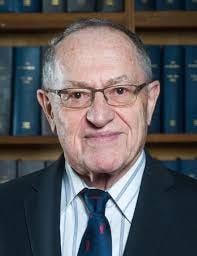
Specifically, Alan Dershowitz the free speech guy, the civil liberties guy, the “I defend the unpopular because I believe in the system” guy.
And just like that, the system bent like it always does when the client’s got a jet and connections.
Dershowitz helped cut a deal in 2007 so slick, it could’ve come with a monogrammed thank-you note. Epstein pleaded to state charges, served just 13 months in county jail and most of those days, he wasn’t even in jail.
He was “on work release.”
That’s right: a man accused of raping dozens of underage girls got to go to the office by day and only sleep in jail at night.
They treated him like he forgot to pay parking tickets, not like he built a trafficking ring.
And Dershowitz? He said he was proud of the deal. Said he’d do it again. Said he might’ve even pushed for less time if he had the chance.
That’s not a defense attorney. That’s a get-out-of-jail architect for billionaires.
A man who built his legacy on the rule of law just showed the world how to walk your client around it.
But he didn’t stop at negotiation. Dershowitz went after the girls.
One was 16. She said Epstein raped her. And instead of believing her, Dershowitz hired private investigators to dig through her social media, found out she liked weed, and sent that to the cops like it was a murder weapon.
Called her greedy. Called her manipulative.
This from a man who’s spent his career claiming to defend the powerless.
When the victim was up against his client, suddenly she was just a liar in lipstick.
And just like that, the message got sent:
Come forward, and the big boys will bury you with your own selfies.
And it wasn’t just Dershowitz. Epstein stacked his legal team like it was the Avengers of moral flexibility…Ken Starr, Jay Lefkowitz, a whole crew of legal talent that wasn’t defending him as much as they were intimidating the system.
Prosecutors described it as a “year-long assault” on justice.
They pulled strings behind closed doors. Cut deals in private rooms.
They agreed not to tell the victims what was happening.
Let me say that again: they cut a plea deal for a man accused of serial child rape and didn’t tell the children.
That’s not a loophole. That’s not a technicality.
That’s a coordinated erasure of pain.
They’ll tell you this was about due process.
Nah. This was about what due process becomes when the accused has more friends in the courthouse than the victims do.
By the end of it, Epstein walked free. The girls stayed silent.
And the lawyers who built that outcome?
They walked away clean, too. Wearing suits. Signing book deals.
Still lecturing us about the Constitution.
A Prosecutor’s Complicity: Alexander Acosta’s Secret Deal
If Epstein’s lawyers built the getaway car, Alexander Acosta handed them the keys and waved from the porch.
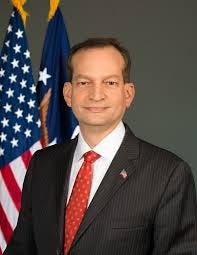
Acosta wasn’t some rookie prosecutor. He was the U.S. Attorney for the Southern District of Florida—a man whose entire job was to enforce federal law. And yet, when faced with a mountain of evidence, a 53-page indictment, and an ongoing FBI investigation, he didn’t just blink…he folded. Instead of pushing forward, he cut a secret plea deal with Epstein’s lawyers. Not only did it drop federal charges, it gave immunity to “any potential co-conspirators” which, in Epstein’s world, meant a whole damn village of recruiters, fixers, assistants, and abusers.
But hold up a minute …it gets worse.
They agreed not to tell the victims.
Read that again.
The U.S. government, supposedly the people’s advocate, made a deal with a man accused of trafficking children and told the victims absolutely nothing. This wasn’t a loophole. It was a choice. A coordinated decision to keep the abused girls out of the room while their abuser walked out the back door with a sweetheart deal in hand.
And when this all came to light in 2018—not because of a prosecutor, but because of a journalist—Acosta didn’t come with receipts or remorse. He came with excuses.
He said going to trial was risky. That getting some jail time and sex offender status was “better than nothing.”
You know who else gets “better than nothing”? People without options. Not prosecutors with subpoenas and the FBI on speed dial.
Even Acosta had to admit parts of Epstein’s deal were “awful.” Like the work-release jail setup where Epstein basically lived at the office and stopped by jail at night like it was an Airbnb.
But here’s where the story jumps genres from legal drama to spy novel.
According to journalist Vicky Ward, during Trump’s 2017 transition, Acosta was asked if the Epstein deal might hurt his confirmation. And his response? Allegedly, he shrugged and said:
“Epstein was above my pay grade.”
“I was told he belonged to intelligence.”
“Leave it alone.”
What. The. Hell. That’s a movie script line you say before the conspiracy montage starts. A federal prosecutor appointed to uphold justiceis now claiming he let a child trafficker off the hook because… what? CIA? Mossad?
We don’t know. And Acosta’s never explained but whether that line was truth or smoke, it tells you everything about how Epstein operated: like a man who knew nothing could touch him.
And honestly? The intelligence rumor might be the least disturbing part because even without spy games, Acosta and his office treated Epstein’s lawyers like royalty. Internal emails showed them thanking the defense team for their “assistance.”
Let me repeat: thanking the lawyers who helped a predator dodge prison.
The Justice Department reviewed all of this in 2020. Their verdict? Acosta showed “poor judgment.”
Poor judgment? Man, if a Black prosecutor did this for a Black trafficker, they’d have thrown him under the jail with a press release and a Netflix doc by now.
So let’s call it out for what it is:
A prosecutor meant to prosecute became a defense mechanism for the rich.
Acosta’s capitulation didn’t just protect Epstein. It reloaded him and gave him another decade to exploit, intimidate, and destroy more girls.
And for what?
A promotion? A pat on the back? A cabinet position in the most chaotic White House in modern history?
Whatever Acosta got, the victims lost. And they lost big.
This wasn’t just failure. It was collusion by the kind of comfort that only ever seems to cushion white men with private jets and “friends in intelligence.”
High Society Cover: Mar-a-Lago and the Patronage of the Elite
Jeffrey Epstein didn’t need to sneak into the halls of power. He was invited.
He didn’t hide in shadows. He hunted in country clubs. And one of the most infamous was Mar-a-Lago, Donald Trump’s exclusive Palm Beach resort where money whispered, and silence echoed louder than guilt.
In the late 1990s, Epstein roamed Mar-a-Lago like he owned stock in it and he wasn’t just there sipping martinis either, he was recruiting. It was in the spa, of all places, where Ghislaine Maxwell spotted 16-year-old Virginia Giuffre, handing out towels, and offered her a “massage opportunity”. That was the pitch. What followed was sex trafficking that spanned continents.
Let’s be clear: this wasn’t some back alley sting. This was a teenage girl being pulled into a predator’s pipeline at one of the most elite clubs in America.
And nobody said a damn thing.
They saw Epstein. They saw Maxwell. They saw something. But as long as the champagne flowed and the staff wore name tags, the silence stayed thick.
Trump? He’s played both sides like a bad card trick.
One day, he’s at parties with Epstein grinning about how “he likes ’em on the younger side.”
The next, he claims he banned him for “poaching” a club employee.
Let’s pause right there.
Poaching. Like Epstein was swiping talent from HR, not trafficking children.
Trump didn’t say “he’s a predator.” He said “he’s taking our girls.”
Like the problem wasn’t rape. It was recruiting without permission.
He reportedly barred Epstein only after a second incident. That tells you all you need to know.
This wasn’t protection by accident. This was elite gentlemen calling bad behavior “ungentlemanly” and then pouring another round.
And it wasn’t just Trump.
Epstein floated through royal estates, celebrity galas, and fundraisers like a welcome guest.
Prince Andrew—you know, the one in the photo with a minor and a smirk—kept up with Epstein even after the first arrest.
Virginia Giuffre says Epstein trafficked her to the prince when she was 17.
Andrew denies it. But that picture keeps testifying.
Bill Clinton was on Epstein’s jet so often it might as well have had his initials on the tail.
He swears he didn’t know anything.
But look—if your entire defense is “I was on the plane, but I didn’t look out the window,” it might be time to sit down.
Here’s the thing: Epstein didn’t need every famous person to co-sign him. He just needed a few.
Every dinner invite, every handshake, every “Jeffrey’s one of the good ones” gave him social camouflage.
He didn’t have to hide his crimes. He just had to keep being invited.
And the message to victims?
If a prince can ignore you, a president can dine with your rapist, and the club you work at lets it happen upstairs?
Then who exactly is left to protect you?
High society looked at Epstein and saw a man who gave to charities, hosted scientists, and threw lavish parties.
They didn’t ask what the girls were doing upstairs.
Because that might’ve made the wine taste sour.
Academic Legitimacy: Harvard and the Ivory Tower’s Embrace
Now let’s talk about Harvard.
The temple of intellect. The self-proclaimed guardian of truth and ethics.
The school with a $50 billion endowment and enough moral swagger to lecture the world on justice.
And what did they do?
They gave a child predator a keycard.
That’s not a metaphor. They literally gave Epstein an office on campus.
After his conviction. After he was a registered sex offender.
After it was public knowledge that he had abused dozens of girls.
He donated $9 million over a decade.
Funded some fancy-sounding “Program for Evolutionary Dynamics.”
And in return, Harvard gave him the full prestige package—access to scholars, his own space to host “discussions,” and most importantly, legitimacy.
Let’s say that again: Harvard, the place that claims to shape the moral leaders of tomorrow, allowed a man who trafficked children to hang out in Harvard Yard like he was a damn guest lecturer.
And when the public found out?
They said, “Oh, we cut him off in 2008.”
Except Epstein kept showing up on campus through 2018.
His office was still there. His name was still on the website.
And Professor Martin Nowak? The one who hosted him? Suspended—only after the press came knocking.
They claimed it was an oversight.
But let’s keep it real: Harvard saw money and clout.
They didn’t forget what Epstein did.
They just decided the donations were worth it.
And that logic? That “we know it’s bad but it helps us” math?
It’s not new at Harvard.
It’s old. Slave-trade old.
Back in the 1800s, Harvard professor Eliphalet Pearson defended slavery with a straight face.
He told people to ignore “tender sentiment” and follow “the voice of reason.”
Said, and I quote:
“Reflect, I say, a moment upon the condition of a creature in human shape… and compare it with the condition of a slave in this country. Their removal [from Africa] is to be esteemed a favor.”
You read that right:
He called slavery a favor.
Said enslaved Africans were being rescued from a life of “lust and passion” back home.
That’s how the most elite university in America justified human trafficking back then.
And now?
They gave a trafficker an office and said it was academic freedom.
From chains to keycards it’s the same logic. Different language.
Harvard didn’t just accept Epstein’s money. They gave him cover.
They let him host scholars. Lend prestige. Play “intellectual.”
They called it philanthropy.
He used it like a cloak.
And they weren’t alone.
MIT’s Media Lab accepted donations under the name “Voldemort” because they knew it would be scandalous to say “Epstein” out loud.
Scientists and professors still flew to his island. Dined at his home. Smiled for photos.
Because, hey—he was “interested in science.”
The problem wasn’t just the cash.
It was the silence.
The willingness to let prestige outweigh pain.
Even after 2008, even after the public knew, academia kept finding a way to say,
“Well… maybe he’s still useful.”
And that’s what makes it so damning.
Because these weren’t hedge fund bros or golf buddies.
These were the people who claim to know better.
Who write papers on ethics.
Who build the curriculums for future judges and CEOs.
Harvard’s motto is Veritas—Truth.
But when the truth showed up with a sex offender registry and a suitcase of cash, they decided truth was negotiable.
Financial Powerhouses: Banks and Billionaires that Enabled Epstein
Epstein didn’t just have money. He had institutional money.
He didn’t stash cash under his mattress. He ran his entire trafficking empire through banks that were too rich to care.
And sitting at the top of that list? JPMorgan Chase.
From 1998 to 2013, they kept Epstein on as a client.
That’s five years after his arrest.
Five years after his conviction.
You rob a bodega, your bank freezes your account.
But Epstein? He ran millions through JPMorgan while they filed “concerns” and cashed the damn checks anyway.
Internal memos show it all:
He was taking out wads of cash. Wiring money to Eastern Europe. “Hosting” Russian models.
Compliance officers flagged it as potential human trafficking.
You know what the bank did? Laughed. Shrugged. Carried on.
Executives joked about his “reputation” while helping him finance abuse in real time.
They didn’t drop him until 2013, and only because someone upstairs said the “headache” wasn’t worth it anymore.
Not the crimes.
Not the girls.
The headache.
That’s what ended a 15-year relationship.
And then—only then—Epstein bounced to Deutsche Bank, where he kept right on moving money until they, too, got exposed and fined.
By 2019, the banks were out of excuses.
The emails were public.
The receipts were everywhere.
JPMorgan got dragged to court, and by 2023, they agreed to pay out:
$290 million to Epstein’s victims
$75 million to the U.S. Virgin Islands
And after all that, you know what they said?
“We deeply regret any association.”
Not “we helped a predator move money.”
Not “we ignored trafficking warnings for a decade.”
Just… “association.”
That’s not regret. That’s brand management.
And let’s not forget the origin story—the man who minted Epstein’s wealth in the first place: Leslie Wexner.
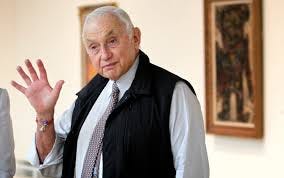
Founder of Victoria’s Secret.
Retail titan.
And for years, Epstein’s only known client.
Wexner didn’t just trust Epstein with advice.
He gave him power of attorney. Let him sign checks, move assets, run deals.
Transferred a seven-story mansion to him. Bought him a jet. Let him operate like a billionaire with a backstage pass.
One friend reportedly said, “It’s not typical for someone that rich to give all their money to a guy nobody’s ever heard of.”
Yeah. No kidding.
And here’s the twist:
Wexner made his fortune selling empowerment to women.
But behind the curtain?
He was empowering a man who groomed, raped, and trafficked girls.
He says Epstein “misappropriated” funds.
But by the time Wexner cut ties in 2008, the damage was done.
It was Wexner’s trust—and Wexner’s millions—that gave Epstein status, cover, and confidence.
Confidence that the rules didn’t apply to him.
Because the truth is, it wasn’t just banks and billionaires.
It was a whole class of people who believed if someone’s rich enough, connected enough, smooth enough, then maybe… just maybe… he’s not that bad.
Epstein wasn’t just enabled.
He was endorsed.
By executives. By patrons. By an entire moneyed ecosystem that watched him move like a predator and said,
“He’s valuable.”
The Modeling Pipeline: Jean-Luc Brunel and Industry Complicity
If you were trying to build the perfect cover for global trafficking, you’d invent the fashion industry.
Glamorous. Untouchable. Obsessed with youth.
And entirely structured to normalize the exploitation of girls who don’t know the rules yet.
Enter Jean-Luc Brunel.
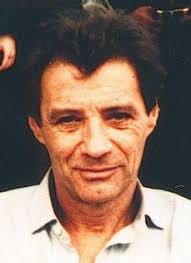
Epstein’s close friend. French modeling agent.
And according to multiple survivors, one of the biggest suppliers of underage girls to Epstein’s empire.
Brunel co-founded MC2 Model Management, bankrolled by Epstein.
He scouted girls in Eastern Europe and South America—some as young as 12—and offered them contracts, visas, and dreams.
Then funneled them straight into Epstein’s orbit.
One survivor said she was pressured into sex by Brunel himself—told her modeling future depended on pleasing the man with the money.
Another said Brunel gifted Epstein three 12-year-olds from France for his birthday.
Let that sit for a second.
This wasn’t fashion.
This was trafficking in high heels.
And here’s the kicker: Brunel had been exposed decades earlier.
60 Minutes did a whole investigation in the 1980s, showing his agency’s pattern of sexual abuse.
He kept operating.
No arrests. No shutdown.
The industry knew—and said nothing.
Because in modeling, silence is currency.
Girls are told to keep quiet.
Agencies protect their “stars.”
And predators?
They just keep recruiting.
Virginia Giuffre said Epstein directed her to sleep with Brunel.
Brunel denied it.
Then he was arrested in 2020 in France—finally.
And like Epstein, he died in jail before he could testify.
Let’s be clear:
Brunel wasn’t an outlier.
He was the rule.
A man who turned runways into hunting grounds, and the entire fashion ecosystem played along.
Magazines. Agents. Photographers. Club owners.
All of them looked the other way while rich men “auditioned” vulnerable girls in hotel rooms.
Epstein? He loved that system.
Masqueraded as a talent scout. Promised gigs, photoshoots, connections.
Maxwell posed as a recruiter, too.
Together, they weaponized aspiration.
And the industry let them.
Because it’s easier to sell “mystery” and “glamour” than to confront organized sexual violence in designer suits.
It took the #MeToo era and a trail of broken girls to start peeling back the curtain.
And even now, most of these agencies still haven’t publicly accounted for the access they gave men like Epstein and Brunel.
The modeling industry sold itself as beauty, luxury, and elegance.
But for Epstein?
It was inventory.
He didn’t have to hide it.
Because the system never forced him to.
Alleged Intelligence Ties: Espionage Rumors and “Above the Law” Protection
Let’s get uncomfortable.
There’s one part of the Epstein story that still floats just out of reach—but keeps resurfacing like a body the system forgot to weigh down properly: the intelligence ties.
Now look, it sounds like a movie. Spy rings. Secret cameras. Blackmail files. Mossad. The CIA.
But the question is: if this really was just one guy flying rich friends to creepy island parties—why did everybody act like he was radioactive and untouchable?
We’ve got Alexander Acosta himself—Trump’s Labor Secretary, former U.S. Attorney—on record saying Epstein “belonged to intelligence.”
That’s not a quote from Reddit. That’s a quote from inside the transition team.
Acosta was asked why he gave Epstein that sweetheart deal.
His answer?
“I was told Epstein was above my pay grade… to leave it alone.”
What does that even mean?
Was Epstein a spy? A government asset?
Was he useful to someone with three-letter clearance and a moral blindfold?
Because the deeper you go, the weirder it gets.
Ghislaine Maxwell’s father, Robert Maxwell, was a known asset for Mossad.
An actual intelligence player. Died under mysterious circumstances.
Former Israeli spy Ari Ben-Menashe says he saw Epstein in Maxwell’s office back in the ’80s. Says Epstein and Ghislaine were involved in ops. Not rumors—statements.
And then there’s the theory:
Epstein’s homes were rigged with cameras.
His parties packed with princes, CEOs, senators.
And those cameras? They weren’t for TikTok.
They were for leverage.
Kompromat.
Sex tapes. Secret files. Material no one wants seen—but everyone in power might pay to keep buried.
Now: has this been proven?
No.
But you tell me—how does a man with no real job, no tech company, no hedge fund track record, and no investment portfolio end up living like a Bond villain with diplomatic immunity?
He had a fake passport with a Saudi address locked in his safe.
He bragged about advising governments.
And he had people in his circle—like former Israeli PM Ehud Barak and Prince Andrew—who weren’t exactly volunteering answers about their travel history.
Even Leslie Wexner, his money plug, was part of a shadowy donor collective called the “Mega Group”—which some say helped fund Israeli intelligence initiatives.
So maybe Epstein wasn’t the mastermind.
Maybe he was the honeytrap.
A man who lured powerful men into compromising situations—then passed the footage on.
For leverage.
For loyalty.
For insurance.
And maybe that’s why so many people stepped aside when it was time to take him down.
Because even if it wasn’t officially sanctioned, the fear that it might be was enough to make folks hesitate.
That’s the irony that sticks:
The people tasked with defending national security may have been securing a pipeline of abuse—just because it came with secrets they could use.
And even if none of it is true?
The rumors alone acted as armor.
Enough to scare prosecutors. Enough to make judges blink.
Enough to keep journalists from going full throttle until it was far too late.
When a predator whispers, “You don’t know who I work for”… and everyone backs away?
That’s not power. That’s institutional complicity weaponized.
Conclusion: A Predator Operates in Plain Sight
Jeffrey Epstein didn’t hide.
He was wrapped in invitations, dressed in donations, and shielded by people who knew better.
Harvard gave him a keycard.
JPMorgan moved his money.
Dershowitz wrote the escape plan.
Acosta stamped it.
Wexner signed the checks.
And everyone else?
They shook his hand and asked if he was bringing wine.
From Ivy League halls to island villas, from fashion studios to federal courtrooms—Epstein was never alone.
His empire was made of girls, yes.
But it was protected by institutions.
Lawyers like Dershowitz didn’t just argue technicalities—they attacked children in public.
Prosecutors like Acosta didn’t just fold—they crafted silence into policy.
Harvard didn’t just take money—they gave status to a predator and called it scholarship.
JPMorgan didn’t just overlook red flags—they brushed them aside with emails that read like punchlines.
And the fashion world?
They gifted him access to a supply chain of suffering, all in the name of luxury.
And maybe—just maybe—intelligence networks found him too useful to stop.
Whether as asset, tool, or just walking kompromat delivery service—Epstein had protection above the law and beneath decency.
This wasn’t a glitch.
This was a system functioning as designed.
One where money buys silence, status buys immunity, and girls get sacrificed in the name of discretion.
And when the victims spoke up?
They were ignored.
Mocked.
Dismissed as drama students, troubled teens, runaways.
But they weren’t.
They were the truth—the kind of truth institutions hope you never see.
If there’s a silver lining, it’s this:
Eventually, the fortress cracked.
Thanks to journalists like Julie K. Brown, civil lawsuits, and the courage of survivors like Courtney Wild and Virginia Giuffre, the silence broke.
But even now, let’s not pretend the reckoning was complete.
Harvard redirected the cash.
JPMorgan paid settlements.
And most of the enablers?
Still rich. Still respected. Still untouched.
Because the real cost of Epstein’s protection isn’t paid by the lawyers or the presidents.
It’s paid by the women who still carry what he did to them.
And what this system…this entire well-dressed machine—let happen.
Epstein is dead.
Maxwell is locked up.
But the infrastructure that protected them?
Still standing.
If we’re serious about justice, we stop pretending monsters operate alone.
We name the helpers.
We audit the institutions.
And we teach our daughters that silence in a mansion is still silence.
Because next time, it won’t just be Epstein.
It’ll be someone with new donors. New lawyers. A better yacht.
And if we don’t burn the blueprint now?
He’ll walk right through the same doors.
If this hit you in the gut, you already know why this work matters.
The institutions protected him.
The victims were silenced.
And the story almost stayed buried.
But we told it anyway.
If you believe in this kind of journalism—Black-led, unbought, and unafraid—
help keep it alive.
Your support isn’t charity.
It’s fuel.
🟥 Become a Founding Member:
$8 a month says:
We don’t just watch injustice. We document it. Loud. And in print.
Can’t swing it right now?
Share the post. That’s love too.
Sources
The NYT: How Jeffrey Epstein Avoided Harsh Punishment
The Guardian: Alan Dershowitz Says He’d Cut the Epstein Deal Again
Vicky Ward: The Secret Deal – “Epstein Belonged to Intelligence”
Miami Herald: Julie K. Brown’s “Perversion of Justice” Series
Washington Post: Epstein Recruited Underage Girls at Mar-a-Lago
Harvard Crimson: Epstein Had an Office on Harvard’s Campus
Harvard & the Legacy of Slavery (PDF)
NYT: JPMorgan Settles Epstein Cases for $365 Million
Damn! You are better than good my friend. I restacked this as soon as I finished. This is a very poweful and compelling piece whose very qualities make it hard to read but worth it for the knowledge contained within. Thank you for this.
I hope he’s doing fine in hell now himself!