

Blackout Brief Daily | June 22, 2026
Small desk note at the bottom today about the operating gap. First, the Brief.
So damn reliable you forget how good it is. Like COOL AC, baby.
Today’s Charge
Today’s loudest machinery was dressed as settlement, enforcement, public safety, and campaign spending. Iran moved through waivers before the public saw the full bargain. Foreign aid moved through executive defiance after Congress refused the cut. Citizenship moved toward revocation dockets. Chicago’s grief got pulled toward a federal-force script. Beneath that, local bodies carried the real invoice: Black mothers, trans patients, immigrant detainees, rural pregnant patients, workers losing health and food support, and voters whose election systems get attention only after failure. XVOA is tracking the transfer point, where decisions become ordinary before the people they govern can answer.
Five Things That Matter Today
Iran talks produced more than diplomatic language: Treasury authorized Iranian oil sales through August 21 while U.S. officials described inspections, frozen assets, and Strait of Hormuz mechanisms as part of the peace architecture [1][2].
The Trump administration’s foreign aid fight moved from policy disagreement into constitutional machinery, with reporting that the executive branch defied Congress after lawmakers refused to approve requested cuts [3].
The DOJ’s expanded denaturalization push showed citizenship being treated as a revocable file, with at least 29 cases filed in May and June and a reported target of about 250 by October [4].
Chicago’s weekend shootings were turned into a federal-force argument even as local grief, Black neighborhoods, and the city’s own violence trends complicated the national script [5][6].
Beneath the national glare, corporate and local systems kept moving: AI money flooded a New York primary, NY-13 wrestled with displacement, prediction markets outran public health, rural residents fought a data center, detention complaints grew, and HIV cuts threatened communities already forced to ration care [7][8][9][10][11][12].
The $50 A Day Keeps The Pain Away
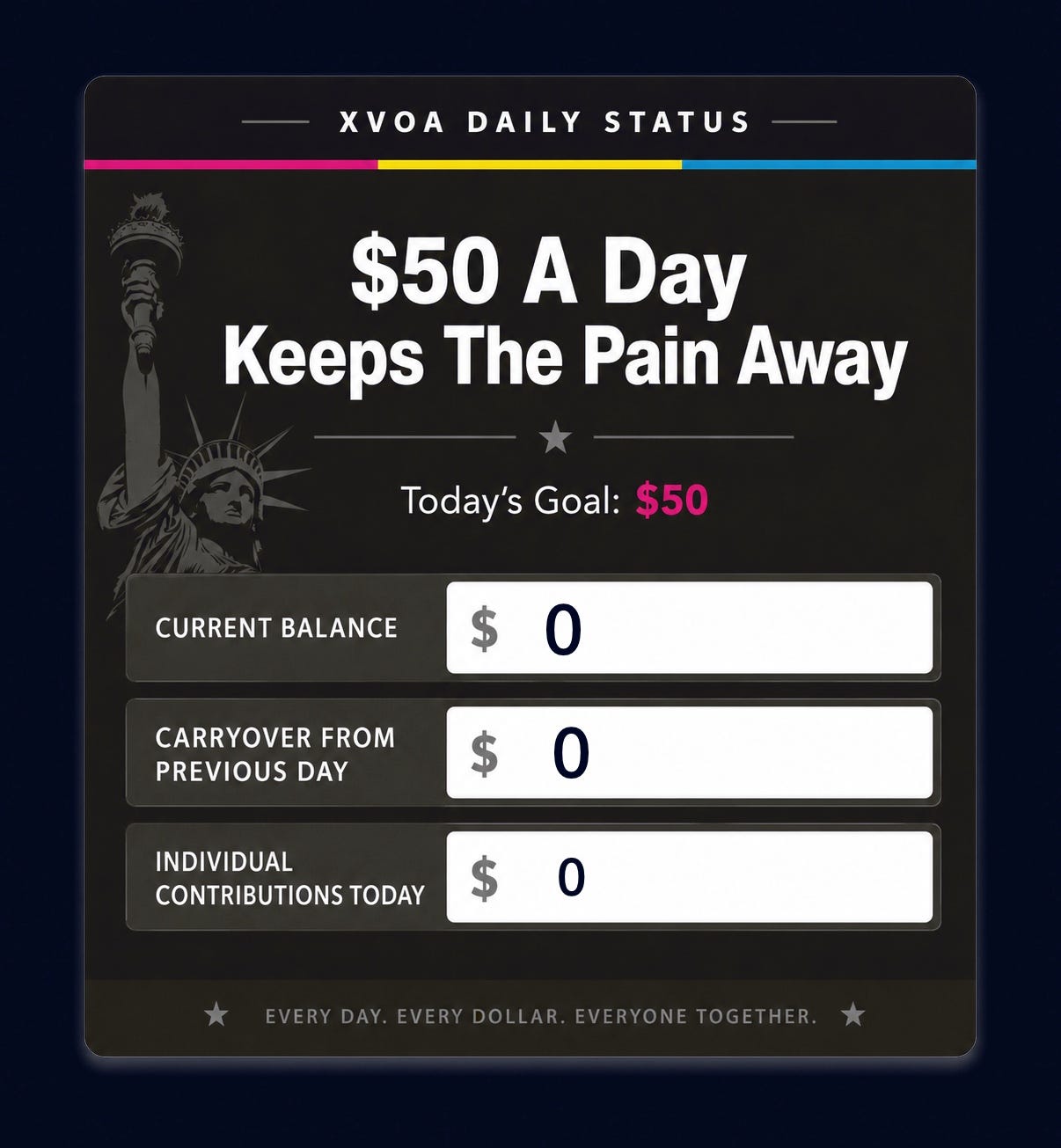
This desk is working from a simple daily discipline: $50 a day keeps the pain away. That is the daily floor that helps keep the lights on while the work moves. One person can cover it, and it also closes fast when ten people put in $5 or five people put in $10. The point is simple: close the day’s operating gap and keep the Brief moving.
Paid subscriptions stabilize the desk for the long haul:
If you want to help close today’s operating gap directly, coffee is the backstop:
The main ask from paid subscribers is transmission. Restack the report. Forward it. Send it to one person who needs to understand what the official story is leaving out.
Now back to work.
The Hierarchy Audit
The loud stories today were built around familiar power centers: war settlement, presidential defiance, citizenship enforcement, urban violence, and billionaire money in a congressional primary. Those stories matter. They show the government moving through waivers, agency power, courts, dockets, policing threats, and campaign finance. But the hierarchy also tells on itself. It can make Iran and Chicago feel like the whole map while treating immigrant detention, Black maternal harm, rural labor-and-delivery deserts, trans medical access, and local election administration as side channels.
That is how erasure works in public life. The national desk names the actor closest to official power, then calls the harmed people “residents,” “patients,” “voters,” or “immigrants.” XVOA reads the day from the landing zone. In that view, a data center fight in rural Indiana, a Black mother’s post-birth disability in Missouri, a West Virginia trans patient losing care because money and politics converged, and a Rhode Island election-training program all belong in the same audit. Power did not only speak from the capital today. It arrived locally, billed locally, and expected the people underneath to call it procedure.
Top Breaking National Stories
1. The Iran deal became an oil waiver before it became a public settlement
By Monday afternoon, the Iran deal had moved from diplomatic language into operating machinery. Reuters reported that the Treasury Department issued a temporary general license authorizing the production, delivery, and sale of Iranian crude, petroleum products, and derivatives through August 21, with related transactions allowed through banking, insurance, and transportation channels and payments possible in U.S. dollars. The license followed a memorandum of understanding that extended the April ceasefire for at least 60 days and tied sanctions relief to Iran’s commitments on nuclear inspections and free transit through the Strait of Hormuz [1][2].
The latest reporting makes the deal more fragile than the headline. Vance said Iran had agreed to let IAEA inspectors back in and that Switzerland produced progress on four lanes: Hormuz transit, Lebanon ceasefire coordination, inspections, and a technical process for unresolved nuclear questions. AP reported that Iran had not acknowledged all of Vance’s claims, including access to bombed enrichment sites where highly enriched uranium is believed to be buried. The Guardian reported that Tehran said it had made no new nuclear concessions and that any outcome would still face Iran’s supreme national security council [22][23]. Ships were moving through alternate routes in Hormuz, oil prices eased, and Secretary of State Marco Rubio headed to Gulf states to sell the regional security piece [22].
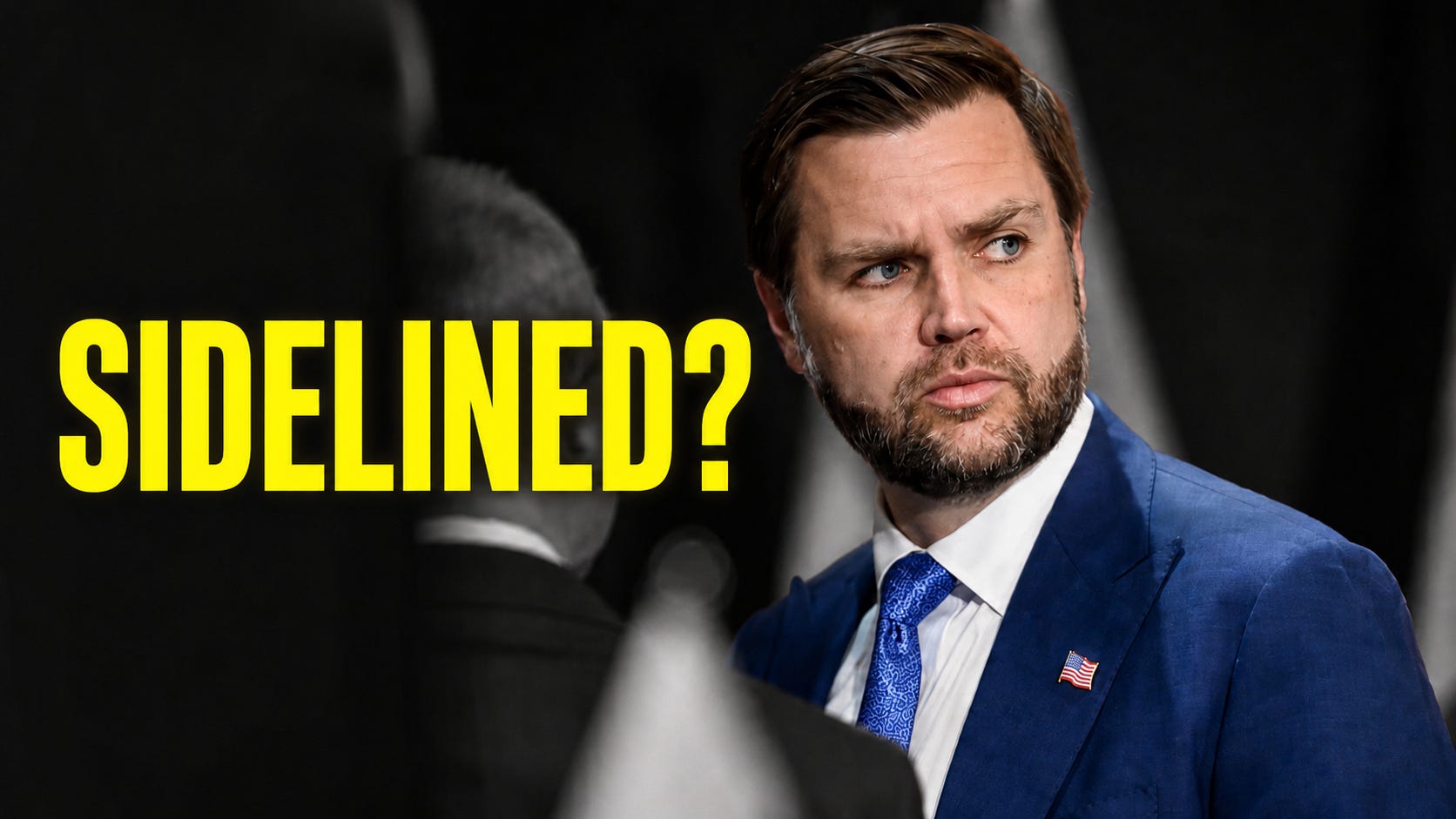
The Vance rumor deserves discipline. The public facts do not show him disappearing from the Iran track: he was the face of the Switzerland talks, defended Trump’s social-media threats, and announced the framework himself [22][23]. But the structure gives Trump the cleaner political position. Vance owns the details, the contradictions, the inspector dispute, and the Iranian pushback. Trump, who was not at the table but still loomed over it, keeps the power to bless the deal, blow it up, or claim victory from outside the room [22]. That is not clean sidelining. It is exposure. If the deal holds, Trump can present himself as the final author. If it collapses, Vance is the man who sold the foundation before the house existed.
Why it matters: The machinery here is bigger than one peace headline. A war that began with force is being converted into waivers, shipping lanes, asset channels, food-purchase mechanisms, technical committees, and political deniability. Congress is still reading much of it after the structure moved. Gulf states, Israeli and Lebanese civilians, Iranian dissidents, U.S. military families, oil workers, and immigrant communities watching another Middle East war cycle all live with the consequences. The deal may reduce violence. It also shows how executive power launders conflict into procedure, then asks the public to applaud the paperwork.
2. Trump’s foreign aid fight became a constitutional power grab in the accounting ledger
ProPublica reported Monday that the Trump administration escalated its fight over foreign aid after Congress refused to approve the cuts the White House wanted. According to the reporting, the administration had sought to eliminate USAID and slash foreign assistance, but Congress did not pass those cuts. The executive branch then moved into a quieter arena: withholding or blocking money that lawmakers had already approved [3].
That may sound like budget mechanics. It is not. Appropriations are one of the few places where Congress can still force the executive branch to answer to a public record. When a president refuses to spend what Congress enacted, the fight is not just about foreign aid. It is about whether the executive can turn the law into a suggestion. The people affected may be outside the United States, including communities relying on food, health, and development programs, but the power grab lands here too. It teaches the state how to ignore a vote without officially canceling one.
Why it matters: The phrase “foreign aid” lets many Americans look away, but the constitutional machinery is domestic. If Congress can be bypassed on funds already approved, the same logic can be aimed at public health, disaster recovery, education, housing, tribal programs, and civil rights enforcement. The target abroad becomes the rehearsal at home.
3. Citizenship moved from belonging to docket number
CT Insider reported Monday that the Justice Department has expanded efforts to revoke citizenship, with more than two dozen denaturalization cases filed in roughly two months and two cases in Connecticut. The outlet reported that a DOJ spokesman confirmed a goal of about 250 denaturalization cases by October. The Connecticut cases involve government allegations that two naturalized citizens lied or concealed prior conduct during the citizenship process. The legal burden for denaturalization remains high, but the important development is institutional: the DOJ has reassigned litigators and built a larger civil docket around revocation [4].
A denaturalization case is not a conviction. An allegation is not proof. But the political signal matters before any final ruling arrives. The state is saying naturalized citizenship can be reopened, audited, and challenged years later. That signal travels through immigrant households long before a judge speaks, especially for Black immigrants, Muslim immigrants, Caribbean and African diaspora communities, and families who already know how quickly paperwork becomes a weapon.
Why it matters: Citizenship is supposed to be the bridge into equal membership. Denaturalization turns that bridge into a file cabinet the government can reopen. Even when cases involve serious allegations, the expansion of the docket creates a broader atmosphere of conditional belonging. For the diaspora, the threat is not only deportation. It is the message that permanence can be made provisional.
4. Chicago’s grief got pulled toward the federal-force script
AP reported that at least seven people were killed and dozens were wounded in a series of weekend shootings in Chicago, including a South Side attack where occupants of an SUV opened fire on a crowd and wounded at least 12 people. The victims in that attack included men and women ages 17 to 47. The weekend also overlapped with major city attention around Juneteenth observances and the opening of the Obama Presidential Center. In response, Trump renewed his call for military intervention in the city [5][6].
The violence is real. The grief is real. But national attention did what it often does with Black cities: it converted local loss into a control fantasy. Chicago became less a place with families, blocks, prevention workers, hospitals, trauma, and municipal failures than a stage where federal force could perform competence. AP also noted that Chicago police data showed violent crime had generally dropped this year even as the weekend saw deadly spikes [5].
Why it matters: Black urban pain is routinely treated as evidence for occupation, not investment. When the national script jumps from shootings to troops, it erases the people already closest to the work: families burying the dead, violence interrupters, emergency clinicians, school communities, and neighborhood organizers. The state knows how to dramatize control. It still refuses to fund safety as care.
5. AI money tested how cheaply a primary can be turned into regulatory terrain
A New York City House primary became one of the clearest national signals of how artificial-intelligence money intends to move through politics. The Guardian reported Monday that AI-focused PACs had raised about $100 million and spent about $44 million, with nearly half of that spending concentrated in the NY-12 race. Much of the money targeted Assemblymember Alex Bores, who has worked on AI regulation, while pro-AI spending networks backed Rep. Jerry Nadler. The same reporting described major backing from wealthy technology figures and counter-spending from groups warning about AI industry influence [7].
This is not just a story about one district, one incumbent, or one challenger. It is a test case for regulatory capture before regulation hardens. The public is still learning what AI will do to labor, education, surveillance, housing, health care, immigration screening, and policing. The industry already knows the value of shaping the lawmakers who will write the rules.
Why it matters: Corporate power does not wait for voters to become fluent in the technology. It arrives with money, urgency, and language about innovation. Black workers, students, tenants, artists, disabled people, immigrants, and people already over-surveilled will live with the consequences of AI policy long before the donor class feels the harm. The future is being purchased as a primary expense.
Stories Buried Beneath the National Headlines
6. NY-13 made displacement and diaspora power part of the primary map
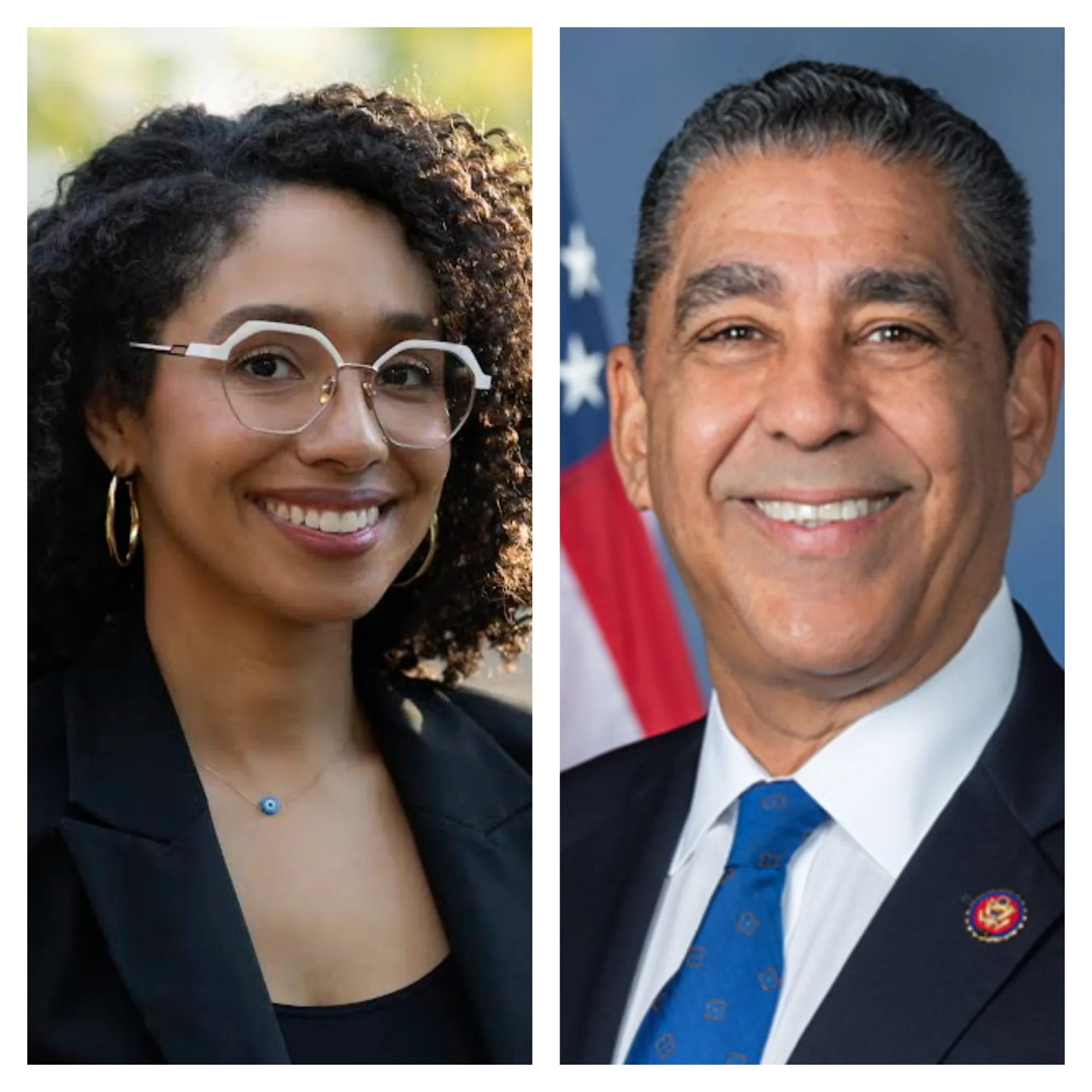
By Monday, the concrete development was simple: Darializa Avila Chevalier was challenging Rep. Adriano Espaillat in New York’s 13th Congressional District as the race entered its final day before the Democratic primary. The district covers Harlem, Washington Heights, and parts of the northwest Bronx. The Guardian reported that Avila Chevalier had support from Zohran Mamdani, Bernie Sanders, DSA, and Justice Democrats, while Espaillat was running as a five-term incumbent and chair of the Congressional Hispanic Caucus. Her campaign put housing, health care, immigration enforcement, campaign money, and congressional stock trading into the race. Espaillat questioned her experience and defended his record [8].
Why it matters: The concrete event is a House primary entering its final day. The stakes include Black, Latino, Afro-Latino, immigrant, and working-class neighborhoods after years of displacement. When the rent map moves, the political map follows.
7. Prediction markets turned gambling into public infrastructure before public health caught up
The Guardian reported Saturday that prediction markets such as Kalshi and Polymarket are surging while public-health advocates warn that support for gambling harm is lagging. The platforms let users wager on outcomes ranging from politics to weather to economic events. Advocates described a system moving faster than regulation, treatment infrastructure, and public understanding [9].
Why it matters: Gambling expansion is often sold as choice, entertainment, or innovation. The harm lands as debt, addiction, family instability, and psychological capture, especially in places already short on behavioral-health care. A market that turns politics and catastrophe into bets is not neutral technology. It is monetized anxiety with a payment processor.
8. Rural Indiana saw the data center arrive before consent
News From The States published a June 22 account from Monrovia, Indiana, where residents organized against a 500-acre Google data-center campus they said was sited and decided without real community input. The reporting connected that fight to a broader rural backlash over decisions made above local residents, alongside hospital closures, Medicaid pressure, local media decline, and low-turnout elections [10].
Why it matters: Data centers are often framed as modernization. Rural residents experience them as land, water, power, tax, and governance questions arriving after the deal has momentum. The same communities told to accept scarcity are suddenly told to host the infrastructure of other people’s future.
9. Detention conditions showed what the immigration dragnet costs after the arrest
States Newsroom reported Sunday on complaints about detention conditions as the Trump administration’s immigration dragnet grows. The story described medical and mental-health complaints at the Farmville Detention Center in Virginia and noted that the federal detention system could reach 68,000 immigrants, with Congress boosting immigration enforcement by $70 billion over three years. ICE did not respond to questions for the report [11].
Why it matters: National immigration coverage often stops at arrest numbers, raids, or border spectacle. Detention is where the policy becomes breath, medication, panic attacks, food, sleep, and access to counsel. For Black immigrants, Latino migrants, asylum seekers, and mixed-status families, the dragnet does not end when the camera leaves.
10. HIV funding cuts treated memory as a budget line
The Guardian reported Monday on activists preparing against federal moves to restrict Medicaid, slash international HIV/AIDS funding, shrink NIH research, and cut programs tied to Ryan White, CDC prevention, and Pepfar. The story noted that 40 percent of Americans with HIV rely on Medicaid at a given time and that cuts would hit Black, Latino, Indigenous, transgender, and immigrant-health research and services [12].
Why it matters: AIDS history is not past tense. It is a warning about what happens when government treats survival as discretionary. Black queer communities, trans people, poor patients, and global South communities have already paid for delay with bodies. To cut HIV infrastructure now is to pretend memory has no clinical value.
11. West Virginia’s gender-affirming care fight made geography a gatekeeper
West Virginia Watch reported Monday that health leaders and LGBTQ people are worried about the future of gender-affirming care amid legal and political fights. The story described Danté Vega, a trans resident who stopped hormone therapy because of cost even with Medicaid, and noted that only two community health providers openly offer gender-affirming care in the state. A 2025 state law further restricted care for minors [13].
Why it matters: Rights do not function if access disappears by geography, price, fear, and provider scarcity. For Black LGBTQ people, rural trans patients, low-income patients, and young people, the machinery does not have to ban every service to make care unreachable. A right you cannot afford or find is a locked door with a nicer sign.
12. Missouri’s childcare story showed Black maternal health does not end at discharge
Missouri Independent reported Monday on Danielle Stewart, a Missouri mother who said childbirth complications left her paralyzed and who later turned childcare access into part of her recovery and advocacy. The story placed her experience inside a wider crisis: Black women in Missouri are 2.5 times more likely to die from pregnancy-related causes than white women, and childcare scarcity compounds the harm after birth [14].
Why it matters: Maternal health is not just the delivery room. It is anesthesia, documentation, disability, lawsuits, childcare, income, transportation, and whether recovery is treated as private luck. Black women do not stop needing policy when the baby is born.
13. Arkansas labor-and-delivery deserts turned childbirth into a drive-time calculation
Arkansas Advocate reported Monday that rural pregnant patients in Arkansas are facing longer drives to hospitals that deliver babies. An ACHI report found 29 percent of pregnant Arkansans lived more than 30 minutes from a labor-and-delivery hospital and 8 percent lived more than an hour away. Eight labor-and-delivery units have closed since 2020, leaving delivery hospitals in only 22 of 75 counties [15].
Why it matters: Rural maternal harm is often hidden by distance. The emergency happens in a car, on a highway, after a closure, between counties, and sometimes across a state line where Medicaid rules change. Pregnancy becomes more dangerous when the hospital is allowed to leave first.
14. Ohio’s safety-net cuts made redistribution look like budget math
Ohio Capital Journal reported Monday on a new analysis projecting that Ohio could lose 51,000 jobs and $5.3 billion by 2029 because of Medicaid and food-assistance cuts and the expiration of Affordable Care Act subsidies. The analysis linked national Medicaid and SNAP cuts to state job losses, rural-health pressure, and reduced coverage. The reporting also noted Medicaid’s role in covering Black births and reproductive health access [16].
Why it matters: Cuts are sold as discipline, but the money leaves somebody’s clinic, grocery cart, workplace, pregnancy, and town. Poor and working-class people lose first, then hospitals, small businesses, caregivers, and local tax bases feel the withdrawal. A budget cut is a transfer of pain with a cleaner font.
15. Quiet systems showed democracy and reentry depend on invisible infrastructure
California gave laptops to incarcerated students in prison college programs, with CalMatters reporting Monday that roughly 30,000 devices went to students and that 13,000 community-college students in prison can now move beyond mail-based correspondence. In Rhode Island, 67 election workers completed a new state certification program built after forged signatures in a 2023 special election exposed inconsistent local practices [17][18].
Why it matters: These are not glamorous reforms, but they expose where power is actually administered. Reentry depends on access to education, research, and technology. Elections depend on trained local workers before any national speech about democracy matters. The invisible system either protects people or disappears them.
Closing Note on Coverage Gaps
The coverage hierarchy revealed a country that still confuses proximity to power with importance. It made the federal actor easier to see than the person underneath the policy. It made oil licenses, troop threats, and PAC money feel urgent because they had recognizable national architecture. Meanwhile, rural pregnant patients, Black mothers, trans patients, detainees, incarcerated students, election clerks, and people living near a data-center footprint had to fight for attention from below.
That does not mean the national stories were distractions. It means they were incomplete without the landing zone. Iran’s waiver tells one story about executive power. Foreign aid defiance tells another. Denaturalization tells another. The buried stories tell us what happens when the same governing instinct reaches bodies that national media treats as background.
XVOA will keep reading the country from that landing zone. Not because local harm is sentimental, but because it is diagnostic. Power shows its real face where it expects nobody important to be watching.
Support XVOA
The $50 A Day Keeps The Pain Away
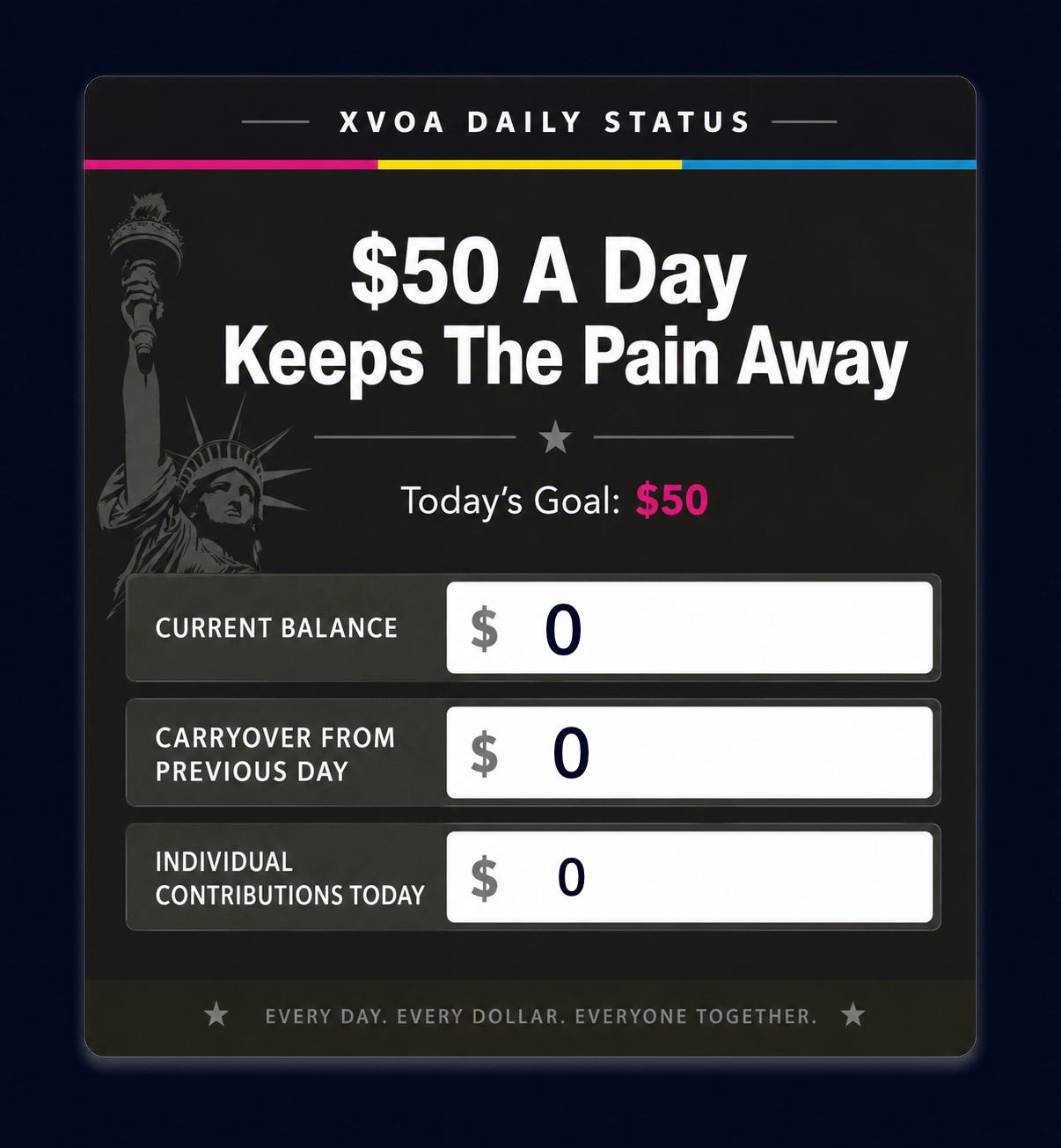
This desk is working from a simple daily discipline: $50 a day keeps the pain away. That is the daily floor that helps keep the lights on while the work moves. One person can cover it, and it also closes fast when ten people put in $5 or five people put in $10. The point is simple: close the day’s operating gap and keep the Brief moving.
Paid subscriptions stabilize the desk:
If you want to help close today’s operating gap directly, coffee is the backstop: Buy Me a Coffee.
Restack the report. Forward it. Send it to one person who needs to understand what the official story is leaving out.
Sources
[1] Reuters, “Vance cites progress in Iran talks, nuclear inspections” - Supports the Zurich talks, inspection claims, frozen-assets discussions, and Strait of Hormuz mechanism.
[2] Reuters, “US authorizes Iranian oil sales amid talks on final peace deal” - Supports the Treasury license authorizing Iranian oil production, delivery, and sales through August 21.
[3] ProPublica, “‘A Huge Grab of Power’: Trump Is Defying Congress on Foreign Aid” - Supports the account of the administration withholding or blocking foreign aid Congress had approved.
[4] CT Insider, “Trump administration expands effort to revoke citizenship, including 2 cases in Connecticut” - Supports the DOJ denaturalization push, Connecticut cases, filing counts, and reported October target.
[5] Associated Press, “7 killed and dozens injured following series of weekend shootings in Chicago” - Supports the weekend Chicago violence count, Trump’s military-intervention rhetoric, and local crime-trend context.
[6] Associated Press, “At least 12 shot after SUV pulls up on a Chicago crowd and occupants open fire, police say” - Supports details on the South Side crowd shooting and victim age range.
[7] The Guardian, “New York City House primary emerges as key battleground in AI civil war” - Supports the AI PAC spending totals and NY-12 campaign-finance context.
[8] The Guardian, “Progressive New Yorker backed by Zohran Mamdani for US Congress targets ‘establishment’” - Supports the NY-13 primary, Afro-Latino district context, and displacement frame.
[9] The Guardian, “Prediction markets surge in US as public health advocates call for support to combat gambling” - Supports the surge in prediction markets and warnings from gambling public-health advocates.
[10] News From The States, “Realignment in middle America: not left or right but local” - Supports the Monrovia, Indiana data-center fight and the local-governance analysis.
[11] Mountain Messenger / States Newsroom, “As Trump’s immigration dragnet grows, so do complaints of detention center conditions” - Supports the reporting on Farmville Detention Center complaints, ICE detention expansion, and enforcement funding.
[12] The Guardian, “The US is slashing HIV/Aids funding. A ‘steady drumbeat’ of activists stands at the ready” - Supports the Medicaid, Ryan White, CDC, NIH, Pepfar, and affected-community details around HIV funding cuts.
[13] News From The States, “Amid legal battles, health leaders, LGBTQ+ community concerned for future of gender-affirming care” - Supports the West Virginia gender-affirming care access story and provider-scarcity context.
[14] News From The States, “Childbirth left a Missouri mother paralyzed. Childcare access helped her heal.” - Supports Danielle Stewart’s story and Missouri Black maternal-health context.
[15] News From The States, “Drive time to Arkansas hospitals for labor and delivery getting longer, report shows” - Supports the Arkansas rural labor-and-delivery drive-time data and hospital-closure context.
[16] News From The States, “Ohio will lose 51,000 jobs, $5.3 billion due to Trump cuts by 2029, new analysis finds” - Supports the Ohio job-loss and economic-impact projections tied to Medicaid, SNAP, and ACA subsidy cuts.
[17] News From The States, “California gave every student in prison a laptop. How community colleges are using them” - Supports the prison-education laptop program and reentry-education frame.
[18] News From The States, “‘The people in this room are the backbone of our democracy.’ 67 complete state elections training.” - Supports the Rhode Island election-worker certification program and forged-signature context.
[19] News From The States, “Rural Tennessee needs family doctors. Can $200,000 lure them to the state’s small towns?” - Supports the rural Tennessee physician shortage and loan-repayment context.
[20] News From The States, “MUSC opens emergency-urgent care hybrid in Lower Richland, a first of its kind for SC” - Supports the Lower Richland emergency-access story and rural health-infrastructure frame.
[21] News From The States, “New Rutgers program aims to study the female brain” - Supports the women’s brain-health research initiative and sex-based medical-research gap.
[22] Associated Press, “The Latest: Vance says talks with Iran set ‘good foundation’ to reach permanent deal to end war” - Supports updated details on Vance’s Switzerland remarks, unresolved IAEA access questions, Trump’s remote intervention, Rubio’s Gulf trip, Hormuz shipping conditions, and oil-price movement.
[23] The Guardian, “Iran agrees to UN nuclear inspectors’ return as part of agreement with US” - Supports the Iran inspection dispute, Tehran’s denial of new nuclear concessions, 60-day implementation timeline, sanctions relief, and Lebanon deconfliction mechanism.
Definitely sidelined. And now Rubio is going over there to do the talks.
So smart.