

Welcome To Blackout eCon Weekly
This is the first issue of Blackout eCon Weekly, the paid economic power audit from XVOA.
Blackout Brief Daily tells you what mattered, what got buried, and what the public headline tried to make normal. Blackout eCon Weekly goes deeper into the money machine itself: jobs, debt, rent, groceries, benefits, student loans, labor, utilities, budgets, courts, corporate extraction, and the quiet institutional decisions that decide who gets squeezed before anybody admits a squeeze is happening.
This is not CNBC with better rhythm. It is not stock advice. It is not personal finance wallpaper. This desk exists because the official economic story keeps speaking in averages while Black households, Black women, low-wage workers, caregivers, renters, borrowers, disabled people, rural communities, immigrants, and our LGBTQ brothers and sisters keep receiving the bill in real time.
The question here is always the same:
What did the money machine do this week, who benefited, who paid, who got erased from the headline, and what did the official economic story refuse to say out loud?
Why This Desk Is Paid
Blackout eCon Weekly is paid because this is where XVOA slows the week down, follows the money, and shows the machinery before the official story hardens into common sense. The public desk names the smoke. This desk reads the wiring.
That requires research, synthesis, receipts, and the willingness to look past the market headline into the household, the workplace, the benefit office, the courtroom, the utility bill, the loan portal, and the communities being told to absorb institutional failure as private responsibility.
Subscribe to XVOA:
TL;DR
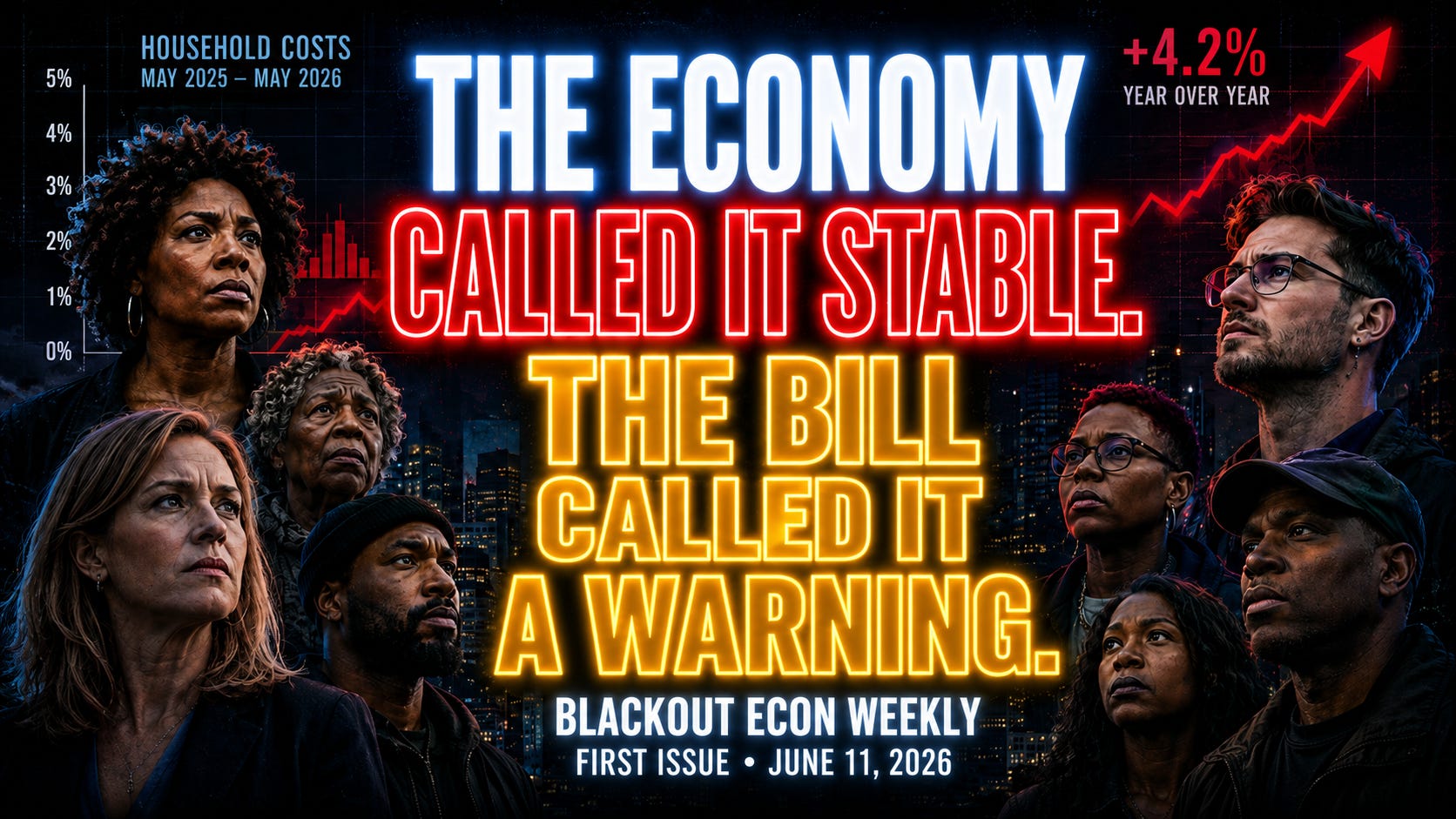
The May jobs report gave the country a “steady labor market” headline: nonfarm payroll employment increased by 172,000 and unemployment held at 4.3 percent. But Black unemployment was 6.6 percent, compared with 3.8 percent for white workers. The warning light was not hidden. It was ignored. [1]
Inflation rose 0.5 percent in May and 4.2 percent over the year. Energy accounted for more than 60 percent of the monthly increase, and gasoline rose 40.5 percent over the year. Translation: the bill showed up before the talking heads finished explaining why the number was “complicated.” [2]
Student-loan policy is moving toward a new repayment regime on July 1, while involuntary collections such as wage garnishment and Treasury offsets are delayed. That delay matters, but so does the larger default machinery: borrower failure is still being treated as personal weakness instead of policy design. [3]
Texas officials are now trying to stop data centers from pushing grid-expansion costs onto residential ratepayers. The AI boom has a meter, a water pipe, a transmission line, and somebody’s grandmother wondering why the utility bill looks possessed. [4]
The buried story is not “the economy.” The buried story is who keeps being told to absorb institutional failure as private responsibility.
