

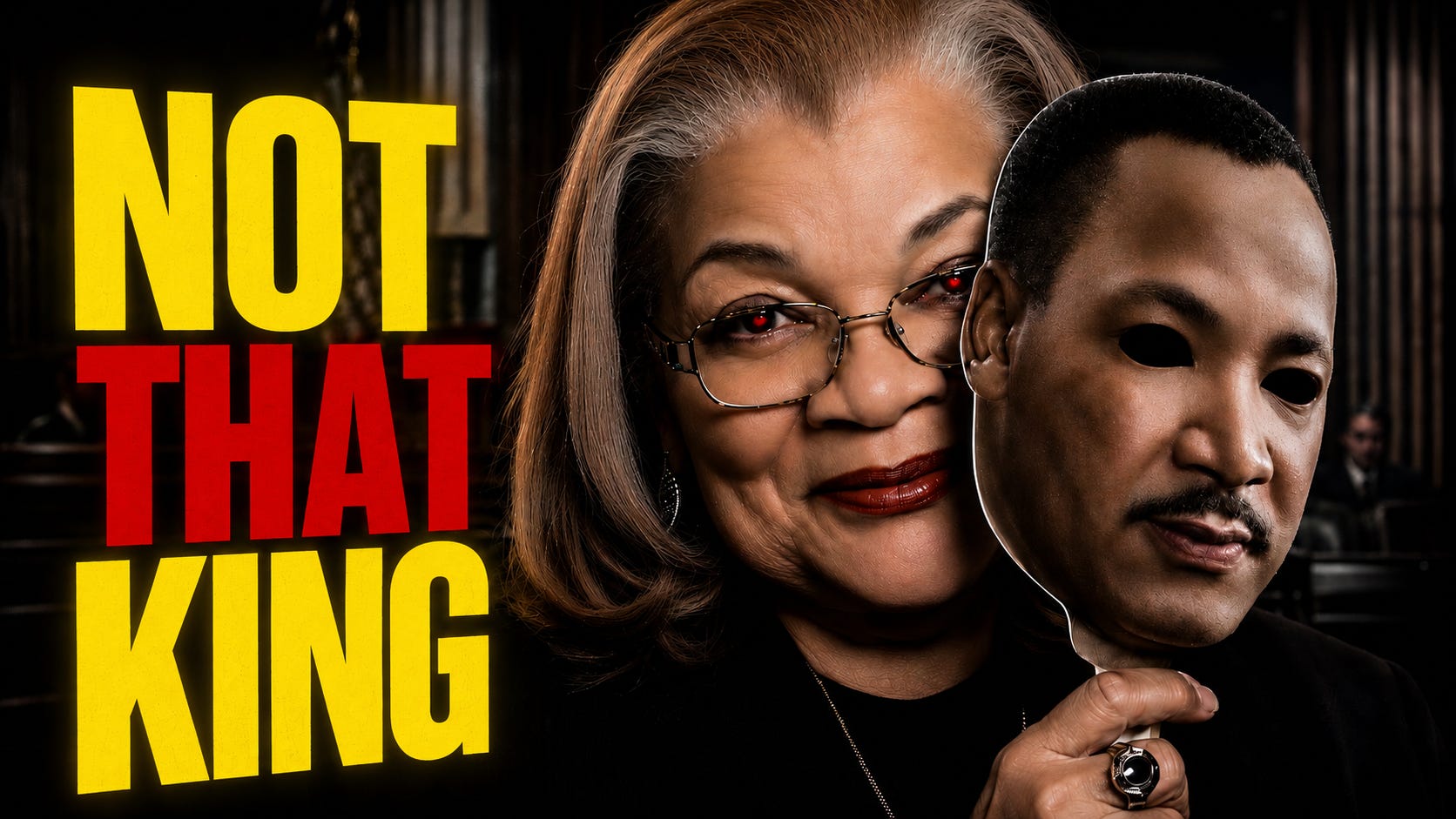
The title I almost used was uglier. Dr. King is a fraud.
No not that Dr. King.
Not Martin. Not the preacher who walked into Birmingham with scripture in one hand and a diagnosis in the other. Not the man who understood that freedom does not begin with vibes, manners, or “unity.” It begins with the facts.
The fraud is the mask. The fraud is what happens when the King name gets lifted from history, hollowed out, and held in front of a politics that would have told the real King to calm down, wait his turn, stop dividing the country, and please be more respectful while America kept its boot on Black life.
Here is my confession: I tried like hell not to write this in public.
Not because white allies cannot be trusted. Because there is a code. Family correction is not public entertainment.
There are some conversations Black folks know how to have after church, in the kitchen, in the car ride home, at the repast, where the grief underneath the critique can be understood without being turned into permission for somebody else’s contempt.
So I resisted this. But when you walk into Congress and use the King name, God language, and the mythology of unity to provide cover for people trying to erase the machinery that made civil rights necessary, all bets are off.
HOLD UP. Before we continue….
Fundraiser Update: The Gap Has Not Moved
Quick note before the essay continues. The current XVOA fundraiser is still at $900 toward the $1,200 goal. That means we are still $300 away. The number has not moved from yesterday.
So let me make the stakes plain. That $300 is not decoration. It is the difference between this desk breathing and this desk grinding itself down while trying to do the work that larger institutions either cannot do, will not do, or only do after the danger has already become obvious.
Thank you to everyone who has already contributed. Seriously. Every contribution has helped keep XVOA moving while I build the livestreams, edit the clips, write the posts, assemble the source rooms, monitor the news, and keep trying to turn this into the Black-led intelligence desk this moment deserves. But close is not finished. We are at the part of the movie where the person is crawling toward the line and everybody in the theater knows they need one more hand.
The fundraiser is $300 from the goal.
Let’s finish it.
The strongest way to support XVOA is to become a paid subscriber. A paid subscription is $8 a month.
If a subscription is not possible, you can make a one-time contribution through Buy Me a Coffee and help close the gap without a longer-term commitment.
Back to the post….
The House Judiciary Committee called the hearing “The Southern Poverty Law Center: Manufacturing Hate, Part II.” Its official description said the hearing would examine whether SPLC “distort[ed] civil rights policy” and funneled money to extremists [1]. The Justice Department has charged SPLC with wire fraud, false statements, and conspiracy to commit money laundering, alleging that donor funds were routed to people associated with extremist groups [2]. SPLC has denied the allegations and argued the prosecution is vindictive, while also saying law enforcement long knew about its informant work [3].
That legal case will move through court.
This essay is about the performance around it.
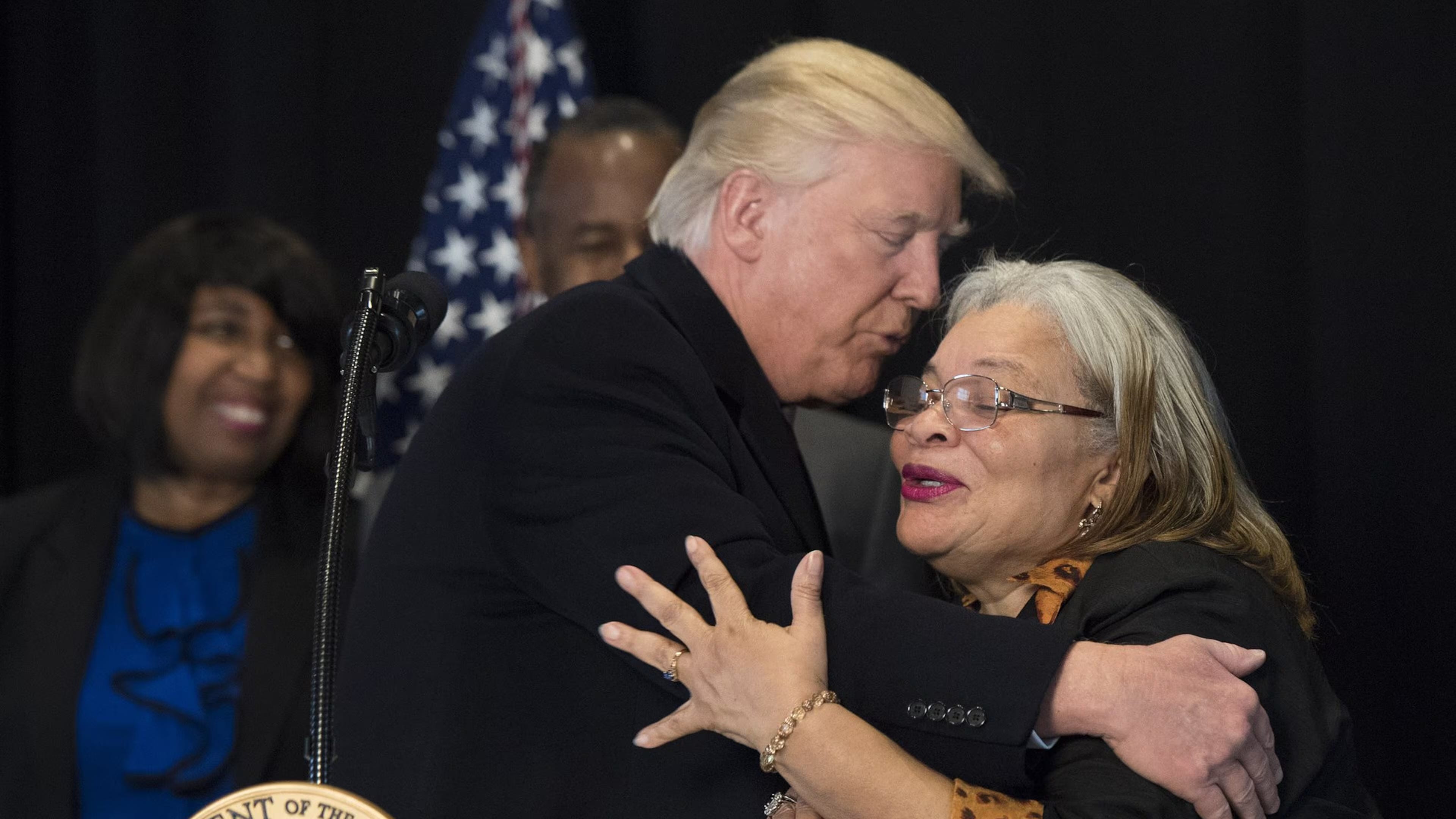
Most Americans had never heard of Alveda King before that hearing. That is precisely why her appearance mattered. She is not Martin Luther King Jr.’s daughter, not a central figure in the civil rights movement, and not someone whose public stature comes from decades of organizing or scholarship. She is Martin Luther King Jr.’s niece, the daughter of his brother A. D. King, and she has spent years as a conservative activist and media personality invoking her family connection in political debates.
The committee did not bring her in because she was an expert on the Southern Poverty Law Center’s finances or because she had firsthand knowledge of the allegations being discussed. She was there because the King surname carries moral weight. For many viewers, hearing “King” is enough to trigger an association with the civil rights movement itself. The testimony borrowed credibility from a legacy most people revere, even if they knew little about the person delivering it.
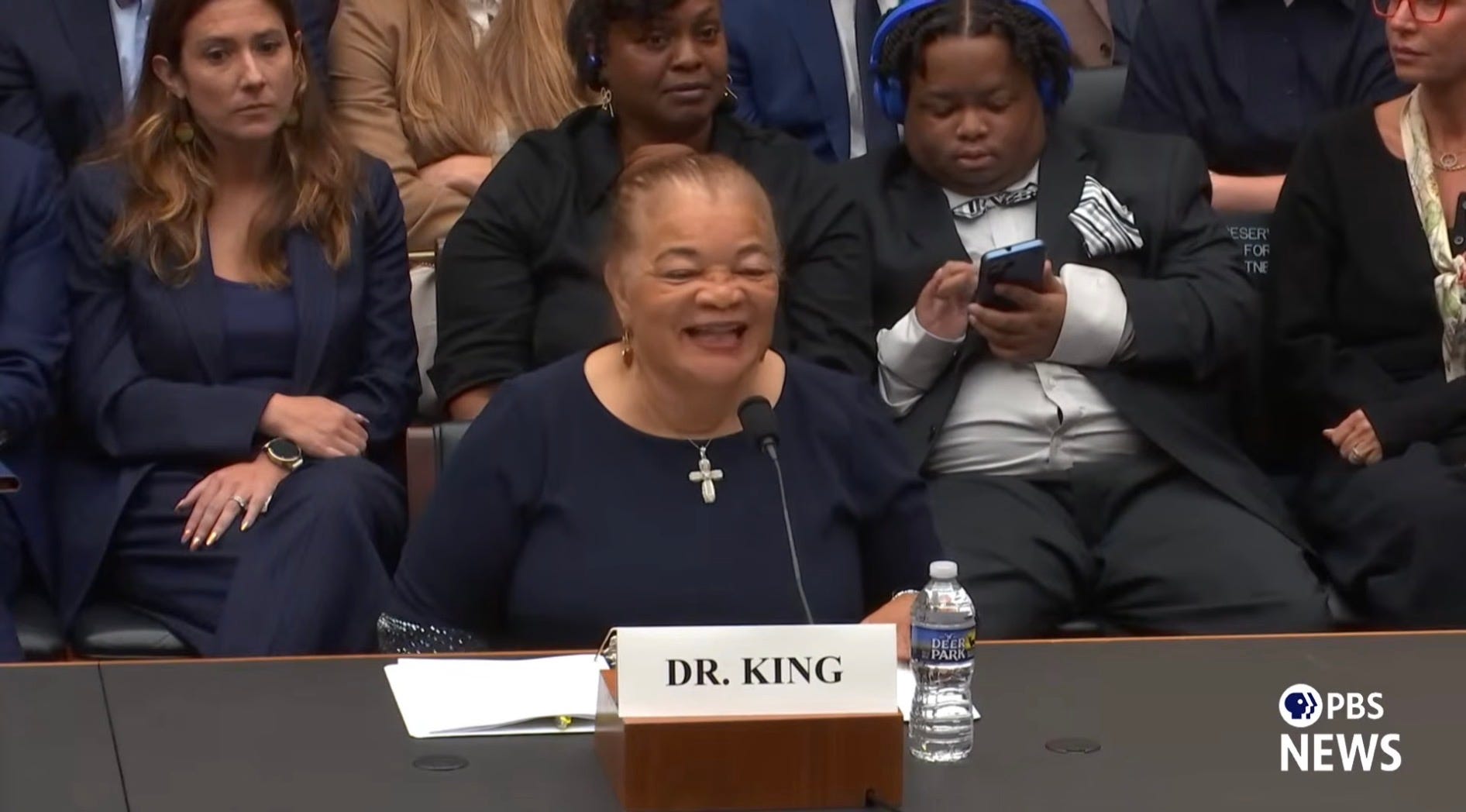
More importantly, she was not operating in a vacuum. Her testimony functioned in concert with a broader political project that has spent years attacking civil-rights institutions, narrowing the public understanding of racism, and discrediting organizations that document harms against marginalized communities. Whether intentionally or not, she was lending the King name to people working against many of the very constituencies her uncle fought to defend.
That became unmistakable during her exchange with Representative Jamie Raskin at the June 9th 2025 House Judiciary Committee hearing [11]. King argued that America should reject frameworks that divide people into groups of “oppressor and oppressed,” emphasizing instead that “we are one blood, one human race” [11].
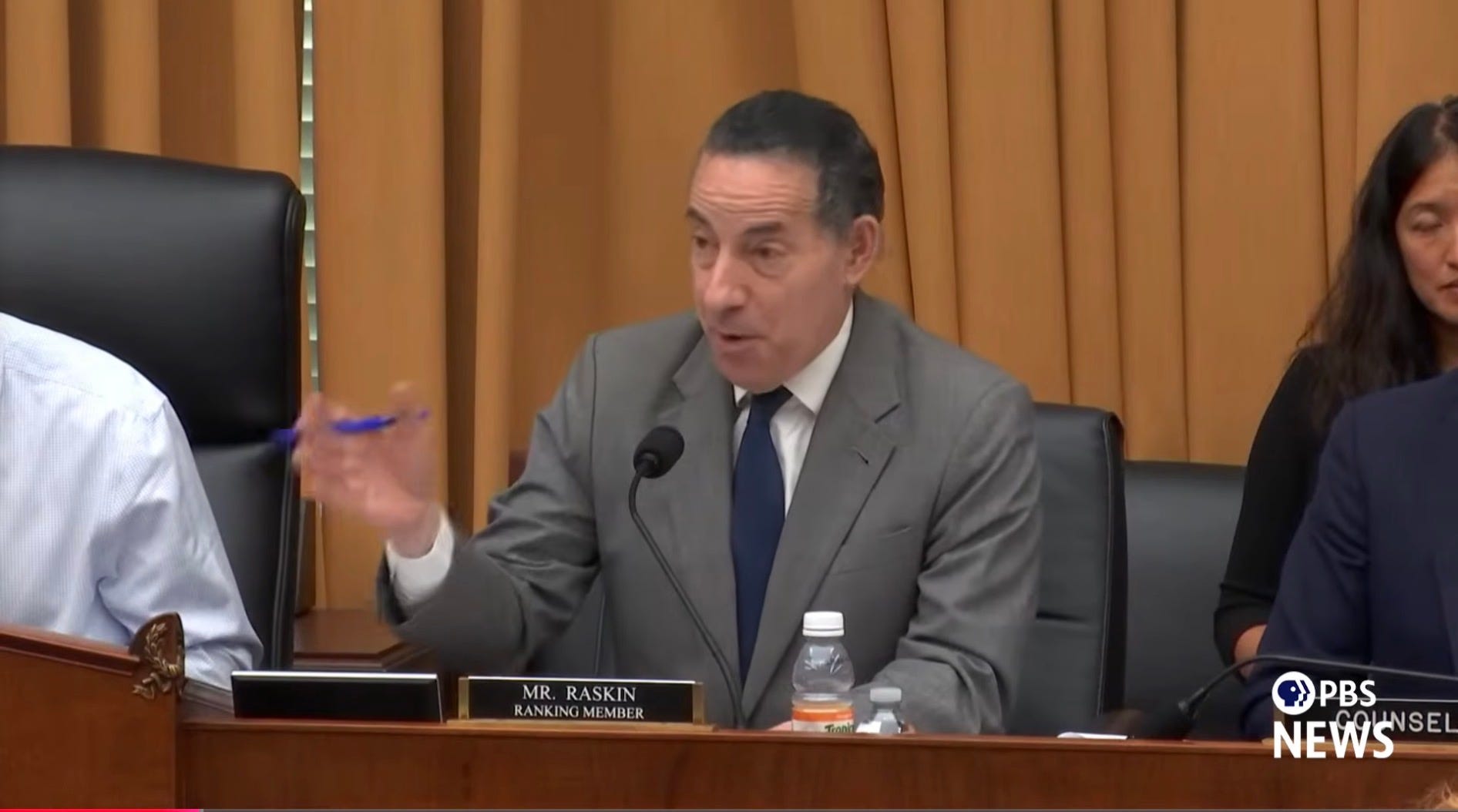
Raskin responded by grounding the discussion in history rather than abstraction, noting that the civil-rights movement did not emerge because people imagined oppression but because Black Americans were subjected to legally enforced discrimination. He pointed to segregation, disenfranchisement, and racial terror as concrete systems that had to be named before they could be challenged [11].
The tension sharpened when King invoked her uncle’s vision of unity and human dignity [11]. Raskin effectively answered that King’s ministry was never colorblind in the modern political sense; Martin Luther King Jr. repeatedly identified specific structures of racial domination and demanded remedies for them, a position documented throughout his speeches and writings, including Letter from Birmingham Jail and Where Do We Go from Here? [6][12]. In substance, the exchange came down to two competing claims: King saying, “We are one blood, one human race” [11], and Raskin insisting that acknowledging our common humanity does not erase the reality that some groups have wielded power over others through law and custom [11]. Unity, he argued, cannot substitute for historical truth.
That clash made the larger dynamic visible. When pressed on history, power, and the realities of discrimination, the language of abstract unity collided with the demand to confront actual systems of harm. It was a perfect example of how the King legacy can be deployed as cover for forces that would rather debate the existence of oppression than address it [11].
In her remarks, Alveda King testified that her family legacy was rooted in “one blood,” Christian dignity, and the belief that her uncle “did not dedicate his life to dividing people into categories of oppressor and oppressed” [4]. Later, she said she dreamed of moving “beyond black power and white power” toward “God’s power and human dignity” [5].
Now, that sounds beautiful if you remove it from history. It sounds holy if you do not ask what it is doing in the room. But “one blood” is not enough if it cannot identify who keeps spilling it. “One human race” is not enough if it becomes a fog machine over the record. “God’s power” is not enough if it is used to make the machinery of domination disappear.
The real King did not preach blindness.
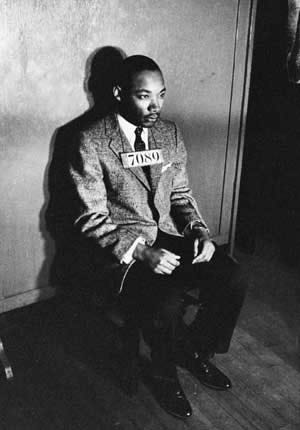
In “Letter from Birmingham Jail,” King described nonviolent struggle as beginning with the “collection of the facts” to determine whether injustice exists [6]. That is the part America keeps trying to cut out of him. Before the dream, there was investigation. Before the sermon, there was evidence. Before the march, there was diagnosis.
King did not say, “Pretend the cage is not there because noticing the bars might divide the room.” He said look. Measure. Name. Confront. Act.
That is why the sanitized King is so useful to power. The real King indicts America. The sanitized King excuses America. The real King exposes unjust order. The sanitized King asks the wounded to be polite inside it.
King warned against “negative peace,” the absence of tension masquerading as harmony [7]. That is the entire trick. America loves peace when peace means Black people stop talking about the injury. America loves unity when unity means the people at the bottom agree not to describe the ladder being pulled up.
That is where the mask comes in. The King mask lets power borrow Black moral authority while avoiding Black historical memory. It lets people who would never tolerate King’s critique of racism, poverty, war, and white moderation pretend they are the true heirs of his dream. It lets them say they love his message while rejecting the machinery he exposed.
And yes, this is where the movie Sinners becomes more than a movie.
Sinners More Than A Movie
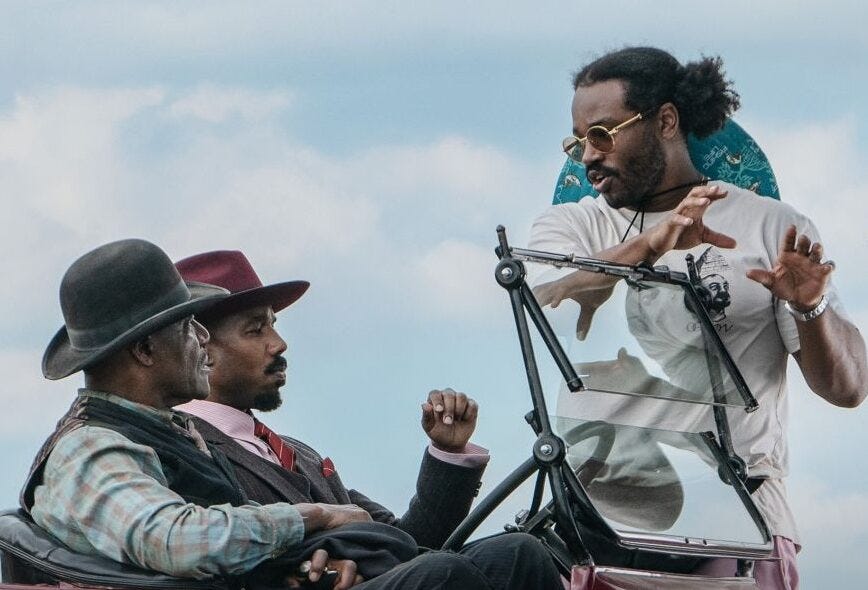
Ryan Coogler has said the title grows out of the relationship between Delta blues and gospel, and that blues was judged as “the devil’s music” [8]. That judgment sits at the heart of the film: who gets called sinful, who gets called sacred, and who gets to decide.
In Sinners, the juke joint is not just pleasure. It is memory. It is refuge. It is Black sound making a room where the dead, the living, and the unborn can recognize one another. Dr. Yvonne Chireau, the film’s Hoodoo consultant, told Teen Vogue, “Blues is the music of Hoodoo,” placing the music inside a Black spiritual tradition rather than outside holiness [9].
That is the old Black argument in a new vampire suit. The church looks at the blues and sees sin. The world looks at Black joy and sees danger. The preacher hears a guitar and warns about the devil. Meanwhile, the predator is already at the door, smiling, harmonizing, asking to be invited in.
The New Yorker’s Richard Brody puts the film’s revision sharply: “evil isn’t in the music” but comes from outside and finds it [10]. Exactly.
Religion becomes dangerous when it teaches us to fear the juke joint more than the vampire.
That is not an attack on faith. That is a defense of faith from its own shadow. A Christianity that cannot see power will eventually bless power. A Christianity that cannot name captivity will call the cage peace. A Christianity that cannot hear the blues will mistake Black survival for sin and white domination for order.
That is the spiritual fraud.
You cannot free yourself from a cage your theology has taught you not to recognize.
You cannot free yourself if every attempt to name oppression gets dismissed as division. You cannot free yourself if “unity” always means the oppressed must be quiet and the comfortable get to stay comfortable. You cannot free yourself if the only acceptable King is the one who has been emptied of rage, memory, strategy, and facts.
The real King was not a mask. He was a witness.
He knew the country could not be healed by pretending the wound was imaginary. He knew reconciliation without truth is anesthesia. He knew that America’s shadow would not vanish because someone quoted scripture over it.
So no, I did not want to have this conversation where everyone on Substack and beyond could watch. But the mask was carried into Congress. The record was made public. The name was used.
And once the King name is used to blur the very forces King taught us to recognize, silence becomes its own kind of cooperation.
The sinner was never the Black witness who saw the chains.
The sinner was the witness who blessed the rope and called it peace.
Support XVOA
Earlier I mentioned that the fundraiser is still $300 short of the $1,200 goal. That gap is what keeps this work under pressure instead of letting it grow.
The strongest long-term support is becoming a paid subscriber for $8 a month. That recurring support keeps the reporting, source rooms, livestreams, and analysis moving without waiting for larger institutions to catch up.
But the immediate gap is still real. Buy Me a Coffee is the fastest way to help close it today. It helps cover the working costs of this desk, including the $200 OpenAI fee that keeps the research, drafting, and production engine running.
Help close the gap. Keep this desk breathing.
Damn X. I’m glad you took it there and said that.
I watched, or listened to, most of the hearing yesterday and wondered about Dr King, until the representative from Texas had a few things to say. That helped explain the situation. This post put it all together for me.