

Blackout Brief Daily | May 18, 2026
So damn reliable you forget how good it is. Like COOL AC, baby.
Today’s Charge
Today’s pattern was blunt: the rule was the weapon. It was about procedure becoming the weapon. The headlines made the Supreme Court, voter databases, China, Iran, and White House construction sound like separate weather systems. Underneath them, power was sorting people through smaller doors: who can sue under the Voting Rights Act, whose registration survives a federal data dragnet, which public-health worker can be fired at will, which pregnant person in custody is treated as disposable, which Black history book disappears from a school shelf. XVOA is tracking the administrative mask: the rule, the memo, the permit, the hearing, the security line item that moves harm before most people know power moved.
Five Things That Matter Today
The Supreme Court sent a Native American voting-rights case and a similar Mississippi case back to lower courts after its own April Voting Rights Act ruling weakened Section 2, leaving Native voters and Black voters in the South facing a higher bar while redistricting fights move fast. [1][2]
The Trump administration has run at least 67 million voter registrations through DHS’s SAVE system, while DOJ has pushed for unredacted voter rolls and critics warn naturalized citizens and valid voters can be mislabeled before the midterms. [3][4]
Reuters reported that HHS supervisors were notified that hundreds of senior health officials may be reclassified into Schedule Policy/Career, making technical and policy staff easier to fire inside a public-health system already being politicized. [5]
A Kansas state judge blocked enforcement of the state’s ban on gender-transition treatment for minors, showing that trans youth care is now being routed through state constitutions, appeals, and family rights instead of medical judgment. [6]
Brooklyn public defenders condemned a courtroom birth in custody, Pregnancy Justice announced an Alabama jail-birth lawsuit, and Tennessee pulled Roots from school shelves, exposing how the smaller systems police bodies, pregnancy, and memory. [7][8][9][10]
Restack This Brief
Restack this brief and send it to one person who keeps asking why everything feels rigged.
Paid subscriptions keep this desk working:
If you cannot subscribe right now, buy me coffee is the backstop to help keep this desk keep on keeping on.
The Hierarchy Audit
National attention wanted a clean ranking today: the Court at the top, Trump and Xi beside it, Iran under that, and the familiar theater of Washington spectacle filling the rest of the frame. That hierarchy made the day look like a set of elite negotiations. But the machinery was lower to the ground.
The voting story was not only a Supreme Court story. It was a Native voter story, a Black district story, a naturalized citizen story, and a state database story. The health story was not only an HHS personnel story. It was a question of whether public-health expertise can survive when civil-service protection is recoded as presidential inconvenience. The economy story was not only about yields and trade deals. It was about who pays when war and tariffs arrive at the grocery aisle.
What risked getting buried was the local damage: a pregnant woman giving birth in custody, a jail-birth lawsuit in Alabama, a Tennessee school district removing Roots, and the anniversary of America being staged through policing and Christian nationalist spectacle. The loud story was power speaking. The quieter story was where power landed.
Top Breaking National Stories
1. The Court Sent Native Voters Back Into the Maze
On Monday, the Supreme Court told lower courts to reconsider a voting-rights case brought by Native American tribes in North Dakota, along with a similar Mississippi case. The move came after the Court’s April decision weakening Section 2 of the Voting Rights Act, the tool long used to challenge racially discriminatory maps and election systems. In the North Dakota matter, the 8th Circuit had ruled that private voters and advocacy groups could not sue under Section 2, leaving enforcement only to the federal government. The Supreme Court did not simply restore the old path. It sent the fight back into a changed legal landscape. Justice Ketanji Brown Jackson dissented, arguing that both rulings should have been reversed. [1]
That distinction matters because voting rights can be strangled by delay. While courts reconsider what remains of Section 2, Reuters reported that civil-rights veterans in Alabama are watching Republican-led redistricting efforts that could eliminate Black opportunity districts across the South after the Court’s April ruling. [2]
Why it matters: The machinery here is not only judicial doctrine. It is time. Native voters in North Dakota and Black voters in Alabama, Louisiana, South Carolina, and Tennessee are being pushed into a slower, narrower enforcement regime while maps can move quickly. When the bridge gets pulled up, power does not always announce itself as racism. Sometimes it arrives as remand, standing, procedure, and “try again under the new rules.”
2. The Purge Machine Put Millions of Registrations Into a Federal Filter
The Trump administration has run at least 67 million voter registrations through DHS’s SAVE system, according to AP reporting published Sunday. The administration says the system is being used to verify eligibility and identify possible noncitizens or deceased voters. But SAVE was built to help determine eligibility for benefits, not to serve as a mass election filter. AP reported that at least 25 states have used it since April 2025, with roughly 60 million checks plus 7.4 million additional checks in North Carolina. Federal officials said the checks identified tens of thousands of possible noncitizens and hundreds of thousands of potentially deceased voters, but voting-rights advocates warn that false positives can hit lawful voters. [3]
Reuters previously reported that DOJ drafted a legal opinion backing demands for unredacted state voter rolls, even as federal judges in several states blocked those demands. That puts the federal government, DHS data systems, state election officials, and courts into one machinery chain. [4]
Why it matters: This is how a purge gets a clean shirt. It is described as eligibility, verification, list maintenance, and election integrity. But the people most likely to pay first are naturalized citizens, voters with mismatched records, poor voters without time to answer government letters, elderly voters, students, and people who move often. For Black immigrants, Afro-Latino citizens, Haitian communities, Muslim immigrants, and other diaspora voters, a database error can become a civic ambush.
3. Public Health Expertise Was Put on a Political Leash
Reuters reported Friday that the Trump administration expects hundreds of HHS officials to lose civil-service protections, according to an internal memo. Supervisors at several HHS agencies were told that an initial wave of employees could be reclassified into Schedule Policy/Career, a category that would make them easier to fire. The administration has described this as a personnel reform tied to policy influence. But the affected roles reportedly include senior technical experts, managers, policy staff, and supervisors at the health department. [5]
That sounds bureaucratic until you remember what HHS touches: public health, disease surveillance, Medicare and Medicaid, food and drug regulation, emergency response, reproductive-health policy, disability services, health-equity programs, and the administrative pipes that keep millions of people alive. Civil-service protections were not invented because bureaucrats are precious. They exist because public systems cannot function if technical judgment is turned into personal loyalty to the president.
Why it matters: The machinery is personnel power. If career health officials can be recoded as political obstacles, then expertise becomes easier to punish. Disabled people, poor patients, pregnant patients, elderly people, rural hospitals, public-health workers, and communities already medically neglected will feel that change before cable panels finish calling it “government reform.” The shadow move is simple: make the institution look bloated, then remove the people who know where the bodies are buried.
4. The Iran War Moved From Foreign Policy Into Household Math
Reuters reported Monday that a global bond selloff deepened as energy prices and inflation fears rose alongside the Iran war. The U.S. 10-year Treasury yield climbed to 4.631 percent, its highest level since February 2025. Brent crude stood around $111 a barrel as efforts to end the war stalled after a drone strike on a UAE nuclear plant. Investors began pricing in the possibility that the Federal Reserve could raise rates by December, a sharp shift from earlier expectations of rate cuts. [11]
This is where foreign policy stops sounding foreign. War moves into oil. Oil moves into inflation. Inflation moves into interest rates. Interest rates move into mortgages, credit cards, auto loans, rent pressure, state budgets, grocery prices, and the cost of borrowing for households already running on fumes. The story is not only what presidents say about Iran. It is how a war most Americans did not vote on becomes a bill poor and working-class people must pay.
Why it matters: The machinery is transmission. National security language makes war sound distant and abstract. The bond market brings it home. Black families, rural drivers, service workers, veterans, disabled people on fixed incomes, and small businesses do not experience war as a strategy memo. They experience it as gas, food, debt, late fees, and another month where survival gets repriced by people who will never miss a meal.
5. The China Farm Deal Sold Repair as Victory
The White House said Sunday that China committed to buying at least $17 billion in U.S. agricultural products annually in 2026, 2027, and 2028 after Trump-Xi meetings. Reuters reported that the figure does not include soybean commitments announced in October 2025, and that U.S. agricultural exports to China fell 65.7 percent year over year to $8.4 billion in 2025 as tariffs hit the farm economy. China’s share of soybean purchases from the United States had already fallen sharply from 2016 levels. [12]
So the administration gets to announce relief after helping create the wound. That does not mean the purchase commitment is meaningless. Farmers, grain handlers, truckers, port workers, rural banks, and agricultural communities can feel real consequences when China walks away from U.S. markets. But the machinery here is political memory management. First, tariffs are sold as strength. Then the damage becomes rural pain. Then partial repair is presented as proof of strategic genius.
Why it matters: Rural people are often used as symbols, not heard as citizens. The farm deal matters because rural economies are real, but so is the manipulation around them. When trade policy becomes performance, workers and farmers become props in a story power tells about itself. Black farmers and small producers, already squeezed by land loss, credit discrimination, market consolidation, and federal neglect, rarely become the face of these deals even when the shockwaves reach them too.
Stories Buried Beneath the National Headlines
6. Kansas Families Won a Temporary Shield for Trans Youth Care
Reuters reported Saturday evening that Kansas state Judge Carl Folsom III had blocked enforcement of the state’s ban on gender-transition treatment for minors in a Friday ruling, granting an injunction requested by parents of two teenagers seeking to continue medication. The law, passed over Gov. Laura Kelly’s veto, banned hormone therapies and puberty blockers for transgender youth with gender dysphoria. Judge Carl Folsom III found the plaintiffs had a substantial likelihood of success under the Kansas Constitution’s protections for personal autonomy and parental medical decision-making. Kansas Attorney General Kris Kobach said he plans to appeal. [6]
Why it matters: The machinery is the state using children as a battlefield for adult identity politics. The reporting does not center Black trans youth, but the diagnosis still holds: when care is restricted, young people with less money, fewer affirming doctors, and less family protection get hit first.
7. A Brooklyn Courtroom Became a Delivery Room
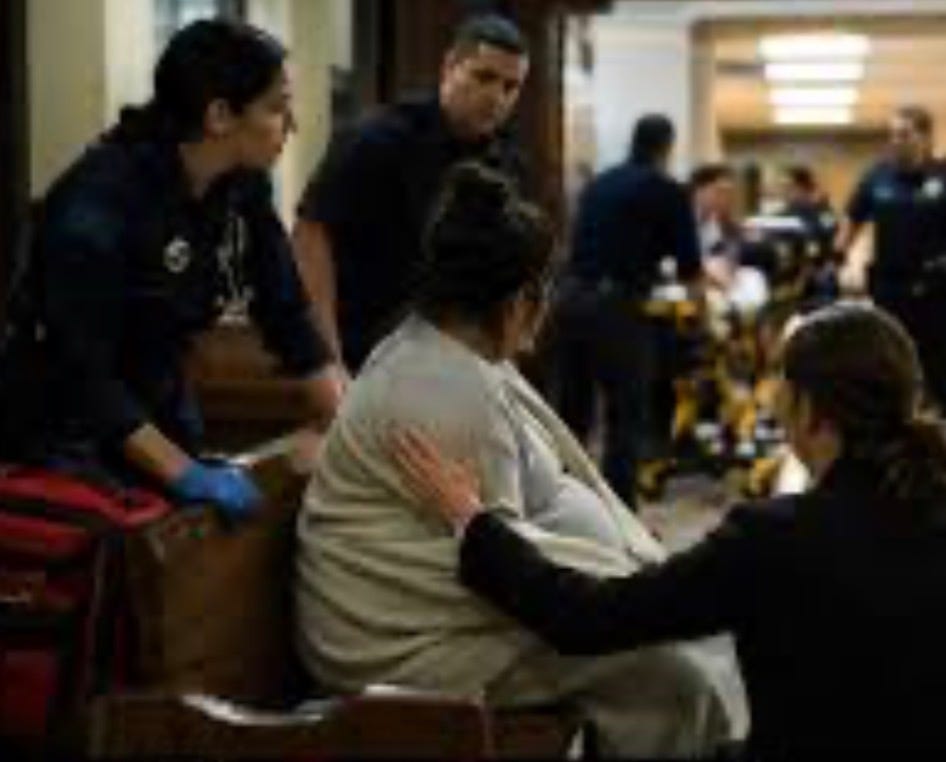
A woman gave birth in a Brooklyn courtroom during arraignment late Friday after being arrested the day before on alleged drug possession and trespassing charges. People reported competing accounts from police, court personnel, and public defenders. The Legal Aid Society and Brooklyn Defender Services said Samantha Randazzo had spent more than 24 hours in custody and alleged she gave birth in restraints on a courtroom bench without adequate care, privacy, or dignity. Court officials and a lawyer disputed some details. [7][8]
Why it matters: The machinery is custody. Even with disputed accounts, the core fact is obscene enough: a pregnant person went into labor inside the criminal process. Poor women, people in withdrawal, and Black and brown women living under heavier policing know what dignity means when custody owns the clock.
8. Alabama’s Jail-Birth Lawsuit Names the Carceral Womb
Pregnancy Justice and the Southern Poverty Law Center announced a federal civil-rights lawsuit on behalf of Tiffany McElroy and her infant daughter against Alabama officials. The lawsuit alleges that McElroy was left to labor alone in jail for more than 24 hours and gave birth without proper medical care. The complaint frames the case as a constitutional violation and a warning about how jails handle pregnant people in custody. [9]
Why it matters: The machinery is reproductive punishment. Pregnant patients in custody, especially poor women, Black women, women with substance-use histories, and rural women with few medical options, face a system that can treat pregnancy as inconvenience until catastrophe arrives. The state controls the body, the cell, the transport, the nurse, and the clock.
9. Tennessee Took Roots Off the Shelf
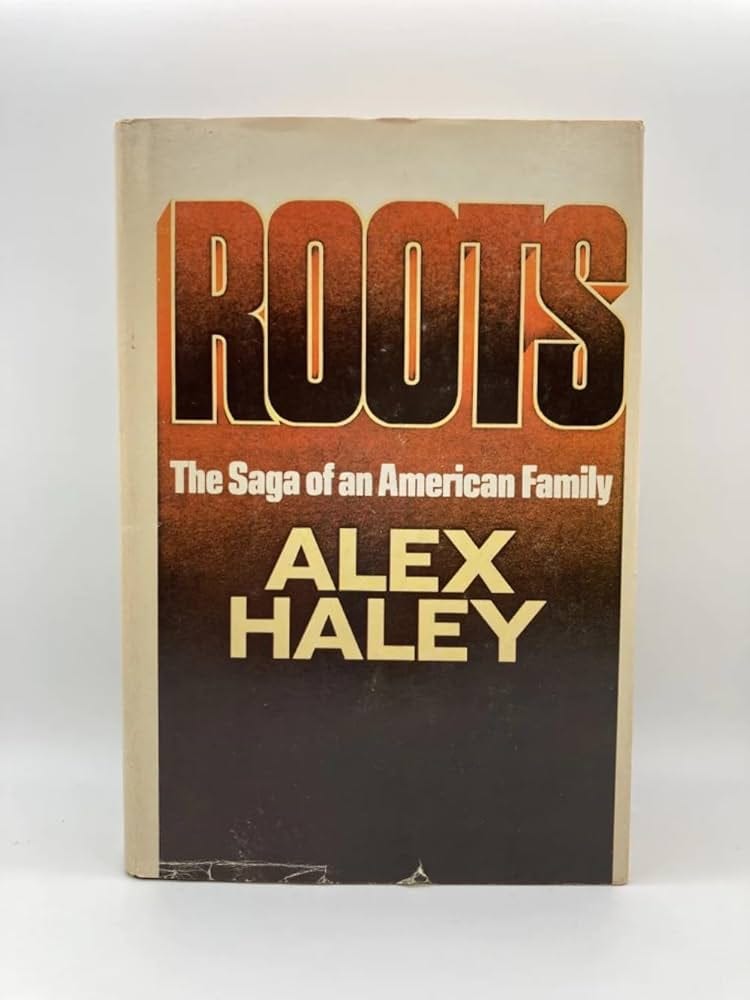
The Guardian reported that Knox County Schools in Tennessee removed Alex Haley’s Roots from school shelves under the state’s Age-Appropriate Materials Act. The district said the law requires review of certain content and that historical significance is not considered under the statute. Roots, the landmark novel tracing Kunta Kinte’s capture in Gambia and the generations that followed, became one of the most important works of Black historical memory in American popular culture. [10]
Why it matters: The machinery is curriculum control. Black students lose access to ancestral memory. White students are protected from the discomfort that might have become moral intelligence. Black diaspora history gets flattened because the story begins in Gambia, crosses the Atlantic, and refuses to let America pretend slavery was abstraction.
10. The Christian Nation Stood on Federal Grass
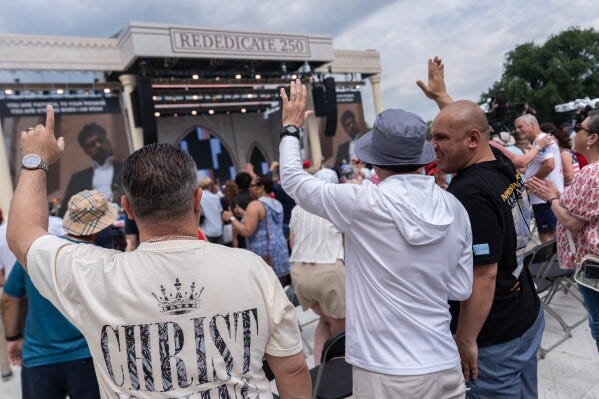
AP reported that thousands attended Rededicate 250, a conservative Christian prayer rally on the National Mall on Sunday, billed as a rededication of the country as “One Nation under God.” The stage made the Christian focus visible, with stained-glass imagery showing founders beside a white cross. President Trump appeared by video reading Scripture, and critics warned that the event promoted Christian nationalism and narrowed the country’s public memory. [13]
Why it matters: The machinery is civic ownership. When the nation’s anniversary is staged as Christian rededication, non-Christian Americans, Black church traditions outside white evangelical politics, Muslims, Jews, Indigenous spiritual communities, atheists, and pluralist believers get pushed toward the edge of the frame.
11. The Ballroom Fight Hid an Immigration Enforcement Bill
Reuters reported Sunday that the Senate parliamentarian had dealt a blow to federal security funding that could support Trump’s White House ballroom project, removing a provision that would need 60 votes if Republicans want it included. The funding fight sits inside a larger $72 billion package, much of it devoted to immigration enforcement. Trump says the ballroom itself will be privately funded, while Republicans sought taxpayer funding for related Secret Service security upgrades. [14]
Why it matters: The machinery is spectacle as camouflage. The ballroom gets the laugh line. The immigration enforcement package gets the money. Black immigrants, Haitian families, Latino communities, Muslim migrants, mixed-status households, and U.S. citizens near enforcement operations are the ones most likely to learn that “security” is not neutral.
12. The D.C. Anniversary Became a Policing Plan
Reuters reported Friday that the Justice Department announced a planned “summer surge” of law enforcement into Washington, D.C., ahead of America 250 events. Officials said they requested 1,500 more National Guard troops, which would bring the total to 5,000. The announcement followed the federal government’s temporary takeover of D.C. law enforcement last summer through presidential executive order. [15]
Why it matters: The machinery is federal control over a majority-Black city. D.C. residents host the nation’s symbols while lacking full political power. When national celebration becomes a reason to expand policing, Black residents, poor residents, teenagers, protesters, unhoused people, and public-space workers absorb the security theater.
13. Selma Heard the Verdict Before Washington Finished Explaining It
Reuters reported Monday that civil-rights veterans in Alabama see history repeating after the Supreme Court’s April Voting Rights Act ruling. Organizers retraced the Selma-to-Montgomery march and protested Alabama plans that could eliminate one of the two U.S. House seats held by Black politicians from the state. Reuters noted that Republican-led efforts in Alabama, Louisiana, South Carolina, and Tennessee could eliminate at least four majority or plurality Black districts if new maps move forward. [2]
Why it matters: The machinery is retreat, repair, and backlash. Black voters win representation, power calls it distortion, courts narrow the remedy, state legislators redraw the map, and the burden returns to the people whose citizenship was supposedly settled. Black voters, Black churches, elderly march veterans, and young voters inherit the fight.
Closing Note on Coverage Gaps
Today’s coverage hierarchy showed how power prefers to be read. Courts want to be read as law. Data systems want to be read as maintenance. Personnel changes want to be read as efficiency. War wants to be read as strategy. Policing wants to be read as safety. Censorship wants to be read as age-appropriateness. Religious nationalism wants to be read as heritage. Every one of those masks had a mouth today.
The local stories carried the truth power hoped would stay small. A courtroom birth. A jail-birth lawsuit. A book pulled from shelves. A city prepared for national celebration with more law enforcement. A trans-health fight moved into state court. A Black voting-rights lineage forced to confront the old retreat after brief repair.
That is the day’s pattern: harm was not always announced as harm. It was laundered through rules. XVOA will keep watching the rulebook, because that is where the bridge keeps disappearing.
Support XVOA
This desk takes time, sources, judgment, and the refusal to let the loudest story bully the most important one off the page.
Paid subscriptions are the main way this work continues. You can support XVOA here:
If a subscription is not possible right now, coffee can be the fallback. But the ask is plain: help fund the desk that keeps following the machinery after the headline moves on.
Sources
[1] Associated Press, “Supreme Court sends voting rights case back to lower court” - Supports the Supreme Court’s remand of the Native American Voting Rights Act case and related Mississippi case.
[2] Reuters, “Civil rights veterans see history repeating after high court guts Voting Rights Act” - Supports the Southern redistricting consequences, Selma protest context, and Black district impact.
[3] Associated Press, “Trump administration’s eligibility checks on millions of voters stoke fear of purges” - Supports the SAVE voter-registration checks, flagged voter data, and purge-risk concerns.
[4] Reuters, “US Justice Department drafts legal opinion backing demands for state voter rolls” - Supports the DOJ voter-roll demand context and legal fight over unredacted state voter data.
[5] Reuters, “Trump administration expects to strip hundreds at US health agencies of job protections” - Supports the HHS Schedule Policy/Career reclassification and civil-service protection story.
[6] Reuters, “Judge blocks Kansas ban on gender-transition treatment for minors” - Supports the Kansas state-court injunction protecting access to gender-transition treatment for minors.
[7] People, “Woman Gives Birth in New York Courtroom During Her Arraignment” - Supports the Brooklyn courtroom birth timeline, charges, and competing official accounts.
[8] The Legal Aid Society and Brooklyn Defender Services, “NYC Public Defenders Condemn the Treatment of Samantha Randazzo” - Supports the public defenders’ allegations and demand for investigation.
[9] Pregnancy Justice, “Federal Lawsuit Filed on Behalf of Alabama Woman Forced to Labor in Jail” - Supports the Tiffany McElroy jail-birth civil-rights lawsuit and reproductive-justice framing.
[10] The Guardian, “Tennessee school district bans Alex Haley’s Roots under 2022 state law” - Supports the Knox County Schools removal of Roots and Tennessee book-ban context.
[11] Reuters, “Global bond rout deepens as Iran war drags on and inflation fears mount” - Supports the Iran-war bond selloff, oil price, inflation, and interest-rate context.
[12] Reuters, “China to buy at least $17 billion in US agricultural products annually, White House says” - Supports the Trump-Xi agriculture commitment and tariff-damage context.
[13] Associated Press, “Thousands flocked to the National Mall in Washington for an America-themed prayer rally” - Supports the Rededicate 250 rally, Christian nationalist criticism, and America 250 political-religious framing.
[14] Reuters, “Federal funding for Trump’s ballroom in jeopardy after Senate ruling” - Supports the White House ballroom security funding dispute and its connection to the larger immigration-enforcement package.
[15] Reuters, “Washington law enforcers to be boosted for America 250, DOJ announces” - Supports the Justice Department’s planned D.C. law-enforcement surge ahead of America 250 events.
"Reuters previously reported that DOJ drafted a legal opinion backing demands for unredacted state voter rolls, even as federal judges in several states blocked those demands." And all of this shit only matters if Trump and Elon didn't rig the entire system for the next forty years. And the only people who care are the people who'll get even more screwed than they already are from the original rig job that said "All men are created equal," meaning all white men, you know, the 29%-31% MINNORITY who rig the game every time. Sorry, everybody else.
Wow! You’ve been busy. Excellent I’ll have to read it again. Well referenced!