

Opening
I was sitting in that familiar late-night posture, the one that masquerades as curiosity when it is really compulsion in house shoes. Laptop open. Notes app half-populated. Three tabs that mattered. Ten tabs that were there strictly to waste my time like bad cable news. It was Saturday, but the room still had a little Friday the 13th hanging in it, the stale supernatural kind of feeling you get when the news has already changed the weather inside your body and now wants credit for the storm.
I clicked the headline because it named the thing everyone keeps trying to pretend is just a foreign policy issue. A war. A global chokepoint. Decisions that turn into gas prices, grocery bills, and funeral notices. The piece was from The Wall Street Journal, and the title was blunt enough to make my jaw tighten: Trump Knew the Risk of Iran Blocking the Strait of Hormuz. He Still Went to War. [1]
Then the page did what it does. A few lines, just enough to tease the bloodstream. A hard stop. The rest behind glass.
I stared at it longer than I want to admit, as if staring could turn the paywall into a door. I am a journalist. I pay for news. I believe in paying for work. That is the embarrassing contradiction. The part of me that wants to say support journalism is the same part that knows I cannot responsibly tell the public to buy ten subscriptions just to understand one week of American power. [8]
And this week, the story is not a celebrity divorce or a tech product launch. It is a war in which the Strait of Hormuz keeps showing up like a nerve ending, the place where geopolitics touches ordinary life. [2][5]
So I did what millions of people do when they hit a paywall. I backed out, hunted for summaries, triangulated across outlets, and tried to reconstruct the truth from whatever was left on the free side of the internet. [7]
That is when the deeper pattern showed itself.
Paywalls are not just a business model. In moments like this, they become a civic sorting machine.
TLDR
The Wall Street Journal reports that Trump was warned a war with Iran could lead to Iran choking off shipping through the Strait of Hormuz, yet the administration proceeded anyway, betting the risk would not fully materialize. [1]
In the last several days, that known risk moved from hypothetical to central reality. The U.S. says it destroyed Iranian mine-laying vessels near the strait, and Trump publicly tied escalation to shipping access. [2][3]
The Strait of Hormuz is not a niche map fact. Recent official energy data show it carries a massive share of global oil trade and a substantial share of global LNG trade, meaning disruption hits the world economy fast. [5][6]
Paywalls now function as an information class filter. Pew finds most Americans do not pay for news, and people with lower incomes are far less likely to be subscribers, even as most regularly encounter paywalls. [7]
Research suggests paywalls reduce news consumption and can depress political knowledge and participation, an especially dangerous mix when a war is being sold to the public in slogans. [11]
Restack it and share it.
Send it to one friend who still thinks this is just media whining, not a warning about who gets locked out of the truth when the stakes turn global.
If you want more reporting that keeps pulling on the thread after the big outlets move on, support it here:
If a monthly subscription is not your thing, you can still throw something on it here:
When a war story hits a paywall
Let us name what is happening without the euphemisms.
The U.S. is in a major military conflict with Iran, and the Strait of Hormuz has become a focal point because Iran has the capability to disrupt shipping there in ways that can spike global energy prices and rattle supply chains. [2][5] Trump has publicly framed U.S. strikes and threats in direct relation to keeping that passage open, including statements tied to Iranian actions around the strait. [2][3]
Even if you never plan to learn the name of a single island or naval system involved, the Strait of Hormuz is the kind of place your life already knows. Recent official data from the U.S. Energy Information Administration emphasize that flows through the strait represent more than one-quarter of global seaborne oil trade and about one-fifth of global oil consumption, with a significant share of global LNG trade also moving through the same corridor. [5] The International Energy Agency similarly underscores the scale of crude oil moving through that chokepoint and the concentration of exports headed toward Asia. [6]
This is why the WSJ headline hits like a brick. If the president knew the risk and proceeded, then the public deserves more than vibes. It deserves the underlying logic, the warnings, the dissent, the assumptions, and the paper trail. [1]
But the public does not get the paper trail by default.
Pew’s survey work captures the basic friction: most Americans encounter paywalls, but a large majority do not pay for news. [7] Translation: a democracy built on consent of the governed is now trying to run on consent of whoever has the subscription bundle.
And yes, I can already hear the response. Just subscribe.
That line always sounds clean until you do the math of modern life. It also ignores the stratified reality of who has disposable income. The U.S. Census Bureau has documented enormous racial wealth gaps in the U.S., including findings that White non-Hispanic households hold far more wealth than households with a Black householder. [14] That gap is not an abstract sociology seminar. It shows up as who can casually pay for one more subscription and who is forced to rely on whatever leaks through.
So in a week when the story is literally about power, risk, and sacrifice, we should not shrug at the fact that the deepest reporting about those decisions is often designed for a paying class.
What the receipts say when you cannot read the receipts
The WSJ piece at the center of this complaint is, by its own framing, doing something valuable. It is reporting on what was known inside the White House and military leadership about the Strait of Hormuz risk, and it is placing that risk at the center of the decision to go to war. [1]
Even from what is publicly visible about the article, the premise is undeniably clear. Trump understood the possibility that Iran could move to disrupt the strait and still proceeded, apparently believing the pressure campaign would cause Iran to back down before fully executing the threat. [1]
Then the real world answered.
In recent days, the U.S. has said it destroyed Iranian mine-laying vessels near the strait, and officials have discussed options for protecting commercial ships, while confusion and mixed messaging lingered around escort operations. [3] Trump also used public messaging, including posts on Truth Social, to connect U.S. strikes and restraint to whether shipping through the strait remains unobstructed. [2]
Meanwhile, in a public interview carried by CBS News, Trump described the war in sweeping terms and spoke as though the U.S. could impose its will on the strait, which is itself a signal of how central the chokepoint has become to the political story being told to the public. [4]
This is the point where the paywall problem stops being merely annoying and starts becoming dangerous.
Because the kind of reporting the WSJ says it is doing here, the inside warnings, the strategic assumptions, the gap between military risk analysis and political confidence, is exactly what allows ordinary people to evaluate whether leaders are acting prudently or gambling with national and global stability. [1]
When that layer is paywalled, the public conversation tends to degrade in predictable ways.
First, people argue about outcomes, not decision-making. We fight over whether something worked while ignoring whether it was reckless.
Second, the loudest narratives become the cheapest narratives. Not the most accurate ones. The cheapest ones.
Third, we outsource our sense-making to whoever is summarizing, spinning, or clipping the story, often with their own incentives. That is not a moral failure of the public. It is what happens when the information environment is engineered for scarcity.
A strangled information pipeline produces psychological distortions. Under uncertainty, people grasp for coherence. They overfit patterns. They project motives. They choose simpler villains. That is normal human cognition under stress. The tragedy is when we pretend the stress is inevitable instead of noticing the mechanism that manufactures it. [7][8]
And this is where the suspicion that paywalls may blunt public criticism of an administration aligned with elite economic interests deserves both respect and discipline.
Respect, because it notices something real: a system that repeatedly asks the public to accept enormous state action with limited direct access to the best documentation.
Discipline, because we cannot honestly claim we know WSJ’s intent from the existence of a paywall alone. A hard paywall can be about revenue, not cover. [9]
But intent is not the only thing that matters.
Effects matter.
And the effect is a narrowed public sphere.
The machine under the paywall
The paywall debate typically gets framed like a simple argument between two moral positions.
Position one: journalism costs money, pay for it.
Position two: information is a public good, it should not be gated.
Both contain truth. Neither, by itself, explains the machinery. [7][8]
The machinery is this: the news industry has been pushed by collapsing ad models toward reader revenue, and a growing subscription economy has emerged as a survival strategy. [12]
At the outlet level, The Wall Street Journal has leaned into a hard paywall model for years, and industry reporting has described how WSJ leadership explicitly differentiated hard paywall logic from metered or freemium approaches. [9] The point is not subtle. The Wall Street Journal is not trying to be an occasional free snack. It is trying to be a paid daily tool.
And it works, in business terms.
From a civic standpoint, though, a hard paywall does something psychologically corrosive in moments of crisis. It makes truth feel like a luxury product.
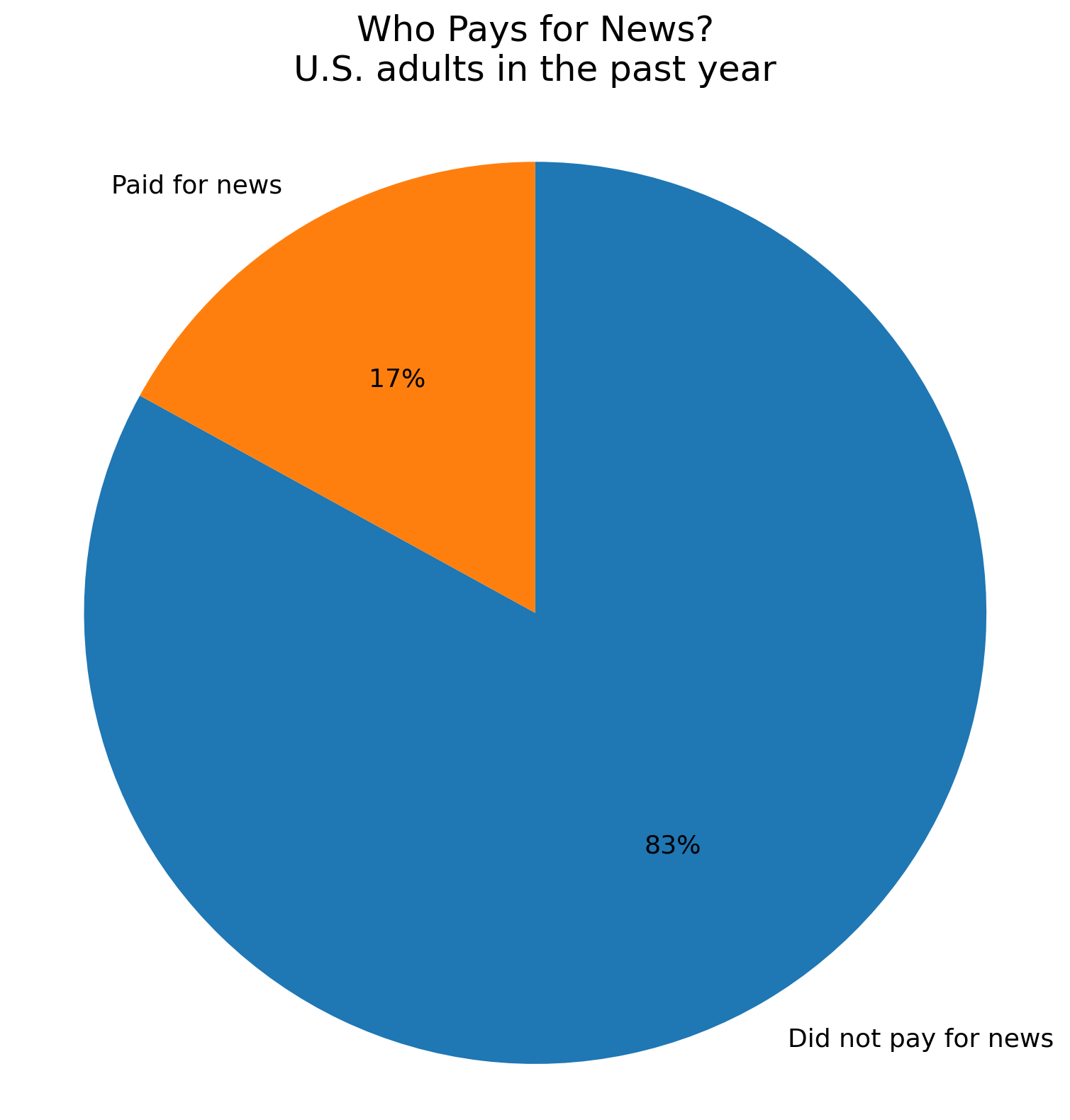
That is why Pew’s numbers land so sharply. In March 2025 survey data, 83% of Americans said they had not paid for news in the past year, while 74% said they run into paywalls at least sometimes. [7] Pew also finds that paying for news varies significantly by income, with the lowest-income group much less likely to pay than the highest-income group. [7]
So here is the structural consequence: the people most exposed to the downstream effects of war and economic disruption are often the least likely to have direct access to the most detailed reporting about how leaders chose the risk. [5][7][14]
That is not because poor and working people are apathetic. It is because money is real.
And when the money is not there, the information environment becomes a patchwork. You read what is free. You watch what is clipped. You rely on talk. You fill gaps with whatever narratives fit your fear or your rage.
This is not theoretical. Research is increasingly trying to quantify it.
A 2025 paper by Julian Streyczek studying the political effects of newspaper paywalls argues that paywalls reduce consumption of online newspaper content and examines downstream effects on political knowledge and participation. [11] You do not have to accept every conclusion to respect the warning: when access to quality reporting shrinks, civic competence tends to shrink with it. [11]
Now add the current moment. Add war. Add oil. Add a chokepoint that moves a huge share of global energy. [5][6]
Then add a paywall.
The deeper machine is not simply the WSJ wants money.
The deeper machine is a class-based information funnel.
Elite readers and institutions can pay, read the nuance, and calibrate their responses.
Everyone else gets downstream interpretation, filtered through whatever is free, fast, and emotionally sticky.
And when that funnel becomes normal, it creates what I would call a civic dissociation. The public is asked to feel the consequences of policy without being allowed to fully see the reasoning behind it.
If you want to know why trust collapses, start there. Pew’s work on public attitudes shows just how thin the sense of obligation to pay for news is, alongside a recognition that newsgathering costs money. [8] People want reliable information. They also resent being told that reliability is only available at the premium tier. [8]
That resentment does not stay politely aimed at the subscription department. It spreads. It becomes contempt for the press, then contempt for facts, then appetite for propaganda.
It is not that the paywall creates misinformation directly.
It is that the paywall creates the empty space misinformation loves.
Who benefits, who pays, and the question that will not go away
So, does WSJ use paywalls to blunt direct public criticism of an administration aligned with its economic interests?
Here is my honest answer: I cannot prove intent from structure alone, and I will not pretend I can. [9]
But here is the answer that matters more: even if the paywall is not designed as political insulation, it functions as insulation.
Who benefits?
The outlet benefits through subscription revenue. A subscription model can reduce dependence on volatile advertising markets, which is one reason so many organizations pursued it in the first place. [12] The paying reader benefits by getting deeper reporting, more context, and often better sourcing.
Politicians and administrations can benefit when high-impact accountability reporting reaches a narrower audience. Not because the reporting is flattering, but because limited reach can reduce mass comprehension and slow mass backlash. [7][11]
Who pays?
You already know the first layer: low- and middle-income people who cannot sustainably stack subscriptions. [7]
But there is a deeper layer. The U.S. is not economically flat. The racial wealth gap is severe, and the Census Bureau has reported stark disparities in household wealth by race. [14] In plain terms, a system that prices civic information as a subscription product will predictably hit Black households and other historically disadvantaged groups harder, not because they care less, but because the wealth is not there. [14]
Then there is the psychological cost.
Paywalls teach people a quiet lesson: the world is happening, but you are not entitled to understand it.
That lesson produces humiliation. Humiliation produces anger. Anger looks for targets.
Sometimes the target is the politician. Sometimes it is the journalist. Sometimes it is your neighbor who you suspect is brainwashed.
This is how a democracy starts eating itself from the inside, not only through bad policy, but through the slow privatization of shared reality.
Now let us be fair, because fairness strengthens the argument.
Journalism really does cost money. War reporting is expensive and dangerous. Investigative work requires time, security, editors, lawyers, travel, and overhead. That is not negotiable. [8] And some of the best accountability reporting in America has been produced by outlets with paywalls, including the WSJ. [1]
So I am not arguing for a moral purity that ignores economics.
I am arguing for civic triage.
In moments when the public is being asked to accept war, sacrifice, and economic volatility connected to a chokepoint that moves a massive portion of the world’s energy, the receipts should not be gated as luxury content. [5][6]
And if outlets insist the paywall is immovable, then they should treat the library system as part of the democratic infrastructure, not as some obscure workaround known only to people with time, stable internet, and institutional literacy.
Here is one concrete fact that matters: WSJ itself operates a public library access program that allows patrons to access WSJ.com through participating libraries. [13] That is not a full solution, but it is proof that a different model can exist, at least in part.
So here is my direct question, not only to The Wall Street Journal but to the whole paywalled press ecosystem:
When the story is about a war that can shake global energy markets, what is your obligation to the non-paying public?
Not as customers.
As citizens.
Because if the answer is none, then we should stop acting surprised when citizens stop acting like citizens.
And here is the question to us, the readers, the Substack crowd, the disenchanted over-50 crowd that has watched institutions fail and then demand trust anyway:
What do we do with the fact that our information system is now shaped like a mall?
Some stores are for browsing. Some are for buying. Security watches certain people more closely than others. The exits are placed to funnel you past temptation. The most valuable goods are behind glass. And the people who built the mall keep insisting it is a public square.
It is not.
It is a marketplace that sells the interpretive keys to power.
If you want one human move, simple and real: take one hour this week and help one person in your life build a legal access path to higher-quality reporting. Show them how your local library works. Help them find a public access program. Explain how to triangulate sources without drowning. [13][7]
Because right now, the press is not only reporting the war.
It is also rationing the public’s ability to understand it.
And in a democracy, that is not just an inconvenience.
That is a slow national emergency.
Pass It On
If this piece said out loud what years of mainstream media disappointment and this latest WSJ paywall slap have been building in your chest, restack it and pass it on.
Send it to one person who is tired of being told the truth matters right before the truth disappears behind glass.
I do this work for readers. Not advertisers. Not shareholders. Readers. Paid subscriptions buy me the time to do this kind of deep reporting every day, not once in a while, not when the algorithm is in the mood, but daily. If you want to help me keep doing that, become a paid supporter here:
And if paid is a bridge too far right now, you can still help me buy back some reporting time with one coffee here:
Sources (in numerical order)
Wall Street Journal: “Trump Knew the Risk of Iran Blocking the Strait of Hormuz. He Still Went to War.” - The reported investigation at the center of the paywall and gatekeeping question.
Reuters: “US attacks Iran’s Kharg Island, Trump says” - Reporting on U.S. strikes and Trump’s public linkage of escalation to shipping access.
Reuters: “US destroys mine-laying vessels as Trump warns Iran over Strait of Hormuz” - Reporting on military claims, escort policy confusion, and the operational reality of disruption risks.
CBS News: “Trump says the war is very complete” - Trump’s own public framing of the war and the strait.
U.S. Energy Information Administration: “Amid regional conflict, the Strait of Hormuz remains critical” - Official energy data on the strait’s share of global oil and LNG flows.
International Energy Agency: “Strait of Hormuz – Oil security and emergency response” - Official international analysis quantifying crude flows and regional dependence.
Pew Research Center: “Few Americans pay for news when they encounter paywalls” - Survey evidence on paywall encounters, payment rates, and income-based disparities.
Pew Research Center: “Few say Americans have a responsibility to pay for news” - Public attitudes showing both resistance to paywalls and recognition that journalism costs money.
Digiday: “Inside The Wall Street Journal’s subscription strategy” - Industry context for WSJ’s hard-paywall, subscriber-first model.
Reuters Institute: “How much do people pay for online news?” - Cross-national research on the ceiling effect for online news payments.
Julian Streyczek: “Political Effects of Newspaper Paywalls” - Scholarly analysis connecting paywalls to reduced consumption and downstream civic effects.
Reuters: “Reuters introduces digital subscriptions for $1 a week” - Context on the wider paywall economy across major news outlets.
WSJ Public Library: “Digital Access Now Available from Anywhere” - WSJ’s own library-access pathway, relevant to legal workarounds and public access.
U.S. Census Bureau: “Wealth by Race of Householder” - Official documentation of racial wealth disparities that shape who can absorb subscription-based information costs.
I am a low income Senior, I would love to subscribe to more substacks, but I can't. I have approximately three dollars left in my checking account until April, so I won't be buying you a coffee either no matter how much I would love to. You are however next on my list for adding. I had planned on it this month. And then came this idiot war, which I highly suspect was triggered by another criminal leader, trying to stay out of prison. Yes Netanyahu I am blaming you for the trigger. Trump just squeezed. Now I am worse off than before, hoping for a Blue Tsunami to sweep this intemperate President out of office with an Impeachment, conviction, and removal from office.
This made me think of a new term I just heard of a day or two ago: the "E" shaped economy. We've probably become aware of the K shaped, where the rich get richer and the poor get poorer. What about someone like me? I'm not a billionaire, and I'm not struggling. YET. Hopefully never. But as got up in age I saw plenty of friends either not make it to retirement, or take retirement early because of health issues or job layoffs--and whose gonna hire a 63 year old? It wouldn't take much to drop a 63 y/o without healthcare and without safety nets (THANKS TO YOU DOGE!) into hunger. Poverty. Homelessness.
The "E" in this new financial term is folks like me. I'm doing okay. I'm fairly healthy. But I'm watching my young adult kids unable to attain what I had at their age. So, I shop the grocery stores and pick up things they could use. I treat them to a tank of gas now and then, and an occasional meal out. Just to give a bit of leeway.
I'm not surprised that the majority of folks don't pay for news. I purchase a print newspaper every weekend. I subscribe to several Substacks. But my kids don't, and neither do some of my peers who aren't as fortunate as I am.
The billionaires, like Rupert Murdock, control the media. No wonder Trump comes off as someone more in control of himself when they sanewash everything he says and does.