

Police Action 2.0: Mission Creep on the High Seas (Part 1)
As a retired police officer, I know the language of law enforcement can be deceptively reassuring. Terms like “police action” suggest limited scope and moral clarity consisting of a quick operation to restore order. But history and my own moral compass tell a different story. Today, I watch with growing indignation as the United States embarks on what can only be called Police Action 2.0 – a campaign of military force cloaked in the rhetoric of law enforcement, ramped up for the social media age and teetering on the edge of all-out war. It’s a story we’ve seen before, now unfolding faster and more dangerously than ever.
From Korea to the Caribbean: A History of U.S. “Police Actions”
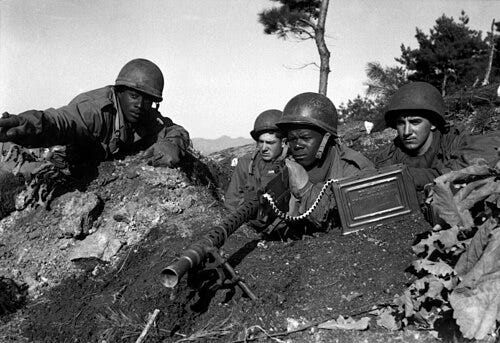
The United States has long used “police action” as a euphemism for military intervention. The Korean War is a classic example: President Harry S. Truman initially described the conflict not as a war, but as a “police action”, since it was never formally declared by Congress . The label implied a contained operation under international auspices, yet that “police action” escalated into three years of brutal fighting, millions of casualties, and an unresolved armistice. In Vietnam too, America waged war without an official declaration, framed as assisting an ally – another policing effort gone far beyond its original mandate.
This pattern continued in later decades. In 1989, the U.S. invaded Panama ostensibly to arrest dictator Manuel Noriega on drug trafficking charges – a law enforcement objective pursued with 27,000 troops, fighter jets, and airborne assaults. The War on Drugs blurred into war by another name. Time and again, what starts as a limited intervention “to keep the peace” or to “intercept” criminals morphs into prolonged conflict. The phrase “police action” has often served as a fig leaf for avoiding the word “war” while military power is unleashed.
Fast forward to today: the theater is not Asia or Central America, but the Caribbean Sea. Once again, the U.S. finds itself in a campaign presented as a necessary policing operation this time against drug cartels at sea, yet it bears all the hallmarks of an undeclared war.
Policing the Waves or Waging War?
In early September 2025, the Trump administration initiated a series of air and naval strikes against boats suspected of carrying narcotics in the Caribbean and Eastern Pacific . Under traditional norms, drug interdiction on the high seas is the realm of the U.S. Coast Guard and law enforcement, who intercept vessels and bring traffickers to justice in court. But this campaign represents a dramatic departure: fighter jets and drones dropping bombs on small boats, with no chance for suspects to surrender or trials to take place. Reuters noted that these strikes “dramatically depart from the traditional approach of using the U.S. Coast Guard to intercept maritime drug shipments and prosecute traffickers in court” . In place of handcuffs and due process, there are fireballs on the open sea.
President Donald Trump’s administration has cast this operation as something less than war, insisting it is part of “a non-international armed conflict” against “narcoterrorists” . By unilaterally designating Latin American drug gangs as terrorist organizations, the White House claims to have “every authorization needed” to use military force . The strikes have killed “dozens of people” – at least 76 by mid-November – whom the administration labels “drug-trafficking terrorists” . In official parlance, this is a continuation of the War on Drugs, only now the battlefield is literal.
On social media, the President has eagerly played the role of top cop and commander combined. On September 15, Trump announced on his Truth Social account: “This morning, on my Orders, US Military Forces conducted a SECOND Kinetic Strike against positively identified, extraordinarily violent drug trafficking cartels and narcoterrorists in the SOUTHCOM area of responsibility” . He even attached a declassified video snippet showing a small boat bobbing in the water moments before a missile obliterated it . This public spectacle of force with a commander-in-chief live-blogging a strike exemplifies how Police Action 2.0 is turbocharged for the social media age. Rhetoric that once might be confined to internal briefings is now broadcast worldwide in real time, amplifying the swagger and raising the stakes.
The result? Mission creep on steroids. What began as targeting “drug smugglers” on the high seas is rapidly expanding in scope. By 2 December, a mere three months into the campaign, President Trump was openly threatening military strikes on sovereign nations. In a televised Q&A, he warned that “any country he believes is making drugs destined illegally for the US” could be attacked . He singled out Venezuela by saying strikes on land targets there would “start very soon” and even hinted at action against Mexico . The message is clear: if illicit opioids or cocaine flow from your territory, you’re “fair game” for American bombs. Such sweeping threats far exceed any reasonable definition of a narrow police operation. They edge toward a regional war on drug-producing countries, declared by presidential fiat on social media.
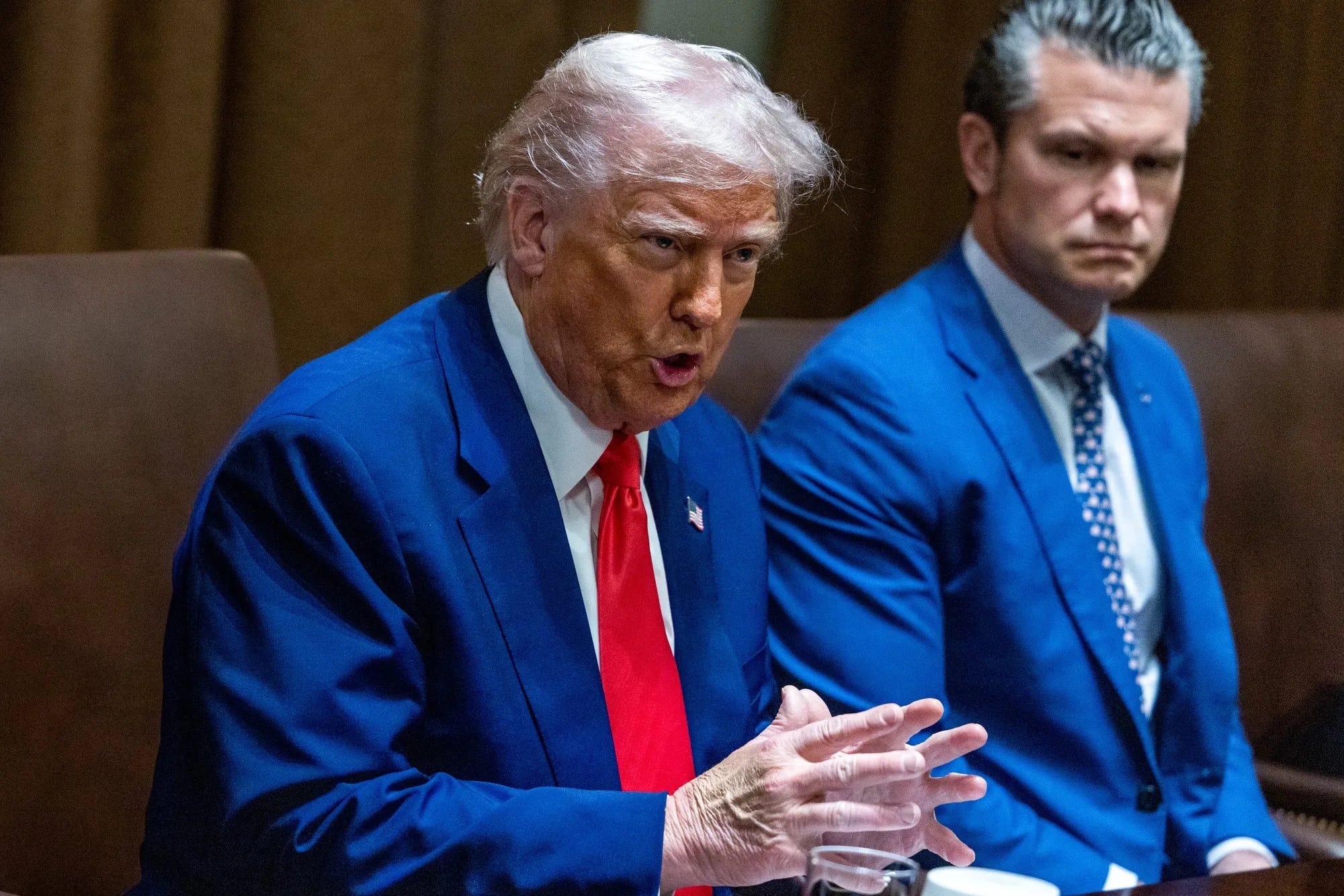
Defense Secretary Pete Hegseth himself, sitting beside Trump in a cabinet meeting, proclaimed “We’ve only just begun striking narco boats and putting narco terrorists at the bottom of the ocean.” . That chilling statement, we’ve only just begun, reflects an embrace of open-ended mission creep. It’s a boast that this campaign will not be a one-off; it is the new normal. For those of us with law enforcement backgrounds, the ethos of policing has always been about measured force, careful rules of engagement, and protecting the innocent. Here we see the inverse: an endless mandate where the definitions of “narco-terrorist” are unilaterally decided behind closed doors, and deadly force is the first resort.
Human rights groups have condemned the strikes as illegal extrajudicial killings. Families of those killed from Colombia to Trinidad vehemently deny their loved ones were cartel criminals at all . One Colombian family has now filed the first formal complaint against the U.S. at the Inter-American Commission on Human Rights, alleging their relative, 42-year-old Alejandro Carranza, “was illegally killed in a US airstrike on 15 September.” Carranza’s family says he was a humble fisherman out for tuna and marlin, not a drug smuggler . To them, and to many watching abroad, this “police action” looks indistinguishable from murder sanctioned by the state.
The White House remains defiant. It claims the boat attacks are justified under a “novel interpretation of law” – an interpretation that appears to discard the usual constraints of both international law and domestic statute. A White House spokesperson’s response to the Carranza complaint was to blast the media for supposedly “running cover for foreign terrorists smuggling deadly narcotics intended to murder Americans” . In other words, any innocent questions about civilian casualties are painted as betrayal. It’s the rhetoric of an administration that believes it can do no wrong in this fight. And perhaps that belief is not just bluster – it has been buttressed by a recent seismic shift in American law at the highest level.
If you want reporting that actually connects these dots instead of pretending they live in separate universes, that work doesn’t happen on vibes and outrage alone. It costs hours I don’t have unless readers buy them. Every paid subscription literally buys me time off the hamster wheel of side gigs so I can sit with this research of history and turn it into in-depth piece like this every week. If you’re tired of watching the big legacy media outlets flinch, become a paid subscriber so I can keep pulling on threads most people are scared to touch.
Immunity Above All: The Supreme Court’s Green Light
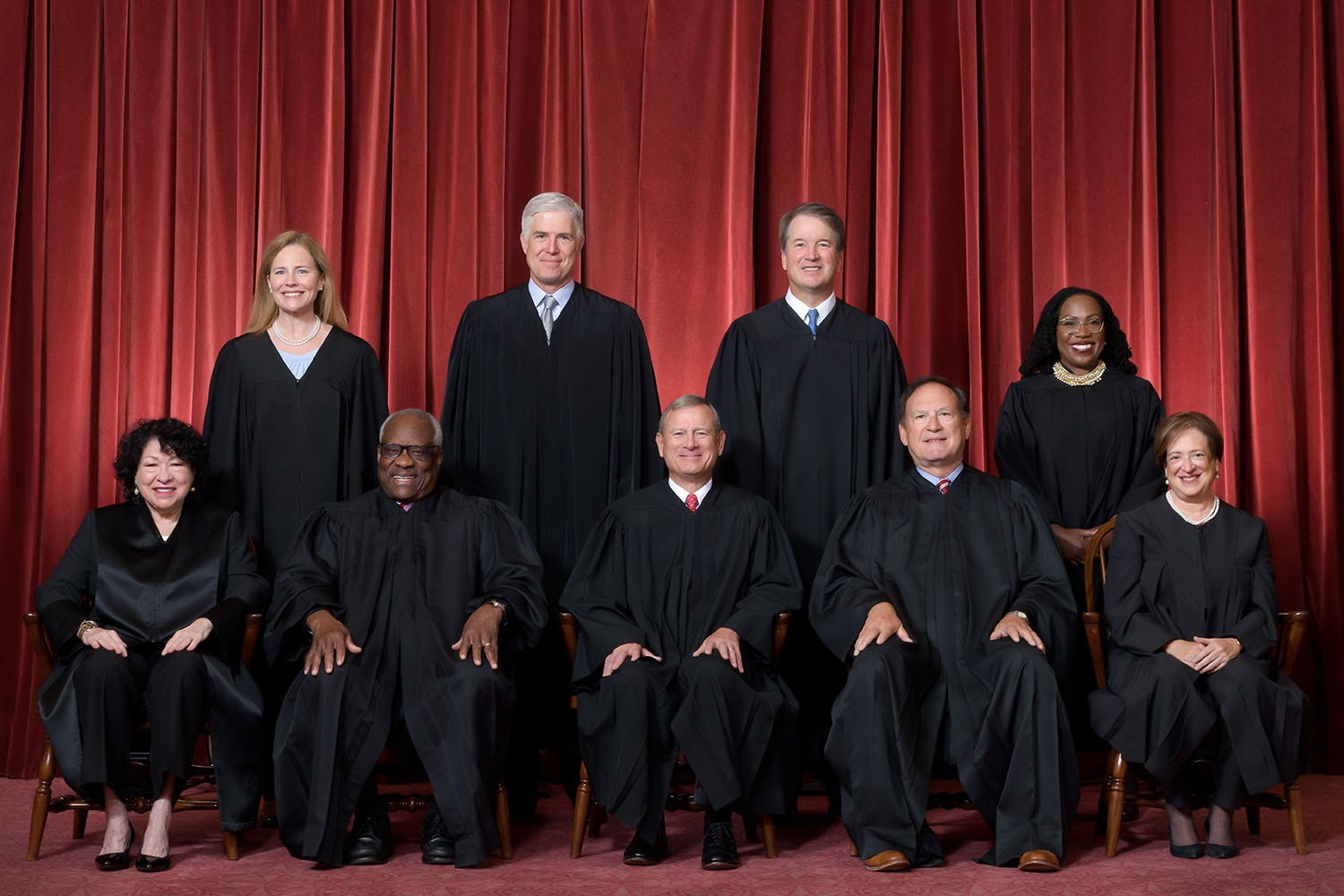
What gives a president the confidence to push a “police action” to its extreme? A key piece of the puzzle lies in a landmark Supreme Court decision that dropped during the 2024 presidential campaigns 1 year before these strikes began. In Trump v. United States (2024), the Supreme Court’s conservative majority effectively placed the president’s official actions beyond the reach of criminal law . The Court held that a president has absolute immunity for acts within the core of his constitutional authority (and “presumptive” immunity even for acts on the blurry edges of duty) . In plainer terms, if something can be framed as an exercise of presidential power like say, commanding the military, then as far as criminal accountability is concerned, it’s hands off. The decision was a bombshell. Even Donald Trump’s own lawyers once acknowledged a president could be prosecuted after leaving office; now the Court had upended that notion . Justice Sonia Sotomayor warned in dissent that the ruling was nothing less than a grant of royal prerogative: “When he uses his official powers in any way, under the majority’s reasoning, he now will be insulated from criminal prosecution… Orders the Navy’s SEAL Team 6 to assassinate a political rival? Immune. Organizes a military coup…? Immune… Immune, immune, immune.” . Her words drip with alarm – and for good reason. With a single decision, a 6–3 majority on the Court told President Trump that as long as he cloaks his actions in the mantle of official duty, the law cannot touch him .
I felt a chill when that ruling came down. As a cop, I operated every day under the notion that no one is above the law. Now I watched the highest court carve out an exemption for the most powerful person in the country. The timing could not have been more fateful. By immunizing “core” presidential acts and surely directing military strikes qualifies the Supreme Court handed Trump a blank check . It’s hard not to draw a line from that decision to the brazenness of the current Caribbean campaign. The president and his inner circle have every reason to believe that legal consequences will never catch up to them. They act as though they have carte blanche to target, bomb, and kill under the banner of national security. And if mistakes are made? If an innocent fisherman is blown to pieces by a Hellfire missile? Well, in their calculation, that’s unfortunate but not indictable.
To be sure, the administration has taken steps to extend this shield of impunity down the chain of command. The Justice Department’s Office of Legal Counsel quietly issued an opinion assuring that U.S. military personnel carrying out these strikes are immune from prosecution . In other words, everyone from the drone pilots and Navy SEALs to the admiral overseeing the operation is being told: Don’t worry, you won’t be held legally liable. The idea is to preempt resistance or hesitation by troops and to signal that this is “safe” legally because it’s been blessed from on high. But there’s a dark irony here. By immunizing everyone preemptively, the administration may have sowed seeds of moral hazard and confusion in the ranks. What happens when the smoke clears and the world calls those actions crimes? Paper shields from the DOJ won’t mean much in the courts of international opinion or even possibly international law. The “novel interpretation” the White House touts is widely disputed; U.S. allies like the UK and France flatly call the strikes illegal . The Supreme Court’s decision might protect Trump from a U.S. courtroom, but it cannot insulate American servicemembers from the burden on their conscience, nor from congressional scrutiny that is now mounting.
“Just Following Orders” – A Wedge Between Commander and Troops
In recent weeks, a palpable anxiety has spread through the Pentagon. What started as bravado at the top with the phrase “we’ve only just begun” has now given way to finger-pointing in the face of backlash. The most controversial incident so far occurred on 2 September: an alleged smuggling boat was hit by U.S. missiles and as it sank, two survivors clung to debris. Rather than rescue or detain them, U.S. forces launched a second strike that killed the survivors . This “double-tap” tactic, normally associated with drone warfare in combat zones, horrified many in Washington who learned of it. Lawmakers from both parties began asking whether that follow-up strike amounted to a war crime.
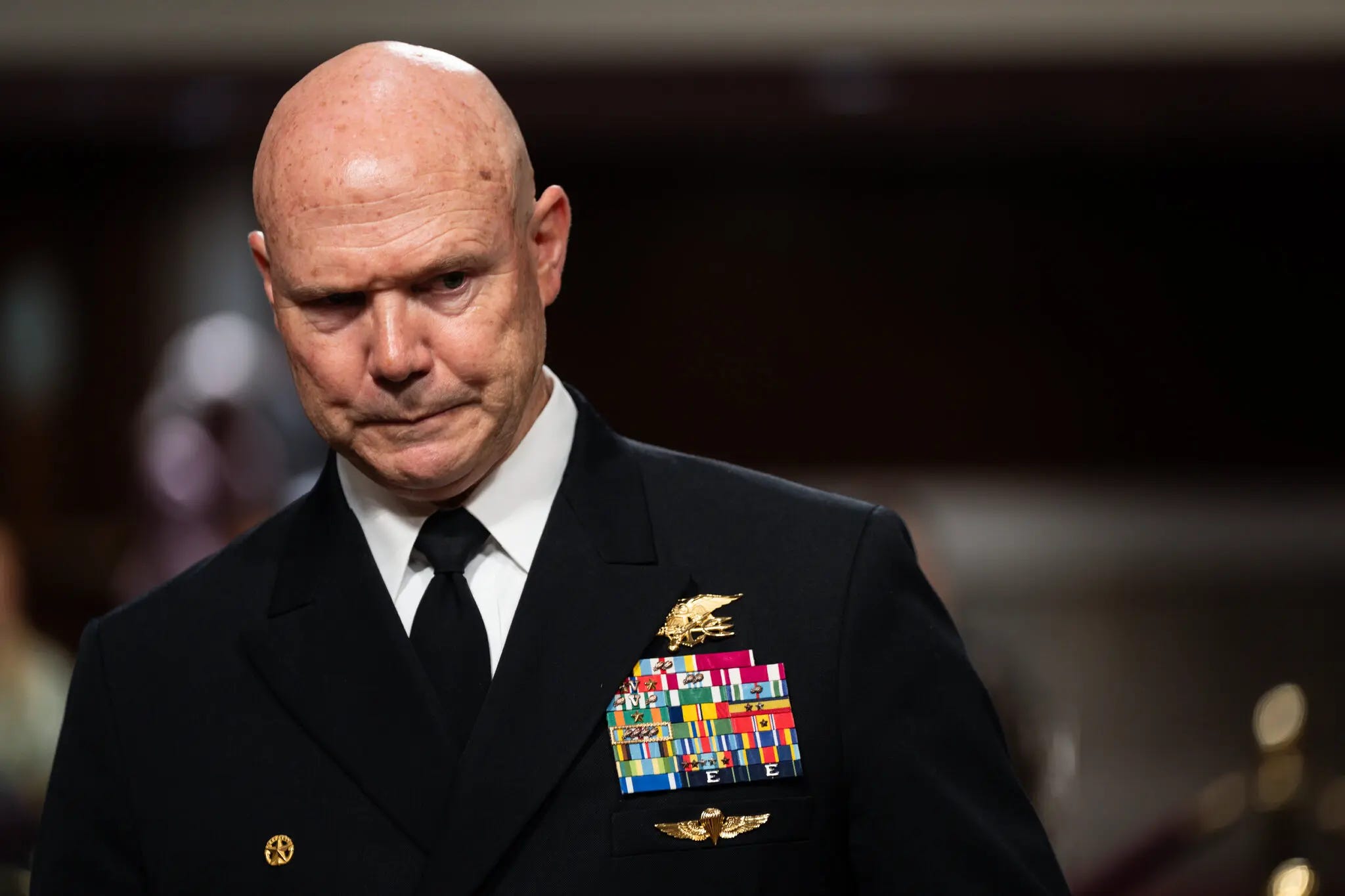
Facing criticism, the Trump administration’s instinct has been to distance its civilian leadership from blame. According to allegations by multiple officials, Defense Secretary Hegseth had given a spoken order to kill the entire crew of that vessel – “leave no one alive” was the message . When the survivors were spotted in the water, the on-scene commander, Navy Admiral Frank M. Bradley, felt compelled to carry out Hegseth’s intent and directed the fatal second strike . At least 11 people were killed in total . Yet when news of this leaked, the White House narrative subtly shifted: Press Secretary Karoline Leavitt acknowledged that Hegseth authorized the mission, but emphasized that Adm. Bradley “worked well within his authority and the law, directing the engagement to ensure the boat was destroyed.” Those carefully chosen words, ‘within his authority’ and “to ensure the boat was destroyed”, left a conspicuous gap. They did not explicitly say who ordered the killing of the survivors. The implication hung in the air that perhaps the admiral had taken it upon himself to execute the no-witnesses directive.
Inside the Pentagon, that equivocation landed like a betrayal. “This is ‘protect Pete’s bulls****,” one disgusted military official told the Washington Post . Another said Leavitt’s statement “left it up to interpretation” who was responsible for the second strike, angrily concluding “It’s throwing us, the service members, under the bus.” These are not the words of anti-war activists or politicians, but of career military personnel who expect accountability and honesty from their leaders. The wedge between the commander-in-chief and his troops is growing. I can feel the anger in those quotes that contain flashes of rage from people who are proud to carry out lawful orders, now fearing they’ll be scapegoated for following an order that came from the very top.
Secretary Hegseth, for his part, has been trying to have it both ways. In public, he praises Admiral Bradley as “an American hero, a true professional” and insists he “stands by the admiral and the combat decisions he has made” . But to many in uniform, that rings hollow when the President himself is simultaneously denying Hegseth gave any such lethal order. Trump told reporters that Hegseth assured him he “did not give an order to kill everyone aboard the boat” and the President added, “I believe him 100 percent.” . Think about that: the Commander-in-Chief is effectively saying if a war crime occurred, it must have been the on-scene commander’s doing, because my Defense Secretary said he didn’t order it. It’s a stunning abdication of responsibility at the highest level. It also directly contradicts what insiders have leaked. Small wonder that some of Hegseth’s own civilian staff at the Pentagon are reportedly alarmed and “contemplating whether to leave the administration” over this very issue .
In the span of days, the narrative flipped from bravado to blame-shifting. The Guardian reported that “the Pentagon scapegoated a navy admiral for the extrajudicial double-tap strike… and vowed to continue operations” regardless . The administration insists everything is lawful, even as it offers up Bradley as a convenient fall guy to appease congressional anger. This is the human cost of Police Action 2.0: not only the dead fishermen and alleged smugglers at sea, but also the morale and integrity of our own forces. I can’t help but recall the Nuremberg principle that following orders is no defense for illegal acts. The rank-and-file know this in their bones because every U.S. service member is taught to refuse an unlawful order. But here, those in the chain of command were assured all was lawful, encouraged from the Oval Office on down to pull the trigger. Now, after the damage is done, the very people who gave those orders are lawyering up, parsing words, and hanging their subordinates out to dry. The trust between leader and led has been fractured.
Between Law and War, A Cop’s Perspective
Watching this unfold, I feel both furious and heartbroken. As a police officer, I operated under strict rules that protected civilians, suspects, and officers alike. If a weapon was fired, there was always an investigation. I never had absolute immunity, and I never wanted it; accountability is what keeps us honest. What I’m seeing now is an America that has drifted perilously far from those principles. A “police action” that flouts the very notion of due process is not policing at all – it is war-making under false pretenses.
In this social media-fueled mission creep, decisions that can kill innocents are made in seconds, tweeted out in triumph, then denied when inconvenient. Legal advice is twisted into a shield of impunity for the powerful, while the rank-and-file are left holding the bag. The Supreme Court may have told President Trump he wears a crown of immunity , but in doing so they have sown a whirlwind. The chain of command is muddied. Who is accountable if everything is deemed “an official act” beyond scrutiny? It’s a question that should haunt all of us, in uniform or out.
This is only Part 1 of the story and it’s a story of a modern “police action” that has already begun to metastasize. What starts in the Caribbean may not stay there. With each strike live-posted and each new threat uttered, the risk of a broader conflict grows. As citizens, we must ask: At what point does a police action become a war by another name? And if it does, who will answer for the innocent lives lost and the principles betrayed?
I don’t have easy answers. But I do know this: calling something a police action doesn’t automatically make it just. True justice requires humility, restraint, and accountability – qualities in short supply in this campaign. If we abandon those, we lose more than a boat or a load of cocaine on the high seas. We lose our moral bearings. And that’s an outcome no one in America, cop or soldier or citizen, should be willing to accept.
If you made it this far, you already know this isn’t surface-level commentary. It’s hours of digging, connecting dots the big outlets tiptoe around, and turning it into something you can actually use to understand what’s being done in our name. Paid subscriptions are what buy me the time to keep doing work like this….slow, careful, fearless. If you want more reporting that doesn’t flinch, I’d be honored if you became a paid supporter.
Sources:
Aram Roston, The Guardian – “Family of victim in Trump drug boat killings files first formal complaint”
Guardian Staff – “Trump news at a glance: Hegseth scrutinized over boat strikes…”
Noah Robertson & Tara Copp, Washington Post – “Hegseth… tries to distance himself from boat strike fallout”
Tom Hals & Jan Wolfe, Reuters – “Explainer: Are the deadly US strikes on alleged drug vessels legal?”
David Cole & Brett M. Kaufman, ACLU – “Supreme Court Grants Trump… a Blank Check to Break the Law”
Korean War – Wikipedia (Truman’s “police action” quote)
https://www.theguardian.com/world/2025/dec/02/trump-caribbean-drug-boat-attack-complaint
https://www.theguardian.com/us-news/live/2025/dec/02/trump-politics-latest-hegseth-boat-strike
https://www.washingtonpost.com/national-security/2025/12/01/hegseth-admiral-boat-strike/
https://www.reuters.com/world/us/us-air-naval-strikes-drug-boats-are-legal-us-officials-say-not-everyone-2025-11-20/
https://www.aclu.org/news/national-security/supreme-court-grants-trump-wholesale-immunity
https://en.wikipedia.org/wiki/Korean_War
Man. I’m Jamaican. This piece hits hard X. Great reporting. You are so good.
Living in a state of delusion called Florida, double speak is our regional dialect. Elections and contracts are barely a speed bump for an aggressive governor bent on consolidating power. Our Surgeon General is only marginally less absurd than RFK. Cruelty rules, lemmings follow, books are banned and reason is furloughed.
War, not war. Legal, illegal. Nothing to see here. I feel like those doomed souls in Thailand on 12/26/2004 standing paralyzed on the beach while the Tsunami reared up over their heads. There is nowhere to run.