

Blackout Brief Daily | May 21, 2026
So damn reliable you forget how good it is. Like COOL AC, baby.
Today’s Charge
Today was not only about another court fight, another DOJ announcement, or another redistricting fight. It was about the country watching procedure become camouflage. Power tried to make a taxpayer fund for political violence, a medical-record dragnet, a map deadline, a deportation contract, and a records-law fight look like normal government administration. The people likely to pay first are the ones with the least insulation: Black voters in the South, trans young people and their families, migrants moved through countries like cargo, pregnant patients, workers, and communities breathing the pollution industry gets to call savings. XVOA is tracking the paperwork because the paperwork is where the harm is hiding.
Five Things That Matter Today
Former Capitol Police officer Harry Dunn and Metropolitan Police Department officer Daniel Hodges sued to block Trump’s $1.776 billion “Anti-Weaponization Fund,” after DOJ created the fund as part of Trump’s IRS settlement and January 6 defendants began eyeing payouts. [1][2][3]
A federal judge ordered White House and executive branch staff to obey the Presidential Records Act after finding a substantial risk that the administration was not fully following the law that preserves presidential records. [4]
Federal prosecutors announced murder and conspiracy charges against former Cuban leader Raúl Castro over the 1996 Brothers to the Rescue shootdown, escalating Washington’s pressure campaign against Cuba as China condemned the charges. [5][6]
Reuters documented the Supreme Court’s uneven use of the Purcell principle in election-map disputes that have repeatedly benefited Republicans, while Louisiana lawmakers moved toward a map likely to reduce Black representation. [7][8]
A federal appeals court let Rhode Island Hospital turn over sealed transgender youth care records to a Texas judge, while families across the country weigh moving because gender-affirming care access is being narrowed by state laws, subpoenas, and federal pressure. [9][10][11]
Restack This Brief
Restack this brief and send it to one person who keeps asking why everything feels rigged.
Paid subscriptions keep the XVOA desk working:
If somebody cannot subscribe right now, coffee can be the backstop. No slick pitch. The work is the pitch.
The Hierarchy Audit
The national hierarchy wanted the day to sound like a handful of elite legal fights: Trump’s compensation fund, a Cuba indictment, the Supreme Court’s election-map posture, the White House records fight, and the latest litigation over trans health care. Those stories matter. But the danger is that national prominence can make the machinery look distant, as if the damage lives only in Washington.
The local record told a harder truth. Louisiana was not debating an abstraction. It was moving toward a map that could collapse Black representation. Mississippi organizers did not rally in a generic public square. They gathered near the old machinery of Jim Crow. Maricopa County was not merely having a personality dispute. Election administration itself was being pulled into a fight over drop boxes. West African deportees landed in Sierra Leone under a deal that turns poor nations into sorting stations for American removal policy. The blackout today was not silence. It was scale. Power made the harm look too technical to mourn.
Top Breaking National Stories
1. Trump’s “Anti-Weaponization Fund” got sued by the officers January 6 already wounded
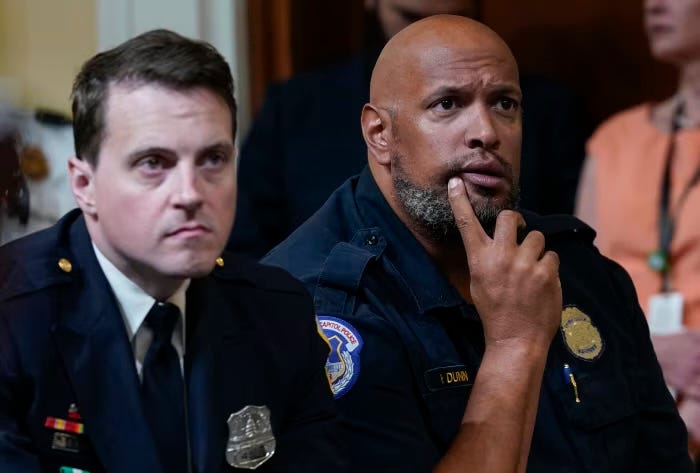
On Wednesday, former Capitol Police officer Harry Dunn and Metropolitan Police Department officer Daniel Hodges filed a federal lawsuit to block President Donald Trump’s $1.776 billion “Anti-Weaponization Fund.” DOJ announced the fund Monday as part of a settlement tied to Trump’s lawsuit against the IRS over the leak of his tax returns. The official DOJ language says the fund will hear claims from people who suffered “weaponization and lawfare,” but Dunn and Hodges allege it is an illegal taxpayer-funded vehicle that could reward insurrectionists and paramilitary groups. [1][2]
Reuters reported that January 6 defendants and Trump allies have already begun calculating possible claims. Former Proud Boys leader Enrique Tarrio, who was sentenced to 22 years for seditious conspiracy before Trump pardoned January 6 defendants last year, said he planned to apply for millions. Acting Attorney General Todd Blanche told lawmakers that even people who assaulted police on January 6 would not automatically be barred from receiving money. [3]
Why it matters: This is not just a fight over a federal fund. It is a reversal of injury. The state is being asked to turn people convicted or accused in the machinery of political violence into claimants against the public purse. Dunn, a Black officer who testified about the racist abuse he endured on January 6, becomes a witness to the old American trick: punish the people who held the line, then call the punishment process healing. The wound gets audited. The rioter gets a claims form.
2. A judge told the White House that records are not optional memory
On Wednesday, U.S. District Judge John Bates in Washington ordered White House officials and other executive branch staff to comply with the Presidential Records Act. The order does not apply directly to Trump, Vice President JD Vance, the Justice Department, or the National Archives, but it does bind many officials across the executive office of the president. Bates found that the plaintiffs had shown a substantial risk that the administration was not fully following a law that has governed presidential records since 1978. [4]
The case came after a Trump administration Justice Department legal opinion said the Presidential Records Act was unconstitutional because it intruded on executive autonomy. Bates rejected that framing, noting that administrations have complied with the law for nearly 50 years, including during Trump’s first term and the first year of the current one. The lawsuits were brought by groups including American Oversight, the American Historical Association, and the Freedom of the Press Foundation. [4]
Why it matters: Records are not clerical scraps. They are public memory with a filing system. When an administration claims the power to treat preservation law as unconstitutional inconvenience, it is also claiming the power to decide what the country will be able to prove later. For Black historical memory, this is not abstract. The archive has always been a battlefield. The first move of impunity is not always the crime. Sometimes it is the missing paper.
3. DOJ indicted Raúl Castro, and foreign policy put on a prosecutor’s suit

On Wednesday in Miami, federal prosecutors announced criminal charges against former Cuban President Raúl Castro over the 1996 shootdown of two civilian planes operated by the exile group Brothers to the Rescue. The indictment, filed secretly by a grand jury in April, accuses Castro, then Cuba’s defense minister, of ordering the shootdown that killed four unarmed American civilians. The charges include murder and destruction of an aircraft, and five Cuban military pilots were also charged. [5]
Trump called it a “very big day” while saying he did not believe further escalation against Cuba was necessary. Cuban President Miguel Díaz-Canel condemned the indictment as a political stunt and warned that it could help justify aggression against Cuba. On Thursday, China opposed the charges, accusing the United States of misusing judicial mechanisms and pressuring Cuba through sanctions and legal action. [5][6]
Why it matters: The deaths in 1996 were real, and the grief of Cuban exile families is real. But the timing and posture matter. A 30-year-old case is being revived inside a broader pressure campaign against Cuba, with DOJ functioning as both prosecutor and foreign-policy signal. Caribbean and Afro-Cuban communities know what happens when great powers turn legal process into regional theater. The courtroom can pursue justice. It can also dress pressure up as justice. XVOA tracks the difference.
4. The Supreme Court’s map logic keeps landing on Black political power
Reuters reported Wednesday that the Supreme Court’s conservative majority has applied the Purcell principle unevenly in recent election-map fights, repeatedly producing outcomes favorable to Republicans. The principle tells courts to avoid changing election rules close to voting because of possible confusion. But Reuters noted that the Court blocked some map changes months before elections while later allowing pro-Republican maps in Louisiana and Alabama days before in-person voting was set to begin, and after mail ballots had already been cast. [7]
The pattern follows the Court’s April 29 ruling in Louisiana v. Callais, which weakened a key provision of the Voting Rights Act and opened the door for Southern Republican states to dismantle majority-Black and majority-Latino districts before the midterms. Louisiana lawmakers are now considering SB 121, a proposed congressional map that would likely eliminate one of the state’s two majority-Black districts and return the state closer to the map used before courts ordered a second Black-opportunity district. [7][8]
Why it matters: A map is not a diagram. It is a machine for deciding whose power counts before a single ballot is cast. When timing rules bend one way for one party and another way for Black voters, the law starts to look less like a neutral referee and more like a drawbridge operator. Black voters in Louisiana, Alabama, Tennessee, and across the South are not being “redistricted.” Their political future is being resized.
5. Trans youth medical records became part of a federal pressure campaign
Late Tuesday, a three-judge panel of the 1st U.S. Circuit Court of Appeals declined to block Rhode Island Hospital from turning over transgender youth care records to a Texas judge. DOJ sought the records as part of a Trump administration investigation into providers of gender-affirming care for minors. The court said the Rhode Island child advocate had not shown irreparable harm, especially because the Texas judge said the records would remain sealed while appeals continue. [9]
Reuters also reported Thursday that families are weighing moves across state lines or out of the country as care access comes under attack. Trump’s executive order aimed at limiting gender-affirming care for patients under 19 has been temporarily blocked, but the administration continues to push new bans, subpoenas, and financial pressure on hospitals. KFF’s tracker notes that Trump executive actions have also targeted LGBTQ health equity, data collection, nondiscrimination protections, and recognition of gender identity in federal policy. [10][11]
Why it matters: This is what state power looks like when it cannot yet fully seize the body, so it goes after the record. Medical files, hospital funding, Medicaid leverage, court venue, and bureaucratic definitions become one system. The reporting names LGBTQ youth and trans families, but it rarely disaggregates Black trans youth, Black queer families, poor families, and disabled trans youth who cannot simply relocate. A right that requires moving is not a right. It is a price tag.
Stories Buried Beneath the National Headlines
6. West African deportees landed in Sierra Leone under a U.S. third-country deal
Nine migrants deported from the United States arrived in Sierra Leone on Wednesday under a third-country agreement supported by a $1.5 million U.S. grant. Sierra Leone officials said the deportees were from Ghana, Guinea, Senegal, and Nigeria, and that the country will accept only West African nationals temporarily. AP reported that 24 deportees were initially expected, but several removals were halted before departure, including one blocked by a federal judge because the government had not allowed a woman to seek protection under the Convention Against Torture. [12]
Why it matters: This is deportation as logistics. The United States moves people through poorer nations, hires contractors for housing and care, and calls the arrangement temporary. For Black immigrants and the African diaspora, the machinery is blunt: removal does not end at the border. It becomes an outsourcing contract.
7. Mississippi organizers rallied for voting rights at the old crime scene
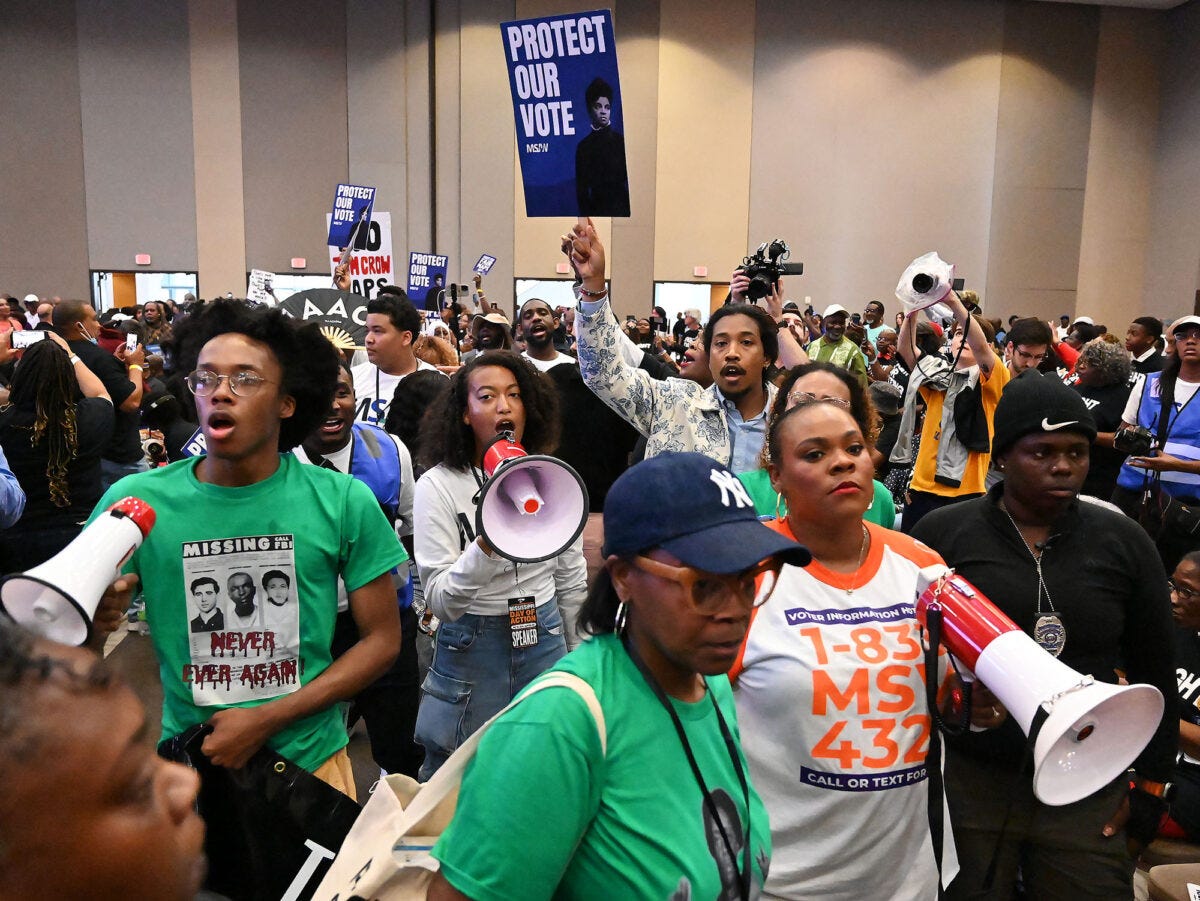
Thousands gathered Wednesday at Mississippi’s War Memorial Building in Jackson to protest the Supreme Court’s decision weakening Section 2 of the Voting Rights Act. The location mattered. The rally took place near the Old Capitol, where white supremacist Mississippi legislators enacted the 1890 constitution that built the “Mississippi Plan” for Black disenfranchisement. Speakers and organizers linked the current redistricting rush to the long history of Black political power being built, feared, and then targeted. [13]
Why it matters: This was not nostalgia. It was site-specific memory. Mississippi’s nearly 40 percent Black population is not an electoral footnote. It is the reason the machinery keeps returning to maps, districts, and timing. The rally understood what national coverage often sanitizes: the past is not past when the same room keeps getting used.
8. A Texas indictment turned reproductive coercion into a post-Dobbs legal battlefield
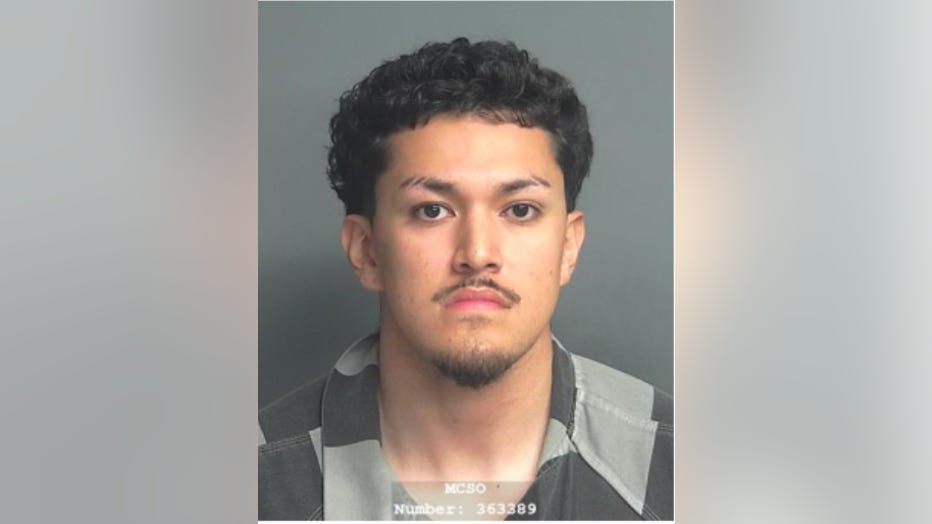
In Montgomery County, Texas, a grand jury indicted 25-year-old Jon Rueben Gabriel Demeter on two first-degree felony charges after prosecutors alleged he secretly administered abortion medication to a pregnant woman without her knowledge, causing a miscarriage. The Houston Chronicle reported that the woman was 14 weeks pregnant and told investigators Demeter gave her a bottle he described as a hydration drink. Officials said the case may be the first prosecuted under Texas’ anti-abortion law under these circumstances. Demeter is being held without bond and is set to appear in court Thursday. [14]
Why it matters: The alleged act is not abortion access. It is reproductive violence. But post-Dobbs law turns the pregnant woman’s body, the fetus, the medication, the relationship, and the prosecution into one charged political stage. Pregnant patients become evidence terrain. The question is whether the law protects bodily autonomy or uses tragedy to deepen state control.
9. Maricopa County’s drop-box feud showed election machinery fighting itself
With Arizona’s July 21 primary two months away, Maricopa County’s internal election conflict escalated Wednesday over ballot drop boxes. County Recorder Justin Heap, through an attorney, warned county supervisors that they could face criminal liability if they voted on drop-box locations. The supervisors unanimously approved the locations anyway. Axios reported that county staff warned the continued fight could soon delay election planning in the nation’s second-largest voting jurisdiction. [15]
Why it matters: This is how election sabotage can arrive without a masked villain. It can look like a jurisdictional dispute, a letter from counsel, a warning to poll workers, and a delayed planning calendar. Maricopa is not just another county. It is a swing-state pressure point where confusion itself can become a political resource.
10. Youth plaintiffs asked a court to stop EPA’s climate rollback before the damage locks in
Eighteen young Americans asked the D.C. Circuit on Wednesday to immediately halt the Trump administration’s repeal of the 2009 endangerment finding, the scientific basis for much of federal climate regulation. Their case, Venner v. EPA, argues that the repeal and the rollback of motor vehicle greenhouse-gas standards threaten constitutional rights, including life, liberty, and religious freedom. The filing says the rescissions could add a gigaton of carbon dioxide pollution while litigation drags on. [16]
Why it matters: Climate policy is often covered as regulation, industry cost, or partisan doctrine. The buried story is the body. Asthma, heat, pollen, water, housing, and religious practice are where federal deregulatory theory lands. Black communities, poor communities, rural communities, and disabled people often breathe the policy first.
11. Equality sites made the endangered list because memory itself is under pressure
The National Trust for Historic Preservation released its 2026 list of America’s 11 most endangered historic places, and AP reported that sites tied to equality movements dominated the list. Stonewall National Monument, the President’s House Site in Philadelphia, the Women’s Rights National Historical Park, the Ben Moore Hotel in Alabama, the Detroit Association of Women’s Clubs, the Tule Lake Segregation Center, and the Greater Chaco Cultural Landscape were among the sites named. At least three were described as endangered by Trump administration actions. [17]
Why it matters: Memory has infrastructure. Monuments, churches, clubs, detention sites, landscapes, and museums hold the proof that America was never only the official story. When those places are starved, threatened, or politically constrained, the damage is not sentimental. It is archival sabotage.
12. Labor’s quiet line items showed the worker machinery moving
OnLabor’s May 20 labor roundup tracked three developments that deserved more attention than they received: the Long Island Rail Road strike ended after a three-day shutdown, key senators rejected Trump’s proposed 26 percent cut to the Labor Department budget, and the EEOC moved to eliminate employer demographic data reporting requirements. [18]
Why it matters: Workers do not lose power only when a boss fires them. They lose it when the state weakens enforcement, cuts the department that polices labor standards, and removes the data needed to prove discrimination. For Black workers, women workers, disabled workers, immigrant workers, and LGBTQ workers, demographic reporting is not paperwork. It is one of the few ways discrimination leaves fingerprints.
13. Voting rights moved into college sports money
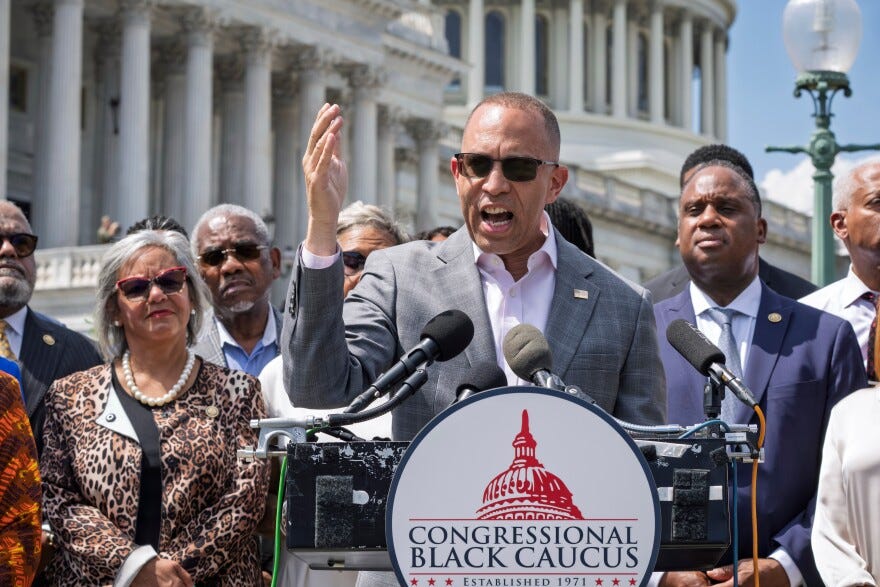
House Democratic leader Hakeem Jeffries amplified the NAACP’s call for Black athletes to boycott public universities in eight Southern states that have moved to reduce Black political representation through new maps. The Guardian reported that the NAACP’s “Out of Bounds” campaign targets states including Tennessee, Louisiana, Alabama, Florida, Mississippi, South Carolina, Texas, and Georgia, where major athletic programs generate enormous revenue. The Congressional Black Caucus also opposed the SCORE Act as part of pressure on universities that have stayed quiet. [19]
Why it matters: Black athletic labor is one of the South’s most profitable public performances. The campaign asks what happens if that labor stops decorating states that are dismantling Black political power. It is a clean diagnosis: if the state wants Black bodies on Saturday, it cannot erase Black voters on Monday.
14. Louisiana’s map hearing put Black representation on a stopwatch
Louisiana lawmakers were set to hear testimony Thursday on SB 121, a proposed congressional map from Republican Sen. Jay Morris. Axios New Orleans reported that Gov. Jeff Landry says a new map is needed before U.S. House elections can resume, after he suspended those elections April 30 following the Supreme Court’s Callais ruling. The proposal would likely eliminate one of the state’s two majority-Black districts, merge or scramble the districts represented by Cleo Fields and Troy Carter, and leave the remaining districts majority white and favorable to Republicans. [8]
Why it matters: The deadline is part of the weapon. When a state says the map must be changed quickly so elections can proceed, speed starts doing political work. Black voters are told to accept a smaller future because the calendar is moving. That is how procedure becomes a bulldozer.
Closing Note on Coverage Gaps
Today’s coverage hierarchy revealed the oldest American trick with a modern interface: make the violence administrative. A fund becomes redress. A subpoena becomes child protection. A map becomes compliance. A deportation deal becomes bilateral cooperation. A records-law fight becomes executive autonomy. A climate rollback becomes savings. A labor-data change becomes paperwork relief.
That is why Blackout Brief Daily exists as the XVOA wire service. The point is not to chase every loud thing until the desk becomes another alarm bell. The point here ya’ll is to identify the machinery before it settles into normal. The danger is not only that power lies. The danger is that power files the lie correctly, stamps it, and dares the public to call procedure violence.
So we keep reading the forms. We keep reading the maps. We keep reading the court orders. We keep reading the local story before the national desk understands what it missed.
Support XVOA
XVOA is not built to flatter power or translate the country into polite confusion.
Paid subscriptions are the first ask because they give this desk room to work without begging the same institutions being investigated for permission to speak. Subscribe here:
If you cannot subscribe right now, coffee can be the backstop. But the subscription is what builds the desk.
Don’t Do It.
Unless you already know exactly why this work needs to exist.
Sources
[1] Reuters, “Police officers who guarded Capitol sue to block Trump’s $1.8 billion ‘slush fund’” - Reporting on Harry Dunn and Daniel Hodges suing to block the Anti-Weaponization Fund.
[2] U.S. Department of Justice, “Justice Department Announces Anti-Weaponization Fund” - Official DOJ announcement describing the fund and its connection to Trump’s IRS settlement.
[3] Reuters, “‘I’m not greedy’: January 6 rioters and Trump allies eye $1.8 billion ‘weaponization’ fund” - Reporting on January 6 defendants and Trump allies seeking payouts from the fund.
[4] Reuters, “Judge orders US officials to comply with presidential records law” - Reporting on Judge John Bates’s preliminary injunction under the Presidential Records Act.
[5] Associated Press, “US raises pressure on Cuba with indictment of former leader as island’s president condemns charges” - Reporting on the Raúl Castro indictment and Cuban response.
[6] Reuters, “China opposes US murder charges against Cuban former president” - Reporting on China’s response to the Castro indictment.
[7] Reuters, “US Supreme Court’s uneven approach to election-map rulings boosts Republicans” - Analysis of recent Supreme Court election-map rulings and the Purcell principle.
[8] Axios New Orleans, “Louisiana lawmakers to debate new congressional map Thursday” - Local reporting on Louisiana’s SB 121 map debate and Black representation stakes.
[9] Reuters, “Court won’t block Rhode Island hospital from releasing transgender care records to Texas judge” - Reporting on the 1st Circuit ruling involving transgender youth care records.
[10] Reuters, “Families weigh moves with gender-affirming care access under assault in US” - Reporting on families considering relocation amid restrictions on gender-affirming care.
[11] KFF, “Overview of President Trump’s Executive Actions Impacting LGBTQ+ Health” - Tracker of Trump administration executive actions affecting LGBTQ health access, data, and protections.
[12] Associated Press, “Deportees from US arrive in Sierra Leone under third-country agreement” - Reporting on West African deportees arriving in Sierra Leone under a U.S.-backed agreement.
[13] The Guardian, “‘We will not go back to Jim Crow’: thousand of Mississippians rally for voting rights” - Reporting from Jackson on the voting-rights rally and its historical location.
[14] Houston Chronicle, “Woodlands man accused of secretly giving woman abortion drug indicted on 2 felony charges” - Local reporting on the Montgomery County indictment.
[15] Axios Phoenix, “Maricopa County election officials clash over drop boxes before primary” - Local reporting on the Maricopa County dispute over ballot drop boxes.
[16] The Guardian, “Young Americans demand court halt Trump’s biggest rollbacks of pollution protections” - Reporting on Venner v. EPA and the requested stay of climate-rule rollbacks.
[17] Associated Press, “Sites tied to equality movements join list of America’s most endangered historic places” - Reporting on the National Trust for Historic Preservation’s 2026 endangered-sites list.
[18] OnLabor, “News & Commentary: May 20, 2026” - Labor roundup covering the LIRR strike, Labor Department cuts, and EEOC demographic reporting.
[19] The Guardian, “‘A Jackie Robinson moment’: Jeffries echoes NAACP calls for college sports boycott over voting rights” - Reporting on the NAACP “Out of Bounds” campaign and Black athlete leverage over voting rights.
Sometimes X you say your whole piece in one title. And that is it. This was masterful what you did with this one. They hid violence in paperwork. In hip hop they would say that’s a bar. That’s something I would hear Kendrick Lamar say. I hope we could get you could do a 1 on 1 piece podcast with Harry Dunn. It would be great to hear yall two discussing this.
Amazing reporting! Thanks, as always!