

Blackout Brief Daily | June 11, 2026
Small desk note at the bottom today about the operating gap. First, the Brief.
So damn reliable you forget how good it is. Like COOL AC, baby.
Today’s Charge
Today was about gates: who gets through, who gets watched, who gets documented, who gets priced out, and who gets told the door was never built for them. The loudest headlines made war, deportation money, and surveillance deadlines look like separate emergencies. Underneath, the same hand kept reaching for access: voter files in Maryland, mail ballots in Shasta County, trans patient records, reproductive care, detention labor, public health warnings, women’s authority inside the church, and older workers staring at another program on the chopping block. The people likely to pay first are immigrants, Black voters, trans youth, poor seniors, rural voters, pregnant patients, and workers whose rights now have to prove somebody meant to hurt them.
Five Things That Matter Today
Trump signed a nearly $70 billion immigration-enforcement bill that funds ICE and Border Patrol through the end of his term, turning the budget into deportation infrastructure [1][2].
The U.S. escalated strikes tied to Iran while oil markets reacted to threats around the Strait of Hormuz, making war power show up as fuel, food, and inflation pressure [3][4][5].
Section 702 surveillance authority is headed toward a Friday lapse unless Congress resolves a fight over Trump’s choice of Bill Pulte as acting intelligence chief [6][7].
The administration narrowed civil-rights enforcement around disparate impact while states sued over anti-DEI contract terms, pushing discrimination law back toward “prove they meant it” territory [8][9][10].
Florida’s Supreme Court let a GOP congressional map stand while Maryland and Shasta County showed how voter power also gets moved through data demands, mail-ballot restrictions, and local procedure [11][12][13][14].
Fundraiser Update: The Gap Is Down to $105
Hold up. Before the Brief keeps moving.
The current XVOA fundraiser is now $1,095 toward the $1,200 goal. That means the gap is down to $105. Not $300 anymore. One hundred and five dollars.
Thank you to everyone who has already put something behind this desk. Seriously. Every contribution has helped keep XVOA moving while the Brief gets researched, written, sourced, edited, clipped, posted, and turned into the Black-led intelligence desk this moment keeps proving it needs.
But close ain’t finished. This is the part where the person is right near the line, everybody can see the line, and the room knows one more hand gets them across.
The strongest way to support XVOA is with a paid subscription. It gives the desk stability beyond one fundraiser and helps make the work less emergency-funded.
If a subscription is not possible, Buy Me a Coffee is the backstop for readers who still want to help close the gap without a longer-term commitment.
The Hierarchy Audit
The loud stories today were built for cable panels: Trump signing a giant immigration-enforcement bill, U.S. strikes connected to Iran, oil-price anxiety, and Congress staring at a surveillance deadline. Those stories matter. But the hierarchy of attention did what it always does: it treated official power as the whole room and local harm as background noise.
The quieter stories told the pattern more plainly. In Maryland, the fight was over whether the Justice Department can seize sensitive voter data from every registered voter in the state [13]. In Shasta County, a rural California electorate approved a measure that would effectively end mail voting even though most local voters rely on mail ballots [14]. In federal court, trans youth and families were left fighting subpoena by subpoena to keep medical records away from DOJ [15]. In New Jersey, lawmakers and advocates kept pushing a shield for reproductive and gender-affirming care [16][17]. At Delaney Hall, detained immigrants were reportedly on hunger and labor strike while the outside protest footage got more attention than the inside conditions [20].
The headline machinery said “security.” The buried machinery said “access.”
Top Breaking National Stories
1. Trump signed the deportation budget before the country finished arguing about oversight
President Trump signed a bill on Wednesday giving his immigration-enforcement agenda nearly $70 billion, including about $38 billion for ICE, $26 billion for Border Patrol, and $5 billion for unforeseen expenses. The House passed the package 214 to 212, and AP reported that the money is designed to fund the agencies through the end of Trump’s term, effectively front-loading several years of immigration enforcement capacity into one political moment [1].
The White House presented the Secure America Act as a victory over Democratic obstruction and said it would fully fund ICE and Border Patrol through the Trump administration. The administration framed the money as fuel for more targets and more arrests [2]. That framing matters because this is not simply “border security” as a slogan. It is appropriated capacity: beds, agents, detention space, raids, transportation, surveillance, prosecutions, and local cooperation pressure.
Why it matters: Immigration policy becomes a different animal when Congress writes the check before communities can absorb the first wave of consequences. Black immigrants, Haitian and African diaspora communities, Latino families, Muslim immigrants, asylum seekers, mixed-status households, detained workers, and U.S.-born children of immigrants are not abstractions inside this machinery. They are the people most likely to meet the budget as a knock, a stop, a workplace sweep, a courthouse encounter, or a detention transfer. The law did not just fund an agency. It funded a posture.
2. The Iran war reached the tanker lane and the price tag reached the kitchen table
By Wednesday, the U.S. had launched new strikes tied to Iran, and U.S. military action included disabling an oil tanker in the Gulf of Oman that officials suspected of violating a blockade. AP reported that U.S. Central Command described the strikes as a response to Iranian aggression, while Trump said the U.S. would hit Iran again after a helicopter collision with an Iranian drone near the Strait of Hormuz [3].
The war story also moved through the market story. Reuters reported Thursday that oil prices swung as traders weighed U.S. and Iranian escalation, threats around the Strait of Hormuz, and concerns about supply. Brent and U.S. crude both moved amid the uncertainty [4]. PBS framed the domestic consequence plainly on Wednesday night: energy prices were helping drive the fastest inflation in three years [5].
Why it matters: War power rarely stays overseas. It comes home as gasoline, groceries, shipping costs, interest-rate pressure, and budget choices. Poor and working-class families pay first because they cannot hedge against fuel spikes. Black households already facing wealth gaps, disabled people on fixed incomes, rural drivers with long commutes, veterans watching another military spiral, and small businesses operating on thin margins become the domestic bill-payers for decisions made in the language of national security. The map says Strait of Hormuz. The receipt says America.
3. The surveillance deadline turned into a loyalty test for the intelligence state
Section 702 of the Foreign Intelligence Surveillance Act was due to expire Friday unless lawmakers reached a deal. Reuters reported that the impasse centered partly on Trump’s decision to install Bill Pulte, a federal mortgage regulator, as acting head of the U.S. intelligence bureaucracy. Democrats demanded Pulte’s withdrawal, while some Republicans also opposed renewal because they wanted more privacy protections for Americans [6].
The authority at issue allows intelligence agencies to collect emails, texts, and cellphone data of foreigners believed to be outside the United States without individual warrants. The surveillance targets are foreign, but privacy advocates have long warned that Americans’ communications can be swept in when they communicate with people abroad. The Brennan Center’s explainer described Section 702 as a law that has allowed the government to evade privacy protections and spy on Americans, arguing that reform is overdue [7].
Why it matters: Surveillance fights are always sold as foreign threats, but they land hardest where suspicion already has a racial and political address. Muslim communities, Black activists, immigrants, journalists, diaspora families, organizers, and people with international ties know the state rarely sees privacy as evenly distributed. The Pulte fight adds another layer: not just what the government can collect, but who gets trusted to hold the machinery. A surveillance deadline became a character test for the people asking to read everybody else’s messages.
4. Civil-rights enforcement got narrowed to intent while DEI got turned into a contract threat
The administration’s civil-rights machinery moved on multiple fronts this week. Reuters reported Wednesday that the Department of Transportation rescinded a civil-rights rule that prohibited unintended disparate impact, aligning with Trump’s April 2025 order directing agencies not to enforce disparate-impact regulations. Transportation Secretary Sean Duffy said the rules would prohibit only intentional discrimination [8].
The Justice Department also said EEOC guidance on disparate impact was unlawful, attacking a legal framework rooted in the Supreme Court’s 1971 Griggs decision, where employment practices that were neutral on their face could still violate civil-rights law if they produced discriminatory effects without business necessity [9]. On Wednesday, 19 states and Washington, D.C., sued the administration over anti-DEI terms being added to federal contracts. The lawsuit said agencies were imposing vague contract language against “racially discriminatory DEI activities” without explaining what that meant [10].
Why it matters: This is the old trick in a new suit. If discrimination only counts when someone leaves a smoking email saying “we meant to discriminate,” power gets to hide behind outcomes. Black women workers, disabled job applicants, LGBTQ employees, older workers, pregnant workers, Black contractors, Latino applicants, and veterans do not experience discrimination only as a confession. They experience it as tests, standards, funding rules, hiring screens, contract language, insurance systems, and workplace practices. The administration is not just fighting DEI. It is trying to make unequal impact legally invisible.
5. Florida’s map moved before voters could stop it
Florida’s Supreme Court allowed the state to use a new Republican-drawn congressional map for the 2026 midterms, denying a temporary injunction sought by voters who argued the map violated the state constitution. AP reported that the 6 to 1 ruling could improve Republican chances of winning as many as four additional House seats [11].
Reuters placed the ruling inside a larger national redistricting fight, noting that Southern states have moved quickly after the Supreme Court weakened Voting Rights Act protections in Louisiana v. Callais. In Florida, voting-rights advocates warned that the decision lets a map move forward while the legal fight continues, with Equal Ground and other groups arguing that the map threatens minority representation and voter power [12]. The state argued that federal constitutional concerns limited race-conscious district protections, while plaintiffs argued that the map was an extreme partisan gerrymander and ran against Florida’s Fair Districts Amendment [11][12].
Why it matters: This is how voting power gets diluted without closing a single polling place. Black voters do not have to be barred from the ballot if their communities are carved, packed, cracked, or submerged before Election Day arrives. The machinery is procedural, but the effect is intimate: fewer districts where Black voters can elect candidates of their choice, fewer officials accountable to Black communities, and more maps that treat representation as a problem to be engineered around. The voter did not move. The map did.
Stories Buried Beneath the National Headlines
6. Maryland’s voter-record fight made privacy an election issue
On Wednesday morning in Baltimore, a federal court held the first hearing in United States v. Demarinis, a case centered on DOJ’s demand for personal data on every registered Maryland voter. The ACLU of Maryland said civil-rights organizations, including Common Cause Maryland and Out for Justice, joined voters in trying to block the demand. The requested data included names, addresses, dates of birth, driver’s license numbers, and partial Social Security numbers [13].
Why it matters: “Voter roll maintenance” sounds clean until the state starts asking for data that can chill participation, enable purges, or expose vulnerable voters. Naturalized citizens, returning citizens, domestic-violence survivors, Black voters with long memories of state scrutiny, and poor voters who cannot easily clean up bureaucratic mistakes are closest to the risk. The ballot fight is also a data fight.
7. Shasta County turned mail voting into a local culture war
In Shasta County, California, voters backed Measure B, which would require single-day in-person voting, restrict absentee ballots, require photo ID, and mandate hand-counting. The Guardian reported that about 85 percent of county residents cast ballots by mail, and civil-rights groups warned that the measure appears to violate California law. The California attorney general’s office said it was monitoring the results and stood ready to act if needed [14].
Why it matters: Local election experiments are national warning systems. Rural voters, disabled voters, elderly voters, caregivers, low-wage workers, voters without easy transportation, and people who cannot stand in long lines are the first to feel the squeeze when mail voting is framed as corruption instead of access. The conspiracy theory became a ballot measure.
8. A Maryland judge protected one hospital’s trans patient records but refused a nationwide shield
On Wednesday, U.S. District Judge Julie Rubin rejected a bid by LGBTQ rights advocates for a nationwide order blocking DOJ subpoenas seeking records from providers who treated transgender youth. Rubin again blocked DOJ from obtaining broad patient records from Children’s National Hospital, calling the request oppressive, but ruled that the plaintiffs could not use that case to create class-wide protection against similar subpoenas across the country [15].
Why it matters: The state does not need to ban care in every place if it can make privacy collapse one subpoena at a time. Trans youth, Black trans youth, parents, doctors, nurses, hospital systems, and LGBTQ legal advocates are being forced into defensive combat over records that should never become political trophies. The partial win still leaves families fighting hospital by hospital.
9. New Jersey kept building a shield for abortion and gender-affirming care
New Jersey advocates rallied Thursday in Trenton for S2260 and A2218, bills designed to strengthen protections around reproductive and gender-affirming health care [16]. Official bill text says the legislation would create a new crime of interference with reproductive or gender-affirming health services [17]. Garden State Equality said the Senate passed the bill in late May and that Assembly action was expected in June [18].
Why it matters: This is the other side of the machinery: not just attack, but shield. Pregnant patients, abortion providers, trans youth, queer families, Black women navigating reproductive care, and people crossing state lines for legal health services all need states willing to build protective infrastructure. Rights without operational protection are press releases.
10. A Somali referee lost his World Cup debut at the border
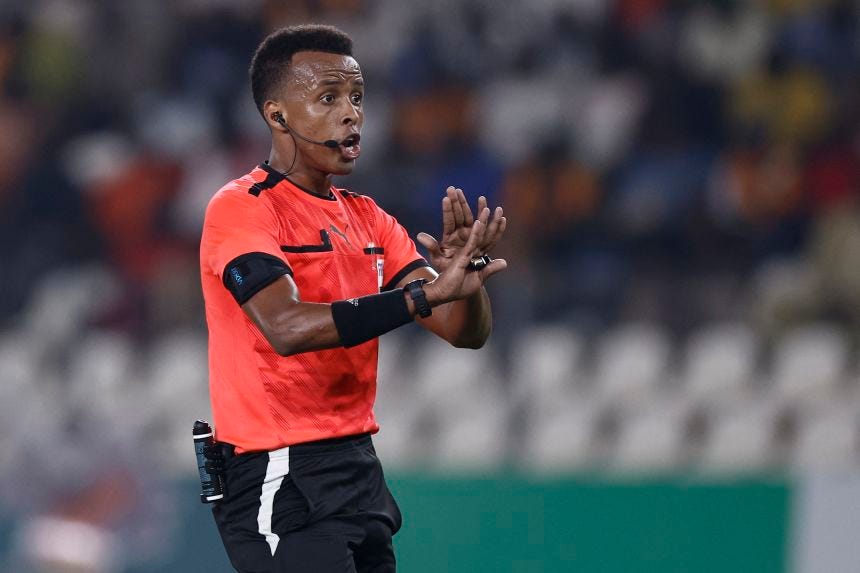
Somali soccer referee Omar Abdulkadir Artan returned to Mogadishu on Wednesday after being denied entry to the United States ahead of the World Cup. Reuters reported that Artan, Africa’s referee of the year in 2025, had been set to become the first Somali official at the tournament. U.S. authorities said he was inadmissible because of vetting concerns, while Somali officials said he had been issued a diplomatic passport and made unsuccessful diplomatic efforts to get him admitted [19].

FIFA President Gianni Infantino said FIFA could not override government immigration decisions and defended the organization’s handling of visa issues [20].
Why it matters: Sports likes to sell itself as borderless until the border decides who gets to stand on the field. The Black diaspora, Somali communities, African professionals, Muslim travelers, and fans from travel-ban countries are learning that global events hosted by America still pass through American suspicion. The World Cup opened with the gate doing the talking.
11. Delaney Hall’s inside story stayed smaller than the protest footage
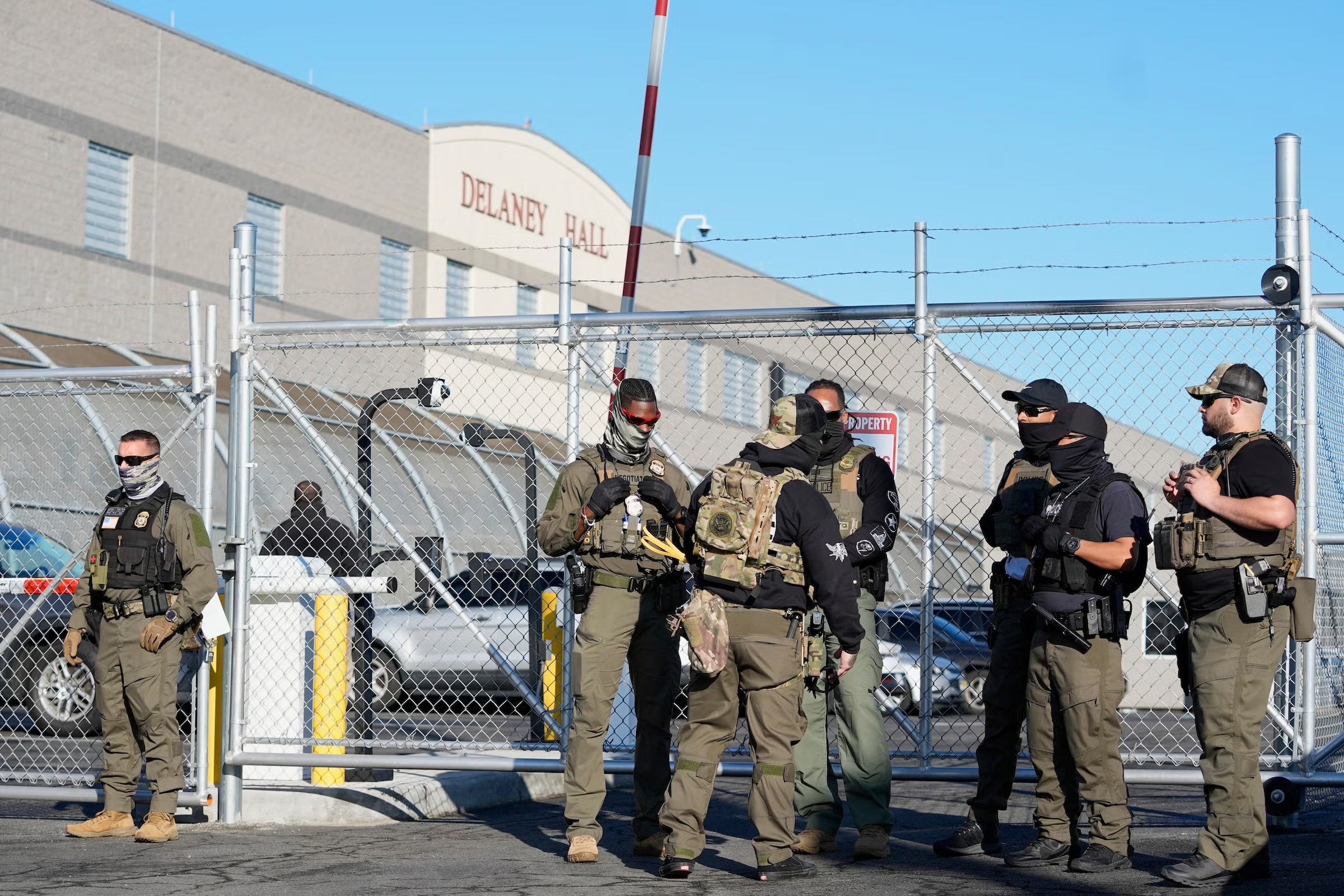
The American Friends Service Committee reported Tuesday that hundreds of detained immigrants at Delaney Hall, an ICE detention center in New Jersey, were on labor and hunger strike. AFSC said the public conversation had focused heavily on confrontations outside the facility while the story inside involved detained people, families, and supporters pushing against detention conditions. The report highlighted the case of Ariadna Zumba, an 18-year-old high school senior who was detained and later released amid the strike [21].
Why it matters: Detention systems depend on attention stopping at the fence line. Immigrants, students, workers, parents, and Black and brown families inside detention are not scenery for protest coverage. Their labor, hunger, fear, paperwork, and release battles are the story. If the camera only sees the gate, the state wins twice.
12. World Cup health surveillance began under a measles shadow
Public-health teams are preparing for World Cup disease risks as millions of fans travel across North America. AP reported that Georgetown and MedStar Health are operating a Health Security Operations Center that will send daily situation reports on disease trends to public-health agencies, hospitals, emergency managers, and other officials. Measles is a top concern, with AP reporting more than 2,000 U.S. cases this year and more than 11,000 in Mexico [22]. The CDC reported more than 2,000 confirmed U.S. measles cases and 30 outbreaks in 2026 [23].
Why it matters: Public health is infrastructure until it gets treated like vibes. Unvaccinated children, immunocompromised people, pregnant patients, low-income families, undocumented people afraid of medical systems, disabled people, and workers in hotels, airports, stadiums, restaurants, and transit are on the front line of mass-event disease risk. The virus does not care who bought the luxury ticket.
13. Southern Baptists advanced a formal ban on women pastors
On Wednesday in Orlando, the Southern Baptist Convention voted 6,028 to 2,026 to advance a constitutional amendment banning churches with women pastors. AP reported that the amendment exceeded the required two-thirds threshold and would require another two-thirds vote next year to become part of the SBC constitution. The amendment would exclude churches that affirm, appoint, or endorse women serving in pastoral functions, especially preaching to the congregation [24].
Why it matters: Gendered power does not only move through legislatures and courts. It moves through pulpits, bylaws, membership rules, and religious institutions that shape political imagination. Women preachers, Black women ministers, girls watching who is allowed to speak, and congregations that already rely on women’s labor while restricting women’s authority all sit inside this conflict. They want women’s service without women’s voice.
14. A senior jobs program moved onto the chopping block
MarketWatch reported Wednesday that Trump’s proposed 2027 budget would eliminate the $395 million Senior Community Service Employment Program, which provides job training to low-income adults 55 and older. The program served more than 42,000 participants in 2023, and the affected population includes veterans, disabled people, people with limited education, people with limited English skills, and people at risk of homelessness [25].
Why it matters: Work requirements become cruelty when the bridge to work gets cut. Older workers, poor seniors, disabled adults, veterans, and people pushed out of stable employment are being told to prove labor-force attachment while a program built for that attachment is targeted for elimination. The state says work. Then it cuts the ladder.
15. Election-denial money traveled through nonprofit plumbing
The Guardian reported Thursday that the Fair Elections Fund, linked to Trump allies Cleta Mitchell and Heather Honey, helped finance a network that pushed doubt about election certification and other voting narratives. The fund sent $300,000 to the American Principles Project Foundation, which paid for ads suggesting certification was optional. The Guardian also reported that the fund gave money to groups tied to election-denial infrastructure and SAVE Act advocacy [26].
Why it matters: Democracy can be attacked with mobs, but it can also be attacked with tax forms, nonprofits, ad buys, influencer networks, and clerk-level pressure campaigns. Latino voters, naturalized citizens, Black voters, local election workers, and bilingual communities are often the targets when “noncitizen voting” panic becomes a funding strategy. The lie got a routing number.
Representation Check
The machinery today did not fall on a generic public. It named some people directly and hid others under polite nouns.
Black women were present where the brief’s sources were loudest and where they were too quiet. They were inside the Florida map fight as voters, organizers, church members, public workers, and community anchors whose political power can be diluted before ballots are cast [11][12]. They were inside the reproductive-health fight in New Jersey, not as decoration, but as patients, providers, mothers, and advocates in a country where reproductive access and racial health inequity already overlap [16][17][18]. They were inside the disparate-impact rollback because Black women often meet discrimination through neutral rules that produce unequal outcomes [8][9].
LGBTQ people, especially trans youth and Black LGBTQ communities, were visible in the DOJ subpoena fight and the New Jersey shield bill. The buried issue is privacy. The state is not just arguing over care. It is trying to enter the record room [15][16][17].
Black immigrants and the Black diaspora were visible in the $70 billion immigration-enforcement bill, Delaney Hall, and Omar Artan’s World Cup exclusion [1][19][21]. “Immigrants” is too broad when Haitian, Somali, African, Caribbean, Afro-Latino, Muslim, and Black migrant communities experience enforcement through racialized suspicion.
Disabled people, poor seniors, rural voters, pregnant patients, older workers, and veterans were present in Shasta County’s mail-voting fight, World Cup disease surveillance, SCSEP cuts, and civil-rights enforcement rollbacks [14][22][23][25]. The broad nouns hide the edge. “Voters” can mean Black voters and disabled voters. “Patients” can mean trans youth and pregnant patients. “Workers” can mean older workers trying not to fall through a policy trap.
Our Time Press put the Black voting-rights warning plainly this week: when courts demand proof of intent while accepting discriminatory results, Black political power becomes easier to damage and harder to defend [27]. That is today’s shadow.
Closing Note on Coverage Gaps
The coverage hierarchy revealed a familiar shape. National media can still find the bright lights: war, Trump, Congress, oil, intelligence, the courts. But power rarely needs a full stage to move. Sometimes it moves through a county election measure. Sometimes it moves through a hospital subpoena. Sometimes it moves through a denominational vote. Sometimes it moves through a budget line for older workers. Sometimes it moves through a referee who earned the field and still got stopped at the door.
Several lanes deserved more fresh, direct reporting than the 48-hour window produced. There was not enough new, verifiable HBCU or Black church civic reporting to force into a full item today, even though the church story and voting-rights story both have obvious Black institutional meaning. Native voters were not centered in today’s strongest fresh stories, even though mail voting, rural access, ID demands, and federal voter-data machinery all carry clear risk for Native communities.
That is the blackout. Harm does not disappear because national attention skipped the address. XVOA keeps the file open.
Desk Note
The fundraiser is now $105 short of the $1,200 goal. That is the whole thing. Not a sermon. Not a second essay hiding at the bottom. Just the plain operating math.
If XVOA matters to your morning, your feed, your political sanity, or your ability to see the machinery before the damage gets normalized, help finish this. The strongest way to support the desk is a paid subscription because it stabilizes the work beyond one urgent gap. An $8 monthly subscription does more than tip the jar. It helps make the Brief predictable, resourced, and less dependent on last-minute scrambling.
If a subscription is not possible, Buy Me a Coffee is the backstop. The gap is $105. Close counts in horseshoes, not in keeping a Black-led intelligence desk running.
If money cannot move today, restack the Brief and send it to one person who needs a steadier read on the machinery.
Don’t Do It.
Sources
[1] AP, “Trump signs bill giving nearly $70B to his immigration enforcement agenda through end of his term” - Supports the immigration-enforcement funding totals, House vote, and through-term funding structure.
[2] White House, “The Secure America Act Ends Democrat Obstruction” - Supports the administration’s framing of the Secure America Act and its stated ICE and Border Patrol funding goals.
[3] AP, “The Latest: US says it is striking targets in Iran again as tensions escalate” - Supports the timeline of U.S. strikes, tanker action, and Trump’s public comments on escalation.
[4] Reuters, “Oil falls as traders digest escalation in US-Iran strikes” - Supports the oil-market reaction, Strait of Hormuz risks, and broader price effects tied to escalation.
[5] PBS NewsHour, “June 10, 2026 full episode” - Supports the framing of energy prices and inflation pressure during the U.S.-Iran escalation.
[6] Reuters, “With surveillance program at risk, Trump tries to end standoff over spy chief” - Supports the Section 702 deadline, Bill Pulte dispute, and congressional standoff.
[7] Brennan Center for Justice, “Section 702 of the Foreign Intelligence Surveillance Act, Explained” - Supports background on Section 702, warrantless surveillance, and privacy concerns.
[8] Reuters, “US transport agency rescinds ‘disparate impact’ civil rights regulation” - Supports the DOT disparate-impact rollback and the administration’s shift toward intentional-discrimination standards.
[9] Reuters, “Justice Department says agency guidance on worker civil rights is unlawful” - Supports DOJ’s attack on EEOC disparate-impact guidance and the legal framework around employment discrimination.
[10] Reuters, “States sue Trump administration over anti-DEI terms in federal contracts” - Supports the lawsuit by 19 states and Washington, D.C., challenging anti-DEI contract terms.
[11] AP, “Florida court allows use of new US House districts drawn by Republicans for midterm elections” - Supports the Florida Supreme Court ruling, map dispute, and potential House-seat effects.
[12] Reuters, “Florida Supreme Court leaves Republican congressional map in place” - Supports the national redistricting context and voting-rights implications of the Florida map ruling.
[13] ACLU of Maryland, “Court Schedules First Hearing in DOJ Lawsuit Demanding Maryland Voter Data” - Supports the Maryland voter-data case, hearing date, requested records, and intervenor concerns.
[14] The Guardian, “A conservative California county is trying to kill mail-in voting” - Supports Shasta County Measure B, mail-voting restrictions, photo ID, hand-counting, and state-law concerns.
[15] Reuters, “US judge rejects ‘unprecedented’ bid to block DOJ transgender health subpoenas nationwide” - Supports the Maryland ruling on DOJ subpoenas for transgender youth health records.
[16] ACLU of New Jersey, “State House Rally to Support S2260/A2218” - Supports the June 11 advocacy action around New Jersey’s reproductive and gender-affirming care shield legislation.
[17] New Jersey Legislature, “Bill S2260” - Supports official bill language creating the crime of interference with reproductive or gender-affirming health services.
[18] Garden State Equality, “LGBTQ+, bodily autonomy rights groups applaud NJ Senate’s passage of reproductive, transgender healthcare providers shield bill” - Supports the Senate passage, vote count, and expected Assembly action.
[19] Reuters, “Somali soccer referee who was denied US entry comes home to hero’s welcome” - Supports Omar Abdulkadir Artan’s denial of entry, return to Somalia, and World Cup consequences.
[20] Reuters, “FIFA chief Infantino defends visa handling, ticket prices on eve of World Cup” - Supports FIFA’s response to visa issues and Artan’s case.
[21] American Friends Service Committee, “What’s really happening at Delaney Hall?” - Supports reporting on labor and hunger strikes at Delaney Hall and conditions inside the detention center.
[22] AP, “Health sleuths are watching for disease threats during the World Cup” - Supports World Cup public-health surveillance, measles concerns, and disease-monitoring infrastructure.
[23] CDC, “Measles Cases and Outbreaks” - Supports current U.S. measles case and outbreak data.
[24] AP, “Southern Baptists vote to advance a formal ban on churches with women pastors” - Supports the SBC vote count, amendment process, and gendered church-governance implications.
[25] MarketWatch, “This proposed federal budget cut could eliminate job training for 42,000 vulnerable seniors” - Supports the proposed SCSEP elimination and impact on low-income older workers, veterans, disabled people, and vulnerable seniors.
[26] The Guardian, “Fund linked to key Trump allies backed push to sow doubt about 2024 election” - Supports Fair Elections Fund reporting, election-certification ads, nonprofit funding flows, and election-denial infrastructure.
[27] Our Time Press, “Black Voting Rights Today, Unprotected by the Federal Government” - Supports Black press framing on voting-rights erosion, intent standards, and Black political power.
So glad you keep paying attention.
I appreciate your very THOROUGH reporting . There is so much to learn in your coverage, all gathered in one place.