

Blackout Brief Daily | June 16, 2026
So damn reliable you forget how good it is. Like COOL AC, baby.
Small desk note after Five Things That Matter Today about the daily operating gap.
First the charge for today.
Today’s Charge
When voters are asked to trust chaos, somebody has already turned confusion into a governing tool. The loud stories today were war diplomacy, oil prices, Supreme Court calendars, and another round of Trump-centered legal spectacle. The buried story was how the same machinery moved through smaller doors: voter files, bond hearings, Medicaid proof rules, pollution permits, workplace enforcement, and election procedures. Power did not need to shout. It asked for records, changed counting rules, narrowed exemptions, and made civil rights sound technical. The people likely to pay first are Black voters, immigrants, trans workers, sick patients, West Oakland families, and poor people forced to prove they deserve not to be crushed.
Five Things That Matter Today
A preliminary U.S.-Iran agreement promised a 60-day ceasefire extension and reopening of the Strait of Hormuz, but the terms remain opaque and the energy machinery immediately began pricing who benefits from restored supply. [1][2]
The Supreme Court agreed to hear whether certain immigrants can be held for long periods without bond hearings, turning due process into a calendar question for people already trapped inside detention. [3]
Reporting on Justice Department scrutiny around Gavin Newsom’s circle and ICE access to local voter files showed two faces of the same problem: federal power using investigative machinery to reach political enemies and election records. [4][5]
Indiana joined an effort to treat mifepristone as a drinking-water contaminant while a federal judge dismissed a challenge over transgender workplace protections, which is what backlash looks like when it learns to speak administrative law. [7][8]
The death of Haitian asylum seeker Daphy Michel was ruled a homicide after her release from ICE custody, while new Medicaid guidance threatens sick patients with more proof burdens. The paperwork is not neutral when it decides who gets abandoned. [9][11]
Desk Note: $50 a Day Keeps The Panic Away
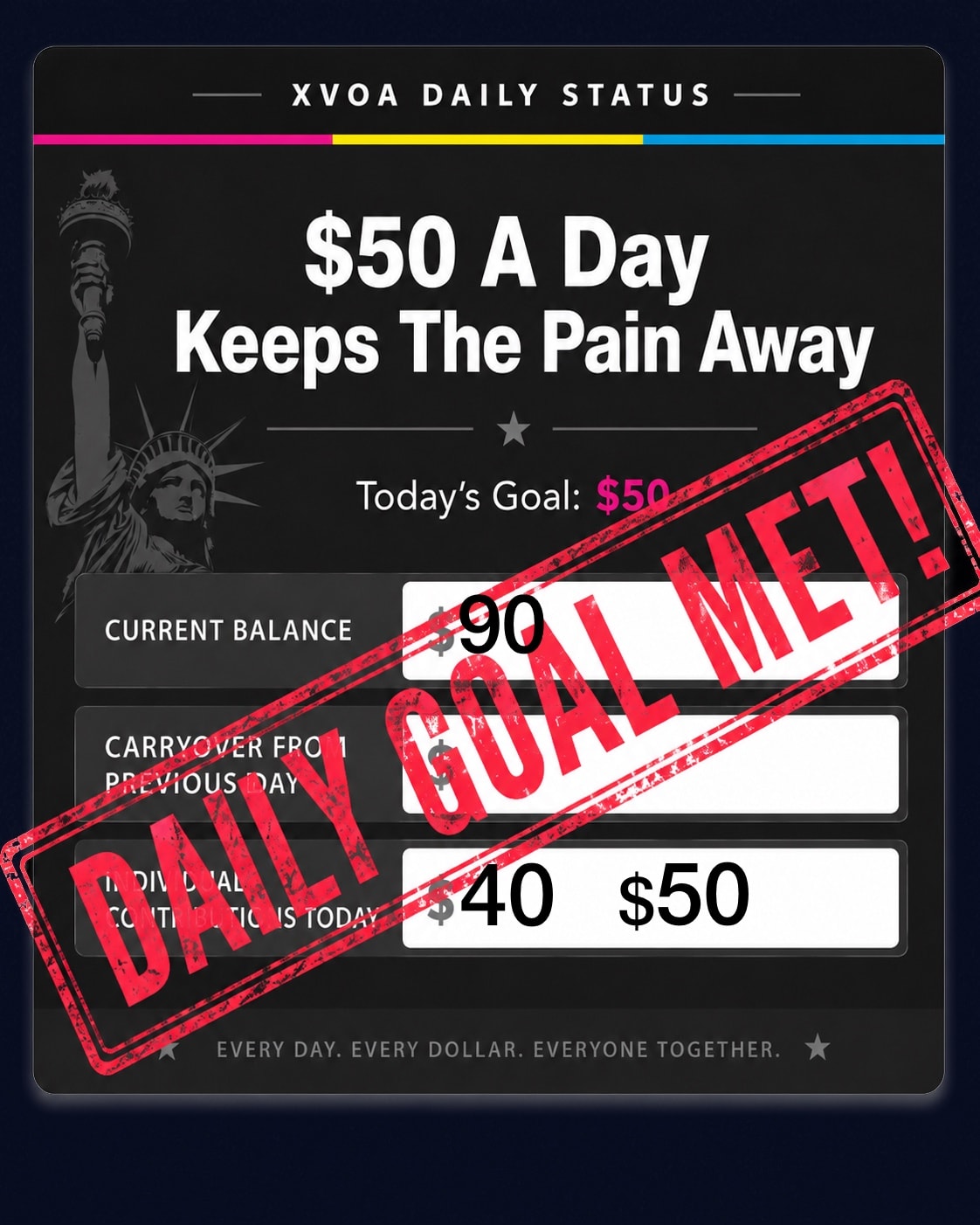
➡️5-16-26 5:30PM Update: Daily goal met! Thank you for the coffee!
XVOA did not arrive at this number by accident. Over time, every fundraiser, subscription push, and reader-support drive pointed to the same practical question: what is the minimum amount of support required each day to keep the desk running without constantly stopping to worry about funding?
After looking at the recurring costs of publishing, maintaining the operation, and keeping the work moving forward, the answer turned out to be surprisingly modest. The daily operating floor is $50. That figure is not an emergency target or a sign that the project is in trouble. It is simply the baseline that allows the desk to function consistently. The purpose of highlighting it is to give you a clear context about what keeps the lights on and why small contributions matter. When that floor is covered, the focus stays on reporting, analysis, and publishing rather than scrambling to fill gaps.
The reality is almost boringly simple: 10 readers giving $5 clears the operating floor for the day. Or 2 readers giving $25. Or 1 reader having a particularly generous day. That is the scale we are talking about. The goal is not to find a billionaire patron or run a constant fundraising campaign. It is simply to cover the daily floor consistently so the desk can keep operating without unnecessary friction.
$50 a day keeps the panic away and gives the desk enough breathing room to keep doing the work with discipline instead of emergency fumes. Paid subscriptions are still the first and best way to stabilize XVOA:
Buy Me a Coffee is the backstop for readers who for whatever reason cannot subscribe but still want to help hit the daily mark.
If money is not possible today, RESTACK the Brief and send it to one person who can possibly contribute.
The Hierarchy Audit
National coverage had an obvious hierarchy today. War and oil came first. The Supreme Court came next. Then came the familiar ritual of asking whether federal law enforcement is being used as a political weapon. Those stories matter. They are not noise. But the blackout sits in the way the same state logic arrived farther down the chain.
The deeper pattern was not only what Washington announced. It was what institutions requested, reclassified, dismissed, or quietly prepared to enforce. ICE did not need a grand speech to reach voter files. Indiana did not need a direct abortion ban to join a mifepristone contamination gambit. Medicaid did not need to announce cruelty as cruelty. It could call the burden “documentation.” Georgia did not need to disenfranchise voters in bright lights. It could let a voting-system rule collide with a special election.
That is the hierarchy XVOA is tracking today: the spectacle made national power visible, while the machinery underneath asked voters, patients, workers, and immigrants to trust chaos.
Top Breaking National Stories
1. The U.S.-Iran Deal Promises Quiet, but the Machinery Still Has the Microphone
The United States and Iran have signed a preliminary agreement meant to extend a ceasefire for 60 days, reopen the Strait of Hormuz, and create a framework for a fuller peace arrangement, according to Reuters. President Donald Trump said the deal was “all signed” and that Vice President JD Vance would attend a formal signing in Geneva on Friday, but the key terms were not made public. The agreement reportedly includes sanctions relief and a reconstruction package for Iran, while leaving unanswered how the truce would be enforced and what would happen after the temporary window ends. [1]
Oil markets moved immediately. Reuters reported that prices fell to three-month lows as traders weighed the possibility of resumed flows through Hormuz, a chokepoint through which roughly one-fifth of global oil supply moves. Analysts began revising expectations before the public had a clear view of the deal’s mechanics. [2]
Why it matters: A ceasefire can save lives, and that matters first. But the machinery underneath is not only diplomatic. It is energy pricing, shipping access, sanctions architecture, reconstruction leverage, and the public management of uncertainty. The people furthest from the signing room, including poor families already squeezed by fuel costs, military families waiting for escalation signals, and communities living under the shadow of war, do not get the luxury of treating unclear terms as market texture. When the details stay hidden, the powerful trade on ambiguity while everyone else waits for consequence.
2. The Court Will Decide How Long Detention Can Hide from Due Process
The Supreme Court agreed on Monday to hear the Trump administration’s appeal in a case involving whether certain immigrants can be detained for extended periods without bond hearings. The case concerns immigrants with criminal convictions who are detained after completing their sentences and placed into deportation proceedings. Reuters reported that the justices will hear the case in the term that begins in October. [3]
The case grew out of challenges brought by immigrants including a Dominican green-card holder identified as G.M., who was detained for 21 months, and Carol Black, a Jamaican green-card holder detained for seven months. The 2nd U.S. Circuit Court of Appeals ruled that due process required bond hearings after six months of detention and that the government had to prove flight risk or danger by clear and convincing evidence. The administration is asking the Court to reject that framework. [3]
Why it matters: This is not a soft procedural dispute. It is about whether the state can convert a person’s immigration case into a long confinement without meaningful review. Black immigrants from the Caribbean and Africa, Latino immigrants, Asian immigrants, Muslim immigrants, and poor immigrants without easy access to counsel are especially exposed when detention becomes the default and the hearing becomes optional. A bond hearing is not mercy. It is one of the few places where the state has to explain why a human being is still in a cage.
3. The Newsom Investigation Story Is Really About Who Gets the Investigative Machine Pointed at Them
California Gov. Gavin Newsom said the Justice Department is investigating him and his family, while the Associated Press reported that a person familiar with the matter denied that the probe specifically targets the governor. AP also reported that people around Newsom, including his wife and former chief of staff Dana Williamson, have faced federal scrutiny involving taxes, finances, and related matters. Newsom has not been accused of wrongdoing. The Justice Department declined comment. [4]
That distinction matters, but it does not end the story. The reporting arrives amid broader concerns that Trump’s Justice Department has pursued investigations or prosecutions involving perceived political opponents, including former FBI Director James Comey, New York Attorney General Letitia James, former CIA Director John Brennan, and former Trump-aligned attorney Sidney Powell. Newsom’s office said agents had intensified questioning of people around him about business, financial, and personal matters. [4]
Why it matters: The accusation here should not be inflated beyond the evidence. But the pattern is still visible enough to examine. Law enforcement does not become harmless because the target line is technically disputed. When federal investigative power begins circling political opponents, families, aides, donors, and associates, the machinery sends a message before any charge is filed. A subpoena can be a search for truth. It can also become a weather system people learn to fear.
4. ICE Obtained Local Voter Files, and the Election Machine Opened a Side Door
Axios reported that ICE investigators obtained individual voter files from local election officials in Texas and North Carolina, bypassing state officials and going directly to local offices. The files were reportedly shared in Webb County, Texas, and Forsyth County, North Carolina. The requests came as the Trump administration expanded a multi-agency effort to identify alleged noncitizen voting through state and local election systems. [5]
The records can include names, addresses, dates of birth, driver’s license numbers, and voting histories. Axios reported that one Texas official said only two alleged noncitizen voting cases had surfaced out of roughly 150,000 voters. DHS defended the effort as necessary to root out fraud and protect election integrity. The same reporting noted that federal officials have been pushing local election administrators toward immigration-verification systems and warning of consequences for noncitizens who register or vote. [5]
Why it matters: This is the story behind the slogan. “Election integrity” becomes something else when immigration enforcement reaches into voter records. Black immigrants, Latino immigrants, naturalized citizens, students, poor voters, and voters with complex paperwork histories all know how quickly a file can become a threat. The danger is not only wrongful removal from a roll. The danger is making the act of being in the voter file feel like exposure.
5. The Supreme Court Will Revisit Whether Six People Can Carry the Weight of a Criminal Jury
The Supreme Court agreed Monday to decide whether states may continue using six-person juries in criminal cases, a practice allowed in Florida and several other states. The case comes from Florida, where Hamed Kian challenged his conviction by arguing that the Sixth Amendment requires a 12-person jury. The Court allowed six-person juries in a 1970 decision, over a dissent by Justice Thurgood Marshall. [6]
AP reported that Florida warned a reversal could threaten thousands of convictions. The Court’s decision to revisit the issue follows its 2020 ruling requiring unanimous jury verdicts in serious criminal cases, a decision that forced states to confront how older jury practices had been shaped by efforts to weaken Black juror power. [6]
Why it matters: Jury size sounds technical until you remember who the criminal system reaches first and hardest. Smaller juries can change deliberation dynamics, reduce the range of lived experience in the room, and weaken the odds that one juror can slow the machinery down. Black defendants, poor defendants, and defendants facing overburdened public defense systems have the most at stake when a jury becomes easier for the state to move through. The question is not only how many people sit in the box. It is how much community conscience the state must face before it can convict.
Stories Buried Beneath the National Headlines
6. Indiana Found a New Door into the Abortion Pill Fight
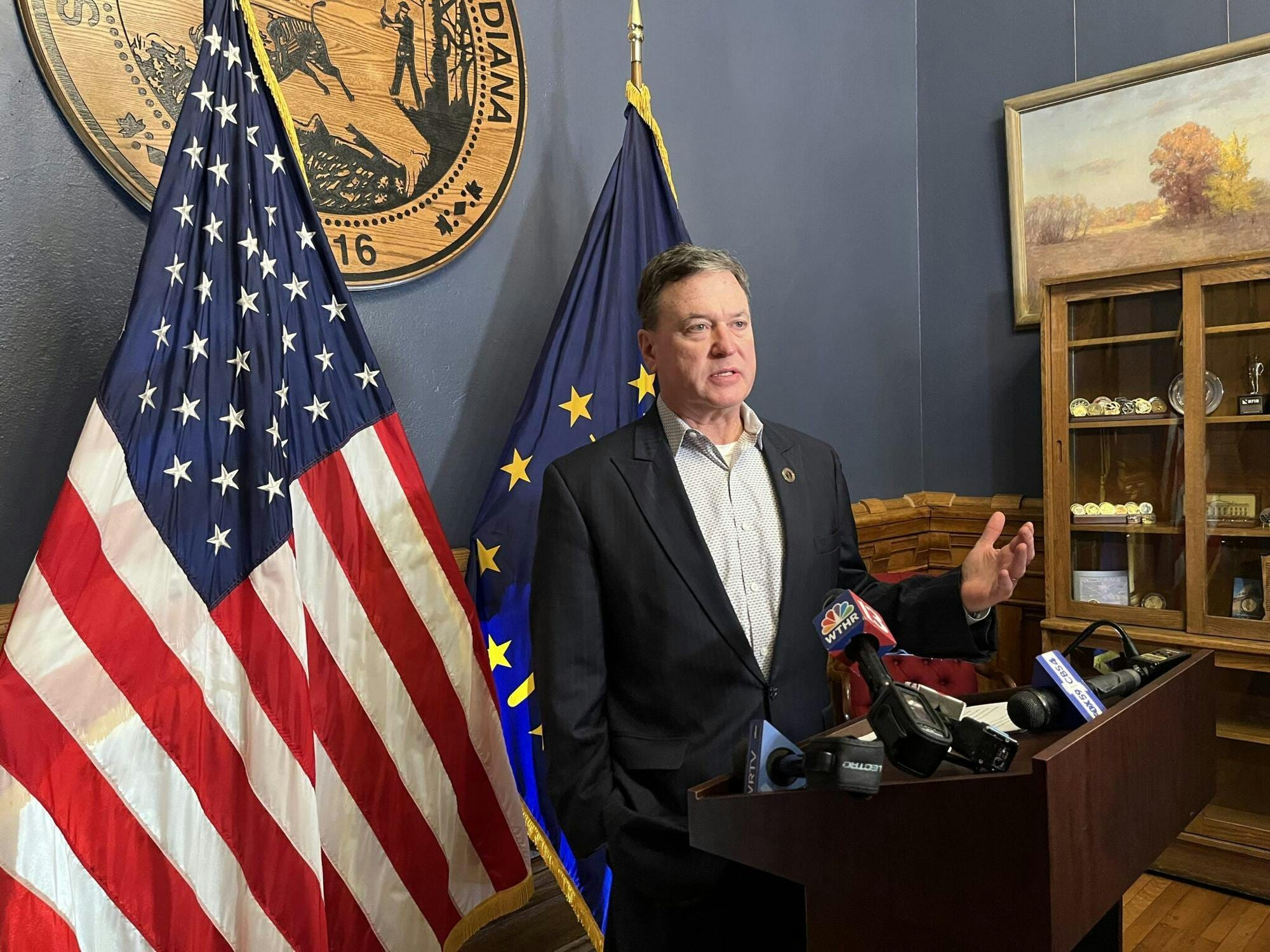
Indiana Attorney General Todd Rokita joined a push asking the Environmental Protection Agency to add mifepristone to a federal list of possible drinking-water contaminants. Axios Indianapolis reported that the request frames abortion medication as an environmental hazard, despite limited evidence for the claim. The ACLU of Indiana called the move another attempt to restrict a safe, FDA-approved medication through fear and intimidation. [7]
Why it matters: This is what happens when a direct ban becomes politically or legally harder to sell. The machinery changes costume. Reproductive control moves through environmental law, federal lists, agency petitions, and claims about contamination. Pregnant patients, poor women, young women, rural patients, and Black women in states with thin abortion access already know the game. The point is not only to win one lawsuit. The point is to make care feel legally haunted before anyone reaches the clinic.
7. A Federal Judge Dismissed a Challenge over Transgender Workplace Protections
A federal judge dismissed a lawsuit accusing the Equal Employment Opportunity Commission of refusing to enforce workplace protections for transgender workers. AP reported that U.S. District Judge Deborah Boardman Russell dismissed the case Friday on jurisdiction and standing grounds. The lawsuit had challenged what advocates described as a “Trans Exclusion Policy” following the Trump administration’s directive recognizing only two sexes. [8]
Why it matters: This is not just about one courtroom loss. It is about how civil-rights enforcement can be narrowed without Congress passing a new statute. Trans workers, including Black trans workers and low-wage LGBTQ workers, are most exposed when agencies signal that discrimination claims may be treated as politically inconvenient. A right that exists on paper but cannot find an agency willing to enforce it becomes a locked door with a nice plaque.
8. Daphy Michel’s Death Was Ruled a Homicide After ICE Released Her into Winter
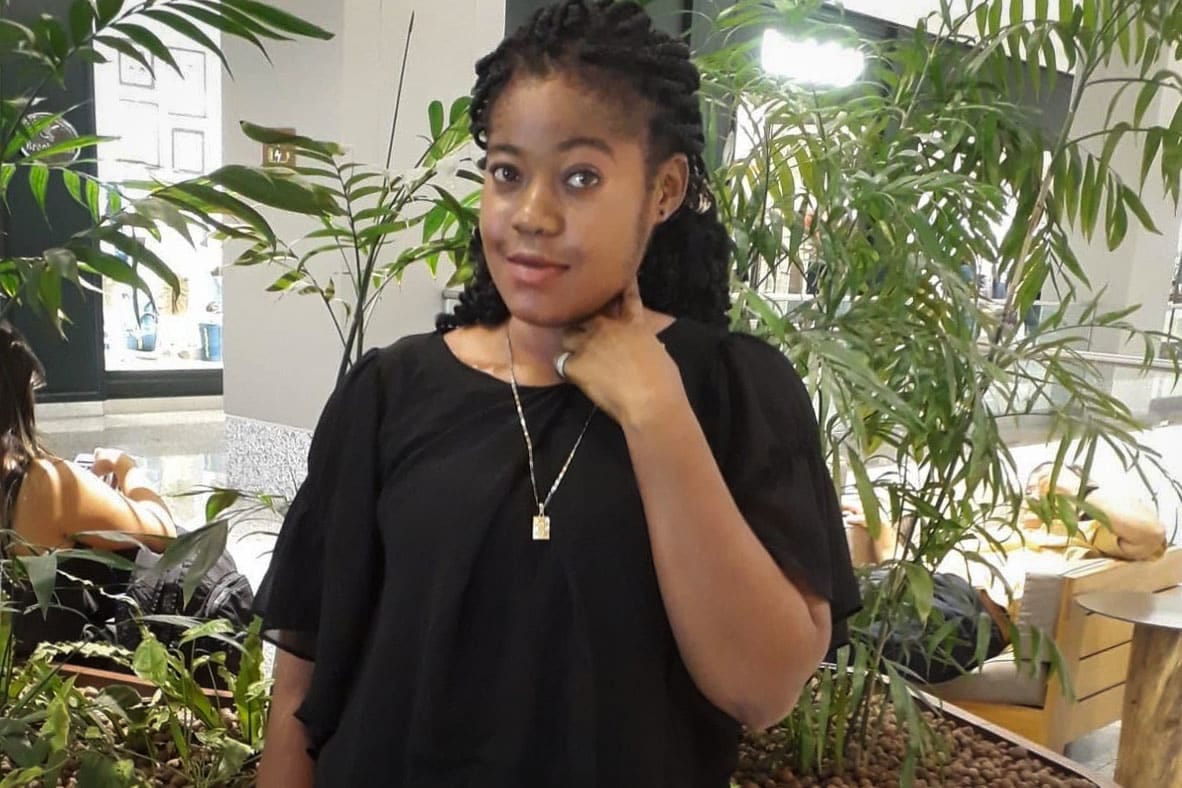
The death of Daphy Michel, a 31-year-old Haitian asylum seeker, was ruled a homicide after she died of hypothermia at a Pittsburgh bus shelter in March. AP reported that Michel had severe untreated mental illness, a language barrier, and a pending immigration hearing when ICE released her from custody with an ankle monitor. Her family’s attorney said a lawsuit against ICE is expected. ICE said Michel received her belongings, a charged phone, and transportation after release. [9]
Why it matters: The word homicide here does not automatically mean a criminal charge. It means her death was caused by the actions of another, according to the medical ruling. That is enough to force the moral question. A Haitian Black woman seeking asylum moved through jail, immigration custody, mental-health neglect, winter exposure, and language isolation until the system called her free and left her unsafe. Release without care can become abandonment with paperwork.
9. West Oakland Is Being Asked to Breathe the Coal Economy Again
The Guardian reported that Trump’s plan to use emergency and wartime powers to support coal projects includes hundreds of millions of dollars for a proposed West Oakland coal export terminal. Local organizers and environmental justice groups have fought the terminal for years, arguing that coal dust and related pollution would fall on a community already shaped by redlining, port traffic, freeway pollution, and industrial burden. [10]
California Assemblymember Mia Bonta introduced legislation requiring a full environmental impact report for coal-related facilities, describing the project as a generational threat to West Oakland. [10]
Why it matters: This is the fossil-fuel story national climate coverage often flattens. It is not only carbon. It is where the dust lands. West Oakland is a historically Black community where infrastructure has already treated residents as acceptable collateral. When wartime language is used to move coal, the war being waged is also against the lungs of people the state has already sacrificed.
10. Medicaid Paperwork Is Becoming a Health Threat
AP reported that new Trump administration guidance could make it harder for medically frail Medicaid recipients to qualify for exemptions from work requirements. The story centered on sick patients such as Brandon in North Carolina, who fears losing coverage while dealing with cancer-related care. The guidance says medical conditions must significantly impair a person’s ability to meet work rules, with proof requirements looming as the policy takes effect. [11]
The Commonwealth Fund separately projected that federal cuts to Medicaid, Affordable Care Act subsidies, and SNAP under H.R. 1 could shrink state economies by billions, eliminate large numbers of jobs, and leave millions without health insurance or food assistance. [12]
Why it matters: The public is often told that work requirements target people who refuse responsibility. The actual machinery targets people who cannot produce the correct proof fast enough. Disabled people, cancer patients, rural patients, poor workers, caregivers, and people with unstable housing or limited internet access will pay first. A sick person should not have to become a paperwork expert to keep chemotherapy from turning into a debt sentence.
11. D.C. Voters Are Choosing Local Leaders Under Federal Threat
Washington, D.C., voters headed to the polls Tuesday for mayoral and delegate primaries in a city facing intensified federal pressure. AP reported that Mayor Muriel Bowser is not running and Del. Eleanor Holmes Norton is stepping down, creating the first election in a generation without both familiar incumbents. The city is also using ranked-choice voting for the first time. [13]
The campaign unfolded after Trump expanded federal law enforcement in the city, deployed the National Guard, imposed federal cuts, reshaped landmarks, and threatened a federal takeover if progressive candidate Janeese Lewis George wins the mayor’s race. [13]
Why it matters: D.C. is not just a local race with national scenery. It is a majority-Black self-government question in a capital where Congress and the White House can still override local choice. Black residents, public workers, tenants, poor families, and immigrants are voting under the shadow of a federal government that keeps treating their city as a stage set. Home rule is not symbolic when the people trying to govern themselves can be threatened from across town.
12. A Judge Ordered National Park History Put Back Where the White-Out Tried to Erase It
A federal judge ordered the Trump administration to restore National Park Service webpages and exhibits changed under an executive order targeting material deemed negative about American history. AP reported that the order requires weekly status reports and restoration of altered or removed material involving slavery, civil rights, Native history, labor history, climate, and LGBTQ references. [14]
The challenged changes affected content at sites including Independence National Historical Park, where references to enslaved people connected to George Washington were altered, and Lowell National Historical Park, where labor history material was removed. [14]
Why it matters: Memory is infrastructure. The state does not only govern through police, courts, and budgets. It governs through what it allows the public to remember. Black history, Native history, labor history, LGBTQ history, and climate truth become dangerous when they interrupt the innocence story power wants on the wall. When the government reaches for the white-out, it is admitting the archive still has teeth.
13. Georgia’s Voting System Is Running into Its Own Deadline
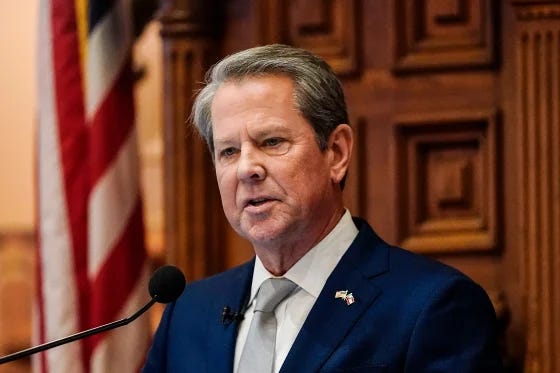
Georgia Gov. Brian Kemp called a special legislative session that will address, among other issues, the state’s ban on using QR codes for official vote tabulation after July 1. AP reported that the law takes effect before the July 28 special election to replace the late U.S. Rep. David Scott, with early voting set to begin July 6. Election officials are navigating conflicting guidance and a possible backup plan involving hand-marked paper ballots. [15]
Why it matters: Voter suppression does not always announce itself as exclusion. Sometimes the machinery produces confusion, delay, and local officials caught between state law, emergency guidance, technology limits, and partisan pressure. The late David Scott’s district includes Black voters whose representation should not be treated as an administrative experiment. A ballot-counting rule can become a civil-rights problem the minute voters are asked to trust chaos.
14. Nevada Republicans Picked an Election Conspiracy Promoter for Secretary of State
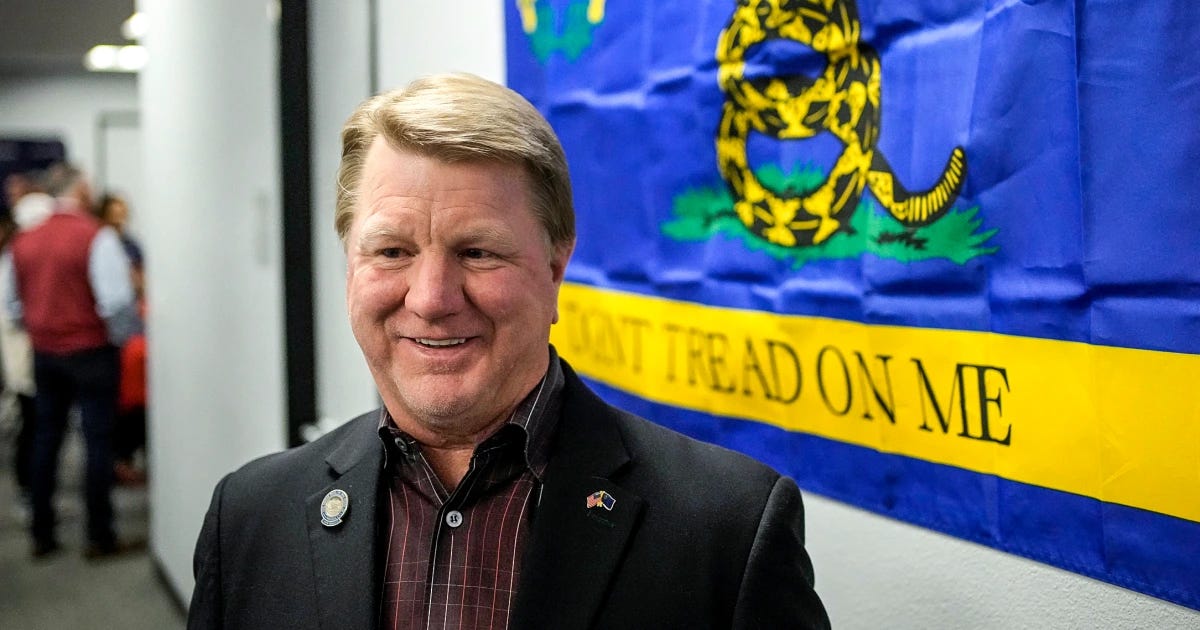
Jim Marchant won Nevada’s Republican nomination for secretary of state, setting up a rematch against Democratic incumbent Cisco Aguilar. AP reported that Marchant has promoted false claims about election fraud, attacked voting machines and mail ballots, and called for hand counting ballots. The secretary of state oversees elections in Nevada, a presidential battleground. [16]
Marchant previously lost the 2022 race for the office and has been a prominent election-denial figure. AP noted that criminal charges against Nevada’s fake electors remain pending. [16]
Why it matters: Election denial is not just speech. It becomes machinery when the person spreading it seeks control over certification, counting systems, voter guidance, and election administration. Black voters in Las Vegas, Latino voters, Native voters, union households, students, and working-class voters all depend on election offices that are boring on purpose. The coup does not always wear horns. Sometimes it runs for secretary of state.
15. The 988 LGBTQ Youth Line May Return, but the Shadow Remains
Them reported that the Trump administration has said it is working to restore specialized LGBTQ+ youth services within the 988 suicide and crisis lifeline by the end of the year, after Congress directed restoration in fiscal 2026. The service had been eliminated in 2025, despite having helped more than 1.5 million LGBTQ youth before shutdown. Advocates remain skeptical because the administration’s anti-trans executive order may shape how services are restored. [17]
Why it matters: Crisis services are not culture-war decoration. They are survival infrastructure. LGBTQ youth, especially Black LGBTQ youth, trans youth, rural queer youth, and young people in hostile families or schools, need support that understands the specific danger they are in. A hotline that returns with political conditions attached is not the same as a door fully reopening.
Representation Check
Today’s machinery found marginalized people through files, exemptions, records, and administrative thresholds. Black women appeared most clearly where reproductive power and state neglect met: in the mifepristone fight, in the Medicaid and public-benefits burden, and in Daphy Michel’s death as a Haitian Black woman released into conditions she could not survive. The broad noun “immigrant” would have hidden her Blackness, her Haitian identity, her mental-health vulnerability, and the language barrier that made abandonment easier to bureaucratize.
LGBTQ people were present in the EEOC case and the 988 youth crisis-line story, but the sharper diagnosis is that rights can be weakened without a headline ban. Agencies can decline enforcement. Courts can dismiss on standing. Services can return under anti-trans conditions. Black LGBTQ people sit at that intersection with less institutional cushion, especially in low-wage work, schools, housing, and crisis care.
Black immigrants and the broader Black diaspora were not a side category today. The detention case before the Supreme Court includes Caribbean immigrants. Michel’s case shows how immigration custody, disability, language, and Black migrant vulnerability can stack until no single institution claims responsibility.
Disabled people, poor people, rural communities, workers, pregnant patients, and public-benefits recipients appeared inside paperwork. The state did not need to say they were disposable. It only needed to demand proof, change a form, narrow an exemption, or make local officials carry the burden of federal choices. Native voters did not appear with enough direct reporting in this 48-hour window, which itself is a coverage warning. Election machinery coverage often says “voters” and lets Native communities vanish until a crisis arrives.
Closing Note on Coverage Gaps
The coverage hierarchy today showed the country’s old trick. It made war, oil, courts, and named political figures visible, then treated the administrative machinery as background hum. But the machinery is where policy becomes weather. It is where a voter file gets opened. It is where an immigrant waits without bond. It is where a sick patient is told to prove frailty. It is where an abortion pill becomes an alleged contaminant. It is where a Black neighborhood is asked to inhale someone else’s energy policy.
Mainstream coverage often knows how to narrate conflict when powerful men are named. It is less fluent when harm arrives through a county office, an agency memo, a technical election deadline, or a grant cancellation. That gap is not innocent. It teaches readers to notice the spectacle and miss the lever.
XVOA will keep tracking the lever. The charge today is simple: when power looks boring, look harder. That is usually when the paperwork is doing the damage.
Support XVOA
XVOA’s daily operating floor is $50. That is the number. Not a crisis mountain. Not a grand speech. Just the basic daily floor that helps keep the desk from running on emergency fumes.
$50 a day keeps the pain away. Ten readers giving $5 clears it. Two readers giving $25 clears it. One reader having a generous day clears it. The best way to stabilize that floor is still a paid subscription:
Coffee is the backstop for readers who cannot or will not subscribe but still want to help hit the day’s number:
And if money is not possible today, restack the Brief and send it to one person who keeps feeling the machinery but has not had the language for it yet.
Sources
To see the receipts activate your free subsciption.
Cause that’s the way they win elections.