

In the silence of darkness, you have closed your eyes and caught a fleeting echo of the voices you’ve been running away from throughout the day, and perhaps even your entire life. My duty as a writer is to seek out and decipher those voices you run from, just as it was my duty as a police officer to seek out the incidents that could potentially explode into a critical event.
I do this not for fame, glory, or some monetary windfall. I am compelled to do this to maintain my own sanity. So when I finish a piece of work, there is a temporary sense of inner completeness. The voices have been assuaged. The truth has been set free, and in doing so, I have been set free. Mission accomplished. If just one additional person reads whatever I’ve written and reverse-engineers the blueprints of their own mental reconciliation, then somebody else gets to feel a little of that freedom, too.
If I’ve painted the picture of a heroic writer searching for the truth at his or her own inner expense, akin to the familiar verse that says you must lose your life in order to save it, then let me rip that picture to shreds.
I, just like you, have been running from the voices. One voice in particular. That’s the voice telling me to address the biggest societal leap since agriculture, the printing press, and the Industrial Revolution.
Artificial Intelligence is artificial deception.
The invented thing that reveals something true
From my perspective, writing and the arts in general are prime examples of deception agreed upon between the writer and reader, contingent upon some revelation of truth. Suspension of disbelief is what immediately comes to mind. A more sinister kind of agreement brings us to a Russian word: vranyo.
The word broadly means lying. What interests me is its use for a false account people knowingly maintain together. The participants recognize the lie, yet the performance continues because acknowledging the truth would cost them something.[9, 10]
A painted animal on a cave wall is evidence of our capacity to represent the world.[1] I suspect that our intelligence and capacity for deception grew together. Imagination, our greatest asset, is a tool that can be used to reveal reality, but it can also be used to obscure it-even hide it from ourselves.
Where this becomes problematic is when an edifice of vranyo purports to dictate who can do what, who you are allowed to be, who’s allowed to exist, and where you’re supposed to fit in. Then the stories we tell about what is become stories about what should be, and some people get to decide where other people should be.
Agriculture and the story of female inferiority
How did agriculture promote the idea that women were inferior? Studies of traditional plough agriculture show how division of labour can crystallise into enduring beliefs about women’s ‘proper place’.[3] How one worked the land could become how one decided who belonged in the public sphere.

That history was never uniform. At Çatalhöyük, an early farming settlement, researchers found that maternal kinship played a central role among people buried within the same houses.[4] There were other ways to organize a society.
Yet female inferiority could be presented as a fact of nature. Aristotle wrote that “the male is by nature superior, and the female inferior.”[12]
That is the leap I want to examine. The difference in labor becomes the difference in human value. The society puts women in an inferior position to men, and then points to that position as proof of their rightful place. The defenders may have come to believe their own argument. By this point, altering a social institution seems tantamount to fighting the laws of nature.
Printing and the authority of the book
The printing press greatly expanded the audience for competing claims about God. Research connects its spread with the spread of the Protestant Reformation.[5] In a Europe divided by religious conflict, printed arguments could challenge authority and provide new justifications for persecution.
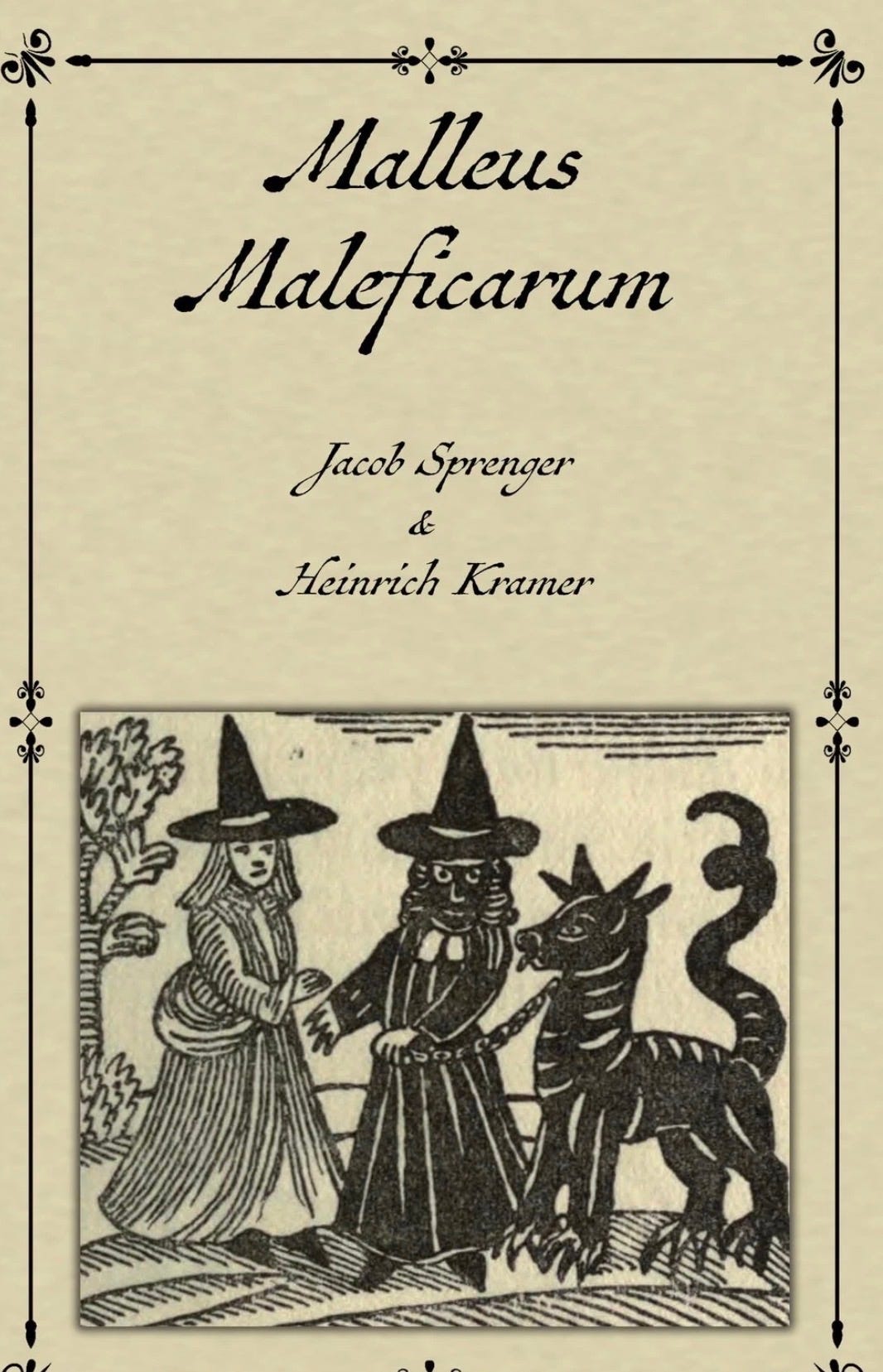
If we consider the Malleus maleficarum, a handbook for hunting witches, combined information about the devil’s doings with guidance for interrogating and condemning alleged witches. Studies on towns in central Europe have found that the printing of these handbooks was associated with the dissemination of witchcraft trials.[6] A frightening account of the world could travel with a set of instructions for acting upon it.
A magistrate could approach an accused person with an explanation of guilt already in hand. The authority of the book could become the authority behind the accusation. The problem is that someone might have the belief that he was defending the truth while at the same time using his authority to compel another human being to accept a lie. At this point, the accused would have to deal with the story as well as the people with authority to make that story a reality.
Industry and the story of deserved rank
Class divisions were already old when the Industrial Revolution arrived.[8] Industrial fortunes gave the people who benefited from inequality another opportunity to explain why it was necessary.
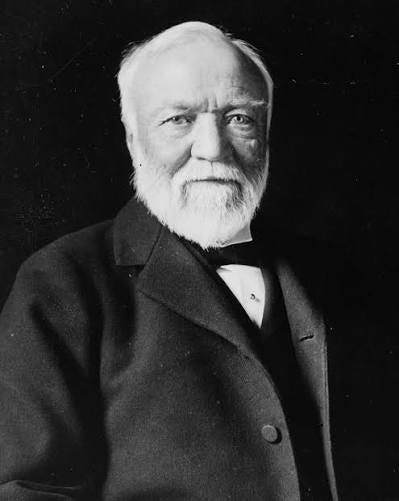
In 1889, Andrew Carnegie defended concentrated wealth as essential to progress. He also believed the wealthy had a duty to use their fortunes for the public good. But the authority to decide how that money should serve the public rested with people he credited with “superior wisdom, experience and ability to administer.”[7]
That is the deception I’d like to explore: There is a difference between owning a factory and working in one. The jump from that difference to a difference in human value is a leap we make. Wealth becomes proof of wisdom. The man whose labor contributed to that wealth becomes a man who needs to be led.
When enough people buy into the narrative, the social hierarchy starts to validate itself. People at the top may confuse their privileged position as evidence of their exceptionalism. People at the bottom may believe their social placement is evidence of their inherent inferiority.
Artificial intelligence and the bargain we enter
Which brings me back to Artificial Intelligence. This question has long been familiar: What happens when our creations determine what is true, and how can we tell if their truths are true?
Generative AI can create compelling justifications which are false.[13] For example, in 2023 lawyers in Mata v. Avianca relied on AI to create false court decisions using ChatGPT and continued to promote them as real when their existence was questioned. As a result, they were sanctioned by the court.[14]
Invented facts were promoted with the authority of case law. This is different than a novelist creating a judge who reveals truths about real justice because readers agree to explore her fictitious world. But inventing case law requires consenting to believe that fictitious event actually occurred. Like with AI-generated case law, people whose lives depend on the result of court decisions have not agreed to be impacted by fiction.
A false response doesn’t necessarily mean the machine intended to fool someone. If we present the fabrication as truth, however, then we’re the ones fooling. We’ve arrived at the point where the truth is too costly to reveal, and the fiction is too valuable to abandon.
But a map ain’t a route. There is a temptation to use AI-generated responses as justification for ceasing to explore our own biases, which, laundered and returned in the guise of truth, could be mistaken for a revelation of sorts, especially if they are in line with the status quo. Those in power would find another reason to act. But it can be revelatory, AI, and its ability to challenge arguments and bring forth perspectives we haven’t previously considered; this, too, is invention.
Ye shall be as gods
When I return to the silence of darkness, I still want that temporary sense of inner completeness. I wish the voices would be quieted by their being listened to. Silence itself doesn’t say if I’m letting go of the truth, or have discovered how to shut it out.
People easily envision an artificially intelligent Terminator stalking them down. Would we recognize it as sinister if we were instead comforted by an artificially intelligent presence that reassures us all is well with things that need questioning? It could be the morphine that soothes the sting of injustice without addressing the injustice itself. Those who benefit from our complacency would have less need to demand our silence if we began asking for it ourselves.
In Genesis, the serpent promises opened eyes: “ye shall be as gods, knowing good and evil.”[11] I wonder how much artificial light it would take to keep us from noticing that we had stopped looking. We could come to defend the very thing that keeps those voices beyond our hearing and call that condition enlightenment.
I still believe an invented thing can reveal something true. That is what I am asking of this piece. If a voice follows you back into the darkness, I hope you will hear it out.
There are many issues I’d like to examine where there are convenient answers that make it OK to avoid pressing questions whose answers might cost us something. I’m hoping to pursue those questions, including my role in accepting convenient answers.
To help me keep pursuing those questions, consider becoming a paid subscriber.
Your support makes it possible for me to spend the (considerable) amount of time needed to follow sources when writing and chase down questions that may not have reassuring answers. If another subscription isn’t in the cards, Buy Me a Coffee. A one-time donation still helps me get the next piece written.
Before we declare the mission accomplished, we ought to know whether the voices have been heard or merely silenced.

Sources
[1] Smithsonian Human Origins Program. “Language & Symbols.”
[2] William von Hippel and Robert Trivers. “The Evolution and Psychology of Self-Deception” (2011). Background reading.
[3] Alberto Alesina, Paola Giuliano, and Nathan Nunn. “On the Origins of Gender Roles: Women and the Plough.”
[4] “Female Lineages and Changing Kinship Patterns in Neolithic Çatalhöyük.” Science (2025).
[5] Jared Rubin. “Printing and Protestants: An Empirical Test of the Role of Printing in the Reformation.”
[6] “Ideational Diffusion and the Great Witch Hunt in Central Europe.” Theory and Society (2024).
[7] Andrew Carnegie. “Wealth” (1889).
[8] Becker Friedman Institute. “The Breakdown of the English Society of Orders: The Role of the Industrial Revolution” (2025).
[9] Gramota Russian dictionaries. “Враньё” (vranyo).
[10] C. Kamphuis. “Vranyo.” Militaire Spectator, June 17, 2024.
[11] Genesis 3:1–7, King James Version.
[12] Aristotle. Politics, Book I, Part V. Translated by Benjamin Jowett.
[13] National Institute of Standards and Technology. Artificial Intelligence Risk Management Framework: Generative Artificial Intelligence Profile. NIST AI 600-1, July 2024.
[14] Mata v. Avianca, Inc., Opinion and Order on Sanctions. U.S. District Court, Southern District of New York, June 22, 2023.