


For everybody reading this who does not have “Editor in Chief” sitting on your desk, I ain’t talking to you.
But if you do carry that title, or something close enough that people go quiet when you walk in, aight then. My name is Axel Foley and I’m a cop. Er, excuse me. A journalist. Cough. But yeah same energy.
Yes you. “Your silence” in my headline refers to you. So sit down. Have a seat and don’t get too comfortable because I’m grinning like Eddie Murphy.from ear to ear. This is the grin that says I’m friendly, but I’m not leaving until you answer the question. Why are you doing this? Why do you think you can bury GOOD below the fold under some bullshit ad for bullshit we don’t need? Why do you think you can erase GOOD by tucking the story behind A1 and pretend like it never happened? You didn’t do this with the O.J. criminal case. Oh wait. Huuuuum. The perp in that case was BLACK! Bingo!
Hold up. What the hell am I doing playing a Black Detroit cop in an essay about journalism, like that’s going to scare an editor in chief into reading the next paragraph, and thinking I can audit a whole industry with nothing but Mountain Dew, spite, and a deadline I already missed.
What the hell am I doing thinking I can address editors in chief directly, like they’ve got my link pinned in Slack between “Budget Cuts Q1” and “Legal Review,” and they are just waiting on my post to drop.
What the hell am I doing thinking a Black retired cop with a keyboard turned indie media Substacker can walk into the penthouse suite of American media, point at the front page, and make grown institutions blink.
Here’s why. I thought I could build these audit charts clean, slice them up, stitch them together, make them pretty, and still have time to write. I got lost in screenshots and cropping and trying to make wide charts behave on a screen. Then I gave up and started writing on them like a man in a hostage video. That’s why you see my handwriting.
Anyway, my entire day (as well as half the next day) disappeared into this essay. Tabs stacked like bricks. Spreadsheets. Screenshots. Dates. Counts. At some point I quit trying to stitch those wide charts together like a sane person. I then looked up and realized I had published nothing. Zero. Which means zero new subscribers. Which means my little independent media operation did not make a single extra dollar that day. The lights do not stay on because I am morally correct. The lights stay on because I hit publish.
**** it. I should have just taken the day off.
But then I saw something in the numbers that made me sit back in my chair like somebody had just confessed. A woman is dead. A federal ICE agent shot her. The state is defending itself in real time. The story bleeds. And in the place where “if it bleeds, it leads” is supposed to be a rule of nature, too many front pages treated it like a one day inconvenience. [4] [12] [23]
So let me name the irony without the velvet gloves. This crisis bleeds. A woman is dead. And still, for too many major publications, the story behaved like it had a short shelf life: a spike, a shrug, a fade. [44]
That’s why The Good Crisis is a bitter phrase. Not because there is anything “good” about a killing. “Good” is a name. Renée Good. [4] [23]
I’m writing to editors in chief because you’re the last people in the building who can turn absence into accountability. You decide what becomes “the country’s business,” and what becomes a local problem the nation can ignore. You decide what gets a banner. You decide what gets a “related reading” link buried under a recipe.
Now do Axel Foley, me, a favor. Pretend I’m not a Detroit cop. Pretend I’m Axel Foley, a journalist with a notebook and a bad sense of timing. My 1970 Chevy Nova is parked outside your front door like it pays rent, baby. The hazards are off. A ticket is already manifesting on the windshield, daring somebody to do something about it. I come in wearing a hoodie and Levi’s like I’m about to cover a street protest or steal your office coffee, whichever the hell comes first. I hit that lobby like I own stock in the building. I tell the front desk I’m “here for a meeting,” which is technically true because I’m about to meet your conscience. Somebody hands me a visitor badge that might as well say “Sure, Why Not.” I chuckle out a smile like I belong. I walk past the turnstiles like they were installed for decoration. I take the elevator straight to your top floor office with the view.
And there you are, overlooking the city, high enough to see patterns. Unmarked black Suburbans. Jeep Wagoneers. Dodge Durangos. The kind of vehicles that never look lost, only hungry. You see people pulled off the street and disappeared into a system that insists on polite language. Call them detention centers. Call them holding facilities. Call them processing sites. Then look back out that window and tell me why everybody suddenly gets shy about the phrase “concentration camp.” [4] [9] [32]
Because that is what readers feel when the story spikes and vanishes. They feel the vans keep moving, and the front page keeps blinking like it is tired. They feel like the building with the best view is choosing not to look.
And here’s where I have to put my cards on the table early, because this whole audit did something rude to my self doubt.
I used to question my journalistic abilities all the time. Not in a cute, humble way either. In the “who let me call this journalism, do I need to log out of Substack and go touch grass?” way.
Then I started building this audit from day one to now, outlet by outlet, date by date. And I watched too many professional institutions we’re raised to revere, institutions with lawyers on retainer and conference rooms named after dead legends, decide that the safest use of A1 real estate was… what, exactly?
“Stocks close lower as investors assess CPI and bank earnings.” “Bomb cyclone winter storm moves east, maps, latest forecast.” “Oscar nomination voting begins, predictions, shortlists, the whole show.” “NFL Wild Card Weekend: biggest winners and losers.”
Meanwhile, GOOD, a federal gun, a dead body, and a public staring at the footage like it’s a moral Rorschach test, gets treated like a one day inconvenience. [4] [11] [18] [44]
So yeah, I started asking serious questions, way earlier than I planned.
Am I more fearless than these institutions with lawyers on retainer?
Because if the answer is yes, that’s not a compliment to me. That’s an emergency siren for you.
And if the answer is no, if you’re just being strategic, then tell me what the strategy is called when you can “cover” a story without actually carrying it.
Because my little audit, my scrappy little spreadsheet, my too many tabs, my stubborn refusal to let this fade, started to feel like an inside joke the public ain’t supposed to hear, which is that the front page is not always a mirror of reality. Sometimes it’s a mirror of what power will tolerate.
HOLD UP. WAIT A MINUTE.
Before I go further, do me one favor. If this hit you, restack it (and hit that LIKE button of course)and send it to one person who still believes front pages are neutral.

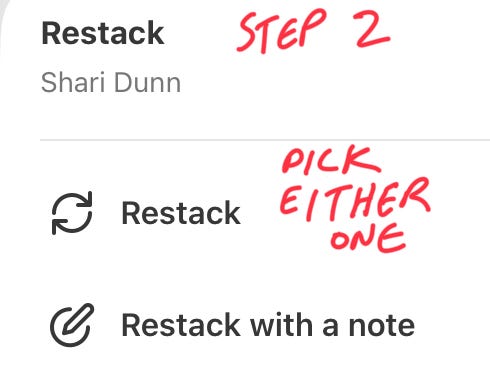
That is how this stuff moves now. It does not travel because an editor in chief wakes up and types my name into search. It travels because a reader says, “You need to see this,” and drops it into a group chat, a workplace Slack, or an email thread. I have watched posts like mine hop reader to reader until they land in rooms I will never be invited into. Then somebody in that room does the quiet thing that matters. They forward it up the chain.
If you’ve read me before, you already know I don’t do vibes. I do receipts. If you want me to keep doing this without choosing between rent and research, you can go paid right now:
o, just catch the link again at the end of this essay.
TLDR
I know it’s long. I’m sorry. Here are a few spoilers to make you stay.
The audit charts show a spike and fade pattern. A lot of outlets touched Renée Good day one, then acted like the story stopped breathing. [44]
The framing tells on people. Some ledes treat protesters like the threat and federal agents like the victim. That ain’t neutral. That is instruction. [18] [19]
The Washington Post is the plot twist. They actually followed through hard in the first week, and that raises a nasty little question about incentives and fear. [44] [46] [48]
The “open secret” is not new. Nightcrawler said the quiet part out loud years ago, and the market still isn’t colorblind. [3]
“Keeping it safe” does not buy safety anyway. Ask the WashPost reporter whose home got searched. [34] [36] [37]
If any of that made your stomach drop, keep going.
When “keeping it real” gets you evicted from the good life
Let me do the part editors won’t say out loud, with some straight talk, plus a peek behind the newsroom curtain, for the civilians reading.
When a story like Renée Good lands on your desk, you are not only weighing facts. You are weighing invitations. You are weighing access. You are weighing whether a board member is going to call you with that soft, smiling voice that means they are furious. You are weighing whether your name is about to get stapled to the word “woke” like a parking ticket you can’t pay off.
And this is where my inner Axel Foley kicks in, hoodie and Levi’s, leaning back in your guest chair like it’s a sofa at a cookout.
Look, I know you’re afraid of getting caught with your pants down on some “woke” stuff, right. I get it. It’s scary. But if you’re that terrified of the word, kiss that new summer house on the beach goodbye. Tell your wife the Amex Gold needs a sabbatical. And the shoes, come on. How many pairs does she need. She’s got so many designer heels she’s leaving little red shoe prints down the driveway where you park the Range Rover, like a breadcrumb trail back to denial.
That is what “keeping it real” costs at the top. It is not the reporting. It is the lifestyle tax.
So the temptation is to do what we all do when we want to look brave without paying for bravery. You run the day one headline. You quote the official line. You add a line about “tensions.” You sprinkle in “both sides.” Then you call it “responsible,” and you move on before anybody makes you pick between truth and comfort.
Which brings me to the question.
What I mean by “silence”
Silence is not always the absence of a headline. Sometimes silence is the shape of coverage.
It looks like one story on day one, then a newsroom moving on as if the facts have stopped moving. It looks like a “what we know” that never becomes “what we verified.” It looks like wire copy doing CPR while the local reporting team takes a long lunch. It looks like treating lethal state action as a momentary flare instead of a living public event.
Roland Martin, a longtime Black journalist and host of the daily show Roland Martin Unfiltered, put his finger on this broader pattern in a recent conversation with Tiffany Cross, a journalist and TV host. Selective outrage has become so routine that shamelessness passes as normal. If a Democrat did what Trump does, Roland said, it would be wall to wall outrage every day. But when Trump does it, too many mainstream voices treat it like “okay, no big deal.” [1]
That “no big deal” reflex is exactly how a killing becomes a brief topic instead of a civic rupture. [1]
And yes, editors, I can already hear the response in your voice. “We covered it.”
Of course you did. And I’m not falling for the newsroom version of a banana in the tailpipe.
What the audit charts show, and why they matter
I’m not asking you to accept a vibe. I’m asking you to face a pattern.


To keep this from turning into an impossible argument about what was on the homepage at 10:12 a.m., I used a simpler proxy. Coverage volume over time, and whether an outlet returned after the first seventy two hours. [44]
Audit Chart 1: The spike and fade curve
In the first week coverage audit (Jan. 7 to 14), the numbers tell a story that even a copy desk can’t rewrite. [44]
Sustained duty is what it looks like when an outlet comes back after the initial adrenaline wears off. It means you kept filing when the story stopped being trendy and started being consequential.
The Washington Post: heavy follow through after Jan. 9. [44] [46] [47] [48] [49]
AP and Reuters: treated it like a major national thread. Multiple updates. Multiple days. Multiple angles. [4] [5] [6] [9] [11] [12]
Local and regional: Star Tribune and MPR stayed on it because they had to live in the city afterward. [23] [24] [32]
Then comes drive by coverage. That’s when you post a single summary and then vanish like you never met the story.
WSJ: summary style explainers. [21] [22]
And then there is effective absence. Not always nothing. Often one and done. The public reads that as a choice. [44]
Audit Chart 2: The first sentence frame


The second set of charts is about something even more revealing than volume: who gets positioned as the problem in the first breath. [44]
Because in modern journalism, the headline and lede don’t just inform. They instruct. They tell the reader who is respectable before the facts even finish arriving.
The framing split is consistent:
Some outlets lead with the blunt fact of lethal state action and treat protests as a human response.
Other outlets lead with the crowd as the threat. Agitators. Swarming. Chaos. Confrontation. Federal agents as embattled professionals under attack. [18] [19]
Both camps will tell you they are “just stating facts.” Sure. And a magician is “just using his hands.”
Once empathy is assigned in the first paragraph, the rest of the story rolls downhill.
The hidden rule beneath “if it bleeds it leads”
Cross said the part that makes certain newsrooms reach for the “tone” button. The problem is not merely political labeling. It’s racial. White run newsrooms, built around a definition of “fair” that is often rooted in what is white and male. [1]
If you are an editor in chief and that statement makes you bristle, sit with the bristle. That bristle is data. That bristle is the institutional nervous system protecting itself.
Cross’s claim was not abstract. She pointed to a structural reality. Only a small slice of reporting staffs are Black, which means even fewer Black women and Black men shaping daily judgment calls about what deserves oxygen. [1]
And that brings us back to Renée Good.
Because her death has been treated, in too many places, like a debate even when video evidence made the central question clearer than the spin allowed. Cross put it plainly. When someone like Good is killed, the system pressures us to not believe our eyes and ears, to treat what is visible as “a debate.” [1] [48]
That is not balance. That is moral anesthesia.
The second burial: the headline and the lede
Even when outlets cover a story, burial can happen in the first sentence.
Cross described a double standard most Black readers recognize instantly. When it comes to state violence against Black people, we have to be infallible. We have to prove we did not invite our own death. [1]
That script shows up in headlines and ledes as a kind of quiet prosecution.
One framing makes protesters the problem. The crowd becomes the threat. The agent becomes the professional. The dead woman becomes a complication, a maybe, a suspicious figure whose humanity can be postponed until after the narrative has done its work. [18] [19]
The other framing treats protesters as citizens responding to lethal force. In that version, official claims are not granted automatically. They are tested against footage, witnesses, and the basic fact that someone ended up dead. [4] [48]
“We can’t cover it all” is a myth, and Roland said so
One of the most revealing moments in that Martin Cross conversation was Roland’s rejection of the newsroom excuse that “so much is being thrown at us, we can’t cover it all.” [1]
He called it nonsense.
If you’re a broadcast network with digital, you have twenty four hours. If you’re cable, you have twenty four hours. You do not have to cover the same thing every hour. That claim of helplessness is not about capacity. It’s about priorities. [1]
Translation for the non journalists reading. “We can’t cover it all” is the media version of “my phone died.” It might be true sometimes. But it’s also the universal alibi for choices you don’t want to own.
“Too much news” is not the problem. The problem is that some stories feel expensive to touch.
Expensive in access. Expensive in blowback. Expensive in the endless weaponization of “bias.” Expensive in the internal fear that if you tell the truth too plainly, you become the story.
So the story gets reduced to manageable content: a day of headline, a follow up that lives behind process language, and a debate segment featuring someone who can be counted on to muddy the moral water.
How the format normalized the dehumanization
Cross described the shift in cable news as a move away from reporting toward platforming: platform white supremacists. Platform liars. Pair them with someone who disagrees. Put them in the ring. Let them fight. Then ask the audience, “Are you not entertained?” [1]
That is the machine that makes Renée Good coverable but not followable.
Because a followable story requires a newsroom to stay with facts, pursue accountability, and resist the gravitational pull of spectacle. But the modern format rewards conflict and adrenaline. It rewards the cheap dopamine of outrage and the false equality of “two sides” even when one side is visibly lying.
Roland said he has been told directly, in real editorial settings, not to push too hard when someone is lying. His response was visceral: he cannot allow a lie to go out unchallenged. [1]
Cross expanded the diagnosis. Networks were afraid to call out conservative liars because they feared attacks and blowback. The result was appeasement disguised as objectivity. [1]
Now translate that fear into the Good case. A killing happens. The official narrative is issued. Video emerges. The public’s moral alarm rings. And instead of meeting that alarm with sustained clarity, too many institutions meet it with caution theater. [4] [48]
The real center of gravity: the comfort of white people
Cross said something that will make some editors uncomfortable, which is exactly why it matters. Many newsrooms center the comfort of white people. When Trump says something that injures Black humanity, the reflex is to scan for “a significant portion of the country who agrees,” then treat the harm as “legitimate” in the name of fairness. [1]
And let’s be honest. This is not a brand new revelation. It’s an open secret. It lives in the shadows of pop culture and pops out when people get sloppy, or honest, or both.
If you have not seen it, Nightcrawler is a 2014 Los Angeles thriller about Lou Bloom, a broke, ambitious hustler who discovers “nightcrawling,” filming wrecks and violent crime and selling the footage to local TV news. The movie is basically a two hour lesson in what happens when ratings and fear become the real assignment. [2]
That is why the movie still hits so hard. Nina Romina, the KWLA news director, gives Lou the blunt formula. Viewers want “urban crime creeping into the suburbs,” with victims “preferably well off and/or white,” hurt “at the hands of the poor, or a minority.” Later, Lou throws it back at her with that line about the “vampire shift.” Nobody in that scene is confused about what sells. Nobody is pretending the market is colorblind. [3]
If that is how you process the world, then a killing like this becomes easier to debate than to name.
Because naming it forces a moral frame. Naming it forces the institution to take responsibility for clarity. Naming it risks making the comfortable uncomfortable.
The psychological mechanism: institutional avoidance dressed as standards
This is not a claim that every editor is malicious. It’s a claim that institutions have shadows.
A newsroom’s persona is public service, truth, accountability, courage. Many of you still believe that persona. Many of your reporters still live it.
But every institution also has a shadow: what it does to survive while continuing to claim virtue.
In the shadow live the incentives nobody wants to discuss on a panel: the lawsuit that could blow a year’s budget, the access that could be revoked, the owner’s political posture, the churn panic, the fear of being labeled biased by people who profit from calling everything biased.
Cross named a cruel asymmetry that sits at the center of the Good story. When it is our bodies, our deaths are treated as negotiable. The narrative becomes a courtroom before it becomes a funeral. [1]
If you are an editor reading this and thinking “that’s not us,” here is the simplest test.
When video contradicts an official claim, do you treat that contradiction as a fact, or as a debate? [48]
The question editors can’t dodge
Here is the operational question that tells the truth without turning this into a sermon:
What would need to be true for you to keep covering Renée Good after the spike?
Not just did you mention it. Not just did you post a summary. I mean the follow through.
What threshold did this story fail to meet? Or did it meet the threshold, and you decided the cost of meeting it publicly was too high?
Because if the answer is cost, then the public has the right to name what happened.
It is not neutrality. It is not restraint. It is triage.
And triage is a decision about who gets saved.
A way back into duty that does not require a confession
Cross and Martin were not merely diagnosing. They were naming an alternative: insist on expertise, insist on facts, insist on calling lies what they are, stop using entertainment formats to launder dehumanization. [1]
So here is a protocol for editors who want to rebuild trust without performing guilt.
Assign a follow up owner for stories involving lethal state action. Not a breaking news owner. A follow up owner. Someone whose job is to return three days later, seven days later, fourteen days later and ask: what changed, what is verified, what is being claimed, who is accountable?
Publish a living verification timeline. Confirmed facts. Disputed claims. Evidence available. Evidence missing. What you will not run yet and why. Readers can tolerate uncertainty. They cannot tolerate feeling managed.
Separate wire oxygen from original reporting. If you ran a wire story, say so. Do not let “we covered it” become a shield if what you did was outsource attention.
Stop building segments around ignorance. Cross called out how media often hands a microphone to ill informed people, especially in Black communities, then calls it “balance.” That is not journalism. That is theater. [1]
WTF Is Going On At The Washington Post?
Caveat: what follows is informed speculation, not an accusation. I’m describing timing, incentives, and optics. I’m going to frame the spicy parts as questions, not “facts,” because the only thing I’m trying to indict here is pattern recognition.
I ran my Good audit fully expecting the Post to land in the “we posted one link, relax” middle. Instead, they showed up near the top. Multi day follow through after the first 72 hours. The kind of sustained attention that says, “No, we’re not letting this die on day three.” [44] [46] [47] [48]
Which is awkward, because I haven’t been watching the Post. I’ve been writing scathing critiques about what it’s become. The climate coverage that sometimes reads like the planet is filing a polite HR complaint. The political posture that keeps finding safe synonyms for hard realities. The way certain voices got pushed out or sidelined when they wouldn’t play nice. And the way Dr. Heather Cox Richardson can be treated like a vibe, face present, substance absent, depending on what’s convenient.
So when the Post suddenly goes hard on Renée Good, the question isn’t “did they do good journalism?” They did. The question is why did the volume and intensity snap back now?
Here are the theories, ranked from boring to “keep your eyebrow raised.”
Newsroom muscle memory kicked in. Even in a compromised ecosystem, there are still reporters and editors who remember what a national accountability story looks like, and they refused to treat a killing as a one day trend.
The story had a video problem. When visuals start contradicting the official story, “both sides” stops being a virtue and starts being a liability. Silence becomes reputationally expensive. [48]
The Post needed a credibility flex. When a paper takes a public trust hit, whether from editorial turbulence, internal blowback, or the slow drift into “don’t make anybody mad” journalism, you eventually need a story where the newsroom can prove: we still know how to do this. [38] [39]
Bezos family optics, the part nobody wants to say out loud. Jeff Bezos is now married to Lauren Sánchez Bezos, who is public facing and brand sensitive in ways a newsroom can’t pretend are irrelevant. She is also listed as vice chair of the Bezos Earth Fund. [43]
Bezos’s stepfather, Mike Bezos, is famously tied to an immigrant and refugee narrative that the Bezos world has never exactly hidden. So here’s the question, again, question not claim: when your family story and philanthropic branding are wrapped in “immigrant grit” and “public good,” do you really want the flagship newspaper you own looking like it’s ducking a story about a U.S. citizen killed in the heat of federal immigration enforcement? [47] [48]
That’s not a conspiracy. That’s brand math.
The system just demonstrated the ‘keeping it real’ tax. Federal agents executed a search warrant at the home of a Post reporter and seized devices. Authorities say she wasn’t the target. Press freedom folks say it chills reporting anyway. [34] [36] [37] [35]
Because the real lesson of that search warrant is this: you can behave perfectly and still get your door knocked anyway.
So yes, the Post is the plot twist. The paper I’ve criticized for softness suddenly shows sustained teeth on Good. At the same moment, the system reminds every journalist watching what the cost of teeth can look like.
This is what “silence” looks like now. Not always nothing. Often one and done. The public reads that as a choice. [44]
What changed for me
After watching the Post do the job, and watching the system remind them what the job can cost, something in my own head clicked.
Here’s the sentence that names what shifted in my mind:
I stopped asking who mentioned her and started asking who followed through.
Mention is cheap now. A link is cheap. A day of headline is cheap.
Follow through is the new credibility.
A1 is where you put what you’re willing to be criticized for, because you believe the public deserves it anyway.
Roland Martin said something that applies here whether you like him or not: you don’t get to call yourself a truth teller while making peace with lies for fear of backlash. [1]
And Tiffany Cross said something that applies here whether it makes you uncomfortable or not: the debate format has helped normalize attacks on Black humanity, and Renée Good is one more place where that normalization tries to do its quiet work. [1]
Conclusion
Listen, you can keep it safe long enough to protect the summer house. You can keep it bland long enough to keep the invitations. You can keep it “measured” long enough that nobody from the powerful side of town ever raises their voice at you in public.
But you do not get to keep the one thing your institution is actually supposed to own.
Credibility.
Because the public is not stupid. They know the difference between a story you published and a story you carried. They know the difference between a headline you ran and a truth you chased. They can feel the moment you switched from reporting to risk management.
And about that “what the hell am I doing” spiral I opened with. I spent a whole day doing this audit instead of posting, which means I missed my own bread and butter and watched my own numbers sit still. I did not do this because it is fun. I did it because I could not shake the feeling that if the big institutions are going to pretend this is a one day story, somebody has to be annoying enough to keep counting.
So yes, you might dodge the uncomfortable phone call this week.
But if you keep doing that, the cancellation won’t come from “woke” anything.
It will come from the people outside your building who finally decide the paper with the best view chose not to look.
And here is my last little banana in the tailpipe. The public can tolerate uncertainty. They cannot tolerate being played.
We are fighting The Good Fight. Pun intended.
We will not allow GOOD to be erased off this earth.
That opening confession at the beginning of this piece was not a bit. This audit ate a full workday and a half I could have used to publish, which means I chose receipts over revenue. I do this full time. No newsroom salary. No corporate backstop. No legal department on speed dial. Just me, the documents, the charts, and the stubbornness to keep counting when everybody else moves on.
If you want more of this kind of work, and you want it done without me having to pick between the lights and the truth, become a paid subscriber here:
SOURCES
2.
https://cjpowersonline.com/wp-content/uploads/2015/01/250889715-nightcrawler-script.pdf
https://www.reuters.com/world/us/us-federal-agent-involved-minneapolis-shooting-during-immigration-surge-city-2026-01-07/
https://www.reuters.com/legal/government/minneapolis-mayor-demands-transparent-investigation-into-ice-shooting-protests-2026-01-09/
https://www.reuters.com/fact-check/fake-image-shared-photo-minnesota-woman-fatally-shot-by-ice-agent-2026-01-14/
https://www.reuters.com/pictures/us-immigration-agent-fatally-shoots-woman-minneapolis-2026-01-07/
https://www.reuters.com/pictures/ice-minneapolis-scenes-streets-2026-01-13/6DBQY3TJLRJ3FOSLOPRMTHHRIA/
https://www.reuters.com/world/minnesota-sues-trump-administration-block-surge-federal-immigration-agents-2026-01-12/
https://www.reuters.com/video/watch/idRW558809012026RP1/
https://apnews.com/photo-gallery/photos-from-ice-officer-shooting-minneapolis-agent-vigil-protests-1cffc841d4a295fcbc6cf1424e707589
https://apnews.com/article/6386af3234405e93f68ea00dbf8c98f1
https://www.pbs.org/newshour/nation/shootings-in-minneapolis-and-portland-spur-protests-over-federal-enforcement-operations-after
https://abcnews.go.com/US/wireStory/minneapolis-edge-after-fatal-shooting-woman-ice-officer-129009408
https://abcnews.go.com/US/video/ice-agent-shot-renee-good-suffered-internal-bleeding-129211530
https://www.cbsnews.com/minnesota/live-updates/minneapolis-ice-agent-shooting-protesters-clash-fbi-investigation/
https://www.cbsnews.com/news/ice-officer-who-shot-renee-good-internal-injuries-sources-say/
https://www.foxnews.com/us/minnesota-anti-ice-agitators-swarm-confront-federal-agents-during-enforcement-operations/
https://www.foxnews.com/us/renee-nicole-good-part-ice-watch-group-dhs-sources-say/
https://www.foxnews.com/politics/rep-ro-khanna-demands-prosecution-ice-agent-minneapolis-fatal-shooting/
https://www.wsj.com/us-news/what-we-know-so-far-about-renee-nicole-good-bb3d847c
https://www.wsj.com/us-news/what-we-know-about-the-ice-agent-who-shot-renee-nicole-good-04f9b04e
https://www.startribune.com/ice-agent-who-fatally-shot-woman-in-minneapolis-is-identified/601560214
https://www.startribune.com/she-was-an-amazing-human-being-mother-identifies-woman-shot-killed-by-ice-agent/601559922
https://www.latimes.com/california/story/2026-01-07/minneapolis-ice-killing-california-lawmakers-decry-public-execution
https://www.latimes.com/opinion/story/2026-01-11/ice-shooting-minneapolis-jan-6
https://www.inquirer.com/news/philadelphia/philadelphia-protest-ice-renee-good-shooting-death-20260108.html
https://www.inquirer.com/opinion/editorials/killing-minneapolis-good-ice-shooting-trump-abuse-20260108.html
https://www.propublica.org/article/videos-ice-dhs-immigration-agents-using-chokeholds-citizens
https://www.wired.com/story/ice-agent-jonathan-ross-renee-good-shooting-firearms-trainer-testimony/
https://time.com/7345954/ice-agents-renee-good/
https://www.mprnews.org/story/2026/01/07/shooting-south-minneapolis-ice-agents-federal-operation
https://en.wikipedia.org/wiki/Killing_of_Renee_Good
https://www.washingtonpost.com/national-security/2026/01/14/washington-post-reporter-search/
https://apnews.com/article/373bd02f4f9ea446dd71c1203da467f3
https://www.axios.com/2026/01/14/fbi-raid-washington-post-reporter-natanson
https://www.theguardian.com/us-news/2026/jan/14/fbi-raid-washington-post-hannah-natanson
https://www.washingtonpost.com/style/media/2024/10/25/washington-post-endorsement-president/
https://www.washingtonpost.com/style/media/2024/10/27/washington-post-endorsement-fallout/
https://www.ap.org/news-highlights/spotlights/2025/in-black-columnists-firing-advocates-fear-decreasing-diversity-vital-perspectives-in-news-media/

https://www.theguardian.com/media/2025/sep/15/karen-attiah-fired-washington-post-charlie-kirk
https://www.bezosearthfund.org/who-we-are/our-people/lauren-sanchez-bezos
And not to sound like a mom here, but don't forget to get a good 7-8 hours sleep and eat your veggies and take a break when you need one...I really admire your writing and work ethic, but we all want you to be around a good long time
So I tried to find the number of articles, columns, LTEs, Op-eds editorials and political cartoons published to date by the Toronto Star, but I'm not very computer savvy and CHATgpt was frustrated by a paywall. I can't get mad at CHATgpt...I can't get by it and I'm a subscriber. But my impression is that it has been a steady sort of drumbeat of all that sort of thing.
Quick observation: I used to think American and other political cartoonists often provided much of the best, most accessible, insights into what is happening, but the problem is that there is increasingly less to satirize or send up as it is not at all funny, as in the brown shirts are now not hiding treatment of Jews is not funny. I find myself, perusing American "news" media, wondering WTF are they doing with sports news or fashions or the best way to barbecue a dead chicken, when they are tumbling so fast beneath the heel of a fascist dictatorship made up of a band of people who transcend the ability of the language to properly characterize them. I mean, I know the answer, but it just seems to me it is past the panic point, speaking as always, as a concerned outsider from north (sort of north-east from Detroit) of the border.
And yeah...eat your veggies and get some rest...not too much...you're needed, but needed healthy.