

An Arkansas Trooper Punched an 18-Year-Old Black Woman. Then He Asked, “Who Said I Can’t?”
A Sunday-night autopsy of the week Alisa Hackett’s question became an offense, disputed allegations became entertainment, and powerful institutions treated restraint as optional.
Note to Readers
I hate the news because every story arrives pretending it lives alone. An Arkansas traffic stop is placed in one box, federal surveillance in another, Jason Arday’s death somewhere between academia and media, and sports in its own little corner. That filing system is useful to institutions doing the same thing in different rooms.
This week, Trooper Moisses Arellano gave us the connective tissue. Eighteen-year-old Alisa N. Hackett told him, “You cannot punch me in my face.” He answered, “Who said I can’t?”
That answer is larger than one traffic stop without making every story equivalent to a police punch. It is the sound power makes when it no longer expects a meaningful no.
This is the Reader’s Cut of the weekly XVOA cultural autopsy. The broadcast is the pressure valve. This page is the evidence room, with the court records, qualifications, source links and Sunday-night updates restored. You should be able to read this without pressing play and lose nothing essential.
TLDR
The question became the offense. An Arkansas trooper admits striking Hackett in the face during an arrest, and the dashcam records him challenging her to identify who said he could not do it.[1][2][3]
Dissent became an intelligence target. A Minnesota defense filing describes undercover federal agents entering anti-ICE meetings and chats, while the White House tried another route around birthright citizenship.[4][5][6][7]
Pain and policy received softer names. ICE forecast a multimillion-dollar acquisition of electric shock gloves, while CMS made low-income families carry the administration’s anti-trans financing policy.[8][9]
Unfinished allegations became entertainment. Coyote vs. Acme escaped its corporate grave, Tupac Shakur’s murder case seated a jury, and Jason Arday died after disputed allegations became a racialized public spectacle involving legacy media and Black creators.[10][11][12][13][14][15][16][17]
Proof of life remained visible. Black arts institutions built their own doors, athlete labor remained unsettled, and the supposedly missing audience for women’s sports became measurable.[19][20][23][24][25][26]
Restack It and Share This Pleeeeze
Alisa Hackett’s words should travel farther than the machinery that tried to reduce them to attitude. Restack this Reader’s Cut, share it and send it to one person who needs the evidence.
This reporting remains public because the record needs witnesses.
Paid subscriptions finance the source checks and reporting time required to build it. If another subscription is not in the cards, Buy Me a Coffee is the backup lane.
The Five Ways They Tried to Fu** Us Over
WAY ONE: ALISA HACKETT’S QUESTION BECAME THE OFFENSE
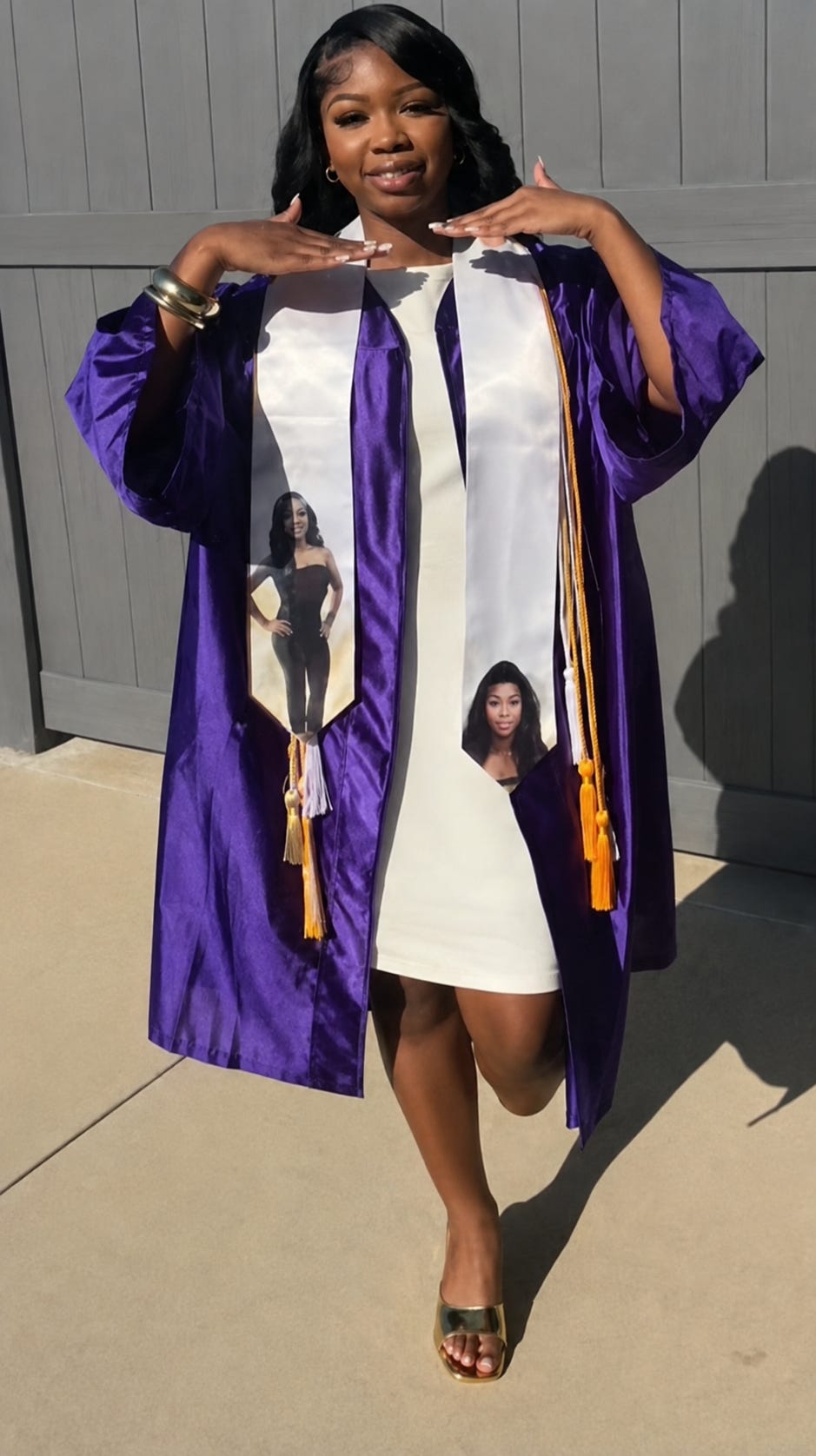
On August 1, at about 10:45 p.m., Arellano stopped Hackett on Arkansas Highway 18 near Manila in Mississippi County. Police records cite alleged speeding and several additional traffic violations. Arellano’s report says he initially intended to issue citations, then decided to make an arrest after an exchange in which Hackett’s supposed attitude became part of the justification. During a recorded call, another trooper encouraged the arrest and referred to Hackett by race. The publicly available record does not identify that trooper securely enough for me to name him.[1][2][3]
When Arellano moved to handcuff her, Hackett repeatedly asked what she had done. The recording shows her turning and pulling one arm away as he tried to secure her hands. He took her to the pavement, and his report says he struck the left side of her face once with a closed fist while trying to gain compliance. The dashcam loses sight of their bodies during that portion of the struggle, so the video does not visibly show the fist landing. The admission comes from Arellano’s own report and his later recorded statements.[1][2]
The defining evidence arrives after the strike. Hackett says, “You cannot punch me in my face.” Arellano replies, “Who said? Who says?” After she calls for her mother, he asks, “Who said I can’t punch you in your face?” He later describes having “tuned her up” and tells someone by phone that he struck her once in the jaw.[2]
Hackett filed a federal lawsuit on August 10 alleging excessive force and retaliation for protected speech. Those civil claims have not been adjudicated. Her traffic and criminal charges are separate matters, and neither set of allegations should be converted into a verdict about the other. As of Sunday night, Arkansas State Police had not publicly announced discipline, a completed use-of-force review or the outcome of any internal investigation.[1][3]
Listen, this is coming from someone who spent 20 years working as a patrol officer. Pulling an arm away can justify some degree of control, but it does not erase the underlying offense, her ability to flee, the threat she presented, the control already achieved or the alternatives available. A closed fist to the face requires its own justification because the sentence “she resisted” cannot function as a blank check.
Why this matters. Traffic stops do not escalate by magic because people make the decisions that change their course. Hackett’s demand for an explanation was recoded as attitude, attitude helped become arrest, and physical resistance became the stated reason for striking her. The legal system will decide the claims before it. Arkansas still has to answer the institutional question: was this necessary control, or did state power punish a Black teenager for refusing emotional obedience?
WAY TWO: OPERATION PUPPET MASTER PUT DISSENT INSIDE THE FILE
Yes, that is the government’s name for it. An August 13 defense motion in a Minnesota protest prosecution quotes Homeland Security reports describing undercover personnel entering anti-ICE meetings and Signal chats, recording license plates, compiling personal dossiers and obtaining financial records connected to unions and nonprofit organizations. The filing’s description comes from defense lawyers reviewing discovery. It is not a judicial finding that every allegation in the motion is true.[4][5]
Fifteen people were charged in June and remain presumed innocent. None of the organizations named in the filing was charged. That distinction matters because the government’s collection appears to have spread beyond the defendants and alleged conduct into the social body around dissent, including meetings, relatives, vehicles, communications and financial relationships.[4][5]
Why this matters. The state does not have to arrest every organizer to chill organizing. It only has to make enough people wonder whether attending a meeting, appearing in a group chat or parking outside a protest has placed them inside a future intelligence file.
WAY THREE: BIRTHRIGHT CITIZENSHIP GETS ANOTHER ELIGIBILITY SCREEN
After the administration lost its earlier attempt to narrow the Fourteenth Amendment’s citizenship guarantee, the White House issued two narrower orders on August 6 directing agencies to withhold recognition of citizenship in newly asserted categories. Civil-rights groups returned to federal court on August 11 in the existing Barbara class action, asking the judge to confirm that babies covered by the nationwide protection already obtained remain protected from the new orders.[6][7]
As of Sunday night, that motion remained pending. The administration says its new categories comply with the Supreme Court’s ruling. The challengers describe them as another unconstitutional end run. Lose on the guarantee, create new classifications, then make families fight over whether the old protection reaches the new language.
Why this matters. A constitutional right is being administered like an eligibility screen, and the uncertainty is part of the pressure rather than an incidental byproduct. It makes parents, hospitals and agencies hesitate while executive power tests how much of the guarantee can be withheld through procedure.
WAY FOUR: THE ELECTRIC GLOVE IS CALLED DE-ESCALATION
On August 10, Homeland Security published an acquisition forecast seeking between $10 million and $20 million in CTG-5 G.L.O.V.E. devices for Homeland Security Investigations and Enforcement and Removal Operations. The devices deliver an electrical shock through direct contact with bare skin. At the week’s deadline, the public record described an anticipated acquisition. It did not establish an awarded contract, a completed purchase or field deployment.[8]
The manufacturer presents the glove as a compliance and de-escalation tool. Critics argue that a contact device may be harder to document than a conventional stun gun. My concern as a former patrol officer is visibility. A tool that delivers pain through touch makes policy, activation records, medical screening, supervisory review and after-action documentation more important, not less.
Why this matters. “De-escalation” has become the euphemism doing the work here. A government agency is considering a less visually obvious way to deliver electrical pain, and the marketing language invites the public to treat coercion as restraint before the oversight structure is even visible.
WAY FIVE: MEDICAID AND CHIP CARRY THE CULTURE WAR
CMS finalized a rule on August 11 and published it in the Federal Register on August 13, with an October 13 effective date. It blocks federal matching funds for specified gender-affirming interventions for people younger than 18 in Medicaid and younger than 19 in CHIP.
This is a federal financing restriction, not a total nationwide prohibition on all gender-affirming care. States can use state-only money, private insurance falls outside this rule, mental-health treatment remains covered and existing hormone prescriptions receive a limited transition period.[9]
CMS says the evidence does not justify federal funding, a conclusion disputed by medical organizations and LGBTQ advocates. Whatever position someone holds in the larger policy argument, the first practical fact is that the rule applies its pressure through programs serving families with the fewest financial exits.
Why this matters. Scarcity is the enforcement mechanism. The federal government has turned an ideological position into a funding penalty, then placed the earliest burden on young people and low-income families least able to purchase a different policy with their own money.
That concludes the Five Ways They Tried to Fuck Us Over.
Now I want to place the week’s central question before you: where have you watched an institution confuse having power with having permission? Tell me what it claimed, how that claim became normal and what forcing it to explain itself would require. Go beyond “this is terrible.” Show me the machinery in the comments.
Entertainment
COYOTE ESCAPES THE CORPORATE GRAVE
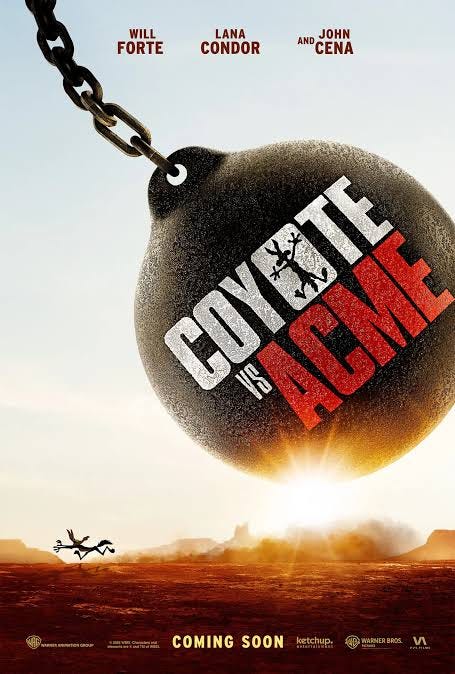
Warner Bros. Discovery shelved the completed Coyote vs. Acme while considering a tax write-off, even though the cast and crew had finished the work. Ketchup Entertainment later acquired the film, and its theatrical release remains scheduled for Friday, August 28. The sale did not happen this week. The current story is that a movie once marked for disappearance is now less than two weeks from reaching theaters.[10][11]
Why this matters. Completed creative labor was treated as an accounting object that could become more valuable by vanishing. Public pressure did not repair the corporate system that made the decision possible, but it kept the vault door from closing quietly and preserved a finished artifact for an audience.
A JURY FOR TUPAC
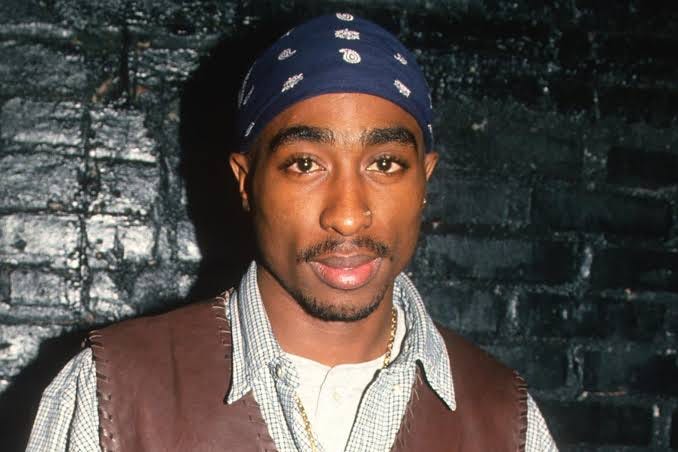
On August 13, a Las Vegas court seated 12 jurors and four alternates for the murder trial of Duane “Keffe D” Davis. Opening statements are scheduled for Monday, August 17. Davis has pleaded not guilty. Prosecutors allege that he orchestrated the 1996 drive-by killing of Tupac Shakur and supplied the weapon. They do not allege that Davis fired the fatal shots.[12]
For nearly 30 years, this killing has lived inside memoir, documentary, street history, accusation and mythology. A courtroom has different obligations. The government carries the burden of proof, Davis gets a defense, and cultural certainty does not substitute for admissible evidence.
Why this matters. A verdict cannot restore Tupac, and a trial should not become another true-crime carnival built on a Black artist’s death. Its value is narrower and more serious: the only prosecution ever brought in the case will finally be tested through evidence rather than rumor.
JASON ARDAY: WHEN INVESTIGATION BECAME AN IDENTITY VERDICT
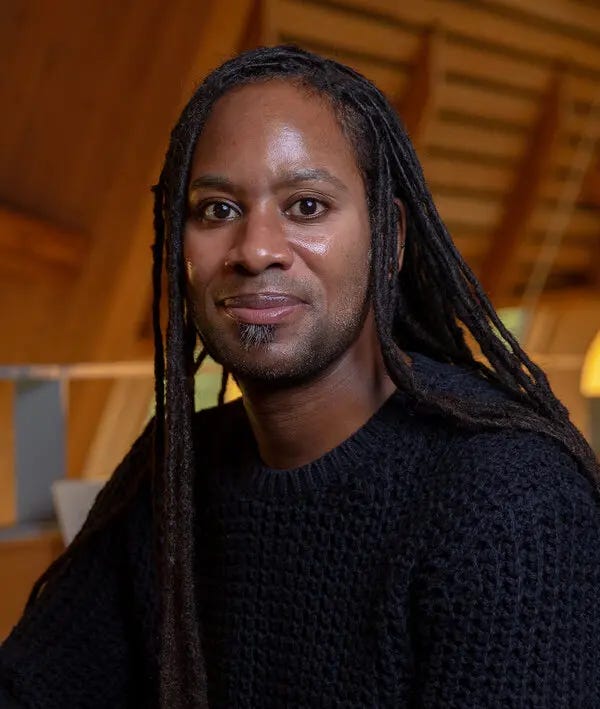
Jason Arday, 41, was found unresponsive at his home in south London on Friday, August 14, and pronounced dead at the scene. Metropolitan Police describe the death as unexpected but not believed suspicious. A file is being prepared for the coroner, and no public cause of death has been announced.
That means this article will not claim suicide, imply foul play or assign responsibility for his death to the press, Nathan Cofnas, Aba N Preach, TKM or anyone else.[13]
Arday’s family says he endured sustained abuse and a campaign of misinformation that became too much for him. That is the family’s assessment, not a coroner’s finding. London Mayor Sadiq Khan called what happened a pernicious public shaming. Cambridge and other institutions where Arday worked issued statements of grief.[13]
The academic record cannot be reduced to either “proven fraud” or “completely exonerated.” Scholars raised integrity concerns before the public explosion, several papers received corrections, and media analyses identified substantial similarities in his 2015 doctoral thesis. Liverpool John Moores University reviewed the thesis and upheld the doctorate.
Cambridge initially said prior complaints had produced no finding of wrongdoing, then announced a fresh inquiry after receiving new information about qualifications, honorary appointments and continuing misconduct complaints. Arday denied deliberate plagiarism while acknowledging mistakes and errors.[14]
The Sunday-night update is that Cambridge has paused its inquiry while Arday’s family grieves and may decide later whether to reopen it. No Cambridge investigation had reached a final conclusion before his death.[15]
The public takedown became racialized even though the underlying concerns did not originate entirely on the far right. Nathan Cofnas, who describes himself as a race realist and is known for claims connecting race and academic ability, ignited the public campaign with a post titled “DEI Fraud and Cover-Up at Cambridge.”
Conservative and anti-DEI outlets then treated Arday’s case as a referendum on Black advancement and institutional standards. Political provenance cannot disprove a document, but it tells us why one disputed academic record became a symbolic hunt.[14]
Black creators entered that machinery too. On August 12, before Arday’s death was reported, Aba N Preach released a 26-minute video titled “Total Fraud.” They called Arday a liar, plagiarist and fraud, mocked and questioned his account of his disability and developmental history, and treated unfinished allegations as settled.
The most revealing moment comes when Aba acknowledges that some accusers had questionable research or “political axes to grind,” then says Arday “definitely did these things” anyway.[16]
After Arday’s death, TKM challenged Aba N Preach and the British media. He said they had thrown Arday under the bus, failed to perform due diligence and had a duty to “make sure you get it right.”
That rebuke captures the responsibility attached to a large platform. It does not establish that every allegation against Arday was false, that Aba N Preach failed due diligence as a proven fact or that any coverage caused his death.[17]
We do not have to choose between those forms of certainty. Black solidarity does not require suppressing evidence. Black commentary still owes its audience a visible line between verified fact, disputed allegation, inference, performance and joke. Arday’s death does not acquit him of every allegation, and alleged errors do not erase his humanity.
Why this matters. An allegation can deserve investigation without a human being deserving annihilation. When a creator prints the verdict in the title before the institutions finish their work, criticism becomes identity judgment and the audience is trained to experience humiliation as proof.
Arts
THE KENNEDY CENTER BECOMES A SELF-MONUMENT
On August 13, the Trump-aligned Kennedy Center board voted to add language to the building crediting President Donald Trump with its restoration and renovation, designate the grounds as “President Donald J. Trump Plaza” and close most of the center for two years. The Reach could retain some programming. The vote followed a federal judge’s order removing Trump’s name and blocking an earlier closure plan.[18]
The board has approved a plan. The new inscription has not yet become an accomplished fact, the building has not already begun this newly approved closure, and the legal conflict remains unresolved. Those distinctions matter because institutional capture often arrives through repeated administrative acts that dare the courts to keep saying no.[18]
Why this matters. Control the board, control the building, control access to the stage, then control the sentence future visitors are expected to remember. A national arts institution is being used to personalize state power and place one living politician inside the architecture of public memory.
ZEITZ MOCAA CHOOSES ITS NEXT ARTISTIC DIRECTOR

On August 12, Cape Town’s Zeitz Museum of Contemporary Art Africa announced Elvira Dyangani Ose as its next artistic director, effective October 1. She brings leadership and curatorial experience from MACBA, The Showroom, Tate and work involving artists from Africa and its diaspora. She is not yet serving in the position, and her title will be artistic director.[19]
Why this matters. Museum leadership is infrastructure. It shapes which artists are collected, preserved, financed, studied and made legible across borders. A major African institution selecting its next steward is a story about continuity and gatekeeping power, not merely a prestigious appointment.
BLACK ART IN AMERICA BUILDS A DOOR OF ITS OWN
Black Art In America’s Fine Art Print Fair and Works on Paper Show ran August 14 through August 16 at its Gallery & Gardens in East Point, Georgia. The event centered limited-edition prints, original works on paper, multiple price points, artist engagement and practical collecting education. The physical fair concluded Sunday, while its online collection remains accessible.[20]
Why this matters. This is access with ownership attached. While one national institution turns toward personal branding, Black artists and collectors are building circulation and cultural memory through independent infrastructure without waiting for an elite gatekeeper to declare the work valuable.
Sports
THE WNBA DECLINES TO MANUFACTURE AN EMERGENCY
The WNBA’s anti-hate task force met on August 12 after former NBA players Enes Kanter Freedom and Royce White announced that they identified as women and intended to enter the 2027 WNBA draft.
No transgender woman has appeared on a WNBA roster, and the league said no immediate eligibility matter affected it. The WNBA condemned bad-faith efforts to marginalize people and announced no new rule, while saying discussion would continue.[21]
The contrast inside the Reader’s Cut is the WTA. Genetic eligibility screening for WTA players began this month at the Cincinnati Open, according to Jessica Pegula. The one-time test looks for the SRY gene. Supporters describe it as a fairness measure, while human-rights advocates argue that it subjects every player to screening in response to a category of controversy rather than a known current transgender competitor.[22]
Why this matters. These are two different institutional responses to the same political pressure. The WNBA declined to treat two men’s stunt as an immediate eligibility emergency. The WTA converted the debate into a medical-governance system affecting every player. The real story is who acquires power over women’s bodies when a hypothetical threat becomes policy.
COLLEGE SPORTS AND THE WORD “PROTECTION”
The Senate left for recess on August 8 without voting on the Protect College Sports Act, though the bill was placed on the September calendar. Supporters say it would create national name, image and likeness and revenue-sharing rules, preserve scholarships and medical protections, and protect women’s and Olympic sports.
The AFL-CIO Sports Council argues that it would limit collective bargaining, athlete compensation and states’ ability to expand athlete rights.[23][24][25]
The delay did not settle the dispute. Labor opposition was one force among several, including concerns from senators in Southeastern Conference states, members of the Congressional Black Caucus, amendment fights and the legislative calendar. Calling the bill “protection” does not resolve whom the protection is designed to secure.
Why this matters. Institutions want national stability around a profitable system. Athlete workers and unions want power over compensation and working conditions. The stalled bill showed that athlete labor is not a settled question Congress can package beneath a reassuring title.
THE AUDIENCE WAS THERE
Nielsen reported 28.6 billion U.S. viewing minutes for women’s sports during the first half of 2026, an 18 percent increase over the same period in 2025.
It also reported advertising spending up 120 percent since 2022 and 3.8 billion WNBA viewing minutes before the All-Star break. Those figures measure aggregate viewing minutes and advertising estimates, not unique viewers or league revenue.[26]
Why this matters. For years, the industry described women’s sports as an audience problem when the deeper problems were access, investment and promotion. Put games where people can find them, cover athletes like their work matters, and the supposedly missing audience becomes measurable.
Closing Argument
THE SUNDAY AUTOPSY
“Who said I can’t?” begins with one Arkansas trooper answering one Black teenager. It does not make a police punch, a funding rule, a procurement forecast and a creator commentary video interchangeable. The harms differ. The recurring psychology is the collapse of restraint.
Power acts first, supplies the euphemism or verdict afterward, then asks who has the standing to object.
At the roadside, that collapse became literal state violence. In federal policy, it became surveillance, citizenship categories, low-visibility pain technology and a medical-funding penalty. In culture, completed labor became a potential accounting loss, a public arts institution became a president’s monument, and an unresolved academic case became an entertainment product with the verdict already printed on the package.
There is projection underneath much of this. Power relocates its own aggression into the person it wants to control, turning Hackett’s questions into attitude, organizing into a security threat, poor families into the policy problem and a Black professor’s disputed record into evidence against an entire project of Black advancement.
Once that projection is accepted, the institution can describe punishment as protection.
Jason Arday’s death does not resolve the allegations, and the allegations did not cancel his personhood. Neither TKM’s anger nor Aba N Preach’s confidence can substitute for findings from a coroner or an academic institution.
Black creators do not owe every Black public figure automatic defense, but large platforms do owe their audiences enough respect to keep evidence, uncertainty, judgment and ridicule from collapsing into one loud performance.
Who was supposed to tell power no this week? The law, courts, oversight, professional standards, unions, journalists, artists, audiences and the public all carry pieces of that responsibility.
Some still tried. Hackett filed suit, civil-rights groups returned to court, and a buried film made it to the road toward theaters. Zeitz MOCAA chose stewardship, Black Art In America built access, the WNBA recognized a bad-faith stunt, the college-sports bill revealed unresolved athlete labor power, and women’s-sports audiences kept showing up.
I do not have a clean “hope wins” ending for Sunday night. Refusal has to become durable power before the machinery learns that it can ignore the word no.
The standard worth carrying into Monday is simple even when enforcing it is not: authority must explain itself, evidence must remain separate from spectacle, and nobody’s humanity becomes collateral because accountability is inconvenient.
Support XVOA
KEEP THIS THING ALIVE
This Reader’s Cut required the traffic-stop recording, federal complaint, court filings, executive order, procurement record, health-policy documents, academic chronology and a source-level audit of two creator videos.
Free readers who want this Black-led intelligence desk to keep doing that work can join the paid XVOA community. Current paid members, thank you.
Readers who do not want another recurring subscription can use Buy Me a Coffee as the one-time support lane.
Sources
Hackett v. Arellano, federal complaint. The August 10 complaint supplies Hackett’s civil allegations, the stop chronology and the pleaded legal claims.
KATV, continuous dashcam upload. The recording documents the stop, the post-strike exchange and Arellano’s later statements while leaving the actual punch below the camera frame.
CBS News, Arkansas trooper traffic-stop investigation. The report supplies additional case status, police-record context and responses to the incident.
Defense discovery motion describing Operation Puppet Master. The filing quotes and characterizes government discovery concerning undercover activity and information collection.
The Guardian, document-based report on anti-ICE surveillance. The report places the defense filing, charged defendants and named organizations in context.
Reuters, Trump signs two narrower birthright-citizenship orders. The report describes the August 6 orders and the categories asserted by the administration.
ACLU, August 11 motion announcement. The civil-rights coalition explains the requested clarification in the Barbara class action.
DHS Acquisition Planning Forecast System, CTG-5 G.L.O.V.E. record. The procurement record establishes the estimated value, agencies and forecast stage.
Federal Register, final Medicaid and CHIP funding rule. The primary rule supplies the covered programs, age distinctions, transition terms and October 13 effective date.
Ketchup Entertainment, official Coyote vs. Acme page. The distributor lists the August 28 theatrical release.
Associated Press, Coyote vs. Acme approaches theaters. The report covers the film’s shelving, sale and return from a proposed tax-write-off burial.
Associated Press, jury seated in the Tupac Shakur murder trial. The report supplies jury composition, charge posture and the scheduled August 17 opening.
The Guardian, Jason Arday found dead at 41. The report supplies the police posture, family statement, institutional responses and absence of a public cause of death.
The Guardian, documented chronology of the Jason Arday allegations. The investigation reviews the thesis allegations, corrections, earlier complaints and institutional responses.
The Guardian, Cambridge pauses its Arday inquiry. The Sunday report supplies the university’s latest inquiry status and response after Arday’s death.
Aba N Preach, “Total Fraud.”. The August 12 video is the primary source for the creators’ framing, categorical claims and acknowledgment of the campaign’s political baggage.
The King Mono Show, Jason Arday response. The post-death episode is the primary source for TKM’s criticism of British media and Aba N Preach.
Associated Press, Kennedy Center board vote. The report covers the inscription proposal, plaza designation, closure vote and prior court order.
Zeitz MOCAA, Elvira Dyangani Ose appointment. The museum’s announcement confirms her title, October 1 start and professional background.
Black Art In America, Fine Art Print Fair and Works on Paper Show. The official page supplies the August 14 through 16 schedule, location, artists and access model.
The Guardian, WNBA rejects bad-faith transgender debate. The report covers the task-force meeting, absence of an immediate eligibility issue and the provocation by former NBA players.
Reuters, WTA genetic testing begins. The report supplies the Cincinnati rollout, SRY screening method and competing responses to the policy.
Associated Press, Protect College Sports Act stalls before recess. The report covers the missed vote, opposition and September calendar.
Senate Commerce Committee, Protect College Sports Act description. The committee release presents the bill supporters’ case and proposed protections.
AFL-CIO Sports Council, opposition to the Protect College Sports Act. The labor statement explains concerns about bargaining, compensation and state athlete-rights laws.
Reuters, Nielsen reports growth in women’s-sports viewing. The report supplies the viewing-minute and advertising estimates with the relevant measurement limits.


