


Blackout Brief Daily | March 21, 2026
Run timestamp (ET): Saturday, March 21, 2026, 12:37 p.m. ET.
BREAKING UPDATE
Late-breaking development: Reuters reported Saturday that Trump threatened further U.S. attacks on Iran, including strikes on its power plants, unless Tehran fully reopens the Strait of Hormuz within 48 hours. That is a major escalation from the earlier “winding down” language and a reminder that the public story of this war keeps shifting faster than the underlying danger. This update landed after the original pre-post timestamp for this brief. (reuters.com)
Five Things That Matter Today
• Natanz was hit again as Trump said the U.S. is considering “winding down” the Iran war, even while Iranian media, the IAEA, and global markets all signaled that the conflict is still widening, not settling. [1][2][3] (reuters.com)
• Iran targeted Diego Garcia, the joint U.S.-U.K. base in the Indian Ocean, with two intermediate-range ballistic missiles, marking its longest-range strike of the war so far even though neither missile hit. [4][5] (reuters.com)
• Attacks on Natanz and the Bushehr near-miss are fueling nuclear panic, but in the authoritative reporting reviewed for this brief, there is still no verified evidence that Israel is preparing to use nuclear weapons. [6][7][8] (reuters.com)
• The Iran war is now a full-blown energy and inflation emergency, with Reuters describing the worst global energy disruption in history, the EU scrambling to relax gas targets, and Washington lending tens of millions of barrels from the SPR to tamp down prices. [9][10][11] (reuters.com)
• While national attention clustered around Natanz, Diego Garcia, and Trump’s shifting war talk, the buried file showed a harsher domestic map: private-prison tax fights in New Jersey, detained families unable to find loved ones during the DHS shutdown, a 19-year-old’s death in ICE custody, a Republican push to overturn Plyler, a new fight over Breonna Taylor, rising BGE pain for Black Baltimoreans, and Kansas trans residents living under fear and ID invalidation. [14][16][18][20][22][28][32] (newsfromthestates.com)
If this briefing helps you see what the national headlines miss, restack it so someone else can see it too. That matters more than people think. The algorithm tends to reward momentum, which means restacks, shares, comments, and outside clicks help a piece travel instead of die in place. If you want to back the work directly, go paid here:
And if you want to support the work without taking on another subscription, the easy move is simple:
The news hierarchy audit in this window was blunt. Major national coverage was dominated by the Iran war’s newest escalations: another strike on Natanz, Iran’s attempt to reach Diego Garcia, Trump’s new “winding down” language, the worsening energy shock, and the growing sense that Washington’s stated endgame changes faster than events on the ground. Reuters and AP both treated those developments as the central national story, and they were right to do so. (reuters.com)
But when the scan moved outward from the big national desks to Black press, statehouse reporting, legal coverage, immigrant-rights reporting, education reporting, and LGBTQ reporting, a different country came into view. The same government crisis showing up nationally as airport lines and unpaid TSA workers is also leaving detained families unable to locate loved ones or secure medical care. The same immigration crackdown being narrated as a national enforcement fight is also turning into private-prison tax battles, local detention expansion, courtroom assaults on school access, and another death inside ICE custody. (vpm.org)
Top Breaking National Stories
1. Natanz Is Hit Again as Trump Talks About “Winding Down” the War
Reported (ET): March 21, 2026, 12:40 a.m. ET. [1] ~~~~~~~~~~~~~~~~~~~~~~~
Summary
Reuters reported early Saturday that Trump said the U.S. is considering “winding down” its military effort against Iran even as Iranian media said the Natanz enrichment complex had been attacked again. Reuters also reported that more than 2,000 people have been killed in Iran since the war began on February 28 and that oil prices are now up 50% because of attacks on energy infrastructure. A separate Reuters dispatch said Iranian state-linked media reported no radioactive leakfrom the latest Natanz strike and that nearby residents were not at risk. AP confirmed both the fresh Natanz hit and the lack of reported leakage, while also noting that Israel publicly said it was “not aware” of carrying out that specific strike. The result is a familiar contradiction: Trump is talking like the war is nearing closure while the battlefield itself is still producing fresh attacks on one of Iran’s most important nuclear sites. (reuters.com)
Why It Matters
Natanz is not symbolic scenery. It is one of the central sites in the long-running struggle over Iran’s nuclear program, which means every new strike there expands the risk of regional panic, miscalculation, and a deeper international crisis around nuclear contamination and retaliation. (reuters.com)
Who Is Affected
Iranians living near strategic infrastructure are directly affected first, but the blast radius is wider than that. Once a war reaches deep into nuclear infrastructure, the people exposed are not only military personnel or regime insiders. They are civilians, neighboring states, energy consumers, and anyone living downstream of a conflict that can now rattle both radiation fears and global prices at the same time. (reuters.com)
What Mainstream Missed
National coverage rightly elevated Natanz, but too much of it still framed the moment as a discrete military development rather than a contradiction inside the White House’s own narrative. If the war were truly winding down, fresh attacks on Natanz would not be one of the day’s defining headlines. (reuters.com)
Sources
Reuters — “Trump says US considering ‘winding down’ Iran war; Natanz nuclear facility attacked.” Original reporting on Trump’s “winding down” language, the new Natanz strike, the rising Iranian death toll, and the war’s economic spillover. ~~~~~~~~~~~~~~~~~~~~~~~
Reuters — “Natanz enrichment facility targeted in US-Israeli attack, Iran’s Tasnim says.” Follow-up report focused on the fresh Natanz strike and the no-leak assessment. (reuters.com)
AP News — “Iran says its main nuclear enrichment facility has been struck again.” Broad war update confirming the new Natanz hit, no reported leakage, and the IAEA’s response. (apnews.com)
2. Iran Targeted Diego Garcia, Extending the War’s Geography in a Way Washington Can No Longer Downplay
Reported (ET): March 20, 2026, 8:46 p.m. ET. [4] (reuters.com)
Summary
Reuters reported that Iran fired two intermediate-range ballistic missiles at Diego Garcia, the joint U.S.-U.K. military base in the Indian Ocean. Neither missile hit the base. Reuters said one missile failed in flight, while a U.S. warship fired an SM-3 interceptor at the other, though it remained unclear whether that interception succeeded. AP described the attempted strike as Iran’s longest-range missile attack of the war, noting that it suggested Tehran either has farther-reaching missile capacity than previously acknowledged or found a way to adapt its space-launch technology for military use. Even unsuccessful, the Diego Garcia strike matters because it stretched the conflict’s geography and publicly tested the reach of Iran’s missile capability against a base Washington and London cannot dismiss as marginal.(reuters.com)
Why It Matters
Diego Garcia is a strategic node, not a footnote. When Iran can plausibly target a base that far from the immediate Gulf theater, it changes both the military map and the public story Washington has been telling about containment. (reuters.com)
Who Is Affected
U.S. and British personnel at Diego Garcia are the obvious first layer. But so are allied states, shipping routes, and civilians everywhere now paying for a war whose reach keeps extending into new zones and new infrastructures. (apnews.com)
What Mainstream Missed
Much of the headline framing emphasized that the missiles missed. That is true and important. But the more consequential fact is that Iran attempted the shot at all, because that tells you the war’s radius is widening faster than the official rhetoric admits. (reuters.com)
Sources
Reuters — “Iran targeted but did not hit Diego Garcia base with missiles, WSJ reports.” Original reporting on the two-missile strike, the failed shot, and the attempted interception. (reuters.com)
AP News — “What to know about Diego Garcia after Iran targets the remote island’s key US military base.” Explainer on the base’s strategic role, the attempted strike, and why it matters geopolitically. (apnews.com)
3. Natanz and the Bushehr Near-Miss Are Triggering Nuclear Panic, but There Is Still No Verified Evidence Israel Is Preparing to Use Nukes
Reported (ET): March 21, 2026, 12:40 a.m. ET. [6] (reuters.com)
Summary
This is the story about nuclear fear, and it needs to be handled carefully. Reuters reported two separate verified facts that make the fear understandable: Natanz was hit again, and earlier this week a projectile struck an area near Bushehr, Iran’s operating nuclear power plant, though Iran told the IAEA there was no damage or injuries there. Reuters also noted in its war-goals analysis that Israel is widely believed to be the only Middle Eastern country with nuclear weapons, even though it does not officially confirm that status. Those facts are more than enough to explain why people are now worrying openly about whether this war could slide into a nuclear dimension. But in the Reuters and AP reporting reviewed for this brief, the verified story is still about attacks on nuclear-related sites and radiological risk, not a confirmed Israeli plan to use nuclear weapons. (reuters.com)
Why It Matters
In a war like this, rumor is part of the battlefield. Once nuclear facilities are being struck or nearly struck, the line between military escalation and catastrophic public fear gets thinner, and the public starts trying to read intent out of fragments, leaks, and silence. (reuters.com)
Who Is Affected
Iranians living near nuclear infrastructure are the immediate human stake, but so are Gulf states, shipping lanes, and populations across the region that would bear the consequences of any radiological event. The whole point of taking nuclear-site risk seriously is that the damage would not stop neatly at a fence line. (reuters.com)
What Mainstream Missed
The mainstream outlets did not invent the panic. They reported the underlying events. What often gets lost, though, is the difference between nuclear-site escalation and verified nuclear-use planning. That distinction matters, because one tells you the war is dangerous and the other would be a separate, still-unverified step. (reuters.com)
Sources
Reuters — “Russia calls for ‘safety island’ around Iran’s Bushehr nuclear plant.” Reporting on the near-Bushehr strike, the radiological warning, and the call for a safety zone around the reactor. (reuters.com)
Reuters — “How Trump’s stated reasons, goals and timeline for Iran war have shifted.” Reuters’ review noting that Israel is widely believed to possess nuclear weapons while official U.S. war aims keep changing. (reuters.com)
AP News — “Iran says its main nuclear enrichment facility has been struck again.” Reporting on Natanz, the no-leak assessment, and the IAEA’s involvement. (apnews.com)
4. The Iran War Is Now a Full-Blown Energy and Inflation Emergency
Reported (ET): March 21, 2026, 5:06 a.m. ET. [9] (reuters.com)
Summary
Reuters reported Saturday that the Iran war has triggered a “nightmare scenario” for the global energy system, with the effective closure of the Strait of Hormuz halting the passage of roughly 20% of the world’s oil and LNG. Reuters said the crisis has already removed about 400 million barrels, pushed prices up around 50%, and prompted the International Energy Agency to call it the worst global energy disruption in history. A separate Reuters report said the European Union is urging member states to lower gas-storage targets and refill more gradually because prices have surged so sharply during the war. Another Reuters report said Washington has already begun lending 45.2 million barrels from the Strategic Petroleum Reserve to oil companies in an attempt to control prices. This is no longer just a war story or even just a foreign-policy story. It is a price-shock story, an inflation story, a winter-heating story, and a grocery-bill story. (reuters.com)
Why It Matters
Energy shocks are one of the fastest ways war turns into ordinary life. Once fuel, fertilizer, shipping, and power costs start moving together, the burden lands first on people with the least room in their budget to absorb it. (reuters.com)
Who Is Affected
Workers, commuters, renters, farmers, and households living paycheck to paycheck are all in the blast radius. The war’s price tag is no longer measured only in appropriations and weapons systems. It is also measured in power bills, airline tickets, food costs, and who gets pushed deeper into debt. (reuters.com)
What Mainstream Missed
Most big coverage understands this as an energy-market story. That is too bloodless. This is a class story. The same oil spike that shows up on a commodities screen shows up later as a forced household decision about what gets cut. (reuters.com)
Sources
Reuters — “Iran war’s energy impact forces world to pay up, cut consumption.” Deep analysis of the Hormuz disruption, the IEA warning, price spikes, and the war’s direct hit on consumers. (reuters.com)
Reuters — “EU urges members to cut gas-storage targets due to Iran war, FT reports.” Reporting on Europe’s scramble to soften gas targets as prices surge. (reuters.com)
Reuters — “US lends oil companies 45.2 mln barrels from reserve, first batch of Iran war.” Reporting on the first large SPR move to blunt war-driven price pressure. (reuters.com)
5. Trump’s Endgame Keeps Shifting as the War Slips Beyond His Control
Reported (ET): March 21, 2026, 6:09 a.m. ET. [12] (reuters.com)
Summary
Reuters’ Saturday analysis said Trump now appears to control “neither the outcome nor the messaging” of the conflict he helped initiate. Reuters reported that the lack of a clear exit strategy is putting both Trump’s legacy and his party’s midterm prospects at risk, especially as rising gas prices and troop movements squeeze domestic support. A separate Reuters review published late Friday walked through the administration’s shifting stated goals, showing that the White House and its top officials have cycled through overthrowing Iran’s government, weakening its military, smashing its missile and nuclear capacity, and simply backing Israel’s aims. That same Reuters review also showed the timeline moving around wildly, from claims the war would last four weeks to suggestions it could continue as long as necessary. The picture is not one of strategic clarity. It is one of narrative improvisation after the war outran its original sales pitch. (reuters.com)
Why It Matters
Wars do not get safer when official goals get blurrier. They get harder to constrain, harder to end, and easier to expand under the cover of ambiguity. (reuters.com)
Who Is Affected
The obvious exposure falls on troops and civilians in the war zone. But the political exposure falls on the public as well, because a war without a stable objective is exactly the kind of war that keeps asking for more money, more time, and more sacrifice while never quite admitting what victory was supposed to mean. (reuters.com)
What Mainstream Missed
National outlets have covered Trump’s contradictory statements as a messaging issue. It is more serious than that. A president changing the war’s rationale in real time is not just a communications problem. It is evidence of drift at the top of a live conflict. (reuters.com)
Sources
Reuters — “Three weeks in, Iran war escalates beyond Trump’s control.” Analysis of the war’s drift, the weak exit strategy, and the domestic political risk. (reuters.com)
Reuters — “How Trump’s stated reasons, goals and timeline for Iran war have shifted.” Detailed review of how the administration’s public rationale has moved across the war’s first weeks. (reuters.com)
Stories Buried Beneath the National Headlines
6. New Jersey Lawmakers Advanced a Bill to Tax Private Prisons and Detention Operators
Reported (ET): March 20, 2026, 6:51 a.m. ET. [14] (newsfromthestates.com)
Summary
A New Jersey Assembly panel approved legislation Thursday that would levy three new taxes on private prisons operating in the state. Statehouse reporting said the bill was inspired by the experience of a New Jersey man held for nearly a year after being detained by federal immigration authorities and would target facilities such as Delaney Hall in Newark. Additional local reporting said the proposal would include an 8% fee based on the operator’s federal contract, a $15 per-inmate, per-day fee, and an added private-prison surtax. The bill is explicitly about offsetting what lawmakers describe as the social costs of incarceration and detention. That means New Jersey is not merely protesting immigration detention in speeches. It is experimenting with how to make the detention business more expensive to run. (newsfromthestates.com)
Why It Matters
Private detention is not only a legal system. It is a revenue model. A bill that taxes the operators directly is one way of forcing the economics of detention into the open. (newsfromthestates.com)
Who Is Affected
Immigrant detainees are the people most immediately trapped in the system, but surrounding communities are affected too because detention facilities impose social, political, and economic costs that governments usually hide as administrative necessity. (newsfromthestates.com)
What Mainstream Missed
While national immigration coverage was dominated by war-linked shutdown politics and airport lines, this story moved first through statehouse and local reporting. It satisfies the buried-story test because it was reported on the media edge and because the national frame usually talks about raids and removals, not the profit architecture that makes mass detention possible. (newsfromthestates.com)
Sources
New Jersey Monitor / News From The States — “NJ lawmakers eye new taxes for private prisons that critics call ‘plainly illegal’.” Statehouse reporting on the committee vote and the bill’s anti-detention premise. (newsfromthestates.com)
Jersey Vindicator / bill text records — “New Jersey lawmakers advance bill that would tax private prison immigration detention companies.” Local and legislative descriptions of the 8% contract fee, $15 daily inmate fee, and surtax structure. (jerseyvindicator.org)
7. The DHS Shutdown Is Also Trapping Detained Families in a Fog of Missing Information
Reported (ET): March 21, 2026, 6:00 a.m. ET. [16] (vpm.org)
Summary
NPR reported Saturday morning that the DHS shutdown is making it even harder for families to contact loved ones in immigration detention or find out where they are being held. NPR quoted Rep. Julie Johnson saying constituents have been unable to locate family members or secure medical treatment for people in detention while Congress and DHS provide inconsistent answers about oversight. Reuters, by contrast, reported on the same shutdown mostly through the airport-security lens, showing airports feeding unpaid TSA workers, staff sleeping in cars, and smaller airports potentially facing closure. Both stories are real. But together they show how the same shutdown hits different people in radically different ways depending on whether you are a traveler waiting in line or a family trying to find someone inside detention. The public story is airport disruption. The buried story is vanishing access to detained human beings.(vpm.org)
Why It Matters
Government shutdowns are often covered like management failures. In detention, they become accountability failures.When oversight degrades and families cannot get basic information, detention becomes even more opaque and dangerous. (vpm.org)
Who Is Affected
Detained migrants and their relatives are directly affected, especially families trying to locate someone or press for urgent medical attention. The people with the least institutional leverage get hit first when the agency goes dark. (vpm.org)
What Mainstream Missed
National coverage of the shutdown has overwhelmingly centered on TSA absences, food drives, airport lines, and travel disruption. This story satisfies the buried-story rule because it surfaced in specialty reporting, because the humanitarian consequences for detained families were not leading the national coverage, and because those consequences are structurally different from the airport version of the same shutdown. (vpm.org)
Sources
NPR / VPM — “DHS shutdown hurts families’ access to detention facilities, Democrat says.” Reporting on detained families unable to locate relatives or secure care during the shutdown. (vpm.org)
Reuters — “Airports rush to feed unpaid TSA workers as belts tighten.” National shutdown coverage showing how airport strain has dominated the mainstream narrative. (reuters.com)
8. A 19-Year-Old Mexican Man Died in ICE Custody, the Youngest Known to Die There in Trump’s Second Term
Reported (ET): March 19, 2026, 3:00 p.m. ET. [18] (reuters.com)

Summary
Reuters reported that Royer Perez Jimenez, a 19-year-old Mexican man, died Monday at the Glades County Detention Center in Florida. Reuters said he is the youngest known person to die in federal immigration custody during Trump’s second term and that his death raised the number of immigrant deaths in federal custody this year to at least 13. AP reported that his death is the 46th reported under ICE custody since January 2025 by its count and the second death that week. ICE said the death was a presumed suicide, while Mexico demanded clarification and called such deaths unacceptable. The case is not isolated enough to be called an aberration anymore. It is part of a detention system that keeps producing deaths faster than the country seems willing to absorb them. (reuters.com)
Why It Matters
Deaths in custody are among the clearest signals that a detention system is not merely strict but failing. When a teenager becomes the youngest known death of an administration’s second term, the moral problem is not only what happened in one cell. It is what kind of system keeps making such outcomes thinkable. (reuters.com)
Who Is Affected
Perez Jimenez’s family is directly affected, but so are thousands of detainees living under the same conditions and all the families trying to keep track of them. Migrants in detention are often positioned publicly as abstractions. Deaths like this are a brutal reminder that they are living people inside a closed system. (reuters.com)
What Mainstream Missed
The story did get national coverage. But it remained small relative to the scale of the underlying problem and was overshadowed almost immediately by war, shutdown, and airport headlines. It satisfies the buried-story test because the consequences for detainees and migrant families are profound, yet the national narrative treats each death as an isolated item rather than a pattern. (reuters.com)
Sources
Reuters — “Nineteen-year-old Mexican man dies in ICE custody, agency says.” Original reporting on the death, ICE’s account, and the yearly custody death toll. (reuters.com)
AP News — “A Mexican teen migrant dies in a Florida jail holding ICE detainees.” Additional reporting on the AP death count and the broader pattern inside ICE custody. (apnews.com)
9. House Republicans Are Openly Eyeing the End of Plyler v. Doe
Reported (ET): March 20, 2026. [20] (k12dive.com)
Summary
K-12 Dive reported Friday that a group of House Republicans is seeking to overturn Plyler v. Doe, the 1982 Supreme Court decision that guarantees undocumented children access to public education under the 14th Amendment. The outlet quoted Rep. Chip Roy saying of Plyler, “It’s time for it to go.” The House Judiciary Committee’s own hearing page confirmed the purpose of the March 18 hearing was to examine why Plyler was “wrongly decided” and how it allegedly harms schools and students. K-12 Dive also reported warnings from MALDEF’s Thomas Saenz that overturning Plyler would leave thousands of children out of school during the day and threaten the continuity of public education itself. This is not a side argument inside conservative legal circles. It is a live congressional effort to normalize the idea that some children can be pushed outside the schoolhouse door again. (k12dive.com)
Why It Matters
Public education has always been one of the country’s most fought-over boundary lines. A direct attack on Plyler is not just an immigration story. It is an attempt to redraw who counts as educable, legible, and entitled to the state’s basic obligations. (k12dive.com)
Who Is Affected
Undocumented children are the immediate targets, but the danger does not stop there. Saenz’s warning makes clear that once the logic of exclusion is accepted for one set of children, the precedent can travel to other children whose education is seen as too costly or politically inconvenient. (k12dive.com)
What Mainstream Missed
This story was carried more clearly by education reporting and committee materials than by the national political front page. It satisfies the buried-story rule because it was elevated first in specialty coverage, and because its consequence for immigrant children and public education is much larger than the amount of mainstream oxygen it received. (k12dive.com)
Sources
K-12 Dive — “Republican reps eye SCOTUS ruling on undocumented children in schools.” Education-policy reporting on the new Republican push against Plyler and the hearing’s stakes. (k12dive.com)
House Judiciary Committee Republicans — “Immigration Policy by Court Order: The Adverse Effects of Plyler v. Doe.” Official hearing page stating the committee’s goal of reexamining and attacking Plyler. (judiciary.house.gov)
10. Da’Quain Johnson’s Family Says the Police Story Does Not Match the Video
Reported (ET): March 20, 2026. [22] (capitalbnews.org)

Summary
Capital B reported Friday that the family of Da’Quain Johnson, a 32-year-old Black father killed by Grand Rapids police, is disputing the official account of his shooting. Capital B reported that Johnson’s mother and the family’s attorneys say a bystander video appears to show him pinned facedown, with a K-9 biting him, when he was shot three times in the back. Local television coverage echoed the family lawyers’ claim that video evidence raises serious questions about whether the force used was justified. Police say Johnson was armed and pointing a gun. The dispute matters because this is the familiar architecture of police accountability in America: selective footage, official assertions, grieving family, and a fight over whether the public will see the whole thing or only the state’s preferred cut. (capitalbnews.org)
Why It Matters
The country has seen this pattern enough times to know the stakes. When a Black man dies in police custody or under police fire and the family says the official narrative is false, the question is not merely what happened in one encounter. It is whether the system can still be trusted to tell the truth about itself. (capitalbnews.org)
Who Is Affected
Johnson’s family is directly affected, especially the child relative who, according to his mother, watched the incident unfold. But Black communities broadly are affected because police legitimacy erodes every time the public is asked to accept partial disclosure as a substitute for accountability. (capitalbnews.org)
What Mainstream Missed
This story was led by Black press and local reporting, not the national agenda. It qualifies as buried because the core dispute over police narrative versus bystander evidence is exactly the kind of locally explosive story that often fails to clear the national threshold unless unrest or viral footage forces it there. (capitalbnews.org)
Sources
Capital B — “Da’Quain Johnson’s Family Disputes Police Account of Fatal Michigan Shooting.” Black-press reporting on the family’s challenge to the official narrative and the bystander-video dispute. (capitalbnews.org)
Spectrum News / local Michigan coverage — “Civil rights attorneys challenge police narrative in fatal Grand Rapids shooting.” Local follow-up on the attorneys’ claims and the pressure for transparency. (baynews9.com)
11. DOJ Wants to Drop the Case Tied to the Breonna Taylor Raid
Reported (ET): March 20, 2026. [24] (reuters.com)
Summary
Reuters reported Friday that the Justice Department moved to drop the criminal case against two former Louisville officers accused of falsifying the search warrant affidavit that led colleagues to Breonna Taylor’s home in 2020. Reuters said the move is part of a broader Trump-administration effort to unwind civil-rights and police-misconduct cases initiated under Biden, including the Louisville policing reform settlement. AP reported the officers’ remaining charges should be dismissed “in the interest of justice,” according to prosecutors, and noted that a hearing is set for April 3. Taylor’s death, and the no-knock raid that killed her, helped ignite one of the largest protest waves in recent U.S. history. This latest step does not just revisit an old case. It tells the country what kind of police accountability this administration is prepared to reverse in plain view. (reuters.com)
Why It Matters
Breonna Taylor is not simply a past symbol. Her case remains one of the clearest measures of whether institutions can tell the difference between bureaucratic error and lethal state abuse. Pulling back now sends a message about how quickly the state is willing to forget. (reuters.com)
Who Is Affected
Black women, Black communities, and families seeking justice in police killings are directly implicated by the precedent here. So are cities and departments that heard, after 2020, that federal oversight might still mean something. (reuters.com)
What Mainstream Missed
This story got national coverage, but much of it framed the dismissal as another legal turn in a long-running case. The deeper consequence is institutional. It is one more sign that the federal government is walking backward out of police-accountability work that emerged from Black-led protest. (reuters.com)
Sources
Reuters — “DOJ seeks to drop criminal case tied to police killing of Breonna Taylor in 2020.” Reporting on the dismissal move and its place in the administration’s larger retreat from police-misconduct enforcement. (reuters.com)
AP News — “Feds move to dismiss charges against officers accused of falsifying warrant in Breonna Taylor raid.” Additional reporting on the filing, hearing date, and family criticism. (apnews.com)
12. Dolores Huerta’s Accusation Against Cesar Chavez Is Forcing a Reckoning About Power Inside the Labor Movement
Reported (ET): March 18, 2026, 8:09 p.m. ET. [26] (reuters.com)

Summary
Reuters reported that civil-rights leader Dolores Huerta publicly accused Cesar Chavez of sexual assault and said she had stayed silent for decades because she believed telling the truth would damage the farmworker movement she had spent her life helping build. AP reported that Huerta is among women and girls who say Chavez abused them and that the allegations have already triggered cancellations of Chavez celebrations and reevaluations of public honors tied to his name. Reuters also reported that the Chavez family did not dispute the allegations and instead praised survivors’ courage. This is not a gossip story about a dead icon. It is a power story about what women inside movements are expected to swallow so the movement’s public myth can survive. (reuters.com)
Why It Matters
Movements do not stop being movements when abuse happens inside them. But the test of a movement’s moral seriousness is whether it can face what was done in its name without asking women to disappear again for the sake of the brand. (reuters.com)
Who Is Affected
Huerta, the surviving women, and the families tied to the farmworker struggle are directly affected. More broadly, Latina women, labor organizers, and survivors inside political movements are affected because this story touches the old rule that powerful men in righteous causes are often treated as untouchable. (reuters.com)
What Mainstream Missed
Reuters and AP both covered this, so the problem is not total absence. The coverage gap is in framing and hierarchy.Overshadowed by war, the story often landed as legacy scandal when it should also be understood as a live reckoning about abuse, silence, and power inside one of the country’s most iconic labor movements. (reuters.com)
Sources
Reuters — “US civil rights leader Dolores Huerta accuses Cesar Chavez of sexual assault.” Reporting on Huerta’s accusation, the Chavez family’s response, and why she says she stayed silent. (reuters.com)
AP News — “César Chavez accused of sexually abusing labor rights leader Dolores Huerta and others.” Additional reporting on the broader allegations and the rapid public fallout. (apnews.com)
13. Black Baltimoreans Are Still Getting Crushed by BGE Bills While the Utility Dodges Public Scrutiny
Reported (ET): March 20, 2026. [28] (afro.com)
Summary
AFRO reported Friday that Baltimore residents, especially Black residents, continue to struggle with rising utility costs and that city leaders held a hearing focused on Baltimore Gas and Electric’s skyrocketing prices. AFRO reported that BGE executives did not attend the hearing and instead dismissed it as “political theater.” AFRO also reported residents describing impossible tradeoffs between heat, rent, debt, and food, while organizers argued Black residents face higher poverty, stagnant wages, and less ability to absorb these price shocks. Local television reporting last week confirmed the same no-show and the same public anger. This is not just a rate story. It is what monopoly utility pain looks like when it lands on a city where Black families already have less cushion to begin with. (afro.com)
Why It Matters
Cost-of-living coverage often talks in national averages. Utility bills make the crisis intimate. They tell you exactly when a market structure, regulatory framework, and local monopoly converge into household strain. (afro.com)
Who Is Affected
Black Baltimoreans living with higher poverty rates, disabled family members, and fixed or stagnant incomes are especially affected. AFRO’s reporting made clear that some residents are already taking on debt or sacrificing other necessities to keep the lights and heat on. (afro.com)
What Mainstream Missed
This story was surfaced by Black press and local media, not by the national business desks that dominate energy and inflation coverage. It qualifies as buried because the national story abstracts cost pressure into charts and macro trends, while the local Black-press story shows exactly which families are eating the cost and which institution skipped the room where they were supposed to answer for it. (afro.com)
Sources
AFRO — “Baltimore residents speak out as BGE skips oversight hearing.” Black-press reporting on rising utility bills, BGE’s absence, and the disproportionate hit on Black families. (afro.com)
WBAL-TV — “City holds hearing on rising utility bills, but BGE doesn’t go.” Local reporting confirming the no-show and the city’s affordability concerns. (wbaltv.com)
14. Turner Station, a Historic Black Community, Finally Won Federal Flood-Resilience Money
Reported (ET): March 20, 2026. [30] (afro.com)
Summary
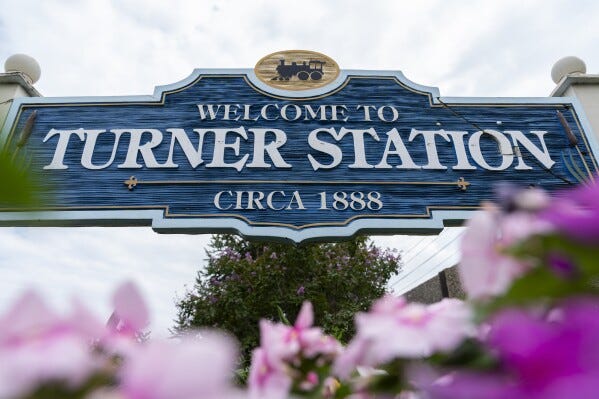
AFRO reported Friday that Turner Station, a historic Black community in Baltimore County, received a $3.15 million federal grant for flood resiliency and mitigation upgrades after decades of flooding and property damage. AFRO said the money will fund the first phase of the community’s flood-resilience roadmap, including pumps, drainage improvements, and stormwater management. Community leaders described the grant as a first step after years of historic neglect. Local television had already reported the grant announcement earlier in the month, but AFRO’s new coverage located it within the longer history of Black shoreline vulnerability and delayed public investment. This is one of those stories national climate coverage almost never holds onto long enough: the slow violence of Black communities waiting years for the state to take recurring flooding seriously. (afro.com)
Why It Matters
Environmental justice is not only about disasters after they happen. It is also about who gets left exposed long enough that “resilience” money feels like overdue recognition rather than routine infrastructure maintenance. (afro.com)
Who Is Affected
Turner Station residents, homeowners, local businesses, and people living on vulnerable shoreline infrastructure are directly affected. Historic Black communities like this one pay twice when flooding is ignored: first through property damage, then through the long wait for government response. (afro.com)
What Mainstream Missed
This story emerged through Black press and local coverage rather than becoming part of the national climate hierarchy. It qualifies as buried because it was reported locally, because the racial and historical context would likely be flattened in generic infrastructure coverage, and because national attention was elsewhere. (afro.com)
Sources
AFRO — “Turner Station receives federal funding to fight flooding.” Black-press reporting on the $3.15 million grant, the resilience roadmap, and the neighborhood’s history of flooding. (afro.com)
WBAL-TV — “Turner Station receives federal funding to deal with flooding issues.” Local confirmation of the grant and the community’s flood vulnerability. (wbaltv.com)
15. Kansas Trans Residents Are Living Under Fear, ID Invalidations, and Bathroom Policing
Reported (ET): March 20, 2026, 8:10 a.m. ET. [32] (newsfromthestates.com)
Summary
News From The States reported Friday that trans Kansans are living in fear, confusion, and defiance under SB 244, the new law that requires government IDs and public-bathroom use to align with sex assigned at birth. The story said the state immediately invalidated the licenses of 275 people who had changed their gender markers when the law took effect, while advocacy groups have put the larger affected license count at about 1,700. ACLU litigation materials say the law also authorizes anyone who suspects a trans person is using the “wrong” restroom in a government building to sue for $1,000 in damages, and ACLU of Kansas says the law retroactively wiped out roughly 1,700 state-issued licenses. The combined result is not a one-off paperwork issue. It is a state project of public exposure and coerced visibility. This is trans-centered policy as daily-life sabotage. (newsfromthestates.com)
Why It Matters
Identity-document rules are never only administrative. When a state invalidates IDs and ties public-bathroom access to birth-assigned sex, it is creating new points of humiliation, policing, and economic risk for people just trying to work, rent, travel, or move through public life. (aclu.org)
Who Is Affected
Trans Kansans are directly affected first, especially people whose IDs no longer match their presentation or whose safety is now contingent on public confrontation. But the law also affects schools, employers, police, and public agencies that will become sites of forced disclosure and complaint-driven enforcement. (newsfromthestates.com)
What Mainstream Missed
This story was driven by state and civil-rights reporting, not by the dominant national front page. It qualifies as buried because it emerged from local and rights-based outlets, because its consequences are immediate and severe for a marginalized community, and because national political coverage still too often treats anti-trans law as culture-war abstraction rather than a system of daily penalties and exposure. (newsfromthestates.com)
Sources
News From The States / Kansas Reflector — “‘I will never relinquish my license’: New law stokes fear, confusion and defiance for trans Kansans.” State-level reporting on fear, bathroom policing, and residents refusing to surrender invalidated IDs. (newsfromthestates.com)
ACLU — “Transgender Kansans challenge state law invalidating their driver’s licenses and allowing them to be sued for using public restrooms.” Civil-rights litigation summary of the lawsuit, bathroom-bounty provision, and ID invalidation. (aclu.org)
ACLU of Kansas — “Kansas Law Wipes Out 1,700 LGBTQ Driver’s Licenses.” Additional context on the law’s retroactive reach, civil penalties, and the estimated scale of ID invalidation. (aclukansas.org)
Representation Check
• LGBTQ stories included: yes. The Kansas anti-trans ID and bathroom-enforcement story is included. (newsfromthestates.com)
• Black women stories included: yes. The Breonna Taylor case is included. (reuters.com)
• Trans-centered story included: yes. The Kansas SB 244 story is the trans-centered entry in this brief. (newsfromthestates.com)
Closing Note on Coverage Gaps
Today’s reporting hierarchy split the country into two versions of the same crisis. On the front page, the war expanded through Natanz, Diego Garcia, oil shock, and Trump’s wobbly endgame. Underneath that, the buried file showed how state power lands closer to the bone: in detention opacity, school exclusion, utility pain, police impunity, trans exposure, and Black communities still waiting for basic flood protection or honest public accountability. The front-page story told you what power was doing at scale. The buried story told you who it was still doing it to, after the cameras moved on. (reuters.com)
Support XVOA
If this brief helped you catch what larger outlets buried, do not do that thing where you nod, say independent work matters, and assume some mystery person will carry the cost. That is how good work gets praised and slowly starved.
Paid subscriptions buy me the time to keep doing this at the level you just read.
But if another subscription makes you want to back away slowly, take the easy out and buy me a coffee instead.
Buy me a coffee here:
I fail to understand why any media repeat anything trump says or gives him a platform, video or otherwise. I would have openly ignored him years ago.
The tax is smart and should have been done everywhere 20 years ago. It is absurd for local governments to bear the burden for companies that make billions. They have gotten a free ride for decades on the backs of citizens who paid local taxes. Every jurisdiction should do this now, the link to local costs make it way overdue. We need to stop absorbing costs for corps that make billions and trade on the exchange.
THANK YOU for this extensive summary of what's happening here! I appreciate this. This is jam packed!! I applaud you!