


Blackout Brief Daily | April 2, 2026
So damn reliable you forget how good it is. Like COOL AC, baby.
Five Things That Matter Today
• Trump fired Attorney General Pam Bondi, with Reuters and AP reporting that the break came amid fallout over the Epstein files, Bondi’s handling of DOJ independence, and Trump’s dissatisfaction with the pace of going after his enemies; Todd Blanche is now the acting attorney general. [1][2]
• Defense Secretary Pete Hegseth forced out Army Chief of Staff Randy George during an ongoing war, extending the Pentagon purge into the Army’s top command post and, according to The Washington Post, removing two additional senior officers as well. [4][5]
• The Supreme Court appeared skeptical of Trump’s birthright citizenship order, with justices signaling resistance to an executive move that could strip citizenship from hundreds of thousands of U.S.-born children each year. [7][8]
• The DHS funding fight is still unresolved even after Senate action, leaving federal workers and core agencies in limbo while Trump tries to paper over the damage with an order to resume pay. [10][11]
• The Iran war stays in this brief only because there is a material update: Trump’s primetime speech offered no exit timeline, signaled possible further strikes, and helped push U.S. crude above $110 a barrel. [13][15]
If you already subscribed or already slid me some coffee money in the last 72 hours, this part is not for you. Back away from the vehicle. Go shine your halo. Maybe get yourself a little muffin. You already did your civic duty. The rest of y’all, let me ask you something: how is it that I’m in here spending all this time making this thing trustworthy, reliable, and COOL as AC, and now that it is smooth, crisp, and doing what it is supposed to do, people start looking at it like it came free with the lease? I got this thing so dependable folks treat it like plumbing. Nobody sends plumbing a thank-you card. Nobody throws plumbing a brunch. Let that pipe burst, though. Now everybody in a bathrobe holding a candle talking about, “This is unacceptable.” That is how some of y’all act with competence. If the place is on fire, you call it urgent. If the air is COOL and the lights are on, you just sit there like, “Well damn, I figured this was part of the package.”
Now you are really out here misbehaving if you read all this, laugh a little, nod like I said something true, and then moonwalk on out of here without dropping $5. That is not frugal. That is cheap in church clothes. Every body reading this: $5 at least. It should probably be more, but I am trying to keep this elegant and not turn this into a telethon with sweat on my lip. Hit It Again. It’s Just Coffee. And restack it too, because the algorithm is like a needy ex with binoculars. It does not believe I exist unless it hears noise in the hallway and sees some movement through the blinds. And if you are not ready for a full Substack relationship, that is fine. We do not have to make this weird. No labels. No pressure. You do not have to meet my people. Just come through, do something useful, and leave with your dignity intact. Hit it again when the spirit moves you. That is all a friends-with-benefits arrangement really is. The benefit is journalism. The friend is coffee. Everybody grown.
Reporting window: March 31, 2026, 8:20 PM ET to April 2, 2026, 8:20 PM ET.
The news hierarchy audit was clear today. The biggest national outlets were dominated by the Bondi firing, the Pentagon shake-up, the Supreme Court birthright hearing, the DHS funding standoff, and the Iran war’s new economic shock. Those are all real stories, and several are genuinely enormous. But they also absorbed the oxygen that usually gets spent on quieter systems of harm. [1][4][7][10][13]
At the edges of the media ecosystem, a different country came into view. Black press and local reporting surfaced an Atlanta housing fight that could determine whether more Black families stay housed, a Georgia pregnancy-criminalization story with sharp implications for Black women, a scathing ICE camp inspection in Texas, the measurable fallout from a hospital retreat on youth trans care, an immigrant-legal-services crisis for Asian New Yorkers, a Maryland Medicaid estimate with a real body count built into it, and a North Carolina pollution plan critics say protects polluters more than people. [16][19][22][31][34][39][42]
Top Breaking National Stories
1. Pam Bondi Is Out, and the Justice Department Just Got Even More Personal
Reported (ET): April 2, 2026
Summary
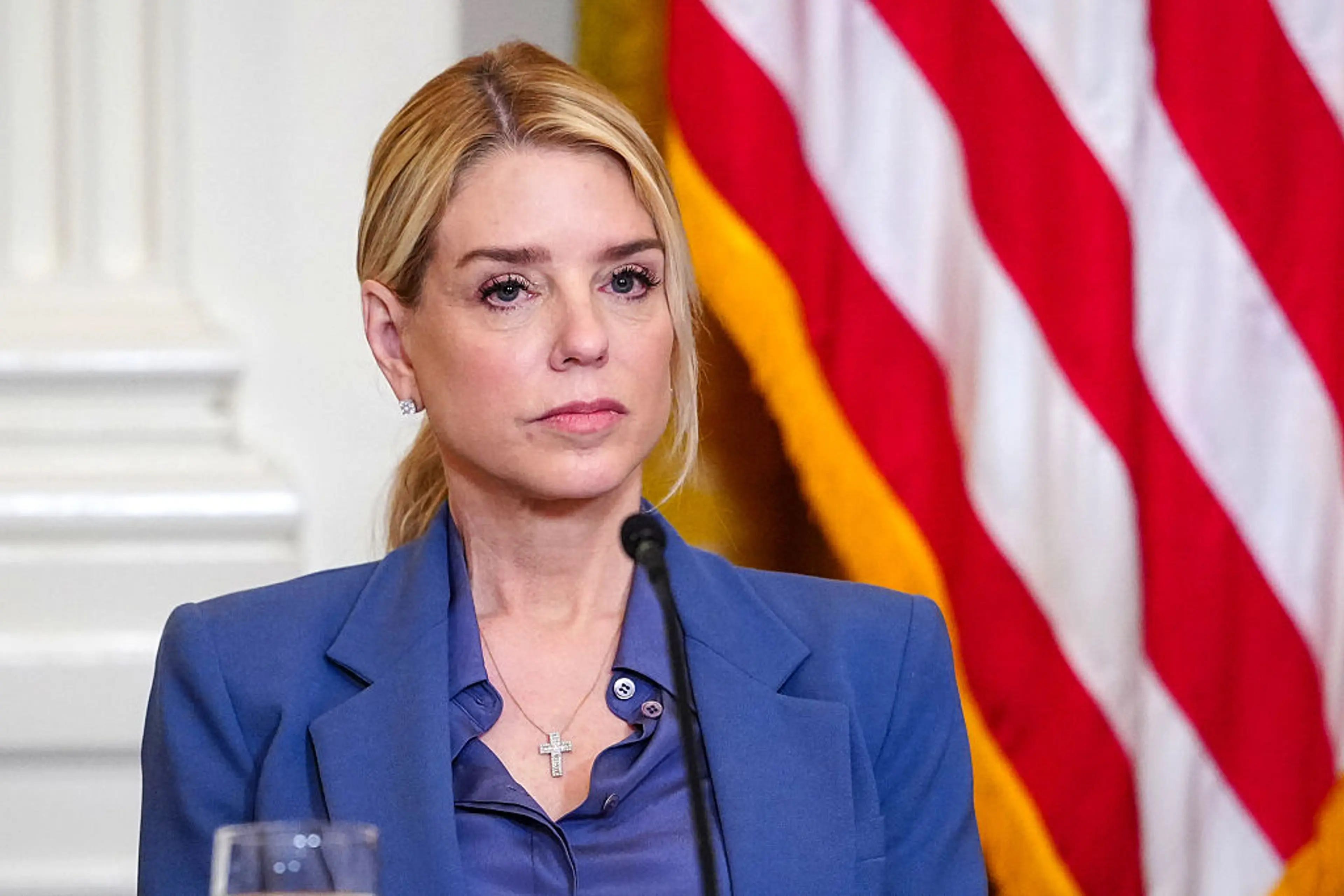
President Donald Trump fired Attorney General Pam Bondi on Thursday. Reuters reported that the break followed mounting dissatisfaction with her performance, especially around the handling of Jeffrey Epstein-related files, criticism over DOJ independence, and Trump’s frustration that Bondi had not moved aggressively enough against his critics. AP reported that Deputy Attorney General Todd Blanche is now serving as acting attorney general. AP also reported that Bondi is still expected to testify before Congress next week about the Epstein files. The result is a Justice Department leadership crisis wrapped inside a loyalty crisis. [1][2]
Why It Matters
This is not an ordinary cabinet reshuffle. The attorney general sits atop the institution that decides what corruption gets investigated, what civil-rights violations get priority, and how much political pressure prosecutors are expected to absorb. By inference from Reuters’ reporting on Trump’s frustration with Bondi’s pace in targeting opponents, the immediate danger is that the next phase of DOJ leadership will be even more openly shaped by personal loyalty and grievance. [1]
Who Is Affected
Anyone who depends on a Justice Department capable of acting like a legal institution instead of a presidential instrument is affected. That includes communities relying on federal civil-rights enforcement when local governments fail, immigrants facing aggressive federal prosecution priorities, and political dissidents who now have fresh reason to worry that the line between law enforcement and retaliation is getting thinner. [1]
What Mainstream Missed
A lot of the immediate coverage treated this as an Epstein story or a palace-intrigue story. The deeper issue is institutional: Reuters explicitly tied Bondi’s fall to pressure over DOJ independence and Trump’s dissatisfaction with her political usefulness. That means the real headline is not just that Bondi is gone, but that the job itself is being redefined as an instrument of presidential appetite. [1][3]
Sources
Reuters — Report on Bondi’s firing, the reported reasons behind it, and Todd Blanche’s interim role. (reuters.com)
Associated Press — Follow-up on Bondi’s removal, Blanche’s appointment, and Bondi’s planned Epstein-files testimony. (apnews.com)
Washington Post — Additional reporting on the White House pressure campaign behind Bondi’s ouster. (washingtonpost.com)
2. Hegseth Forces Out Army Chief Randy George During a War
Reported (ET): April 2, 2026

Summary
Defense Secretary Pete Hegseth forced out Army Chief of Staff Gen. Randy George on Thursday. Reuters described it as the latest purge among the Pentagon’s most senior ranks. The Washington Post reported that two other senior Army officers were removed alongside George. Reuters said George was pushed into immediate retirement, even though he had more than a year left in his term. The firings landed while the United States is still prosecuting war against Iran and moving additional forces into the region. [4][5]
Why It Matters
This kind of upheaval would be destabilizing at any time. During wartime, it sends a more dangerous message: command continuity is negotiable, and ideological compliance may matter more than institutional stability. That is bad for the military as an organization and worse for the people lower in the chain who have to execute missions under suddenly altered leadership. [4]
Who Is Affected
Active-duty soldiers, reservists, military families, and deployed personnel are the first to absorb this instability. The Washington Post also reported that a disproportionate number of senior leaders targeted in Hegseth’s broader purge have been women and minorities, which means this is not only a command story but also a story about which officers are being marked as expendable. [5]
What Mainstream Missed
Too much coverage of Pentagon purges gets narrated as elite infighting among people with stars on their shoulders. The operational point is simpler and more serious: wartime command is being shaken to demonstrate civilian ideological dominance. The signal travels downward fast, and it tells the officer corps that professional judgment can lose to political loyalty. [4]
Sources
Reuters — Report on Randy George’s forced retirement and the latest Pentagon purge. (reuters.com)
Washington Post — Reporting on the removal of George and two other senior Army officers during the Iran war. (washingtonpost.com)
The Guardian — Additional context on Hegseth’s reshaping of Pentagon leadership. (theguardian.com)
3. Supreme Court Signals Skepticism of Trump’s Birthright Citizenship Order
Reported (ET): April 2, 2026
Summary
The Supreme Court appeared skeptical of Trump’s effort to end birthright citizenship for children born in the United States to undocumented immigrants or non-permanent residents. Reuters reported that most of the justices seemed unwilling to let the administration proceed with what may be the boldest piece of Trump’s immigration agenda. Trump became the first sitting president to attend Supreme Court oral arguments in person. Reuters and the Washington Post both reported that the justices focused heavily on the 14th Amendment’s text and longstanding precedent. If the Court ultimately rejects Trump’s order, it will mark one of the rare major judicial roadblocks to his immigration project.[7][8][9]
Why It Matters
Birthright citizenship is not a niche immigration rule. It is one of the clearest constitutional statements about who belongs here and whether the country organizes itself around birth on U.S. soil or around a bloodline and status regime. If Trump’s order were upheld, the United States would be building a legal subclass of U.S.-born children whose existence is recognized but whose membership is denied. [7][9]
Who Is Affected
Mixed-status families are the most immediate targets. So are hospitals, state agencies, schools, and courts that would be forced to navigate citizenship disputes at birth. The human cost would fall hardest on children born into legal precarity through no action of their own. [7]
What Mainstream Missed
The shorthand framing is that this is another immigration case. It is bigger than that. This is a fight over whether the 14th Amendment still means what generations of Americans were taught it means, or whether the executive branch can carve out a stateless class through sheer interpretive aggression. [7][9]
Sources
Reuters — Main report on the Court’s skepticism and Trump’s extraordinary courtroom appearance. (reuters.com)
Washington Post — Coverage of the justices’ questioning and the constitutional stakes. (washingtonpost.com)
Reuters — Additional reporting through the family history of Wong Kim Ark and the precedent at issue. (reuters.com)
4. DHS Shutdown Drags On as House Republicans Stall and Trump Moves to Patch Over the Damage
Reported (ET): April 2, 2026
Summary
Federal funding for the Department of Homeland Security remained in limbo Thursday even after the Senate cleared the way for legislation to end the partial shutdown. Reuters reported that the House held a brief session without acting on the measure and is not scheduled to meet again until Monday. AP reported that Trump plans to sign an order to resume pay for DHS employees who have gone without paychecks. AP also noted that the broader funding lapse is likely to extend into next week and that ICE and Border Patrol funding is still being steered into a later reconciliation package. This is now a long-running shutdown with a political workaround attached to it, not a clean resolution. [10][11][12]
Why It Matters
DHS is not just an immigration agency. It houses FEMA, the Coast Guard, cybersecurity operations, and a range of basic federal capacities that people only remember when they fail. A shutdown treated as leverage in an immigration fight turns every one of those functions into collateral damage. [10]
Who Is Affected
Federal workers are affected first, especially those already missing paychecks. But so are people who rely on airport security, disaster response, flood and hurricane preparedness, cybersecurity coordination, and maritime safety. When a department this broad becomes a partisan bargaining chip, the damage spills well beyond Washington. [11]
What Mainstream Missed
Much of the coverage has treated this like legislative choreography. The fuller picture is uglier: the same political coalition demanding a hardline state is willing to leave major pieces of that state financially crippled as long as the immigration branding stays intact. That contradiction matters because it reveals that the spectacle is part of the policy. [10][12]
Sources
Reuters — Report on the unresolved DHS funding fight and House inaction. (reuters.com)
Associated Press — Report on Trump’s order to resume pay and the likely continuation of the shutdown. (apnews.com)
Axios — Additional reporting on the political path forward for House Republicans. (axios.com)
5. Update: Trump Says Iran Objectives Are “Nearing Completion,” but Oil and Markets Heard Escalation
Reported (ET): April 1-2, 2026
Summary
Trump used a primetime address Wednesday night to say U.S. war aims in Iran were nearly accomplished, but he offered no clear timeline for ending the war. Reuters reported that he also threatened devastating further strikes and left major unresolved issues hanging, including the fate of Iran’s enriched uranium and the status of the Strait of Hormuz. AP reported that Trump said U.S. forces would “finish the job” soon while still signaling continued heavy strikes. On Thursday, markets translated that ambiguity into a fresh shock: The Guardian reported that U.S. crude surged above $110 a barrel and equities fell after investors concluded the speech pointed to escalation, not de-escalation. This story stays in the brief because it is not a repeat for the sake of repetition; it materially changed the domestic economic stakes of the war. [13][14][15]
Why It Matters
Wars are not only fought on maps. They are also transmitted through shipping lanes, fuel prices, insurance costs, freight bills, and food systems. A White House speech that reassures nobody and spikes oil anyway is not just a foreign-policy event. It is a cost-of-living event. [13][15]
Who Is Affected
Service members and their families face the obvious direct risk. But households already living close to the margin are the ones who feel war first through the pump, the grocery store, and utility costs. Internationally, countries dependent on Hormuz traffic face the same uncertainty at a larger scale. [14]
What Mainstream Missed
A lot of war coverage still treats the battlefield and the household budget like separate beats. They are not. The first domestic evidence of escalation may not be a Pentagon briefing. It may be the everyday math of people who were already choosing between rent, gas, and food before oil jumped again. [13][15]
Sources
Reuters — Report on Trump’s primetime Iran speech and the lack of an exit timeline. (reuters.com)
Associated Press — Follow-up on Trump’s claim that U.S. forces will “finish the job” soon. (apnews.com)
The Guardian — Market and oil-price reaction after Trump’s speech. (theguardian.com)
Stories Buried Beneath the National Headlines
6. Georgia’s Last-Day Housing Fight Could Decide Whether More Black Atlantans Are Pushed Out
Reported (ET): April 2, 2026
Summary
Capital B Atlanta reported on Thursday that the fate of two Georgia housing bills, HB 689 and HB 1132, could determine whether more Black Atlanta families stay housed or get pushed deeper into instability. The outlet noted that Atlanta became the eviction capital of the United States last year and that the bills were tabled in the Senate on Wednesday, meaning they had to move by the end of the legislative day to survive. HB 689 would create a homelessness-prevention program and flexible local grants, while HB 1132 would lower the cost of nonprofit-built affordable housing by exempting certain construction materials from sales taxes. Capital B also reported that Black people made up less than half of Atlanta’s population but 80% of the unhoused in metro Atlanta. Taken together, this is not just a procedural statehouse story. It is a live referendum on whether Georgia treats Black displacement as a crisis or as background noise. [16][17][18]
Why It Matters
Housing instability is not abstract in Atlanta. It is tied to eviction records, motel living, school disruption, job loss, and the ability of families to remain inside the communities they built. A state legislature that chooses not to move on prevention and affordable-housing supply is not being neutral. It is choosing the existing pattern of displacement.[16]
Who Is Affected
Black renters are affected first. So are families living in extended-stay hotels as housing of last resort, nonprofits trying to build affordable units, and children whose housing instability becomes educational and health instability in real time. [16]
What Mainstream Missed
This story met the buried-story test because it was advanced through Black press and local reporting, not through the dominant national narrative. While Capital B Atlanta and WABE were tracking the housing bills and Atlanta’s eviction burden, most national attention was fixed on Bondi, the Pentagon purge, the Supreme Court, and Iran. When Atlanta housing does break into broader coverage, it is often flattened into market trend language. What gets stripped out is the racialized eviction pattern and the policy machinery that decides whether Black families get relief or another push toward dispossession. [16][18]
Sources
Capital B Atlanta — Local Black press reporting on HB 689, HB 1132, and Atlanta’s racialized housing burden. (atlanta.capitalbnews.org)
Georgia Senate calendar PDF — Primary document showing the bills on the tabled legislation list. (legis.ga.gov)
WABE — Local reporting on metro Atlanta’s 144,000-plus eviction filings. (wabe.org)
7. Update: Georgia Pregnancy-Criminalization Case Now Comes With a Fuller Warning for Black Women
Reported (ET): April 2, 2026
Summary
This is an update to a case we have already covered. The core facts of the Alexia Moore case did not change in this reporting window: she remains the Black Georgia woman charged after police alleged she took abortion pills, and earlier coverage had already established the murder charge and the $1 bond. What is new is the framing and the additional reporting from Capital B Atlanta, which places the case inside a broader pattern of pregnancy criminalization, identifies Black and low-income residents as facing disproportionate risk, and notes that Georgia’s pregnancy-related death rate for Black women was more than twice that of white women in 2021. The report also adds a Pregnancy Justice finding that medical providers were involved in one in three pregnancy-criminalization cases, showing how a hospital visit can become a law-enforcement handoff. That is the update here: not a brand-new prosecution, but a fuller, more dangerous picture of what this case means. [19][20][21]
Why It Matters
Once prosecutors, police, and hospital reporting practices begin to merge around pregnancy, the right to seek care changes shape. A patient no longer walks into an exam room as a patient alone. She may also be entering as a potential criminal suspect, especially in states with abortion bans and aggressive fetal-personhood frameworks. [19]
Who Is Affected
Black women are affected in especially dangerous ways because the legal threat lands on top of already unequal maternal-health outcomes. Low-income pregnant people, miscarriage patients, abortion patients, and anyone who fears hospital scrutiny also have reason to read this case as a warning, not an anomaly. [19]
What Mainstream Missed
This story qualifies as buried because the fuller framing came from local Black press and local accountability reporting, not from the national agenda. The update is not that Moore was newly charged; that was already known. The update is that Capital B and The Current make newly explicit the privacy concerns, the racial disparities, the role of medical providers, and the broader pattern of pregnancy criminalization that earlier national coverage treated more narrowly. The result is a classic coverage gap: a dramatic arrest gets national notice, while the structural consequences for Black women navigating pregnancy care do not. [19][20][21]
Sources
Capital B Atlanta — Black press reporting on Moore’s case, pregnancy criminalization, and Black maternal-health disparities. (atlanta.capitalbnews.org)
The Current — Local reporting on the case, hospital privacy questions, and the judge’s skepticism. (thecurrentga.org)
Associated Press — National follow-up on Moore’s $1 murder bond and the legal uncertainty of the charge. (apnews.com)
8. ICE’s Largest Tent Camp in Texas Logged 49 Violations and Still Passed
Reported (ET): April 2, 2026
Summary
A new inspection of Camp East Montana in El Paso, the nation’s largest immigration detention facility, found 49 deficiencies in detention standards. AP reported that the violations included use of force, restraints, security, medical care, mental-health care, suicide-prevention failures, and tuberculosis-exposure problems. AP also noted that this was the highest number of deficiencies found in any similar inspection released this year and that at least three detainees have died since the camp opened. Local outlet KVIA reported that the deficiencies included 22 tied to force and restraints, 11 tied to security and control, and five tied to medical care. Yet despite all that, the camp still received an “acceptable/adequate” rating. [22][23][24]
Why It Matters
Detention policy is often argued in ideological abstractions. Inspection reports drag it back to mechanics: who got medical care, who got restrained, who got protected from self-harm, and who did not. When a facility can produce this many failures and still pass, the problem is larger than one site. It is a standards-and-accountability regime that is learning how to normalize danger. [22][24]
Who Is Affected
Detainees are affected most directly, especially people with medical, psychological, or language needs. Their families are affected too, because they are the ones forced to piece together what happened when a detention center becomes a place of sickness, neglect, or death. [22]
What Mainstream Missed
This story satisfied the buried-story test for two reasons. First, it emerged through a primary inspection document, local border reporting, and then an AP story rather than as a lead national narrative. Second, even when nationally reported, it could still be framed as one bad-facility story instead of a structural one. While national attention stayed on Bondi, the Supreme Court, and Iran, this report showed how a billion-dollar detention expansion can produce death, disease risk, and still receive an acceptable grade. [22][23]
Sources
Associated Press — National report on the 49 deficiencies, the deaths, and the unusual severity of the inspection. (apnews.com)
KVIA — Local El Paso reporting with a more detailed breakdown of the deficiencies. (kvia.com)
ICE Office of Detention Oversight page — Primary source hub for detention inspection records. (ice.gov)
9. A Rohingya Refugee Survived Genocide and Died Here After Border Patrol Left Him Behind
Reported (ET): April 1, 2026

Summary
Local officials in western New York ruled the death of Nurul Amin Shah Alam, a nearly blind 56-year-old Rohingya refugee from Myanmar, a homicide. Reuters reported that Shah Alam was found dead in Buffalo after being released from jail into Border Patrol custody and then left at a coffee shop in freezing conditions. Reuters described the homicide ruling as one that points to death by negligence or omission, not necessarily intentional killing. New York Attorney General Letitia James said her office is continuing its review and stated that Shah Alam was “abandoned and left to suffer alone in his final hours.” The moral obscenity here is plain: a man who fled genocide made it to the United States and still died from official neglect. [25][26][27]
Why It Matters
Immigration policy is usually narrated through numbers. This case forces it back into flesh. A system that can process a disabled refugee through custody and release him into deadly abandonment is not merely harsh. It is indifferent to whether vulnerable people survive contact with it. [25]
Who Is Affected
Refugees, asylum seekers, people with disabilities, people with limited English, and families already navigating detention and release systems are all implicated by this case. It also lands as a warning to communities that know exactly what happens when the government’s paperwork ends before the human obligation does. [25]
What Mainstream Missed
This is a buried story because immigration coverage is still structured to chase raids, court fights, and official rhetoric. What often gets less attention is what happens after custody transfer, after release, after the cameras move on. Reuters covered the ruling, and the state attorney general responded, but the larger national narrative still treated border enforcement as a numbers-and-politics story rather than a story about whether people under federal control are being abandoned into death. [25][26]
Sources
Reuters — Report on the homicide ruling and the circumstances surrounding Shah Alam’s death. (reuters.com)
New York Attorney General — Official statement confirming the office’s continued review of the case. (ag.ny.gov)
The Guardian — Additional reporting on the case and the outrage it triggered. (theguardian.com)
10. Washington State Quietly Gave Immigrant Workers More Warning Before Federal Audits Hit
Reported (ET): April 1, 2026
Summary
Washington state has enacted a new law requiring employers to notify workers when federal immigration-related workplace inspections are coming and to tell affected workers the results. Bloomberg Law reported that Gov. Bob Ferguson signed the measure and that it creates notice requirements tied to I-9 audits and related enforcement. The bill text says the legislature intended to require Washington employers to give notice in the event of a Form I-9 inspection and provide additional protections and support for workers and employers. Washington State Standard framed the law as a direct effort to make sure immigrant workers are not blindsided when their employment records are targeted by federal authorities. In plain English, the state has tried to slow down the element of surprise. [28][29][30]
Why It Matters
Paper enforcement can be as destabilizing as a raid when workers have no warning, no translation, and no idea what rights they have. A notice regime does not end immigration enforcement, but it changes the balance of power between federal audit machinery and the people whose livelihoods are on the line. [29][30]
Who Is Affected
Immigrant workers and mixed-status families are the obvious targets of this policy, but employers are also being told they have obligations beyond quiet compliance. The bigger question is whether other states will adopt the same idea or leave workers to discover an audit only after the panic has already begun. [28]
What Mainstream Missed
This story qualifies as buried because it emerged through statehouse, labor, and immigrant-rights reporting rather than through the dominant national immigration frame. While the loudest national coverage stayed on shutdown politics and enforcement spectacle, this law focused on the quieter question that often matters more in practice: do workers get time, notice, and information before the state turns paperwork into fear? That is a real material difference, and it rarely gets headline treatment. [28][29]
Sources
Washington State Standard — Statehouse reporting on the new worker-notice law. (washingtonstatestandard.com)
Bloomberg Law — Labor-policy reporting on Ferguson’s signing of HB 2105. (news.bloomberglaw.com)
Washington bill text — Primary legislative language describing the I-9 inspection notice requirement. (lawfilesext.leg.wa.gov)
11. Update: The Fallout From Baystate’s Youth Gender-Care Retreat Is Now Measurable
Reported (ET): April 2, 2026
Summary
Connecticut Public and NEPM reported on Thursday that families are still reeling after Baystate Health ended gender-affirming medications for minors in February. The outlet reported that Baystate tied its decision to threats over “hundreds of millions of dollars” in federal reimbursements and that the hospital has not reversed course even after a judge ruled against Trump’s policy in March. Connecticut Public also reported that TransHealth in Northampton expects to absorb more than 200 former Baystate patients. On the same day, GBH reported that the Massachusetts Senate is considering a $3.5 million backstop fund meant to preserve access to gender-affirming care if federal coverage is cut. This is why the story stays in the brief as an update: the new reporting moves beyond abstract policy threat and shows concrete patient displacement. [31][32][33]
Why It Matters
The chilling effect is not waiting for the final federal rule. It is already here. Hospitals that depend heavily on Medicaid and Medicare are making anticipatory decisions, which means care can vanish before the legal fight is fully settled. [31]
Who Is Affected
Trans youth and their families are affected most directly. So are smaller clinics that now have to absorb displaced patients, and anyone living in a state that thought geography alone would protect them from federal pressure. [31][32]
What Mainstream Missed
This story met the buried-story test because local public-media reporting documented the lived fallout while national coverage has centered mostly on courtroom fights and ideological debate. It also meets the test because the consequences for trans families are often mentioned only briefly, if at all, while institutions and politicians dominate the frame. The more complete story is not simply that a hospital paused care. It is that families had to scramble, clinics had to scale up, and a state legislature is now trying to build an emergency funding shield. [31][33]
Sources
Connecticut Public / NEPM — Report on family-level fallout and Baystate’s refusal so far to reverse course. (ctpublic.org)
Connecticut Public — Additional reporting on TransHealth taking on 200-plus former Baystate patients. (ctpublic.org)
GBH — Statehouse reporting on the proposed Massachusetts funding backstop for trans health care. (wgbh.org)
12. Asian Immigrants in New York Are Getting Shut Out of Legal Help With Deportation-Level Consequences
Reported (ET): April 1, 2026
Summary
Documented and a new AALDEF report show that Asian immigrants in New York City are routinely shut out of meaningful access to immigration legal services even though they make up roughly a quarter of the city’s undocumented population. Documented reported that only one in ten legal-service hotlines offers an Asian language option, even though between 70% and 100% of clients served by community groups require interpretation. Community organizations also told Documented that immigration-related cases now make up 30% to 40% of some organizations’ workload, roughly double what they handled before Trump returned to office. The AALDEF report says families are being pushed toward expensive or exploitative private attorneys and are losing cases, status, and time with their families as a result. This is a story about invisibility inside a city that likes to imagine its immigrant infrastructure works for everyone. [34][35]
Why It Matters
Immigration systems punish delay, confusion, and bad advice brutally. A legal-services structure that looks functional on paper but is inaccessible in practice produces detention, deportation, family separation, and predatory lawyering. In that sense, this is not merely a service gap. It is an unequal access-to-survival gap. [34][35]
Who Is Affected
Asian undocumented immigrants, asylum seekers, and limited-English families are the immediate targets of this failure. The people most likely to fall through are often the ones least visible in national immigration coverage, which still too often flattens the story into a single demographic narrative. [34]
What Mainstream Missed
This story qualifies as buried because it was first advanced through immigrant-community reporting and a specialty advocacy report, not through the center of the national media system. It also qualifies because the consequences for Asian immigrant communities are frequently omitted from mainstream immigration framing altogether. The gap is not just that the story was smaller. The gap is that an entire community’s legal precarity remains easy to miss unless you read the margins on purpose. [34][35]
Sources
Documented — Community-reporting on the AALDEF study and the real-world legal consequences for Asian immigrants. (documentedny.com)
AALDEF — Press release summarizing the report’s findings on language access, legal-service gaps, and family harm. (aaldef.org)
13. Appeals Court Blocks HUD’s Attempt to Politicize Homelessness Grants
Reported (ET): April 1, 2026
Summary
A federal appeals court refused to let the Trump administration alter key federal homelessness-funding conditions. Reuters reported that the First Circuit left in place a lower-court ruling blocking HUD from changing the criteria for Continuum of Care grant funding. Reuters said the proposed changes threatened more than $2 billion in grants used by roughly 4,000 housing groups and nearly 200,000 people. AP’s earlier reporting on the case showed that HUD had tried to weight funding decisions around political criteria including sanctuary policies, harm reduction, and transgender inclusion. What looks at first like a technical grant case is really a fight over whether homelessness money can be rerouted through ideological tests. [36][37][38]
Why It Matters
Homelessness policy is one of the clearest places where administrative ideology becomes material life. If the federal government can make stable housing contingent on political alignment, then housing-first, harm-reduction, and trans-inclusive models all become vulnerable to executive mood shifts rather than public need. [36]
Who Is Affected
Unhoused people are affected first, especially those who rely on permanent supportive housing and services that do not require sobriety or ideological screening. Service providers, local governments, and trans-inclusive housing programs are also directly implicated because their funding streams were part of the fight. [36]
What Mainstream Missed
This story qualifies as buried not because there was zero national coverage, but because the coverage that did exist was brief, legalistic, and easily drowned out by louder political drama. It also qualifies because the broader implications for trans-inclusive providers, harm reduction, and the housing-first model were often treated as technical criteria rather than as an attempt to redefine who deserves housing help. In other words, the ideological project was bigger than the headline most readers ever saw. [36][37][38]
Sources
Reuters — Appeals-court report on the blocked HUD restrictions and the scale of funding at risk. (reuters.com)
Associated Press — Earlier reporting on the lower-court ruling and the political criteria HUD tried to impose. (apnews.com)
Public Rights Project — Statement on the ruling and the number of people and programs protected. (publicrightsproject.org)
14. Maryland’s Medicaid Threat Now Has a Bigger Number: 270,000 Could Lose Coverage
Reported (ET): April 1, 2026
Summary
A new analysis reported by WYPR found that as many as 270,000 Maryland residents could lose Medicaid coverage by 2028. WYPR said the estimate comes from new Robert Wood Johnson Foundation analysis and reflects stricter reenrollment requirements and tougher work rules. The same report also noted that the Maryland Department of Health had previously estimated about 175,000 people would lose coverage and that the state could lose about $2.7 billion in federal funding. Maryland would also face tens of millions of dollars in added administrative costs just to implement the new checks. This is what bureaucratic attrition looks like when translated into a state health system. [39][40][41]
Why It Matters
A lot of people do not lose Medicaid because they are ineligible. They lose it because renewal systems are confusing, deadlines are missed, documentation is hard to produce, and states are forced into churn-heavy compliance regimes. That means “eligibility reform” can function as a coverage-cut machine even for people who still qualify.[39]
Who Is Affected
Low-income adults, people with chronic conditions, families juggling unstable work, and anyone already fighting paperwork to stay insured are all at risk. The strain also moves outward to clinics, hospitals, and local economies that will have to absorb more uninsured care and less federal money. [39]
What Mainstream Missed
This story qualifies as buried because the concrete state-level estimate came through local reporting rather than the center of the national media cycle. It also qualifies because national Medicaid stories often stop at Washington budget arithmetic, while the Maryland reporting turned the fight into a number of people who could lose care and a number of dollars the state could lose trying to replace it. The coverage gap here is the difference between political debate and administrative fallout. [39][40][41]
Sources
WYPR — Local reporting on the new estimate that 270,000 Marylanders could lose coverage. (wypr.org)
Maryland Department of Health document — Prior state estimate of coverage losses and federal funding cuts. (health.maryland.gov)
Baltimore Fishbowl — Local republication and regional amplification of the updated estimate. (baltimorefishbowl.com)
15. North Carolina’s PFAS Plan Is Being Attacked as “Toothless” Because It Still Won’t Make Polluters Pay
Reported (ET): April 1, 2026
Summary
North Carolina’s proposed PFAS and 1,4-dioxane plan is drawing rising backlash because critics say it still lacks enforceable limits and real consequences for polluters. WRAL reported that the plan would require industries and wastewater systems to monitor contamination and submit minimization plans, but not necessarily reduce discharges. Public Radio East reported that critics view the rules as “toothless” because they do not include enforceable numeric limits or automatic penalties. The Southern Environmental Law Center said the rules do not require polluters to reduce toxic discharges and noted that more than 3.5 million North Carolinians drink water contaminated with unsafe PFAS levels while more than one million face water threatened by 1,4-dioxane. In other words, the state is being asked to accept monitoring as if it were justice. [42][43][44]
Why It Matters
Communities do not drink regulatory intent. They drink water. A pollution plan that emphasizes testing and voluntary minimization without binding reductions can leave the burden on households, local utilities, and downstream communities instead of on the industries that created the contamination. [42][43]
Who Is Affected
People living downstream of industrial discharge points are affected first, especially families whose drinking water systems are already strained. Fishers, pregnant people, children, and communities that cannot afford expensive filtration or relocation all carry the risk when regulators wait for voluntary compliance. [43]
What Mainstream Missed
This story was driven by local climate reporting, public radio, and environmental-justice advocacy rather than by the dominant national news agenda. It also qualifies because pollution stories are routinely framed as technical regulatory disputes while the class and health stakes are pushed into the background. The real question is not whether facilities file the right paperwork. It is whether families keep absorbing toxic exposure while the state negotiates softly with polluters. [42][43][44]
Sources
WRAL — Local climate reporting on the backlash to the proposed PFAS and 1,4-dioxane rules. (wral.com)
Southern Environmental Law Center — Environmental-justice critique of the proposal and contamination figures. (selc.org)
Public Radio East — Local public-media reporting on the hearings and criticism that the plan is “toothless.” (publicradioeast.org)
Closing Note on Coverage Gaps
The structural pattern today is that national news still privileges spectacle, purge, court theater, and war rhetoric over the slower machinery that actually redistributes harm. The Bondi firing, the Army purge, and the birthright hearing all matter. But the buried section shows where power keeps moving after the cameras leave: through eviction policy, hospital retreat, Medicaid paperwork, detention inspections, toxic-water rules, and pregnancy surveillance. [1][4][7][16][19][22][39][42]
That is the hierarchy problem in one frame. National headlines often tell you where elites are fighting. Local Black press, public media, labor-law reporting, immigrant outlets, and environmental-justice reporting tell you where ordinary people are paying. If you want to understand the country instead of just the performance, you have to read both. But you especially have to read the places that keep track of who got buried beneath the performance. [16][19][34][42]
Support XVOA
Listen, if this brief helped, let me first show love to the people who already put something on it. Y’all are helping keep this thing from turning into one of those sad little operations where everybody got opinions but nobody paid the light bill. And love to the folks reading free too. I mean that. The opens, clicks, reads, and restacks still matter, and right now every one of those little signals tells the machine this work deserves to travel.
But I think I finally figured out the hustle I pulled on myself. I made this thing too dependable. The game becomes: how useful can you make something before people start treating it like the weather, like it just appears on its own? And baby, I have been performing miracles in central air. I made this thing COOL like AC. Too cool. The kind of cool where people walk in, get comfortable, and forget somebody is paying to keep the breeze moving. Let that unit die for one hot afternoon, though, and suddenly everybody remembers comfort costs money.
And I know money is strange right now. I am in the same economy you are. Same random expenses. Same little purchases that look harmless till your account starts looking back at you funny. I get it.
So here is the pitch, just tilted a little different. If this work helps you think straighter, see deeper, or feel a little less gaslit by the day’s nonsense, do not leave all the weight on applause. Applause is appreciated. Applause is also free. And free does not keep the engine running. If you have the means, send a little something and help me keep building this at the level you clearly want it.
Because some days I really do think maybe I should scale this all the way back. Then I look at the news and think, “Oh, so chaos has a budget, propaganda has investors, and truth is supposed to freelance off vibes?” That does not sit right with me. So if your answer is no, keep this going, hit me with a coffee and help me keep the COOL AC blowing:
And yes, if you already donated before, you are absolutely allowed to act brand new and do it again. That is not greed. That is maintenance. If coffee is the quick hit, the subscription is the steady relationship. You want to keep this work strong, sharp, and very much alive? Put a ring on it:
And yes, if you donated a couple weeks ago, you can hit it again. That is not pressure. That is the bonus round. We can keep it friends-with-benefits. The benefit is journalism. The friendship is caffeinated. You want commitment? I respect tradition. Put a ring on it:
You write: "That means the real headline is not just that Bondi is gone, but that the job itself is being redefined as an instrument of presidential appetite. " While that was explicit to me from media reporting it also suggests that Bondi's replacement (who does not matter, I think, as much as media is indicating) will have what she has, oops...had...and that is a job that, essentially by definition, is simply not possible to execute. My opinion is based on the fact that Bondi turned herself inside out, made an utter fool of herself, and displayed significant incompetence --- when held to account, either by a committee or by media. And yet that was not enough for Trump, because, and here I theorize from what I garnered from media, she looked so foolish and inept, reflecting back on Trump, in addition to her lack of aggressive persecution against crimes not committed. Her replacement has the same problem. Like her, he/she will almost certainly milk the position for self-gain well above and beyond salary, enriching themselves, family, and so on, but will also have to satisfy that "presidential appetite". And that, I think we should all know by now, is literally impossible. It is so on two levels. Even if Democrats, reporters and so on could be found guilty minus the rule of law and anything approaching traditional due process -- Trump's wet dream -- he would still never be satisfied, wanting anyone guilty of the most minor slight put away for life. But the fact is not all judges have gone the Judge Canon route...most have not, and rule of law still applies. So what he may see as a crime -- insisting, for example, on congressional oversight where mandated by the constitution -- won't, can't, lead to a court conviction. So either the new person on the block fails to satisfy Trump by not laying enough charges, or he or she fails to satisfy Trump by an increasing amount of failures to attain conviction. The option that Trump wants -- satisfaction -- still being impossible. Bondi may have been a little too corrupt, not for Trump, but to avoid media scrutiny and the new guy may last longer by being a little less overt in attaining a share of the goodies, but the job, itself, cannot be done under this presidency.
Pam Bondi can’t coverup anymore. The walls are closing in. She’s forced to release files. She can’t prosecute if there’s no evidence. So he’s pissed. After all the hollering. Justice is justice. He’s creating his own Saturday night Massacre and he doesn’t even know it. Now Blantche who gave Maxwell the prison camp. This is all about Epstein and protecting him. Bondi knows everything. Conveniently she has a deposition coming up. Now she can just go plead the 5th and go back to the private sector and this investigation can get slowed down. Sounds about right. I hope they get justice. Just like Noam Bondi did a terrible job. She gaslit. And didn’t listen to the victims. She carried his water. And now she’s a scapegoat and got burned.