

Opening Note to Readers
This is the Reader’s Cut of the XVOA video on Major Jason Watson. It is built for readers who want the reporting, the argument, and the constitutional stakes without sitting through the full broadcast. The video preserves Watson’s voice, the source clips, and the emotion of the moment. This article organizes the record, separates the legal questions from the moral ones, and puts the machinery in plain sight.
Prefer to just read instead? The complete edited argument begins below.
TLDR
• Major Jason Watson, an active-duty Air Force officer, appeared in uniform on the steps of the U.S. Capitol and called for the impeachment, conviction, and removal of President Donald Trump and Vice President JD Vance. Capitol Police arrested him after officers said he remained in an area where demonstrations were prohibited. [1][2]
• The misdemeanor connected to the Capitol demonstration was later dropped, according to the Washington Post profile examined in the video. The Air Force investigation continued, shifting the real threat from civilian court to military discipline. [3]
• Watson’s oath requires him to support and defend the Constitution. Military law also limits partisan activity, the political use of the uniform, and contemptuous speech by commissioned officers. Both obligations are real. The collision between them is the story. [4][5][6]
• Before the arrest, Watson described seventeen years of service, an earlier anonymous protest that failed, deep guilt over the burden placed on his family, and his belief that the military was under extraordinary constitutional strain.
• Watson understood that visibility would increase the cost. The uniform gave his protest institutional force while giving the Air Force a clearer disciplinary case.
• The XVOA verdict: You can question Watson’s decision without questioning the sincerity of his oath. Congress still owns the larger failure. The people with constitutional power kept describing the crisis while one officer made himself pay for it.
Restack this piece and send it to one person who still thinks the Watson story begins and ends with a man holding a sign.
If you have been reading XVOA for free and waiting for a reason to step across the line, this is the reason. Get off the fence and become a paid subscriber:
If your budget cannot carry another subscription, buy the desk a coffee instead:
The operating floor remains the operating floor: $50 a day keeps the pain away.
Video Chapters
00:00 Introduction: Constitutional Trust and the Question This Video Asks
0:24 The Major Watson Update: Why This Story Matters
1:16 The Washington Post Article Breakdown, Finally
4:18 The Charges Were Dropped, but the Real Battle Shifts to the Military
6:18 Detained, Gagged, and Silenced: Watson’s Status at Joint Base Anacostia
10:36 Putting the Verdict in the Viewer’s Hands
11:53 The “Lights On” Interview Begins: Watson Before the Arrest
13:11 Watson Speaks: Seventeen Years of Service in His Own Words
16:53 “The Military Is Barely Hanging On”: A Chilling Statement from NATO
23:52 The Anonymous Hunger Strike: A Year of Failed Protest
24:20 “It Failed”: Watson’s Rare, Honest Admission
29:25 The Personal Cost: Family, Career, and What He Is Sacrificing
39:09 Post-Arrest Update: What We Actually Know
41:12 Why He Chose Visibility: A Symbol, Not an Accident
48:50 Congress Responds: Jessica Denson vs. Congressman Adam Smith
The Criminal Charge Disappeared. The Institutional Charge Did Not.
Major Jason Watson took the oath literally.
That is the charge.
He treated the words “support and defend the Constitution” as an active obligation instead of ceremonial language. He concluded that the government had crossed constitutional lines. He then chose the most visible place available, wore the uniform that represented his authority, and asked Congress to use the power it already possessed.
The same uniform that made the country listen also placed his career in immediate danger.
That contradiction is the center of this story. Watson’s supporters see conscience. Military law sees discipline, political neutrality, and the risk of an officer using the authority of the uniform to enter a partisan conflict. Congress sees a man who forced its members to answer for powers they prefer to discuss rather than use. The media sees a difficult story because every honest version raises questions about the stability of the institutions it covers.
Watson walked into all of that on purpose.
Reuters reported that the Air Force opened an investigation after Watson appeared at the Capitol in uniform and called for Trump and Vance to be removed. The office of Air Force Secretary Troy Meink said the investigation would proceed and emphasized the military’s nonpartisan character. [1]
That response was predictable. It was also serious. The Air Force could hardly ignore a commissioned officer appearing in uniform at a removal rally and denouncing the commander in chief.
The harder question begins where the easy disciplinary answer ends:
What did an officer with seventeen years of service believe he had seen that made losing the remaining years of his career feel more honorable than remaining silent?
The Washington Post Finally Showed Up
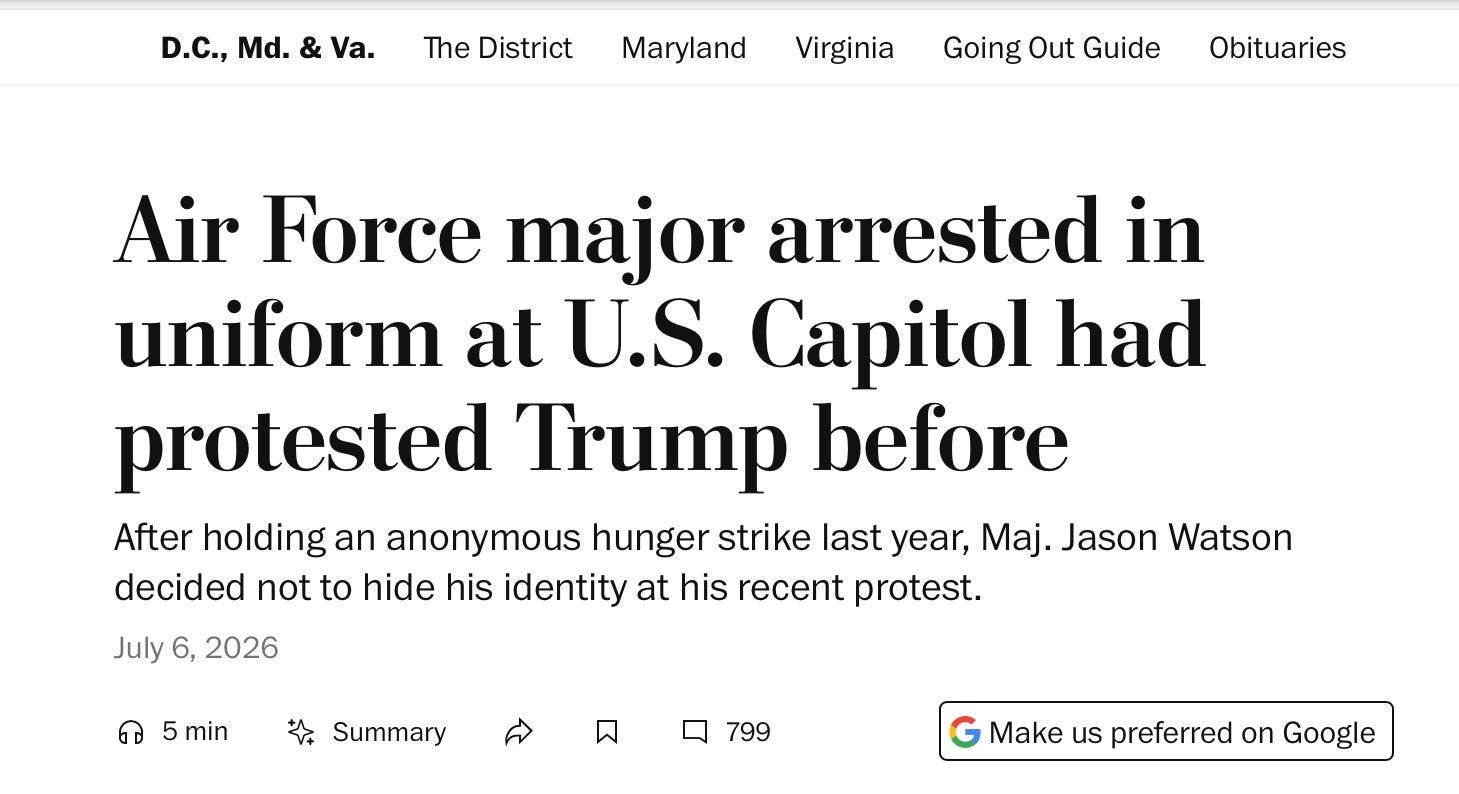
For days, much of the country learned about Watson through livestreams, international coverage, independent creators, and social media. Then the Washington Post produced a fuller profile: “Air Force major arrested in uniform at U.S. Capitol had protested Trump before.” [3]
That article mattered because it moved Watson out of the disposable viral news category and into the documented public record.
The Post reported that the misdemeanor arising from the demonstration had been dropped. It also made clear that the Air Force investigation remained alive. Watson had escaped one courtroom while moving deeper into the system capable of ending his career.
The distinction is important here.
Capitol Police arrested Watson after saying he ignored warnings to stop demonstrating in a prohibited area. That civilian enforcement question was narrow: where he stood, what officers ordered, and whether he complied. [2]
The military question is broader. It reaches the uniform, the public speech, the political setting, his criticism of senior officials, obedience to regulations, and conduct expected of a commissioned officer.
A dropped misdemeanor does not restore his career, remove the investigation, or settle the constitutional argument. It simply changes which institution gets to judge him.
Watson’s story entered the national press as a local arrest story. The institution holding his future is one of the largest and most powerful bureaucracies on Earth.
That is how American power often hides the machinery. The dramatic image travels everywhere. The administrative punishment moves behind closed doors.
The Oath and the Rulebook
The oath is real.
Federal law requires officers in the uniformed services to swear that they will support and defend the Constitution against enemies foreign and domestic, bear true faith and allegiance to it, and faithfully discharge the duties of their office. [4]
The rulebook is also real.
Department of Defense policy allows active-duty service members to vote and express personal opinions, provided they do not present those views as the position of the Armed Forces. It restricts participation in partisan political activity, especially when the uniform or official authority creates the appearance of military endorsement. [5]
Article 88 of the Uniform Code of Military Justice also provides that commissioned officers may be punished for contemptuous words directed at the president, vice president, Congress, and other specified officials. [6]
These rules protect more than the comfort of elected officials. They help prevent the military from becoming an armed political faction. They preserve civilian control, protect the chain of command, and keep officers from turning rank into partisan power.
That principle carries special weight in a country where Black people have lived through military force used to enforce slavery, crush labor, police protest, occupy neighborhoods, and decide whose demand for freedom counted as disorder. Black historical memory gives us no reason to romanticize officers deciding that personal conviction outranks democratic government.
It also gives us no reason to pretend institutions always deserve obedience simply because they wrote the regulation.
The American military has enforced segregation, excluded Black officers, punished dissent, and carried out policies later condemned by the country that ordered them. Constitutional language has often become most important when institutions wanted obedience without scrutiny.
Watson placed himself inside that contradiction.
His oath points upward to the Constitution. His commission places him inside a disciplined hierarchy. His protest declared that the hierarchy’s civilian leadership had violated the constitutional order. His uniform made the declaration impossible to separate from his office.
That is why this case deserves thought instead of slogans.
The cleanest pro-Watson argument says conscience required action.
The cleanest institutional argument says every officer who feels morally certain cannot convert the uniform into a political platform.
Both arguments contain truth. America now has to decide what remains when they collide.
Watson Before the Arrest
The arrest photograph can swallow the person.
A uniformed man stands with his hands behind his back while officers escort him away. The image arrives already loaded with meaning: discipline, humiliation, state power, sacrifice, and the old American ritual of deciding whether a Black man’s defiance makes him courageous or dangerous.
The interview recorded before the arrest restores the man inside the image.
Watson described himself as an ordinary officer. He did not present a chest full of decorations as proof of superior morality. He talked about seventeen years of service and the possibility that three remaining years could disappear. He spoke like a person who understood exactly what retirement, rank, and reputation meant.
That humility makes the story harder to dismiss.
Attention seekers usually inflate their importance. Watson kept shrinking his. His argument was that the message mattered more than the messenger and that his relative lack of institutional importance made him available for sacrifice.
That is a brutal piece of military logic: If somebody has to lose a career, let it be mine.
It also contains a warning. Institutions become unstable when conscientious people start viewing themselves as expendable parts available for public sacrifice.
“The Military Is Barely Hanging On”
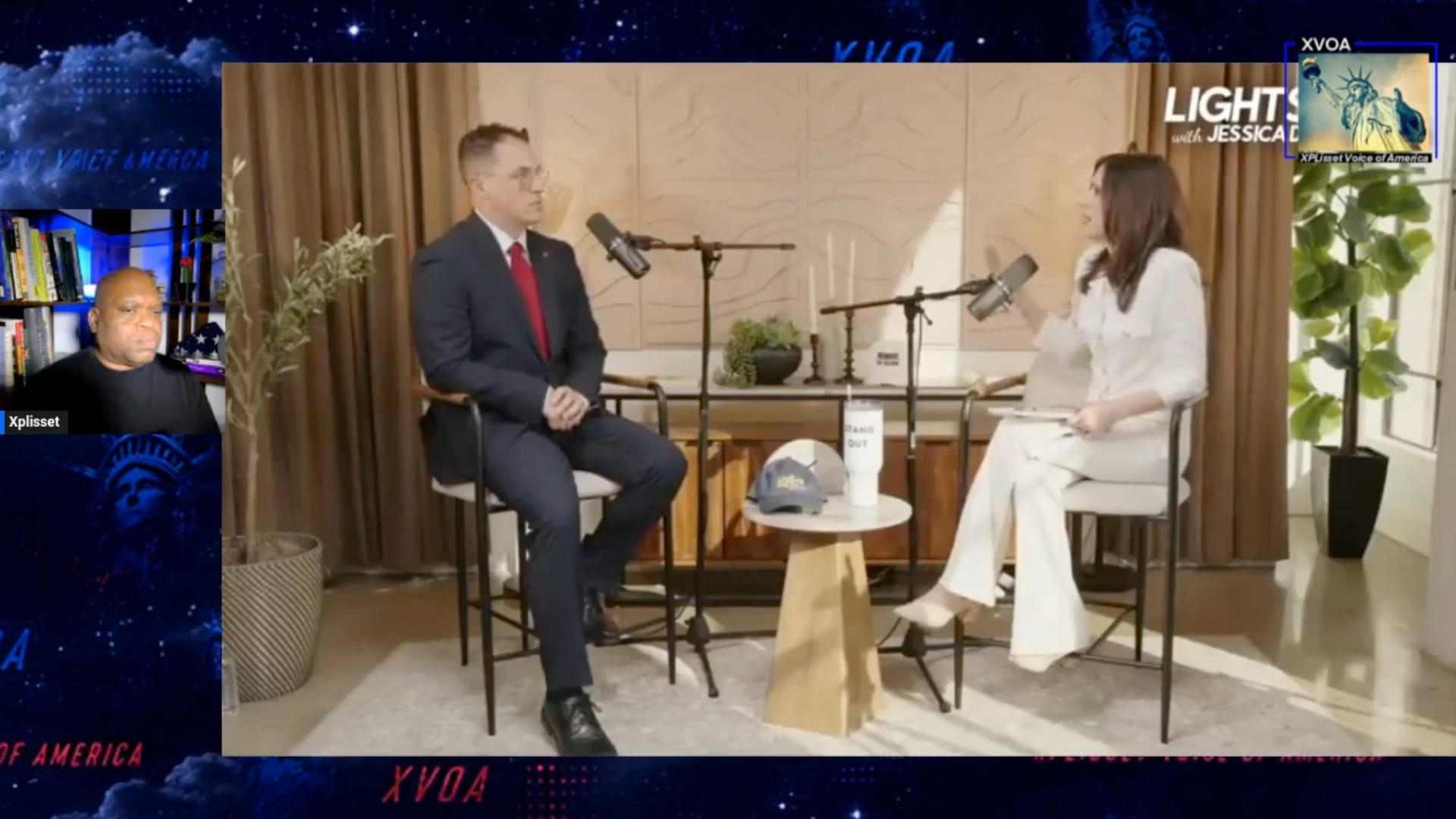
The most chilling moment in Watson’s interview came when he said the military was “barely hanging on.”
That statement came from an active-duty major assigned within the NATO structure. He was not speaking as a retired officer promoting a book, a cable-news general defending a party, or a civilian guessing from the outside.
His statement, however, still requires an abundance of caution. Watson offered his assessment, not an official readiness report. One officer cannot speak for the entire force.
But the rank and assignment make the warning impossible to wave away.
A major lives close enough to the machinery to understand how policy becomes orders, how morale moves through units, how career officers interpret civilian leadership, and how much strain can remain invisible to the public. Watson’s language suggested a military carrying pressure that official ceremonies and polished briefings do not reveal.
That does not prove collapse.
It proves that an officer inside the system believed the strain had become severe enough to describe publicly while risking his career.
The country should want to know why.
The public conversation has focused heavily on whether Watson broke military rules. The country also needs to ask what conditions produced an officer willing to break them in full view.
The Protest That Failed
Watson had tried invisibility first.
Before the Capitol protest, he described an extended anonymous hunger strike meant to register opposition without making himself the story. By his own admission, it failed.
That sentence deserves respect because political performers rarely admit failure so plainly.
The protest failed because sacrifice without witness creates no political pressure. Nobody knew who was refusing food, what career stood behind the act, what family carried the strain, or why the government should care.
Watson appears to have learned the harsh lesson of modern protest: private pain is easy for power to ignore.
So he reversed the strategy.
He chose the Capitol. He chose the uniform. He chose visibility. He chose an action that would force the institution to recognize him even if the recognition came through arrest and investigation.
The uniform became the amplifier.
It also became the evidence.
That was the bargain.
The Family Standing Behind the Uniform
Public sacrifice is rarely paid by one person.
Watson spoke about his family with guilt. That may be the most human part of the record.
A career belongs to the service member on paper. In practice, the family serves beside it. They live with the moves, the deployments, the missed events, the uncertainty, the retirement calculations, and the institutional discipline. A decision that places seventeen years of service at risk also places a household’s future at risk.
Watson understood that.
His willingness to proceed does not erase the burden. His guilt does not settle whether the decision was fair to the people closest to him. It reveals that he could see the damage and still believed the constitutional danger was larger.
That is where hero language becomes inadequate.
Heroes in public stories often arrive scrubbed of the people who absorb their consequences. Watson’s act carries a wife, children, financial security, health, reputation, and the future he had spent nearly two decades building.
Calling him courageous should never become a way of making their cost disappear.
Calling him reckless should never become a way of making his conscience disappear.
The Uniform Was the Message
Watson could have protested in civilian clothes.
He could have resigned, retired later, written anonymously, contacted Congress privately, or waited until the uniform no longer carried disciplinary force.
He chose the uniform because the uniform was the message.
It told the country this warning came from inside the institution. It told Congress that a commissioned officer believed the constitutional machinery had failed badly enough to justify personal ruin. It made every viewer confront the oath as something worn on the body.
It also created the strongest case against him.
The DoD rules are built around appearance as much as intention. An active-duty officer in uniform can make a personal political statement look like military endorsement. That danger is why the uniform cannot become a costume for partisan warfare. [5]
Watson’s defenders should face that directly.
His act was powerful because it crossed a line. The line gave the act meaning. The line also gave the Air Force jurisdiction over the consequences.
Pretending otherwise weakens his case.
The stronger defense says Watson knew the line existed, understood the price, and crossed it because he believed constitutional failure had made ordinary channels morally insufficient.
That defense does not guarantee exoneration.
It does force the institution to answer the substance behind the breach.
Congress Wants the Oath Without the Cost
Watson did not ask the military to seize power.
He asked Congress to exercise impeachment power.
That distinction is essential.
His public argument returned responsibility to the civilian branch designed to investigate, impeach, and remove presidents. He stood at the Capitol because the remedy he demanded belongs there.
Congress has spent years mastering the performance of alarm. Members issue grave statements, appear on television, call conduct unprecedented, describe democracy as endangered, and explain why the votes are difficult.
Calling it out is commentary.
Using constitutional power is governance.
Watson’s protest accused Congress of allowing constitutional pressure to move downward until an officer decided to carry it back up the Capitol steps.
That accusation applies across party lines in different ways. Republican members protect Trump. Democratic members describe the threat while frequently treating the absence of guaranteed victory as a reason to narrow the fight before it begins.
The oath contains no vote-count exception.
That does not mean Congress can manufacture votes. It means members still possess tools: articles of impeachment, hearings, subpoenas, public evidence, forced votes, institutional obstruction, and the power to place every member’s position into the historical record.
Power rarely announces that resistance is guaranteed to succeed.
It asks whether people holding office will use the tools they swore to use before safety arrives.
Jessica Denson and Adam Smith Reveal the Divide
The post-arrest debate exposed the divide clearly
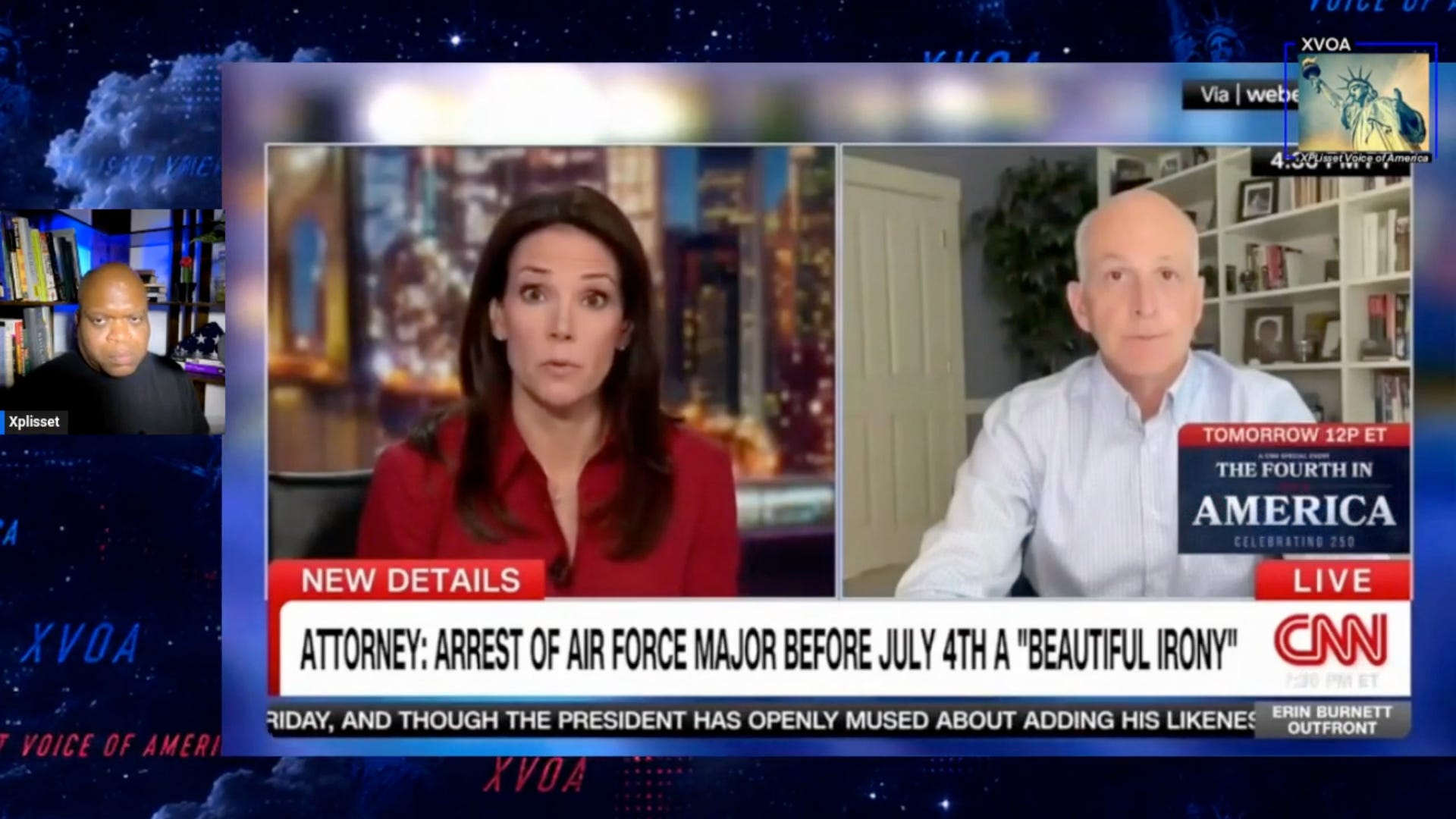
Congressman Adam Smith argued that Watson had improperly blamed the whole Congress and crossed the boundary of an active-duty officer’s role. His position reflects a legitimate constitutional concern: military officers do not get to supervise elected officials through public pressure backed by rank.
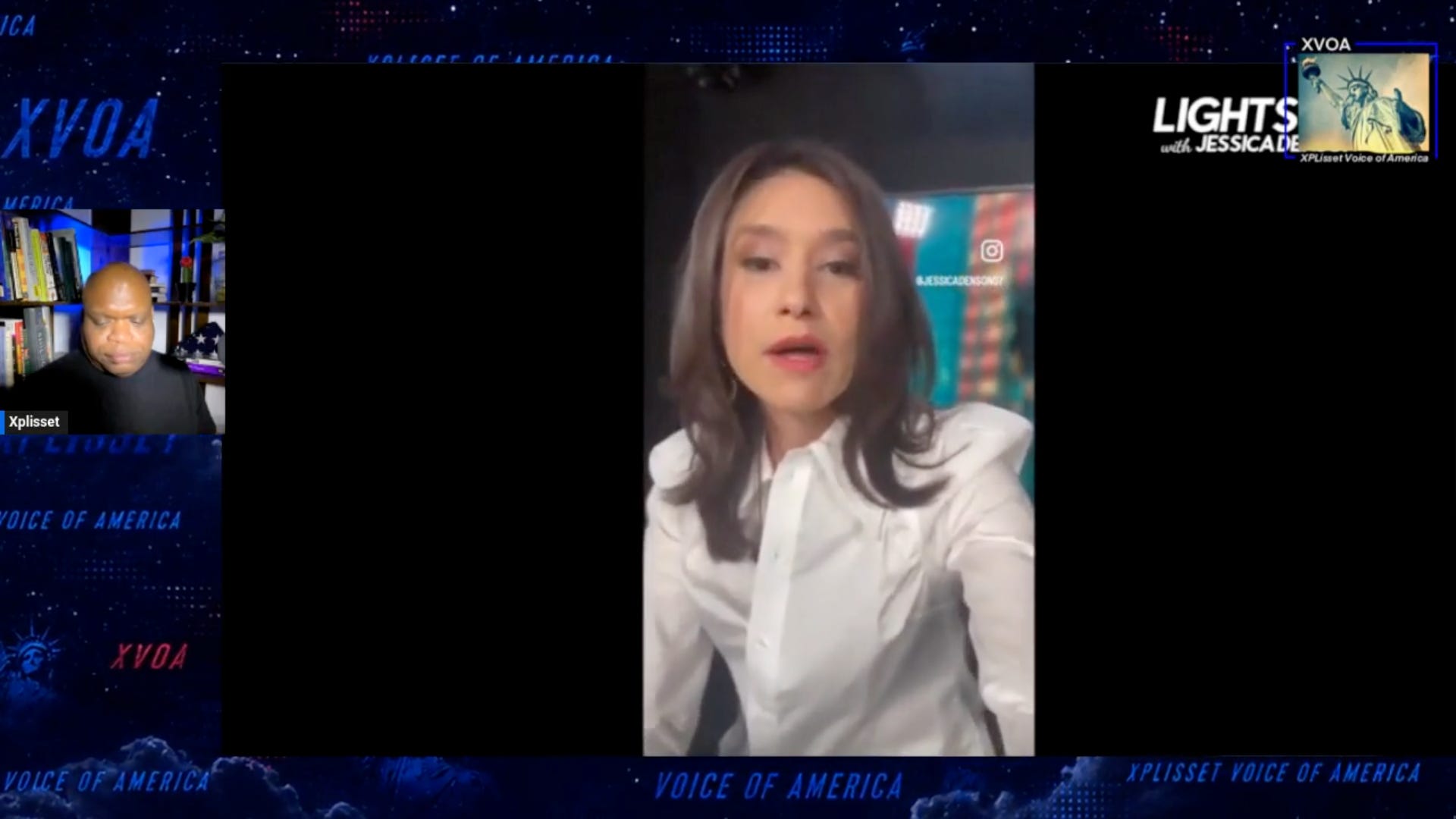
Jessica Denson answered from the other side. She argued that congressional officials could not reduce their duty to statements and vote counting while Watson absorbed the consequences of visible resistance.
Her sharpest line was simple: the oath does not say defend the Constitution only when you have the votes.
That sentence lands because it exposes the moral asymmetry.
Watson acted before safety.
Congress wants credit for concern while waiting for favorable conditions.
The military has authority to investigate Watson’s conduct. Congress still has responsibility to answer his charge.
Those obligations can exist at the same time.
I part company with anyone asking the public to “carry on Major Watson’s mission.” Watson’s mission belongs to Watson. Every citizen, veteran, officer, legislator, judge, and journalist has an independent duty to examine the Constitution, the evidence, the limits of their role, and the consequences of action.
Imitation would cheapen the act.
Independent conscience honors it.
The Machinery Behind the Moment
This is where the Watson story becomes an XVOA story.
The machinery is visible once you stop staring only at the arrest photograph.
The Air Force controls the investigation, the rules, the timeline, the public statements, and much of Watson’s ability to respond.
The press controls whether his act becomes a national constitutional warning or a strange local-news item.
Congress controls the remedy Watson demanded while portraying itself as an observer of the crisis.
Watson’s family absorbs costs that never appear in official statements.
The public receives a simplified argument: hero or fool, patriot or insubordinate officer, conscience or career suicide.
Power benefits from that simplification.
A hero story lets supporters celebrate Watson while Congress remains untouched.
A fool story lets institutions discipline Watson while avoiding the conditions that produced him.
The real story is more dangerous because responsibility spreads upward.
The president commands the military.
Congress writes the law, controls funding, possesses impeachment power, and declares war.
The military enforces discipline and preserves political neutrality.
The press is supposed to tell the public when those systems begin grinding against one another.
Watson forced all four into the same frame.
That is why the story kept getting treated as if it were smaller than it was.
The Case Against Watson. The Case for Watson.
Here is the case against Watson.
He was an active-duty commissioned officer. He appeared in uniform at a political action calling for the removal of the president and vice president. Military regulations protect nonpartisanship and restrict political activity tied to official status. Article 88 prohibits contemptuous speech by commissioned officers toward named civilian officials. The uniform made his personal judgment look institutional. Discipline cannot depend on whether the public agrees with an officer’s politics. [5][6]
That case is serious.
Here is the case for Watson.
He swore an oath to support and defend the Constitution. He believed the executive branch had violated it, including through military action he considered unauthorized. He tried a less visible form of protest and concluded it had failed. He asked Congress to use a civilian constitutional remedy. He understood the career consequences and acted publicly anyway. His conduct reads as conscience rather than opportunism.
That case is serious too.
Now place the cases beside each other.
The military needs rules strong enough to prevent officers from becoming political actors.
The republic needs consciences strong enough to recognize when obedience becomes participation.
No slogan resolves the collision.
The investigation may determine whether Watson violated military law. It cannot decide whether the country that produced his protest is healthy.
That judgment belongs to the public.
Closing Argument
Major Jason Watson took the oath literally.
The institution may punish him for the way he acted on it. That outcome would fit the rulebook. It would leave the warning unanswered.
You can question Watson’s decision without questioning the sincerity of his oath.
You can defend civilian control of the military while demanding that civilians actually control the constitutional crisis.
You can recognize the danger of officers entering politics while recognizing the greater danger of elected officials outsourcing courage to the people with the most to lose.
Watson’s misdemeanor disappeared. The image remains. The investigation remains. His family’s cost remains. The question remains.
What happens when a career officer decides the Constitution is in greater danger from his silence than his defiance?
Washington would prefer to turn that question into paperwork.
History may refuse.
Support XVOA
XVOA uses Black historical memory to explain the country everybody else keeps misreading. Paid subscriptions buy the reporting time, source review, editing, and production required to keep this desk alive.
Subscribe:
The daily operating floor is $50. As always, $50 a day keeps the pain away.
Backup support:
Sources
1. Reuters, “Air Force to investigate officer who called for Trump impeachment,” July 3, 2026.
2. The Guardian, live coverage describing Watson’s arrest, the Capitol Police account, and the Air Force response, July 2, 2026.
3. The Washington Post, “Air Force major arrested in uniform at U.S. Capitol had protested Trump before,” July 6, 2026.
4. 5 U.S.C. § 3331, oath of office for officers in the uniformed services.
https://www.law.cornell.edu/uscode/text/5/3331
5. Department of Defense Directive 1344.10, “Political Activities by Members of the Armed Forces.”
https://www.esd.whs.mil/Portals/54/Documents/DD/issuances/dodd/134410p.pdf
6. 10 U.S.C. § 888, Article 88 of the Uniform Code of Military Justice.
https://www.law.cornell.edu/uscode/text/10/888
7. “Lights On” interview with Major Jason Watson, recorded before his Capitol protest and used in the XVOA video.
8. CNN interview with Jessica Denson discussing Watson’s arrest, reported restrictions, and the congressional response, used in the XVOA video.
Excellent reporting and analysis! Thank you!
Great piece. Some of your best work.