



Cliff Albright and Chris Kromm on Mississippi’s close race, the South’s neglected organizers and the votes still being counted.
Black Voters Matter co-founder Cliff Albright and Chris Kromm, the executive director of the Institute for Southern Studies, spoke with Democracy Now! on November 6 about why a Black Democrat made the Senate race in Mississippi competitive and what that means for other races in the South. Albright and Kromm also discussed voting barriers in the South and the importance of sustained investment in Southern states. Their interview inspired this post and marks a fitting way to kick off this series, I HATE VIDEO. Below are some of their main arguments, with additional reporting identified alongside them. [1]
I Hate Video
In high school, there was this group of kids that everyone seemed to want to hang out with, the cool kids’ table. The jocks, the popular kids, the people trying desperately to be near the popular kids. You could be perfectly happy sitting somewhere else and still get tired of having their popularity rubbed in your face.
I’m launching a series called I Hate Video because some of my fellow Substackers remind me of that table. They’ve mastered the form and it seems effortless: the makeup, the lighting, the graphics, everything. Some of those slick presentations bring to mind James Brown’s “Talkin’ Loud and Sayin’ Nothing.” [2] I’m being a little facetious. Some of these people I admire, and I’ll admit I’m jealous of how easily they seem to do it.
I’m still figuring out the video thing myself. I like the production, the aesthetics, the challenge. I just hadn’t imagined myself in front of the camera. Meanwhile, I’m up late working on a piece, and apparently I need to find time to get good at this too. Damn.
I Hate Video is also for my readers who aren’t interested in watching videos on Substack. You want to sit with a phrase, reread a paragraph or think through an idea. Maybe you came here to get away from the video bullshit. You shouldn’t feel pushed aside by a publication you subscribed to read.
Going forward, each video that I make will have an I Hate Video | Read About… post that breaks down the reporting, interviews, quotes and other information. You’ll get the full written piece, with the context and my thinking. When the video email arrives, you can skip it and still have the reporting. In this particular instance I’m taking a video which was produced elsewhere and doing the dirty work of breaking it down for you into a readable format.
Mississippi, with the count still unfinished
By Friday afternoon, Scott Colom led Cindy Hyde-Smith by over 2,400 votes; Mississippi’s Senate race remained uncalled. [3]
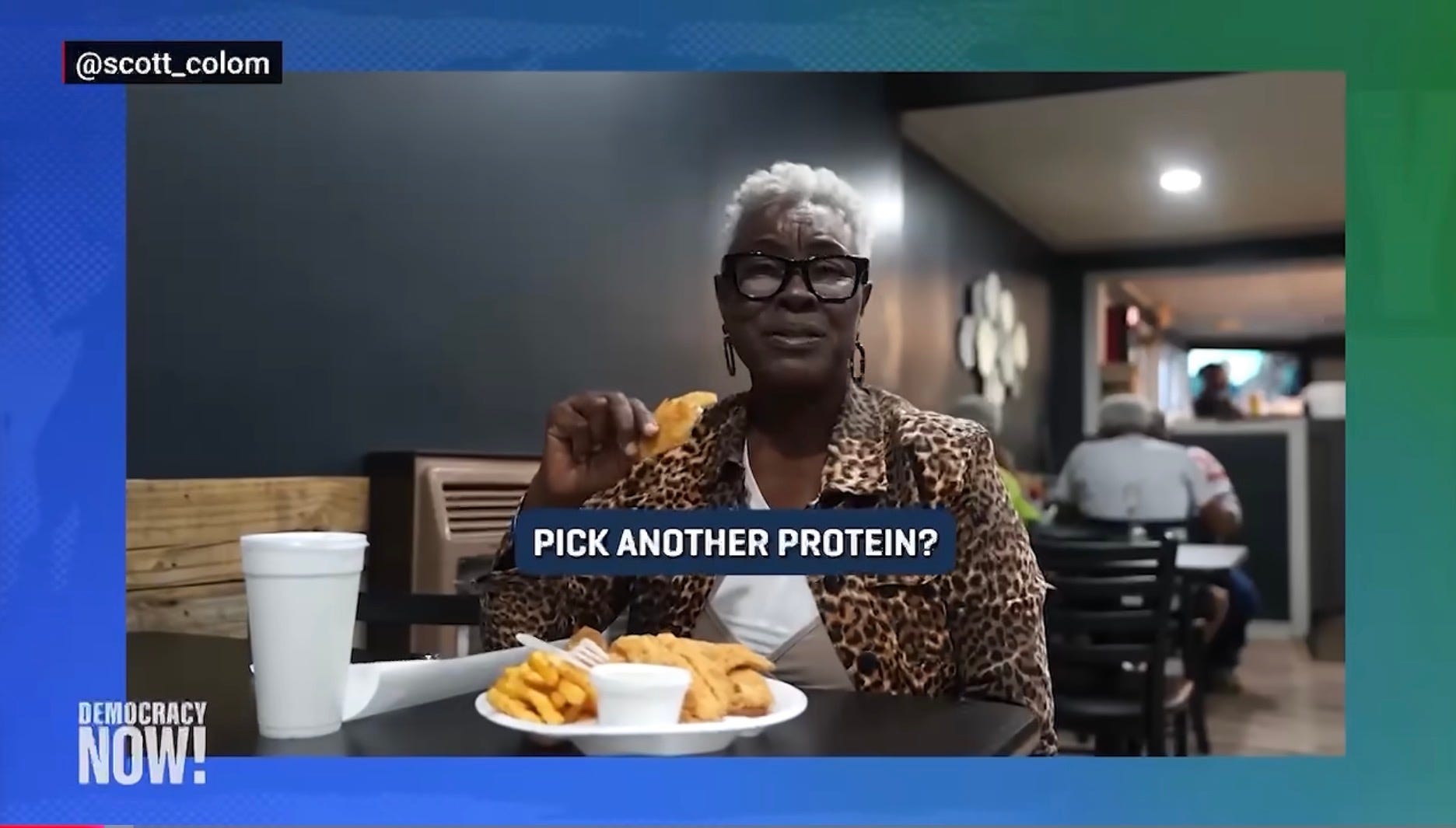
Colom in an ad
In one of his ads, Colom responds to comments that Hyde-Smith made about beef being expensive and encouraging consumers to “pick another protein.” People in the ad respond that they would rather pick another senator. By focusing on the economy and the cost of living, Colom’s campaign is targeting an issue that most people can relate to: struggling to make ends meet. [1]
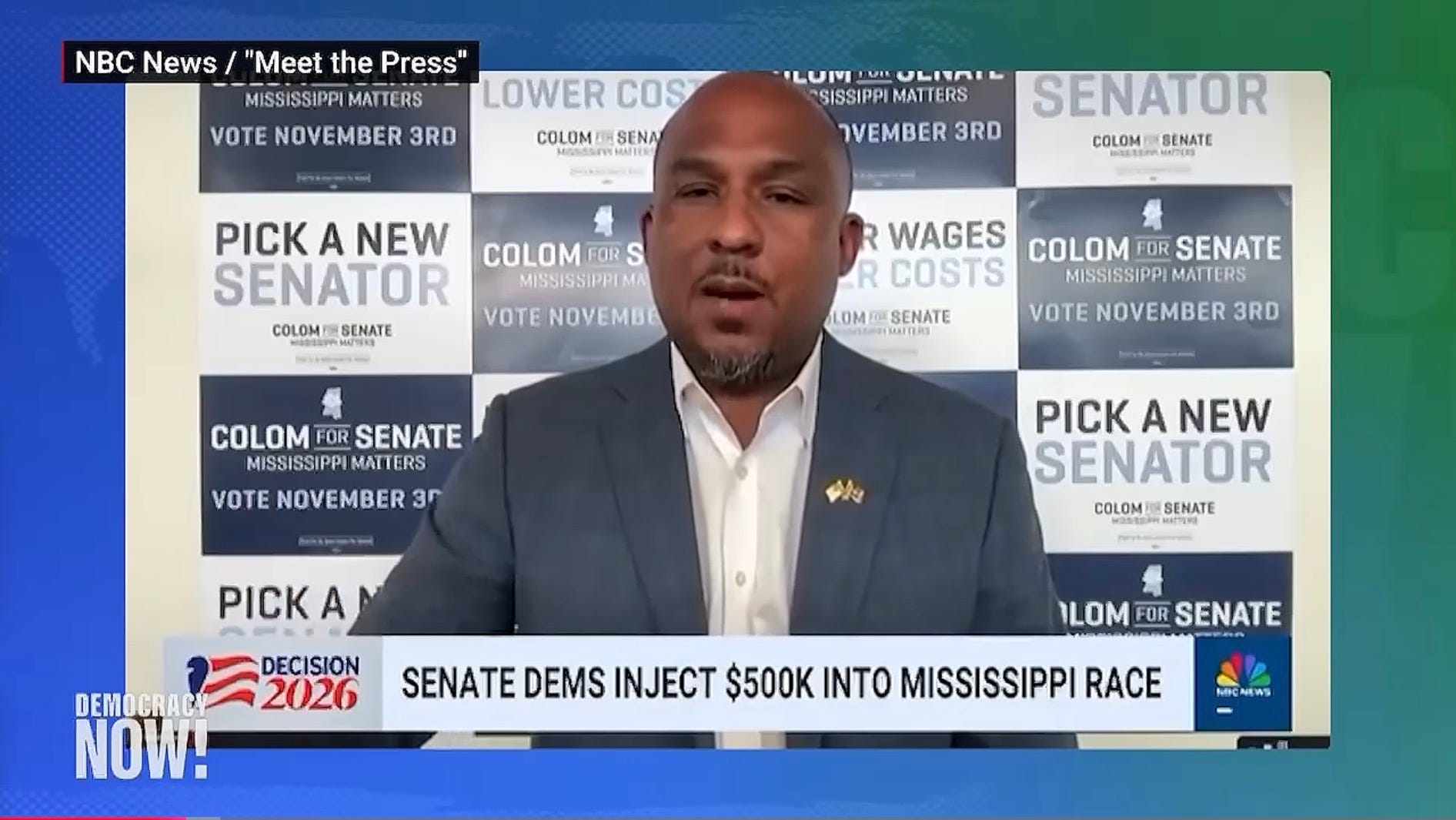
Colom on national Democrats
In the interview clip played by Democracy Now!, Colom expresses frustration with national Democrats and their approach to the Senate race in Mississippi. Rather than simply thinking about which candidates and states will help them get to 51 seats in the Senate, Colom believes that Democrats should be thinking bigger and be working to advance issues and policies that benefit working class people. “What’s the path to least resistance to get to 51?” he asks, mimicking the strategy he’s criticizing. [1]
“You can’t lead with doubt,” Colom says. He argues that Democrats should believe they can compete and make a case to working people in states such as Mississippi. [1]
Colom has said this before. In an October 27 report from NPR, he said, “Mississippi has never been a lost cause, we’ve been a betrayed cause.” He went on to say: “The Democratic Party has not been trying to win Mississippi.” [4]
Essentially, Colom is upset because he believes that national Democrats wrote off Mississippi as a state that they wouldn’t win, so they didn’t seriously invest resources into the state’s Senate race and instead approached the election as if Hyde-Smith winning was a foregone conclusion. Albright and Kromm discuss what more Democrats can do to turn Mississippi and other Southern states into consistently competitive states. [1]
On a side note: According to AdImpact and as reported by NPR on October 27, as of that date in the month of October, Democrats had spent about $5 million on ads in Mississippi while Republicans had spent $3.2 million. These numbers aren’t necessarily reflective of total ad spending throughout the election, but rather just the month of October as of October 27. [4] In their Democracy Now! interview, Kromm says that national Democrats recognized late in the game that Mississippi was competitive, but he’s critical of the fact that they didn’t realize it sooner. [1]
Albright’s answer: look at the years behind Georgia
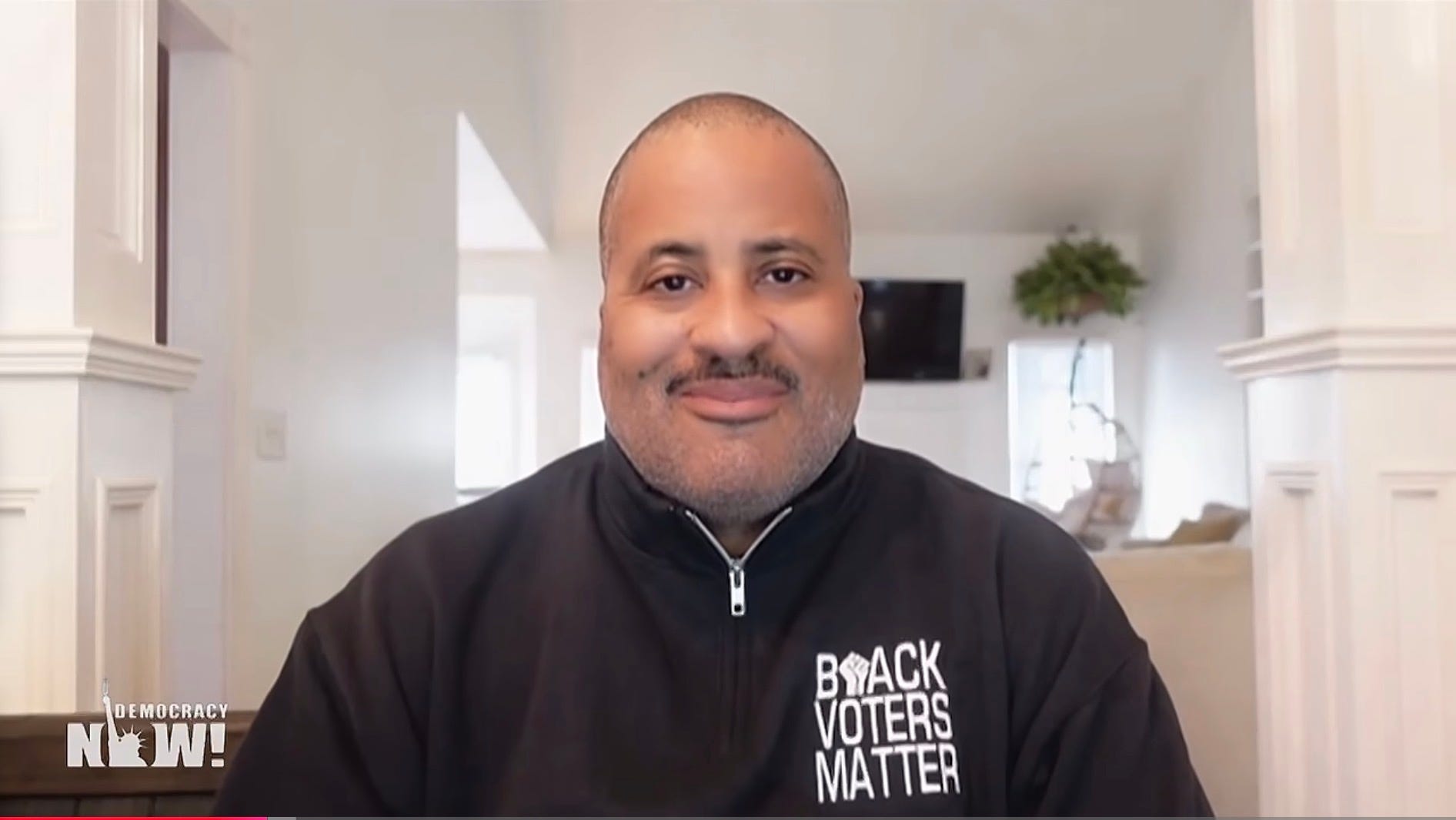
When pressed on what more national Democrats can do to turn Southern states into consistently competitive states, Albright responds by saying that Democrats need to seriously invest resources into Georgia, Mississippi, Louisiana, Alabama and Florida. He points to Georgia’s results as evidence of what sustained investment over several election cycles can accomplish. Specifically, Albright points to investment that Democrats made during the 2020 and 2022 election cycles as contributing factors to Georgia’s success because that investment allowed Democrats to develop and build strong coalitions and an effective infrastructure for turning out voters. According to Albright, Democrats haven’t made comparable investments in other Southern states. [1]
Albright also uses Angie Nixon’s Senate campaign in Florida as an example of what organizers and candidates can accomplish despite limited national investment. After Andrew Gillum’s narrow loss for governor in Florida in 2018, Albright says that Democrats essentially retreated and began writing the state off. Albright believes that Angie Nixon’s Senate race should force Democrats to reconsider that approach. [1]
During his interview with Democracy Now!, Albright questioned the priority given to pursuing “unicorn Trump voters” who might switch sides. He believes that Democrats should focus more on investing resources into Black and brown voter mobilization and organizing because those organizations are woefully under-resourced. [1]
Albright says this year’s results should put an end to the debate about investing in Black and brown voters in the South. But he suspects that debate will continue. His frustration is that organizers may have to keep making the case for sustained investment even after demonstrating what’s possible. [1]
Albright also attributes some of the increased energy for organizing in the South to Louisiana v. Callais and the subsequent redistricting battles. According to Albright, Black voters got engaged and mobilized because they felt that their representation was being taken away from them. [1]
Kromm: follow the Senate campaign down the ballot
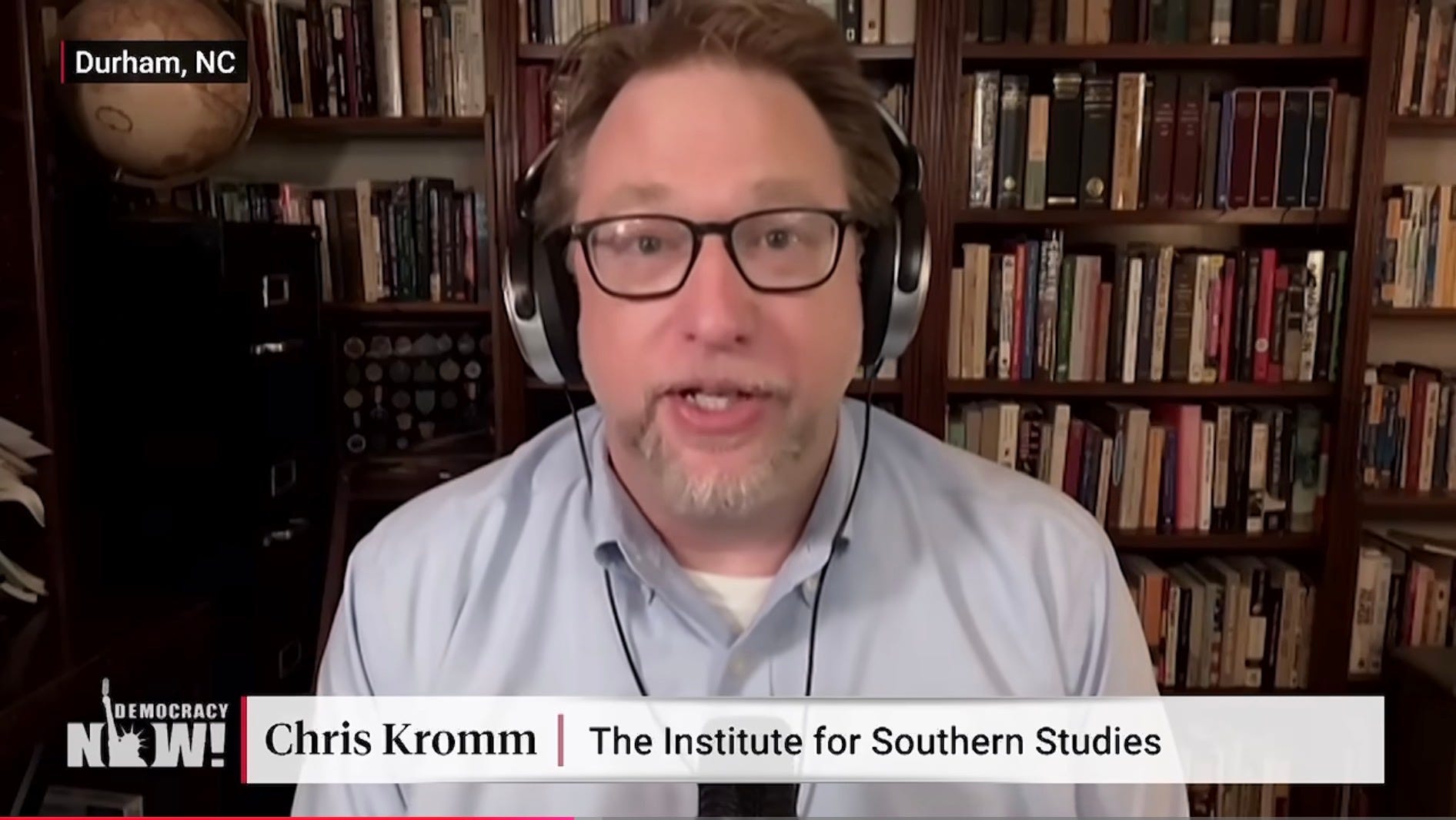
Kromm’s interview with Democracy Now! starts with a discussion about what’s at stake in Scott Colom’s race to unseat Cindy Hyde-Smith. She had previously blocked his nomination to a federal judgeship in northern Mississippi. [1]
Biden nominated Colom in October 2022. The blue-slip process allowed the nominee’s home-state senators to signal their support as part of the Senate Judiciary Committee’s consideration of district court nominees. Hyde-Smith’s refusal to return her slip stalled Colom’s nomination. [5]
According to a statement that Hyde-Smith released in April 2023 and that’s still posted on her Senate website, Hyde-Smith declined to send in a blue slip for Colom’s nomination. Her Mississippi Senate colleague, Republican Roger Wicker, sent in his blue slip. [5]
Now, Colom is running to take Hyde-Smith’s Senate seat. If he’s successful, he’ll be the first Black senator from Mississippi since Reconstruction. The last Black senator from Mississippi was Blanche K. Bruce, who left office in 1881. [1][6]
Kromm also believes that gerrymandering and voting restrictions limited Democratic gains. The wave “would have been even bigger,” he says, without those barriers. [1]
He cites Democrat Justin Pearson’s unsuccessful campaign for Congress out of Memphis. [1] Pearson campaigned against data-center growth around Memphis and, according to Kromm, brought attention to an important issue in the community. [1] He lost to Republican Brent Taylor in a district whose boundaries Republicans had redrawn. [7]
Kromm also speaks to the importance of turning out voters. According to Kromm, Roy Cooper’s successful Senate campaign in North Carolina helped boost turnout statewide, which, along with strong grassroots organizing efforts, led to an impressive Democratic showing in House races in the state. [1] Jamie Ager, a Democrat, won western North Carolina’s 11th Congressional District, and LaKesha Womack, a Democrat, defeated Republican Tim Moore in North Carolina’s 14th Congressional District. [8]
Winning does not make suppression disappear
“We’re able to overcome the suppression, but that doesn’t mean that it’s not a structural barrier,” Albright says, warning that restrictions on voting shouldn’t be seen as ineffective simply because Democrats had a successful election day. [1]
He points to Raphael Warnock’s 2022 Senate victory in Georgia. Albright recalls people using Warnock’s win to dismiss complaints about voter suppression. He credits the organizing that got voters through those restrictions and argues that Democrats still need to remove them. For Albright, this shows the importance of not only investing in voter registration and turnout, but pushing for voting rights legislation. [1]
The work still underway in Mississippi
Mississippi voters who cast affidavit ballots because they didn’t have photo ID can still have their ballot count if they bring acceptable photo ID to their circuit clerk’s office on or before November 10, according to the Mississippi Secretary of State. [9] Mississippi volunteers are currently working to make sure affidavit voters are able to cure their ballots, Albright says on Democracy Now!. [1]
Civil-rights lawyers disagree with Hyde-Smith’s legal team on the handling of affidavit ballots, Kromm says. [1] Hyde-Smith’s legal team asked county election officials to preserve affidavit ballots separately, including those that were accepted or cured. The lawyers’ November 5 letter also says the process “must not delay lawful tabulation, prevent the counting of any legally cast ballot, or compromise ballot secrecy.” Her campaign’s lawyers wrote that letter; a court did not issue it. The letter doesn’t identify any valid ballots that were thrown out. [10]
Albright and Kromm emphasize the importance of continued organizing in the South. Albright stresses the importance of continuing to show up for Black and brown communities and pushing for voting rights legislation. Kromm stresses the importance of statewide races that can help candidates further down the ballot. With Mississippi’s Senate race still unsettled, volunteers are helping voters get their ballots counted. [1]
Go paid for just $4 a month or $40 a year
Your paid subscription gives me time to keep digging on this story and tell you whether anybody in the new Congress gets that voter an answer.
To celebrate, I’m offering my free subscribers a celebratory BLUENAMI discount of 50% off XVOA for as long as you remain a paid subscriber.

The deadline to claim the Bluenami Discount is Sunday, November 15 at 11:59 p.m. ET.
Sources
Democracy Now!, November 6 interview with Cliff Albright and Chris Kromm, November 6, 2026. Relevant timestamps: 1:54 (Colom), 10:19 (investment), 12:10 (voting restrictions), 12:43 (North Carolina), 14:23 (Pearson).
James Brown, official recording of “Talkin’ Loud and Sayin’ Nothing”, official artist channel / Universal Music Group.
CBS News, Mississippi Senate results.
Stephen Fowler, NPR via KCLU, Black voting power and the Mississippi Senate race, October 27, 2026.
Frank Corder, Magnolia Tribune, Colom’s nomination: Hyde-Smith withholds her blue slip, April 4, 2023. Reprinted on Hyde-Smith’s Senate website.
U.S. Senate, Blanche K. Bruce biography. Dates of service.
The Tennessee Tribune, Pearson loses congressional bid to Brent Taylor, November 3, 2026.
Steve Harrison, WFAE, Ager and Womack win North Carolina House races, November 3, 2026.
Mississippi Secretary of State, 2026 election reminders and ballot deadlines, October 26, 2026.
Counsel for Cindy Hyde-Smith for U.S. Senate, letter concerning preservation of affidavit ballots, November 5, 2026, published by the NRSC.
I hate video, too. I applaud this. And I appreciate your honesty. I'm also watching Mississippi like a hawk. Dear Lord, please let this be the start of a whole new way to live.
I'm one of those who prefers the written word over video, so I appreciate your doing this. There is value in video, but it always appears more ad hoc and less carefully thought through than an essay. By following the transcript of a video (which I do a lot) you can see how an exchange between (or among) different parties can help an idea develop, but it's inferior to an essay.