


You know this already. You just haven’t been able to put words to it.
It’s a Man’s world.
It’s a sick world.
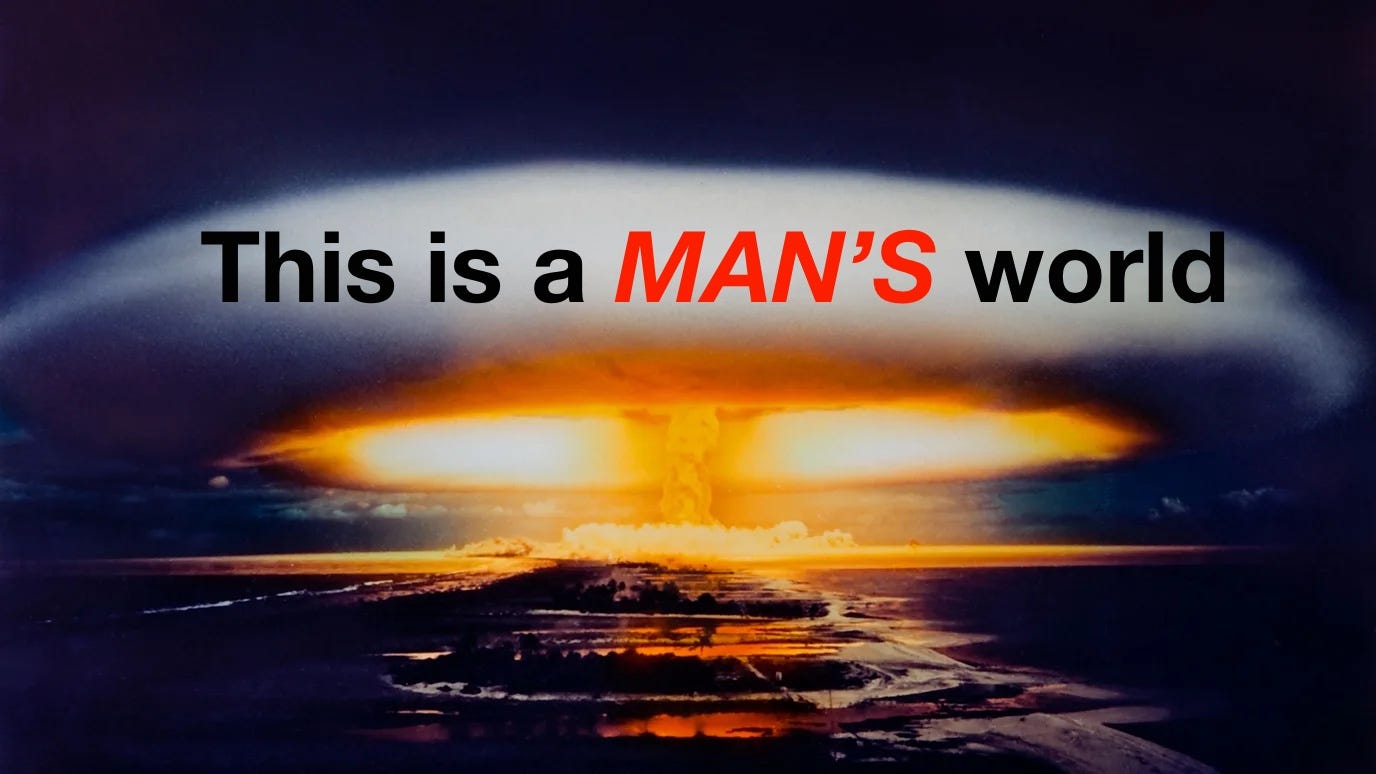
The most powerful weapon ever built was unleashed after serious people raised the possibility that it might set off consequences no one could control.
Fuck it. Hit the button.
A Virginia politician picked up a gun and aimed it at his wife, the mother of his children.
He said fuck it then he pulled the trigger, then pulled the trigger on himself. [6][9]
The bomb and the murder-suicide are not the same act. One is war. One is domestic violence. One belongs to the state. One belongs to the home. But psychologically, they rhyme. Both come from a world where men are taught that control is identity, possession is love, domination is order, and destruction is an acceptable answer when control collapses. [1][3]
This is not an argument that every man is violent. It is not an argument that women are innocent by nature or that the ancient past was some perfect feminist paradise before men ruined the picnic. That is too easy, too sentimental, and too weak.
The argument is harder than that.
Patriarchy did not begin as a bad attitude. It became a system because men gained material advantages in land, war, inheritance, priesthood, law, and the organization of the family. Once those advantages hardened, the story of the world had to be rewritten to make male rule look natural. [3][5]
That is the part they buried.
The women have perched up.
The men have walked out and hit the unsubscribe button.
I do not blame them honestly.
Even some women are going to object to this thesis.
I do not blame them either.
Because if this argument is even half true, then we inherited more than a set of gender roles. We inherited the aftermath of a coup and mistook the crime scene for creation.
So before we talk about bombs, guns, presidents, cops, senators, and men like me, we have to walk backward. Not into fantasy. Into the record. Bone. Stone. Graves. Figurines. Kinship. Agriculture. Inheritance. Scripture. Law. The point is not to prove that every ancient society worshiped women or lived under matriarchy. The point is simpler and more damaging to patriarchy: father-rule was not always the only imaginable order. [2][3][5]
TLDR
This is not an argument that every man is violent. It is an argument that patriarchy trained men to confuse control with love, possession with identity, and destruction with power. [1][6]
Father-rule was not inevitable. The record does not prove a universal ancient matriarchy, but it does prove human beings have organized kinship, sacred meaning, and authority in ways that did not begin with the father. [2][3][4]
Patriarchy became durable because it had material incentives. Land, stored wealth, inheritance, war, priesthood, and paternity anxiety turned women’s bodies into political territory. [3][5]
Male violence is not only personal. It is domestic, religious, legal, military, and symbolic. The bomb and the murder-suicide are not the same act, but they come from the same old fantasy: if I cannot control the world, I can destroy it. [1][6]
Angela Davis is right: men do not need to be invited into this fight. Domestic violence, sexual violence, intimate violence, and gender violence are men’s problems, and men have to confront men. [1]
Restack this and share it. Send it to one person who needs to read it, especially a man who thinks this essay is about somebody else. And if this work is worth keeping alive, become a paid subscriber:
Or just buy coffee at the very least
Thirty Thousand Years Before the Father
Thirty thousand years ago, nobody was filling out a birth certificate. Nobody was checking a surname. Nobody was standing in a courthouse pretending the father’s name was the first fact of a child’s life. The first fact was the woman. Everybody could see who carried the child. Everybody could see who bled, swelled, labored, nursed, and kept the infant alive.
That does not mean women floated around in some perfect lavender paradise. Hunger existed. Death existed. Fear existed. Children died. Bodies broke. Childbirth could kill. The cave was not a boutique retreat with goddess candles and ethical honey. It was hard life. But hard life does not automatically produce father-rule. That is the first lie patriarchy needs us to believe. [3][5]
The deep past does not hand us a written constitution. It gives us fragments: figurines, burial goods, ochre, shells, handprints, settlement patterns, tools, and symbols repeated across time. Some of those symbols return again and again to the female body: breasts, bellies, hips, vulvas, pregnant forms, blood-colored pigment, openings, and signs of return. [2][3][14]
We should be careful here. A female figurine does not automatically prove a goddess cult. A burial with red ochre does not give us a transcript of what the mourners believed. The evidence does not prove a universal ancient matriarchy. It proves something more difficult for patriarchy to explain: the female body was not always treated as a shameful object in need of male supervision. It was visible. It was carved. It was buried with meaning. It occupied symbolic space before kings, states, churches, and armies claimed the authority to explain life. [2][3]
That matters.
Before land became property, before children became heirs, before marriage became a contract for controlling women’s sexuality, the woman was the undeniable evidence of human continuity. Men could hunt. Men could fight. Men could make tools. Men could tell stories. Men could protect, carry, mourn, build, and teach. But men could not open the gate between nonlife and life. [3][5]
Maternity was visible. Paternity was not.
The mother was evidence. The father was inference.
That one fact does not explain all human history, but it explains why mother-line systems made sense. In a world before DNA, the child’s connection to the mother was obvious. The child’s connection to the father had to be believed, asserted, or enforced. Maternity did not require surveillance. Paternity did. [4][5]
So when the mother’s line organized belonging, it was not because women were sentimental mascots. It was because the mother was the record. The mother, her mother, her sisters, her brothers, her people. The maternal uncle mattered because he was tied to the mother’s blood. The grandmother mattered because she carried memory. The older women mattered because survival required knowledge, not just force. [3][4]
Food knowledge. Birth knowledge. Plant knowledge. Wound knowledge. Weather knowledge. Baby knowledge. Grief knowledge. The knowledge of where life returns after winter and what to do when the fever comes.
Men were not useless in this world. That objection needs to be buried before it starts running around. Men hunted, guarded, repaired, made tools, taught, carried, sang, and helped hold the group together. But help is not the same thing as rule. Strength is not the same thing as sovereignty. A spear does not become a constitution just because a man is holding it. [3][5]
This is where patriarchy eventually had to perform its first major trick. It had to take the obvious and make it secondary. It had to take the woman, the first proof of life, and reduce her to a vessel. It had to take the man, the uncertain participant, and make him the legal center. It had to turn the mother into biology and the father into law. [3][5]
That took time.
A lie this large usually does.
The Mother Was the Map
A child is born, and nobody has to call a meeting to decide where that child belongs. The answer is sitting right there, sweating, bleeding, exhausted, alive. The mother is not an opinion. The mother is the first archive.
In a mother-line world, belonging does not depend on male suspicion. It does not require locking women down so men can feel certain about heirs. The child grows inside a network that can be known: mother, grandmother, sisters, aunties, brothers of the mother, children who share milk, fire, food, sleeping space, and danger. [4][5]
Again, this is not soft life. It is old life. It is cold, hunger, teeth, infection, childbirth without anesthesia, and grief without a hospital form. But difficulty can produce cooperation as easily as domination. Small human groups that turn every crisis into a throne room do not last very long. [3][5]
Power in such a world would not have needed to look like a king. It could look like memory. It could look like the person who knew which root healed and which root killed. It could look like the woman who had seen three bad winters and still knew where food returned. It could look like the elder everyone ignored until the child started burning with fever. [3][4]
The daily economy was not one heroic male dragging civilization home by the antlers. Hunting mattered. Of course it mattered. But gathering, processing, cooking, nursing, carrying, teaching, healing, and remembering mattered too. Survival was not one man’s spear. Survival was the network. [3][5]
That is why women were not decorative in these systems. They were infrastructure. They were the visible continuity of the group. They were the people through whom belonging could be traced without paranoia. [4][5]
This is the world patriarchy had to overwrite. Not because women ruled every man with a stone fist. Not because the ancient past was one long feminist committee meeting under the moon. Because there were human societies, and there still are human societies, where the father is not the first fact of social order. [3][4]
That is enough to frighten patriarchy.
The system does not require proof that women ruled everything everywhere. It only needs people to believe that men have always ruled because men were meant to rule. Once that belief breaks, the whole structure starts looking historical instead of natural. [3]
And if it is historical, it can be changed.
That is what had to be made to look primitive, dirty, chaotic, dangerous, sinful, witchlike, irrational, and in need of correction. Not because every man hated every woman. Because once the mother is no longer the map, the man can redraw the world around himself. [2][8]
When They Had to Kill Her Twice
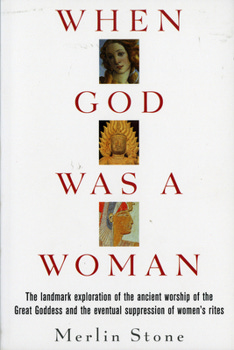
Merlin Stone was an American sculptor, art historian, and feminist writer best known for her 1976 book When God Was a Woman. That book is one of the sources behind this section. Stone argued that many ancient societies preserved religious symbols of female divinity before father-god religion became dominant: sacred trees, serpents, fruit, birth, blood, sexuality, and the mother-body as signs of power. [2]
I am not asking the reader to accept every claim Stone made as settled archaeology. The argument does not need that. Stone is useful here as one witness to an older symbolic world in which female sacred authority had not yet been fully subordinated to the father, the husband, the priest, and the state. [2][3]
The larger point is material. Symbols alone did not create patriarchy, and men did not build civilization around controlling women simply because they were jealous of childbirth. That explanation is too thin. The takeover had practical incentives. [3][5]
Start with land.
Once human beings settled, farmed, stored grain, managed animals, and defended fixed territory, wealth stopped being only what the group could carry. Wealth became fields, herds, houses, stored food, tools, weapons, and eventually enslaved people. Once wealth could be stored, it could be stolen. Once it could be stolen, it had to be defended. Once it had to be defended, organized male violence became politically valuable. [3][5]
That changed bargaining power inside the group.
In mobile foraging life, a woman mistreated by a man often had more ways to leave, return to kin, or rely on a wider network. In settled life, especially where women moved to the husband’s people, that changed. The man stayed near his brothers, cousins, elders, and male allies. The woman entered as an outsider. [5]
This is what patrilocal marriage does. It moves the wife away from her own kin and into the husband’s household, village, or clan network. Before any individual husband raises his hand or gives an order, the structure has already shifted power toward him. He has nearby backup. She has distance from hers. [5]
A husband did not need to be stronger than every woman. He needed a coalition. Brothers nearby. Elders who would side with him. Customs that treated his family as the real home and the wife as the transferred person. If she resisted mistreatment, she could be framed as disruptive, disobedient, ungrateful, or dangerous to household order. Other women might sympathize, but they could also be trapped inside the same structure. [3][5]
This is not about every individual husband being cruel. It is about the arrangement. Patrilocality gave men an enforcement network and left women with weaker immediate bargaining power. Over time, that arrangement taught everyone the same lesson: the husband’s line was the center, and the wife’s obedience was the price of belonging. [5]
Then came inheritance.
If a man owns land, animals, weapons, stored grain, or slaves, he wants to know who gets that wealth when he dies. In a mother-line system, the child belongs to the mother’s line because the mother is known. In a father-line system, the answer is unstable. Paternity cannot be seen. It has to be controlled. [4][5]
That is where women’s sexuality becomes a political problem. [5]
Virginity rules, adultery laws, veiling, seclusion, arranged marriage, bride transfer, punishment for female sexual autonomy, all of it begins to make brutal sense once inheritance flows through men. The point is not romance. The point is certainty. The womb becomes a guarded border because property has to pass through it. [5][8]
Now add war.
Pastoral and warrior societies had practical reasons to bind men together. Herds could be raided. Settlements could be attacked. Fields could be seized. Young men had to be trained, hardened, organized, and made loyal to male command. The more war mattered, the more male coalitions mattered. The more male coalitions mattered, the easier it became to treat women as the reproductive infrastructure behind armies, farms, and states. [3][5]
A woman’s body produced children. Children became labor. Sons became soldiers. Daughters became marriage alliances. Reproduction became statecraft. [3]
This is why the first patriarchal order was not just a household arrangement. It was economic. It was military. It was legal. It was reproductive management. Men were not simply trying to feel superior. They were trying to secure labor, heirs, land, lineage, and loyalty. [3][5]
That is also why religion had to be rewritten. [2][8]
A society built around male descent, private property, priestly authority, and controlled reproduction cannot leave older symbols of female sacred power untouched. If trees, serpents, fruit, blood, birth, sexuality, and the mother-body still carry public religious authority, male rule has a legitimacy problem. Those symbols have to be subordinated, reinterpreted, or made dangerous. [2][8]
Genesis matters here not because it is a neutral record of the beginning of the world. It matters because it encodes a political answer to a social question: why should the woman be ruled? [13]
In the story, the woman reaches for knowledge. The serpent tells her her eyes will open. She eats. She gives the fruit to the man. Nakedness becomes shame. The body becomes a problem. Birth becomes pain. Then comes the sentence that carries the whole regime in miniature: “he shall rule over you.” [13]
That line is not just theology. It is social order with God’s signature placed at the bottom.
The older symbols are still there, but their meaning has changed. The serpent is no longer wisdom. It is deception. The tree is no longer sacred nourishment. It is forbidden. The fruit is no longer communion. It is trespass. The woman is no longer the one who seeks knowledge. She is the one blamed for catastrophe. [2][8][13]
That is what I mean by killing her twice.
First, women lose material power: land, kin protection, sexual autonomy, property rights, public authority, and religious leadership. Then the old meanings are rewritten so the loss appears deserved, natural, or holy. The body that once signified life becomes a source of shame. The woman who once anchored lineage becomes a subordinate wife. The mother who once made belonging visible becomes a vessel inside the father’s house. [2][3][5]
The genius of the rewrite is that it made male control look older than politics. Older than property. Older than law. Older than the state. It made patriarchy feel like the universe itself had spoken. [2][8][13]
But the universe did not speak. Institutions did.
Control over land made inheritance more important. Inheritance made paternity more important. Paternity made control over women’s sexuality more important. Once that control became central to property, family, and political power, religion helped make the arrangement feel permanent. [3][5][8]
This was not every man waking up one morning and deciding to hate women. It was accumulated advantage. Men gained more control over land, weapons, law, priesthood, and household authority. Women lost access to independent kin protection, sexual autonomy, property rights, public authority, and religious legitimacy. Over time, those material changes hardened into custom. [3][5]
The next step was moral justification. Male rule was taught as natural. Female submission was taught as sacred. The father was placed first in the family, first in inheritance, first in law, and finally first in heaven. Anyone who questioned that order could be treated as immoral, rebellious, unnatural, or ungodly. [8][13]
The Bomb Was Already in the House
This is where the ancient argument returns to the modern trigger.
A man who kills his wife and then himself is not thinking about Paleolithic figurines, matrilineal descent, or Merlin Stone. He is not acting out a footnote. He is acting inside a psychological order that taught him possession is love, authority is masculinity, and the loss of control is humiliation. [1][6]
That does not mean every violent man is consciously defending patriarchy. Most are not that articulate. Violence often works below language. A man does not have to understand the system to enforce it. He only has to feel entitled to what the system told him was his. [1]
His wife.
His children.
His house.
His name.
His respect.
His future.
His world.
When that world refuses him, he experiences refusal as theft. When the woman leaves, disobeys, exposes him, rejects him, or simply becomes fully human outside his control, the old order inside him panics. If he cannot possess the world, he may decide nobody else gets to live in it either. [1][6]
That is the emotional logic of murder-suicide.
It is also the political logic of the bomb.
Different scale. Same sickness.
The state tells men that domination is security. The family trains people to accept hierarchy before they can even name it. The husband rules the wife. The father rules the children. The priest blesses the arrangement. The law protects it. The military expands it. The bomb globalizes it. [1][3][5]
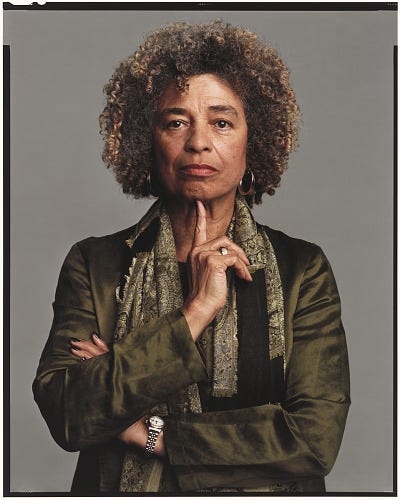
Angela Davis has argued that what we often call women’s issues, domestic violence, sexual violence, intimate violence, gender violence, are in large part men’s problems. That is the plain truth. Women have been forced to manage the consequences of male violence while men debate whether the problem has anything to do with them. [1]
It does.
A society organized around male control will produce men who experience equality as loss. It will produce men who experience women’s freedom as theft. It will produce men who would rather destroy the home than lose authority inside it. It will produce leaders who would rather destroy nations than admit limits. It will produce weapons so large that the old household threat becomes planetary. [1][3]
This is why the bomb and the gun belong in the same essay.
Not because all violence is the same. Not because men are born monsters. But because patriarchy teaches men to confuse control with life itself. And once control becomes life, losing control feels like death. [1]
So yes, it is a Man’s world.
That is the problem.
Not because men built everything. Not because men contributed nothing good. Not because women would automatically create paradise if handed the keys tomorrow morning. The problem is that father-rule trained civilization to organize itself around possession, hierarchy, inheritance, conquest, and the fear of losing what was never naturally owned in the first place. [3][5]
We inherited that world.
We also inherited the edited story that made it look inevitable.
But the record does not say patriarchy was inevitable. It says human beings have organized life differently before. The record does not say male rule is nature. It says male rule had to be built, defended, justified, sanctified, and taught. [3][4][5]
That means it can be untaught.
The first step is to stop calling the crime scene creation.
The next step is to ask what that crime scene does to men. Because patriarchy does not only teach men to control, possess, and punish. It also teaches some men to experience violence as proof of life itself. War becomes glory. Murder becomes purpose. Domination becomes arousal. And the man who was taught to feel most alive when something else dies is not an accident of civilization. He is one of its oldest products. [1][3][14]
When Murder Became Manhood
To understand that product, we have to look at what happens when a culture stops defining power as the capacity to create and starts defining it as the capacity to kill. [14]
In the lecture I am drawing from here, the speaker makes a blunt distinction between two religious worlds. In the older goddess-centered symbolic order, power was associated with creating life, sustaining life, fertility, birth, regeneration, and return. In the later patriarchal warrior order, power increasingly became associated with death: the sword, the raid, the storm god, the mountain god, the war god, the weapon that demanded blood. [14]
That shift matters because killing did not remain a practical act. It became a sacred and social act. Men did not merely kill because food, land, or defense required it. They began to build status, identity, and religious meaning around the capacity to kill. [3][14]
The sword is important here. A knife can cut meat. An axe can chop wood. A hoe can prepare soil. Even a spear can be used for hunting. But the sword is different. Its main purpose is to kill human beings. When a society begins to organize prestige around the sword, it is organizing prestige around human destruction. [14]
That changes what manhood means.
A boy does not simply become a man by learning to feed people, repair tools, carry children, remember stories, or help the group survive. He becomes a man by proving he can face death, deliver death, and not collapse under the psychic weight of either. Violence becomes initiation. [3][14]
This is how murder becomes more than murder. It becomes proof.
Proof of courage. Proof of loyalty. Proof of discipline. Proof that the boy has severed whatever softness the culture has taught him to despise. Proof that he belongs with the men.
The lecturer’s discussion of Athens and Sparta is useful because it shows that patriarchy did not only operate through law. It also staged itself through public culture. [7][14]
Athens is remembered as the birthplace of democracy, theater, philosophy, and civic reason. But it was also a deeply patriarchal society. Women’s public lives were restricted. Male citizenship stood at the center of political meaning. The city that gave the West so many stories about reason also gave it stories that trained people to accept the father as the true source of the child. [3][7][14]
That is why the lecturer’s discussion of The Oresteia matters. [7][14]
In that story, Orestes kills his mother, Clytemnestra, after she kills his father, Agamemnon. The moral question should be unbearable. What does a society do with a son who murders the woman who bore him? But the drama does not simply condemn him. It puts motherhood itself on trial. [7]
Apollo argues that the mother is not the true parent. She is only the nurse of the father’s seed. Athena, a goddess born from the head of Zeus, sides with the father’s line. Orestes is acquitted. The mother’s blood is subordinated to the father’s claim. [7]
This is not just a family drama. It is civic education. [7][14]
A whole audience watches a story in which the murder of the mother becomes legally and spiritually negotiable because the father’s authority has been made supreme. The play does not merely entertain. It teaches. It tells the city that the old mother-right order has been defeated, and the new father-order has the gods on its side. [7][14]
That is how patriarchy trains the imagination.
It does not only say women must obey. It tells stories where women’s claims are excessive, dangerous, irrational, or outdated. It tells stories where male violence restores order. It tells stories where the son’s loyalty to the father matters more than the mother’s body. It tells stories where killing can be purified if it serves the correct hierarchy. [7][14]
This is where murder begins to move toward sport.
Not sport in the narrow modern sense of a game with rules and tickets, although that comes later too. Sport in the deeper sense: violence as spectacle, ritual, ranking, and masculine excitement. Men watch other men fight. Boys learn which men are admired. The crowd learns to cheer the disciplined killer. Blood becomes public instruction. [14]
Sparta represents another version of the same problem. The lecturer contrasts Sparta with Athens partly because Spartan women retained more public freedom and social force than Athenian women. But Sparta was still organized around a severe military order. Boys were trained into hardness. Discipline, endurance, and the capacity for violence became civic virtues. The male body belonged to war. [14]
So Athens gives us the ideological theater of patriarchy. Sparta gives us the militarized body of patriarchy. One trains the mind through story. The other trains the body through discipline. Both make male identity depend on loyalty to an order larger than the self. [7][14]
This is the key point: patriarchal societies do not simply tolerate violence. They sort violence into categories.
Unauthorized violence is crime.
Authorized violence is duty.
Successful authorized violence is honor.
Repeated authorized violence becomes tradition.
Enjoyed authorized violence becomes culture.
That is how a man can kill for the state and be decorated, kill for property and be excused, kill for honor and be understood, kill in the home and still be described by neighbors as a good man who snapped. [1][3]
The categories change, but the underlying training is old. Men are taught to split themselves. Tenderness goes in one box. Fear goes in another. Grief goes somewhere deeper. Rage gets a uniform. Violence gets a flag. Murder gets a speech about order.
This does not mean every soldier enjoys killing. Many do not. Many are traumatized for life by what they are ordered to do. It does not mean every man secretly wants blood. That is lazy thinking. The point is that patriarchal culture repeatedly creates institutions where men are rewarded for overriding their horror, suppressing their vulnerability, and converting fear into aggression. [1][3]
That conversion is not natural. It is trained.
The boy is taught not to cry. The teenager is taught not to be soft. The young man is taught to compete. The soldier is taught to obey. The husband is taught to lead. The father is taught to rule. The citizen is taught to thank men for violence as long as the violence has been properly authorized. [1][3]
This is where war and domestic murder begin speaking the same language, even when they are not the same act.
The state says: kill for order.
The patriarch says: obey for order.
The violent man says: if I cannot have order, I will make ruin.
In each case, destruction becomes a way to answer humiliation. That is the sickness. Not that men are born wanting to destroy. But that patriarchy gives men a script in which destruction can feel like restoration. [1]
And once killing becomes proof of manhood, peace starts to look like emasculation. Compromise starts to look like weakness. Equality starts to look like defeat. A woman saying no starts to feel like a rebellion. A nation refusing domination starts to feel like an insult. A body outside male control starts to feel like a threat. [1][3]
This is why the ancient material matters.
The sword did not stay in the Bronze Age. It became a symbol. The war god did not stay on the mountain. He moved into the flag, the badge, the pulpit, the football chant, the action movie, the campaign speech, the police fantasy, the domestic tyrant’s fist, and the nuclear doctrine that says civilization can be saved by threatening to end it. [1][14]
That is the long afterlife of murder becoming manhood.
Men are not only taught to kill. They are taught that the willingness to kill proves they are real. And a civilization that teaches men to prove themselves through death should not be surprised when death keeps answering back. [1][3]
The Men Have to Turn Around

Dr. Cerina Fairfax did not die inside a theory. [6][9]
She died in a house. [6][9]
She died in the place where America tells women they are supposed to be safest. Home. Family. Marriage. Children. The soft words. The respectable words. The words we use when we do not want to admit how much terror has been hidden inside the architecture of ordinary life. [1][6]
Justin Fairfax was not an ancient warlord. He was not a Bronze Age raider. He was not a man in a cave worshiping a sword. He was a modern American man. Educated. Accomplished. Once powerful. Once celebrated. A man who had stood inside the machinery of the state and then, according to police, picked up a gun and killed his wife before killing himself. [6]
We have to say her name because patriarchy loves to turn dead women into supporting characters in the stories of ruined men.
Dr. Cerina Fairfax. [6]
Not just his wife.
Not just the mother of his children.
Not just the woman in the house.
A person. A professional. A mother. A life. A world.
And when a man turns his private collapse into a death sentence for the woman beside him, we need to stop calling that a tragedy as if tragedy means nobody made a choice. It is a tragedy, yes. But it is also a revelation. It shows us what can happen when a man experiences loss of control as annihilation, humiliation as permission, and a woman’s continued existence outside his authority as an insult that must be answered. [1][6]
That is not love gone wrong.
That is ownership exposed.
And I need to be clear here. I hated writing that sentence. I hated writing much of this essay. Every paragraph wanted to let me stand outside the fire and point at other men. Ancient men. Religious men. Violent men. Powerful men. Men with guns. Men with bombs. Men who appear in news reports after the bodies have already been found.
But the lie is that patriarchy only lives in the worst man you can imagine.
It does not.
It lives in the ordinary male expectation to be centered. To be soothed. To be forgiven before the harm is named. To be heard before the woman is believed. To be admired for doing what women were expected to do without applause. To be called complicated when we are cruel. To be called wounded when we are dangerous. To be called lonely when what we really are is entitled. [1]
That is why this was hard to write. Not because I think I am Justin Fairfax. Not because every man is one bad day away from murder. That is not true and it is too easy. It was hard because patriarchy gives all men scripts before it gives some men weapons. The gun is not the beginning. The gun is the last punctuation mark on a sentence men have been rehearsing for thousands of years. [1][6]
My house.
My wife.
My children.
My name.
My future.
My world.
And if it will not be mine, nobody gets to have it.
That is the murder-suicide logic.
And America understands that logic better than it wants to admit.
The nuclear bomb is the same fantasy with a federal budget. It is the ultimate patriarchal instrument because it says: if I cannot guarantee the world on my terms, I reserve the right to end the world altogether. Deterrence dresses that threat in strategy. Policy gives it charts. Generals give it discipline. Presidents give it speeches. But underneath the language is the old male wound with uranium in its hand.
Obey, or everything burns.
That is not only foreign policy. That is a spiritual sickness.
And a nation can walk toward murder-suicide without one single mushroom cloud rising over the horizon. It can do it by a thousand cuts. A woman killed in a house. A child making a 911 call. A judge’s order ignored until blood answers it. A predator protected by money. A file redacted. A name withheld. A powerful man excused. A victim exposed. A committee stalled. A report delayed. A body politic taught, day after day, that the powerful can do what they want and the vulnerable can be processed later. [6][9][10][11][12]
That is why the Epstein files belong in this conclusion. [10][11][12]
Not because Jeffrey Epstein is the whole story. He is not. The story is the world that made him useful. The men around him. The money around him. The institutions around him. The prosecutors, lawyers, politicians, financiers, fixers, friends, and cowards who treated girls’ bodies as the private playground of powerful men and then treated the public’s demand for the truth as an inconvenience. [10][11][12]
The Epstein coverup, whatever legal language anyone wants to hide behind, is not only about documents. It is about a civilization protecting male access to female vulnerability. It is about the same old order wearing a better suit. The girl becomes evidence. The evidence becomes sealed. The sealed file becomes national fatigue. Then the country is told to move on. [10][11][12]
No.
Do not move on.
That is what patriarchy always asks the living to do after women and girls have paid the bill.
Move on from the wife.
Move on from the girl.
Move on from the rape.
Move on from the missing file.
Move on from the bruise.
Move on from the dead woman in the house because the man who killed her had promise, had pressure, had demons, had a career, had friends who are shocked, had neighbors who never saw it coming.
No.
The dead are not debris on the road to male redemption.
Angela Davis has been saying something men still do not want to hear. What we call women’s issues are, in large part, men’s problems. Domestic violence. Intimate violence. Sexual violence. Gender violence. These are not problems women created. These are problems women have been forced to survive, name, organize around, study, grieve, and explain while men stood nearby waiting to be invited into the work. [1]
Davis corrects that too. Men do not need to be invited. [1]
Men need to move.
Men need to take up arms against patriarchy, and I do not mean guns, fists, armies, or the same old theater of domination wearing a progressive slogan. I mean the weapons patriarchy hates: accountability, interruption, confession, discipline, tenderness, refusal, and organized betrayal of male silence. [1]
Men have to confront men.
Not perform allyship for women. Not sit in the back of the room waiting for applause because we finally admitted sexism exists. Not turn feminism into another stage where men get to be praised for speaking beautifully about women’s suffering.
Men have to interrupt the joke.
Men have to challenge the friend.
Men have to believe the woman before the obituary makes belief safe.
Men have to stop treating rage as depth.
Men have to stop treating jealousy as proof of love.
Men have to stop treating sexual access as validation.
Men have to stop hiding behind loneliness while making women responsible for curing the violence that loneliness becomes.
Men have to stop raising boys to be little countries with armies at the border and no language for grief.
And men like me have to stop writing as if insight is absolution.
It is not.
Insight is only the beginning of the struggle. And struggle is the point. There is no conquest of evil without struggle. Not online performance. Not a clever sentence. Not a public confession that costs nothing. A real struggle. The kind that humiliates the ego. The kind that makes a man look at the small, respectable places where he still expects the world to bend toward him. The kind that forces him to ask what he has called love that was really control, what he has called pain that was really entitlement, what he has called protection that was really possession.
That is the shadow work men do not want.
But if we refuse it, women will keep dying in houses and girls will keep disappearing into files and boys will keep being fed to wars and nations will keep pointing weapons at the future and calling the threat peace.
This is what I mean when I say it is a Man’s world.
Not a compliment.
An indictment.
A warning.
A confession.
Because men have ruled enough to prove that rule itself cannot save us. Men have conquered enough. Built enough bombs. Written enough scriptures. Signed enough laws. Buried enough women. Sealed enough files. Given enough speeches over coffins we helped fill.
The world does not need one more man proving he is real through domination.
The world needs men willing to become human without making women bleed for the lesson.
That is the work.
Not someday.
Now.
Before the next house.
Before the next file.
Before the next war.
Before the next man stands at the edge of losing control and reaches for the oldest answer patriarchy ever gave him.
Men, put down the world before you kill it trying to prove it was yours.
Support This Work
Something has happened here that I have never seen before.
This work has brought a surge of paid subscriptions and Buy Me a Coffee support unlike anything this publication has experienced. I do not take that lightly. It tells me this piece hit the place I was afraid to touch, and it tells me some of you want this kind of work to keep existing.
So I am asking plainly: become a paid subscriber today.
Support independent writing that is willing to say what polite media keeps sanding down. Support the work that digs through history, psychology, race, gender, violence, power, scripture, and the national sickness without pretending the wound is smaller than it is.
Paid subscriptions keep this alive. They give me the time, space, and oxygen to keep writing the essays that cost something to produce because they cost something to tell the truth.
Subscribe here:
If a paid subscription is not possible right now, buy me a coffee. That helps too. But paid subscriptions are what build the foundation.
Sources
Angela Davis: “Women, Race and Class in the Post-Trump Era” — Southbank Centre / WOW discussion used for Davis’s argument that gender violence is a men’s problem, not merely a women’s issue.
Merlin Stone, When God Was a Woman — Used for the discussion of goddess symbolism, sacred trees, serpents, fruit, female divinity, and the religious demotion of women.
Angela Saini, “Patriarchy: Where Did It All Begin?” — LSE Wollstonecraft lecture used for the argument that patriarchy is historical, not natural or inevitable, and for the discussion of matrilineal societies and support networks.
“The Matriarchy America’s Founding Fathers Admired” — Used for the discussion of matriarchy as care-centered social organization and the Haudenosaunee / Six Nations model of clan mothers and accountable leadership.
What Is Politics?, “The Origins of Male Dominance and Social Hierarchy” — Used for the materialist explanation of agriculture, patrilocal marriage, bargaining power, hierarchy, and male dominance.
CBS News, “Former Virginia Lt. Gov. Justin Fairfax kills wife, fatally shoots himself in murder-suicide” — Used for reporting on the deaths of Justin Fairfax and Dr. Cerina Fairfax.
Aeschylus, Eumenides — Classical source used for the discussion of Orestes, Apollo, Athena, and the symbolic subordination of mother-right to father-right.
Therese, “The Forgotten Goddess: How Patriarchy Rewrote Religion” — Used for the discussion of Asherah, Yahweh, divine-feminine erasure, and father-god politics.
WTOP, “Former Va. Lt. Gov. Justin Fairfax shot his wife in apparent murder-suicide weeks before court deadline to move out” — Used for additional reporting on the Fairfax divorce/court context.
U.S. Department of Justice, Epstein Library — Official DOJ disclosure page for Epstein-related records.
U.S. Department of Justice, “Department of Justice Publishes 3.5 Million Responsive Pages in Compliance with the Epstein Files Transparency Act” — DOJ statement on the volume of Epstein-related records released.
Reuters, “U.S. Justice Department watchdog to review release of Epstein files” — Used for reporting on the DOJ inspector general review and criticism over redactions, victim exposure, and handling of the Epstein files.
Genesis 3, Bible Gateway — Biblical source for the serpent, tree, fruit, childbirth pain, and “he shall rule over you” language.
“When God Was A Woman” lecture — Lecture source used for the discussion of goddess symbolism, weapon worship, war gods, Athens, Sparta, and murder becoming a masculine proof structure.
Eloquent. Rough. Raw. Impressive. This should be read, saved, shared and restacked by everyone who reads the full narrative. The mirror is clear, the acknowledgement is vivid. The words land with the harshness of realization.
Thank you.
Damn - I wish I could write this well! I’m figuring you have been researching and editing this for years.
I can’t support your work yet, but I will at some point!