




Urgent Message From Xplisset
UPDATE: THE FUNDRAISER IS CLOSED
See the full update here
Before we get into the essay, a quick update: the emergency fundraiser is moving, but we are not across the line yet. Thank you to everyone who has helped get us this far.
Raised: $1052. Remaining: $448. | as of 5-7-2026 12:37 AM
I need to close the remaining $790 by Friday because that is the line between keeping this one-man newsroom moving and being forced to step away from the work to chase survival money.
If this work matters to you, the strongest way to help is a paid subscription:
If that is not possible, a one-time coffee or tip still helps keep this one-man newsroom alive.
Now let’s get to the piece.

Introduction
This is where the dead start talking.
Not because I believe ghosts are floating through the Supreme Court, dragging chains through marble hallways and whispering case law to the living. America is strange, but not that strange. The dead start talking when the living pretend not to hear history.
Listen, I’m just a retired Black cop with a keyboard. I’m not a lawyer. I do not have a robe, a clerk, a law school pedigree, or a lifetime appointment. But that is no excuse to sit this one out. I am a citizen journalist now, whether I was ready to call myself that or not, and I should have jumped on this story sooner.
Because something is happening to Justice Ketanji Brown Jackson. Not ordinary disagreement. Not routine Supreme Court sharp elbows. Something colder. She is being singled out. Named. Framed. Isolated. Made to sound extreme for saying plainly what power wants buried under procedure, doctrine, emergency orders, and polite institutional language.
I was born in 1972. I came into consciousness inside the fragile shelter built by the Civil Rights Movement. I was not born in the old world, but I was raised close enough to feel its breath. The marches had happened. The dogs had been seen. The hoses had been televised. The martyrs had been named. The laws had changed. Thurgood Marshall had sat on the Supreme Court.
Somewhere inside me, even after everything I knew as a Black man and everything I saw as a cop, there was still a child of the post-civil-rights world who believed the floor would hold.
That child has been dying slowly.
Maybe that is what this essay really is. Not just a defense of Justice Jackson. A reconciliation inside my own soul.
The boy born into the afterglow of civil rights is sitting down with the man living through the backlash. The child who thought history had bent toward justice is facing the adult who now knows history does not bend by itself.Somebody has to keep pulling. Somebody has to say, “No, I saw what you did.”
That is why Justice Jackson matters here. When they attack her, they are not only attacking one justice. They are attacking the witness. The person inside the room who refuses to make danger sound respectable. The voice warning the public that the machinery is moving and the marble has become a mask.
I happen to be writing a novel where the dead are not exactly dead. In my writing life, I summon characters in my imagination. I walk with them. I talk to them. Sometimes they answer in voices more honest than mine because they are not trying to protect me from what I already know.
So when this story would not leave me alone, I did what I apparently do now. I went walking. And I asked history who was still willing to talk.
Sandra Day O’Connor declined the interview. She said her record should speak for itself.
Justice Thurgood Marshall declined too. In the way I imagine only Thurgood Marshall could, he said he had already argued with America for a living and had no plans to spend the afterlife doing customer service for constitutional illiteracy.
So that left two witnesses. Justice Benjamin Robbins Curtis, who dissented in Dred Scott and watched the Supreme Court disgrace itself in the language of law. And Justice Ruth Bader Ginsburg, who knew what it meant for a woman inside the institution to keep warning the country while the country kept calling her dramatic.
I found them where all dangerous dissents go before history is ready to admit they were right.
Not in heaven.
Not in hell.
In the archive.
And when I asked what they made of what is happening to Justice Ketanji Brown Jackson, neither one looked surprised.
History rarely is.
The Dead Ask for Receipts
Curtis did not speak first. Neither did Ginsburg. They just looked at me. Not cruelly. Not dismissively. But the way judges look at a man who has brought a feeling into the room before he has brought the file.
Fair enough.
I had come to the archive with grief. They wanted a record. So I started there.
The issue is not simply that Justice Ketanji Brown Jackson was named. Let us get that out of the way now before the legal hall monitors start blowing whistles and writing citations in the margins. Justices name one another in opinions. That happens. The issue is how her name is being used.
In Trump v. CASA, the Court was dealing with universal injunctions, not finally deciding the constitutionality of Trump’s birthright citizenship order. But when Justice Jackson dissented, the majority did not merely say, “We disagree.” It described her position as “difficult to pin down,” said her argument was “more extreme still,” and ended that passage by accusing her of decrying an “imperial Executive” while embracing an “imperial Judiciary.” [1]
Curtis looked down at the page.
“That is not merely an answer,” he said.
Ginsburg did not move.
“That is a characterization,” she said.
And that is the point. A Supreme Court majority has every right to answer a dissent. It should. That is how the law breathes. But when the majority marks a dissenting justice as extreme, untethered, confused, or outside the bounds of proper legal thought, it is doing more than resolving a case. It is teaching the public whom to distrust.
Then it happened again. In the NIH emergency-stay dispute, the fight was procedural, technical, and easy to bury under words like jurisdiction, forum, claims, grants, APA, Tucker Act, and Court of Federal Claims. The kind of legal fog that makes ordinary citizens feel like the room has been intentionally sealed off from them.
But even there, Justice Jackson’s name kept appearing as a point of correction. Justice Barrett wrote, “Nor is Justice Jackson correct.” Justice Gorsuch wrote that “Justice Jackson’s dissent suggests” a mistaken view of the APA. Justice Kavanaugh wrote that “Justice Jackson seems to suggest” the Court could avoid the forum-channeling problem by denying the application, then answered, “That is wrong.” [2]
Now, maybe each sentence can be defended inside the four corners of legal argument. That is not my point. My point is what the pattern does. It takes the one justice who keeps warning that the Court is using emergency procedure to bless executive power, then it frames her warnings as overstatement, confusion, or extremism. It makes her sound like the problem instead of the person pointing at the problem.
That is old institutional magic. Curtis knew it. Ginsburg knew it. Every Black person who has ever watched a room punish the witness instead of confronting the harm knows it too.
You say what happened. They say you are emotional. You name the danger. They say you are extreme. You point to the machinery. They say you do not understand the rules of the machine. And by the time everybody finishes debating your tone, the machine has already moved another few feet forward.
Curtis finally spoke again.
“The law,” he said, “has always had a talent for making power sound neutral.”
Ginsburg folded her hands.
“And when a woman names that power too plainly,” she said, “the institution often mistakes warning for drama.”
That is why this is not merely about Justice Jackson. It is about the witness. If she is wrong, answer her. If her reasoning fails, show the failure. If her doctrine is weak, expose the weakness. That is law.
But if the response is to isolate her, name her, frame her as extreme, and let that framing travel into a political culture already trained to call a Black woman unqualified, angry, emotional, radical, or out of place, then we are no longer just watching judicial disagreement. We are watching institutional discipline.
And when they discipline the witness inside the room, the warning is meant for everyone outside the room:
Do not say what you see.
Do not call power by its name.
Do not notice that the marble is wearing a mask.
Curtis and the Prophetic Dissent
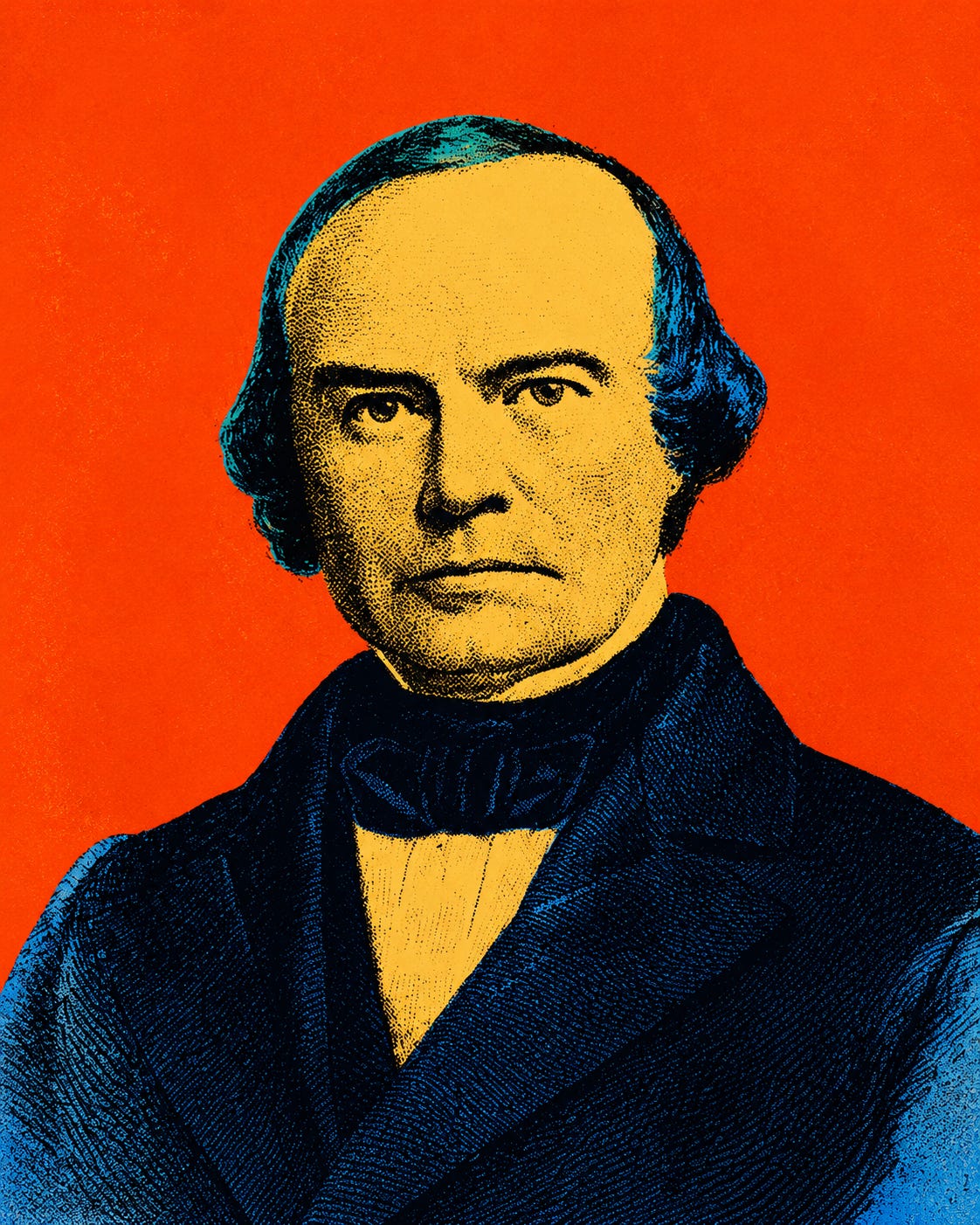
Curtis did not like the comparison at first. I could feel it before he said a word. There are certain historical names you do not throw around just because you need voltage. Dred Scott is one of them. That case is not a metaphor machine. It is a wound. It is an autopsy report on what happens when the highest Court in the country dresses racial domination in constitutional language.
Curtis knew that better than anybody in the room.
“Do not compare every wrong opinion to Dred Scott,” he said.
I nodded.
“That is lazy.”
I nodded again.
“But remember what Dred Scott proves,” he said. “The Court can be wrong with perfect grammar.”
That one landed. Because that is the thing people forget. Evil does not always arrive drooling in the street. Sometimes it arrives formatted. Sometimes it has footnotes. Sometimes it has jurisdictional language. Sometimes it tells you it is only following doctrine while it is building a cage around the future.
In 1857, Chief Justice Roger Taney’s Court held that Black people could not claim citizenship under the Constitution and that Congress had no power to ban slavery in federal territories. The National Archives describes the decision as one that moved the country closer to Civil War and notes that it was later overturned by the Thirteenth and Fourteenth Amendments. [3]
Curtis dissented. But he did not dissent by screaming. That is what makes him useful here. He dissented like a man opening a file.
He went back to the record. He asked who was understood to be a citizen when the Constitution was adopted. And there, in the historical record Taney tried to bury under white supremacist certainty, Curtis found the fact that broke the majority’s story. Free native-born Black people in several founding-era states had been citizens of those states. In New Hampshire, Massachusetts, New York, New Jersey, and North Carolina, Curtis wrote, free native-born inhabitants descended from African slaves were not only citizens, but those who met the qualifications could vote on equal terms with other citizens. [4]
That did not make America innocent. Curtis was not saying the founding was clean. It was not. He was saying the majority’s version of history was false.
And that matters. Because a false history inside a Supreme Court opinion is not just an error. It is a weapon. It tells the public: this is not power, this is tradition. This is not exclusion, this is original meaning. This is not domination, this is law.
Curtis saw the trick. So does Justice Jackson. That is the bridge. Not because Trump v. CASA is Dred Scott. It is not. Not because every ugly opinion is slavery in a robe. That is cheap writing, and I am not doing it.
The bridge is this right here people: the Court has a long memory when it wants to protect power and a short memory when power needs to be confronted.
The majority creates a narrow frame. Procedure. Jurisdiction. Remedy. Standing. Forum. Then a dissenter says, wait. Look at what this frame allows power to do once the public stops watching. And suddenly the dissenter becomes the problem.
Not the executive power.
Not the injury.
Not the people locked outside the protection of the courts.
The dissenter.
Curtis looked at me like he had seen that before. Of course he had. In Dred Scott, the majority made racial exclusion sound like constitutional necessity. Curtis answered by showing that the historical premise was wrong. The majority wanted the country to believe Black citizenship had no constitutional home. Curtis showed that Black citizenship had been there at the beginning, even if America had spent generations trying to evict it from memory. [4]
That is what a prophetic dissent does. It does not always win the day. Sometimes it loses badly. Sometimes the majority laughs it off. Sometimes the newspapers side with power. Sometimes the professors explain why the dissent is impractical, emotional, excessive, unrealistic, or too dramatic for serious people. But the dissent leaves a marker. A flare. A record. A note to the future saying: they knew.
Curtis leaned back.
“A dissent is not always written for the Court,” he said.
Then he looked at the file again.
“Sometimes it is written for the day the Court has to answer for itself.”
That is what makes Justice Jackson dangerous. Not reckless. Dangerous. There is a difference. A reckless dissent throws fire because it wants attention. A dangerous dissent turns on the lights.
Justice Jackson is dangerous because she refuses to let procedure launder power. She keeps looking at the emergency docket, the narrow remedial language, the careful little jurisdictional boxes, and asking the question ordinary people need answered: What happens to the people outside the box? What happens to the ones who have not sued yet? What happens when executive power moves faster than the courts and the courts respond by narrowing their own reach? What happens when the marble says, sorry, wrong forum?
That is not drama. That is witness. And Curtis, of all people, understood the difference.
Ginsburg and the Woman Who Warns Too Early

Ginsburg let Curtis finish. That seemed right. Curtis belonged to the old wound, the one that proved the Court could dress racial domination in perfect legal grammar. Ginsburg belonged to another wound: the woman who warns too early.
Not the woman who does not know the rules. The woman who knows them too well.
She looked at me like she knew I was about to make her into a symbol.
“Careful,” she said.
I understood.
Ruth Bader Ginsburg was not a mug, a meme, a collar, or a plush doll. She was a lawyer. A tactician. The Supreme Court’s own biography notes that she co-founded the ACLU Women’s Rights Project and served as the ACLU’s general counsel in the 1970s. [5]
She knew how to move inside hostile rooms. She knew how to make America answer its own promises. In United States v. Virginia, Ginsburg wrote the majority opinion holding that Virginia could not keep women out of the Virginia Military Institute because the school had always been built for men. The government needed an “exceedingly persuasive justification” for gender discrimination. [6]
That was not drama. That was discipline.
And when she dissented, the warning mattered because she knew what the majority was removing before the public felt the absence. That is the lesson of Shelby County v. Holder. When the Court weakened the Voting Rights Act’s preclearance system, Ginsburg warned that throwing it away because it had worked was like throwing away an umbrella in a rainstorm because you were not getting wet. [7]
“Do you know why that line survived?” she asked.
“Because it was memorable,” I said.
“No,” she said. “Because it was true.”
That is the problem with warning too early. The room calls it exaggeration. The institution calls it drama. And when the warning comes from a Black woman, America reaches for older weapons: angry, radical, unqualified, emotional, extreme, out of place.
Justice Jackson is not Ginsburg reborn. She is her own figure. But she is standing inside a familiar room. A Black woman justice is not only read as a justice who dissents. She is read through every old reflex about Black competence, Black anger, Black audacity, and Black presence in elite spaces that were never built with her in mind.
That is why the naming matters. Not because justices never name one another. They do. The issue is what happens when her name keeps getting attached to frames that make her sound confused, extreme, or outside the boundaries of serious law.
That language does not stay inside the opinion. It travels into cable news, right-wing newsletters, comment sections, and the mouths of people who were already waiting for permission to say she never belonged there.
Ginsburg folded her hands.
“The first thing they do,” she said, “is turn the warning into a personality defect.”
That one sat there. Because every woman knows that room. Every Black person knows that room. Every Black woman knows the room inside the room.
You name the danger. They say you are angry. You cite the record. They say you are making it about race. You refuse to smile while doing it. They say you lack temperament. Then the institution goes back to work while everyone debates your tone.
That is why this is not only happening to Justice Jackson. It is happening through her.
When a justice inside the room warns that the machinery is moving, and the answer is to make her sound extreme, the message is meant for everyone outside the room too. Do not worry about the doctrine. Do not question the emergency orders. Do not ask who gets left outside the remedy. Trust the marble. Put the umbrella down.
Ginsburg looked toward the archive window. There was no weather in that place. Only records. Only warnings. Only history clearing its throat again.
The Witness Inside the Room
Curtis had the record. Ginsburg had the warning. But Justice Jackson has the burden of being alive.
That is different. The dead can wait for history. The living have to sit in the room while the machine is still moving. And that is what makes her dangerous. Not because she is reckless. Not because she does not understand the doctrine. Not because she is confused by procedure. Justice Jackson is dangerous because she keeps asking what procedure is doing to people.
In Trump v. CASA, the majority said the case was about universal injunctions. The Court did not decide whether Trump’s birthright citizenship order was constitutional. It decided whether lower courts could issue sweeping relief beyond the parties before them. [1]
That sounds narrow. That sounds clean. That sounds like law doing what law does. But Jackson looked at the same machinery and asked the question ordinary citizens needed somebody inside the room to ask: Can a federal court order the Executive to follow the law?
She did not hide the question under a velvet cloth. She put it on the table. And that is when the knives came out.
The majority said her position was “difficult to pin down.” It said her argument was “more extreme still.” It said she decried an “imperial Executive” while embracing an “imperial Judiciary.” [1]
That language matters. Not because Justice Jackson is too delicate to be criticized. She is a Supreme Court justice. She can take a hit. The problem is not criticism. The problem is framing. Once a justice who warns about executive power is described as extreme, the public is being taught how to hear her before it ever reads her.
Extreme. Difficult to pin down. Not serious. Not grounded. Too much.
That is the translation.
Then came the NIH case. Again, the fight looked procedural. Forum. Jurisdiction. APA. Court of Federal Claims. Emergency stay. Words built like a locked gate. Jackson saw what was behind it.
She warned that the Court’s order sent plaintiffs on a likely futile, multivenue search for relief while government action moved ahead. She called out the danger of lawmaking on the emergency docket. She said the Court was making it harder to vindicate the rule of law when the judiciary should be preserving legal constraints. [2]
Again, she was not merely arguing doctrine. She was naming consequence. And again, her name became a correction point.
“Nor is Justice Jackson correct.”
“Justice Jackson seems to suggest.”
“That is wrong.” [2]
Maybe every sentence can be defended by a clerk with a stack of cases. Fine. But I am not asking whether each sentence can survive a law review footnote. I am asking what the pattern does in public life.
It takes the justice who keeps translating procedure into consequence and makes her sound like the problem. Not the executive order. Not the narrowed remedy. Not the emergency posture. Not the people left outside the protection of the courts. Her.
That is the move. Curtis saw it as false history. Ginsburg saw it as dismissed warning. Jackson is seeing it as procedural fog. And I am telling you as a retired Black cop who spent years reading official language, the fog is never just fog.
Fog helps somebody move unseen. Fog lets the hand reach for the lever. Fog lets power say, “You do not understand the process,” while the process quietly locks the door.
That is why Justice Jackson matters. She is not standing outside the building screaming at the marble. She is inside the building saying the marble is wearing a mask.
That is witness. And witness is always dangerous to power.
When They Attack the Witness, They Attack Us
This is where I have to come back to that child born in 1972, the one who thought the floor would hold. The one who inherited the afterglow. The one who believed the dogs had been seen, the hoses had been recorded, the martyrs had been named, and the Court, for all its sins, had at least learned to be ashamed of itself.
That child wanted to believe the worst had been defeated enough. Not healed. Not paid for. Not washed clean. But defeated enough for the floor to hold.
Now the floor is talking. And it does not sound stable.
Because what I see happening to Justice Jackson is not just happening to Justice Jackson. It is happening through her. She is the person in the room we are supposed to hear less clearly. She is the witness whose warning has to be softened, narrowed, corrected, mocked, named, framed, and made to sound extreme before the machinery can keep moving.
And if they can do that to her in public, from inside the Supreme Court, imagine what that teaches the rest of us.
Do not say what you see.
Do not name power too plainly.
Do not ask who gets left outside the remedy.
Do not ask why the emergency docket keeps becoming a highway for executive power.
Do not ask why procedure always sounds neutral right before somebody gets hurt. Do not ask why a Black woman justice has to be made to sound extreme before the country can avoid listening to her.
Just trust the marble. Trust the robe. Trust the grammar. Trust the footnotes. Trust the men and women who know how to say dangerous things in a calm voice.
No.
I am done trusting calm voices just because they learned how to sound official. I was a cop. I know reports. I know how a sentence can hide a beating. I know how passive voice can bury a victim. I know how institutions protect themselves with process. I know how the person who says, “Wait, that is not what happened,” suddenly becomes difficult, emotional, hostile, confused, unprofessional, out of line.
And I know this too: when the witness is attacked, the attack is not only meant for the witness. It is meant for the crowd. It is meant for everybody watching. It tells us what happens when we speak. It tells us what happens when we notice. It tells us what happens when we refuse to let power hide behind procedure.
That is why this matters. An attack on Justice Jackson is not an attack on us because she is perfect. She is not. It is not an attack on us because every dissent she writes must be correct. It does not. It is an attack on us because she is one of the few people inside the room telling the public what the machinery is doing while the machinery is still moving.
And if they can turn the witness into the problem, the rest of us are supposed to forget what she witnessed. We are supposed to forget the child outside the injunction. Forget the researcher whose grant disappears. Forget the citizen who cannot afford three forums, five appeals, and a decade of procedural patience. Forget the worker. Forget the immigrant. Forget the Black voter. Forget the woman. Forget the poor. Forget everyone who only discovers the law’s limits when they reach for protection and touch marble instead.
That is the real point I’m trying to force this essay to get across: the law is not sacred because it is written. The law is sacred only when it protects the living from power. When law becomes a mask for power, dissent becomes a duty. When procedure becomes a locked door, witness becomes good trouble. When the Court tells us not to worry because everything is technical, that is when citizens must lean forward.
Because technical is where they hide the blade.
History objected. Curtis objected. Ginsburg objected. Justice Jackson is objecting now. And the rest of us have a choice.
We can sit in the cheap seats and let them tell us this is all too complicated. Or we can say what every living citizen has the right to say when power starts speaking in riddles:
No.
Hell no
I saw what you did.
I heard what she said.
And I know why you attacked her.
Support This Work
If this essay reached you, help me keep doing this work while the machinery is still moving.
This is not corporate media. This is not a newsroom with a legal department, a research staff, and a billionaire owner tucked safely behind the curtain. This is one retired Black cop with a keyboard trying to read the record, name the pattern, and say what power would rather leave buried in procedure.
The emergency fundraiser has moved because readers stepped up. Thank you to everyone who got us this far. Right now, we have raised $710, with $790 remaining.
The strongest way to support this work is to become a paid subscriber:
If a paid subscription is not possible right now, a one-time coffee or tip still helps keep this one-man newsroom alive.
But please understand what you are supporting. You are not just helping me write one more essay. You are helping keep a witness on the wall, watching the fog, reading the footnotes, and saying out loud what too many institutions count on ordinary people missing.
History objected. Justice Jackson objected. I am objecting too.
Help me keep objecting.
Sources
Trump v. CASA, official Supreme Court opinion, including the majority’s discussion of universal injunctions and its direct characterization of Justice Jackson’s dissent.
National Institutes of Health v. American Public Health Association, official Supreme Court opinion, including Justice Jackson’s emergency-docket warning and direct responses to her by other justices.
National Archives, Dred Scott v. Sandford (1857), explaining the ruling’s citizenship and territorial-slavery holdings, its role in moving the country closer to Civil War, and its later reversal through the Thirteenth and Fourteenth Amendments.
Justia U.S. Supreme Court Center, Dred Scott v. Sandford, Justice Curtis dissent passages on founding-era Black citizenship and voting rights in several states.
Supreme Court of the United States, official biography of Justice Ruth Bader Ginsburg, noting her ACLU Women’s Rights Project work, appointment to the Court, and service dates.
Library of Congress, U.S. Reports: United States v. Virginia, 518 U.S. 515 (1996), including Ginsburg’s majority opinion and the “exceedingly persuasive justification” standard for gender-based government action.
Justia/Supreme Court PDF of Shelby County v. Holder, including Ginsburg’s dissent and the preclearance “umbrella in a rainstorm” warning.
I love kentry Brown Jackson.
Once again, Xplisset -- wow!!!! "the law is not sacred because it is written. The law is sacred only when it protects the living from power." A powerful truth. But even more so is your analysis and exposure of what is really happening when Justice Jackson is dismissed for being "extreme," etc. Thank you for naming what is happening. Thank you!